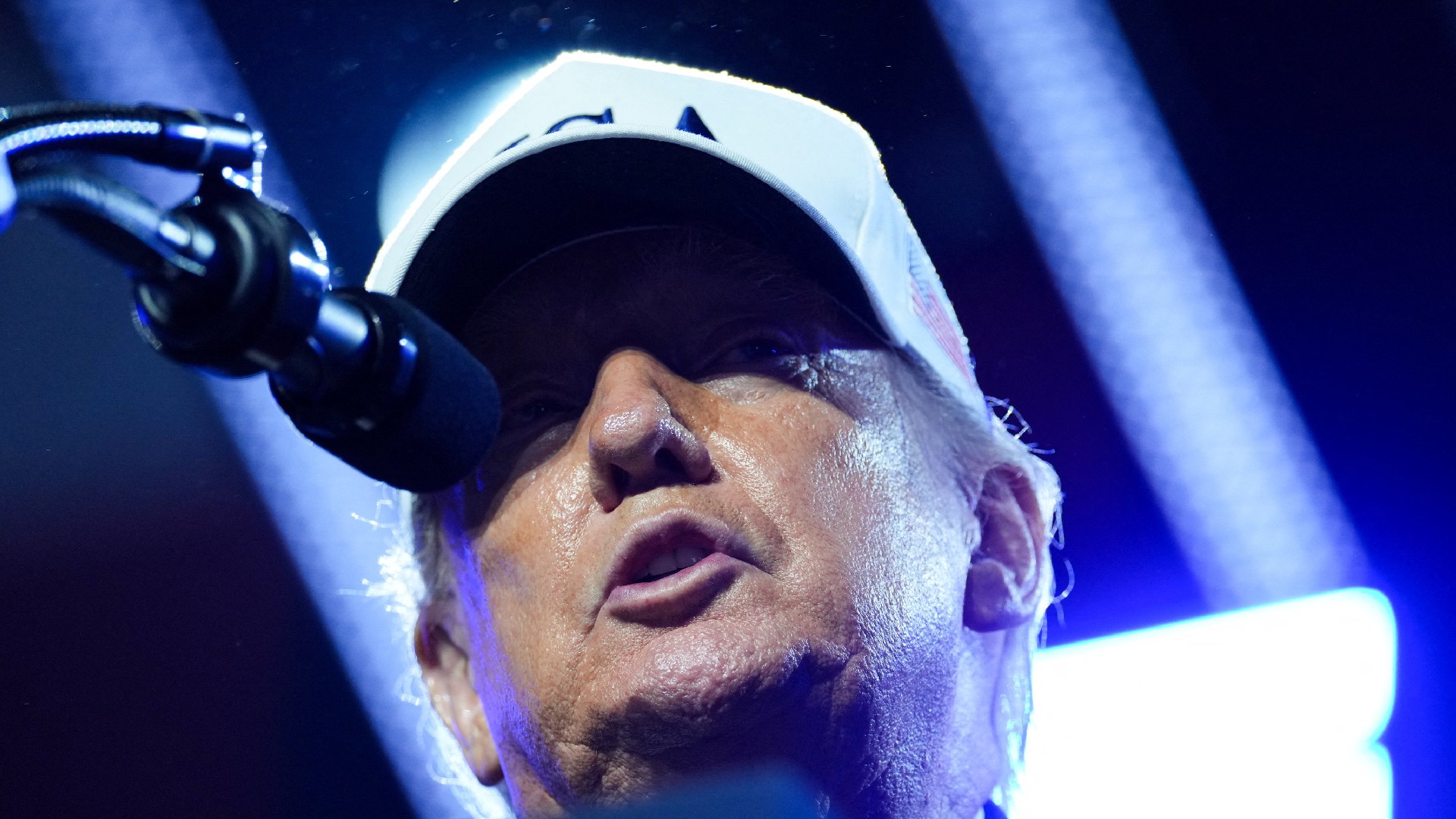
On Friday, U.S. President Donald Trump publicly confirmed that the U.S. military had executed a new set of limited targeted strikes against Iran’s Qeshm Island, a strategically critical landmass situated in the Strait of Hormuz, the chokepoint waterway that has faced repeated disruptions ever since the U.S. launched its broad military campaign against Iran back in February. Trump asserted to assembled White House reporters that the operation successfully disabled local Iranian air defense infrastructure in a remarkably short window, estimating the mission took between 5 and 15 minutes to complete.
Shortly before Trump’s public remarks, Iranian state media outlets verified that two distinct explosive detonations had been recorded in the island’s Suza residential and coastal district. The official Islamic Republic of Iran Broadcasting (IRIB) also relayed an official statement from the Iranian Army, which claimed its domestic air defense units had shot down an American unmanned aerial vehicle operating over Qeshm Island’s airspace during the incident, directly contradicting parts of the U.S. president’s account of the operation’s success.
For its part, U.S. Central Command (CENTCOM), the military command overseeing all U.S. operations in the Middle East, offered a cautious, restrained statement when pressed for comment on the reported blasts, noting that the immediate operational situation across the surrounding theater was “relatively calm” in the aftermath of the strike mission. Later that same Friday evening, CENTCOM published an official notice on its official X platform account, announcing a reward program offering up to $20 million in cash compensation plus potential resettlement support for any individuals who provide verifiable intelligence related to Iran’s full nuclear program, including hidden facilities, specialized equipment, affiliated scientific personnel, and any movements of those assets or people.
This latest round of military action follows a set of “defensive strike” operations the U.S. military carried out earlier that week on Monday. Notably, it also marks the first overt U.S. military action against Iranian targets since Trump’s Republican Party sustained a devastating, widely unexpected defeat in the recent U.S. midterm elections, a electoral outcome that exit polls and political analysts partially attributed to widespread public discontent over Trump’s unilaterally launched war against Iran, which triggered a steep, global surge in energy prices that strained household budgets across the United States.
In the weeks following that electoral loss, Trump’s public communications regarding the Iran conflict have been inconsistent and contradictory: he has alternated between issuing belligerent threats to “completely destroy” Iranian strategic assets, and making repeated claims that the months-long conflict is nearing a final resolution. Speaking to reporters on the same Friday as the new strikes, Trump doubled down on claims that active, high-level negotiations with Iranian representatives were already underway, stating, “We’re dealing with them now. They want to make a deal. We’ve made a lot of progress with Iran.”
The Qatari Foreign Ministry, which has acted as a long-standing neutral intermediary for backchannel talks between Washington and Tehran, also weighed in on the ongoing diplomatic discourse on Friday. Spokesperson Majad al-Ansari posted a formal statement on X pushing back against unsubstantiated reports that the negotiation process had ground to a halt, dismissing those narratives as “false claims” and noting that spreading such misleading information only benefits bad-faith actors who wish to prolong the destructive war and destabilize the wider Gulf region.
This report originates from Middle East Eye, an independent news outlet specializing in in-depth, on-the-ground coverage of the Middle East, North Africa, and adjacent global regions.