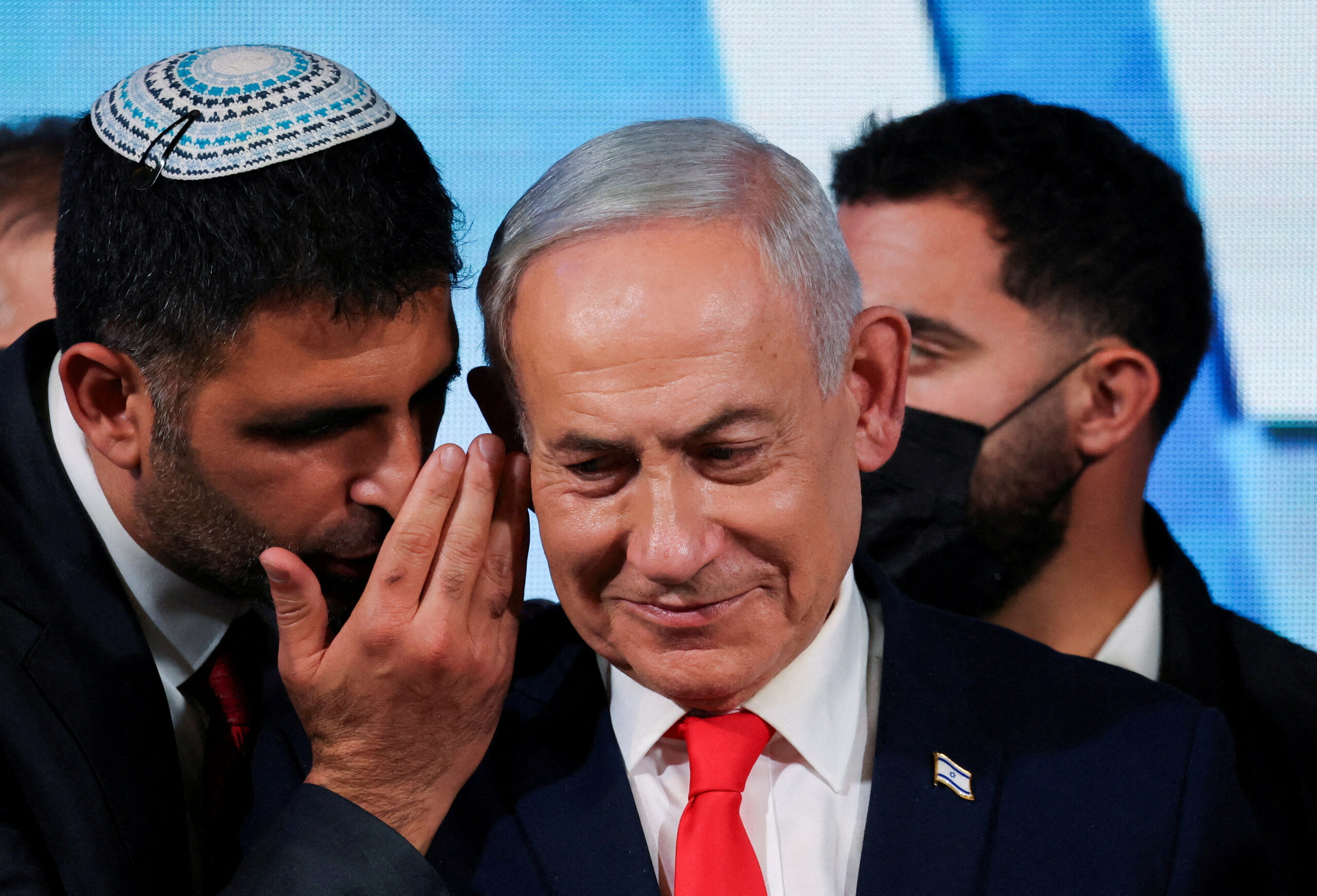
A wave of fierce condemnation has erupted across Israel’s political and media spheres, with dozens of public figures charging that outgoing Prime Minister Benjamin Netanyahu is orchestrating an attempted coup to cling to power, following his electoral bloc’s defeat in last week’s national vote — a contest marked by record-breaking turnout among Palestinian citizens of Israel.
Critics allege Netanyahu is leveraging the country’s domestic intelligence agency, the Shin Bet, to discredit the election outcome and erode the legitimacy of Palestinian-led political factions that secured historic representation in the 120-seat Knesset. More than seven days after final preliminary tallies confirmed Netanyahu’s right-wing bloc trailing the opposing coalition, Shin Bet director David Zini, a Netanyahu appointee, has launched a sweeping probe focused on the Palestinian electorate, airing unsubstantiated claims of mass voting fraud, bribery, and foreign meddling with no public evidence presented to back the allegations. The parallel campaign to delegitimize the Ra’am party and the Joint List — the two Palestinian-led factions that won a combined unprecedented 19 Knesset seats — is widely framed by analysts as a deliberate gambit by Netanyahu to avoid ceding control of the premiership.
The crackdown has already drawn widespread outcry: on Tuesday, Shin Bet agents detained Abd Abu Shahadeh, a contributing journalist for Middle East Eye, citing an open “security-related investigation,” while Israeli media outlets confirmed Zini has pushed to summon prominent Palestinian elected political leaders, including Ahmad Tibi, Sami Abou Shahadeh, Mansour Abbas, and Ayman Odeh, for formal questioning.
Senior opposition figures have issued stark warnings about the erosion of Israeli democratic norms. Yair Golan, head of the opposition Democrats party, told reporters on Wednesday that the country’s democratic system was facing existential peril, noting that law enforcement had detained political activists without warrants, the Shin Bet was attempting to compel senior elected officials to submit to questioning with no supporting evidence, and the outgoing Netanyahu administration was refusing to formally acknowledge the verified election results. Hours later, Golan went further, explicitly accusing Netanyahu of attempting to “carry out a coup and seize power by force.” Former prime minister Yair Lapid echoed the accusation the previous day, claiming Netanyahu was working to “crush democracy and steal the elections with the help of sleeper agents of the regime in the security establishment” — a clear reference to Zini, who was installed as Shin Bet chief by Netanyahu last year amid widespread public criticism over his documented far-right ideological leanings. Opposition bloc leader Gadi Eisenkot offered a more measured but equally firm rebuke, stating Netanyahu was leading a coordinated, organized effort to “sabotage Israeli democracy” by inciting street violence against elected officials and systematically undermining the independence of law enforcement institutions.
Israel’s mainstream press has joined the chorus of condemnation, framing the ongoing developments as an unprecedented constitutional crisis. Amos Harel, a veteran correspondent for leading daily Haaretz, wrote in a Wednesday op-ed that Netanyahu, his inner circle, loyalist figures in the security apparatus, and aligned media outlets were “energetically driving Israel into the most critical constitutional crisis in its history.” Harel characterized Netanyahu’s actions as a full “regime coup” that drew directly from the playbooks of authoritarian regimes, pointing to the misuse of secret security services, targeted incitement against ethnic minorities, threats of political violence, and the refusal to recognize verified electoral results. A separate opinion piece published in Calcalist, Israel’s prominent financial news outlet, made identical charges, with journalist Moshe Gorali arguing that the outgoing government’s refusal to accept the election results represented a dangerous, unprecedented escalation, and that the administration was following a “familiar dictatorial-fascist protocol” by deploying a politically loyal intelligence agency to invalidate a free and fair electoral outcome. Ronen Bergman, a senior investigative reporter for Ynet, also publicly stated that Israel was “in the midst of a coup attempt.”
On Wednesday, Israel’s nonpartisan Central Elections Committee formally submitted the fully certified final election results to President Isaac Herzog, formally dismissing all unsubstantiated claims of widespread electoral fraud. Despite this official confirmation, the Shin Bet has continued its targeted investigations, which multiple insiders have confirmed lack even foundational supporting evidence. A source with direct knowledge of the Shin Bet’s election-related inquiries told Ynet that Zini was operating with no clear grasp of his official legal mandate, noting that under Israeli law, formal investigations into a sitting Knesset member require far more than uncorroborated speculation. Zini, a former senior Israeli military officer and a settler residing in the occupied Syrian Golan Heights, has long maintained close, documented ties to the Israeli settler movement, and has previously publicly stated that Shin Bet directors “have to act according to the law, but they are first and foremost subordinate to the prime minister.”
Ynet reporting shows that security officials reviewed more than 1,000 separate public allegations of election fraud, and none of the claims were found to hold any verifiable credibility. Haaretz further revealed that only one of the dozens of Shin Bet election-related investigations was initiated before voting day, while every subsequent probe targeting Palestinian political leaders and activists was launched only after it became irrefutably clear that Netanyahu’s electoral bloc had lost the parliamentary majority. A senior law enforcement official speaking anonymously to Channel 13 News accused Zini of “throwing out names without evidence and echoing Likud’s talking points” and noted that the Shin Bet director had triggered the most severe crisis of public confidence in the agency seen in decades. The official added that if the investigations ultimately produce no tangible evidence of wrongdoing, Zini’s leadership of the agency cannot be allowed to go unchallenged. Separate reporting from Channel 12 News confirmed that the day-to-day operations of the election-related probes are being overseen by Zini’s deputy, who has well-documented close personal ties to Netanyahu, and that the deputy is directing investigative efforts even as career law enforcement officials have repeatedly emphasized there is insufficient evidence to bring formal charges against any of the individuals targeted for questioning.
Israel’s Netanyahu accused of attempting coup after election defeat