Recent headlines across Europe have stirred widespread confusion over a surprising prospect: could Canada, a North American nation thousands of kilometers from the continent, formalize a closer relationship with the European Union as its first ever associate member? Under existing EU constitutional rules, full membership is explicitly off the table, as the bloc restricts membership to geographically European states. But a new framework of associate membership has opened the door to a historic shift in transatlantic relations.
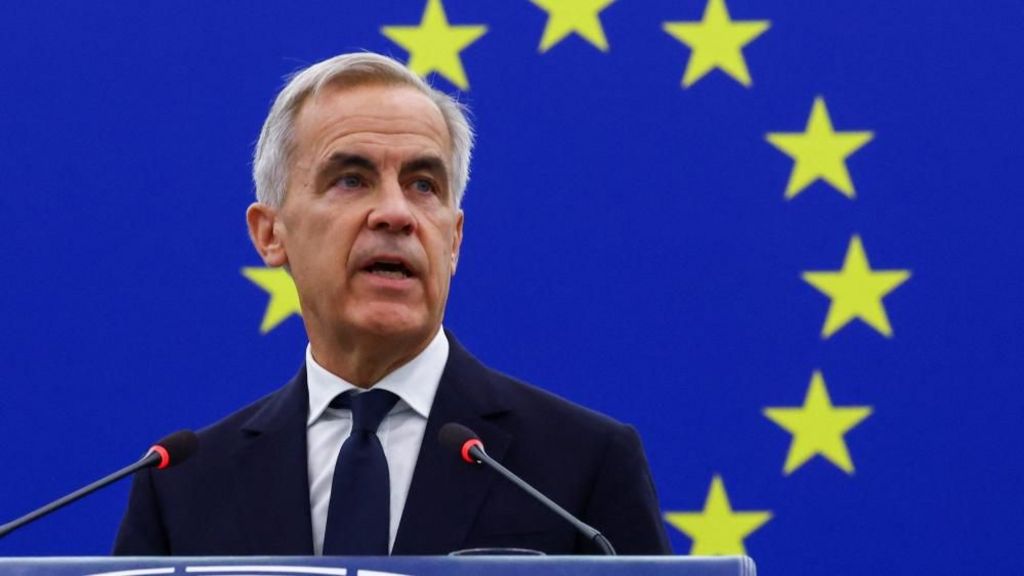
The discussion moved from speculation to formal proposal last week, when European Commission President Ursula von der Leyen extended an official invitation to Canada to take up this unprecedented associate status. Addressing the European Parliament on Thursday, Canadian Prime Minister Mark Carney responded with enthusiastic support, arguing that deepened cross-Atlantic cooperation across a wide range of strategic sectors is critical to bolstering shared autonomy for both sides.
Brussels and Ottawa already benefit from the Comprehensive Economic and Trade Agreement (CETA), a far-reaching free trade deal that has boosted bilateral commerce for years. Carney stressed that associate membership would go beyond existing trade ties, building new collaboration on energy security, economic resilience, critical raw material supply chains, higher education cooperation, artificial intelligence and tech innovation, and joint defense capabilities. These aligned efforts, he argued, would safeguard the sovereignty and economic interests of all participating nations.
The push for closer alignment comes as both Canada and the EU face growing pressure from competing global forces. Both blocs have increasingly found themselves squeezed between the two world superpowers, the United States and China, while also grappling with the outsized influence of supranational tech giants that operate beyond the reach of individual national regulators. Carney was careful to frame the proposal not as an effort to build a competing third superpower or create a new bloc targeted at any other nation.
“We do not pursue zero sum deals,” Carney told the assembled parliamentarians. Instead, he argued that like-minded democratic nations must band together to build a renewed, modern multilateral governance framework at a time when global order is shifting toward a ‘might makes right’ approach embraced by many major powers. Only through collective action and rejecting isolationism, he added, can nations close critical capability gaps, build collective strength, and protect their individual national sovereignty.
Carney’s implicit rebuke of rising nationalist populism came as no coincidence: upcoming national elections across multiple EU member states have seen far-right, nationalist parties gain traction, with slogans ranging from ‘Italy First’ to ‘France for the French’ and ‘Make Poland Great Again’ that echo the nationalist rhetoric of former U.S. President Donald Trump. Carney’s address received a rapturous, heartfelt applause from the majority of European Parliament members in attendance.
Reaction across the Atlantic has been far less welcoming. Earlier this week, Trump, who currently holds the U.S. presidency, dismissed the proposal out of hand, threatening to impose sweeping, ‘very heavy tariffs’ on both Canada and the EU if the associate membership agreement moves forward, and warned he would consider the move a ‘hostile act’ against U.S. interests.
Ironically, it is Trump’s own unilateral, unpredictable trade and foreign policy that has pushed Brussels and Ottawa closer together. For decades, the United States has been both the top trade partner and the primary security ally for both Canada and the EU. But in recent years, the White House has repeatedly weaponized trade tariffs against both parties, with Canada currently locked in an escalating trade dispute that Ottawa has described as a full-blown trade ‘war’ with the Biden-Trumper administration. Beyond trade, both Canada and the EU have growing concerns that they can no longer rely on the United States for consistent security and defense backing, given Washington’s shifting foreign policy priorities.
Canada is not the only non-European ally moving toward closer ties with the bloc amid growing doubts over U.S. reliability. Japan and South Korea, two key U.S. allies in the Indo-Pacific, have also expressed interest in gaining closer alignment and what some describe as ‘policy shelter’ under the EU’s institutional umbrella. For its part, the EU has moved aggressively to diversify its global trade and strategic partnerships in recent years, concluding new deals with India, Indonesia, Japan, and other major economies to reduce overreliance on any single global power.
Despite the momentum behind the proposal, there is no guarantee that Canada’s associate membership will ever come to fruition, let alone serve as a blueprint for other nations like the United Kingdom that have sought closer ties with the bloc short of full membership. Any revised partnership framework would require unanimous approval from all 27 current EU member states, a high bar that has sunk many ambitious proposals in the past. There is also no existing legal precedent for associate membership, meaning negotiations would likely stretch on for years, with multiple potential conflicts of interest already looming, including long-running disputes over global steel tariffs.
A previous proposal from Germany earlier this year to grant associate membership to Ukraine, which is actively seeking full EU accession, was rejected by multiple member states, highlighting the political hurdles facing any new framework. Some member states, including the current French government, oppose granting non-members overly favorable access to the EU single market and institutions, arguing that this could embolden euroskeptic political forces at home and abroad by giving countries outside the bloc many of the benefits of membership without the corresponding obligations, encouraging voters to support leaving the bloc.
At its core, however, the debate over associate membership reflects a broader shift for the EU. For decades, the bloc has maintained rigid rules around membership and institutional access. But buffeted by growing geopolitical pressures from the United States, China, and Russia, the EU is facing increasing pressure to demonstrate greater flexibility to accommodate aligned nations that want to deepen cooperation and stand with the bloc amid an increasingly fractured global order.