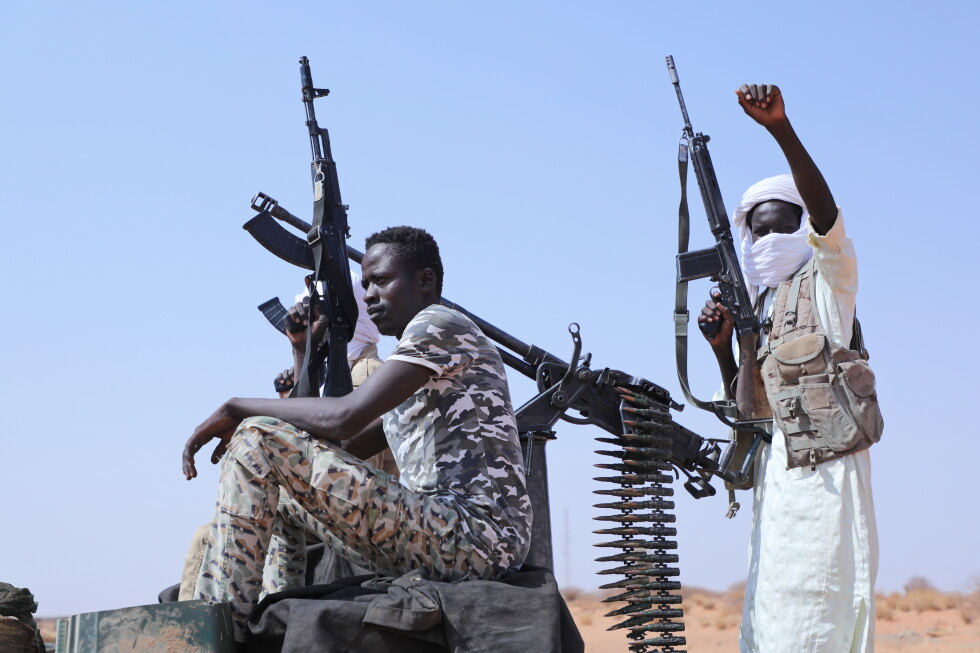
Four years into a brutal civil war that has shattered Sudan, the United States is pushing the United Nations Security Council to adopt tougher punitive measures against the country’s warring factions, aiming to force military and paramilitary leaders back to the negotiating table.
The ongoing conflict has already left an indelible mark of catastrophe across the northeast African nation: official tallies confirm at least 59,000 people have been killed, more than 13 million have been displaced from their homes, and widespread famine now grips large swathes of the country. Massad Boulos, senior adviser for Arab and African affairs to former U.S. President Donald Trump, outlined the U.S. proposal to the Security Council on Monday, emphasizing that external support for the two rival parties remains the single greatest driver sustaining the bloodshed.
Since fighting erupted between Sudan’s formal government forces led by Gen. Abdel-Fattah Burhan and the Rapid Support Forces (RSF) commanded by Gen. Mohamed Hamdan Dagalo, multiple foreign powers have provided backing to opposing sides, Boulos said. While he declined to name specific supplying nations, public reporting and international investigations point to Egypt openly supporting Sudan’s military, while the United Arab Emirates has faced repeated accusations from UN experts and human rights organizations of funneling arms to the RSF – claims the UAE has consistently denied.
“Numerous external actors continue to funnel a tremendous and increasing volume of military support to both warring parties,” Boulos told the council. “The Security Council already holds the tools needed to curb this flow of materiel that keeps the conflict alive.”
The core of the U.S. draft resolution circulating among Security Council members would expand a long-standing arms embargo that currently only applies to Sudan’s western Darfur region, the site of mass atrocities in the early 2000s, to cover the entire country. The proposal explicitly clarifies that drones and all related unmanned aerial technology fall under the embargo’s scope, a key update that responds to the growing use of drones by both sides in the current conflict. Independent experts have confirmed that Burhan’s army and the RSF are both actively pursuing advanced drone models, and rights groups have documented how widespread drone strikes have driven civilian casualties across Sudan.
The draft resolution obtained by the Associated Press openly condemns the steady flow of external military assistance, weaponry, and ammunition to both factions, noting that this ongoing support prolongs the war and undermines all international mediation efforts. It includes a binding demand that all nations end any form of direct or indirect support – whether logistical, financial, or military – that enables the conflict to continue.
The roots of Sudan’s current crisis stretch back to 2019, when a popular pro-democracy uprising forced the military to oust longtime autocratic president Omar al-Bashir, opening a fragile transition to civilian rule. Tensions between Burhan and Dagalo, who once served as Burhan’s deputy on the ruling sovereign council, boiled over into open conflict three years after Bashir’s ouster, when a simmering power struggle over the planned integration of the RSF into Sudan’s regular military erupted into full-scale war.
Burhan has already rejected the proposed new sanctions, vowing that his forces will continue fighting until they recapture all territory currently held by the RSF. In comments carried by the army-controlled SUNA news agency during a police officer graduation ceremony in Khartoum on Monday, Burhan struck a defiant tone: “Our souls and destiny are in God’s hands. Our message to those staying in hotels abroad and cheering for sanctions meant to subjugate the Sudanese people is this: The Sudanese people will not be broken, but we will break and defeat you.”
United Nations Under-Secretary-General for Political Affairs Rosemary DiCarlo told the Security Council that despite repeated diplomatic pushes to bring Burhan and Dagalo to negotiations, both sides remain committed to a zero-sum military strategy that leaves no room for de-escalation. “Greater international attention and urgent action are needed to change this dangerous calculus,” DiCarlo said, echoing the U.S. call for stronger council action to end the conflict.
Associated Press reporter Noha Elhennawy contributed reporting from Cairo, Egypt.