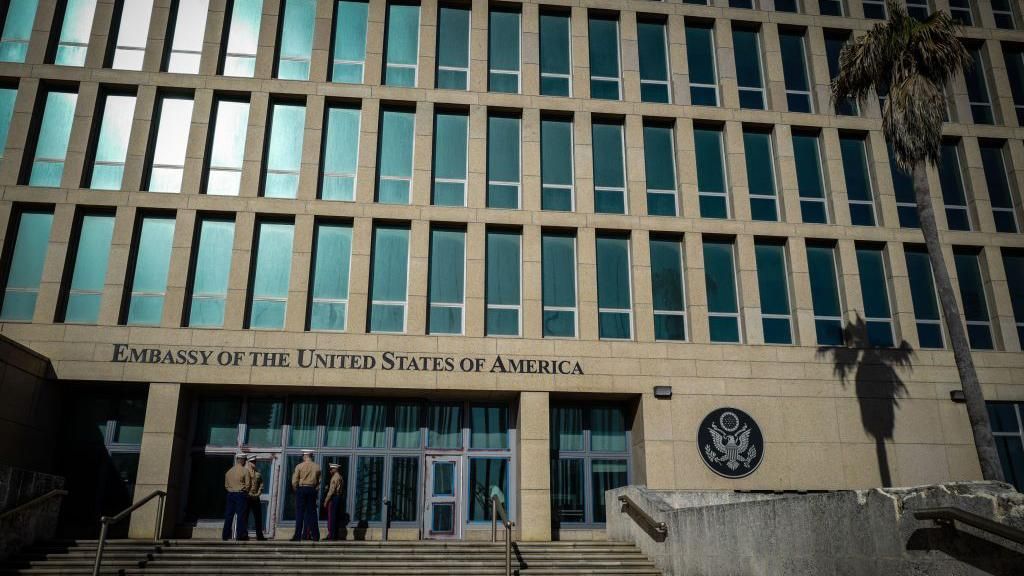
Eight years after the first public reports of a puzzling neurological condition dubbed Havana Syndrome emerged from U.S. diplomatic staff in Cuba, the U.S. government has issued nearly $3 million (£2.2 million) in compensation to affected personnel and their families. These payments mark the first formal financial relief granted to U.S. agency staff impacted by the mysterious illness, whose origins stretch back more than a decade to early unreported cases among CIA officers posted to Havana.
Since those initial incidents, hundreds of “anomalous health incidents” matching Havana Syndrome profiles have been recorded across the globe, from diplomatic posts in China to domestic locations in Washington D.C. Affected individuals have described a wide range of debilitating symptoms: many report hearing unexplained auditory phenomena including persistent low hums, sharp clicks, high-pitched squeals, and what they describe as the sound of grinding metal. Others experience intense pressure around the skull, chronic dizziness, persistent nausea, and lasting cognitive impairment that disrupts daily life.
The compensation, announced by the U.S. Department of Defense, was authorized under the 2021 Havana Act, federal legislation designed to support personnel affected by the condition. In a statement accompanying the announcement, DoD officials reaffirmed their commitment to prioritizing care for all affected staff moving forward.
For more than a decade, the origin of Havana Syndrome has sparked fierce public and intelligence community speculation. The earliest reports of concentrated symptoms among overseas diplomatic and intelligence staff led to widespread theories that a foreign adversary was deploying a novel directed-energy or sonic weapon to attack U.S. personnel. Many researchers and observers have pointed to pulsed microwave radiation as a plausible cause of the neurological damage reported by victims, reinforcing the foreign attack hypothesis.
“My brain is broken,” former CIA analyst Erika Stith, who is among those affected, told CBS News in 2022. “We got this as a result of serving our country. And we deserve to be taken care of.”
In a 2023 declassified assessment, the majority of U.S. intelligence agencies concluded that it is “very unlikely” that a foreign state actor used a purpose-built novel weapon or prototype device to cause harm to U.S. personnel and their families. A small minority of the intelligence community, however, has not fully ruled out the foreign attack theory, leaving the question of origin formally unresolved.
Crucially, the 2023 assessment from the National Intelligence Council emphasized that no U.S. intelligence body questions the reality of the suffering experienced by affected individuals. The entire intelligence community agrees that victims reported “genuine, sometimes painful and traumatic, physical symptoms and sensory phenomena” honestly, the report confirmed.
Havana Syndrome first entered the public consciousness in 2016, when U.S. diplomats in Havana publicly reported falling ill after hearing unexplained piercing sounds at night in their homes and offices. By 2017, rising reports of symptoms led the U.S. government to withdraw more than half of its embassy staff from the Cuban capital. Canada, which also recorded dozens of similar cases among its own diplomatic personnel in Havana, followed suit in 2019, sharply cutting its on-ground presence in the country. While public cases only emerged a decade ago, some researchers and victims have traced similar unexplained neurological incidents back to the Cold War era, suggesting the condition may have been affecting intelligence and diplomatic staff for decades.