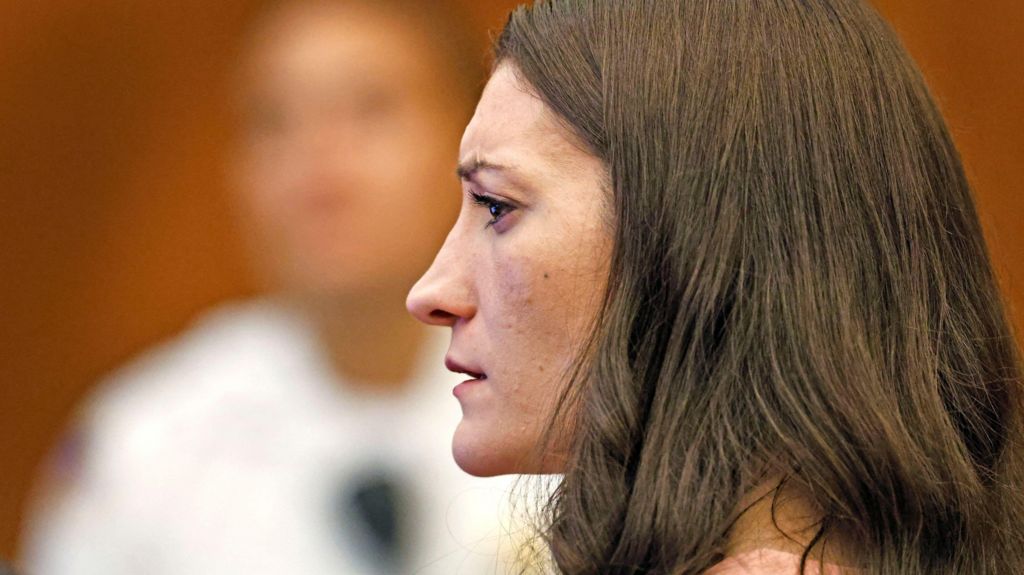
The closely watched murder trial of Lindsay Clancy, a Massachusetts woman accused of killing her three young children in January 2023, has begun with starkly conflicting narratives about her mental state in the months leading up to the tragedy. The case, which is scheduled to unfold over several weeks, has already sparked debate over mental health care access and postpartum complications, after Clancy’s legal team launched an insanity defense centered on claims of severe psychosis.
Clancy, 32, faces three counts of first-degree murder for the deaths of 5-year-old Cora, 3-year-old Dawson, and 8-month-old Callan. She has pleaded not guilty to the charges, and does not dispute that she caused the children’s deaths, but argues she was not criminally responsible due to her mental condition at the time. If convicted, she will be sentenced to life in prison without the possibility of parole.
The first witness called to the stand was Patrick Clancy, Clancy’s ex-husband, who delivered emotional testimony about his wife’s gradual mental decline in the months before the killings. Patrick told jurors that Clancy had long struggled with anxiety and depression, and had intermittently sought treatment from medical providers while taking multiple psychiatric medications. He recalled that Clancy had shared growing suicidal thoughts with him, and that her condition steadily deteriorated despite efforts to adjust her care, including switching to a new psychiatrist when her original treatment failed to improve her symptoms.
By December 2022, one month before the children’s deaths, Patrick said Clancy’s mental health entered a severe downward spiral. “She started to lose a lot of weight, and she became very depressed, and she was having a really hard time,” he testified, adding that watching her struggle was an incredibly stressful experience. “She kept getting worse and worse.”
Prosecutors have rejected the defense’s framing of the tragedy, arguing that Clancy made a deliberate, calculated choice to kill her children and was fully aware of her actions when she carried out the attack. In opening remarks, Assistant District Attorney Shanan Buckingham told the 12-member jury that Clancy acted “intentionally, rationally, and swiftly to accomplish a very specific goal – to kill.” “She is criminally responsible for the murders, because the evidence will prove to you that she knew exactly what she was doing,” Buckingham said, prompting a visible emotional reaction from Clancy, who shook and cried in the courtroom as the prosecution described her children.
The defense has pushed back aggressively against the prosecution’s narrative, painting Clancy as a loving, involved mother who had no motive to harm her children, and whose breakdown was the result of untreated severe postpartum psychosis – a rare, life-threatening emergency that impacts approximately 1 in 1,000 new mothers after childbirth, according to the UK National Health Service. Symptoms of the condition include delusions, hallucinations, extreme mood swings, and cognitive confusion, and Clancy’s legal team argues that she was completely overcome by psychosis at the time of the killings.
“This is a woman that did not get the medication, did not get the medical treatment, that she so deserved,” defense attorney Kevin Reddington told the jury. While prosecutors asked jurors not to frame the trial as a broader debate on women’s mental health care, Reddington pushed back on that framing, telling the court “It sure as hell is,” arguing that the core question of the trial is what was happening in Clancy’s mind at the time of the deaths. In opening arguments, the defense displayed graphic evidence of Clancy’s subsequent suicide attempt, including photos of her self-inflicted wounds, the weapon she used, and images of her intubated in a hospital bed after the attack.
Over the coming weeks, both sides will call a wide range of witnesses, including law enforcement officers, first responders, family members, friends, and psychiatric experts, to build their cases for the jury. The case has already drawn widespread attention for its disturbing details, and for its focus on gaps in mental health care for postpartum people, a leading public health advocacy topic across the United States.
A public warning accompanies all coverage of the case: this story includes distressing details of violence, child death and suicide. Anyone experiencing suicidal thoughts or mental distress is encouraged to reach out to a local medical provider or a global support organization such as Befrienders Worldwide, which maintains a directory of support services across the world at www.befrienders.org.