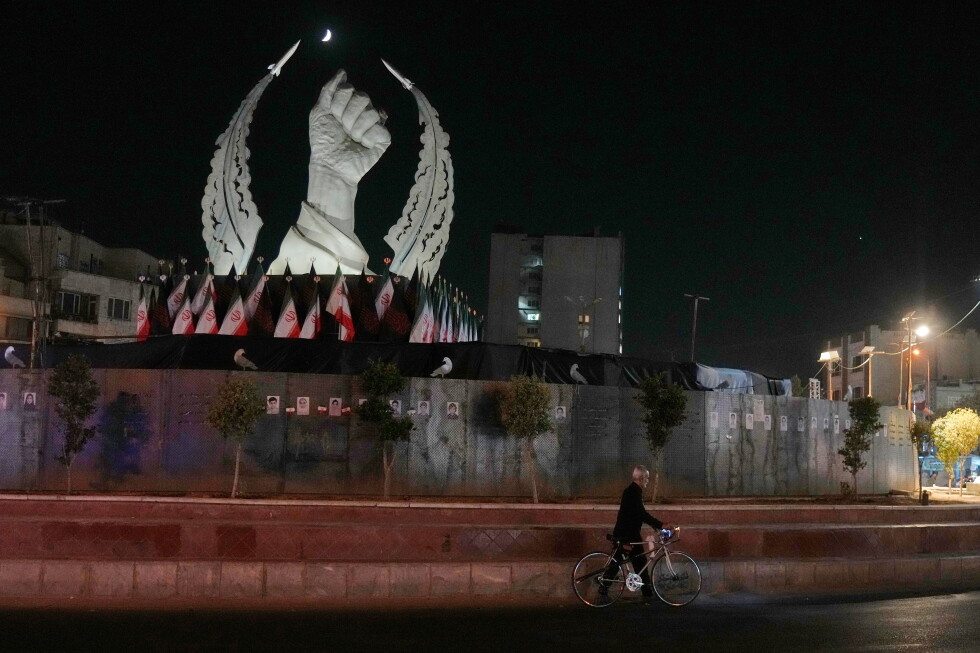
In the early hours of Monday, the United States launched a fresh wave of airstrikes targeting Iran, marking nine straight nights of sustained bombardment, just one day after the Pentagon confirmed the death of a third American service member killed in recent regional attacks. The rapid escalation of hostilities comes as a previously brokered interim ceasefire deal, negotiated to lay the groundwork for a permanent end to conflict between the two nations, has completely collapsed, leaving the Middle East on the brink of a wider regional war that threatens to draw in neighboring Israel and key U.S. allies across the Gulf.
The latest American service member death was announced Saturday, after the service member was killed in Iraq while conducting a controlled detonation of a downed Iranian drone that had entered coalition-controlled territory. This fatality followed a deadly Iranian attack on U.S. troops stationed in Jordan that killed two service members; remains found during recovery operations for a missing service member from that strike were confirmed on Sunday, bringing the total number of U.S. service members killed since the outbreak of hostilities to 17.
U.S. Central Command, which oversees American military operations across the Middle East, confirmed in an official statement that Monday’s strikes continued a campaign focused on degrading Iranian military capabilities that Tehran has used to target commercial shipping and civilian mariners moving through the Strait of Hormuz, the world’s most critical chokepoint for global energy supplies. Shortly after the new strikes began, the British military reported a large ship caught fire off the coast of Oman in the Strait of Hormuz, a route Washington has encouraged commercial vessels to use to avoid Iranian interception. The cause of the blaze remains unconfirmed as of Monday morning.
Tehran has responded to the ongoing U.S. bombardment with retaliatory strikes targeting U.S. allied states across the Middle East, drawing Jordan, Bahrain, Kuwait and other Gulf nations directly into the escalating conflict. Early Monday, Iran fired a barrage of missiles toward Jordanian territory, prompting Jordan’s military, which hosts major U.S. military bases and relies on American air defense support, to shoot down multiple incoming projectiles. Jordanian officials confirmed no casualties or damage from the strike, and later summoned Iran’s top diplomatic representative in Amman to issue a formal protest.
The missile strike toward Jordan prompted Israeli security officials to issue a rare warning, noting that falling debris from intercepted missiles could cross into Israeli territory, marking the first time Israeli civilians have faced air raid warnings in weeks. Two Israeli air defense interceptors were launched on the outskirts of Eilat, the Israeli coastal city adjacent to Jordan’s port of Aqaba, the target of the Iranian strike, to neutralize any rogue debris.
Across the Gulf, Bahrain activated its air defense systems early Monday and the U.S. embassy in Manama issued an emergency security warning alerting American personnel to potential Iranian targeting of unspecified sites in the capital. Kuwait also confirmed that one of its key power and water desalination plants, a critical piece of civilian infrastructure that supplies nearly 90% of the country’s drinking water, was attacked for the second time in 48 hours, causing significant fires but leaving the national power grid stable.
In a revelation that adds new urgency to global nuclear non-proliferation concerns, Iran’s state-run television reported Sunday that U.S. strikes hit the construction site of the planned Darkhovin nuclear power plant in southwestern Iran. Satellite imagery captured by Planet Labs PBC on July 9 shows the site remains in early stages of development, with only preliminary earth clearing completed. The International Atomic Energy Agency, the United Nations’ nuclear watchdog, confirmed that during its most recent inspection, the site contained no nuclear material. Iran had not previously reported any strike on the facility to international observers.
Jasem Mohamed al-Budaiwi, secretary-general of the six-nation Gulf Cooperation Council, has publicly condemned Iran for targeting critical civilian infrastructure, accusing Tehran of committing war crimes. Under international humanitarian law, civilian sites including power plants, water facilities and bridges are generally protected from deliberate attack, though they lose that protection if repurposed for military use. Even in those cases, attacking forces are required to minimize civilian harm and ensure strikes are proportionate to the military objective. The U.S. has similarly targeted Iranian bridges and electrical facilities as part of its nine-day bombing campaign, drawing criticism from humanitarian groups for the risk to Iranian civilians.
The fight for control over the Strait of Hormuz remains at the core of the ongoing conflict. Before the outbreak of war, roughly one-fifth of the world’s global oil supplies transited the narrow waterway each day, making any disruption to shipping a major threat to global energy markets. U.S. President Donald Trump has publicly threatened to target Iran’s critical civilian infrastructure including power stations and bridges to force Tehran to back off its claims to control the strait, and recent U.S. targeting indicates the administration is following through on that threat. Over the past week, the U.S. Navy has reimposed a full naval blockade on Iranian ports to halt all Iranian crude oil exports, with military officials reporting Saturday that six tankers have been redirected and one Iranian vessel disabled since the blockade began.
A maritime safety body overseen by the U.S. Navy issued an updated advisory Sunday warning that the threat to commercial mariners transiting the region remains severe, with deliberate hostile action against shipping considered highly likely. Shipping activity through the strait has fallen to a fraction of pre-war levels: just eight ships completed transits on Saturday, and only three did so on Friday, compared to a pre-war daily average of nearly 140. The near-standstill in traffic has already sent ripple effects through global energy markets, pushing fuel prices higher and hurting some of the world’s most vulnerable economies that rely on affordable energy imports.
Iran’s Supreme Leader Mojtaba Khamenei issued a stern warning to the U.S. in a public statement Saturday, saying that continued attacks on the Islamic Republic will result in “unforgettable lessons” for Washington. An Iranian nuclear negotiator also confirmed that Tehran is suspending all its commitments under the previously agreed interim ceasefire deal, accusing the U.S. of being the first to violate the agreement. The 60-day window set out by the interim deal to negotiate a permanent end to hostilities and resolve outstanding disputes over Iran’s nuclear program is now past its halfway point, with no signs of renewed diplomatic progress.
Iranian authorities reported Sunday that at least 50 Iranian civilians and personnel have been killed in the latest round of U.S. airstrikes, with another 517 people wounded. Tehran has not yet released any official figures on overall material losses from the nearly two weeks of sustained exchange of fire.