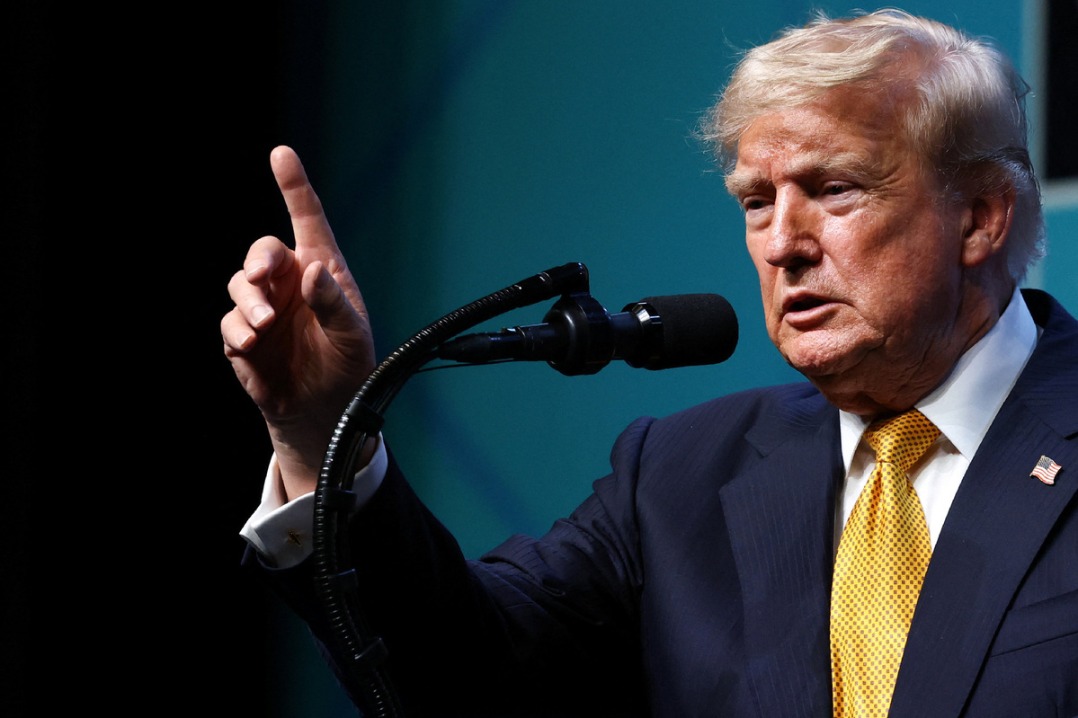
The 2026 NATO summit wrapped up in Ankara, Turkiye on July 8, with leaders of the 32-member alliance formally reaffirming their longstanding pledges to collective defense. Yet behind the carefully crafted statements of unity, explosive and disruptive comments from US President Donald Trump laid bare growing rifts between Washington and its European allies, leaving the future of the 70-plus-year-old trans-Atlantic alliance shrouded in uncertainty.
At the heart of the friction is the decades-long dispute over defense burden-sharing, which has escalated into a fundamental clash of priorities under Trump’s tenure. Repeating familiar criticisms that the United States bears an unfair share of NATO’s collective costs, Trump made his frustrations explicit during remarks in Ankara. “Despite the fact that I’m very upset with NATO, that we pay far, far too much, billions and billions of dollars too much — because it’s unfair — we protect them, but they’re not there for us,” he told reporters. Beyond budget demands, the US president expanded his rhetorical attacks: he revived his controversial call for the United States to take control of Greenland, an autonomous territory of NATO member Denmark; publicly rebuked Spain over its defense spending levels and stance on the ongoing Iran conflict; and even threatened to impose a full trade embargo on Madrid.
These remarks stood in stark opposition to efforts by NATO Secretary-General Mark Rutte and European alliance leaders to project a unified front to global audiences. The public confrontation underscored how the trans-Atlantic relationship has shifted from a strategically aligned partnership to an increasingly transactional arrangement, with widening gaps on everything from burden-sharing to core strategic priorities.
Analysts note that the split over defense spending is deeply tied to overlapping domestic political and economic pressures across Europe, where leaders face difficult trade-offs between military investment and domestic welfare. Tom Harper, a lecturer in international relations at the University of East London, explained that European governments face significant political backlash if higher military outlays come at the expense of core public services. “If increased defense spending coincides with cuts to social services and education, this will likely impose domestic costs on European governments, which they may be unwilling to pay, especially should they be facing election campaigns,” Harper said, framing the debate as a modern iteration of the classic “guns versus butter” trade-off. He added that the economic benefits of higher European defense spending would flow disproportionately to the United States, noting that major American defense contractors are often positioned to win the bulk of new procurement contracts, a dynamic that helps explain Washington’s persistent pressure for higher spending.
Matthew Arnold, a policy analyst and visiting fellow at the London School of Economics and Political Science, echoed this concern, questioning whether many NATO members can actually sustain the significantly higher defense spending that Trump has demanded. “The fiscal concerns are serious,” Arnold said, warning that sustained military spending increases would worsen already high public debt burdens and deepen social tensions across the continent, while the immediate gains of new procurement would overwhelmingly benefit US-based firms.
Beyond budget disputes, experts warn that NATO now faces a fundamental challenge to its long-term cohesion, with mounting risks of a legitimacy crisis for the alliance. Lawrence Loh, director of the Center for Governance and Sustainability at the National University of Singapore Business School, noted that the summit unfolded at a critical turning point for the bloc. “The NATO summit comes at a critical time when the alliance faces an emerging legitimacy crisis,” Loh said. “With pressure from Trump, NATO risks bowing to this strongman’s demands for increased defense spending. It is evolving into a transaction grouping of countries that weigh their respective interests with just one member — the US.”
Loh added that NATO is simultaneously navigating overlapping challenges: European economies are grappling with slowing growth, the continent faces rising political fragmentation and strained social integration, and the alliance has drawn widespread criticism for its limited effectiveness in addressing ongoing conflicts across the Middle East. “All in all, NATO is now caught between a rock — the US — and a hard place, which is all the region-based anguishes in Europe,” he said.
Many analysts agree that Trump’s confrontational approach will likely accelerate a long-building push for greater European strategic independence, reshaping the alliance’s fundamental structure over the coming decade. Angel Saz-Carranza, director of the EsadeGeo Center for Global Economy and Geopolitics in Spain, noted that gradual rebalancing of the trans-Atlantic relationship is already underway. “Reliance on the US will diminish as European Union capabilities increase, which will gradually rebalance the trans-Atlantic relationship,” he said.
Pedro Brinca, an associate professor of macroeconomics at Nova School of Business and Economics in Portugal, also expects NATO to shift toward a more European-led character over time. But he cautioned that Europe’s ability to take on greater defense responsibilities depends not just on increasing spending, but on improving the efficiency of that spending. Fragmented national procurement processes deliver far less collective security than coordinated cross-European investment, Brinca noted.
When NATO leaders departed Ankara, their final joint statement included a line noting leaders “look forward to our next meeting” — but crucially, the document did not commit to a specific date for the next summit, a small omission that underscores the deep uncertainty hanging over the alliance’s near-term future. While leaders reaffirmed their commitment to collective defense in public statements, the summit made clear that NATO’s greatest challenge is no longer only external military threats, but sustaining political trust and cohesion among its own member states.