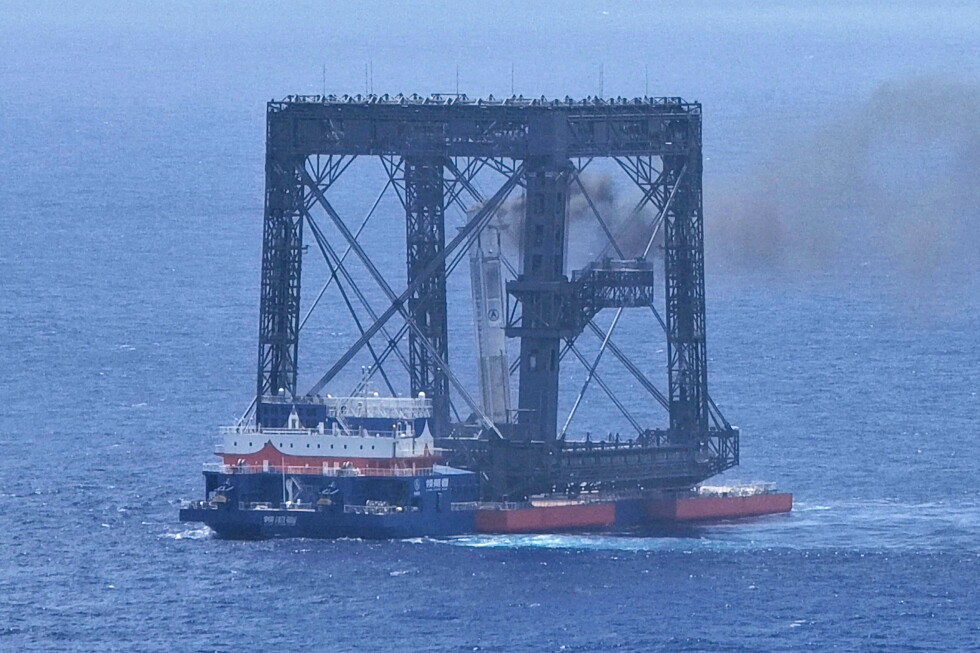
In a landmark milestone for China’s expanding space exploration program, the nation has successfully completed the first-ever recapture of a rocket’s first stage following a weekend launch, state media confirmed Friday. The recovered booster belonged to the Long March-10B launch vehicle, which separated its first stage from the second upper stage moments after lifting off from the southern coastal spaceport on Hainan Island, a renowned tropical beach tourism destination. After separation, the first stage executed a controlled descent and landed safely on a pre-positioned maritime recovery platform in the open ocean, according to China’s official Xinhua News Agency.
This breakthrough puts China in a small group of nations capable of reusable rocket technology, a development pioneered years ago by U.S. private space firm SpaceX that has transformed the global launch industry by drastically cutting mission costs. By reusing the first-stage booster — the most powerful and expensive component of a launch vehicle that carries payloads out of the lower atmosphere — space agencies and private companies can avoid building entirely new rockets for every mission, bringing down overhead and increasing launch frequency.
Per Xinhua’s specifications, the reusable Long March-10B is designed to deliver a maximum payload of 16,000 kilograms (roughly 35,275 pounds) to low Earth orbit, the region of space within 2,000 kilometers of Earth’s surface that hosts most commercial satellites, the International Space Station, and other crewed missions. For comparison, SpaceX’s workhorse Falcon 9 rocket lists a maximum low Earth orbit payload capacity of 22,800 kilograms (approximately 50,265 pounds) on the company’s official website, and the Falcon rocket fleet has routinely ferried astronauts and critical cargo resupplies to the International Space Station for NASA for nearly a decade.
Industry analysts note that this successful recovery marks a critical turning point for China’s space program, opening the door to lower-cost, more frequent access to space that can support the nation’s growing ambitions in satellite deployment, lunar exploration, and future crewed deep space missions.