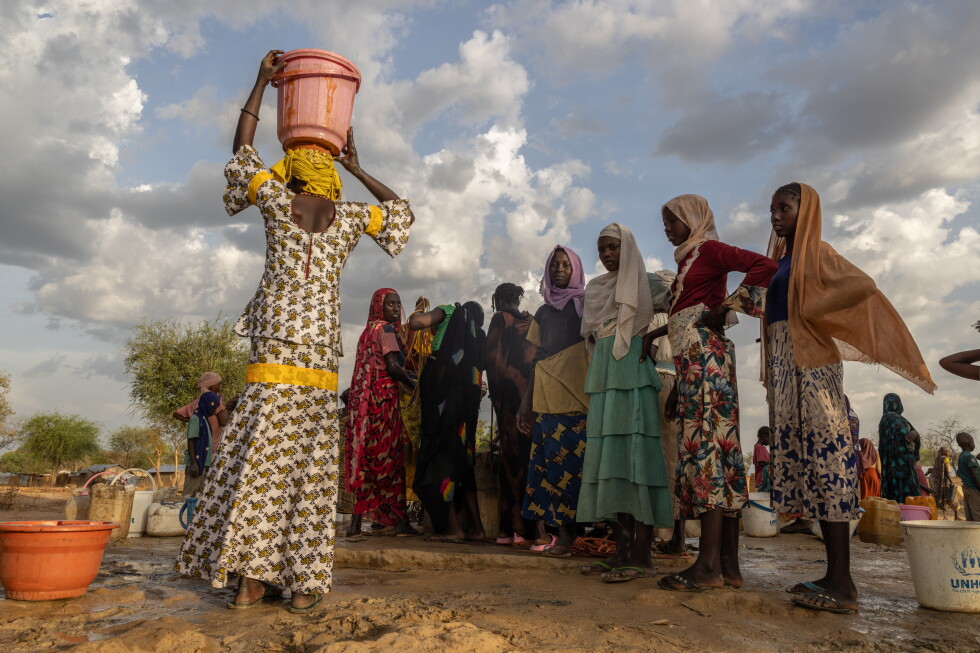
GENEVA – In a stark briefing held Friday, the United Nations Entity for Gender Equality and the Empowerment of Women (UN Women) delivered alarming findings showing that widespread funding cuts over the past 18 months have stripped at least 1 million women and girls of access to life-saving humanitarian aid and essential support services.
The crisis traces directly to policy shifts implemented after the Trump administration took office in January 2025. As the United States remains the single largest contributor to the United Nations’ overall budget, the administration’s rollback of global foreign assistance has triggered cascading disruptions across U.N. humanitarian programs. Eighty-four percent of women’s organizations surveyed by UN Women confirmed that demand for their services has risen sharply since the new U.S. policy took effect, even as their operating budgets have shrunk.
“Every dollar pulled out of women’s organizations is a dollar taken away from survivors of conflict-related sexual violence, displaced mothers, girls forced out of school, and communities fighting to stay alive,” stated Sofia Calltorp, UN Women’s head of humanitarian action, during a press conference in Geneva.
UN Women’s research drew responses from 855 women’s organizations operating across 52 countries, painting a grim portrait of systemic breakdown. The data shows 89% of these groups can no longer meet the growing demand for services from vulnerable women and girls, forcing frontline organizations to turn away people in need. One out of every five surveyed groups warned they will likely suspend operations permanently or temporarily within the next 12 months.
Calltorp emphasized that the recorded figure of 1 million women affected is almost certainly an underestimate of the true scale of harm. “We know that this number, at least 1 million women and girls, is just the tip of the iceberg,” she said.
The report arrives amid broader global aid contraction that is worsening already dire conditions for at-risk populations globally. UN Women noted that conflict-related sexual violence incidents doubled worldwide over the past year, just as OECD data revealed a 24% drop in global development assistance—from previous levels to $174 billion, marking the largest single-year decline in development aid on record. The OECD is a research and policy collective made up of 38 primarily developed nations.
“Without immediate action to reverse these cuts, the organizations that have kept women and girls alive through the world’s worst crises risk becoming another casualty of war,” Calltorp added.
Funding shortfalls triggered by U.S. cuts and reductions from other major donor nations have already forced multiple U.N. agencies to slash thousands of staff positions and scale back life-saving aid programs across every region of the world. Amid a broader U.N. restructuring effort labeled UN80, top U.N. officials are currently evaluating a proposal to merge UN Women with the United Nations Population Fund (UNFPA), the agency focused on global sexual and reproductive health rights.