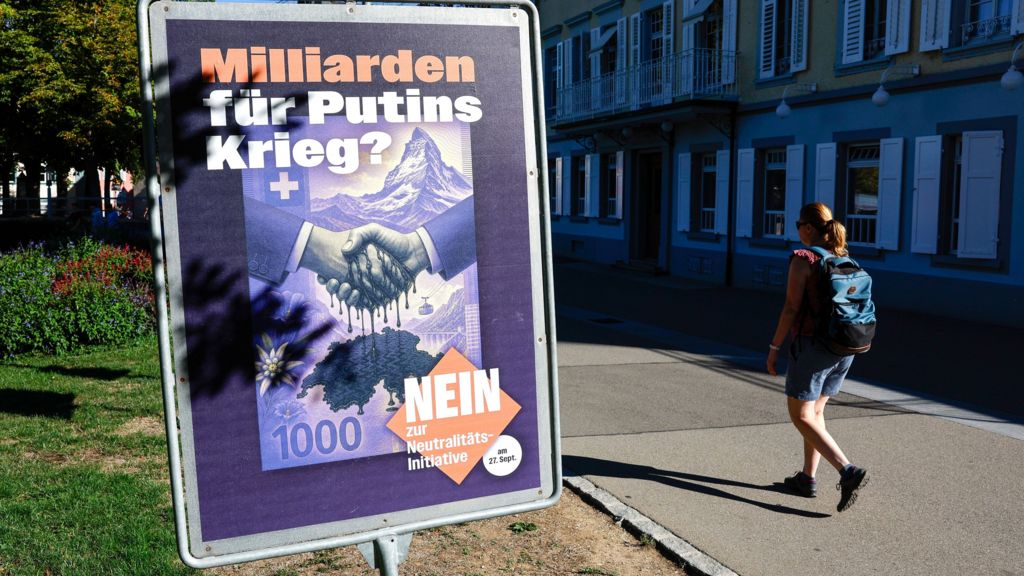
In a landmark vote that has reshaped the global conversation around one of the world’s oldest traditions of state neutrality, Swiss voters have delivered a resounding defeat to a controversial initiative that would have tightened legal constraints on the country’s long-standing non-aligned foreign policy. Official results confirm more than 70 percent of participating electorate rejected the proposal, which would have required Switzerland to secure formal approval from the United Nations before enacting any international sanctions, while also barring the nation from pursuing deeper cooperation with the NATO military alliance. The ballot initiative, backed by the right-wing Swiss People’s Party (SVP), drew open public support from the Russian government in the midst of Moscow’s full-scale invasion of Ukraine – a conflict that has reignited long-simmering debates over how a centuries-old neutral framework should adapt to modern European security challenges. The proposal was uniformly opposed by Switzerland’s federal government and every other major political party across the national ideological spectrum, whose leaders argued that rigid constraints on sanctions policy would undermine the nation’s ability to respond to acts of international aggression. For context, Switzerland’s formal status of “eternal neutrality” was first codified at the 1815 Congress of Vienna, a post-Napoleonic European settlement that recognized the country as a neutral buffer amid competing great power blocs. The legal parameters of this neutrality were further solidified in the 1907 Hague Convention, which enshrines a permanent ban on Swiss arms sales to nations engaged in active conflict, a policy still in place today that led Bern to reject a German request for tank ammunition bound for Ukraine in recent months. Unlike many European nations, Switzerland maintained formal neutrality throughout World War Two, though this period remains controversial: the country infamously accepted Nazi-looted gold deposited in Swiss banks and turned away tens of thousands of Jewish refugees fleeing Nazi persecution to avoid triggering a German invasion. The Swiss government formally apologized for these actions in the 1990s. Commenting on the results, Lukas Golder, co-director of leading Swiss research institute Gfs.bern, told public broadcaster SRF that the outcome was not a rejection of Swiss neutrality itself, but a clear signal that voters support maintaining targeted sanctions against Russia over its invasion of Ukraine. “People have a clear idea of what Switzerland’s neutrality is supposed to achieve,” Golder explained. Ahead of the vote, Swiss Foreign Minister Ignazio Cassis emphasized in a national televised debate that the country’s approach to neutrality has always been rooted in pragmatic flexibility. While Cassis confirmed that the country has no plans to abandon its long-standing ban on arms sales to conflict zones including Ukraine, he stressed that neutrality does not amount to moral indifference in the face of aggression. “We will not look away when we see violations of the very international rules that allow us to live in peace,” Cassis said. The vote highlights the unique nature of Swiss direct democracy, a system that regularly puts major national policy decisions directly to the electorate via binding referenda rather than leaving them exclusively to elected lawmakers. The result makes clear that a large majority of Swiss voters support the current flexible approach to neutrality that allows Bern to join international sanctions campaigns against aggressor states, even as it maintains its formal non-aligned status and ban on arms exports.