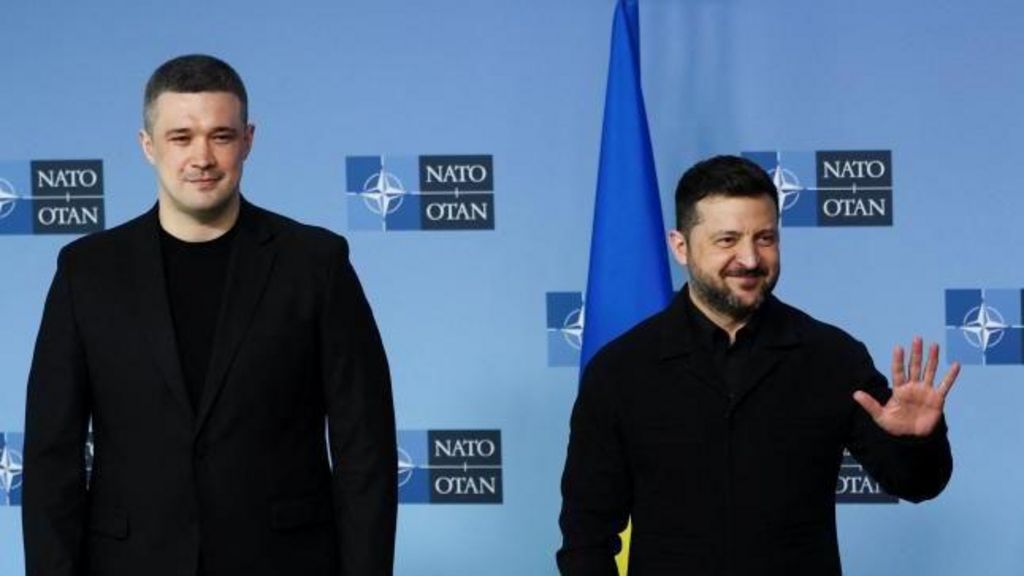
A high-stakes power struggle between Ukraine’s recently removed defense minister Mykhailo Fedorov and President Volodymyr Zelensky has yet to be resolved, days after Fedorov’s dismissal sparked widespread public unrest across the country. Fedorov, a 35-year-old reformer widely credited for overhauling Ukraine’s military capabilities amid the ongoing war with Russia, has rejected a proposed alternative cabinet position from Zelensky, and is demanding his former post as defense minister be restored.
In an official statement released to journalists this week, Fedorov confirmed he turned down Zelensky’s offer of deputy prime minister for military innovation. The ousted minister argued that only three state positions directly shape the trajectory of Ukraine’s war effort: the presidency, the defense minister role, and the commander-in-chief of the armed forces. No other post, he insisted, would give him the authority needed to continue advancing the strategic plan his team developed to bring the war to a successful conclusion.
Fedorov was appointed defense minister in January 2025, and quickly emerged as a popular figure for his data-driven military reforms, anti-corruption initiatives, and the widely successful Army of Drones program that has transformed Ukraine’s strike capabilities against Russian targets. In his statement, he outlined that his six-month tenure has already shifted battlefield momentum in Ukraine’s favor, opening a rare window of opportunity to force Russia into negotiated peace through military strength. “I have never sought any personal post or status,” Fedorov emphasized. “I only want the opportunity to really influence the outcome and bring Ukraine’s victory closer.”
Zelensky’s decision to remove Fedorov from his post last week triggered mass street demonstrations across Ukraine. Public pressure later forced Zelensky to dismiss commander-in-chief Oleksandr Syrskyi, a 60-year-old veteran officer who had publicly clashed with Fedorov over the need for radical military reform. Syrskyi, who led the successful 2022 defense of Kyiv during the early days of Russia’s full-scale invasion, had grown increasingly unpopular among many Ukrainians who viewed his Soviet-era command style as incompatible with modern, innovation-driven warfare. He was replaced by the younger, highly regarded Mykhailo Drapatyi.
However, protesters have rejected this step as insufficient, vowing to continue demonstrating until Fedorov is reinstated. While the public broadly welcomed Syrskyi’s removal, widespread frustration remains over Zelensky’s original decision to oust the popular defense minister. Fedorov has already been replaced in the role by Yevhenii Khmara, a former senior official with Ukraine’s Security Service (SBU).
It remains unclear whether the standoff can still be resolved through negotiation. Presidential adviser Dmytro Lytvyn confirmed that discussions between Fedorov and Zelensky’s team are still ongoing, noting that “it would be inappropriate to disclose details at this stage.”
Political observers note that the current impasse highlights growing divisions within Ukraine’s wartime leadership over military strategy and reform. While Fedorov and his supporters credit his reforms for Ukraine’s recent battlefield gains, some analysts push back, noting that current advances like deep drone strikes into Russia were rooted in planning developed more than a year ago during Syrskyi’s tenure. Even so, polling and public protests make clear that Fedorov retains broad popular support, with many Ukrainians viewing him as indispensable to the country’s war effort. The unresolved battle of wills between Zelensky and Fedorov leaves a major leadership gap at a critical moment when Ukraine is capitalizing on newfound battlefield momentum, creating uncertainty for the country’s wartime leadership.