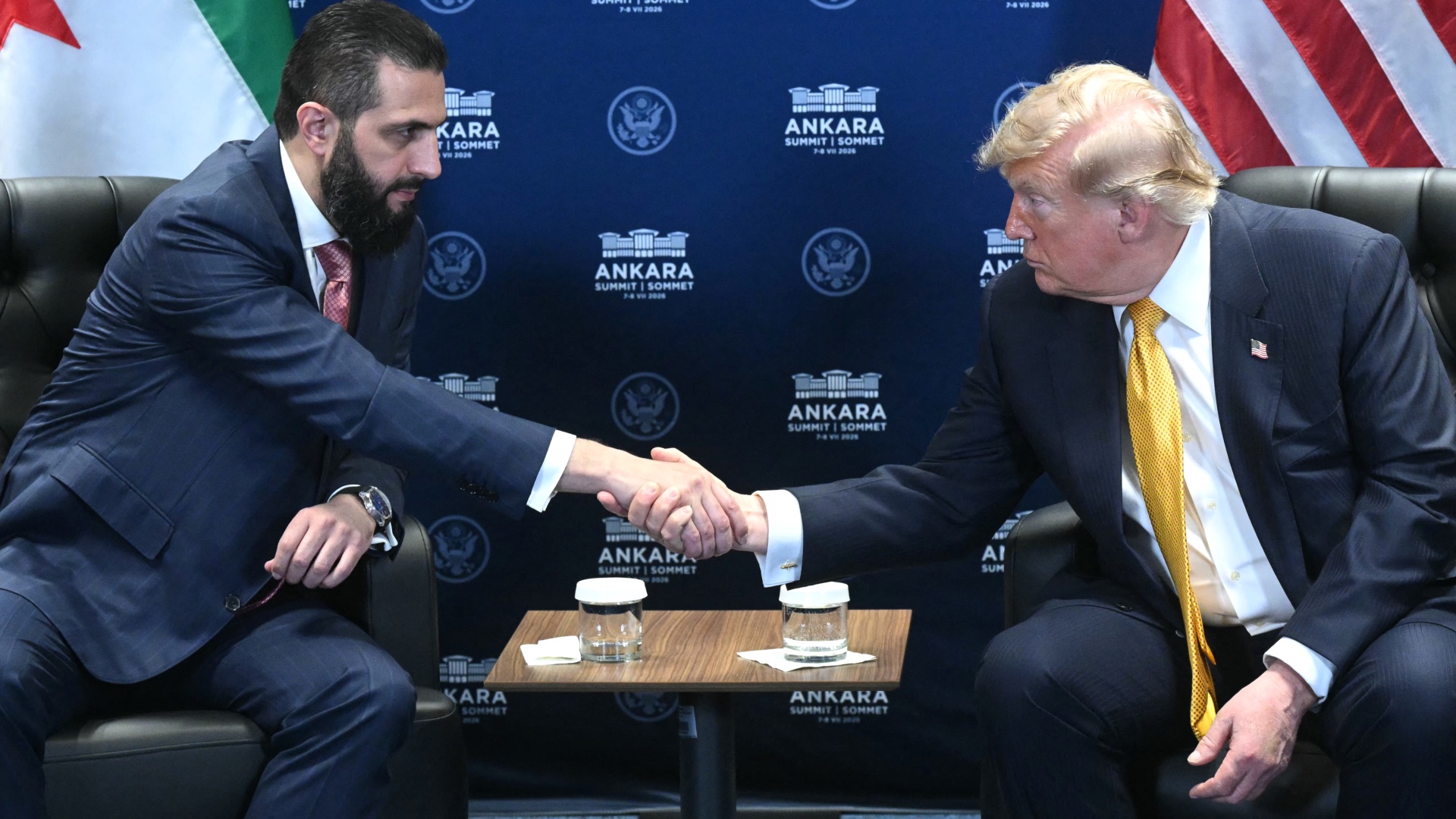
During U.S. President Donald Trump’s high-profile visit to Ankara, Turkey this week, one decision stands out as the most consequential outcome of his diplomatic engagements: on Wednesday, the United States formally initiated the process to strike Syria from its State Sponsors of Terrorism (SST) designation list.
Syria was first added to the SST roster back in 1979, and currently only four nations remain on the list: Cuba, Iran, North Korea, and Syria, which is set to be the first to exit in decades. U.S. Secretary of State Marco Rubio framed the step as a landmark move by the Trump administration to open a new future for the Syrian population.
“Lifting the restrictions tied to this designation will unlock international trade and foreign direct investment, create opportunities for Syria to rebuild its war-ravaged infrastructure and institutions, and open a new chapter for the Syrian people,” Rubio said in an official statement. “A stable, unified Syria that is at peace internally and with its neighbors benefits not just the Middle East region, but the entire global community.”
Beyond its symbolic weight, the de-listing will immediately roll back long-standing U.S. export restrictions on defense-related goods and clear the way for increased American foreign assistance to Syria. This support can extend to capacity-building for the Syrian military and local police forces, as the country works to stabilize after 14 years of devastating civil conflict. The process was triggered Wednesday when Trump submitted formal notification of his intent to rescind Syria’s designation to Congress, kicking off a mandatory 45-day waiting period before the change takes full effect.
Natasha Hall, an associate fellow in the Middle East and North Africa programme at London-based think tank Chatham House, called the policy shift “earth-shifting” for Syria in an interview with Middle East Eye. She noted that the SST designation stood as one of the last major remaining barriers to Syria’s long-awaited economic recovery. For the Syrian American Council, a advocacy group that has long campaigned for the de-listing, the announcement was greeted with deep gratitude. Alberto Hernandez, the group’s grassroots officer, argued the move represents a clear victory for U.S. national security, framing it as the correct approach to renewed diplomatic engagement with Damascus.
On Capitol Hill, the proposal has seen unusual cross-bloc support. Hall noted that Republican Party leadership has largely aligned with the Trump administration’s foreign policy priorities on this issue, even when unplanned. On the Democratic side, Senate Foreign Relations Committee top member Jeanne Shaheen joined Senator Elizabeth Warren in penning a joint letter to Trump last week urging him to proceed with de-listing, emphasizing that the designation remained “the most significant remaining legal impediment to Syria’s reconstruction.”
Rubio confirmed that the U.S. has secured formal written assurances from new Syrian President Ahmed al-Sharaa that his government will not back any acts of international terrorism moving forward. Wednesday’s announcement came just hours after Trump and Sharaa held a high-profile bilateral meeting on the sidelines of the NATO summit in Ankara, where Trump offered unusually positive public remarks, calling Sharaa “fantastic” and “highly respected.”
Sharaa’s rapid ascent to diplomatic acceptance with the U.S. is unprecedented: a little over a year ago, he was first introduced to Trump in Riyadh, Saudi Arabia, and by November 2024, he was exchanging gifts with the U.S. president in the Oval Office. No Syrian leader – particularly one who was once labeled a terrorist by the U.S. – has stepped foot in the White House for decades. Sharaa’s rise to power has been backed heavily by Turkey, which has sought to build a pro-Ankara government in its neighboring Syria since late 2024.
Hall notes that Trump’s quick willingness to embrace Sharaa is one of the most notable foreign policy pivots of the past year, a step that she argues no other recent U.S. president from either major political party would have taken. While the de-listing is expected to be widely celebrated by ordinary Syrians emerging from years of conflict and the Assad era, Hall points out that many Syrian civil society activists have expressed disappointment that the policy shift did not include stronger U.S. demands for political inclusion, accountability for past human rights abuses, and other reforms that activists have long demanded.
Despite these concerns, Hernandez argues that the move aligns with the Trump administration’s shifting global priorities, which now focus heavily on great power competition with China and instability in Latin America. A stable Syria removes the need for ongoing U.S. military and diplomatic engagement in the Middle East, he said, which ultimately serves American national security interests. “If the Middle East is unstable and requires U.S. military or political handholding, that is to our collective countries’ detriment. So for Syria to be strong and stable, that benefits the U.S. national security interests,” Hernandez explained.
The de-listing process formalized Wednesday builds on an executive order Trump issued in June 2025 that ordered initial sanctions relief for Syria, in response to what the White House describes as positive governance changes and counterterrorism actions taken by Sharaa’s new government, alongside the formal security assurances provided by Damascus. “Today marks a significant milestone in the revived US-Syria bilateral relationship and in Syria’s history as a nation,” Rubio said. “We commend the government of Syria for charting a new course and look forward to enhancing our partnership with Syria and its people.”