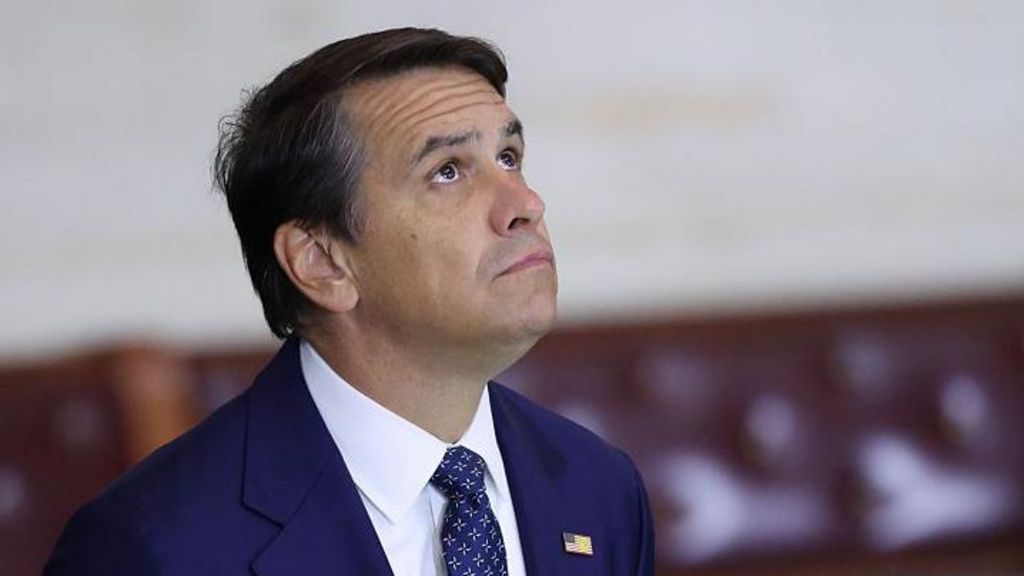
A high-stakes political standoff has stalled the confirmation of Todd Blanche, the acting United States Attorney General, for the permanent post, as former President Donald Trump floats a controversial plan to temporarily pull his nomination and reintroduce it after two opposing Republican senators leave office.
Blanche, who has filled the role of the nation’s top law enforcement officer in an acting capacity since April, requires full backing from all Republican members of the Senate Judiciary Committee to move his confirmation forward. But two GOP senators—John Cornyn of Texas and Thom Tillis of North Carolina, both of whose current terms end in January next year—have refused to support his nomination over a scrapped $1.8 billion compensation plan for allies of Trump.
The fund, labeled the “anti-weaponization fund” by the Trump administration, was created earlier this year to resolve a personal lawsuit Trump filed against the Internal Revenue Service over the unauthorized leak of his confidential tax returns. If enacted, the fund would have allowed Trump associates to file claims for financial compensation for what they frame as politically biased prosecutions carried out during prior Democratic administrations. The proposal sparked immediate bipartisan backlash from lawmakers on both sides of the aisle, who criticized it as a misuse of federal funds for political favor. Blanche, who led negotiations for the plan, ultimately walked away from the deal, and a federal judge later formally blocked the fund, ruling it raised serious concerns over violations of federal ethical guidelines.
Now, Cornyn and Tillis are demanding a written guarantee from Blanche that the Department of Justice will not revive the fund at any point in the future. As of press time, the Trump administration has not issued that public commitment. Blanche held a closed-door meeting with the two senators on Thursday, but no details of a potential agreement have emerged. Tillis laid out his opposition publicly, saying “The only logical conclusion I can draw from this setback is that, in fact, there is somebody who wants to enable [the fund] at the right time. This is unacceptable.”
Trump, for his part, has issued a blunt response to the blockade, saying he is open to temporarily withdrawing Blanche’s nomination if the two senators do not reverse their position, with plans to re-nominate him after their terms end in January. But Trump’s proposal faces a major, immediate obstacle: Democrats are widely forecast to flip control of the Senate in November’s midterm elections, which would all but kill any chance of confirming Blanche after the new Congress is seated.
Under current federal rules, acting officials can hold vacant cabinet positions for up to 210 days, and may continue to serve in an acting capacity while the Senate confirmation process remains ongoing. That means even if Democrats retake the Senate majority in November, Blanche could theoretically retain his post as Attorney General for a prolonged period.
Current polling forecasts show Democrats are heavily favored to flip the U.S. House of Representatives, but the battle for Senate control remains far closer. In North Carolina, Democratic candidate Roy Cooper holds a consistent lead over his Republican challenger in the race to replace Tillis. In Texas, Cornyn was already ousted in the Republican primary by state Attorney General Ken Paxton, who earned a public endorsement from Trump. Paxton, who has faced multiple high-profile ethics scandals over his career, will face Democratic candidate James Talarico in November, with polling showing the race is currently a toss-up.
This blockade marks the latest instance of Trump’s cabinet nominees facing opposition from within his own party. In November 2024, Trump initially tapped former Congressman Matt Gaetz for the Attorney General post, but was forced to scrap the nomination within days over widespread Republican opposition. Two of Trump’s nominees to lead the Centers for Disease Control and Prevention have also failed to secure enough support for confirmation in the Senate.