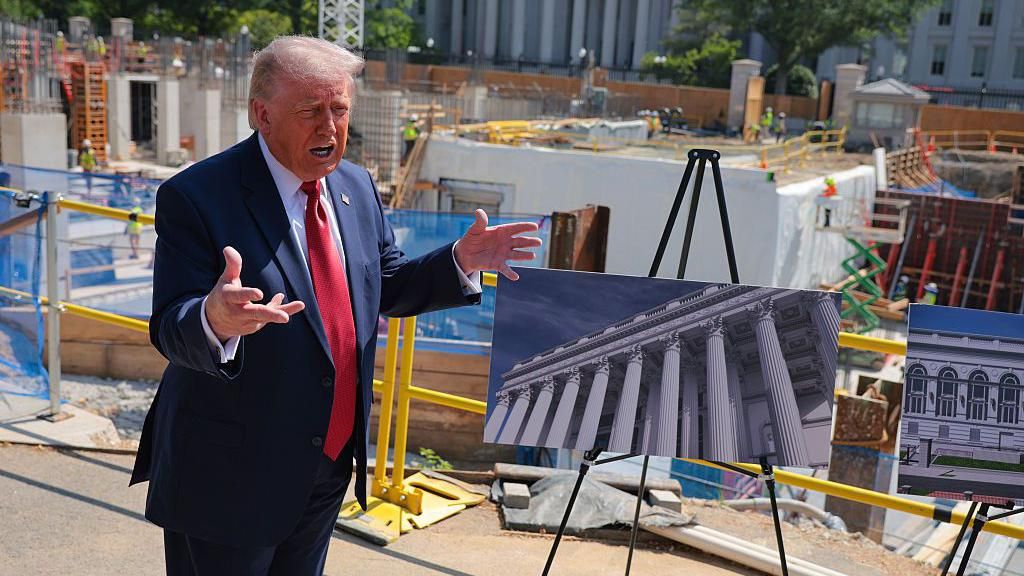
A high-stakes legal battle over a $400 million unapproved ballroom construction project at the White House has reached the U.S. Supreme Court, as President Donald Trump’s administration is pushing emergency action to allow work to continue past an upcoming construction halt deadline.
The conflict dates back to October of last year, when the Trump administration moved forward with demolition of the White House East Wing to launch the project without securing required congressional authorization or completing mandatory federal historic and land-use review processes. The National Trust for Historic Preservation quickly filed a lawsuit challenging the project’s legality, arguing that skipping the mandatory review — which includes opportunities for public comment and approval from the National Capital Planning Commission and other regulatory bodies — violates federal law.
Last week, a federal appeals court upheld the lower court’s ruling that ordered construction to pause pending congressional and regulatory approval, with the stop-work mandate set to take effect on August 21. Now, the Trump administration has submitted an emergency application to the Supreme Court, requesting that the construction halt be put on hold while the administration appeals the appeals court’s ruling.
In the emergency filing submitted Friday, Solicitor General D. John Sauer argued that allowing the stop order to take effect when the project is already 65 percent complete would be deeply inequitable, and framed the paused construction as “dangerous.” Sauer also argued that forcing the president to seek congressional approval to upgrade White House security would give the legislative branch improper, dangerous leverage over executive branch safety. He described the impending halt as “construction-by-injunction,” writing that “With the dangerous injunction poised to take effect for the first time on August 21, its stop-work mandate is even more flagrantly inequitable, if not impossible.”
President Trump has defended the project from its launch, arguing that the White House currently lacks a sufficiently large venue to accommodate major national and international events, and that the expansion is critical to bolstering on-site national security. Beyond the ballroom, the administration says the project includes new national security and emergency infrastructure, including hardened bomb shelters and on-site medical facilities for use during crises.
The administration has also pushed back on legal challenges by claiming that no congressional approval is required because the entire $400 million price tag is being covered by private corporate donations, not taxpayer funds.
This ballroom project is not the only controversial infrastructure initiative tied to Trump’s broader plan to reshape Washington D.C.’s iconic cityscape. The president has also overseen a renovation of the Lincoln Memorial Reflecting Pool and has proposed building a massive “Arc de Trump,” modeled after Paris’ iconic Arc de Triomphe. All of these projects have faced repeated allegations that the administration skipped legally required public comment and environmental and historic review processes, claims the president has consistently denied.