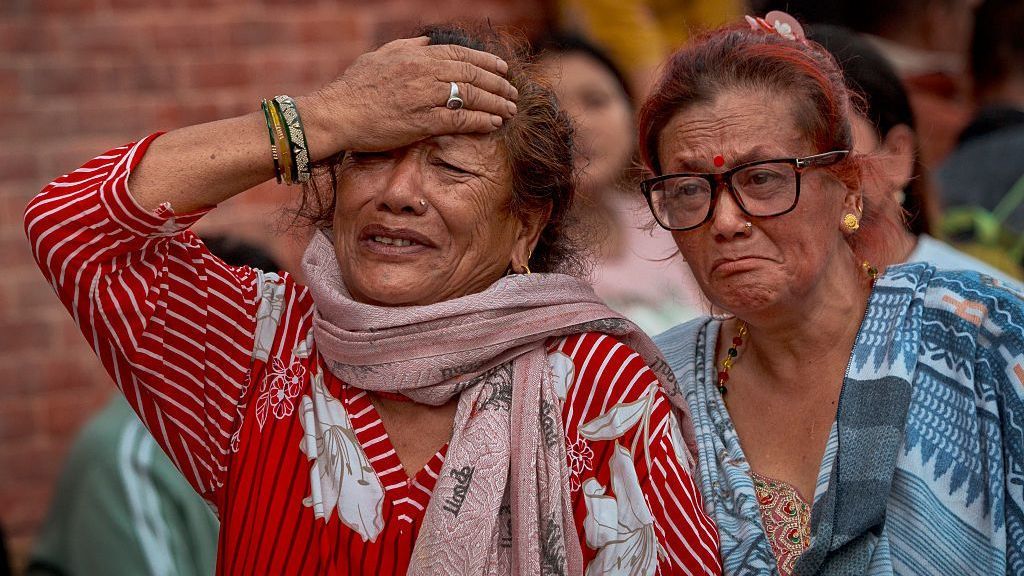
It has been seven days since a catastrophic glacial-collapse-triggered flash flood tore through the cross-border Himalayan valley along the Nepal-Tibet boundary, leaving a trail of widespread destruction and a massive number of unaccounted-for people as rescue teams race against time to locate any remaining survivors before shifting fully to recovery operations.
Official death tolls released by relevant authorities paint a grim picture of the disaster’s impact. Nepal’s national disaster management agency confirms that at least 1,114 people have lost their lives across Nepali territory, with close to 4,000 more still listed as missing. On the Tibetan side of the border, Chinese state media reports 16 confirmed fatalities and more than 500 people unaccounted for, with no survivors reported to date even as search work continues.
Access to the full scope of damage in Tibet remains limited, as the Chinese government maintains strict travel restrictions for foreign journalists in the region, meaning all public information about the disaster there comes exclusively through official state media outlets. While Beijing has confirmed the devastation along the border, few detailed updates on victim identities or the full impact on local rural communities have been released to the global public. In a positive development for cross-border search efforts, however, Chinese state media reports that round-the-clock work using heavy equipment has succeeded in clearing debris and reopening the key Gyirong border crossing route, a step expected to speed up search operations moving forward.
In Nepal, one of the most urgent ongoing search priorities focuses on hundreds of workers believed to be trapped inside the tunnels of local hydroelectric power stations, which were inundated when the floodwaters swept through the valley. To date, roughly 12,000 people have been pulled from affected areas and brought to safety, but thousands more remain missing – including hundreds of foreign nationals from countries including India, the United Kingdom, Australia, the United States, and Malaysia, among others. As the first week since the disaster passes, aid officials and communities are increasingly bracing for the confirmed death toll to rise significantly in coming days.
International and cross-border support has been deployed to assist in the response, with technical and operational experts from both China and India on site helping to construct temporary bridges that will allow rescue teams to reach cut-off remote communities. Drones are also being deployed to conduct aerial scans of hard-to-reach terrain in search of any signs of life from missing people.
The United Nations’ Office for the Coordination of Humanitarian Affairs confirmed this week that the disaster response has now entered a new phase, with national and local authorities ramping up both relief distribution and recovery work. The biggest ongoing challenge facing responders remains access to affected areas: more than 40 bridges along critical transport routes were destroyed by the surging floodwaters, leaving the most isolated communities dependent on army helicopter flights to receive even basic food and supplies. Many villages still face critical shortages of fuel and electricity a week after the flood hit.
The human displacement crisis stemming from the disaster is also growing in Nepal. Authorities report that nearly 3,500 people have been left homeless by the flood, with most currently housed in 27 emergency displacement sites across the hard-hit Nuwakot and Rasuwa districts. The majority of these sites are repurposed school buildings, which has disrupted access to education for thousands of local children.
For displaced survivors and affected communities, the United Nations outlines core immediate priorities: access to life-saving humanitarian aid, recovery of remains to allow for proper burials, systematic tracing of missing relatives, reunification of children separated from their families during the flood, and access to specialized psychosocial support to help communities process the trauma of the disaster.
Aid officials warn of growing secondary health risks in the wake of the flood, particularly as the disaster unfolded in the middle of Nepal’s annual monsoon season. Overcrowded emergency shelters, contaminated drinking water supplies, and damaged local health facilities have combined to create a heightened risk of infectious disease outbreaks among displaced populations.
Nepali Prime Minister Balendra Shah has reaffirmed the national government’s commitment to prioritizing survivor protection, emergency medical care, and mental health support for those affected by the disaster. In a coordinated response to the crisis, the government of Nepal and the United Nations have jointly launched a four-month emergency humanitarian flash appeal to raise funding for ongoing relief and recovery efforts across the country’s affected districts.