More than 12 months after Donald Trump returned to the White House, thousands of Canadian travelers are continuing a deliberate boycott of leisure travel to the United States, a response driven by controversial trade policies and inflammatory rhetoric about Canada’s sovereignty that has already cost the U.S. tourism sector billions in lost revenue.
For many Canadian households, the shift in travel plans did not happen overnight. Kent Truscott, a resident of London, Ontario, had made multiple recreational trips to the U.S. over the years, visiting destinations from California to New York as recently as 2023. But within months of Trump’s 2024 re-election, Truscott and his family made a permanent decision to avoid American travel. That meant scrapping a long-planned spring trip to Texas, where he and his brother had intended to spend thousands of dollars watching the SpaceX Starship launch. Instead, Truscott redirected that travel budget to exploring Canada’s own Atlantic provinces of Nova Scotia and Prince Edward Island.
Far from regretting the change of plans, Truscott said the domestic trip exceeded his expectations. He and his wife rented a car, hiked the iconic, cliffside Cabot Trail, and stayed at a women-owned coastal resort, where he ate what he described as the best halibut dinner of his life, caught fresh that same morning in the Atlantic bay. But the decision to boycott runs deeper than a change of scenery: Truscott cited Trump’s imposition of new tariffs on Canadian goods, repeated comments suggesting Canada should become the U.S.’s 51st state, and controversial domestic policies including anti-immigration raids as core reasons for his stance. Even if Trump leaves office in the future, Truscott noted that more than 70 million Americans voted for his agenda, leaving a fundamental rift in cross-border relations that will not quickly heal.
Truscott is far from alone in this choice. Official national travel data shows that even with a small uptick in Canadian road trips to the U.S. in April of this year, total trips were still 800,000 lower than the same month in 2024, before Trump won re-election. The economic impact has been substantial: the boycott stripped an estimated C$3.3 billion ($2.35 billion) from U.S. tourism revenue last year alone, with that money instead flowing to Canadian domestic businesses and international destinations outside the U.S. Many U.S. cities and states that rely heavily on Canadian tourism have already scrambled to reverse the trend, rolling out targeted promotions and deep discounts to lure visitors back. In July, New York City’s tourism board announced a 30% discount on Broadway show tickets and hotel rooms exclusively for Canadian travelers.
For Lynda Rousseau, a retired dual U.S.-Canadian citizen now living in Ottawa, the boycott came hand-in-hand with an early move back to her home country. Rousseau and her husband Joe had lived in Texas for 19 years, with a planned return to Canada scheduled for summer 2025. But they pushed their relocation up to February that year, immediately after Trump’s election win, saying they could not stomach living in the U.S. under his leadership. After Trump began publicly referring to Canada as the “51st state” and mocking former Canadian Prime Minister Justin Trudeau as a “governor,” the couple decided to boycott all U.S. travel entirely.
They canceled a summer cruise scheduled to depart from New York City and travel through the Panama Canal, rebooking the same cruise line for a Mediterranean itinerary that took them to Rome and Barcelona, where they explored ancient Roman ruins and sampled local cuisine. The couple also scrapped their long-held plan to become “snowbirds” — Canadian retirees who spend cold winter months in warm U.S. states like Florida and Arizona. Today, they only cross the border occasionally to pick up mail, and never spend money on goods or services during their brief trips. While Rousseau says she misses the convenience and affordability of nearby U.S. travel, the boycott has brought an unexpected benefit: a renewed sense of national pride in Canada.
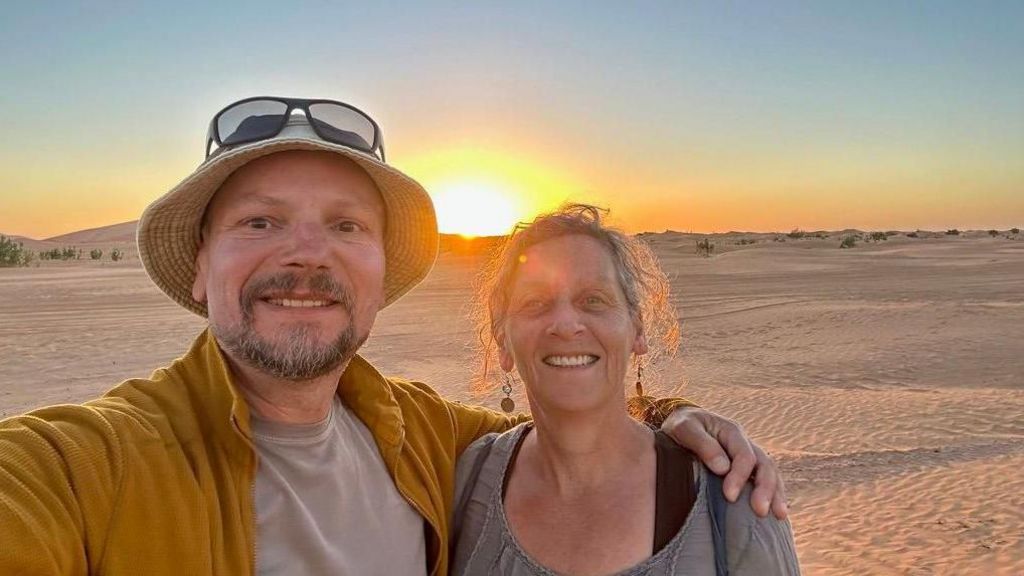
Vancouver retiree Nick Smith has avoided U.S. travel on and off for years, having first boycotted after Trump’s initial 2016 election win, only resuming cross-border trips when Joe Biden took office. Now, he is back to avoiding the U.S. entirely, encouraged by the widespread boycott among his fellow Canadians. Smith even avoids connecting flights through U.S. airports, opting for more expensive direct flights to international destinations to avoid stepping on U.S. soil. Earlier this year, he and his wife Sylvia traveled to Morocco for the first time, where they experienced Ramadan firsthand, an experience he called deeply eye-opening and unlike anything they could have had in Canada. For Smith, a change in U.S. administration would not be enough to bring him back; he says he needs to see tangible action to repair cross-border relations before he would consider visiting again.
For Christie Mitchell, a 50-year-old mother of two from Powell River, British Columbia, the boycott has been a particularly emotional shift. Mitchell has traveled to the U.S. countless times over her life: she has hiked American national parks, attended NFL games, and driven an RV across multiple states down to Florida. She even grew up in an era when Canadians did not need a passport to cross the border, and once thought of Canada and the U.S. as one shared, open country. But that warm sense of closeness has faded under the current U.S. administration, and she does not want to support it with her travel spending. “It breaks my heart, because I love Americans and I love America,” she said.
Instead of taking a planned cheap birthday trip to Las Vegas to celebrate her 50th birthday this year, Mitchell fulfilled a lifelong dream by hiking the 490-mile Camino Francés pilgrimage route in Spain. The trip exceeded her expectations, she said, as she got to meet travelers from across the globe and have deep, meaningful conversations with people from all walks of life. Mitchell says she would be open to returning to the U.S. if a new administration takes office and cross-border relations are fully repaired.
While political tensions are the primary driver of the boycott, some Canadians also cite economic factors: the declining value of the Canadian dollar has made U.S. travel significantly less affordable for many households, pushing more travelers to seek domestic or alternative international destinations instead. For most of those surveyed, however, the core issue remains the strained relationship between the two neighboring countries, a rift that many say will take years to mend, even if political leadership changes.