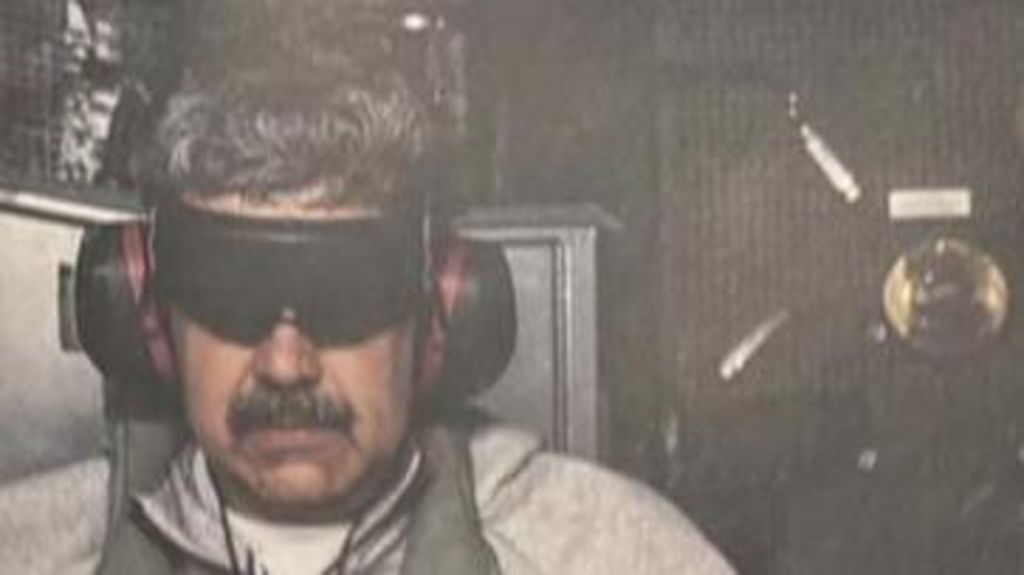
A decorated U.S. Army Special Forces master sergeant is facing a slew of federal charges for allegedly exploiting classified knowledge of the covert operation to capture Venezuelan leader Nicolás Maduro to place illegal, profitable bets on the outcome of the mission, federal prosecutors have confirmed. The case has thrown a spotlight on growing regulatory concerns over unregulated crypto prediction platforms that enable government insiders to profit from confidential national security information.
Gannon Ken Van Dyke, a 17-year active-duty soldier stationed at Fort Bragg, North Carolina, who earned promotion to master sergeant in 2023, has been at the center of the unfolding scandal. As a member of elite special operations command, Van Dyke signed a strict non-disclosure agreement in 2018 that bound him to protect all sensitive classified information, acknowledging the U.S. government placed unique trust in him to guard operational secrets. Prosecutors allege that despite this commitment, he used his insider access to details of the January Maduro seizure to trade on Polymarket, a crypto-based prediction market, netting more than $400,000 in illicit winnings.
Outside of his military career, Van Dyke built a growing side career as a real estate investor, public records and online profiles show. He founded Better Homes NC LLC, a property investment firm registered in 2022, and owns at least six residential properties across North Carolina. He also operates a popular mountain Airbnb retreat called Daddy Bear Cave, where he holds a 5-star superhost rating, with guests praising his responsiveness and attention to detail. Most notably, public property records show Van Dyke closed on a $340,000, 2,400-square-foot three-bedroom home just 20 days after Maduro’s capture, coinciding with the transfer of his alleged betting winnings. His wife works alongside him in the real estate industry, advertising rental and sales listings through major industry brands, though her social media accounts have been taken offline in recent days, and Van Dyke’s own Facebook profile currently lists him as single.
According to the unsealed indictment issued last week, Van Dyke created his Polymarket account on December 26, 2025, using a virtual private network to route his connection through a foreign country to hide his location. Over the following week, between December 27 and January 2, he invested roughly $33,934 into a series of bets that predicted the timeline of U.S. military action in Venezuela and the date of Maduro’s removal from power.
On January 3, just hours after Van Dyke placed his final bet, then-President Donald Trump publicly announced that U.S. special operations forces had captured Maduro and his wife Cilia Flores in an overnight raid in Caracas. The couple were transported to the USS Iwo Jima, the U.S. Navy amphibious assault ship staged in the Caribbean for the mission, with photos later confirming Maduro in custody. Prosecutors also allege that just over an hour after Trump’s public announcement of the capture, Van Dyke uploaded a photo to his personal Google account showing him posing with a rifle alongside other special operations soldiers on the deck of a ship at sunrise, apparently confirming his presence on the operation.
Polymarket, the platform Van Dyke allegedly used, has faced growing regulatory scrutiny in recent months over the risks of insider trading by government officials with access to non-public information. The platform’s anonymous blockchain-based structure has been compared to the “Wild West” by legal experts, as most users cannot be identified by their public blockchain addresses alone. In early January, after Maduro’s capture, online investigators quickly noticed an anonymous bettor had earned nearly half a million dollars from correctly predicting the seizure, sparking widespread public outcry, but the bettor’s identity remained unknown for months.
Prosecutors say Van Dyke made a critical misstep that unmasked him: he used his personal email address to register his Polymarket account. After news reports began highlighting the large winning bet, Van Dyke allegedly took steps to cover his tracks, closing his account and attempting to hide his illicit winnings. According to the U.S. Department of Justice, he first withdrew roughly $409,881 in winnings and transferred most of the sum to a foreign interest-generating crypto vault, then changed the email associated with his crypto exchange account to a new, unlinked address. On January 16, he transferred the full sum, including accumulated interest totaling approximately $444,209, to a new personal brokerage account. Despite these efforts, federal investigators were able to trace the activity back to Van Dyke and unseal the full indictment last week.
Van Dyke faces five federal charges: unlawful use of confidential government information for personal profit, theft of non-public government data, commodities fraud, wire fraud, and unlawful monetary transaction. The U.S. Commodity Futures Trading Commission has also filed a separate civil lawsuit against him alleging insider trading. He is scheduled to be arraigned and formally enter a plea at a federal courthouse in New York this coming Tuesday, according to U.S. media reports. The indictment does not detail Van Dyke’s exact day-to-day role in the Maduro operation, which involved months of preparation, air strike capabilities, a network of on-the-ground intelligence assets, and a large coordinated military build-up in the Caribbean region.