标签: South America

南美洲

  • Former Brazilian intelligence chief was arrested by ICE, senator says

    Former Brazilian intelligence chief was arrested by ICE, senator says

    A high-profile development in the aftermath of Brazil’s 2023 attempted coup has crossed international borders, as former Brazilian intelligence chief and ex-lawmaker Alexandre Ramagem has been taken into custody by U.S. Immigrations and Customs Enforcement, a Brazilian senator confirmed this Monday. Ramagem was already convicted over his role in the anti-government uprising staged by supporters of former Brazilian president Jair Bolsonaro, receiving a 16-year prison sentence back in September. He fled Brazil shortly before he was scheduled to begin serving his sentence, leaving Brazilian authorities searching for him across international jurisdictions.

    Brazilian federal police confirmed earlier this Monday that a fugitive convicted by the country’s top supreme court on the same three charges tied to the coup attempt had been arrested in Orlando, Florida, though the agency stopped short of naming Ramagem publicly. ICE’s online detainee registry has since listed Ramagem as being in agency custody as of Monday, though the facility where he is being held and the specific grounds for his detention have not been disclosed to the public.

    Senator Jorge Seif, an ally of the former Bolsonaro administration, announced via his social media platforms that he has formally filed a request with the U.S. Embassy in Brasilia pushing for Ramagem to be granted political asylum in the United States. Seif argued that Ramagem is the target of political retribution, rather than being subject to legitimate criminal prosecution, and claimed that he should therefore not remain in ICE custody. Seif added that the submitted document lays out what his team frames as justifications for granting asylum to both Ramagem and his family.

    “The political persecution against President Bolsonaro, his sons and his allies is now hitting an elected lawmaker in foreign soil,” Seif said in his public statement.

    Ramagem’s conviction over the coup plot led to his removal from Brazil’s Congress in December, just three months after his September sentencing, following institutional procedures to strip convicted public officials of their elected seats. As of Monday evening, neither ICE officials nor Ramagem’s personal legal counsel have responded to requests for comment from The Associated Press on the custody situation and asylum request.

  • Colombia approves plan to cull dozens of wild hippos

    Colombia approves plan to cull dozens of wild hippos

    On a Monday announcement from Bogotá, Colombian federal environmental authorities greenlit a controversial plan to cull dozens of invasive wild hippos that have overrun fertile, humid river valleys in the nation’s central region. The large non-native mammals have increasingly encroached on human settlements, while pushing native wildlife out of their natural habitats, prompting officials to approve the cull after more than a decade of failed non-lethal population management.

    Colombian Environment Minister Irene Vélez explained that all alternative population control strategies—including surgical sterilization of individual hippos and relocation of the animals to domestic and international zoos—have proven exorbitantly costly and ineffective at curbing the species’ rapid population growth. Up to 80 hippos will be targeted under the approved cull order, though Vélez did not disclose a timeline for when the culling operations will begin. “If we don’t take this step, we will never get this population under control,” Vélez stated, emphasizing the move is a necessary intervention to protect Colombia’s unique native ecosystems.

    This wild hippo population is unprecedented: Colombia remains the only country outside of Africa with a sustainable wild hippo colony. The animals trace their roots directly to the private menagerie of infamous Medellín Cartel drug kingpin Pablo Escobar, who imported four hippos to his sprawling Hacienda Nápoles ranch in the Magdalena River Valley during the 1980s. After Escobar was killed in a 1993 police raid, the Colombian government seized most of his assets, including the ranch. While most of his exotic zoo animals were relocated to facilities across the country, the large hippos were left to roam the surrounding river ecosystems due to the logistical difficulty and cost of capturing and moving them.

    From that founding population of four, the hippo colony has exploded in size. A 2022 study from Colombia’s National University pegged the current wild population at roughly 170 individuals, and the animals have expanded their range more than 100 kilometers north of their original territory at Hacienda Nápoles. Environmental officials warn the animals pose a clear danger to local residents, who increasingly encounter the territorial, fast-moving mammals on rural farms and along riverbanks. Ecologists also note that hippos outcompete native aquatic species, including vulnerable Colombian river manatees, for limited food and habitat resources.

    Despite the ecological and public safety risks, the hippos have become an unexpected economic boon for the region. Hacienda Nápoles, now a government-operated theme park featuring water attractions, a zoo housing other African species, and historical exhibits related to Escobar, counts the hippos as one of its top draws. Local villagers outside the park have also built small businesses around the animals, offering guided hippo-watching tours and selling hippo-themed handicrafts and souvenirs to visiting tourists.

    The decision to cull the hippos has drawn fierce pushback from Colombian animal welfare advocates, who have opposed lethal population control proposals for years. Activists argue the hippos have as much right to live in the region, and add that sanctioning a lethal cull sets a harmful precedent for a country still emerging from decades of violent internal conflict.

    For 12 years, across three successive Colombian presidential administrations, the government prioritized non-lethal sterilization programs to slow the hippo population’s growth. But those efforts never expanded beyond a small pilot scale: capturing the powerful, dangerous animals and performing invasive sterilization surgery carries extreme risk and carries a price tag that has been unsustainable for long-term population management. Relocating the entire colony back to Africa is also off the table: the small founding gene pool of the Colombian population and concerns that the animals could carry non-native diseases make a transcontinental relocation unfeasible, leaving officials with few remaining options.

  • Peru election drags into second day after ballot delivery fiasco

    Peru election drags into second day after ballot delivery fiasco

    Peru’s 2026 general election has hit widespread logistical and technical disruptions that have delayed the final release of official results, leaving more than 50,000 eligible voters locked out of casting ballots on the originally scheduled election day, Sunday.

    More than 27 million Peruvians were called to the polls across the country and overseas to elect a new president and fill seats in both chambers of the newly restructured Congress, with mandatory voting required for all citizens between the ages of 18 and 70. But procedural failures upended voting operations in dozens of locations: multiple polling stations opened far behind schedule, while others never opened at all. Disruptions were not limited to Peru’s domestic voting sites; problems were also reported at overseas polling locations in Orlando, Florida and Paterson, New Jersey. In response to the chaos, Peru’s National Electoral Board has granted a one-day extension, allowing disenfranchised voters to cast their ballots on Monday. Current interim President José María Balcázar attributed the failures to a private logistics contractor that failed to deliver voting materials to polling sites before the opening of polls, leaving thousands without the ability to participate.

    With roughly half of all cast ballots counted in preliminary tallies, conservative candidate Keiko Fujimori holds a narrow lead over Rafael López Aliaga, the right-wing former mayor of Peru’s capital city Lima. The race for the second spot in the upcoming run-off remains extremely tight, however, and exit polls indicate the contest is still wide open: left-wing candidate and former tourism minister Roberto Sánchez remains in striking position to overtake one of the two front-runners and secure a place in the June 7 run-off. No candidate is on track to clear the 50% of the popular vote threshold required to win the presidency outright, making the June run-off between the top two finishers all but guaranteed.

    The election comes at a moment of unprecedented political upheaval for Peru. Over the past 10 years, the country has seen six presidents forced out of office via resignation, impeachment, or ouster amid sprawling corruption scandals. The last president to complete a full four-year term was Ollanta Humala, who left office in 2016. Balcázar, the 83-year-old interim incumbent, only took office in February following the latest leadership shake-up, and he will step down once the election process concludes. The next president will face the immediate challenge of rebuilding public trust in government, after years of chaos left most Peruvian voters deeply skeptical that political leaders prioritize the public good over personal gain.

    Beyond the presidential race, the outcome of the congressional contest will carry major long-term implications for Peruvian politics. This election marks the re-establishment of the Peruvian Senate, a 60-seat upper chamber that cannot be dissolved by the sitting president, meaning it will hold significant independent legislative power.

    Fujimori, the daughter of late autocratic former President Alberto Fujimori, who was convicted of crimes against humanity during his time in office, is making her fourth bid for the presidency, having lost in the final run-off in the three previous election cycles. She maintains high name recognition across the country, and her legacy tied to her father draws both strong support from loyalist voters and intense opposition from critics of her father’s authoritarian rule. On election day, Fujimori publicly reaffirmed her connection to her father by visiting his grave, a move that underscored her unwavering allegiance to his legacy. Both Fujimori and López Aliaga have campaigned on hardline “iron fist” platforms to address rising crime and corruption, two top priorities for voters heading into the election. Extortion has become a particularly urgent crisis, with public transport workers regularly targeted by criminal gangs demanding protection money. As counting continued, Fujimori framed the race as a ideological battle, saying “the enemy is the left”, signaling her goal of blocking any left-wing candidate from advancing to the June run-off.

  • World Cup 2026: Who’s in, where to watch, betting odds, schedules and more

    World Cup 2026: Who’s in, where to watch, betting odds, schedules and more

    As the first 48-team FIFA World Cup in history draws near, football fans across the globe are gearing up for the biggest edition of the beautiful game’s flagship event, set to unfold across 16 host cities spanning the United States, Canada, and Mexico from June 11 to July 19, 2026. This expanded tournament will feature a total of 104 matches, doubling down on the action that defined past 32-team World Cups and opening the door for more nations to compete on soccer’s biggest global stage.

    The three co-host nations, the U.S., Canada, and Mexico, have all earned automatic qualification to the tournament, joining defending 2022 champion Argentina in the field. Four underdog nations — Cape Verde, Curacao, Jordan, and Uzbekistan — will celebrate their World Cup debuts this year, marking a historic milestone for their football programs and communities.

    ### New Tournament Format for Expanded Field
    To accommodate the expanded 48-team lineup, FIFA has rolled out a revamped competition structure. All participating teams are guaranteed three group-stage matches, with teams split into 12 four-team groups. After round-robin play concludes, the top two teams from each group will advance to the knockout round, joined by the eight best-performing third-place teams from across all groups. Teams that finish fourth in their groups are eliminated immediately.

    After the group stage, 32 remaining teams will enter a traditional single-elimination bracket, with only one small exception: the two teams that fall in the semifinal round will still compete for third place in a dedicated match held the day before the 2026 World Cup final.

    ### Venue and Match Schedule Breakdown
    The tournament will roll out in a sequential progression across the three host nations, with venues allocated by knockout round:
    – **Group Stage (June 11–June 27):** Matches will be held across 16 cities: Atlanta, Foxborough (MA), Arlington (TX), Guadalajara (Mexico), Houston, Kansas City, Inglewood (CA), Mexico City, Miami Gardens (FL), Monterrey (Mexico), East Rutherford (NJ), Philadelphia, Santa Clara (CA), Seattle, Toronto, and Vancouver.
    – **Round of 32 (June 28–July 3):** 12 host cities will host matches: Foxborough, East Rutherford, Inglewood, Toronto, Santa Clara, Seattle, Houston, Arlington, Mexico City, Atlanta, Miami Gardens, Vancouver, and Kansas City.
    – **Round of 16 (July 4–July 7):** Matches will take place in Vancouver, Atlanta, Mexico City, East Rutherford, Seattle, Arlington, Houston, and Philadelphia.
    – **Quarterfinals (July 9–July 11):** Four venues have been selected: Foxborough, Inglewood, Miami Gardens, and Kansas City.
    – **Semifinals (July 14–15):** Atlanta and Arlington will host the two final semifinal matches.
    – **Third-place match (July 18):** The bronze medal match will be held in Miami Gardens.
    – **2026 World Cup Final (July 19):** The decisive final match will kick off in East Rutherford, New Jersey.

    ### Full Group Standings and Host Nation Schedule
    The official group draw sorted all 48 qualified teams into 12 groups, seeded by their current FIFA men’s world rankings:
    – Group A: Mexico (15), South Korea (25), Czechia (41), South Africa (60)
    – Group B: Switzerland (19), Canada (30), Qatar (55), Bosnia and Herzegovina (65)
    – Group C: Brazil (6), Morocco (8), Scotland (43), Haiti (83)
    – Group D: United States (16), Turkey (22), Australia (27), Paraguay (40)
    – Group E: Germany (10), Ecuador (23), Ivory Coast (34), Curacao (82)
    – Group F: Netherlands (7), Japan (18), Sweden (38), Tunisia (44)
    – Group G: Belgium (9), Iran (21), Egypt (29), New Zealand (85)
    – Group H: Spain (2), Uruguay (17), Saudi Arabia (61), Cape Verde (69)
    – Group I: France (1), Senegal (14), Norway (31), Iraq (57)
    – Group J: Argentina (3), Algeria (28), Austria (24), Jordan (63)
    – Group K: Portugal (5), Colombia (13), Congo (46), Uzbekistan (50)
    – Group L: England (4), Croatia (11), Panama (33), Ghana (74)

    For co-host the United States, all three of its group-stage matches will be held on home soil: opening against Paraguay in Inglewood, California on June 12, followed by a match against Australia in Seattle on June 19, and closing group play against Turkey back in Inglewood on June 25. If the U.S. wins Group D, it will play its Round of 32 match in Santa Clara, California on July 1; a second-place group finish would see the team play in Arlington, Texas on July 3, and the team can also advance as one of the top eight third-place teams regardless of its final group standing.

    ### Key Storylines Heading Into Kickoff
    One of the biggest lingering questions heading into the tournament is whether Argentine captain Lionel Messi, widely regarded as the greatest men’s footballer of all time, will take the pitch. The 2022 tournament champion, who led Inter Miami to an MLS Cup title in 2025 and earned back-to-back MLS MVP honors, has not formally confirmed his participation. Argentine head coach Lionel Scaloni noted in March that the final call rests entirely with Messi, adding, “I believe that he has to be there, for the sake of football. But it’s not me who decides. It’s up to him.” While there has been no public indication Messi plans to skip the tournament, he has stated he will only compete if he is fully fit.

    This World Cup also comes at a time of unprecedented parity in men’s international football. The last six consecutive World Cups have all crowned different champions: Argentina (2022), France (2018), Germany (2014), Spain (2010), Italy (2006), and Brazil (2002) — a stretch of alternating champions that has never occurred in the tournament’s 100-year history. Argentina will enter the 2026 tournament with a chance to make history: no nation has won back-to-back World Cups since Brazil’s 1958 and 1962 victories, and only Italy (1934, 1938) and Brazil have ever achieved the feat.

    ### How to Watch and Pre-Tournament Betting Odds
    For U.S. viewers, Fox Sports holds the exclusive English-language broadcast rights to the 2026 World Cup: 70 matches will air on the main Fox broadcast network, 34 will air on cable channel FS1, and every match will stream live on Fox One and the Fox Sports app. Spanish-language coverage will be available via NBCUniversal’s Telemundo and Universo, with additional streaming options available on Peacock, FuboTV, Hulu, YouTubeTV, and DirecTV Stream.

    As of pre-tournament rankings, BetMGM Sportsbook lists Spain as the slight favorite to win the title at +450 odds, followed closely by France (+550), England (+650), co-favorites Brazil and Argentina (+800 each), and Portugal (+1000). Host nation the U.S. holds +4000 odds to claim its first World Cup title since 1994. The longest odds belong to debutants Haiti and Curacao, both sitting at +250000 — a bet that would pay out $250,000 for every $100 staked should either side claim the historic trophy.

  • Peru election results delayed after thousands get a one-day voting extension

    Peru election results delayed after thousands get a one-day voting extension

    LIMA, Peru — Widespread logistical failures that blocked thousands of voters from casting ballots on Sunday have forced Peru’s electoral officials to extend voting into Monday, pushing the final outcome of the country’s highly contested presidential election past the original scheduled announcement date. The chaotic opening day of voting, which saw countless citizens both within Peru and overseas locked out of polling stations, left millions waiting in uncertainty as the nation navigates one of its most fragmented political moments in modern history.

    Electoral authorities confirmed that just over 52,000 eligible voters will get a second chance to cast their ballots on Monday. This extension applies to voters registered in Lima, Peru’s densely populated capital, as well as two overseas polling locations: Orlando, Florida, and Paterson, New Jersey. Officials initially put the number of eligible voters for the extended voting period at 63,300 before revising the figure downward to correct an earlier miscount.

    Peru enforces mandatory voting for all citizens between the ages of 18 and 70, with a fine of up to $32 imposed on those who fail to participate without a valid excuse.

    Sunday’s vote caps a turbulent decade for Peruvian politics: 35 candidates are competing to claim the presidency, a role that has already changed hands eight times in 10 years. The crowded field includes a former cabinet minister, a popular comedian, and the heir to a well-established political dynasty, reflecting deep divisions within the country’s electorate.

    The election is being held against a backdrop of soaring violent crime and persistent institutional corruption, which has spawned overwhelming public discontent. Most Peruvian voters already view the full slate of candidates as untrustworthy and ill-prepared to tackle the country’s most pressing crises. In response to widespread public anxiety over public safety, many candidates have put forward hardline policy proposals, including plans to construct massive new maximum-security megaprisons, restrict food access for incarcerated people, and reinstate the death penalty for severe criminal offenses.

    For many ordinary voters, public safety remains the top priority, even as frustration with political brokenness runs deep. Heidy Justiniano, a 33-year-old nurse waiting in line to vote at a Lima public school, told reporters she had still not settled on a candidate by the time she reached the polling station. “There’s so much crime, so many robberies on every corner; a bus driver was killed just recently,” Justiniano said. “What matters most to us right now is safety, the lives of every person. Politicians don’t always keep their promises. This time, we have to choose our president wisely so that he can improve Peru.”

    In total, more than 27 million Peruvians are registered to vote in the election, with roughly 1.2 million of those registered at overseas polling stations, primarily in the United States and Argentina.

    Under Peruvian electoral law, a candidate must win an outright majority of more than 50% of the vote to claim the presidency without a runoff. Given the fragmented electorate and the unprecedented size of the candidate field — the largest in Peruvian history — political analysts almost universally predict that a second-round runoff election will be held in June.

    In addition to selecting a new president, voters are also casting ballots to fill seats in a newly reconfigured bicameral Congress, a change mandated by recent legislative reforms. This marks the first time in more than three decades that Peruvians will directly elect members to a full two-chamber legislature, with the reforms concentrating substantial new governing power in the newly established upper chamber.

  • Strikes on alleged drug boats kill 5, leave 1 survivor in eastern Pacific, US military says

    Strikes on alleged drug boats kill 5, leave 1 survivor in eastern Pacific, US military says

    In a latest escalation of the Trump administration’s aggressive campaign against suspected Latin American drug trafficking networks, the U.S. military announced Sunday that it destroyed two small vessels it accuses of smuggling narcotics in the Eastern Pacific Ocean. The operation left five people dead and one person rescued, marking the most recent deadly action in a crackdown launched back in early September. Since the administration began labeling its targets “narcoterrorists” and authorizing open-target strikes, the death toll from these U.S. military boat attacks has climbed to at least 168, according to official data.

    U.S. Southern Command, the military branch overseeing operations in Latin America and the Caribbean, confirmed the Saturday strikes were carried out along well-documented smuggling corridors that traffickers routinely use to move contraband north toward the United States. Unlike many previous strikes, the command did not release any concrete evidence to verify the boats were actually carrying illegal drugs at the time of the attack. Footage circulating on the social platform X, formerly Twitter, captures the two small craft moving across open water before large, bright explosions engulf both vessels.

    Following the strikes, Southern Command said it alerted the U.S. Coast Guard to launch search-and-rescue operations for the lone reported survivor. The Coast Guard has confirmed it is leading coordination for the search effort and stated it will release further updates as more information becomes available.

    The operation comes as the Trump administration is simultaneously ramping up military pressure on two separate global fronts: Latin American drug networks and the Iranian government in the Persian Gulf. Just hours after the Pacific strike, President Donald Trump announced the U.S. Navy will implement a full naval blockade of Iranian ports and restrict all commercial traffic moving through the Strait of Hormuz, a critical chokepoint through which roughly 20% of the world’s daily oil supplies pass. The blockade announcement comes just days after ceasefire negotiations between U.S. and Iranian delegates held in Pakistan collapsed without any breakthrough, ending a fragile multi-week truce that had paused open hostilities between the two nations.

    Trump has framed the ongoing boat strikes against suspected traffickers as a core component of what he calls an “armed conflict” with transnational drug cartels, arguing the escalated military action is critical to cutting off the flow of narcotics into the U.S. and reducing the record number of fatal drug overdoses that kill tens of thousands of Americans annually. To date, however, the administration has failed to produce substantive public evidence backing its repeated claims that those killed in the strikes are confirmed “narcoterrorists.”

    Critics have raised two core objections to the campaign: they question the legality of extrajudicial military strikes targeting non-state actors in international waters, and they cast doubt on the policy’s actual effectiveness in addressing the country’s overdose crisis. Policy analysts have pointed out that the synthetic opioid fentanyl, which is responsible for the vast majority of fatal overdoses in the U.S., is almost exclusively trafficked across the land border with Mexico. Fentanyl is primarily produced in Mexican laboratories using precursor chemicals imported from China and India, making maritime Pacific smuggling a negligible contributor to the overall drug flow.

    The simultaneous dual military deployments mark a rare moment where the U.S. is carrying out active offensive operations in two separate regions. While the Trump administration has prioritized its counternarcotics campaign in the Western Hemisphere, it has shifted significant naval and air resources to the Middle East over the past several weeks following the outbreak of open hostilities with Iran. The new blockade of Iranian ports is designed to cut off Iran’s key oil export revenue, its primary leverage in the ongoing war, after Tehran briefly closed the Strait of Hormuz earlier this month.

    Related developments unfolding alongside the Pacific strike include a growing public feud between former President Trump and newly elected Pope Leo XIV, the first American pope, over the U.S.’s war with Iran, as well as an immediate spike in global oil prices following the blockade announcement, as markets react to the threat of disrupted global crude supplies.

  • Argentina international Cristian Romero injured in Tottenham’s loss to Sunderland

    Argentina international Cristian Romero injured in Tottenham’s loss to Sunderland

    In a tense Premier League clash at Sunderland’s Stadium of Light on Sunday, Tottenham Hotspur suffered a double blow: a 1-0 defeat to the Black Cats and a worrying injury to star defender Cristian Romero that left the Argentine international visibly emotional as he exited the pitch.

    The incident unfolded in the second half, when Romero collided with Spurs goalkeeper Antonin Kinsky during a sequence of play in the box. Immediately after the impact, the 27-year-old defender was seen limping heavily, and it quickly became clear he could not continue the match. Though Romero did not need a stretcher and walked off the pitch under his own power, he was openly distressed and in tears, with teammates stepping in to console him as he made his way to the sideline for medical assessment.

    As of Sunday evening, the full extent of Romero’s injury remains undisclosed, with club medical staff yet to release a formal diagnosis. The timing of the setback has already sparked widespread concern, however, coming just months before the 2026 FIFA World Cup, where Romero is expected to be a core contributor to the defending champion Argentina national team.

    For Tottenham, the injury is a major potential setback to the club’s remaining domestic season goals. Newly appointed Spurs head coach Roberto De Zerbi described the incident as “very bad” in his post-match comments, acknowledging the uncertainty around how severe the damage is.

    “We have to wait for assessments over the coming days to know more,” De Zerbi told reporters. “I hope for all of us that this is not a serious issue, because Cristian is a crucial player for this squad. We need him back to finish this season strong and hit the targets we’ve set for ourselves.”

    Kinsky, by contrast, escaped the collision relatively unscathed. The goalkeeper was able to remain on the pitch after receiving treatment, with medics only needing to wrap a bandage around a head wound he sustained in the impact.

  • Peru’s voters face choice of 35 contenders for ninth president in 10 years

    Peru’s voters face choice of 35 contenders for ninth president in 10 years

    As Peruvians head to the polls on Sunday for a high-stakes presidential election, the Andean nation finds itself grappling with deep-seated public anger, a spiraling crime crisis, and a historic political reshuffle that will shape its governance for years to come. This election will mark the selection of Peru’s ninth president in just one decade, a statistic that underscores the chronic political instability that has long plagued the country. A field of 35 candidates — ranging from a seasoned former cabinet minister to a popular comedian and the heir to one of Peru’s most famous political dynasties — are competing for the nation’s highest office, in the largest candidate pool the country has ever seen.

    The entire campaign has been defined by one overwhelming public concern: a dramatic surge in violent crime and entrenched political corruption that has left most voters convinced that every candidate lacks integrity and is unprepared to tackle the country’s most pressing challenges. Official government data paints a stark picture of the security breakdown: homicide rates have doubled since the start of the decade, while extortion cases have jumped fivefold. In 2025 alone, more than 200 public transportation drivers were murdered across the country, a statistic that has spread fear across every layer of society. A 2025 national survey from Peru’s National Institute of Statistics and Informatics found that 84% of urban respondents worry they will fall victim to a violent crime within the next year.

    This widespread anxiety has translated into raw voter disillusionment, shared by Peruvians from all walks of life. Juan Gómez, a 53-year-old construction worker supporting five children, summed up the prevailing mood as he carried groceries home: “You can’t trust anyone anymore, nothing’s going to change. Criminals come on motorcycles, put a gun to your head… you look around and there’s no police officer. What are you going to do? You just let them rob you.” Retiree Raúl Zevallos, 63, echoed that fear, describing the constant risk of daily travel: “You get on the bus, and you have to sit far from the driver; you don’t know if you’ll make it home alive. Criminals drive by on motorcycles, shoot, kill the driver, and you could die, too.”

    In response to public demands for action, most candidates have rolled out hard-line security proposals to win over frustrated voters. Planks on the campaign trail include constructing large-scale “megaprisons,” requiring incarcerated people to work to earn access to meals, and even reviving the death penalty for the most serious violent offenses.

    The best-known candidate in the race is Keiko Fujimori, a conservative former congresswoman and daughter of late Peruvian President Alberto Fujimori, who is making her fourth bid for the presidency. Fujimori has campaigned on a promise of an iron fist crackdown on organized crime, but her record has drawn scrutiny: in recent years, her party backed legislation that legal experts argue has made it far harder to prosecute criminal offenders, eliminating preliminary detention for certain offenses and raising the legal bar to seize illegally gained assets. If elected, Fujimori has pledged to allow criminal case judges to serve anonymously and mandate that prisoners work to earn their food rations.

    Another top conservative contender is Rafael López Aliaga, the former mayor of Lima, Peru’s capital. López Aliaga has proposed building new high-security prisons in the country’s remote Amazon region, also backs anonymous judge protections, and has promised to expel all undocumented migrants living in Peru. A more unconventional candidate is Carlos Álvarez, a comedian who has pivoted to politics, who has pledged to bring in security policy expertise from the leaders of El Salvador, Denmark, and Singapore if elected.

    Beyond the presidential race, this election carries historic implications for Peru’s governing structure: for the first time in more than 30 years, voters are also selecting a new bicameral Congress, after lawmakers pushed through constitutional reforms in 2024 that shift significant power to a newly created upper Senate chamber. This reversal of a decades-old unicameral system comes despite 80% of voters rejecting a bicameral model in a 2018 public referendum.

    Under the new framework, the sitting president will lack the power to dissolve the Senate, while the upper chamber will gain the ability to remove a sitting president from office through impeachment. The threshold for impeachment has also been lowered dramatically: impeachment will now pass with just 40 votes out of the 60-member Senate, compared to the previous requirement of 87 votes out of 130 unicameral legislators. Political analysts widely credit the frequent use of the impeachment power by the old unicameral Congress for the chaotic “revolving door” of presidents that has seen Peru turn over eight leaders in 10 years.

    The new Senate will also take on sweeping powers beyond impeachment, including the authority to appoint and discipline top government officials, ranging from the national ombudsman and constitutional court justices to central bank board members. It will also hold the power to review and amend legislation passed by the lower congressional chamber. Alejandro Boyco, a researcher at the Institute of Peruvian Studies, warned that the concentration of power in the small 60-person Senate creates new corruption risks. “They’ve concentrated too much power in a 60-people chamber,” Boyco said. “They are not going to be immune to being corrupt.”

    Voting is mandatory for all Peruvian citizens between the ages of 18 and 70, with more than 27 million registered voters nationwide. Around 1.2 million registered voters are living abroad, mostly in the United States and Argentina, and will cast ballots outside the country. While an outright win requires a candidate to capture more than 50% of the vote, political analysts widely agree that a June runoff election is all but guaranteed, given the deep divisions among the electorate and the historically large field of candidates competing for support.

  • At least 30 feared dead in crush at Haitian tourist site

    At least 30 feared dead in crush at Haitian tourist site

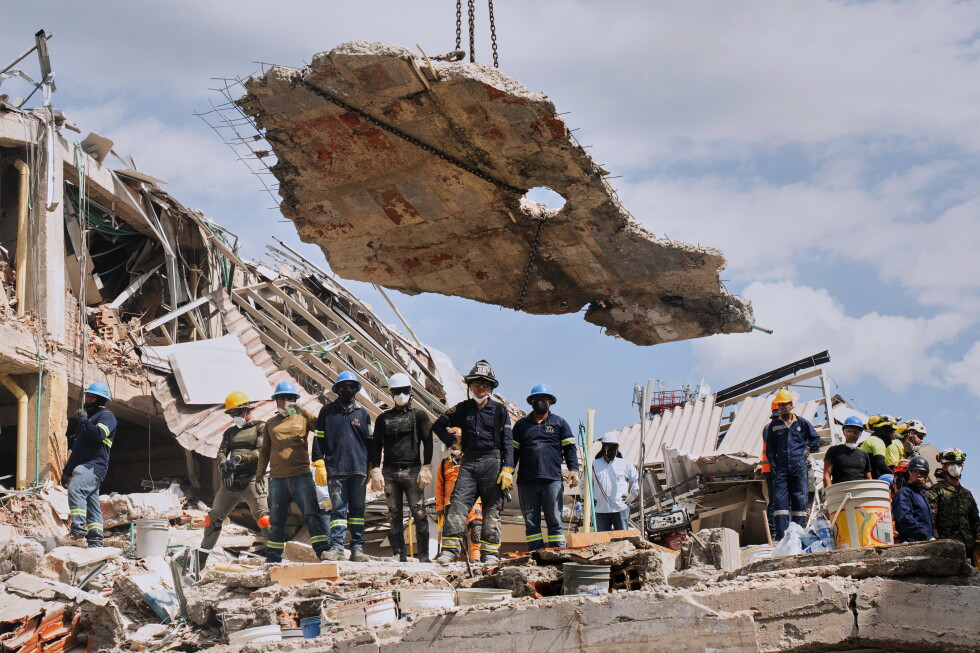
    A devastating crowd crush at one of Haiti’s most iconic cultural landmarks has left at least 30 people dead, with officials warning the final death toll may climb higher in the wake of the Saturday incident. The tragedy unfolded at the Laferrière Citadel, a UNESCO World Heritage Site and enduring symbol of Haitian independence located near the northern town of Milot, during an annual Easter community gathering.

    Jean Henri Petit, head of civil protection for Haiti’s Nord department, confirmed the initial casualty count, and emphasized that recovery efforts were still ongoing to account for all impacted visitors. Haitian Prime Minister Alix Didier Fils-Aimé confirmed the incident occurred during a public tourist-focused event that drew a large crowd of young attendees. He announced in an official statement that a full investigation into the disaster has been launched, and all relevant government agencies have been mobilized to provide support to injured victims and the families of those deceased. “The government sends its sincere condolences to the affected families,” Fils-Aimé added.

    Local Haitian media outlets, citing senior officials, report that the site became dangerously overcrowded after the annual event—held to commemorate the 19th-century fortress’s founding—was widely promoted on social media. The crush began near the main entrance of the large hilltop fortress, and emergency responders say the dangerous conditions were made far worse by a sudden onset of heavy rain that panicked the crowd of visitors and students.

    The initial death toll was first reported by Haiti’s leading newspaper Le Nouvelliste, which sourced the figure from Petit. The Haitian government’s official public statement did not include a specific casualty number, as officials continue to verify the extent of the tragedy.

    Completed more than two centuries ago shortly after Haiti won its independence from French colonial rule, the Citadelle Laferrière—also called Citadelle Henry—was built by revolutionary leader Henri Christophe. The massive stronghold took more than 10 years to complete, and formed a core defensive position in a network of fortifications designed to protect the newly independent Caribbean nation from foreign invasion. Today, it stands as one of Haiti’s most visited tourist sites and a powerful national symbol of freedom.

    This deadly crowd disaster comes as Haiti already faces a protracted crisis of widespread gang-related violence that has claimed thousands of lives across the country this year, straining already limited public safety and emergency response capacity.

  • Peru election highlights lack of plans to tackle illegal mining despite growing environmental crisis

    Peru election highlights lack of plans to tackle illegal mining despite growing environmental crisis

    As Peru prepares for a pivotal general election on Sunday that will install a new president and full Congress, one of the country’s most damaging and profitable illicit activities — unregulated illegal gold mining — has been almost entirely sidelined by political candidates, even as the industry pushes deeper into the Amazon rainforest and protected Indigenous territories.

    Industry and policy experts warn this widespread silence from campaigners exposes a systemic national failure to confront what is now Peru’s largest illicit economy, a multi-billion dollar trade that inflicts escalating damage on critical ecosystems, public health, and Indigenous communities that have called the Amazon home for millennia.

    “Political parties do not grasp that illegal mining has become the country’s dominant criminal enterprise, generating more illicit revenue than any other activity,” said César Ipenza, a prominent Peruvian environmental lawyer. “There is either profound ignorance about what this crisis means for Peru’s future — or, in too many cases, political actors have already become complicit participants in this illegal economy.”

    Projections from the Peruvian Institute of Economics estimate illegal mining will generate more than $11.5 billion in revenue in 2025, accounting for over 100 tons of annual gold exports. The scale of the illicit industry now rivals the size of Peru’s formal legal gold mining sector and outpaces the revenue generated by drug trafficking, long considered the country’s top illegal trade.

    A small number of candidates have put forward limited proposals to address the crisis, including former officials and technocratic candidates Jorge Nieto and Alfonso López Chau. Their plans include measures such as mandatory gold traceability systems, enhanced financial intelligence tracking, and expanded protections for at-risk environmental defenders. But these proposals remain scattered across platforms and fall far short of a comprehensive national strategy to curb the industry’s growth.

    Many other leading candidates, representing Peru’s most influential conservative and populist parties, have centered their campaigns on issues like public security, broad economic growth, and expanded extractive development, with no direct mention of illegal mining or its deep ties to systemic corruption and illegal territorial control in the Amazon. A handful of high-profile candidates — including media personalities turned politicians Ricardo Belmont and Carlos Álvarez — omit the issue entirely from their published policy platforms.

    “Illegal mining and other large illicit economies are not a priority in any major party’s governing plans,” said Magaly Ávila, director of environmental governance at Proetica, a leading Peruvian anti-corruption organization. According to Proetica’s analysis, roughly 64% of all party platforms fail to address the illegal mining crisis in any meaningful way, while only 5% of parties tackle the issue “clearly and explicitly.”

    A March 2026 analysis from Peru’s official Observatory of Illegal Mining reinforces these findings. The audit found that only 12 of the country’s 36 registered political parties have released specific policy proposals to address illegal mining, while the remaining parties either offer only vague general statements without actionable measures or do not mention the issue at all.

    Peruvian governments have repeatedly announced new crackdown operations and national strategies to combat illegal mining in past years, but enforcement of these policies remains severely limited, experts say. The Associated Press reached out to multiple Peruvian government entities to request comment on illegal mining and protections for Indigenous territories ahead of the election, but received no response prior to publication.

    Peruvian lawmakers have repeatedly extended a temporary regulatory program that allows informal miners to continue operating while they pursue formal legal status. Critics of the program argue it has been widely abused by criminal networks and has directly enabled the expansion of illegal mining across the country.

    At the same time, recent changes to Peruvian national legislation have weakened the ability of prosecutors and judges to pursue organized criminal groups, including large-scale illegal mining networks, according to international human rights and environmental groups. Analysts say these policy rollbacks came in response to intense political pressure from small-scale miner associations, which have organized large public protests to demand looser regulations. These protests have made tightening enforcement far more politically difficult for incumbent and aspiring politicians alike.

    Julia Urrunaga, Peru program director for the London-based Environmental Investigation Agency (EIA), noted that many small-scale miner protests appear to be highly coordinated from behind the scenes, indicating that powerful criminal networks are pulling the strings to advance their policy interests.

    The rapid expansion of illegal mining in recent years has been largely driven by soaring global gold prices, which have climbed to between $4,500 and $5,000 per ounce, making even small deposits of gold extremely profitable for miners. Once concentrated almost exclusively in the southern Amazon region of Madre de Dios, illegal mining operations have now spread to new parts of the Amazon basin and beyond Peru’s traditional mining corridors.

    “Gold prices have hit historic highs, and that has directly driven the explosive expansion of illegal mining across the country,” Ipenza said. “The Peruvian state simply does not have the institutional capacity to respond to or prosecute this activity at its current scale.”

    Illegal mining operations almost universally rely on liquid mercury to separate gold from ore, a cheap but highly toxic process that releases massive amounts of the heavy metal into Peruvian Amazon rivers. From there, mercury builds up in the tissue of fish, entering the food chain that millions of Peruvians rely on for sustenance.

    “In Amazonian river communities, between 50% and 70% of the daily diet comes from local fish,” explained Mariano Castro, Peru’s former vice minister of environment. “So human exposure to mercury grows exponentially. Mercury is extremely toxic, and it causes severe, permanent neurological damage for people exposed over long periods.”

    Environmental and public health experts have already confirmed that mercury contamination in many affected regions exceeds international safety standards, creating long-term public health risks for local populations. Ipenza warned that continued expansion of illegal mining across the Amazon “will bring widespread contamination, growing influence for transnational criminal groups, and direct existential harm to Indigenous and local populations.”

    “Illegal mining already puts our health, the Amazon’s biodiversity, and our traditional ways of life at grave risk,” said Tabea Casique, a board member of AIDESEP, Peru’s largest national Indigenous organization. “Most political parties are still not taking this problem seriously or presenting concrete plans to address it.”

    Castro, the former environment vice minister, called past state efforts to rein in illegal mining “completely insufficient,” noting that lawmakers have systematically weakened legal tools to prosecute criminal mining networks. These changes include reduced penalties for illegal mining and new restrictions that make it harder to classify large-scale mining operations as organized crime. Widespread gaps in regulatory oversight also allow illegally mined gold to be laundered into formal legal supply chains, most often through small-scale processing plants that mix illicit and legal gold for export.

    Ipenza called for sweeping reforms, including stronger regulatory oversight of small-scale gold processing plants and improved inter-agency coordination between customs officials, financial intelligence units, and criminal prosecutors to track gold flows and crack down on illegal activity. Analysts agree that weak gold traceability systems are one of the central vulnerabilities enabling illegal mining’s expansion.

    “There is no functional system to trace gold mining production in Peru,” EIA’s Urrunaga said. “Different authorities hold fragmented bits of information, but there is no unified system — and apparently no political will — to connect those pieces and track illegal gold.”

    “We are talking about more than $12 billion in illegal gold exports every year,” she added. “How can this activity continue with almost total impunity?”

    Policy and environmental experts warn that delaying action on the crisis will only make it far harder to contain in coming years. The next Peruvian government will immediately face mounting pressure to confront a crisis that is already spiraling out of control.

    “Authorities cannot fulfill their fundamental responsibility to protect Peruvian citizens if they continue to normalize an activity that causes such widespread, irreversible harm,” Castro said.