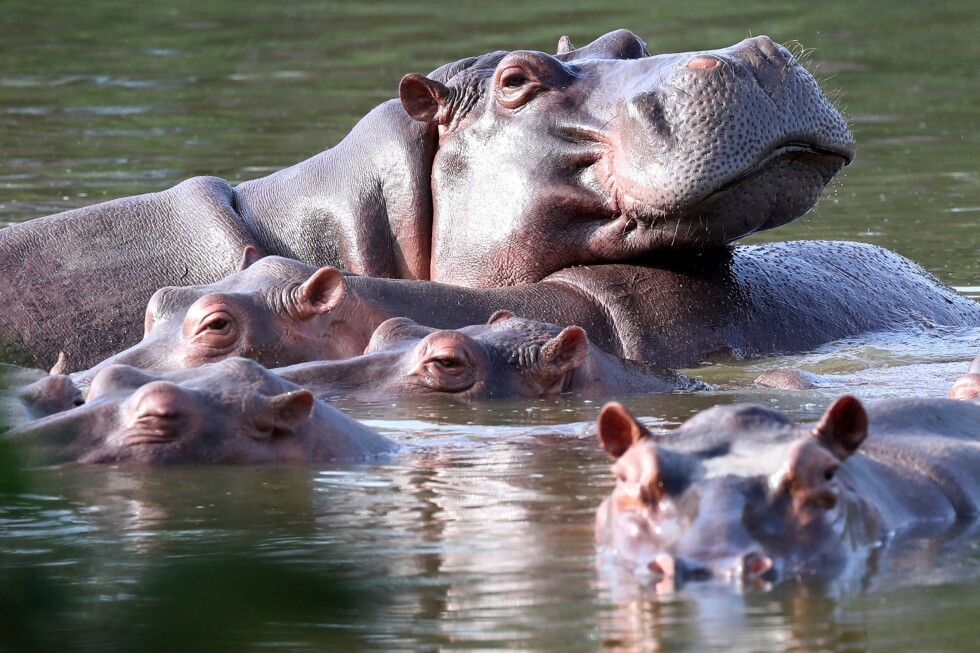
On a Monday announcement from Bogotá, Colombian federal environmental authorities greenlit a controversial plan to cull dozens of invasive wild hippos that have overrun fertile, humid river valleys in the nation’s central region. The large non-native mammals have increasingly encroached on human settlements, while pushing native wildlife out of their natural habitats, prompting officials to approve the cull after more than a decade of failed non-lethal population management.
Colombian Environment Minister Irene Vélez explained that all alternative population control strategies—including surgical sterilization of individual hippos and relocation of the animals to domestic and international zoos—have proven exorbitantly costly and ineffective at curbing the species’ rapid population growth. Up to 80 hippos will be targeted under the approved cull order, though Vélez did not disclose a timeline for when the culling operations will begin. “If we don’t take this step, we will never get this population under control,” Vélez stated, emphasizing the move is a necessary intervention to protect Colombia’s unique native ecosystems.
This wild hippo population is unprecedented: Colombia remains the only country outside of Africa with a sustainable wild hippo colony. The animals trace their roots directly to the private menagerie of infamous Medellín Cartel drug kingpin Pablo Escobar, who imported four hippos to his sprawling Hacienda Nápoles ranch in the Magdalena River Valley during the 1980s. After Escobar was killed in a 1993 police raid, the Colombian government seized most of his assets, including the ranch. While most of his exotic zoo animals were relocated to facilities across the country, the large hippos were left to roam the surrounding river ecosystems due to the logistical difficulty and cost of capturing and moving them.
From that founding population of four, the hippo colony has exploded in size. A 2022 study from Colombia’s National University pegged the current wild population at roughly 170 individuals, and the animals have expanded their range more than 100 kilometers north of their original territory at Hacienda Nápoles. Environmental officials warn the animals pose a clear danger to local residents, who increasingly encounter the territorial, fast-moving mammals on rural farms and along riverbanks. Ecologists also note that hippos outcompete native aquatic species, including vulnerable Colombian river manatees, for limited food and habitat resources.
Despite the ecological and public safety risks, the hippos have become an unexpected economic boon for the region. Hacienda Nápoles, now a government-operated theme park featuring water attractions, a zoo housing other African species, and historical exhibits related to Escobar, counts the hippos as one of its top draws. Local villagers outside the park have also built small businesses around the animals, offering guided hippo-watching tours and selling hippo-themed handicrafts and souvenirs to visiting tourists.
The decision to cull the hippos has drawn fierce pushback from Colombian animal welfare advocates, who have opposed lethal population control proposals for years. Activists argue the hippos have as much right to live in the region, and add that sanctioning a lethal cull sets a harmful precedent for a country still emerging from decades of violent internal conflict.
For 12 years, across three successive Colombian presidential administrations, the government prioritized non-lethal sterilization programs to slow the hippo population’s growth. But those efforts never expanded beyond a small pilot scale: capturing the powerful, dangerous animals and performing invasive sterilization surgery carries extreme risk and carries a price tag that has been unsustainable for long-term population management. Relocating the entire colony back to Africa is also off the table: the small founding gene pool of the Colombian population and concerns that the animals could carry non-native diseases make a transcontinental relocation unfeasible, leaving officials with few remaining options.