标签: South America

南美洲

  • ‘Every drop of water counts’: Fear for the future of Argentina’s glaciers

    ‘Every drop of water counts’: Fear for the future of Argentina’s glaciers

    Nestled in the shadow of the snow-capped Andes, Virginia de Valle walks through her family’s 16-hectare Bodega Gieco vineyard in Argentina’s renowned wine hub Mendoza, gesturing to the rows of grapevines that produce 100,000 litres of premium wine annually. Her opening remark carries unshakable gravity: “Without water, there would be no wine.” For Mendoza’s winemaking community, every drop of irrigation water traces back to the Andes’ winter snowpack and ancient glaciers – natural reserves that now sit at the center of a fierce national debate following recent parliamentary approval of sweeping reforms to Argentina’s landmark 2010 glacial protection law.

    For generations, Mendoza’s identity has been tied to its glacial water supply. Residents call the region “the daughter of the Andes’ water,” and as droughts grow more frequent and severe across the semi-arid province, glacial melt has become a critical buffer that keeps vineyards productive and household taps running. De Valle’s fear is shared by millions across the country: the rolled-back protections will open vulnerable glacial ecosystems to destructive large-scale mining, putting vital water sources at irreversible risk. “Every drop of water counts,” she emphasizes, a warning that resonates far beyond Mendoza’s vine rows.

    Argentina was a global pioneer in glacial conservation when it passed the 2010 Glacier Law, the first national legislation in the world dedicated specifically to protecting these critical frozen water reserves. The original law designated all glaciers and surrounding periglacial environments – including permafrost that traps billions of liters of frozen water – as strategic national reserves, banning any commercial activity that would damage them, and required a full national inventory maintained by the country’s leading glacial research body, the Argentine Institute of Snow Research, Glaciology and Environmental Sciences (Ianigla).

    The new reforms shift all decision-making power to provincial governments, which will now determine which glaciers within their borders qualify as “strategic” – defined as reserves that provide water for consumption, agriculture, biodiversity, scientific research or tourism. Glaciers deemed non-strategic can be removed from the national protected inventory, stripping them of all legal environmental safeguards. Proponents of the changes, led by President Javier Milei’s libertarian administration La Libertad Avanza, frame the original 2010 law as an unnecessary regulatory barrier that has blocked Argentina from unlocking its vast mineral wealth. They argue that opening glacial regions to copper and lithium mining will catalyze regional economic growth and accelerate the global transition to clean energy, which depends heavily on both minerals. Milei, who has campaigned on cutting red tape to attract foreign investment, has pointed to neighboring Chile, which shares the Andes mountain range and exports $20 billion worth of copper annually, while Argentina currently exports no copper at all. According to Bloomberg reporting, major global mining firms including Glencore, Lundin and BHP Group have already met with Milei, with plans to invest roughly $40 billion into Argentina’s untapped copper reserves if regulations are loosened.

    Opposition to the reforms has erupted across the country, from Mendoza’s wine valleys to Patagonia’s popular hiking destination El Chaltén, with the rallying cry “Los glaciares no se tocan” (Hands off our glaciers) painted on walls and sidewalks nationwide. More than 100,000 people registered to participate in a public hearing on the reforms in March, though fewer than 400 were able to speak during the two-day session. Agostina Rossi Serra, a biologist with environmental advocacy group Greenpeace, argues that widespread public opposition demonstrates this is not just an environmentalist cause – it is a fight for public water security. “It made clear that it’s not just environmental organisations who were asking for this law not to be amended; it was the people, the public, who were asking for water to continue to be protected,” she says.

    Many of the provincial governments pushing for the reforms, including Mendoza and neighboring San Juan, are located in arid and semi-arid regions where water is already a scarce, highly contested resource. Serra accuses these regional governments of prioritizing mining revenue over the long-term well-being of local ecosystems and communities: “They are provinces that believe mining development is far more important than ecosystems and the communities themselves.”

    Leading glaciologists have also pushed back on the core justifications for the reform, calling its central claims fundamentally flawed. Lucas Ruiz, an independent glaciologist researcher at Ianigla, explains that the argument that some glaciers do not contribute to river systems is scientifically baseless. “The most false part of it all is the claim that there are glaciers that do not contribute to rivers. If it’s a glacier, it has ice and contributes water. It’s very basic,” he says. Ruiz adds that the reform’s vague language creates massive uncertainty: “We are left not knowing what criteria will be used, not knowing which technical bodies will be involved, and clearly, any glacier and any periglacial environment could be at risk.”

    Ruiz also acknowledges a painful paradox at the heart of the debate that complicates the scientific community’s position: glacial melt is accelerating globally due to climate change, driven by fossil fuel emissions. Avoiding the worst-case scenarios requires a rapid global energy transition to renewables – a transition that depends entirely on large-scale extraction of copper and lithium for batteries, transmission infrastructure and clean energy technology. “It is a stark paradox, hard to accept, but it is the reality. Because the message from science is that energy transition is necessary,” he says. The solution, he argues, is not to roll back protections entirely, but to require rigorous environmental impact assessments for any mining project that would affect glacial ecosystems, and ensure all development is conducted responsibly.

    Greenpeace remains deeply concerned that the profit motive will push provinces to weaken protections to attract investment. “If I have an international company looking for a place to develop a project, I’ll probably choose the province with the fewest environmental restrictions. That’s the concern we’re going to face,” Serra says.

    Supporters of the reform argue that provincial control is the most fair and effective governance structure. Federico Palavecino, a Buenos Aires-based lawyer who advises mining projects on glacial regulation, says that since provincial communities will bear the consequences of any mismanagement, they should have the right to set their own rules. “Why should we tell them how to live?” he asks, arguing that removing regulatory barriers will bring much-needed economic investment to struggling rural communities.

    Back in her Mendoza vineyard, De Valle is working to educate visitors about the potential consequences of the reform, framing the fight as one that affects all Argentines, not just winemakers. “It will affect wineries, but first, it will affect life,” she says. With more than 16,900 glaciers across Argentina feeding 36 river basins that supply water to seven million people across 12 provinces, the outcome of this debate will shape the country’s water security, economic future and environmental legacy for generations to come.

  • Trinidad’s prime minister escalates feud with Caribbean neighbors over US policy in the region

    Trinidad’s prime minister escalates feud with Caribbean neighbors over US policy in the region

    A simmering diplomatic dispute between Trinidad and Tobago and its fellow Caribbean Community (CARICOM) member states erupted into open confrontation Friday, as Prime Minister Kamla Persad-Bissessar doubled down on her demand that bloc Secretary-General Carla Barnett leave office when her five-year term expires this August.

    The rift at the heart of the conflict traces back to late 2025, when the United States deployed an unusually large military contingent near Venezuela’s borders in preparation for operations targeting then-Venezuelan President Nicolás Maduro. The move split the 15-nation regional trade bloc, with most CARICOM leaders rejecting the U.S. military deployment and reaffirming their longstanding commitment to keeping the Caribbean a formal “zone of peace.”

    Persad-Bissessar, who won Trinidad and Tobago’s general election one year ago, has broken sharply with that regional consensus. She has publicly dismissed the zone of peace framework as “zone of peace fakery,” and openly thrown her administration’s support behind both U.S. military strikes in the South Caribbean and the Trump administration’s broad crackdown on transnational drug trafficking and organized crime.

    In a statement late last year, as the U.S. finalized its operational plans against Maduro, Persad-Bissessar argued that CARICOM had incorrectly taken sides with what she called “the Maduro narco-government” under the false pretense of the zone of peace agreement. Her comments came as multiple regional governments raised formal complaints over the civilian harm and alleged illegality of deadly U.S. boat strikes carried out as part of the anti-drug campaign.

    The prime minister’s months-long campaign to oust Barnett has grown increasingly intense, ultimately forcing CARICOM leaders to hold an emergency summit Friday to discuss the secretary-general’s planned reappointment. As leverage to push her agenda, Persad-Bissessar has repeatedly reminded fellow leaders that Trinidad and Tobago contributes roughly 22% of CARICOM’s total annual operating budget, equal to approximately $20 million. She has made clear that her administration holds deep dissatisfaction with the bloc’s current policy direction, saying she cannot understand why the majority of regional states have aligned with Venezuela and Maduro rather than backing the U.S. position on counter-narcotics and regional security.

  • Brazil’s Supreme Court postpones decision on how Rio picks a governor, extending political chaos

    Brazil’s Supreme Court postpones decision on how Rio picks a governor, extending political chaos

    RIO DE JANEIRO, BRAZIL – A weeks-long political standoff in one of Brazil’s most high-profile states has been extended, after the country’s Supreme Court announced a last-minute delay Thursday to a critical ruling on who will assume the Rio de Janeiro governorship. The vacancy, which opened three weeks ago, has left the state’s urgent policy matters, from public security funding to transit infrastructure and fuel pricing, in the hands of an interim caretaker with limited mandate to act.

    The opening for the governorship was created by law on March 23, when incumbent Cláudio Castro stepped down to launch his campaign for a Senate seat in Brazil’s October general election, a requirement under Brazilian electoral law. What was meant to be a straightforward succession has instead devolved into chaos, as every constitutionally next-in-line candidate is unable to take office.

    Thiago Pampolha, Castro’s former deputy governor, would have been the automatic replacement, but he resigned from the deputy role earlier in 2025 to take a position at a state government oversight agency, disqualifying him from the succession. The next candidate in line is Rodrigo Bacellar, speaker of the Rio state legislature, who was recently arrested on corruption charges and removed from his public post.

    The Supreme Court’s delay came after Justice Flávio Dino requested additional time to review the central legal question of the case: whether Castro’s interim replacement, who will serve only until January 2026, should be selected by a special early popular election or appointed by the state’s historically scandal-plagued legislative body. Dino will have up to 90 days to complete his review and return the case for a final court ruling. As of Thursday’s partial vote, the 10-member court is split 4-1 in favor of an appointment by the state legislature, with the remaining votes yet to be finalized.

    Currently, the top justice of Rio’s state judiciary, Ricardo Couto de Castro, is serving as acting governor on an emergency basis. Local media reports indicate that the interim role was never intended to be long-term, leaving Couto de Castro facing major pushback from state administrative officials who are unwilling to commit to major policy decisions under an unelected temporary leader.

    Notably, a new permanent governor will not take office until January regardless of the Supreme Court’s ruling, as Rio voters are already scheduled to elect their next full-term leader as part of October’s national general election. But the months-long leadership vacuum has already created tangible harm for Rio residents, political analysts warn.

    Thomas Traumann, a veteran political consultant and former Brazilian government minister, called the prolonged uncertainty not just a national embarrassment, but a public risk. “The federal government recently reached an agreement to bring down sky-high diesel prices, which have spiked because of ongoing conflict in the Middle East,” Traumann explained. “Rio is one of the only states that has not been able to sign on to the deal, because there is no sitting governor with the authority to approve it. That means Rio will now have the most expensive diesel in all of Brazil.” He added that the vacuum leaves the state vulnerable to security crises: “If criminal gang violence erupts tomorrow, who has the authority to order police to respond?”

    Local media also added that justices within Rio’s state judiciary are growing increasingly concerned that their core work will grind to a halt, as their leader is tied up managing the entire state’s executive branch with no clear end to his interim tenure in sight.

    The succession dispute has already become tangled up in national political tensions, with major partisan actors lining up behind opposing outcomes. Sen. Flávio Bolsonaro, son of former Brazilian President Jair Bolsonaro and a prominent conservative voice ahead of October’s election, has publicly pushed for the legislature to appoint state lawmaker Douglas Ruas to the interim post. On the opposing side, supporters of current President Luiz Inácio Lula da Silva — and Lula’s endorsed candidate for Rio governor, Eduardo Paes — have argued that the vacancy requires a direct popular vote to fill the interim role.

  • Argentina to play friendlies at Texas A&M and Auburn ahead of World Cup

    Argentina to play friendlies at Texas A&M and Auburn ahead of World Cup

    Argentina’s 2026 FIFA World Cup title defense campaign is taking shape, with the Argentine Football Association confirming this Thursday that the reigning world champions will wrap up their pre-tournament preparation with two high-profile friendly matches at major American college football venues. Led by global football icon Lionel Messi, the South American side will first kick off their final warm-up series against Honduras on June 6 at Kyle Field, the home stadium of Texas A&M University’s athletics program located in College Station. This iconic venue boasts a seating capacity of more than 102,000, making it one of the largest collegiate sports facilities in the United States. Four days after the Honduras matchup, Argentina will face Iceland on June 9 at Jordan-Hare Stadium, the home ground of Auburn University’s Tigers, based in Alabama. This friendly comes just 48 hours before the official opening kickoff of the expanded 48-team 2026 World Cup, which is being co-hosted across three North American nations: the United States, Mexico, and Canada. Following the conclusion of their pre-tournament tune-ups, Argentina will formally launch their title defense on June 16 in Kansas City, Missouri, where they will square off against Algeria in their first Group J fixture. The two remaining group stage matches for Argentina will both be hosted in Arlington, Texas: the squad is scheduled to face Austria on June 22 before closing out group play against Jordan five days later on June 27. The selection of large-capacity college stadiums for pre-World Cup friendlies reflects the growing popularity of top-tier international soccer in the U.S. collegiate sports landscape, as the country prepares to co-host its first World Cup in more than 30 years. The matches are expected to draw massive crowds of both American soccer fans and Argentine expatriates eager to see Messi and the reigning champions compete on U.S. soil ahead of the global tournament.

  • Venezuelan police block protesters demanding higher wages and pensions

    Venezuelan police block protesters demanding higher wages and pensions

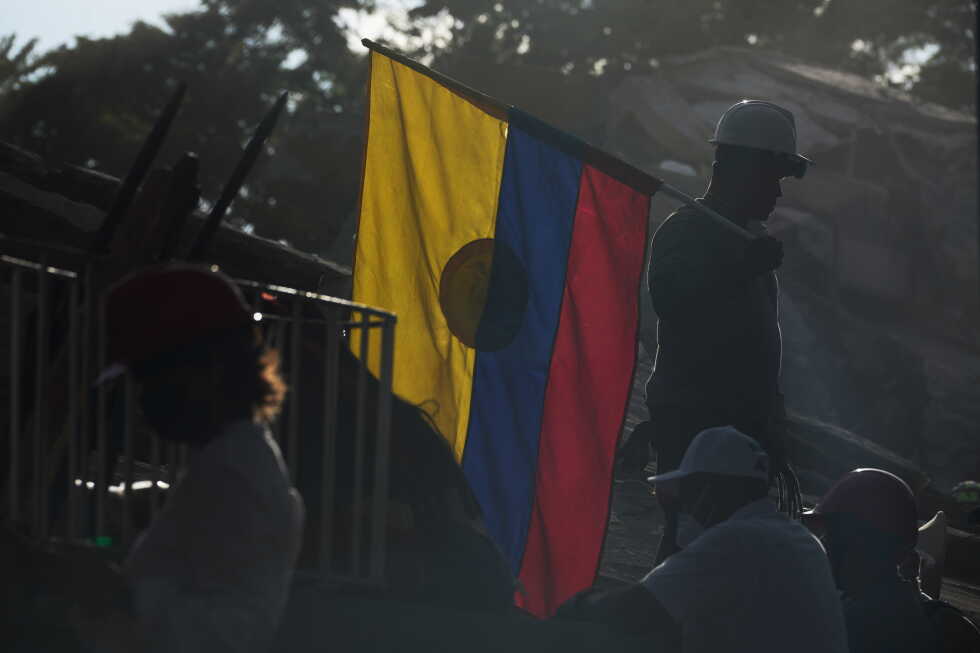
    On a Thursday in downtown Caracas, thousands of public sector employees, union representatives and retired Venezuelans took to the streets, heading toward the Miraflores presidential palace to demand living wages and adequate, dignified pensions. Their demonstration was met with heavy police resistance, as National Security forces had pre-deployed across key downtown routes to block the protesters’ advance. The confrontation marked a sharp public rebuke of the interim government’s economic policies, coming just 24 hours after acting President Delcy Rodríguez addressed the nation on live television to call for worker patience amid ongoing efforts to rebuild Venezuela’s collapsed economy.

  • Argentina approves Milei’s bill that eases protections for glaciers, despite environmental backlash

    Argentina approves Milei’s bill that eases protections for glaciers, despite environmental backlash

    BUENOS AIRES, Argentina — In a contentious early-morning vote that has divided lawmakers, environmental advocates and scientific communities across the country, Argentina’s national Congress has greenlit a polarizing bill backed by libertarian President Javier Milei that rolls back decades-old glacier protections to open more large-scale metal mining projects. The legislation, which already cleared the Argentine Senate in February, passed the lower chamber with a final count of 137 votes in support, 111 votes in opposition, and three abstentions, setting the stage for Milei to sign the bill into law in the coming days.

    The core change introduced by the new regulatory framework is a major narrowing of environmental protections that have stood for 14 years. Back in 2010, Argentina enacted a landmark law that imposed a full ban on all mining activity on glaciers and their surrounding periglacial zones — frozen landscapes that act as critical natural water regulators for downstream communities. Under the updated rules, only glaciers and landforms documented to have “specific hydrological functions” will retain protected status, with individual provincial governments granted the authority to make these designation decisions.

    Industry leaders in Argentina’s mining sector project that the regulatory shift will unlock more than $30 billion in new investment over the next 10 years, with roughly 70% of that capital earmarked for new copper, gold and silver extraction projects across the country. Argentina is home to more than 16,900 glaciers spanning the Andes Mountain Range and South Atlantic Islands, covering a total area of roughly 3,276 square miles. Glaciology researchers have already documented that human-driven climate change is driving rapid glacial retreat across the nation, and scientific experts warn that weakening protections puts critical water resources at severe risk. For arid regions that depend on glacial melt to sustain river systems and community water access, scientists note that increased mining activity could permanently jeopardize long-term water security.

    Opposition political forces have already slammed the bill as unconstitutional, arguing that it eliminates core environmental safeguards that protect public natural resources. But the most immediate challenge to the new law will come from the courts, where leading environmental organizations have already begun organizing a massive public class-action lawsuit to block the legislation from taking effect. Groups including Greenpeace Argentina and the Environment and Natural Resources Foundation say the legislative process was deeply flawed, and that lawmakers ignored widespread public concerns over water safety and ecosystem protection.

    “If they refuse to listen in Congress, they will be forced to listen in the courts,” the coalition of environmental groups said in an official public statement. The organizations are urging ordinary Argentine citizens to join the legal action, which argues that the regulatory reform poses an existential threat to both public water access and the fragile, unique ecosystems that surround the nation’s glaciers.

  • Argentina passes bill loosening protection of its glaciers

    Argentina passes bill loosening protection of its glaciers

    BUENOS AIRES, Argentina — Argentina’s lower congressional chamber has given final approval to a hotly contested amendment to the country’s landmark 2010 Glacier Law, opening the door to expanded mining activity in sensitive glacial regions and sparking fierce pushback from environmental activists and water protection advocates. The original 2010 legislation, widely hailed as a pioneering global conservation measure, imposed a total ban on mining and mineral exploration across all glacial zones, designating these frozen landscapes as critical national water reserves.

    The approved reform shifts regulatory authority: the power to map and define which glacial areas will receive protected status is transferred from the national Argentine Institute for Snow, Ice and Environmental Sciences (Ianigla) to individual provincial governments. President Javier Milei, a prominent supporter of the overhaul, framed the change as a step toward decentralized resource governance, saying it empowers provincial leaders to leverage their own natural assets and permits mining activity only in areas that do not require environmental protection.

    The bill cleared the Argentine Senate in February 2026, leaving lower house approval as the final procedural barrier. Its passage has deepened political and social divides across the country, with opponents organizing mass public demonstrations outside congressional buildings. Protesters carried signs reading “La Ley de Glaciares no se toca” — “Hands off the Glacier Law” — to demand the legislation be withdrawn.

    Opponents warn the amendment puts Argentina’s most essential freshwater supply at existential risk. “Without water, we cannot even begin to plan for growth or development,” opposition Congresswoman Natalia de la Sota argued. Supporters of the reform, however, reject claims that the change weakens glacial protections. Backbench Congresswoman Nancy Picón Martínez, a proponent of the bill, said the mining industry has been unfairly demonized in public debate, insisting “this law protects glaciers, no matter how much some people want us to believe otherwise.”

    Under the terms of the new framework, existing glaciers and periglacial environments — frozen landscapes that may not be permanently covered in ice but remain frozen for a large part of the year — will retain protected status under Ianigla’s national inventory until provincial governments formally prove these areas do not function as strategic water reserves.

    Argentina is home to more than 16,900 glaciers, which feed 36 river basins spanning 12 provinces that supply freshwater to nearly seven million people. Meltwater from these glacial systems plays a critical role in buffering the impact of droughts, a growing threat across Argentina’s semi-arid northern and central regions driven by accelerating climate change. In provinces like Mendoza, glacial meltwater is often the only reliable water source for communities and agricultural production during extended dry periods.

    Governors of five mineral-rich provinces — Catamarca, Jujuy, Salta, Mendoza and San Juan — united in support of the amendment, arguing the 2010 law blocked efforts to drive inclusive, sustainable economic growth for both provincial and national economies without compromising resources for future generations.

    Leading environmental organizations have sharply condemned the reform, pushing back on the core argument that only a subset of glacial and periglacial areas qualify as strategic water reserves. “The primary function of all glaciers and the entire periglacial environment is to act as a freshwater reservoir,” explained Agostina Rossi Serra, a biologist with Greenpeace Argentina. “Periglacial environments hold water within their structure, and their gradual melt feeds the rivers and streams that sustain our country. A large portion of the regions pushing hardest for this amendment are arid and semi-arid areas where water is already an extremely scarce resource.”

  • Trapped miner rescued from flooded Mexican tunnel after 14 days

    Trapped miner rescued from flooded Mexican tunnel after 14 days

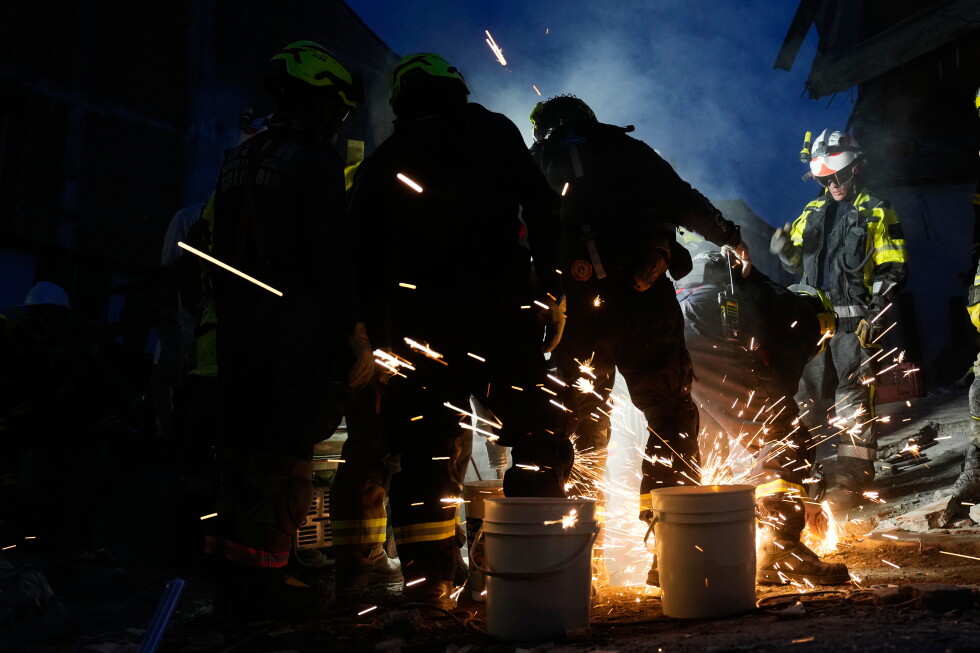
    A remarkable 14-day rescue mission ended in success this week, when Mexican army divers pulled a 42-year-old miner to safety after nearly two weeks trapped in a flooded, collapsed gold mine in the northern state of Sinaloa. The incident unfolded on March 25, when a tailings dam — the containment structure built to hold toxic mining waste — burst at the site, sending mud and water rushing through the underground tunnels. At the time of the collapse, 25 workers were operating deep below the surface. Twenty-one of those workers were able to evacuate to the surface immediately, but four were cut off and trapped 300 meters underground by the disaster.

    In the days that followed, rescue teams launched a frantic search through the waterlogged tunnels. Five days after the collapse, one trapped miner, José Alejandro Cástulo, was pulled to safety, while a second was found deceased. It took rescuers a full 13 days of continuous, painstaking searching to locate the third trapped miner, Francisco Zapata Nájera. After more than 300 hours of navigating murky, debris-filled water, divers finally spotted the faint, repeated blinking of Zapata Nájera’s headlamp, which he had been switching on and off intentionally to signal his location to search teams.

    Footage captured from the rescue mission shows Zapata Nájera standing in waist-deep water, visibly exhausted but unbroken in spirit. When divers reached his position and told him that his torchlight had been critical to finding him, he repeated again and again that he never lost faith that he would be saved. Even after locating him, however, the rescue team faced a new obstacle: the water level in the connecting tunnel was still too high for an immediate extraction. Divers left Zapata Nájera with emergency supplies including clean drinking water, canned tuna, and energy bars, and promised to return once they could lower the water enough to bring him out.

    Over the next 20 hours, rescue teams operated heavy pumps to drain excess floodwater from the tunnel system. Early Wednesday, the water level dropped enough to allow extraction, and Zapata Nájera was finally brought to the surface. Wrapped in a thermal blanket to stabilize his body temperature and seated on an electric utility cart, he exited the mine entrance, and was immediately airlifted by helicopter to a local hospital for evaluation, where he was reunited with his waiting family. Doctors reported that while he is frail after his 14-day ordeal, his vital signs are stable and he is expected to make a full recovery with appropriate medical care.

    The search is still ongoing for the fourth miner, who remains missing in the collapsed mine. Mexican President Claudia Sheinbaum issued a public statement praising both the relentless effort of the Mexican army rescue team and Zapata Nájera’s extraordinary resilience and unwavering hope, which she credited for making the “astounding rescue” possible.

  • Peruvians choosing a president from 35-candidate pool in Sunday’s election

    Peruvians choosing a president from 35-candidate pool in Sunday’s election

    On Sunday, Peru will hold a landmark general election that will select the Andean nation’s ninth president in just 10 years, alongside the launch of a new bicameral legislative system — all against a backdrop of soaring violent crime, deep-rooted public corruption, and widespread voter cynicism that has left much of the population skeptical of change. Thirty-five candidates are competing for the nation’s top office, an unprecedented field in Peru’s electoral history that ranges from a longtime political scion and a former capital mayor to a popular comedian, reflecting deep fragmentation in the electorate that analysts say all but guarantees a June runoff.

    Voting is compulsory for Peruvian citizens between the ages of 18 and 70, with more than 27 million registered voters nationwide. Around 1.2 million of those eligible to vote are currently living abroad, with the largest concentrations of overseas voters located in the United States and Argentina. To win the presidency outright, a candidate must secure a 50% majority of the vote; given the split field, no candidate is expected to hit that threshold, pushing the race to a second round.

    For most Peruvian voters, the single most pressing issue driving this election is the unchecked surge in violent crime that has upended daily life across the country. Official government data shows homicides have doubled over the past decade, while extortion cases have jumped fivefold. In 2025 alone, more than 200 public transportation drivers were killed in targeted attacks, leaving ordinary residents afraid to leave their homes. A 2025 national survey from Peru’s National Institute of Statistics and Informatics found that 84% of urban respondents worried they would become a crime victim within the next year.

    Juan Gómez, a 53-year-old construction worker supporting five children in Lima, summed up the pervasive frustration with public insecurity and political failure. “You can’t trust anyone anymore, nothing’s going to change,” Gómez said. “(Criminals) come on motorcycles, put a gun to your head… you look around and there’s no police officer. What are you going to do? You just let them rob you.” Raúl Zevallos, a 63-year-old retiree, echoed those fears, noting the constant risk of violence that comes with routine travel. “You get on the bus, and you have to sit far from the driver; you don’t know if you’ll make it home alive,” Zevallos said. “Criminals drive by on motorcycles, shoot, kill the driver, and you could die, too.”

    In response to widespread public anger over crime, most candidates have rolled out hardline policy proposals aimed at demonstrating they will tackle the crisis. Planks of these platforms include constructing massive new maximum-security megaprisons, restricting prisoner access to food unless they work, and reinstating the death penalty for serious violent offenses.

    The most high-profile candidate in the race is Keiko Fujimori, a conservative former congresswoman and daughter of late Peruvian President Alberto Fujimori, who is making her fourth bid for the presidency. Fujimori has campaigned on an “iron fist” anti-crime agenda, promising to make prisoners work to earn their meals and allow judges presiding over criminal cases to remain anonymous to protect them from gang retaliation. But her platform faces scrutiny: her political party supported recent legislative changes that legal experts argue have weakened criminal prosecutions, including eliminating preliminary detention for certain offenses and raising the legal bar for seizing assets connected to criminal activity.

    Another leading conservative contender is Rafael López Aliaga, the former mayor of Lima, who has proposed building new large-scale prisons in Peru’s remote Amazon region, also backing anonymous judges and calling for the expulsion of undocumented immigrants living in the country. The race also includes outsider candidates, most notably Carlos Álvarez, a comedian who has pivoted to politics and has promised to invite policy experts from El Salvador, Denmark, and Singapore to help craft a new national security strategy for Peru.

    Beyond the presidential race, Sunday’s election will mark the return of a bicameral Congress to Peru for the first time in more than 30 years, a change enacted via 2024 constitutional amendment by sitting lawmakers despite 80% of voters rejecting the proposal in a 2018 public referendum. Under the new structure, the 60-seat Senate will hold substantial new powers: the president will no longer have the authority to dissolve the Senate, and the chamber will have the power to remove the president from office through impeachment with just 40 votes, a lower threshold than the 87 votes required under the previous unicameral system. Political analysts note that the lower impeachment threshold was a direct response to the frequent turnover of presidents over the past decade that left Peru with nine leaders in 10 years, but warn the new structure concentrates too much power in a small chamber.

    “They’ve concentrated too much power in a 60-people chamber,” said Alejandro Boyco, a researcher at the Institute of Peruvian Studies. “They are not going to be immune to being corrupt.” The new Senate will also be responsible for appointing and disciplining top government officials, including the national Ombudsman, Constitutional Court justices, and members of the Central Bank’s board of directors, in addition to reviewing and amending legislation passed by the lower congressional chamber.

  • Brazil’s Lula argues for ban on online betting platforms

    Brazil’s Lula argues for ban on online betting platforms

    SAO PAULO — In a stark policy shift that has sent ripples through Brazil’s multi-billion dollar online gambling sector, President Luiz Inácio Lula da Silva announced Wednesday he supports a full nationwide ban on digital betting platforms, an industry that generates an estimated $4 billion in annual revenue in Brazil and ranks among the largest global markets for the activity. The 80-year-old incumbent, who is set to run for re-election in October’s general vote, framed the unregulated growth of online gambling as a “massive tragedy” that has driven exponential growth in household debt across millions of Brazilian families.

    In an interview with Brazilian news outlet ICL Noticias, Lula made his position clear: “If it were up to me, we would shut all of them down. I am deeply concerned about the growing indebtedness of the Brazilian people. If these platforms cause widespread harm to our population, why would we allow them to continue operating? We are discussing this proposal with the utmost seriousness.”

    The president acknowledged that any ban or major regulatory overhaul would require legislative approval from Brazil’s congress, where many lawmakers maintain close political and financial ties to betting industry lobbyists. The trajectory of online betting regulation in Brazil has shifted dramatically over the past seven years: sports betting was first legalized in 2018 via legislation signed by then-President Michel Temer. After taking office, Lula’s left-leaning administration blocked a number of unlicensed platforms in 2024 before introducing a formal regulatory framework for the industry in 2025. Currently, the administration is already pushing to raise industry tax rates from the existing 12% of gross income, a proposal that has drawn fierce pushback from operators.

    Betting industry representatives have argued they support clear, standardized regulation to build a more transparent and trustworthy domestic market. But they warn that excessive tax hikes or a full ban would backfire: local licensed operators would be forced out of business, while unregulated offshore platforms would continue to capture a large share of Brazilian consumers without meeting licensing requirements or paying any domestic taxes.

    Data from a leading Brazilian commerce and services confederation, published this past March, underscores the urgency of Lula’s concerns: more than 80% of all Brazilian households currently carry some form of outstanding debt, the highest recorded share since 2010. Independent market analysts have linked a significant portion of this rising household debt burden to the rapid expansion of the online betting sector over the past five years.

    Criticism of online betting has already united a broad coalition of opposition to the industry across Brazil. Most forms of gambling remain illegal under Brazilian law, and major religious groups and social activists have long decried the social harm caused by unregulated online betting. The industry also holds a massive cultural footprint in Brazil: betting companies sponsor nearly every top-flight and second-division professional soccer club in the country, and some of the nation’s biggest soccer stars — including Vinícius Júnior, Ronaldo Nazário, and Roberto Rivellino — serve as high-profile spokespeople for both domestic and international betting brands.