Nestled in the shadow of the snow-capped Andes, Virginia de Valle walks through her family’s 16-hectare Bodega Gieco vineyard in Argentina’s renowned wine hub Mendoza, gesturing to the rows of grapevines that produce 100,000 litres of premium wine annually. Her opening remark carries unshakable gravity: “Without water, there would be no wine.” For Mendoza’s winemaking community, every drop of irrigation water traces back to the Andes’ winter snowpack and ancient glaciers – natural reserves that now sit at the center of a fierce national debate following recent parliamentary approval of sweeping reforms to Argentina’s landmark 2010 glacial protection law.
For generations, Mendoza’s identity has been tied to its glacial water supply. Residents call the region “the daughter of the Andes’ water,” and as droughts grow more frequent and severe across the semi-arid province, glacial melt has become a critical buffer that keeps vineyards productive and household taps running. De Valle’s fear is shared by millions across the country: the rolled-back protections will open vulnerable glacial ecosystems to destructive large-scale mining, putting vital water sources at irreversible risk. “Every drop of water counts,” she emphasizes, a warning that resonates far beyond Mendoza’s vine rows.
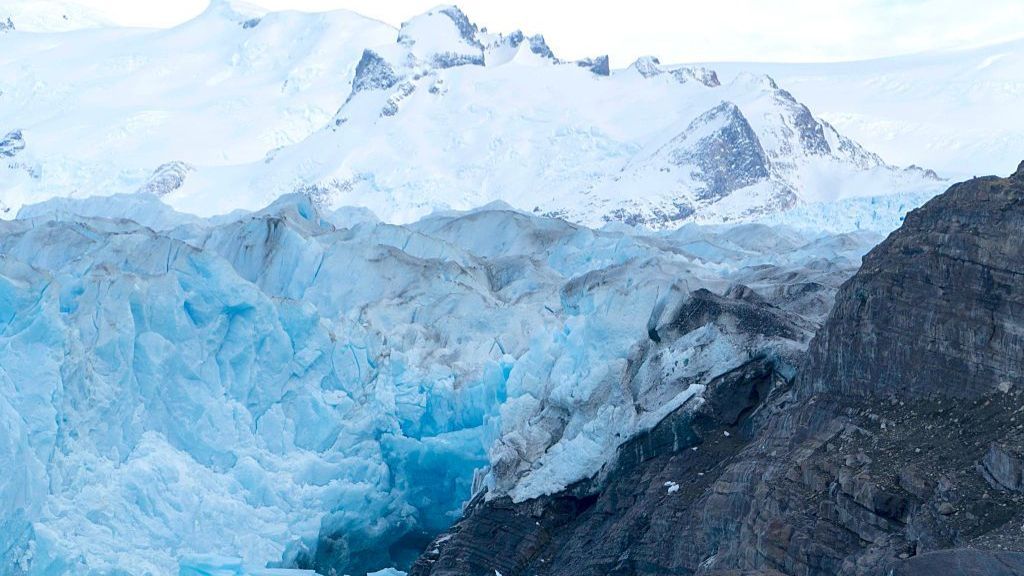
Argentina was a global pioneer in glacial conservation when it passed the 2010 Glacier Law, the first national legislation in the world dedicated specifically to protecting these critical frozen water reserves. The original law designated all glaciers and surrounding periglacial environments – including permafrost that traps billions of liters of frozen water – as strategic national reserves, banning any commercial activity that would damage them, and required a full national inventory maintained by the country’s leading glacial research body, the Argentine Institute of Snow Research, Glaciology and Environmental Sciences (Ianigla).
The new reforms shift all decision-making power to provincial governments, which will now determine which glaciers within their borders qualify as “strategic” – defined as reserves that provide water for consumption, agriculture, biodiversity, scientific research or tourism. Glaciers deemed non-strategic can be removed from the national protected inventory, stripping them of all legal environmental safeguards. Proponents of the changes, led by President Javier Milei’s libertarian administration La Libertad Avanza, frame the original 2010 law as an unnecessary regulatory barrier that has blocked Argentina from unlocking its vast mineral wealth. They argue that opening glacial regions to copper and lithium mining will catalyze regional economic growth and accelerate the global transition to clean energy, which depends heavily on both minerals. Milei, who has campaigned on cutting red tape to attract foreign investment, has pointed to neighboring Chile, which shares the Andes mountain range and exports $20 billion worth of copper annually, while Argentina currently exports no copper at all. According to Bloomberg reporting, major global mining firms including Glencore, Lundin and BHP Group have already met with Milei, with plans to invest roughly $40 billion into Argentina’s untapped copper reserves if regulations are loosened.
Opposition to the reforms has erupted across the country, from Mendoza’s wine valleys to Patagonia’s popular hiking destination El Chaltén, with the rallying cry “Los glaciares no se tocan” (Hands off our glaciers) painted on walls and sidewalks nationwide. More than 100,000 people registered to participate in a public hearing on the reforms in March, though fewer than 400 were able to speak during the two-day session. Agostina Rossi Serra, a biologist with environmental advocacy group Greenpeace, argues that widespread public opposition demonstrates this is not just an environmentalist cause – it is a fight for public water security. “It made clear that it’s not just environmental organisations who were asking for this law not to be amended; it was the people, the public, who were asking for water to continue to be protected,” she says.
Many of the provincial governments pushing for the reforms, including Mendoza and neighboring San Juan, are located in arid and semi-arid regions where water is already a scarce, highly contested resource. Serra accuses these regional governments of prioritizing mining revenue over the long-term well-being of local ecosystems and communities: “They are provinces that believe mining development is far more important than ecosystems and the communities themselves.”
Leading glaciologists have also pushed back on the core justifications for the reform, calling its central claims fundamentally flawed. Lucas Ruiz, an independent glaciologist researcher at Ianigla, explains that the argument that some glaciers do not contribute to river systems is scientifically baseless. “The most false part of it all is the claim that there are glaciers that do not contribute to rivers. If it’s a glacier, it has ice and contributes water. It’s very basic,” he says. Ruiz adds that the reform’s vague language creates massive uncertainty: “We are left not knowing what criteria will be used, not knowing which technical bodies will be involved, and clearly, any glacier and any periglacial environment could be at risk.”
Ruiz also acknowledges a painful paradox at the heart of the debate that complicates the scientific community’s position: glacial melt is accelerating globally due to climate change, driven by fossil fuel emissions. Avoiding the worst-case scenarios requires a rapid global energy transition to renewables – a transition that depends entirely on large-scale extraction of copper and lithium for batteries, transmission infrastructure and clean energy technology. “It is a stark paradox, hard to accept, but it is the reality. Because the message from science is that energy transition is necessary,” he says. The solution, he argues, is not to roll back protections entirely, but to require rigorous environmental impact assessments for any mining project that would affect glacial ecosystems, and ensure all development is conducted responsibly.
Greenpeace remains deeply concerned that the profit motive will push provinces to weaken protections to attract investment. “If I have an international company looking for a place to develop a project, I’ll probably choose the province with the fewest environmental restrictions. That’s the concern we’re going to face,” Serra says.
Supporters of the reform argue that provincial control is the most fair and effective governance structure. Federico Palavecino, a Buenos Aires-based lawyer who advises mining projects on glacial regulation, says that since provincial communities will bear the consequences of any mismanagement, they should have the right to set their own rules. “Why should we tell them how to live?” he asks, arguing that removing regulatory barriers will bring much-needed economic investment to struggling rural communities.
Back in her Mendoza vineyard, De Valle is working to educate visitors about the potential consequences of the reform, framing the fight as one that affects all Argentines, not just winemakers. “It will affect wineries, but first, it will affect life,” she says. With more than 16,900 glaciers across Argentina feeding 36 river basins that supply water to seven million people across 12 provinces, the outcome of this debate will shape the country’s water security, economic future and environmental legacy for generations to come.