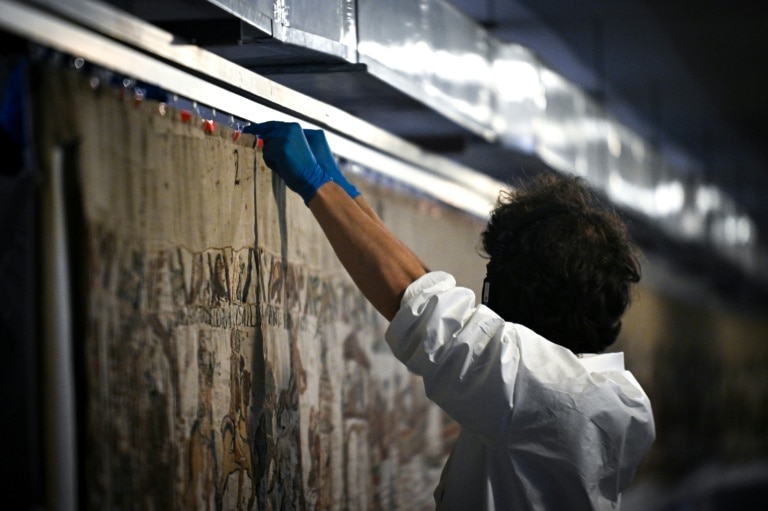
After more than 900 years rooted in its permanent French home, the iconic 11th-century Bayeux Tapestry began its unprecedented journey to London’s British Museum on Thursday, in what ranks as one of the most complex cultural logistics operations in modern history. The fragile 68-meter embroidered masterpiece, which has called the northern French town of Bayeux home for centuries, departed its home institution inside a custom-built high-tech container engineered to absorb vibrations and lock in a consistent temperature and humidity level, according to sources close to the operation. The artwork will travel through the Channel Tunnel aboard a climate-controlled truck, accompanied by a full police security escort to ensure its safe passage across the Channel. This landmark loan is billed as a deliberate diplomatic gesture designed to strengthen long-standing Franco-British friendship, marking the first time the tapestry has left French territory in more than nine centuries. The tapestry chronicles the 1066 Norman invasion of England led by William the Conqueror, who crossed the Channel to defeat King Harold at the Battle of Hastings — an event that permanently reshaped the trajectory of English and European history. Starting September 10, the UNESCO-listed artwork will be open to public viewing at the British Museum in a special exhibition running through July 2027. The historic move has not been without controversy, however. A cohort of conservation experts has raised repeated alarms that the cross-channel transport could cause irreversible harm to the already fragile artwork, which currently bears 30 distinct tears and nearly 10,000 small holes. A 2021 analysis by restoration specialists warned that any journey longer than two hours would carry unavoidable “additional risks” for the delicate piece. These warnings were set aside when French President Emmanuel Macron first announced the approved loan exactly one year ago, framing the move as a celebration of Franco-British ties a decade after the divisive Brexit referendum that strained bilateral relations. In the years since the announcement, cultural and technical teams have completed extensive preparatory work to mitigate transport risks, including multiple detailed technical studies and two full test runs using a full-size reproduction of the tapestry to refine logistics protocols. Last September, conservators completed a delicate, months-long operation to carefully remove the tapestry from its permanent display at the Bayeux Museum, where it had not been moved since 1983, and transfer it to a secured, undisclosed storage location to await transport. This is not the first time plans have been floated to bring the tapestry to the UK: two prior proposals, one for Queen Elizabeth II’s 1953 coronation and a second for the 900th anniversary of the Battle of Hastings in 1966, were ultimately scrapped over conservation and logistics concerns. Public demand for the upcoming exhibition has already broken records, with the British Museum selling 100,000 tickets on the first day of sales earlier this month. Adult tickets are priced between £25 and £33, and after the first batch sold out in record time, museum officials have announced that a second allocation of tickets will be released to the public later this year. Once on display, the tapestry will be laid flat for unobstructed viewing inside a purpose-built elevated glass display case designed to protect the artwork while giving visitors a full view of its intricate embroidery. The UK government has covered the full cost of the transport operation, though the exact total expenditure has not been disclosed to the public.
标签: Oceania
大洋洲
-
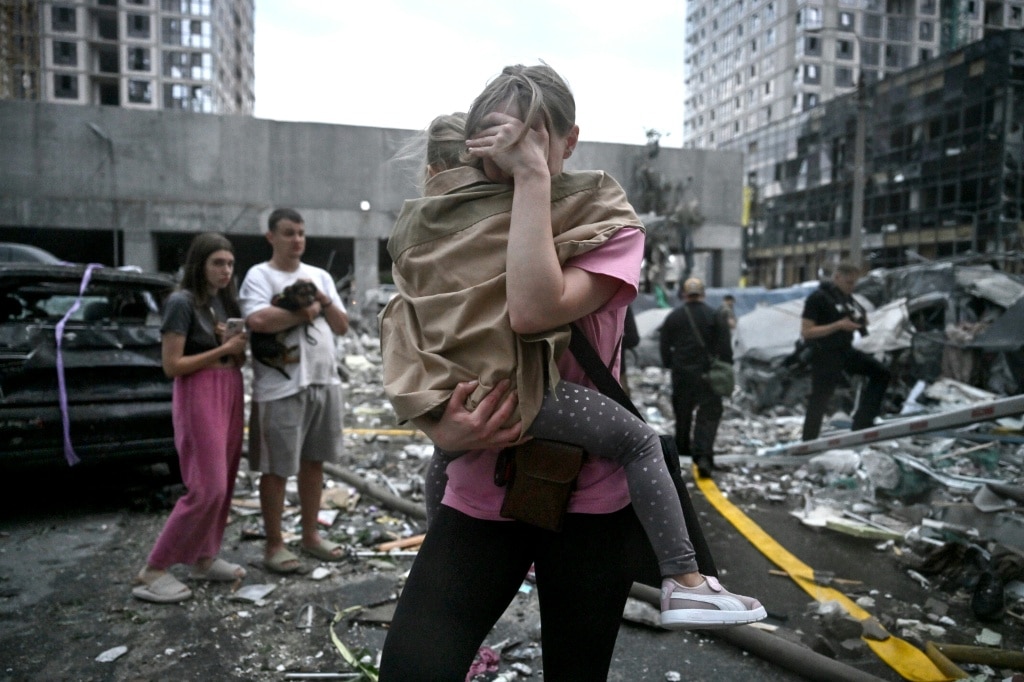
Nerves high in Kyiv as Russia escalates missile attacks
After more than four years of enduring Russia’s full-scale invasion, residents of Ukraine’s capital Kyiv are facing a sharp new spike in danger and anxiety, as Moscow escalates its missile assault with a wave of hard-to-intercept ballistic attacks that have upended the fragile daily routines civilians had built over years of conflict.
For 27-year-old student Oleksiy Virskovsky, the growing intensity of strikes pushed him to change a habit he had kept through hundreds of nights of attacks: he no longer skips trips to the neighborhood underground shelter. Speaking to Agence France-Presse, Virskovsky said Russian attacks on Kyiv have grown far more aggressive, massive, and intense in recent weeks. “It’s somehow become more frightening, and I’ve started going down to the shelter… I’ve begun to take safety more seriously than before,” he explained.
While Russia has targeted Kyiv with missile and drone strikes since the first day of its invasion, the latest wave of attacks relies heavily on ultra-fast ballistic missiles that Ukraine’s air defense systems struggle to shoot down. This new tactic has already claimed dozens of lives in July alone, with more than 50 residents killed so far this month. Two of the deadliest strikes on the capital across the entire four-year invasion occurred less than a week apart in early July.
During a large-scale assault overnight between July 5 and 6, Kyiv’s air defenses failed to intercept a single incoming ballistic missile — a troubling setback for a city long considered the best-defended in Ukraine. In another separate attack, a missile detonated over Kyiv’s skyline and jolted sleeping residents awake before the city’s air alert system could even trigger sirens. The early failure of the warning network, which normally sends multiple daily alerts via street loudspeakers, metro announcements and smartphone notifications, marked a rare and unexplained glitch that deepened public unease.
Ukrainian President Volodymyr Zelensky has publicly acknowledged the capital’s critical vulnerability: Kyiv does not have enough US-provided Patriot missile interceptors to fully shield the city from incoming strikes. At a recent NATO summit, US President Donald Trump signaled openness to allowing Ukraine to produce its own interceptors domestically, but key details of the plan remain undisclosed, and any domestically manufactured systems will take months to reach operational use.
In the gap between the rising threat and long-term solutions, Kyiv residents are scrambling to rewrite the unwritten safety rules they developed over four years of war. For years, many civilians relied on personal experience and social media tracking of incoming attacks to gauge the level of risk, allowing them to maintain a semi-normal daily routine. But ballistic missiles cut travel time to Kyiv to just a few minutes after launch, eliminating the window of time civilians previously had to react and reach safety.
The new urgency has sent thousands of residents flocking to the city’s metro network, Kyiv’s primary large-scale underground refuge, far earlier than they previously would. Many now head straight to stations immediately after finishing work, rather than waiting for an official air alert to be called. On nights when major attacks are anticipated, station platforms have become severely overcrowded, with civilians bringing pets, tents, air mattresses, baby prams and cots to settle in for the night.
Kyiv’s metro authority confirmed that more than 50,000 residents camped in the metro network during one recent major attack — the highest number of people seeking shelter there since the chaotic first months of the invasion in 2022. For Veronika Khudenko, a 22-year-old intern who has been in Kyiv for just one month from London, every night over recent weeks has been spent in the metro. “The latest attacks are very hard to bear, very nerve-wracking,” she told AFP. “It’s very hard to function during the day, because there is strong emotional pressure throughout the night.”
Not all residents can or choose to seek shelter in underground public spaces. Anna Nesterova, a 46-year-old podologist, says she prefers to remain at home during attacks, sheltering in the building’s entrance hallway, because she fears being trapped in a crowded underground space if a strike hits. “It’s more convenient for me and I feel calmer at home,” she said. Nesterova’s son joined the front lines immediately after he turned 18, so she says she feels a responsibility to stay calm for him.
Thirty-four-year-old Yulia Parkhomenko, a mother of two, also remains at home during strikes: the nearest metro station is too far from her residence, and there are no adequate private or public basements nearby. As soon as an air alert sounds, she gathers blankets and pillows, and hunkers down in the bathroom with her two children. “With each attack it’s getting more and more frightening,” she said. “And the scariest thing is for the children. My children are just very afraid.”
The escalating strikes have left the capital gripped by a new wave of chronic stress, as civilians adapt to a level of threat that has not been seen since the opening weeks of the invasion, four years ago.
-
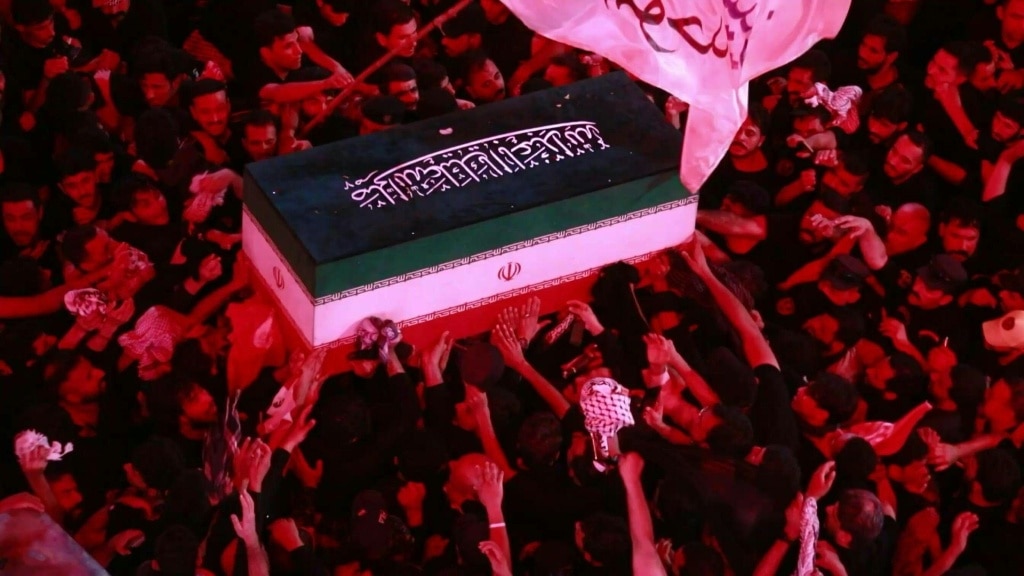
‘Only revenge’: Iran mourners defiant at Khamenei burial
Battling sweltering temperatures that neared 40 degrees Celsius, thousands of loyalists to Iran’s Islamic Republic gathered in the northeastern holy city of Mashhad on Thursday for the burial of long-serving Supreme Leader Ali Khamenei, united by chants of vengeance and firm rejection of any compromise with Western powers. Khamenei was killed in an Israeli strike in late February, on the opening day of a major US-Israeli military campaign against Iran, cutting short a 35-year tenure leading the country.
The six-day series of national funeral ceremonies saw mourners pay tribute across Tehran, the key clerical center of Qom, and Iraq’s holy Shia cities of Najaf and Karbala, where massive crowds turned out to honor the late leader before his body was transported to Mashhad for the final interment. Per Khamenei’s will, he will be laid to rest at the Imam Reza shrine, Iran’s most sacred site for Shia Muslims, alongside close family members including his infant granddaughter, daughter, son-in-law, and daughter-in-law Zahra Haddad Adel — all of whom died in the same February 28 strike that killed Khamenei. His son and designated successor Mojtaba Khamenei, widely reported to have been injured in that attack, has not yet appeared in any public setting, a development that has drawn close scrutiny from global observers.
As crowds lined the processional route from early morning, local officials announced that a helicopter would carry Khamenei’s coffin over the final segment of the journey to the shrine, after projections showed the main avenue would be overwhelmed by attendees. At least one fighter jet escorted the aircraft carrying the casket to Mashhad, a security precaution that came as new hostilities have broken out between Iran and the United States, just one month after a preliminary accord was reached to end months of open conflict. Facing the extreme heat, fire trucks deployed water sprays to cool the massive gathering, while military fighter jets carried out low-altitude passes over the event to reinforce security.
Nearly all attendees wore black mourning garb: men in black shirts, and women in full black chadors, with many waving the red flags that carry traditional symbolic meaning of vengeance in Shia Islam. Slogans directed at US President Donald Trump, Israeli Prime Minister Benjamin Netanyahu, and any push for diplomatic compromise rang out across the crowd, led by official funeral eulogists. Large provocative banners placed near the procession drew a hardline line: one displayed a caricature of Trump with a bounty advertised for his head, while another bore a message in English directed at Netanyahu reading “There will be blood.”
“The loss of the leader is heavier than losing our parents,” said Hoda, a 35-year-old housewife who traveled to attend the burial. Echoing the widespread sentiment across the crowd, she told reporters, “Only the death of Trump and Netanyahu will soothe our pain. There should be no compromise at all,” referencing the mid-June peace deal that ended the initial phase of open hostilities.
Mohammad Afsharian, a 41-year-old local shop owner, noted that the unified call for revenge cut across any public divides over diplomatic policy. “I don’t know what’s the story with diplomacy and what’s the policy to continue diplomacy but all the people are carrying red flags in a sign of seeking revenge,” he said.
The public anger aligns with longstanding criticism from Iranian hardliners, who have repeatedly pushed back against President Masoud Pezeshkian’s administration for pursuing diplomatic talks with Washington following Khamenei’s assassination. Tahereh Rahmani, a 37-year-old school administrator, echoed the hardline consensus: “Only revenge, only revenge can soothe the pain. We are here with our red flags to call for the revenge of our leader.”
The ongoing outbreak of violence forced the closure of the 800-kilometer rail link connecting Tehran and Mashhad, Iran’s state railway company confirmed, adding that organizers had arranged alternative road transport for passengers left stranded by the closure. The funeral prayer ahead of the burial was set to be led by 101-year-old Ayatollah Hossein Noori Hamedani, a prominent conservative figure within the Islamic Republic’s leadership, capping a week of national mourning that has underscored the deep polarization and heightened tensions roiling the region in the wake of Khamenei’s death.
-

Olympic sprint champs Alfred, Thomas bid for work-life balance
Two of sprinting’s biggest rising stars, 2024 Paris Olympic champions Julien Alfred and Gabrielle Thomas, are gearing up for a highly anticipated 200-meter showdown at this week’s Monaco Diamond League, approaching the 2025 track season with a new, intentional priority: balancing elite athletic competition with meaningful personal time.
The pair made global history at the 2024 Paris Games, where American sprinter Thomas claimed 200m gold, while Alfred delivered St. Lucia’s first ever Olympic medal of any type by taking top spot in the women’s 100m. Now, they are set to face off in one of the most competitive fields of the 2025 Diamond League circuit.
For Thomas, Friday’s race marks her first Diamond League start in two years, following a season-ending achilles injury that sidelined her in 2024. Despite the extended break from top-tier Diamond League competition, she has already proven her elite form this year: last month in Texas, she clocked a blistering 21.70 seconds in the 200m, a time that briefly held the world lead and currently ranks as the second-fastest mark globally in 2025.
She will face stiff competition in Monaco, including current world leader Adaejah Hodge, fellow American sprinter Anavia Battle, and Alfred, who has remained undefeated in all outdoor races so far this season. Both sprinters have framed the high-stakes race as an opportunity to push each other to new personal bests.
“It’s a great field with amazing competitors so I’m looking forward to seeing what we can bring out of each other,” Thomas told reporters ahead of the race. Alfred echoed that excitement, saying, “Gabby’s a big competitor so I’m just looking forward to having a race.” The St. Lucia native also confirmed she will skip the upcoming Commonwealth Games in Glasgow this July to maintain her balanced schedule.
Unlike previous years packed with championship or Olympic preparations, 2025 is a rare offseason for elite track and field, with no Olympic Games or standard world championships on the calendar. World Athletics will launch its new biennial invitational Ultimate World Championship in Budapest this September to cap the season, but the reduced pressure has opened up new space for athletes to prioritize personal commitments that often fall by the wayside during intense training cycles.
For Alfred, that means regular trips home to St. Lucia to connect with loved ones. The 25-year-old said she has relished the chance to prioritize relationships alongside her training. “I’ve been going back to St Lucia every month. I’m happy to find a balance between life and sport, seeing a lot more of my family and friends,” she explained. “Sometimes I tend to be so focused on just competing and winning all the time. Winning is always fun, but winning can’t be the end and be all of your life. While we do love to compete, and we’re both very competitive, we are also full people outside of the sport.”
Thomas is also taking advantage of the less demanding 2025 schedule to check off a major personal milestone: she is currently planning her wedding for this year. “I actually have my wedding plan for this year because it’s an off season, and I’m having so much fun planning my wedding,” the 29-year-old said. “I’m centering other aspects of my life, and just taking time to see my friends. I’ve made multiple trips to see my family. Normally, in every other year, you feel guilty for taking trips to visit your mom and dad, showing up for your friends.”
She added that many casual sports fans do not grasp the extent of personal sacrifices elite athletes make to compete at the highest level. “This is a time that we get to enjoy life like that, and we foster these relationships, and we get to add it to our potential support while also still being on the circuit and still always running,” she said.
Looking ahead to Friday’s sold-out race at Stade Louis II, Thomas said her status as Olympic champion has not changed her core approach to competition. “I try to focus on the same, despite the fact that the expectations get higher,” she said. “The goal is to win. The goal is to come out and put your best foot forward, no pun intended, and just do what it takes to win the race. You take it race by race, and hopefully, I compete well to the best of my abilities, and I finish the race healthy. And of course, just have a good time and push myself!”
-
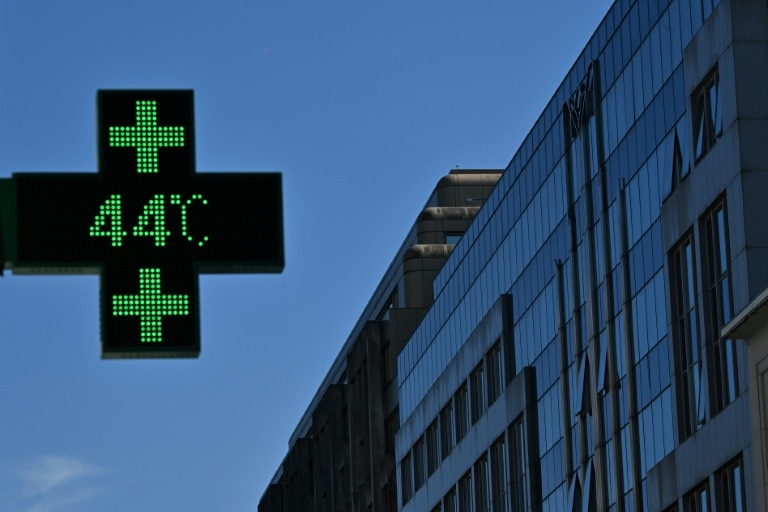
Two thirds of EU faced harmful ozone levels during heatwave: report
Last month’s historic heatwave that baked Western Europe left an alarming hidden public health crisis in its wake: a new report from environmental non-governmental organization Global Witness has found that two-thirds of the European Union’s population were exposed to dangerous, above-guideline levels of ground-level ozone pollution between June 21 and 28.
The analysis, which combines data from 162 cross-continental air quality monitoring stations, atmospheric modelling from the EU’s Copernicus Atmosphere Monitoring Service (CAMS) and regional census data, estimates that nearly 298 million EU residents — including 100 million children and elderly people, groups that are disproportionately vulnerable to air pollutant harm — faced ozone concentrations exceeding the EU’s recommended maximum daily eight-hour average of 120 micrograms per cubic meter. Even more starkly, around 87 percent of the EU’s 450 million total population were exposed to levels above the World Health Organization’s stricter safety guideline of 100 micrograms per cubic meter, with 72 million people hit by concentrations crossing the 150 micrograms per cubic meter threshold, classified as the most dangerous range. Two-thirds of all monitoring stations recorded ozone readings in the top 1 percentile of all June measurements dating back to 2013, with a peak reading of 233.7 micrograms per cubic meter recorded in Germany’s North Rhine-Westphalia on June 27.
This widespread exposure event comes just hours after the EU’s Copernicus Climate Change Service confirmed June 2024 was the hottest June ever recorded in Western Europe, amplifying longstanding concerns about how climate change is worsening dangerous air quality events. Unlike the stratospheric ozone layer that shields Earth from harmful solar radiation — which is slowly recovering from decades of damage caused by chlorofluorocarbon refrigerants — ground-level ozone is a toxic primary component of smog that poses severe risks to human health. Exposure can trigger acute breathing issues, permanent lung tissue damage, asthma attacks, and a range of other chronic respiratory and cardiovascular complications. Data from the European Environment Agency shows that ozone pollution was linked to more than 63,000 premature deaths across Europe in 2023 alone, alongside billions of euros in damaged agricultural crops.
Ground-level ozone forms when nitrogen oxides (most often released from vehicle traffic) and volatile organic compounds (largely tied to human-caused methane emissions) react under high temperatures and intense sunlight — conditions that were widespread across the continent during last month’s heatwave. “If these chemicals are not emitted in the first place, then ground-level ozone does not form,” explained CAMS director Laurence Rouil, whose agency provided modelling data for the Global Witness report. Rouil noted that the scale of this ozone event, occurring so early in the summer season, is particularly concerning when compared to the devastating 2003 European heatwave, calling it “really remarkable and worrying.” She added that coordinated international action is essential to address the root causes of rising ozone pollution.
While the EU has made significant progress cutting nitrogen dioxide emissions over the past several decades, the report highlights a critical policy gap: methane, which contributes one-third of all ground-level ozone formation, currently has no binding reduction targets for agricultural sources in the bloc. Global Witness senior campaigner Flossie Boyd framed the widespread exposure as an “invisible threat” driven by fossil fuel dependence. “People are being forced to live through very dangerous conditions as a result of our dependence on fossil fuels,” Boyd told AFP, calling for immediate policy action to cut precursor emissions that drive both rising global temperatures and toxic ozone pollution. “We need to stop these initial emissions driving up dangerous temperatures and driving the ozone and other forms of pollutants that are making our cities and beyond dangerous places to live,” she added.
Independent climate scientists not involved in the report have echoed its findings, noting that the pattern matches on-the-ground data across the continent. James Weber, a climate scientist at the University of Reading in the UK, told AFP that his own independent research found more than half of UK air monitoring stations exceeded the WHO’s ozone safety guideline during the heatwave’s peak. Weber warned that ozone pollution creates an extra layer of health risk during heat events, when human bodies are already strained by high temperatures and humidity. “Ozone is a problem when there are already pressures on people’s health from humidity and temperature,” he said, noting that ongoing climate change will only increase the frequency and severity of these overlapping extreme heat and ozone events. For the general public, he recommends avoiding strenuous outdoor activity during the hottest hours of days when high ozone levels are forecast.
-
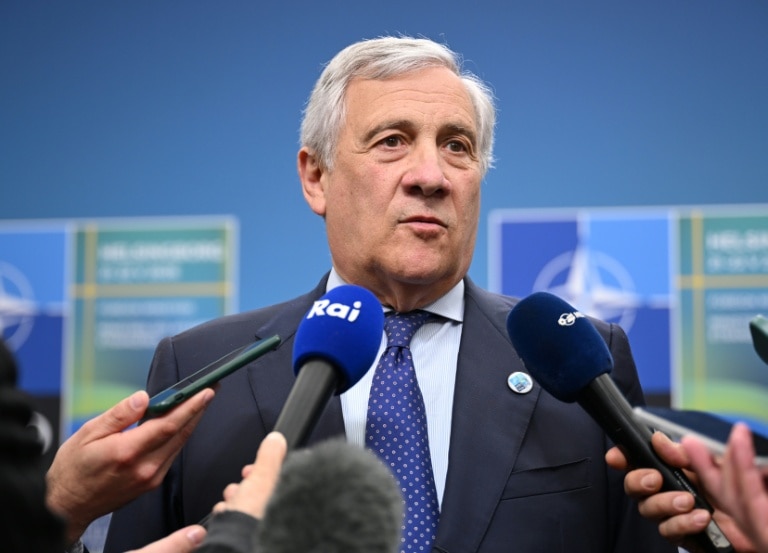
Italy expels two Russian diplomats accused of spying: minister
In a sharp escalation of diplomatic tensions between Rome and Moscow, Italy has ordered the immediate expulsion of two Russian military attaches found to be engaged in espionage activities on Italian soil, senior government officials confirmed Thursday. The move comes just 48 hours after Italian law enforcement announced the arrest of two former Italian intelligence agents, who local media reports are accused of leaking highly sensitive military information related to Italy’s support for Ukraine to Russian handlers.
Italian Foreign Minister Antonio Tajani made the announcement of the expulsions official via a post on social media platform X, confirming the identities of the expelled diplomats as Ivan Petrovich Gorbachev and Mikhail Vasilyevich Astakhov. Tajani said the pair have been given a three-day deadline to leave Italian territory, noting they were directly tied to the espionage ring uncovered by prosecutors in Rome.
In his statement, Tajani issued a firm condemnation of Moscow’s actions, saying: “Moscow continues to use hybrid warfare to attack the West and Italy — acts of interference that are serious and unacceptable to Italian institutions and national security.”
The espionage investigation unfolded after Rome police revealed the arrest of the two ex-agents earlier this week. Details released by law enforcement show one of the detainees, a 59-year-old former Italian intelligence operative, was regularly paid by a Russian handler. Over the course of his collaboration, he passed classified information through a network of six sources, four of whom are currently active-duty military personnel assigned to high-security posts, police said.
Local media reports have shed further light on the scope of the leaked information. The network allegedly passed details to Russia about the SAMP/T, a joint Italian-French air defense system, along with Aster missiles that Rome planned to deliver to Ukraine for field testing in 2024. Russian handlers also sought intelligence on a NATO deployment based in Bulgaria and Avio, the major Italian defense manufacturer that produces engines for military drones and supersonic missiles, according to the reports.
Leading Italian newspaper Corriere della Sera added that the 59-year-old suspect also disclosed the identities of Italian counter-espionage agents assigned to monitor Russian intelligence operatives working in Italy. Another major national outlet, La Stampa, reported that the former agent shared thousands of separate intelligence documents with his Russian contacts over a 12-year period of collaboration, based on recordings of the suspect’s phone conversations seized by investigators.A legal representative for the former agent has rejected all accusations of treason against his client. The lawyer claims the suspect only collected information that is already available in the public domain, and the former agent is scheduled to undergo formal questioning by investigators on Friday.
Details of the second arrested Italian ex-agent, including their identity and the specific accusations against them, have not been released to the public as of Thursday.Italian Defense Minister Guido Crosetto framed the uncovered ring as just a small part of a much larger pattern of Russian activity earlier this week, saying the case is “just the tip of the iceberg” of Moscow’s ongoing hybrid warfare campaign across Europe amid its full-scale invasion of Ukraine.
This is not the first such diplomatic clash between Italy and Russia in recent years. In 2024, an Italian court sentenced a serving Italian navy captain to prison after he was caught selling classified documents to the Russian embassy. That incident also resulted in Italy expelling two Russian officials, followed by Moscow retaliating with the expulsion of one Italian diplomat from Russia. -
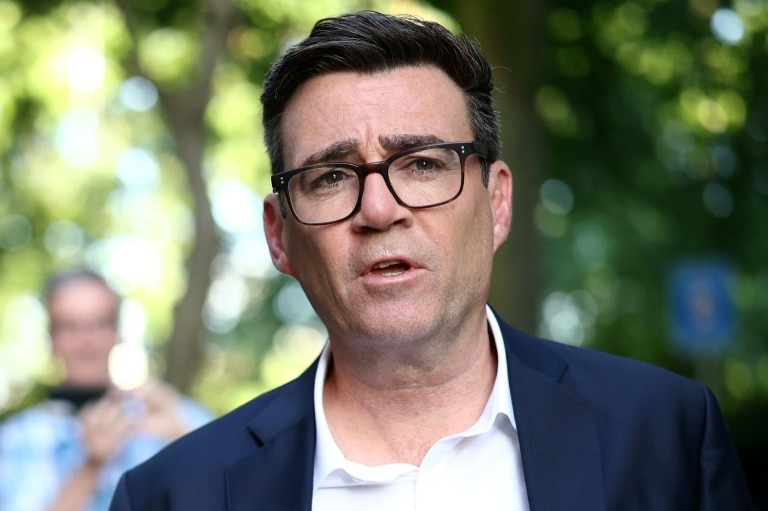
Labour leadership contest takes Burnham closer to UK PM’s office
The path to 10 Downing Street cleared a major milestone for veteran British politician Andy Burnham on Thursday, as the nomination period officially opened for a new leader of the UK’s ruling Labour Party following Keir Starmer’s resignation last month.
At 56 years old, Burnham stands as the only sitting Labour Member of Parliament that has publicly declared their candidacy to replace Starmer, who stepped down on June 22 after losing the confidence of his parliamentary party amid sustained criticism over repeated policy flip-flops and questions about his decision-making. Thursday morning saw a steady stream of Labour MPs file into the party’s parliamentary headquarters to submit their nominations for their preferred leader, with most insiders already signaling their backing for Burnham.
With no other declared candidates in the race after a string of potential challengers dropped out in recent days, political observers widely expect Burnham to be formally confirmed as Labour’s new leader – and the UK’s prime minister-in-waiting – at a special party conference scheduled for July 17. He would officially take up residence at 10 Downing Street just three days after the confirmation vote. If a contested leadership election were called, however, a result would not be announced until August 29, after a ballot of rank-and-file Labour members and representatives from the party’s affiliated trade unions.
Burnham’s path to the top job became all but guaranteed late Wednesday when former armed forces minister Al Carns announced he would not enter the race, ending any last speculation of a contested contest. Carns had initially suggested a leadership race could give Labour a chance to hold a full policy debate, but ultimately backed out and threw his support behind Burnham, arguing that extended internal party infighting was not what the British public needed amid ongoing economic and social challenges. “Months of internal Labour politics isn’t what the country needs right now. We’ve got to get on with the job,” Carns said in his statement.
To qualify as an official candidate, Burnham only needs the backing of 81 of Labour’s 402 sitting MPs – a threshold that political insiders confirm he will pass far more easily than required. Nicknamed the “King of the North” for his three consecutive election wins as Greater Manchester mayor, Burnham returned to parliament last month after winning a by-election, a move that cleared the way for his leadership bid. He previously served as an MP between 2001 and 2017, and this marks his third attempt to secure Labour’s top leadership post.
In a keynote policy speech delivered in June, Burnham laid out his early policy priorities, promising to deliver “the biggest rebalancing of power our country has seen” by devolving more authority to regional and local communities. “We need to put power in the hands of the people and places who can use it best,” he said, adding that raising living standards for all UK residents would be his core priority. “To fix the economy and the country, we need to change politics and we need to do it now,” he added. He has already moved to reassure financial markets by committing to the outgoing government’s current borrowing limits, pledging fiscal discipline and promising to reduce the UK’s growing welfare spending. One of his signature proposals is the creation of a “No. 10 North” regional prime ministerial office to drive devolution across northern England.
Carns’ withdrawal follows another high-profile exit from potential candidacy, after former health minister Wes Streeting announced he would abandon plans to run and also back Burnham. Multiple opinion polls rank Burnham as Labour’s most popular national politician, positioning him as slightly left of the more centrist Starmer. Many Labour MPs see Burnham as the party’s best bet to recapture lost voter support from Nigel Farage’s right-wing Reform UK, which has led Labour in national opinion polls for more than a year. Recent polling has narrowed the gap, however, amid growing scrutiny of Farage’s personal finances.
On the day Starmer announced his resignation, Burnham was sworn in as a Member of Parliament, and more than 200 Labour MPs turned out for a celebratory group photo with him at Westminster, a clear public signal of the party’s overwhelming support for his leadership bid. One anonymous Labour MP told reporters that the party was right to back Burnham, arguing that “he couldn’t be worse than Starmer” and describing him as a potential “breath of fresh air” for British politics. But not all MPs are fully confident: another anonymous lawmaker who backed Burnham expressed concern that the incoming leader will only have a matter of weeks to prepare to take control of government before he officially becomes prime minister.
-

‘Total Eclipse’ singer Bonnie Tyler, queen of the 80s power ballad, dies at 75
The global music community is mourning the loss of one of the 1980s most iconic vocal talents, Welsh singer Bonnie Tyler, who has passed away at the age of 75. Her family confirmed the news in a public Facebook statement Thursday, announcing that Tyler died unexpectedly overnight at a hospital in Portugal, where she had been receiving treatment for complications following emergency intestinal surgery earlier in May.
Tyler’s death comes weeks after fans were given renewed hope when she emerged from an induced coma following the procedure. The planned 50th anniversary European tour celebrating her 1976 breakthrough hit *Lost in France* had already been canceled due to her ongoing illness, with the run scheduled to conclude this December in her hometown region’s capital of Cardiff.
Born Gaynor Hopkins in 1951 in the small Welsh town of Neath, Tyler grew up in a working-class household alongside five siblings, the daughter of a coal miner and a homemaker. She left formal schooling at 16, with little inkling that she would go on to become one of rock music’s most recognizable and beloved voices. From an early age, she drew musical inspiration from her mother, whose own powerful singing drew neighborhood crowds; Tyler would later credit her mother for passing down her extraordinary vocal gift.
In her early working years, Tyler held a job at a local grocery store, performing at small venues in her free time. She first changed her stage name to Sherene Davis to avoid confusion with popular contemporary Welsh singer Mary Hopkin, before rebranding as Bonnie Tyler after being scouted by RCA Records in 1975, just months after talent agent Roger Bell discovered her performing at a Swansea nightclub. Shortly after signing her first record deal, Tyler underwent surgery to remove vocal cord nodules; when she did not rest her voice as advised following the procedure, she developed the signature husky, sultry vocal tone that would make her a global star.
Tyler earned her first mainstream chart success with the 1977 hit *It’s a Heartache*, and shifted toward a harder rock sound as she entered the 1980s. It was 1983’s *Total Eclipse of the Heart*, written by legendary composer Jim Steinman, that cemented her place as an international music icon. The epic power ballad remains one of the most beloved tracks in rock history: 43 years after its initial release, it crossed one billion streams on Spotify, has sold more than six million copies worldwide, and its iconic music video has racked up more than one billion views on YouTube.
At the height of her fame in 1984, Tyler scored another global hit with *Holding Out for a Hero*, recorded for the blockbuster box office hit *Footloose* starring Kevin Bacon. Over the course of her five-decade career, she released 17 full studio albums, earned three Grammy Award nominations, and represented the United Kingdom at the 2013 Eurovision Song Contest. She remained a particularly popular draw in Germany throughout her later career, and in 2022, she was honored as a Member of the Order of the British Empire (MBE) by Queen Elizabeth II for her contributions to global music.
Known for her unpretentious, down-to-earth persona and unwavering connection to her Welsh roots, Tyler maintained a quiet life outside of her touring schedule. Married to her childhood sweetheart, former judo athlete and property developer Robert Sullivan, since 1973, she split her time between Wales and the Algarve region of Portugal, a place she once described as a “magical” home that she held close to her heart. In interviews later in life, she often laughed off the trappings of global stardom, telling *The Times* in 2025, “I live a very normal life and don’t go around with bodyguards; I’m not Mariah Carey, darling. I’m always happy to take a selfie in front of the salad counter.”
When asked if she grew tired of performing her decades-old hit songs, Tyler had only one answer: “Why wouldn’t I love singing something like ‘Total Eclipse of the Heart’? As soon as I start one of those numbers, the whole audience sings it back to me — it’s magic.” That magic has left an enduring legacy that will continue to resonate with music fans across generations for decades to come.
-

Trump’s ‘retribution’ threat against Iran sends Australian sharemarket into decline
Australia’s benchmark stock index has extended its downward trend for a fourth consecutive trading session, as escalating geopolitical tensions between the United States and Iran triggered risk aversion among global and domestic investors, dragging down key mining shares while select sectors managed to eke out gains on Thursday.
The S&P/ASX 200 fell 22.60 points, or 0.26%, to close at 8762.50, while the broader All Ordinaries index dropped 18 points, or 0.20%, to settle at 8961.30. The Australian dollar held steady against the U.S. dollar, ending the trading day at 69.36 U.S. cents.
Against the overall market downturn, eight out of Australia’s 11 major industry sectors closed in positive territory, with energy, consumer staples and technology leading the gains. Energy stocks rallied in lockstep with climbing global crude oil prices, which were lifted by supply disruption fears tied to tensions in the key Strait of Hormuz. Woodside Energy gained 1.49% to $29.30, Santos climbed 2.00% to $7.65, and Ampol rose 1.47% to $35.29. Major domestic supermarket chains also posted solid gains, with Woolworths adding 1.35% to $40.44 and Coles increasing 1.11% to $23.67.
Offsets to these sector gains came from a sharp pullback in material and mining stocks, which were pressured by a dual hit of heightened Middle East conflict and softer-than-expected Chinese economic data. China is the world’s largest importer of iron ore, Australia’s top export, making the sector particularly sensitive to shifts in both Chinese demand and global risk sentiment. Shares in mining giant BHP fell 1.11% to $56.87, Rio Tinto slumped 3.25% to $158.52, and Fortescue Metals Group dropped 1.58% to $18.11, dragging the broader market lower.
The market volatility was triggered by fresh threats from former U.S. President Donald Trump, who pledged “retribution” against Iran following alleged attacks on commercial shipping vessels transiting the Strait of Hormuz, a chokepoint through which roughly a fifth of the world’s oil supplies pass. After a series of exchanged attacks earlier this week, Trump confirmed new U.S. strikes against Iran in a Truth Social post, writing: “This is in retribution for yesterday’s bombing of ships by Iran. If it happens again, it will get much worse!”
Brent crude stabilized at $78 U.S. per barrel after a sharp rally on Wednesday, while West Texas Intermediate added 1% to trade around $74 U.S. per barrel, extending a three-day winning streak for oil prices. Shipping traffic through the Strait of Hormuz remains heavily disrupted, with only a small fraction of normal vessel traffic moving through the waterway, according to market analysts.
Marc Jocum, senior product and investment strategist at Global X, described the current market environment as “geopolitical whiplash” for domestic Australian investors. “One day hopes of de-escalation emerge, the next they disappear. Investors are playing a game of geopolitical whiplash, where optimism at breakfast can turn into panic by dinner as each new headline rewrites the market narrative,” Jocum said. “Renewed U.S. military strikes on Iran for a second straight day, alongside Mr. Trump’s dismissal of a ceasefire as a ‘waste of time’, kept risk appetite firmly on the sidelines.”
In individual company news, insurance broker Steadfast Group gained 0.78% to $5.19 amid ongoing discussions over a $7.7 billion takeover bid led by U.S.-based Amwins Group and investment firm Dragoneer Investments. New Zealand-headquartered building materials firm Fletcher Building jumped 7.55% to $2.99 after upgrading its full-year 2026 earnings guidance, now forecasting earnings before interest and tax of between $400 million and $403 million, including $52 million in revenue from surplus property sales. Commercial construction company FDC Consolidated soared 12% to $3.37 in its debut trading session on the ASX, which opened at 12:30 p.m. local time.
-
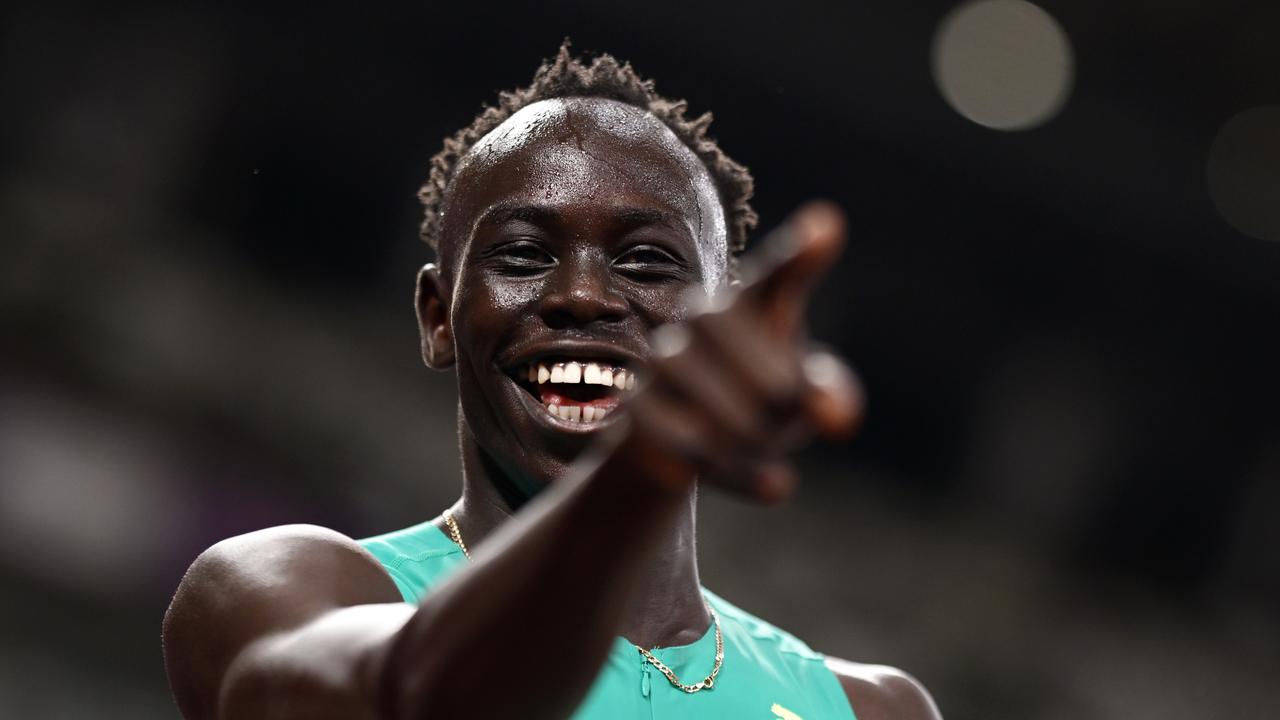
Gout Gout suffers major injury blow ending his 2026 months early
One of Australian track and field’s most promising young sprint talents, 18-year-old Gout Gout, has delivered crushing news to his fanbase: a significant training injury has ended his entire 2026 competitive campaign and forced him to withdraw from the upcoming World Under-20 Athletics Championships. The speedster shared the update via his official Instagram account on Thursday, revealing the setback occurred during a training session in Brisbane the previous evening.
In a raw, heartfelt public statement, Gout Gout detailed the extent of his injury: a partial thickness tear to his left hamstring, paired with partial disruption of the connecting tendon. After receiving MRI results early Wednesday morning, the teen confirmed he would be unable to compete at the championships scheduled to take place next month in Eugene, Oregon, United States.
“ I’m very disappointed but I have no other possibility but to accept this situation,” Gout Gout wrote in his post. “I understand this is part of athletics. My focus now will be on my rehab in the coming weeks and months and ensuring I come back in 2027 better and stronger and faster.” Effectively closing the door on any return to racing this year, he closed his post with a straightforward promise to fans: “See yall in 2027.”
Within hours of the announcement, messages of support flooded the teen sprinter’s comment section from across the global athletics community. The official Australian Olympic Team account was among the first to offer encouragement, writing “All the best in your recovery Gout. Looking forward to seeing you back on the track in 2027.” Former Olympic gold medal-winning sprinter Justin Gatlin added, “Let that recovery make you hungry, G,” while American sprinter Tate Taylor shared: “Keep faith man, hope all is well, much love always.”