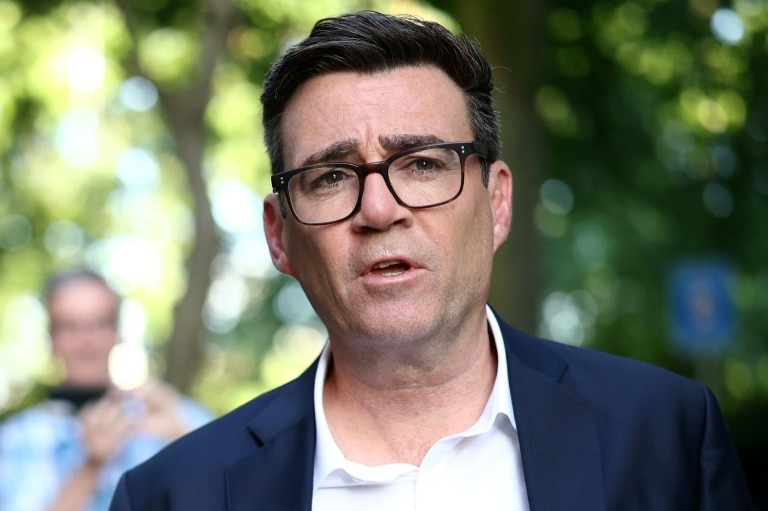
The path to 10 Downing Street cleared a major milestone for veteran British politician Andy Burnham on Thursday, as the nomination period officially opened for a new leader of the UK’s ruling Labour Party following Keir Starmer’s resignation last month.
At 56 years old, Burnham stands as the only sitting Labour Member of Parliament that has publicly declared their candidacy to replace Starmer, who stepped down on June 22 after losing the confidence of his parliamentary party amid sustained criticism over repeated policy flip-flops and questions about his decision-making. Thursday morning saw a steady stream of Labour MPs file into the party’s parliamentary headquarters to submit their nominations for their preferred leader, with most insiders already signaling their backing for Burnham.
With no other declared candidates in the race after a string of potential challengers dropped out in recent days, political observers widely expect Burnham to be formally confirmed as Labour’s new leader – and the UK’s prime minister-in-waiting – at a special party conference scheduled for July 17. He would officially take up residence at 10 Downing Street just three days after the confirmation vote. If a contested leadership election were called, however, a result would not be announced until August 29, after a ballot of rank-and-file Labour members and representatives from the party’s affiliated trade unions.
Burnham’s path to the top job became all but guaranteed late Wednesday when former armed forces minister Al Carns announced he would not enter the race, ending any last speculation of a contested contest. Carns had initially suggested a leadership race could give Labour a chance to hold a full policy debate, but ultimately backed out and threw his support behind Burnham, arguing that extended internal party infighting was not what the British public needed amid ongoing economic and social challenges. “Months of internal Labour politics isn’t what the country needs right now. We’ve got to get on with the job,” Carns said in his statement.
To qualify as an official candidate, Burnham only needs the backing of 81 of Labour’s 402 sitting MPs – a threshold that political insiders confirm he will pass far more easily than required. Nicknamed the “King of the North” for his three consecutive election wins as Greater Manchester mayor, Burnham returned to parliament last month after winning a by-election, a move that cleared the way for his leadership bid. He previously served as an MP between 2001 and 2017, and this marks his third attempt to secure Labour’s top leadership post.
In a keynote policy speech delivered in June, Burnham laid out his early policy priorities, promising to deliver “the biggest rebalancing of power our country has seen” by devolving more authority to regional and local communities. “We need to put power in the hands of the people and places who can use it best,” he said, adding that raising living standards for all UK residents would be his core priority. “To fix the economy and the country, we need to change politics and we need to do it now,” he added. He has already moved to reassure financial markets by committing to the outgoing government’s current borrowing limits, pledging fiscal discipline and promising to reduce the UK’s growing welfare spending. One of his signature proposals is the creation of a “No. 10 North” regional prime ministerial office to drive devolution across northern England.
Carns’ withdrawal follows another high-profile exit from potential candidacy, after former health minister Wes Streeting announced he would abandon plans to run and also back Burnham. Multiple opinion polls rank Burnham as Labour’s most popular national politician, positioning him as slightly left of the more centrist Starmer. Many Labour MPs see Burnham as the party’s best bet to recapture lost voter support from Nigel Farage’s right-wing Reform UK, which has led Labour in national opinion polls for more than a year. Recent polling has narrowed the gap, however, amid growing scrutiny of Farage’s personal finances.
On the day Starmer announced his resignation, Burnham was sworn in as a Member of Parliament, and more than 200 Labour MPs turned out for a celebratory group photo with him at Westminster, a clear public signal of the party’s overwhelming support for his leadership bid. One anonymous Labour MP told reporters that the party was right to back Burnham, arguing that “he couldn’t be worse than Starmer” and describing him as a potential “breath of fresh air” for British politics. But not all MPs are fully confident: another anonymous lawmaker who backed Burnham expressed concern that the incoming leader will only have a matter of weeks to prepare to take control of government before he officially becomes prime minister.