标签: Oceania

大洋洲

  • Alleged murder of Aboriginal girl highlights Australia’s deep inequalities

    Alleged murder of Aboriginal girl highlights Australia’s deep inequalities

    In the dry, remote outback of Australia’s Northern Territory, a growing pile of flowers, handwritten sympathy notes, and soft cuddly toys has accumulated on the chain-link fence marking the entrance to Old Timers town camp, known locally as Ilyperenye. This impromptu memorial honors 5-year-old Kumanjayi Little Baby, a Warlpiri Indigenous girl who disappeared from her community in April and was found dead five days later. An Aboriginal man has since been charged with her murder, and the tragedy has rippled across the nation, sparking collective grief, widespread public outrage, and urgent demands to address long-buried systemic inequalities facing Indigenous Australian communities.

    Residents of Alice Springs, the small nearby town with a population of less than 30,000, describe a community frozen in grief. Many local residents joined the frantic search for Kumanjayi in the days after her disappearance. “The whole community is numb,” one mourner shared, a sentiment echoed across the region. Alice Springs Mayor Asta Hill notes that even in the depths of this tragedy, the crisis has drawn the tight-knit region closer: “In some ways you could say we’ve actually seen some of the best of the community in the absolute worst of times.” What began as a local loss has quickly become a national moment of reckoning: condolence motions have passed through federal parliament, Prime Minister Anthony Albanese has publicly acknowledged the heartbreak of the tragedy, saying “it breaks your heart,” and vigils have been held from Alice Springs to capital cities across the country.

    In a statement shared at an Alice Springs vigil, Kumanjayi’s mother described her young daughter as a beloved “princess.” The 5-year-old loved cartoons and computer games, adored spending time with her older brother, and was eagerly looking forward to starting primary school. “My heart is broken into a million pieces,” she wrote. “I want you to know that I am having trouble knowing how I can repair it and how I can live without my little baby.”

    Kumanjayi disappeared from Old Timers town camp, one of 16 informal Indigenous settlements scattered around Alice Springs. The story of these camps stretches back to the 1880s, when European colonisers displaced Aboriginal people from their traditional lands, forcing them to settle on the outskirts of the growing town. For decades until the 1960s, Aboriginal people were even barred from entering the majority-white town centre. The camps were only formalised as social housing in the 1970s, after residents pushed for basic access to electricity, clean running water, and permanent shelter. Today, the camps remain chronically underfunded: overcrowding is widespread, there are no local grocery stores, frequent power outages disrupt daily life in the desert heat, public transport is limited, internet access is scarce, and unpaved, poorly maintained roads lack basic street lighting. Public health researchers warn that this entrenched poverty fuels higher rates of alcohol misuse and domestic violence in the camps, creating constant pressure for resident families.

    Nina Lansbury, an associate professor at the University of Queensland who researches public health and housing in the Northern Territory, attended a local vigil for Kumanjayi and says the conditions that put the young girl at risk are nothing new. “I have a report from 1978 that I use in my research that’s from the Northern Territory that was citing all these same things – coming up to 50 years. It’s a big issue, it’s 2026 and this is still happening. Let’s hope this is a turning point,” she said, noting that Kumanjayi was never raised in a home environment that supported her family’s health and safety.

    Since Kumanjayi’s death, her community has entered “sorry business,” a traditional period of cultural mourning for Aboriginal and Torres Strait Islander peoples that can last for days, weeks, or even months, involving cultural ceremonies and practices. Her family has requested that her death be treated with respect and not exploited for political gain, but the tragedy has nonetheless forced a national reckoning with decades of policy failure that have left Indigenous children disproportionately vulnerable.

    Indigenous Australians currently experience stark systemic inequities: they are three times more likely to face unemployment than non-Indigenous Australians, have a significantly lower life expectancy, make up 37% of the national prison population despite accounting for just 3% of the total population, and face higher rates of both experiencing and perpetrating family violence. Prime Minister Albanese acknowledged this legacy of failure in parliament, admitting: “The simple truth is that all governments of all persuasions over generations have not done enough to deal with what are generational challenges.”

    This legacy stretches back more than a century, through policies that targeted Indigenous families and children. The most infamous is the Stolen Generation, which lasted until the 1970s: tens of thousands of Indigenous children were forcibly removed from their families as part of a brutal assimilation policy, with many placed in institutions or foster care where they suffered abuse and neglect. The 1997 landmark Bringing Them Home report estimated that as many as one in three Indigenous children were taken from their families during this period. More recently, the 2007 Northern Territory Intervention, launched to address child sexual abuse in remote communities, was scrapped after 15 years and widely deemed a failure. Catherine Liddle, CEO of SNAICC – the national peak body representing Aboriginal and Torres Strait Islander children and their families – says the Intervention left lasting intergenerational trauma: “Men stopped bathing babies, they stopped helping out because what they heard was if you do those things, you’re a paedophile and you’re going to get locked up and your children are going to get taken away. There was fear of even going to authorities for innocent reasons because you’re scared that you’re going to be told that you’ve done something wrong.”

    In response to public outcry after Kumanjayi’s death, Northern Territory Child Protection Minister Robyn Cahill has announced a full review of the territory’s child protection system, alongside planned reforms. “I will not be a minister who abandons yet another generation of Territory kids,” Cahill said. “The reality is we have kids in really difficult situations and for a long time people have been paralysed by the fear that they will be accused of [creating another Stolen Generation]. Children deserve to be safe – every single child in our community has a right to expect that.”

    However, peak Indigenous organisations have harshly criticised the proposed review and reforms, warning they risk deepening the existing crisis. In a joint statement, Aboriginal Peak Organisations Northern Territory (APONT) and SNAICC argued the changes threaten to weaken the Aboriginal Child Placement Principle, a critical framework designed to keep Indigenous children connected to their family, culture, and community. They warn that weakening this principle would amount to “a race-based attempt to blame Aboriginal families for conditions created by government failure.”

    Indigenous leaders are calling for a holistic, community-led approach to address the deep-rooted social inequalities that put children like Kumanjayi at risk. Liddle points to the overlapping failures of multiple systems: “When you look at the prison system in the Northern Territory, it is nearly always 100% Aboriginal children and nearly every single one of those children came out of the child protection system.” She notes that the Northern Territory lowered the age of criminal responsibility to 10 years old in 2024, a move justified by the government as a child protection measure, despite widespread pushback from doctors, human rights groups, and Indigenous organisations. “It’s like paving a road – it’s like putting down pavers and saying here you are this is going to be your journey and by the way we’re going to lock you up at the age of 10 when something goes wrong,” Liddle said.

    Liddle argues that any meaningful reform must be led by Indigenous communities themselves, not parliaments. “Difficult conversations need to be had – but these should also encompass failures in social policy, housing, the prison system and the justice system,” she said. “Those conversations needed to be led from community because the answers to this sit with community, they don’t sit in parliament. You have to find out what’s actually going on and that will change depending on which community you’re sitting in, what state you’re sitting in. You also need to ensure that you’re investing in the services that we need and investing in the services that were designed by us for us.”

    For many local residents, the tragedy also highlights the need to reframe how Indigenous communities are discussed and supported. Jonathan Hermawan, a vigil attendee, notes that while Kumanjayi was a beloved child who lived in poverty and vulnerability, there is a risk of homogenising and unfairly stereotyping diverse Indigenous communities. “Every system has its failures when you homogenise a group that’s very diverse,” he said. “The notion of Aboriginality is like comparing a white person and saying every white person is affected. We are far more diverse than that, we are far more complex than that.” Across the country, many hope that this national moment of grief will finally translate to lasting, meaningful change that addresses generations of inequity and keeps Indigenous children safe.

  • Judge declares mistrial in Weinstein case as jury fails to reach verdict

    Judge declares mistrial in Weinstein case as jury fails to reach verdict

    A federal judge in New York has declared a mistrial in the latest sexual assault trial of disgraced former Hollywood film producer Harvey Weinstein, after the jury was unable to reach a unanimous verdict on the charges brought by accuser Jessica Mann. This outcome marks the third time proceedings against Weinstein over Mann’s allegations have collapsed, leaving the case unresolved. Now 74, Weinstein has already been convicted in two other separate sexual assault cases, meaning he will remain in custody regardless of this trial’s conclusion. The disgraced studio executive, whose decades-long pattern of alleged abuse sparked the global reckoning of the MeToo movement, is currently serving a 16-year prison sentence stemming from a 2022 California conviction for raping a European actress more than a decade ago. He is also appealing that conviction, alongside a June 2024 New York conviction for sexual assault against former film producer Miriam Haley. The first guilty verdict against Weinstein for Mann’s allegations, returned in 2020, was later thrown out over improper witness handling. A 2025 retrial ended in a mistrial after a bitter conflict among jury members, making this week’s outcome the second consecutive mistrial in the case. During the latest proceedings, Mann, now 40, recounted her first encounter with Weinstein at a 2013 industry party, when she was a 27-year-old aspiring actress and he was one of the most influential powerbrokers in Hollywood. She told the jury that Weinstein positioned himself as a potential mentor, showering her with flattering compliments — even saying she was prettier than A-list star Natalie Portman — and investing in her career by buying her acting textbooks. To the young, emerging actress, this attention initially felt like a once-in-a-lifetime miracle, she said. Mann’s testimony was deeply emotional, with frequent pauses as her voice cracked under the weight of recounting the alleged assault. Her account largely aligned with the testimony she gave in the two previous trials. In a post-declaration statement, Manhattan District Attorney Alvin Bragg acknowledged the disappointment of the mistrial outcome, while reaffirming respect for the jury system. “While we are disappointed that the proceedings ended with a mistrial, we deeply respect the jury system and sincerely thank all of the jurors for their time and dedication,” Bragg said. “For nearly a decade, Jessica Mann has fought for justice.” The 2017 exposure of dozens of sexual misconduct allegations against Weinstein, published in groundbreaking investigations by *The New York Times* and *The New Yorker*, ignited a watershed global movement centered on holding powerful perpetrators of sexual harassment and assault accountable. More than 80 women came forward with accusations against Weinstein, and the reporting triggered the MeToo movement that has reshaped workplaces and cultural attitudes around the world.

  • Stocks tumble as US-Iran impasse fuels inflation fears

    Stocks tumble as US-Iran impasse fuels inflation fears

    On Friday, international financial markets suffered widespread downturns as geopolitical gridlock in the Middle East and underwhelming outcomes from the high-stakes US-China leaders’ summit reignited investor anxiety over sustained inflation that threatens to undermine global economic expansion. The standoff over the Strait of Hormuz, a critical chokepoint for global energy shipments, sent crude prices jumping by as much as 3.5%, lifting benchmark Brent crude to nearly $109 per barrel by mid-afternoon GMT.

    The much-anticipated summit between US President Donald Trump and Chinese President Xi Jinping failed to deliver the concrete breakthroughs investors had hoped for, both on Middle East de-escalation and bilateral trade negotiations. While Trump claimed the two sides had struck “fantastic trade deals”, he offered no detailed specifics, only noting that Beijing had expressed interest in purchasing American oil and soybean exports, and confirmed he did not raise the contentious issue of existing tariffs during discussions. China’s top diplomatic officials later clarified that the two nations had agreed to uphold previously reached accords and set up new bilateral trade and investment working councils, but offered no new commitments to resolve ongoing tensions.

    Market analysts characterized the meeting as heavy on symbolic goodwill but light on tangible policy progress. With diplomatic efforts to reopen the Strait of Hormuz — where commercial oil tanker traffic has slowed to a near halt following the outbreak of regional conflict — stuck in limbo, fresh uncertainty flooded through global energy and financial markets. The White House confirmed that both leaders agreed the strait must remain open for global energy trade, but investors had pushed for more concrete action to restore full shipping access, which has been blocked amid the ongoing US-Iran impasse. Trump amplified geopolitical jitters Thursday in an interview with Fox News, saying he would “not be much more patient” with Iran, leaving energy markets on edge over potential further supply disruptions.

    Rising crude oil futures triggered a sharp jump in government bond yields across major developed economies, as investors demanded higher returns to compensate for growing inflation risk. In the United Kingdom, where newly inaugurated Prime Minister Keir Starmer is already facing fresh challenges to his leadership, 30-year government bond yields climbed to 5.869% — their highest level since 1998, surpassing the previous record set just three days earlier. In Japan, 30-year bond yields hit the 4% threshold for the first time since 1999.

    “Bond yields have continued to march higher, and this has introduced more volatility to the wider financial markets as investors worry about the impact of increased government borrowings across the developed economies and what they mean for their economies,” explained Fawad Razaqzada, a senior market analyst at FOREX.com.

    Across global equity markets, losses were broad and deep. In Asia, Japan’s Nikkei 225 closed 2% lower, while Hong Kong’s Hang Seng Index and China’s Shanghai Composite dropped 1.6% and 1% respectively. Major European bourses fared worse: London’s FTSE 100 closed down 1.7%, Paris’ CAC 40 fell 1.6%, and Frankfurt’s DAX 30 slid 2.1% by the end of trading. On Wall Street, the Dow Jones Industrial Average and S&P 500 both dropped 0.9% from the fresh all-time highs set Thursday, driven by a cooling in the ongoing AI-fueled tech rally that pulled the Nasdaq Composite down 1.1%. The US dollar strengthened against all major global currencies, including the British pound, euro, and Japanese yen.

    “Stalled US-Iran diplomacy keeps supply fears firmly in focus,” noted Matt Britzman, senior equity analyst at Hargreaves Lansdown. “Even if resolved next month, the oil market could remain undersupplied through October, keeping inflationary pressures high and adding another headache for consumers, central banks, and, eventually, investors.”

    Susannah Streeter, chief investment strategist at Wealth Park, echoed that assessment, adding: “With diplomatic efforts aimed at resolving the Middle East conflict in limbo, fresh uncertainty has flooded in.”

    By 1530 GMT, key market metrics stood at: Brent North Sea Crude up 3.0% at $108.88 per barrel; West Texas Intermediate up 3.5% at $104.71 per barrel; Dow Jones at 49,636.63 (down 0.9%); S&P 500 at 7,436.28 (down 0.9%); Nasdaq Composite at 26,335.25 (down 1.1%); FTSE 100 at 10,195.37 (down 1.7%, close); CAC 40 at 7,952.55 (down 1.6%, close); DAX 30 at 23,950.55 (down 2.1%, close); Nikkei 225 at 61,409.29 (down 2.0%, close); Hang Seng Index at 25,962.73 (down 1.6%, close); Shanghai Composite at 4,135.39 (down 1.0%, close); GBP/USD at 1.3324 (down from 1.3400); EUR/USD at 1.1624 (down from 1.1673); USD/JPY at 158.68 (up from 158.33); EUR/GBP at 87.25 pence (up from 87.09 pence).

  • Ukraine can down Russian drones en masse. But missiles are a problem

    Ukraine can down Russian drones en masse. But missiles are a problem

    A devastating seven-hour Russian aerial assault on Ukraine’s capital Kyiv earlier this week that killed 24 civilians and left residential buildings in ruins has laid bare a critical and dangerous divide in Ukraine’s air defense capabilities, nearly four years into the full-scale invasion.

    After years of constant combat, Ukraine has honed an extremely effective homegrown network to combat Russian long-range drones – a success that has drawn admiration even from advanced global militaries. In this latest wave of attacks, Russia launched 675 drones and 56 missiles targeting Kyiv and other populated areas. Ukraine’s integrated defense system, which combines electronic jamming technology, anti-aircraft artillery, fighter jets and helicopters, and small interceptor drones, managed to shoot down all but 22 of the incoming drones, a 97% success rate. President Volodymyr Zelensky publicly commended his air forces for achieving a 94% overall drone interception rate across recent attacks.

    But when it comes to Russian ballistic and cruise missiles, the picture is drastically different. Fifteen of the 56 missiles fired in this week’s barrage penetrated Ukrainian defenses, and Ukrainian officials confirm these missiles were responsible for nearly all of the attack’s civilian casualties and structural damage. This gap exposes a chronic, acute shortage of the advanced Western anti-missile systems and their costly ammunition that Ukraine needs to stop incoming projectiles.

    “The real damage was done by missiles, especially in Kyiv,” said Sergii Beskrestnov, an advisor to Ukraine’s defense minister, following the assault. Zelensky echoed the assessment, acknowledging that “the most difficult challenge is defending against ballistic missiles.”

    Zelensky has repeated urgent calls to Western allies for additional support, pushing for faster arms deliveries through the PURL procurement platform that partner nations use to source U.S.-made weapons for Kyiv. Shortly after the attack, British Defense Secretary John Healey announced London would speed up deliveries of British air defense and counter-drone systems to Ukraine. But a growing global shortage of anti-missile ammunition, exacerbated by concurrent defense demands in the Middle East, has left Ukraine in a precarious position.

    The most capable system Ukraine operates against ballistic missiles is the U.S.-made Patriot battery, whose PAC-3 interceptor missiles cost roughly $4 million apiece. The U.S. only produces around 600 of these interceptors annually, and multiple interceptors are often required to destroy a single incoming missile. Zelensky noted that Middle Eastern allies recently used 800 PAC-3 interceptors to fend off Iranian drone and missile attacks – a total number Ukraine has never had access to across its entire four-year war. One senior Ukrainian official told AFP bluntly that the interceptors “have become harder to find.”

    Even before this latest massive barrage, Ukrainian air force spokesman Yuriy Ignat told local media that ammunition was already being rationed due to persistent supply chain issues. “The launchers that are part of certain units and batteries are half-empty — and that’s putting it mildly,” Ignat said, adding that stockpiles were already depleted after Russia’s sustained winter campaign targeting Ukraine’s energy infrastructure. He added that Ukrainian negotiators are often forced to beg allies for as few as five to 10 additional Patriot interceptors at a time.

    While short-term solutions remain scarce, long-term and even some medium-term pathways do exist. Ukraine’s proven track record defeating Iranian-designed drones has caught the attention of wealthy Gulf nations, which have faced repeated attacks from the same type of drones. On multiple diplomatic visits to the region, Zelensky has signed several new air defense cooperation agreements, with details still under wraps. He has publicly proposed a trade: Ukraine shares its hard-earned anti-drone expertise with Gulf states, in exchange for Patriot ammunition or investment in Ukraine’s domestic defense production. Lockheed Martin, the manufacturer of the Patriot system and PAC-3 interceptors, has also announced plans to ramp up production over the next seven years to meet global demand. Over time, Ukraine can also expand its own domestic defense production with Western backing.

    Yet for the immediate threat Russia poses, options are severely limited, according to Jade McGlynn, a research fellow in the Department of War Studies at King’s College London. “Bluntly I can’t see any significant solution or significant improvement that is available in the short term, beyond just giving Ukraine more of the air defence systems that are a bit more available than the Patriots,” McGlynn told AFP.

  • Israeli strikes wound dozens in Lebanon as talks in US enter second day

    Israeli strikes wound dozens in Lebanon as talks in US enter second day

    As US-mediated negotiations between Lebanese and Israeli envoys entered their second day in Washington on Friday, Israel launched a new wave of airstrikes targeting Hezbollah positions across southern Lebanon, leaving at least 37 people injured and deepening civilian hardship in the already war-battered region. The Israeli military confirmed in an official statement that it had targeted Hezbollah infrastructure sites in the vicinity of Tyre, a major coastal city in southern Lebanon. Multiple rounds of blasts were documented by an Agence France-Presse correspondent on the ground, with two strikes hitting areas close to Tyre proper. Lebanon’s state-run media added that one strike hit a facility operated by a local non-governmental organization, located just adjacent to a local hospital.

    Lebanon’s Ministry of Public Health released casualty figures confirming that among the 37 wounded were six hospital staff members, nine women and four children. Local resident Hafez Ramadan, who lives near the targeted structure, revealed the building was sheltering displaced families who had already fled their hometowns to escape ongoing cross-border violence. The site also sits next to a hotel that houses additional displaced people. Ramadan noted, “There are only women, children and the elderly here. Because of this strike, people have been displaced again.”

    Prior to Friday’s attacks, the Israel Defense Forces (IDF) issued evacuation orders for five towns and villages in and around southern Tyre, followed by a second warning for five additional southern Lebanese communities shortly after the strikes. The IDF also confirmed that one Israeli soldier was killed in clashes with Hezbollah in southern Lebanon, pushing the total number of Israeli soldiers killed in hostilities with the group since early March to 19. One Israeli civilian contractor was also killed in recent clashes. Lebanon’s official National News Agency reported additional strikes on southern locations that were not covered by prior Israeli evacuation warnings, expanding the scope of the offensive beyond areas Israel had flagged. In tandem with the Israeli airstrikes, Hezbollah announced it had carried out multiple coordinated attacks against Israeli troops in at least six southern Lebanese towns.

    The strikes drew immediate condemnation from Imran Riza, the United Nations Humanitarian Coordinator for Lebanon, who decried the “unacceptable” civilian cost of persistent attacks. “The reality on the ground in Lebanon has been deeply alarming,” Riza said. “Airstrikes and demolitions continue daily, with an unacceptable toll on civilians and civilian infrastructure.” Despite the escalation of violence, Riza stressed that ongoing diplomatic efforts in Washington represent a critical opening to end the bloodshed, expressing hope that the talks would “pave the way toward a political solution” between the two long-belligerent neighbors.

    The negotiations, hosted at the U.S. State Department, resumed shortly after 9 a.m. ET Friday, bringing together representatives from Lebanon and Israel — two countries that have remained officially at war for more than seven decades. U.S. mediators characterized the first day of talks on Thursday as productive and positive, though neither Lebanese nor Israeli officials have issued public comments on the negotiations’ progress to date. Lebanon’s core negotiating demand is a lasting extension of the current ceasefire, which is set to expire this Sunday if no extension agreement is reached, and a formal Israeli commitment to halt all offensive strikes on Lebanese territory.

    The current fragile truce between Israel and the Iran-backed Hezbollah went into effect on April 17, but the agreement has failed to stop hostilities entirely. Hundreds of people have been killed in cross-border strikes since the truce took effect, with both sides repeatedly accusing one another of violating the terms of the ceasefire. According to Lebanese official data, more than 2,900 people have been killed in Israeli attacks across Lebanon since hostilities reignited in March, when Hezbollah launched a rocket barrage against Israel in retaliation for the killing of a senior Iranian leader. More than 400 of those deaths have occurred since the April truce went into force.

    Leading the two negotiating delegations are veteran political figures with long-standing, hardline positions on the conflict. Lebanon’s team is headed by 76-year-old Simon Karam, a former ambassador to Washington and independent politician known for his advocacy for Lebanese national unity amid the country’s deep sectarian divides. Israel’s delegation is led by Yechiel Leiter, Israel’s current ambassador to the U.S. and a long-time close ally of Israeli Prime Minister Benjamin Netanyahu, with deep roots in Israeli conservative activism, settler politics and hardline diplomatic approach.

    The negotiations are taking place amid heavy pressure from the U.S. and Israel for Lebanon to disarm Hezbollah, a demand that has sparked intense pushback domestically. Senior Hezbollah official Mahmud Qamati issued a scathing rejection of the talks Friday, describing direct negotiations between Beirut and Israel as “humiliating” and part of a broader conspiracy against Lebanese sovereignty and the group’s armed resistance. “Beirut going to direct, humiliating negotiations with the Israeli enemy is not a separate issue from a comprehensive conspiracy against the nation, its sovereignty and its resistance,” Qamati said, noting that the talks are unfolding while “the south is being destroyed and martyrs are being killed daily.”

    Hezbollah has long refused any formal direct engagement with Israel, maintaining its position of non-recognition of the Israeli state. Israeli forces have already occupied swathes of southern Lebanon since the outbreak of current hostilities, carrying out widespread demolition of residential villages and infrastructure over the past several weeks, leaving thousands more Lebanese residents displaced.

  • New deadly Ebola outbreak hits DR Congo

    New deadly Ebola outbreak hits DR Congo

    African public health authorities announced Friday the confirmation of a new Ebola outbreak in the northeastern Ituri Province of the Democratic Republic of the Congo (DRC), warning of heightened risks of widespread transmission due to long-running regional insecurity, unregulated cross-border movement, and strained local health infrastructure.

    As of the latest update from the Africa Centres for Disease Control and Prevention (Africa CDC), the outbreak has already been linked to 65 deaths among 246 suspected cases, with preliminary lab results confirming Ebola infection in 13 tested samples, four of which were fatal. Suspected cases have also been detected in Bunia, Ituri’s provincial capital home to 300,000 residents, and confirmation testing is currently underway.

    This new event marks the 17th recorded Ebola outbreak the DRC has faced since the virus was first identified in the region in 1976. The country’s most devastating outbreak, which ran from 2018 to 2020, claimed nearly 2,300 lives, while the prior outbreak, declared in August 2023 in central DRC, was only eradicated in December 2023 after killing at least 34 people.

    Ituri Province, which shares borders with Uganda and South Sudan, presents unique challenges to outbreak response. The region’s gold-rich geology has drawn thousands of artisanal miners, creating constant, unregulated cross-border and internal population movement that can accelerate viral spread. For more than a decade, the area has also been roiled by recurring inter-militia violence, which has restricted access to remote communities and displaced tens of thousands of people into crowded urban settlements — conditions that dramatically increase the risk of person-to-person transmission.

    Preliminary genetic analysis suggests the circulating strain is not the Zaire ebolavirus variant, the deadliest form of the disease with a case fatality rate of 80 to 90 percent, and the only strain for which an approved vaccine currently exists. Full genomic sequencing is still ongoing to confirm the strain’s identity to guide response efforts.

    Local residents and community leaders report a sharp spike in unexplained deaths since mid-April, with some areas recording five to six fatalities per day. “For the past few weeks, the municipality of Mongbwalu has been recording a cascade of deaths, with at least five to six people dying every day in the streets,” local resident Gloire Mumbesa told Agence France-Presse. “We just dug graves to bury three people, but we don’t actually know what these people died of. We’re starting to be afraid of every possible case of illness,” added Salama Bamunoba, a civil society organizer in Rwampara health zone.

    Confirmed and suspected patients are currently isolated in local health facilities, but an anonymous local health source confirmed that frontline workers are facing critical shortages of personal protective equipment and other essential supplies. Logistics also present a major barrier to response across the DRC, a country four times the size of France with sparse, poorly maintained road infrastructure that makes rapid delivery of medical supplies and personnel difficult.

    Response teams from the World Health Organization and medical humanitarian organization Doctors Without Borders have already deployed to the affected region to conduct risk assessments, scale up testing, and support contact tracing efforts. Over the past 50 years, Ebola — a viral hemorrhagic fever spread through direct contact with infected bodily fluids that causes severe bleeding and organ failure — has killed an estimated 15,000 people across Africa, even with the development of effective vaccines and treatments for the Zaire strain. While recent outbreaks have been contained far more effectively than the 2014 West African epidemic that killed over 11,000 people, ongoing insecurity and weak health systems in central Africa continue to create risks of large-scale transmission.

  • Kyiv in mourning after 24 killed as Ukraine, Russia swap POWs

    Kyiv in mourning after 24 killed as Ukraine, Russia swap POWs

    The Ukrainian capital Kyiv entered a day of national mourning on Friday, one day after a deadly Russian missile attack claimed 24 civilian lives, including three young girls, even as Kyiv and Moscow moved forward with a major exchange of hundreds of prisoners of war, one of the last active channels of cooperation between the two warring nations.

    Thursday’s attack, the deadliest strike on Kyiv in months, tore through a residential building, leaving a scene of twisted rubble and shattered lives. Ukrainian President Volodymyr Zelenskyy visited the devastated site on Friday, where he condemned the assault as an act of unprovoked brutal terror. The three child victims, all girls aged 12, 15, and 17, included 12-year-old Liubava Yakovleva, who had already lost her father fighting against Russia’s 2022 full-scale invasion, Ukrainian Prime Minister Yulia Svyrydenko confirmed. Rescue crews worked more than 28 straight hours to pull survivors from the rubble, ultimately saving 30 people, while 24 injured people remain hospitalized for treatment, Kyiv Mayor Vitali Klitschko reported.

    The tragedy in Kyiv’s central neighborhoods unfolded alongside a rare moment of progress along the front: a coordinated prisoner swap that returned 205 captured Ukrainian troops to Ukrainian-controlled territory. Photographers on the ground captured emotional scenes as the newly freed soldiers, many gaunt after months or years in captivity, wrapped themselves in Ukrainian flags, cheered, embraced one another, and waited anxiously to reunite with their families. In exchange, Kyiv released 205 Russian soldiers, who were transported to Russia’s ally Belarus for medical and psychological support, per Russian defense officials.

    Zelenskyy noted that this swap marked the first phase of a previously announced 1,000-for-1,000 prisoner exchange brokered by former U.S. President Donald Trump. Most of the released Ukrainian troops had been held in Russian captivity since the early months of the 2022 invasion, including fighters who defended the Azovstal steel plant in Mariupol and personnel stationed at the Chernobyl Nuclear Power Plant when Russian forces seized the site in the first weeks of the war. Prisoner exchanges have remained one of the only consistent areas of negotiation and cooperation between Kyiv and Moscow since the full-scale invasion began in February 2022.

    In the wake of the Kyiv strike, Kyiv’s armed forces launched a wave of retaliatory overnight drone strikes on Russian territory. Russian officials confirmed that strikes on the southwestern Russian city of Ryazan, roughly 120 miles from Moscow, killed four people, including one child, and damaged two residential buildings and local industrial sites. Unverified social media footage from Ryazan shows thick plumes of smoke rising above the city of 500,000, with a multi-story apartment building left with several entire floors burned black. Retaliatory drone strikes on Russian territory are common throughout the ongoing war, but deadly attacks this close to the Russian capital remain rare.

    The devastating attack on Kyiv has further dimmed already faint hopes for a breakthrough in stalled peace talks to end the conflict. Kyiv’s Western allies have accused Moscow of undermining diplomatic efforts to de-escalate the war. Russia has shown no willingness to step back from its core territorial demands, which require Ukraine to cede four eastern and southern regions that Russia illegally claimed to annex in 2022. Fresh Russian attacks continued across Ukraine on Friday: one person was killed in the southern Zaporizhzhia region, while a missile strike on a village in the northern Chernigiv region wounded a 45-year-old mother and her 13-year-old daughter, both of whom were hospitalized for treatment.

  • ‘Jump in a lake’: Alleged door-to-door sales pest accused of harassing multiple Melbourne

    ‘Jump in a lake’: Alleged door-to-door sales pest accused of harassing multiple Melbourne

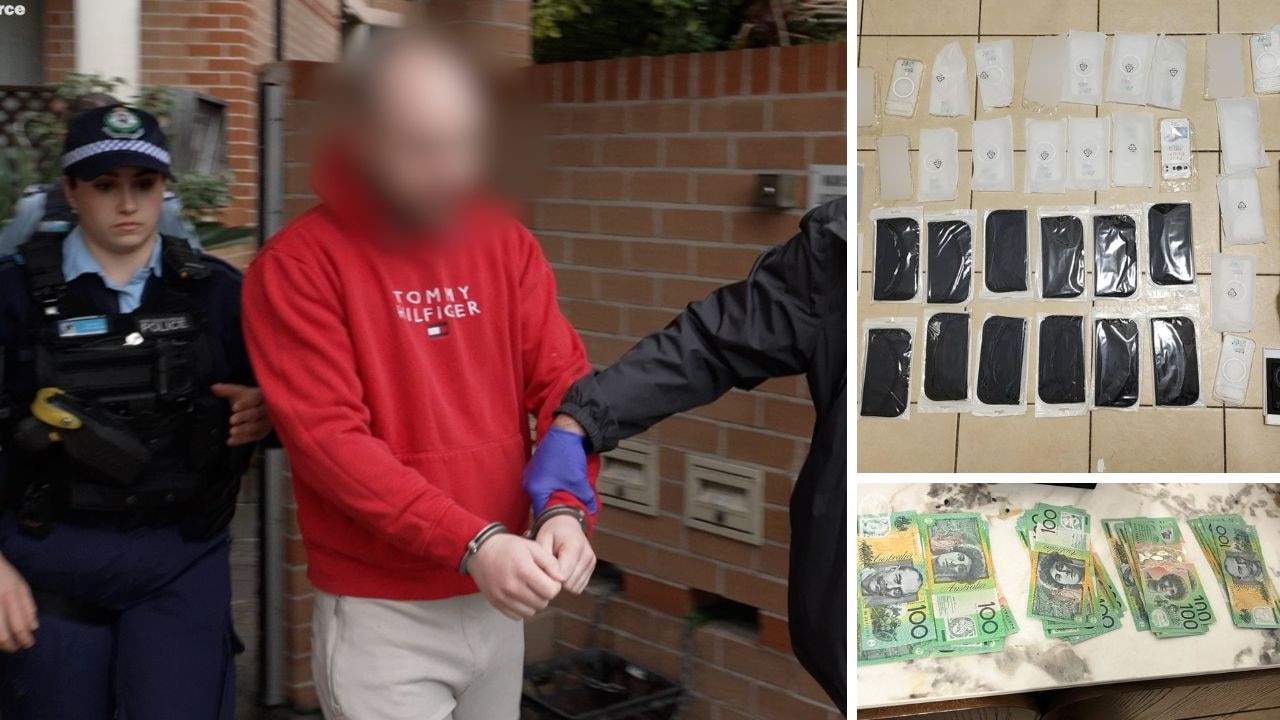
    A 46-year-old man from Mernda is at the center of multiple allegations of aggressive harassment and trespassing after targeting businesses across Melbourne, with shocking CCTV footage capturing his hostile interactions with staff who rejected his unsolicited sales pitches. Victoria Police have confirmed they spoke to the man following a formal complaint filed over the May 11 incident at a Ravenhall business, located in Melbourne’s western outskirts, and he has since been released pending a future court summons.

    The first and most widely reported incident involves Mikaela Borg, a small business owner who says she was left shaken and in tears after the man showed up at her workplace unannounced to push discount vouchers for a local mechanic. When Borg declined the offer and asked him to exit her premises, the man erupted into verbal aggression. Security footage from Borg’s store captures the visibly angry man reaching for her security camera before launching into a verbal tirade, telling Borg to “shut the door and … go jump in a lake” before leaving the property.

    In an interview with 7News, Borg described the lingering fear from the encounter, saying “I’m just frightened, obviously, to be in my own workplace. I didn’t know who he was – he wasn’t wearing ID.” What Borg has experienced is not an isolated case, according to local reporting. Multiple businesses across Melbourne, and even some in Perth, have come forward with similar accounts of the man’s uninvited, aggressive sales tactics. Additional CCTV footage from other workplaces shows the man screaming profanities at staff after being asked to leave, and approaching waiting patients inside a chiropractic clinic just hours after his confrontation with Borg.

    Leon Callea, owner of Ravenhall-based mechanic workshop GM-F Performance, previously allowed the man to sell discount vouchers at his business after the man claimed he could help boost the workshop’s customer base. Callea told reporters he terminated the agreement almost immediately after receiving a complaint about the salesman’s behavior.

    A Victoria Police spokesperson shared detailed context around the incident in an official statement, confirming the allegations: “It is alleged a man entered a warehouse on Katherine Dr and aggressively touted a business service about 3.40pm. When the offer was declined by the sole occupant of the premises, the man became aggressive and refused to leave after being told to. The man eventually left the premises.” Police confirmed the 46-year-old Mernda man was interviewed after the report, and was released pending summons. Authorities have not yet released information on whether formal charges have been filed.

    Local business owners have taken to social media to share their own encounters with the man and warn others about his behavior. Victoria Police is urging any member of the public or business owner who has had a negative interaction with the man or has additional information related to the incident to contact Crime Stoppers anonymously on 1800 333 000 or file a report through the official Crime Stoppers Victoria website.

  • What next for Chelsea & Kerr as striker exits?

    What next for Chelsea & Kerr as striker exits?

    When Sam Kerr swapped the Chicago Red Stars for Chelsea in a landmark January 2020 transfer — then the most expensive move in Women’s Super League history — the 31-year-old Australian striker carried the weight of unprecedented expectation on her shoulders. Six and a half years later, as the 32-year-old prepares to hang up her Chelsea boots at the end of the current season, it is clear she has not only met those expectations but surpassed every possible benchmark, cementing her legacy as one of the greatest players to ever grace both the Blues and the WSL.

    Kerr’s goalscoring pedigree long preceded her arrival in London. Even after leaving the National Women’s Soccer League six years ago, she retains her status as the competition’s all-time leading goal scorer. When she joined Chelsea, she already held the all-time goal record in Australia’s W-League, and still sits third on that list today. In the NWSL, she claimed three consecutive Golden Boot awards, with her 18-goal single-season tally standing as a league record until 2024, when Temwa Chawinga hit 21.

    That elite goalscoring touch translated seamlessly to the WSL. Over her Chelsea career, Kerr has lifted 11 major trophies: five WSL titles, three FA Cups, three League Cups, and one Community Shield, missing out on the league title only in her final partial season. This campaign alone, she has netted 16 goals across 29 appearances in all competitions, pushing her to 64 WSL goals for the club — enough to make her Chelsea’s all-time leading WSL scorer. A two-time WSL Golden Boot winner, she was named 2022 WSL Player of the Season and PFA Fans’ Player of the Year in both 2021 and 2022. In 2023, after hitting 29 goals in 38 appearances to lead Chelsea to a WSL and FA Cup double, she finished second in Ballon d’Or voting.

    What has made Kerr such an irreplaceable asset for Chelsea goes beyond just her raw goal tally. Her knack for stepping up in high-stakes moments is unmatched: 22 of her WSL strikes have been game-winning goals, she has found the back of the net in five FA Cup finals, and five League Cup finals. With one regular season game remaining against Manchester United at Chelsea’s home ground on Saturday, Kerr could make her 158th and final appearance for the club, and a goal would see her draw level with Fran Kirby as Chelsea’s all-time leading top scorer across all competitions, with 112. She currently stands as the fourth-highest appearance maker in Chelsea women’s history.

    Off the pitch, Kerr’s tenure in London has been marked by both professional milestones and personal upheaval. Her undisputed status as the leader of Chelsea’s attack came to an abrupt halt in January 2024, when she suffered a devastating anterior cruciate ligament injury that kept her sidelined for more than 18 months. She only regained full match fitness in the second half of the current 2025-26 season, long after Chelsea’s title challenge had fallen off pace. In Kerr’s absence, new manager Sonia Bompastor led the squad to an unbeaten domestic treble in her debut 2024-25 campaign, but the club has struggled with a gap in the number nine role this term.

    Kerr also weathered intense public controversy off the pitch in 2025, when she stood trial for racially aggravated harassment against a Metropolitan Police officer. She was ultimately found not guilty, but the high-profile case sparked calls in Australia for her to be stripped of the national team captaincy, pushing her to step back from the public eye in England. Amid this turbulent period, Kerr also welcomed major personal changes: she married former West Ham midfielder Kristie Mewis, and the couple welcomed their first son in May 2025.

    With Kerr out of action for most of the past 18 months, Bompastor has turned to other attacking options to fill the gap: England international Lauren James stepped up to lead the line, and the signing of USA winger Alyssa Thompson added further attacking quality this season. Young England striker Aggie Beever-Jones, one of the club’s most natural finishers, has seen her campaign disrupted by recurring injuries, while Colombian star Mayra Ramirez has not made a single appearance in 2025-26. These gaps have left the number nine position a persistent problem for the Blues, even as Kerr worked her way back to fitness. This season, Kerr has started just four WSL matches, notching six goals and two assists across 17 appearances in all competitions — a return that made her impending exit increasingly likely.

    Even coming off a long injury layoff, Kerr proved she still has elite quality when she led the line for Australia at the 2026 AFC Women’s Asian Cup in March. She scored four goals in six matches as Australia reached the final, where they fell to runners-up behind Japan. On her return to Chelsea, she started six consecutive matches, including the FA Cup semi-final against Manchester City, where she found the net despite Chelsea’s eventual defeat. The performance confirmed what many have long known: even at 32, Kerr remains one of the most prolific and dangerous strikers in the world.

    As Kerr prepares to leave Stamford Bridge, her next move remains unconfirmed, but multiple reports point to a potential return to the NWSL in the United States. Australian broadcaster 10 News recently reported that Kerr had agreed a deal to join expansion side Denver Summit, though the striker quickly refuted the claim on social media.

    For Chelsea, replacing Kerr will be one of the most challenging tasks the club has faced in recent years, and Bompastor has already confirmed that signing a elite starting striker is the club’s top summer transfer priority. This summer already marks a major transitional period for the Blues, with several key senior players including captain Millie Bright, midfielder Guro Reiten and striker Catarina Macario all set to depart alongside Kerr. After a season plagued by injury problems and shallow attacking depth that has seen the club underperform relative to its own high standards, Chelsea is targeting a proven, established goalscorer to reinforce their frontline.

    Manchester City’s WSL leading scorer Khadija Shaw currently tops Chelsea’s transfer wishlist, but whoever the club signs will face an enormous challenge to fill Kerr’s shoes. Remarkably, even after missing more than a year of action with injury, Kerr will still finish this season as Chelsea’s top goalscorer across all competitions, and the only Chelsea player to hit double figures for goals. Since the start of the 2024-25 WSL season, Beever-Jones leads all remaining Chelsea strikers with 13 goals, James is next with eight, while Kerr has notched six despite being sidelined for 18 months of that stretch. The numbers speak for themselves: Chelsea has a huge rebuild job on their hands to reestablish a competitive frontline capable of challenging the top clubs in England and Europe.

  • Australia court doubles payout for trans woman in landmark discrimination case

    Australia court doubles payout for trans woman in landmark discrimination case

    A landmark transgender discrimination case in Australia has concluded with a revised ruling that strengthens protections for gender-diverse people, boosting the compensation awarded to a trans woman who was expelled from a female-only digital platform.

    The case, which has made legal history as the first gender identity discrimination claim to be heard by Australia’s Federal Court, stems from an incident in 2021, when Roxanne Tickle, a trans woman, downloaded and registered for the Giggle for Girls app. After completing the selfie-based registration process, Tickle used the platform for six months before her account was removed by the app’s founder, Sall Grover.

    Grover, who launched the app in 2020 after experiencing misogynistic abuse from men during her career as a screenwriter in Hollywood, created the platform to serve as a private, women-only digital safe space. During the original court proceedings, Grover testified that she removed Tickle’s account after identifying what she described as “male facial features” in Tickle’s profile photo, treating her the same way she would treat any cisgender man seeking access to the platform.

    Nearly two years ago, the original ruling found Grover guilty of indirect discrimination against Tickle and awarded the trans woman AU$10,000 in compensation. Dissatisfied with the finding, Grover filed an appeal seeking to overturn the original verdict. On Friday, a full panel of three Federal Court judges dismissed Grover’s appeal, upgrading the ruling to a finding of unlawful direct discrimination against Tickle and doubling her compensation to AU$20,000, equal to roughly $14,000 USD or £11,000 GBP.

    In their judgement, the judges noted that the original trial judge had made an error in not classifying Tickle’s removal, which followed Grover’s initial visual assessment of her profile photo, as direct discrimination. The ruling confirmed that under Australia’s Sex Discrimination Act, service providers are prohibited from discriminating against individuals on the basis of gender identity. The court made clear that Grover had treated Tickle, a trans woman, far less favorably than she would have treated a cisgender woman seeking access to the app.

    Throughout the original trial, Grover’s legal team argued that sex is a strictly biological category, and conceded that discrimination did occur, but claimed it was based on biological sex rather than gender identity.

    Shortly after the Federal Court released its revised ruling Friday, Grover announced she plans to take her challenge to Australia’s High Court in a final bid to overturn the judgement.