标签: Oceania

大洋洲

  • Israelis chant threats, anti-Palestinian slogans at Jerusalem Day march

    Israelis chant threats, anti-Palestinian slogans at Jerusalem Day march

    On Thursday, tens of thousands of Israeli nationalists poured through the winding cobblestone alleyways of Jerusalem’s Old City for the annual Jerusalem Day parade, an event marking Israel’s 1967 capture and unilateral annexation of East Jerusalem that has a long history of escalating into conflict. As hardcore ultranationalist marchers chanted virulently anti-Palestinian slogans including “Death to Arabs” and “May your villages burn,” most Palestinian residents of the historically contested neighborhood locked themselves inside their homes, boarding up storefronts to avoid targeted intimidation and violence.

    Jerusalem Day commemorates what Israeli officialdom calls the “reunification” of the city after the 1967 Arab-Israeli War, a conflict that left Israel in control of East Jerusalem – a territory home to a majority Palestinian population that the United Nations and much of the international community have never recognized as legally annexed by Israel. For decades, the annual parade has been a flashpoint for intercommunal tension, with young ultranationalist participants regularly targeting local Palestinian communities with verbal abuse, threats, and physical assault. This year’s march unfolded against a fragile regional backdrop, coming just weeks after a ceasefire halted fighting between Israel and Hamas in Gaza that has been violated by near-daily incursions and strikes on both sides.

    Local Palestinian residents described scenes of deliberate harassment and property damage during the 2024 march. Mustafa, a resident of the Old City’s Via Dolorosa, told Agence France-Presse that a group of roughly 20 ultranationalist Israeli youth forced their way into his home’s courtyard, shattering glass and breaking down doors while screaming racist chants. “If you push them, you’ll go to prison… you can’t do anything,” he explained, describing the helplessness many residents feel amid the annual show of force. Most Palestinian shop owners closed their businesses for the day, pulling down metal shutters and abandoning the busy commercial lanes of the Old City.

    A small group of grassroots activists from the joint Israeli-Palestinian movement Standing Together deployed across the neighborhood to protect remaining open shops and residents from attack, but social media footage and on-the-ground reporting showed activists being shoved and surrounded by aggressive marchers. In one viral clip, young marchers hurled plastic chairs at a Palestinian shopkeeper while screaming anti-Arab slurs, before the shopkeeper responded by throwing one chair back and brandishing a stick in self-defense. One anonymous Palestinian shop owner told AFP that tensions and aggression have escalated annually: “The situation gets worse every year.”

    Among the march’s high-profile participants was Israeli far-right National Security Minister Itamar Ben Gvir, who used the occasion to visit the contested Al-Aqsa Mosque compound – the third-holiest site in Islam, known to Jews as the Temple Mount and Judaism’s most sacred site. “Fifty-nine years after the liberation of Jerusalem, I raised the Israeli flag on the Temple Mount, and we can say with pride: we have restored sovereignty over the Temple Mount,” Ben Gvir wrote on his Telegram channel, as he was photographed marching alongside crowds flanked by a heavy security detail.

    Many participating marchers expressed openly exclusionary views about Palestinian and non-Jewish presence in the city. Reuven, a 37-year-old who attended the parade with his young son, told AFP: “Christians and Muslims can stay here, but this city, one united city, belongs to the Jews.” The crowd also included members of Hilltop Youths, a hardline settler movement linked to routine attacks on Palestinian communities in the Israeli-occupied West Bank, one of whom stated “They have no place here” when asked about Palestinian residents. Marchers also targeted journalists covering the event, shoving reporters and blocking them from filming the unrest.

    AFP correspondents on the ground confirmed that racist chants and vandalism unfolded under the direct observation of Israeli police deployed heavily across the area, with marchers pounding on the closed shutters of Palestinian shops in a deliberate show of intimidation. Not all attendees supported the aggressive rhetoric, however: a small contingent of Israeli peace activists handed out flowers to local residents to show solidarity with the Palestinian community. “It was important for me to come in order to show some solidarity with the local community and say that as a Jew, as a Zionist, as someone who wants a Jewish state here, I want them to be part of it and be part of the nation with equal rights,” said 52-year-old tech worker Ilan Perez, who traveled from the Tel Aviv suburb of Raanana to participate in the counter-protest.

  • Mbappe, Dembele head up France squad for 2026 World Cup

    Mbappe, Dembele head up France squad for 2026 World Cup

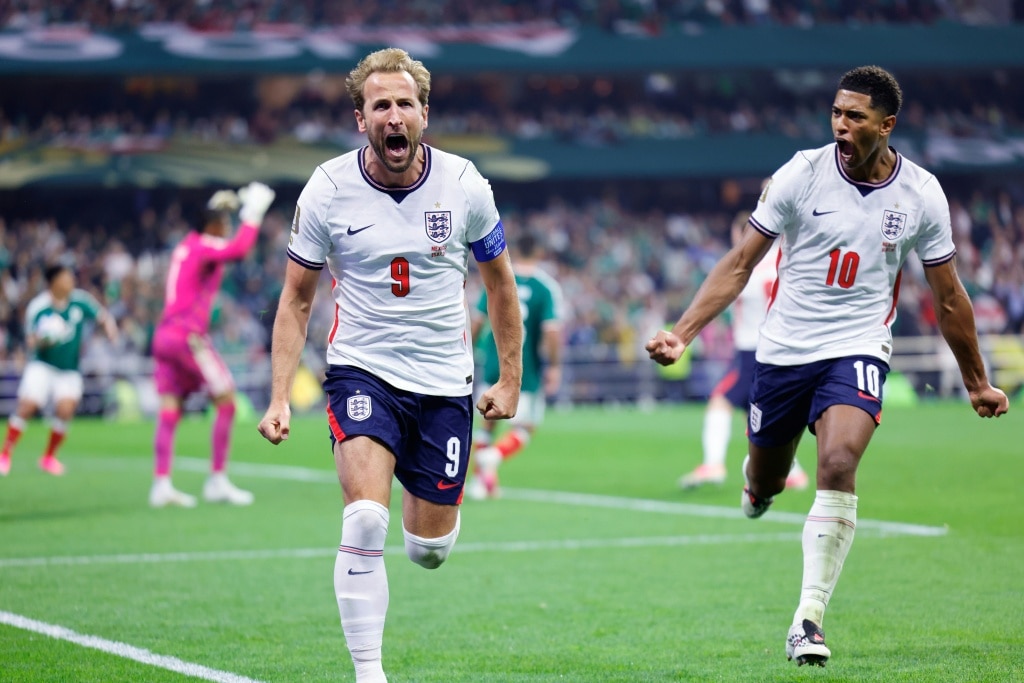
    As football fans across the globe gear up for the 2026 FIFA World Cup co-hosted by the United States, Canada and Mexico, France head coach Didier Deschamps has confirmed his 26-man squad for the tournament, marking his final major international selection before stepping away from the role. The four-time World Cup winning manager’s roster holds few surprises, built around tactical cohesion rather than simply picking the 26 highest-rated individual players, he explained.

    Kylian Mbappe, the team’s star captain-elect, will lead Les Bleus into the tournament despite sustaining a thigh injury last month that forced him to sit out critical late-season fixtures for Real Madrid in La Liga. The 27-year-old frontman will spearhead one of the most exciting attacking lines in the competition, joined by reigning Ballon d’Or winner Ousmane Dembele, Paris Saint-Germain’s rising star Desire Doue, and Bayern Munich dynamic winger Michael Olise. 22-year-old playmaker Rayan Cherki, who turned in a standout debut season at Manchester City in the Premier League, will make his first World Cup appearance for France.

    In defense, Arsenal’s William Saliba, who has cemented his status as one of the league’s top center-backs, will bring solidity to the French backline, widely expected to line up alongside Bayern Munich and Bundesliga champion Dayot Upamecano in the heart of defense. Liverpool’s Ibrahima Konate and Crystal Palace’s Maxence Lacroix have also earned selection to Deschamps’ defensive cohort.

    Only four players – Mbappe, Dembele, full-back Lucas Hernandez and midfielder N’Golo Kante – remain from Deschamps’ 2018 World Cup-winning squad that lifted the trophy in Russia. Lens goalkeeper Robin Risser is the only uncapped player called up to this year’s roster.

    Several high-profile players have missed out on selection, headlined by Real Madrid midfielder Eduardo Camavinga and Paris Saint-Germain shot-stopper Lucas Chevalier. Deschamps acknowledged Camavinga’s likely disappointment, noting the midfielder struggled through an injury-hit season with limited minutes at club level. Liverpool striker Hugo Ekitike was also forced to rule out of contention after suffering a season-ending Achilles injury in April.

    Speaking to reporters after the announcement, Deschamps reflected on his 14-year tenure in charge of the French national team, ahead of his seventh and final major tournament as head coach. “It’s been part of my life for 14 years running. But if people are worried, I’m not retiring. I’ll have a life of my own. The World Cup is the most important thing,” he said.

    France will kick off their Group I campaign against Senegal on June 16, before facing off against Iraq and Norway to close out the group stage. The full squad is as follows:

    **Goalkeepers**: Mike Maignan (AC Milan), Robin Risser (Lens), Brice Samba (Rennes)
    **Defenders**: Lucas Digne (Aston Villa), Malo Gusto (Chelsea), Lucas Hernandez (Paris Saint-Germain), Theo Hernandez (Al Hilal), Ibrahima Konate (Liverpool), Maxence Lacroix (Crystal Palace), Jules Kounde (Barcelona), William Saliba (Arsenal), Dayot Upamecano (Bayern Munich)
    **Midfielders**: N’Golo Kante (Fenerbahce), Manu Kone (Roma), Adrien Rabiot (AC Milan), Aurelien Tchouameni (Real Madrid), Warren Zaire-Emery (Paris Saint-Germain)
    **Forwards**: Maghnes Akliouche (Monaco), Bradley Barcola (Paris Saint-Germain), Rayan Cherki (Manchester City), Ousmane Dembele (Paris Saint-Germain), Desire Doue (Paris Saint-Germain), Michael Olise (Bayern Munich), Kylian Mbappe (Real Madrid), Jean-Philippe Mateta (Crystal Palace), Marcus Thuram (Inter Milan)

  • Trump to seek tangible trade wins in Xi summit

    Trump to seek tangible trade wins in Xi summit

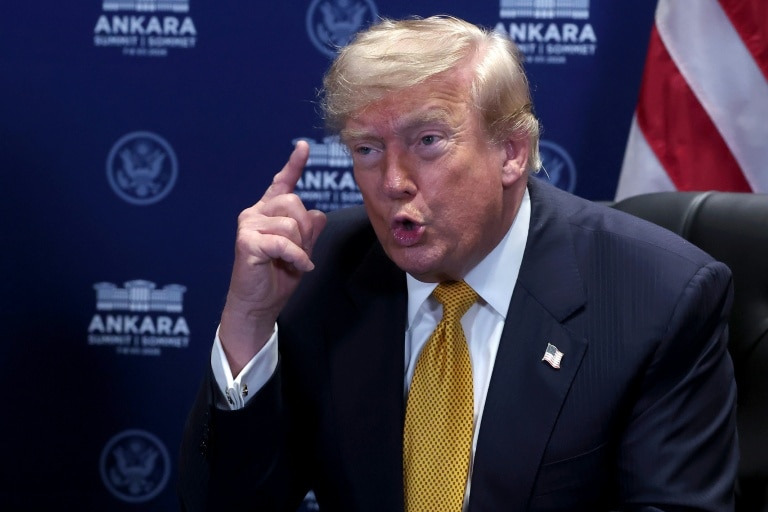
    When U.S. President Donald Trump arrived in Beijing for his landmark summit with Chinese leader Xi Jinping — the first visit by a sitting American president in nearly a decade — high expectations for breakthrough progress on trade and bilateral relations hung over the meetings. But after a day of ceremonial handshakes and official banquets, a blunt warning from Xi over the sensitive issue of Taiwan overshadowed the proceedings, as the U.S. delegation heads into the final day of talks on Friday focused on securing tangible trade and geopolitical wins.

    On the trade front, Trump is seeking to lock in major commercial agreements across key sectors ranging from agriculture and commercial aviation to cutting-edge artificial intelligence. He is joined on the trip by a roster of top American business leaders, including Tesla CEO Elon Musk and Nvidia chief Jensen Huang, highlighting the private sector’s stake in improved bilateral commercial ties. Ahead of Friday’s trade-focused discussions, Trump previewed one high-profile deal in an interview with Fox News, confirming that China has agreed to purchase 200 Boeing commercial jets. Markets reacted cautiously to the announcement, however: shares of Boeing dipped immediately after the reveal, as investors had anticipated a larger, more substantial purchase agreement.

    Beyond commercial deals, the Trump administration is also pushing for progress on geopolitical flashpoints, most notably the ongoing Middle East conflict and its impact on global energy supplies. In his Fox News interview, Trump said that Xi gave him clear reassurance that China will not provide military aid to Iran amid the ongoing war, a key win for the U.S. administration. “He said he’s not going to give military equipment… he said that strongly,” Trump told reporters, adding that Xi shares the U.S. goal of keeping the Strait of Hormuz — the critical maritime chokepoint through which 20% of the world’s oil supplies pass — open to global shipping. The White House later confirmed in a brief official readout that both leaders “agreed that the Strait of Hormuz must remain open to support the free flow of energy.” This issue has already upended the summit schedule: Trump was originally scheduled to travel to Beijing in late March, but postponed the trip over tensions linked to the Hormuz closure.

    Talks between the two global powers are also set to address the emerging framework for AI governance, with U.S. Treasury Secretary Scott Bessent telling CNBC that the world’s two leading AI powers are negotiating to establish “guardrails” for responsible development and deployment of the technology. Despite this opening for dialogue, longstanding frictions remain: U.S. export controls on advanced AI semiconductors and related technology to China remain one of the most contentious issues in bilateral trade relations.

    Diplomatic undercurrents have shaped the tone of the summit from the start. While Trump has repeatedly praised Xi, calling him a “great leader” and a “friend,” the Chinese side has responded with relatively muted diplomatic overtures. That dynamic shifted sharply on Thursday, when Xi delivered an uncharacteristically blunt warning that any missteps on the Taiwan issue could push the two nuclear-armed superpowers into open conflict. Trump declined to address Xi’s Taiwan warning when questioned by reporters Thursday, but Bessent said the president would share more details of his position “in the coming days.”

    The two leaders also touched on long-term great power dynamics during their first day of talks, with Xi referencing the so-called Thucydides Trap — the theory that a rising power will inevitably clash with an existing dominant power. Xi emphasized that Beijing and Washington have the ability to transcend this historical risk, avoiding conflict despite their growing competition. In a post on his Truth Social platform early Friday, Trump framed Xi’s reference to great power shifts through a domestic political lens, noting that Xi “very elegantly referred to the United States as perhaps being a declining nation.” Trump claimed that Xi’s observation was not aimed at his own administration, which he says has overseen an “incredible rise” for the U.S., but rather at the tenure of his predecessor Joe Biden. “Two years ago, we were, in fact, a Nation in decline,” Trump wrote. “Now, the United States is the hottest Nation anywhere in the world, and hopefully our relationship with China will be stronger and better than ever before!” He added that Xi “congratulated me on so many tremendous successes.”

    As the two leaders enter the final day of negotiations, observers are watching to see whether the summit will deliver on Trump’s promises of tangible wins, or whether lingering disputes over Taiwan, AI trade controls, and the Middle East will overshadow any potential progress.

  • Dior nods to Hollywood’s Golden Age with Cruise collection

    Dior nods to Hollywood’s Golden Age with Cruise collection

    French luxury fashion powerhouse Dior has brought old-school Hollywood glamour back to life with its highly anticipated 2027 Cruise collection, marking the brand’s first Cruise show under newly appointed creative director Jonathan Anderson. The star-studded event unfolded at the Los Angeles County Museum of Art (LACMA), where the iconic house wove together nods to Tinseltown’s golden era, California’s iconic natural beauty, and Dior’s decades-long historic relationship with cinema. A-list attendees from across the entertainment industry packed the venue, including singers Sabrina Carpenter and Miley Cyrus, and screen legends Al Pacino, Jeff Goldblum, Anya Taylor-Joy and Macaulay Culkin, all gathering inside LACMA’s newly opened David Geffen Galleries for the glitzy affair.

    Event designers transformed the museum’s striking concrete architectural curves into a atmospheric set straight out of a mid-century classic detective film, complete with vibrant vintage automobiles and moody, cinematic lighting. When models stepped out from a soft smoky haze to take their turns on the runway, they wore designs awash in warm, vibrant hues of golden yellow, rich purple and tangerine orange. The collection’s concept was rooted in a legendary chapter of Dior and Hollywood history, drawing inspiration from the iconic demand actress Marlene Dietrich made to director Alfred Hitchcock ahead of filming 1940s classic *Stage Fright*: “No Dior, no Dietrich!”

    True to the spirit of Dietrich’s legendary on-screen wardrobe, Wednesday evening’s show balanced unapologetic glamour with a core thread of female empowerment. Floral motifs emerged as a defining design element across the collection: a scattering of bright daffodils burst from the hem of one flowing skirt, while cascading red-orange poppy petals— a nod to California’s beloved state flower— spilled down the silhouette of a structured evening gown. Tailored outerwear also took a prominent turn on the runway, rendered in dramatic tones of jet black, shimmering gold and metallic silver. One standout piece, a tailored gray-striped coat, featured geometric shadow patterns that mirrored the effect of light slanting through vintage Venetian blinds, pulling directly from the visual language of 1940s black-and-white cinema. Even the brand’s iconic accessories joined in the theme: a reimagined version of Dior’s classic saddle bag drew design inspiration from mid-century American automobiles, perfectly complementing the collection’s nostalgic premise.

    Many guests in attendance highlighted the collection’s thoughtful nostalgic tone, praising Anderson’s juxtaposition of design influences that created loose, fluid silhouettes far from the heavily cinched shapes Dior is historically known for, echoing the elegant styles of 1940s Hollywood. Anderson, who previously served as artistic director for Spanish luxury brand Loewe, stepped into his expanded role at Dior in June 2025, making history as the first designer since founder Christian Dior himself to oversee the brand’s three core lines: women’s wear, men’s wear, and haute couture. Since taking the role, he has debuted a critically acclaimed first menswear collection in June 2025, a first women’s wear collection that received more mixed reception that October, an extravagant second menswear collection in Paris this past January, and a punk-inflected, floral-accented debut haute couture collection that stayed true to Anderson’s well-known rebellious creative identity.

    Just as Dior itself has deep ties to the film industry— the brand earned an Oscar nomination in 1955 for its costume work on *Indiscretion of an American Wife*— Anderson has already built strong connections to modern Hollywood, having created custom costumes for the 2024 hit sports drama *Challengers*, directed by Luca Guadagnino and starring Zendaya. Dior’s annual Cruise, or resort, shows are known for being hosted in rotating iconic locations around the globe, bringing the luxury brand’s transitional designs to new audiences each year. Last year’s presentation was held in Rome, following previous shows in Scotland and Mexico, while the brand’s last Cruise show in Los Angeles dated back to 2017, making this week’s event a notable homecoming for the label on the West Coast.

  • Kerr to leave Chelsea at end of season

    Kerr to leave Chelsea at end of season

    One of women’s football’s most iconic forwards, Sam Kerr, will bring her record-breaking tenure at Chelsea Women to a close when her current contract expires at the end of this summer. The 32-year-old Australian, who sits atop Chelsea Women’s all-time Women’s Super League (WSL) goalscoring charts, will make her final appearance for the Blues in a home fixture against Manchester United this coming Saturday.

    Since joining Chelsea from the National Women’s Soccer League (NWSL) in November 2019 in what was then the most expensive transfer ever completed by an English women’s club, Kerr has cemented her legacy as one of the greatest players to ever step onto the Stamford Bridge pitch. Across 157 appearances in all competitions for the club, she has found the back of the net 115 times, and sits just one goal away from matching Fran Kirby’s all-time club record of 116 total goals heading into her farewell match. Her 64th WSL goal against Leicester City earlier this season secured her position as the league’s all-time top goalscorer for Chelsea, a new historic milestone.

    Kerr’s time at the club has been defined by unprecedented success. Over six years, she helped Chelsea lift 11 major trophies: five WSL titles, three FA Cups, three League Cups, and one Community Shield. Individually, her achievements are equally impressive: she earned two WSL Golden Boots, won the 2022 WSL Player of the Season award, and claimed back-to-back PFA Fans’ Player of the Year honors in 2021 and 2022. Renowned for her acrobatic backflip goal celebrations, Kerr scored countless decisive goals in high-stakes matches, from FA Cup finals to Champions League knockout fixtures, forming a devastating attacking partnership with Fran Kirby that powered Chelsea’s six-year dominance of the WSL under former manager Emma Hayes.

    Kerr’s recent career has been marked by remarkable resilience. In January 2024, she suffered a devastating anterior cruciate ligament (ACL) injury during a Chelsea training camp, which kept her sidelined for nearly 17 months. After signing a two-year contract extension in June 2024, she made a fairytale return to action in September 2025, 637 days after her injury, marking her comeback with a goal in a 3-1 victory over Aston Villa. She has gone on to score 16 goals in 29 appearances across the current season, with six goals in her most recent six matches in all competitions, proving she still retains the world-class finishing ability that made her a global star.

    In a reflective statement on her upcoming final match, Kerr expressed gratitude for her time at the club. “When I reflect on my Chelsea career and doing it for the last time [against Manchester United this Saturday], I just feel happy,” she said. “Happy that it happened, and I feel so grateful to have played for this club for six years and won as many trophies as we could.”

    Chelsea’s official statement paid tribute to the striker’s transformative impact on the club, both on and off the pitch. “We thank Sam for her incredible contribution to our success on the pitch and sustained growth off it,” a club spokesperson said. “We wish her all the best in the next chapter of her career.”

    While Kerr’s departure leaves an irreplaceable void in Chelsea’s attacking line, current manager Sonia Bompastor has already confirmed that signing a new starting number nine is a top summer transfer priority. Manchester City’s star striker Khadija Shaw, the WSL’s current top goalscorer, is reportedly at the top of the club’s shortlist, though any new signing will face enormous pressure to match Kerr’s legacy of consistent goals and titles.

    As for Kerr’s own next chapter, details remain unconfirmed. Sources close to the player have indicated a return to the NWSL in the United States is the most likely outcome, though a recent report from Australian broadcaster 10 News claiming Kerr had already agreed a deal to join Denver Summit was quickly dismissed by the striker on social media. All eyes will now be on Stamford Bridge this Saturday, as fans turn out to say goodbye to one of the most influential players in Chelsea Women’s history.

  • US senators vote to withhold own pay in government shutdowns

    US senators vote to withhold own pay in government shutdowns

    In a rare display of bipartisan unity on Thursday, members of the U.S. Senate voted unanimously to approve a measure that would suspend their own salaries for the duration of any future government shutdown, a step designed to force lawmakers to share the financial burden that falls on federal workers and American citizens when funding gridlock brings federal operations to a halt.

    The move comes in direct response to a string of crippling funding standoffs that have disrupted the federal government repeatedly over the past eight years, leaving millions of Americans facing disrupted public services, delayed benefit payments, and growing anger at the pervasive political dysfunction in Washington D.C. The proposal has its roots in the widespread public criticism that followed recent extended shutdowns, when hundreds of thousands of federal employees were forced to work without pay or placed on unpaid furlough, while members of Congress continued to receive their full salaries on schedule.

    Sponsored by Republican Senator John Kennedy of Louisiana, who is not affiliated with the prominent Kennedy political family that produced former President John F. Kennedy and 2024 presidential candidate Robert F. Kennedy Jr., the measure requires the Senate to withhold pay from all sitting senators any time funding expires for at least one federal agency or department. Withheld salaries would only be released to lawmakers once the shutdown ends and full government funding is restored.

    Unlike binding legislation, this resolution applies exclusively to the operation of the Senate and does not require approval from the House of Representatives or a signature from President Donald Trump to take effect. However, a longstanding constitutional ban on adjusting congressional pay mid-term means the rule will not go into force until after the upcoming November midterm elections.

    The string of funding crises that prompted this vote stretches back to the start of Trump’s current term in office. Most recently, the federal government suffered a 43-day shutdown last year amid a bitter dispute over expired Affordable Care Act subsidies. That was followed earlier this year by a 76-day partial shutdown of the Department of Homeland Security, the longest partial department shutdown in U.S. history, triggered by clashes over funding for immigration enforcement operations.

    Speaking ahead of the final vote, Kennedy emphasized that the existing system, which insulates lawmakers from the financial harm of shutdowns while ordinary workers bear the cost, is unacceptable. “We ought to hide our heads in a bag. It’s got to stop,” Kennedy said, adding that, “Shutting down government should not be our default solution to our refusal to work out our issues and our differences.”

    Kennedy framed the bill as a necessary incentive to push lawmakers to reach funding agreements and avoid future shutdowns, acknowledging that he had pushed for a stricter original proposal that would permanently withhold pay from senators during shutdowns and bar them from leaving Washington while a funding lapse is ongoing. Even so, he framed the unanimous vote as a step toward the shared sacrifice he says is needed in Congress. “This is about putting our money where our mouth is,” he told his fellow senators ahead of the vote.

  • Princess Catherine wraps up Italy visit with pasta class

    Princess Catherine wraps up Italy visit with pasta class

    After months of gradual reintroduction to public life following cancer treatment, Britain’s Princess Catherine has wrapped up her first official overseas visit since her 2024 cancer diagnosis, closing out the two-day trip to Italy with a hands-on pasta-making workshop in the scenic region around Reggio Emilia.

    The 44-year-old Princess of Wales, who confirmed her cancer was in remission in January 2025, crafted traditional tortelli — a regional stuffed pasta comparable to ravioli — at a countryside farmhouse hotel outside the northern Italian city. Working alongside local chef Ivan Lampredi, the princess kneaded dough, added savory filling, and cut out the signature pasta shapes, joking at one point, “Sorry, I’m very slow,” to which the chef offered a reassuring response.

    The entire trip centered on one of Catherine’s longstanding advocacy priorities: early childhood education, a cause deeply personal to her as the mother of three children — Prince George, 12, Princess Charlotte, 11, and Prince Louis, 8. On the morning before the pasta workshop, she visited a local preschool that employs nature-based learning methodologies, as well as an educational center designed to teach young children about sustainable recycling practices.

    When Catherine arrived in Reggio Emilia on Wednesday, hundreds of enthusiastic local onlookers lined the streets to greet her with cheers, marking a warm welcome for the princess’s first foreign official outing in more than two years. Her previous overseas royal engagement came in December 2022, when she accompanied her husband Prince William, the heir to the British throne, to Boston for the annual Earthshot Prize awards ceremony focused on environmental innovation.

    Catherine first shared her cancer diagnosis publicly in March 2024, announcing that she had begun a course of preventative chemotherapy while opting not to disclose the specific type of cancer. She stepped back from most public duties during her treatment, before revealing in early 2025 that her cancer was in remission. Since that announcement, she has slowly resumed public engagements, building up to this full overseas working visit.

    A long-time champion for early childhood development, Catherine founded the Royal Foundation Centre for Early Childhood in 2021, an initiative dedicated to raising global awareness of how foundational early life experiences shape long-term health and outcomes for children.

  • Germany’s Merz calls for more investment, less subsidies in EU budget

    Germany’s Merz calls for more investment, less subsidies in EU budget

    A pivotal debate over the future of the European Union’s long-term budget has taken center stage at the 2026 Charlemagne Prize ceremony in Aachen, Germany, where Chancellor Friedrich Merz has called for sweeping structural reform to align the bloc’s spending with 21st-century challenges. The event, which honored former European Central Bank President Mario Draghi for his decades of work advancing European integration, became a platform for confronting longstanding frictions over EU fiscal policy and competitiveness.

    The 27 EU member states are currently locked in tense negotiations over the 2028-2034 multiannual budget. A bloc of so-called frugal nations, led by Germany and the Netherlands, has already pushed back against a substantial spending increase proposed by the European Commission, the EU’s executive body. Speaking at the award ceremony Thursday, Merz, a conservative leader, argued that the EU’s current budget framework is hopelessly outdated. “We cannot meet the challenges of the 21st century with a 20th-century budget,” he declared, echoing growing frustration across the bloc over stagnant budget structures that have not shifted in decades.

    Merz backed a landmark 2024 competitiveness report from Draghi, which warned that the EU risks falling behind global rivals the United States and China without a fundamental shift in policy. He criticized that the EU budget’s core content and structure has remained virtually unchanged for generations, with more than two-thirds of all EU funding still allocated to redistribution programs and direct subsidies. For decades, the EU has leaned heavily on these subsidies and redistribution mechanisms to offset economic disruptions from internal trade integration and support less wealthy eastern European member states as the bloc expanded. But Merz argued this model is no longer fit for purpose, calling for an overall reduction in unnecessary budget spending and a major reallocation toward investments that boost EU competitiveness and collective defense.

    Despite backing Draghi’s call for increased joint investment, Merz drew a firm line against the funding mechanism Draghi proposed: collective debt issuance by all EU member states. “Excessive indebtedness threatens sovereignty and limits the capacity to act,” Merz stated. Analysts widely note the comment also carries weight for domestic German politics, where the country relaxed its long-standing strict constitutional “debt brake” rules only last year, after years of adhering to rigid fiscal limits, to fund increased defense and infrastructure investment.

    In his acceptance speech for the Charlemagne Prize, which recognizes individuals who work to advance European unity, Draghi offered a sharp critique of the bloc’s overreliance on external free trade deals as a growth driver — a long-standing priority for German economic policy. Draghi argued that pursuing new trade agreements is far easier than tackling “unfinished work at home,” a reference to the EU’s incomplete single market. He noted that reform requires confronting entrenched vested interests that benefit from fragmented energy markets and an incomplete single market, choices European leaders have long avoided.

    Draghi, who also served as Italian prime minister from 2021 to 2022 and led the ECB from 2011 to 2019, is widely credited with preventing the collapse of the euro during the 2010s eurozone debt crisis. His successor at the head of the ECB, Christine Lagarde, reinforced his calls for urgent action in a speech delivered the night before the ceremony, noting that global competition has shifted dramatically. “The United States and China have entered a new age of industrial strategy and geopolitical competition — intensified by tariff wars and rare-earth battles — and all this amid the worst energy crisis on record,” Lagarde said, echoing Draghi’s warning that the EU must act fast to avoid falling behind in global competitiveness.

  • Stars flying into Cannes in private jets ‘obscene’, say ex-pilots

    Stars flying into Cannes in private jets ‘obscene’, say ex-pilots

    As the iconic Cannes Film Festival approaches, climate campaigners and former aviation professionals are shining a harsh spotlight on the luxury private jet travel habit of Hollywood’s biggest names, calling their excessive carbon and fuel use a deeply unethical indulgence amid a mounting global energy crisis.

    Last year’s festival alone saw 750 private jet flights carry A-list stars and industry executives to the French Riviera, according to new data compiled by Brussels-based environmental nonprofit Transport and Environment (T&E). That volume of travel burned through a staggering 2 million liters of jet kerosene — a footprint equal to the fuel consumption of 14,000 commercial passengers flying the route between Paris and Athens, T&E’s aviation lead Jerome du Boucher told AFP in an interview this week.

    Anthony Viaux, a former Air France pilot and one of the dozens of aviation professionals backing the campaign, argued that the wasteful consumption by the rich and famous is far more than just out of touch. “The rich and famous burning through scarce fuel to get to a film festival isn’t just tone deaf, it’s obscene,” Viaux said. With the ongoing conflict in the Middle East pushing global fuel markets into chaos and many nations facing acute fuel shortages, the global community can no longer justify reserving massive volumes of scarce fuel for elite luxury travel, campaigners say.

    At present, EU regulations leave two-thirds of all private jet flights exempt from carbon taxes under the bloc’s Emissions Trading Scheme (ETS), a loophole T&E traces back to EU policymakers’ fear of retaliatory action from the former U.S. Trump administration if private aviation were added to the scheme. This creates a stark double standard: ordinary commercial passengers flying within the EU are required to pay these carbon levies, while the world’s wealthiest elite escape the cost entirely.

    The call for reform has even won support from wealthy advocates for change. Julia Davies, an investor and co-founder of Patriotic Millionaires UK, pointed out that private aviation is a luxury accessible only to a tiny sliver of the global population, yet that same elite group avoids the fuel and carbon taxes that ordinary working people pay every day when they commute to work.

    Campaigners are pointing to a small but high-profile example to prove change is possible: last year, Chilean-American star Pedro Pascal — who gained global fame for his lead role in *The Last of Us* and *Narcos* — traveled to Cannes on a commercial economy flight, defying the unwritten rule that A-listers arrive via private transport. Former private jet pilot Katie Thompson argues there is no reason every other celebrity cannot follow Pascal’s lead, or opt for low-carbon train travel for short European routes to the Riviera.

    The current global fuel crunch, driven by months of heightened tension around the Strait of Hormuz following U.S.-Israeli strikes on Iran, has created widespread disruption across European aviation already this year. France alone has canceled more than 500 flights in recent months, and up to 20 million passengers across Germany are expected to face scheduling disruptions and shortages during the peak summer holiday travel period, du Boucher noted. Against this backdrop, campaigners say the crisis presents a rare opening to force long-overdue reform of private aviation regulations.

    T&E is currently lobbying European national governments to enact a full ban on private jet travel, arguing that scarce kerosene reserves should be reserved for essential travel rather than elite luxury. The group is also calling for EU policymakers to close the existing ETS loophole, requiring all private jet flights and international routes into the bloc to pay full carbon taxes, regardless of external political pressure. “EU policymakers shouldn’t let Trump’s administration dictate the rule,” Viaux said.

    T&E data shows that even a simple shift from private to commercial travel for all Cannes attendees would put the festival 40 percent of the way to meeting its 2030 carbon emissions reduction target, a meaningful step forward for an event that has pledged to cut its climate impact. AFP has reached out to the Cannes Film Festival organizing committee for comment on the campaign’s demands, and no response has been issued as of yet.

  • Angus Taylor eyes ‘generational’ change, but Pauline claims he’s seeing orange

    Angus Taylor eyes ‘generational’ change, but Pauline claims he’s seeing orange

    In a high-stakes address to Australia’s House of Representatives delivered shortly after 7:30 pm Thursday, Opposition Leader Angus Taylor laid out the Coalition’s far-reaching policy blueprint for tackling the country’s soaring cost of living, locking in a series of contentious pledges that have already divided political circles across the nation.

    Against a backdrop of a federal budget shaped by global volatility stemming from the Middle East conflict – one where the ruling Labor government has pushed forward sweeping reforms to housing investor tax breaks including changes to capital gains tax and negative gearing, policies the Coalition has already promised to reverse if elected – Taylor’s reply positioned the opposition as a sharp alternative to Labor’s agenda. Prime Minister Anthony Albanese has framed Labor’s tax changes as a critical step to rebalance Australia’s increasingly unaffordable housing market and improve equity for first-time buyers, but Taylor rejected that framing outright, labeling the new levies on housing and small business a “stealth raid” on hardworking Australians striving to improve their financial standing, an unfair assault on personal aspiration.

    The most eye-catching proposal in the Coalition’s plan is a hard cap on net overseas migration, tied directly to the annual number of new housing completions across the country. Taylor stressed that under a future Coalition government, “Never again will a government be able to bring in more people than our housing can support. That’s our commitment.” To address the current national housing shortfall, Taylor confirmed migration levels would be held “significantly below” the cap for the first several years of a Coalition term, delivering what he called “one of the biggest cuts to immigration in Australian history.” He declined to release a precise numerical target ahead of the next election, arguing that setting a fixed figure now would be reckless, and hit out at Labor for consistently overshooting its own migration targets, drawing jeers from government benches in response.

    Beyond the migration cap, the Coalition laid out a suite of further border and visa policy changes: the existing Australian Values Statement will become an enforceable condition for visa approval, permanent visa holders will be legally required to learn English, enhanced border screening will be implemented to block radical extremists, Temporary Protection Visas will be reinstated to crack down on what Taylor called “frivolous protection claims” via a formal list of safe countries deemed free of persecution, and the government will move to process and deport 70,000 visa overstayers who have no legal right to remain in the country. “Those who criticise the law being enforced must explain why their sympathies lie with illegal overstayers instead of with migrants and Australians who abide by the law,” Taylor said.

    On housing, the Coalition plans to unblock stalled residential construction projects and inject $5 billion into supporting core infrastructure including new roads, water networks and sewage systems. Taylor said these investments, paired with deep cuts to burdensome regulatory red tape, will unlock 400,000 new homes and reduce the cost of a newly built home by as much as $70,000. Taylor also targeted the 2,000-page National Construction Code introduced under Labor, arguing its thousands of overlapping rules add tens of thousands of dollars to new build costs, with the Coalition aiming to shrink the code to roughly 200 pages. Additional deregulation is planned for the Environmental Protection and Biodiversity Conservation Act as well.

    On tax policy, the Coalition introduced its Tax Back Guarantee, which will index the two lowest income tax thresholds to inflation starting in the 2028-29 financial year. Taylor explained this reform will fully protect 85% of Australian income earners, delivering an estimated $250 in relief in the first year of the policy, growing to more than $1,000 annually by the fourth year. Starting in 2031-32, the two highest tax thresholds will also be indexed to inflation, extending full protection from bracket creep to all Australian taxpayers, a change Taylor described as once-in-a-generation tax reform. For small businesses with annual turnover under $10 million, the policy makes the immediate asset deduction of up to $50,000 a permanent measure, to encourage ongoing business investment.

    In a further contentious shift, Taylor confirmed the Coalition will restrict access to the National Disability Insurance Scheme (NDIS) and 17 other welfare programs exclusively to Australian citizens, excluding permanent residents from accessing these benefits. “My message is this: If you commit to Australia, then Australia will commit to you,” Taylor said. “After all, the taxes paid by hard working Australians should support Australians.” The policy drew immediate mixed reactions even across the political sphere: One Nation leader Pauline Hanson quickly claimed the entire budget reply was “replete with One Nation policies,” arguing the Coalition had stolen longstanding One Nation proposals after previously dismissing the minor party as having no workable ideas. But senior Coalition figures defended the plan, with Shadow Treasurer Tim Wilson telling the ABC the policy aligns with a growing global shift among European nations, arguing “it has to be on the basis of they come, commit and contribute” to access public benefits. Liberal Senator Sarah Henderson told Sky News the policy of restricting welfare to citizens is “right and proper,” though she declined to specify how much taxpayer money the change would save.

    On economic and fiscal policy, Taylor announced that a future Coalition government would deposit 80 cents of every dollar in resource revenue that exceeds forecast projections into a new Future Generations Fund. The fund will be used to pay down Labor’s projected $1 trillion in national debt and fund new nation-building infrastructure projects, with 25% of fund allocations directed to regional communities that Taylor said have been neglected by the current Labor government. Taylor also rejected Labor’s tax breaks for electric vehicles, noting the majority of benefits flow disproportionately to high-income households, and confirmed the Coalition would collaborate with the Albanese government on NDIS reform, an unusual point of bipartisan agreement in an otherwise combative address.

    On national security, Taylor argued that in an era of global “coercion, crisis, and conflict,” Australia must prioritize greater self-reliance. A Coalition government will develop a formal National Security Strategy and appoint a dedicated National Security Adviser, with defense as the central pillar of the strategy. Unlike Labor, which projects to hit the 3% of GDP defense spending target by 2033 via a planned $53 billion spending increase over 10 years, Taylor committed the Coalition would meet the 3% of GDP target immediately, accusing Labor of accounting trickery to delay the investment.

    Overall, Taylor’s address stayed largely aligned with the Coalition’s longstanding policy priorities: pushing back against high mass migration levels, criticizing big government overspending, and highlighting the growing cost of living crisis that has made the traditional Australian dream of a single-income earner saving for a home deposit increasingly out of reach for many. Taylor closed by outlining his core vision for the country: “to revive the freedom that Australians have lost under Labor. Not a government-directed economy – a free-enterprise economy. Not bigger government – better government.”