标签: Oceania

大洋洲

  • Asian markets cautious, oil dips after Trump holds off on Iran attack

    Asian markets cautious, oil dips after Trump holds off on Iran attack

    Geopolitical tensions in the Middle East continued to shape global financial trading on Tuesday, as Asian equity markets traded mixed and crude oil pulled back from recent elevated levels after former U.S. President Donald Trump announced he would delay a planned military strike on Iran to allow for diplomatic negotiations. The pullback in oil prices came amid glimmers of hope for de-escalation, but ongoing uncertainty over the Strait of Hormuz kept energy markets volatile and investor risk appetite in check.

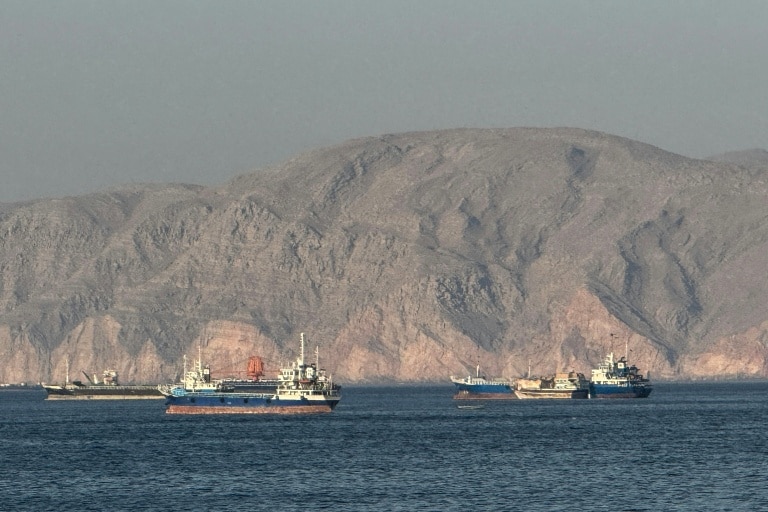
    The regional conflict that began in late February between the U.S.-Israel bloc and opposing forces has resulted in a de facto blockade of the Strait of Hormuz, the critical chokepoint that carries roughly 20 percent of the world’s global oil exports during peacetime. In a post to his Truth Social platform Tuesday, Trump revealed that the leaders of Qatar, Saudi Arabia, and the United Arab Emirates had requested he hold off the scheduled military strike to open space for negotiations. He wrote that he had granted the request, as “serious negotiations are now taking place.”

    Despite pausing offensive action, Trump stressed that U.S. military forces remain on high alert, ready to launch a full-scale large-scale assault on Iran at a moment’s notice if negotiations fail to reach an acceptable outcome. Speaking at a subsequent White House event, he framed the current diplomatic push as a “very positive development,” noting that key Arab regional allies believe a final deal is within reach that would see Iran abandon its nuclear program — a goal Tehran has long denied pursuing.

    “There seems to be a very good chance that they can work something out. If we can do that without bombing the hell out of them, I’d be very happy,” Trump told reporters, while reiterating his warning that military action remains on the table if talks collapse. This dual messaging underscored the continued fragility of security in one of the world’s most energy-rich regions.

    The prospect of a diplomatic breakthrough sent oil prices lower, though the decline provided only limited relief after weeks of extreme volatility driven by the ongoing Middle East conflict. At the time of reporting, global benchmark Brent crude hovered around $109 per barrel, while U.S. West Texas Intermediate traded near $107. Official data as of 0230 GMT recorded Brent down 2.1 percent at $109.75 per barrel, while WTI bucked the broader trend to gain 1.2 percent, hitting $107.40 a barrel.

    Across Asian equity markets, performance was uneven as investors balanced cautious optimism over diplomacy with lingering anxiety over geopolitical and economic risks. Japan’s Nikkei 225 opened and closed 0.5 percent lower at 60,537.87, as broader geopolitical jitters offset a better-than-expected first-quarter GDP report that showed the Japanese economy expanding 0.5 percent, exceeding analyst forecasts of 0.4 percent growth. South Korea’s Kospi index fell more than four percent, dragged down by steep losses in the technology sector that tracked downward movement on Wall Street a day earlier. Markets in Shanghai, Taipei, and Jakarta also closed lower, while the Hang Seng Index in Hong Kong gained 0.3 percent to hit 25,740.60, and benchmarks in Sydney and Wellington also finished in positive territory.

    Safe-haven assets edged higher on Tuesday, with gold and silver posting small gains, a signal that investor caution remains elevated despite the diplomatic opening. All market eyes are now turning to Wednesday, when U.S. semiconductor giant Nvidia is set to release its quarterly earnings results. The report is widely anticipated as investors seek clarity on whether massive current investments in artificial intelligence data center infrastructure will deliver the strong returns market participants have priced in.

    Other global market moves were muted. The Dow Jones Industrial Average closed up 0.3 percent at 49,686.12 in New York’s previous session, while London’s FTSE 100 gained 1.3 percent to close at 10,323.75. Currency markets saw minor shifts: the pound dipped to $1.3416 from $1.3422 on Monday, the euro edged up against sterling to 86.80 pence, fell slightly against the dollar to $1.1645, and the dollar gained marginally against the yen to reach 158.98 yen.

  • Hawthorn coach likens AFL’s Tasmania decision to being ‘kicked out of home’

    Hawthorn coach likens AFL’s Tasmania decision to being ‘kicked out of home’

    After more than two decades of calling northern Tasmania home, Australian Football League (AFL) side Hawthorn FC is facing an uncertain future for its Tasmanian membership and local staff, after the governing body ordered the club to cede all of its Tasmanian match rights to the newly admitted Tasmania Devils expansion team ahead of the Devils’ 2028 debut.

    For years, Hawthorn has hosted four annual home-and-away fixtures and one pre-season match in Launceston, building deep roots in the northern Tasmanian community and creating some of the club’s most iconic on-field memories – including Lance Franklin’s legendary 13-goal performance against North Melbourne in 2012. The club had argued to retain its Launceston matches after the Devils’ entry, noting the expansion side would base its operations out of southern Tasmania’s Hobart. But AFL confirmed in an official announcement Tuesday morning that the new franchise will receive exclusive rights to host matches across the entire state, ending Hawthorn’s long-standing Tasmanian partnership.

    Hawthorn president Andy Gowers confirmed the club has already entered discussions with AFL to relocate the five displaced matches, with the club’s top priority being securing four extra home games at the Melbourne Cricket Ground (MCG), the league’s premier venue. Gowers also acknowledged the significant financial and community impact of the decision, noting that the Launceston games have long been a major contributor to the club’s bottom line. “I am not going to talk exact numbers (money lost), but what I will say is it is a significant factor in our bottom line and has been for a number of years. That’s part of our disappointment,” Gowers told reporters Tuesday.

    The biggest immediate concern for the club is the future of its 8,000 local members and full-time Tasmanian-based staff, who have been core to Hawthorn’s presence in the region for decades. “That is clearly one of our major considerations. Members down there on the ground but also staff, we’ve got full-time staff who work there. We feel for them and we’ll be communicating with every member, all of our staff, all of the people down there who have supported us and got involved in the football program down there – we feel for them,” Gowers said. When asked whether AFL would assist displaced Launceston-based staff with re-employment in Tasmania, Gowers said he could not confirm any support arrangements at this time.

    Hawthorn head coach Sam Mitchell echoed the club’s widespread disappointment, framing the decision as an unexpected loss of a second home for the club’s players and staff. “You know the people at the coffee shop, the hotels and go on the same sort of walks and around the same sort of people all the time. It feels like we’ve sort of been kicked out of a home and I understand, I guess, from the AFL’s perspective,” Mitchell said. “I mean it’s easy to group all of Tassie together, but we’ve spent the vast majority of our time in Launceston and we’ve loved our time there. We’re enormously disappointed we won’t get the opportunity to continue to be a part of that community.”

    Despite the disappointment, Mitchell noted the club remains focused on its remaining 2024 season fixtures, with the team set to play its next scheduled Launceston match this Thursday night. “Having said that, we’ve still got seven games to go, so we’ll do our best to show how much they mean to us on Thursday night,” Mitchell added.

  • AFL 2026: Hawthorn star Will Day will make his long-awaited return this weekend

    AFL 2026: Hawthorn star Will Day will make his long-awaited return this weekend

    After months of sidelined frustration and a years-long streak of cruel injury setbacks, the wait for Hawthorn Football Club and its star Will Day is finally drawing to a close. The talented 24-year-old is set to make his first competitive appearance of 2026 this Friday, stepping onto the field for the Box Hill Hawks in the Victorian Football League (VFL) as part of a carefully structured comeback plan, putting him in line for a potential return to the top-tier AFL squad as early as next week.

    Day’s path back to competitive football has been marked by repeated heartbreak. The young star has not seen a single minute of senior action in 2026, after damaging his shoulder during the club’s pre-season training camp. This latest injury blow follows a 2025 campaign cut short by a persistent foot injury, which itself came after a collarbone issue ended his 2024 season prematurely. Three straight years of season-interrupting injuries have kept one of the club’s most exciting prospects off the field far more than he has been on it, leaving fans hungry for his return.

    Hawthorn head coach Sam Mitchell confirmed the comeback news in an upbeat briefing this week, noting that Day has passed every fitness benchmark after two full weeks of full training with the senior squad. “He’ll play this week, he’ll play some limited minutes on Friday night with Box Hill,” Mitchell said. “It’s pretty exciting, pretty exciting for Will and I think for all of us. He’s obviously a very high-profile player to be getting back and playing some VFL time.”

    To protect Day from re-injury as he regains match sharpness, the club will manage his minutes very carefully in Friday’s outing. Mitchell outlined that the 24-year-old will start on the bench for each quarter to ease him back into the physical intensity of competitive play, and made clear that Day is not yet expected to be ready for full AFL-level action this weekend. “He certainly won’t be ready for AFL footy at this stage,” Mitchell added.

    The coach did, however, hint that Day could be recalled to the senior side much faster than most injured players, thanks to the nature of his recovery. Unlike lower-body injuries that force athletes to spend weeks building back cardiovascular fitness, a shoulder injury allowed Day to maintain his conditioning throughout his recovery. “He’s obviously coming back from a shoulder which means he’s fitter, you can get a lot more physical work in, your physical profile, they can work pretty hard. So he’s going to be ready for AFL footy at a high level straight away. Sometimes when you get back from a foot or a lower leg injury, it’s hard to get the fitness base needed,” Mitchell explained.

    Day’s potential comeback comes at a key juncture for Hawthorn, who are currently in the middle of their fixture run in Tasmania, with a match against Adelaide kicking off in Launceston this Thursday night, one of the club’s final seven scheduled games at the Apple Isle. Fans have long remembered Day’s standout performance in last year’s opening round, where he led the Hawks to a victory over Sydney at the Sydney Cricket Ground, a display that cemented his status as one of the club’s most promising young talents.

    Mitchell said the club will not push Day to replicate that electric form straight away, but he is confident the young star will be able to contribute from his first minutes back on the field. The timeline for his senior return will depend on how Day pulls up after Friday’s VFL outing, with assessments of his movement, fitness and confidence set to dictate next steps. “To be determined, we’ll see how he goes this week, see how his movement is, how his confidence is,” Mitchell said. “When he gets back, stay back. That’s the aim, it could be as early as next week or it could be longer than that.”

    For long-suffering Hawthorn fans who have followed Day’s injury battle over the past three seasons, Friday’s limited appearance will mark a small but incredibly exciting step forward for one of the club’s brightest stars.

  • As bee population collapses, US apiarists fear research cuts

    As bee population collapses, US apiarists fear research cuts

    Nestled in a lot behind an abandoned gas station at the foot of Appalachia’s rolling mountains in West Virginia, a dozen apiarists gather around veteran commercial beekeeper Roy Funkhouser, the air thick with the low buzz of thousands of honeybees. What began as a regular monthly meeting for the group — a mix of casual hobbyists and full-time commercial operators — has shifted from a skill-sharing workshop to a forum for growing anxiety: as U.S. bee populations collapse to historic levels, a looming federal funding cut threatens to shutter the nation’s oldest bee research lab, a 100-year-old institution that has led global efforts to combat the threats facing honeybees.

    For Funkhouser, the crisis is not an abstract policy debate — it is a devastating collapse of the livelihood he has built over decades. Where he once tended roughly 1,200 hives, fewer than 200 remain active this year. “It’s a real struggle,” he told Agence France-Presse. “The parasites that we’ve got now, the mites and everything — more viruses and more pesticide exposures, more chemical exposures — everything is just more of a struggle today than what it was in the past.”

    Funkhouser’s experience is far from unique. The latest data from Apiary Inspectors of America shows that U.S. beekeepers lost more than half of all their managed colonies in the 12-month period ending April 2025, marking the worst annual loss rate since the organization began tracking colony health decades ago.

    At the top of the list of threats facing colonies is *Varroa destructor*, a tiny 1.5-millimeter parasitic mite that the U.S. Department of Agriculture (USDA) recognizes as the single most damaging honeybee pest in the country, inflicting higher economic damage than all other apicultural diseases combined. The crab-like parasites feed on honeybee tissue and fat stores, and spread a debilitating, wing-deforming virus that can wipe out entire colonies in months. Beyond threatening apiculture, the mites put critical agricultural pollination at risk: commercial beekeepers like Funkhouser truck their colonies across the country to pollinate high-value crops, from California’s vast almond orchards to fruit farms across the Midwest. Without sufficient healthy bee populations, crop yields drop sharply, threatening food supplies and raising prices for consumers.

    For years, Funkhouser and his fellow beekeepers have turned to researchers at the USDA’s Beltsville Agricultural Research Center (BARC) — home to the nation’s oldest bee lab — for evidence-based guidance to fight the mite crisis. Zac Lamas, one of the lead entomologists at the BARC bee lab, has worked directly with West Virginia beekeepers to sample colonies, test for genetic markers of disease and pesticide exposure, and develop tailored mitigation strategies.

    “It’s not that we’re working with one beekeeper,” Lamas explained during a field training session with beekeepers. “We might be working with several million dollars’ worth of colonies, or several million dollars’ worth of pollination services that won’t exist because these colonies are at risk.”

    But that support is now at risk of disappearing entirely. As part of a cost-cutting plan driven by congressional funding cuts that reduced USDA agricultural research budgets by more than $32 million in key priority areas, the agency is moving forward with plans to close the entire BARC facility. While some research programs will be redistributed to other federal facilities across the country, the fate of the iconic bee lab remains unclear, and the USDA has not responded to questions about where or if bee research operations will be reestablished.

    Lamas, who has already accepted a new position at a local university after facing layoff from the lab, argues that the closure is a short-sighted decision that undermines decades of progress. The entire bee lab program costs just $3.2 million annually, he says, a tiny fraction of the $600 million in annual economic losses that bee colony collapse currently inflicts on U.S. agriculture. “The idea that we’re redundant and expensive isn’t a good way to generalize the value of this lab or the cost of this lab,” he noted.

    Beyond the direct funding gap, Lamas warns that breaking up the lab will erase irreplaceable institutional knowledge. For a century, BARC has assembled a team of specialists with overlapping skills focused entirely on protecting bee health and supporting national food security. “When we have a new problem, multiple people with complementary skills can work on it quickly,” he said. That collaborative capacity will be lost if the team is scattered, he added.

    For beekeepers already grappling with record losses, the impending closure comes as a devastating blow. Just as researchers are beginning to untangle the complex mix of parasites, viruses, and environmental stressors driving colony collapse, the cut threatens to halt progress. “We’ve got results from a lot of our testing and figured out a lot of the things that are going wrong,” Funkhouser said. “The unfortunate thing is, it seems like when you figure out one thing the next year, it’s something else. Without the lab, we’ll be flying blind.”

  • Arsenal on the brink of Premier League title after nervy Burnley win

    Arsenal on the brink of Premier League title after nervy Burnley win

    The 2023-2024 English Premier League title race has entered its final, nail-biting stretch, with Mikel Arteta’s Arsenal side moving to the cusp of ending a two-decade-plus championship drought courtesy of a tense 1-0 victory over already-relegated Burnley at the Emirates Stadium on Monday.

    Kai Havertz’s 37th-minute header from a Bukayo Saka corner proved the difference on the night, pushing the Gunners five points clear of defending champions Manchester City at the top of the table. Havertz’s goal marked Arsenal’s 18th Premier League goal scored from set pieces this season, a testament to the club’s well-honed tactical strength in dead-ball situations.

    However, the result could have been drastically different. In the second half, Havertz mistimed a challenge that raked his studs down Burnley midfielder Lesley Ugochukwu’s calf, an incident that went to a VAR review for potential dismissal. In a call that kept Arsenal at full strength, referees opted to retain the original yellow card decision rather than upgrade it to a red card that would have left Arteta’s side to defend their narrow lead with 10 men for the final 25 minutes of play. Havertz was shortly substituted off for new signing Viktor Gyokeres, though the Swedish forward’s introduction did not unlock a second wind for Arsenal’s attack.

    The match was far from the dominant victory many fans and pundits predicted. Buoyed by a sold-out home crowd for their final home fixture of the season, Arsenal were widely expected to cruise past a Burnley side that had claimed just two points from their previous 10 outings. But the already-relegated Clarets put up a staunch defensive fight, forcing the Gunners into a tense finale that kept spectators on edge until the final whistle. Before Havertz’s winning goal, Leandro Trossard hit the outside of the post from the edge of the penalty area, and a first-half penalty appeal from Bukayo Saka was turned away by officials.

    The narrow win leaves Arsenal on the brink of their first Premier League title since 2001-2002, ending a 22-year wait. The Gunners could even lift the trophy as early as Tuesday, if Manchester City fails to secure three points away to Bournemouth. Even if City maintains its title push by beating Bournemouth and wrapping up its final two fixtures against Bournemouth and Aston Villa, Arsenal only needs one more win away to Crystal Palace this coming Sunday to seal the championship. A draw at Selhurst Park would open the door for City to claim the title on goal difference if Pep Guardiola’s side wins both of their remaining matches.

    Speaking after the final whistle, Arteta emphasized that his side had completed everything within their control to put themselves in a winning position. “One more to go. We have done our job, what is in our hands. We have to wait and see what is going to happen tomorrow and then it’s time to prepare for the Palace game,” the Arsenal manager said. Acknowledging the narrow margin of victory, he added, “The margin should have been bigger but we haven’t achieved that. We have shown what we have shown all season that when we need to defend and get through the game, we can do it in an efficient way.”

    That defensive efficiency has been key to Arsenal’s recent run: since their loss to City last month, the Gunners have kept four consecutive clean sheets in Premier League play, a solid foundation that has allowed them to extend their lead at the top of the table. The narrow result, however, still leaves a narrow opening for City to clinch a fourth consecutive Premier League title. Adding further drama to the final days of the season, multiple reports emerged on Monday that Guardiola is set to depart Manchester City after a trophy-laden 10-year tenure following the club’s final home match against Aston Villa on Sunday.

  • Los Angeles World Cup workers vow strike over ICE guarantees

    Los Angeles World Cup workers vow strike over ICE guarantees

    Less than a month before the 2026 FIFA World Cup kicks off across North America, hospitality staff at Los Angeles’ SoFi Stadium — one of the tournament’s key U.S. host venues — have drawn a hard line, vowing to walk off the job if federal Immigration and Customs Enforcement (ICE) agents are granted access to the facility during matches.

    Represented by UNITE HERE Local 11, the roughly 2,000 food and beverage, cleaning, and concession workers behind the threat are pushing for two binding guarantees: first, that ICE will not conduct any operations or deploy personnel at the stadium during the eight World Cup matches scheduled there, and second, that FIFA will not share workers’ personal data collected for tournament accreditation with ICE, foreign governments, or intelligence agencies.

    For the largely immigrant workforce that keeps the $5 billion arena running, an ICE presence inside the stadium is not just a logistical disruption—it is a direct threat to their safety and peace of mind. Speaking at a Monday protest outside SoFi Stadium, cook Isaac Martinez, speaking on behalf of the bargaining unit, laid out the workers’ core concern. “ICE should have no role in these games,” Martinez said. “We do not want to live in fear coming to work, or fear being detained going home.” Without a satisfactory agreement from event organizers and local officials, Martinez added, the workforce is fully prepared to launch strike action that would disrupt tournament operations.

    Workers’ concerns are rooted in a long pattern of controversial and violent enforcement actions by ICE. The agency became the face of aggressive immigration crackdowns during the Donald Trump administration, and human rights organizations have repeatedly condemned its conduct during widespread raids across U.S. cities, including a major operation in Los Angeles last year. Most recently, early in 2026, ICE agents fatally shot two civilian protesters during an operation in Minneapolis, intensifying widespread criticism of the agency’s aggressive tactics.

    Beyond ICE deployment, workers have also raised alarms about FIFA’s mandatory accreditation process, which requires all venue staff to submit extensive personal information ahead of the month-long tournament, which runs from June 11 to July 19 across 16 host cities in the United States, Canada, and Mexico. Worker Yolanda Fierro emphasized that staff have no guarantee their sensitive data will not be misused, calling on FIFA to commit explicitly to not sharing information with immigration enforcement bodies.

    The workers’ protest has already drawn high-profile political backing from Tom Steyer, a leading Democratic candidate in California’s upcoming gubernatorial race, who joined demonstrators outside the stadium Monday. Carrying signs reading “Kick ICE Out of the World Cup” and plastic soccer balls, protesters got a firm show of support from the candidate, who questioned the agency’s presence at a global sporting event. “ICE’s mandate is border control,” Steyer said. “Can anyone explain what that has to do with the World Cup? Nothing. How is it possible that this is the agency that is going to be here when we know in fact they’re an absolute threat, a lawless threat, to workers in California?”

    As of Monday, neither FIFA nor event organizers had issued a formal response to the workers’ demands, leaving the threat of a strike hanging over one of the World Cup’s highest-profile U.S. venues.

  • Star of Rome’s ‘sexy priest’ calendar admits: ‘I was never a priest’

    Star of Rome’s ‘sexy priest’ calendar admits: ‘I was never a priest’

    For years, a grinning face has stared out from magazine kiosks across Rome, gracing the cover of one of the capital’s most tourist-popular souvenirs: the infamous “sexy priest” calendar. Countless visitors to the Vatican, the global seat of Catholicism, have snapped up the annual publication for upwards of 10 euros ($11.65) as a quirky memento of their trip, charmed by the idea of a unusually handsome man of the cloth fronting the project. Now, four decades after the iconic cover shot was taken, the man behind the face has spilled a long-held secret: he was never a priest at all.

    In a recent interview with Italy’s leading daily newspaper *Repubblica*, 39-year-old Giovanni Galizia, now a flight attendant instructor, opened up about the accidental decades-long hoax. The story dates back to when Galizia was just 17 years old, when a chance encounter with a photographer led to the fateful photoshoot. The photographer was working on a project highlighting iconic local figures across major Italian cities: gondoliers for Venice, priests for Rome. With a full priest’s outfit already prepared, he asked the teen Galizia if he would step in for a quick shot as a casual favor.

    “It was just a game,” Galizia recalled of the 2001 shoot, which took place in Palermo, far from Rome where the calendar would later become a staple. He never took a single euro for the photo, he said, and had no idea the image would become a permanent tourist fixture decades later. Of the cover shot that’s drawn thousands of admiring glances from tourists, Galizia downplayed the hype that earned the calendar its “sexy priest” nickname. “I don’t see anything sexy in that photo… there’s nothing sensual about it,” he told the outlet. He also added that his current 39-year-old face shows the passage of time far more clearly than the decades-old teen shot.

    Galizia went on to confirm that his non-priest status is not a one-off, hinting that many of the other “priests” featured across the calendar’s monthly pages may also be fake models, not actual clergy. Today, Galizia lives an ordinary life out of the spotlight: while his face is instantly recognizable to anyone who has wandered Rome’s tourist streets, he is able to move completely incognito outside the capital. The only reminder of his unexpected fame comes when friends travel to Rome, who almost always send him a photo of his face staring back from a kiosk calendar.

  • ‘Best player in the comp’: Tom Trbojevic’s glowing endorsement of Blues star as Manly fullback provides injury timeline

    ‘Best player in the comp’: Tom Trbojevic’s glowing endorsement of Blues star as Manly fullback provides injury timeline

    As the 2026 State of Origin series opener in Sydney draws closer, a key injured NSW Blues star has thrown his full support behind two controversial selection calls that have rocked the rugby league community. Injured Manly Sea Eagles captain Tom Trbojevic, who ruled himself out of the squad with a hamstring injury sustained in a match against the Cowboys last month, says rookie winger Tolu Koula will thrive despite his lack of top-flight NRL experience in the position.

    Trbojevic, who is on track to return to club action no earlier than round 16 of the NRL season, opened up about the selection in an interview with SEN, where he heaped praise on the 22-year-old Manly speedster. Koula, who has been named on the left wing for the Origin opener, has never featured in the position at the NRL level, though he has played wing previously in the NSW Cup and for his home nation of Tonga in international competition. Despite the inexperience at the sport’s highest domestic level, Trbojevic says Koula’s natural aggression and athleticism make him the perfect fit for the role. “He’s a very confident kid. When he gets on a footy field, he absolutely goes after it. It’s going to be no different come next Wednesday night,” Trbojevic said. “The way that he moves is incredible. He’s going to be a real strike for them out wide.”

    The selection of Koula over veteran Blues winger Josh Addo-Carr has been one of the most talked-about calls from new NSW coach Laurie Daley, but Trbojevic also threw his weight behind another high-profile selection: the recall of former Blues captain James Tedesco, who will start at fullback after edging out in-form Penrith Panthers star Dylan Edwards for the spot. Tedesco will make his first Origin appearance since 2024, after continuing the red-hot form that earned him the 2025 Dally M Medal into the opening rounds of the 2026 NRL season. Trbojevic noted that choosing between the two elite fullbacks was an unenviable task for Daley, but said Tedesco is more than ready to deliver for his state.

    “He’s been unbelievable this season and last year, and he’s picked up this year where he left off,” Trbojevic said. “He’s always been very damaging around the ruck and gets the ball late in sets to attack tiring forwards, but he’s also done a lot of good work out wide, and that’s where he’s grown a lot. I wouldn’t like to be Laurie Daley in that situation because they’re two incredible players, but whichever way you go, you’re going to get someone to do a job.”

    Trbojevic also praised the selection of his Manly teammate Haumole Olakau’atu, who will earn his first starting Origin spot on the right edge after several appearances off the bench over previous series. Olakau’atu has been in dominant form for the Sea Eagles to open the 2026 season, with Trbojevic arguing the forward has been one of the best players in the entire competition over the past two months. “I thought he was almost the first one picked the way he’s played the last seven or eight weeks,” Trbojevic said. “He’s been our best player and has almost been the best player in the comp the way he’s gone after it. He’s obviously played Origin before coming off the bench, but if you give him that opportunity to start on the right edge, it really suits him because he can get into the game and hopefully can cause some havoc.”

  • Bolivia protest sees violent clashes, looting in La Paz

    Bolivia protest sees violent clashes, looting in La Paz

    Weeks of growing civil unrest in Bolivia boiled over into violent confrontation in the capital La Paz on Monday, as thousands of demonstrators demanding the resignation of center-right President Rodrigo Paz stormed key government sites, triggering tear gas barrages from security forces and widespread disruption across the Andean nation. The unrest comes as Bolivia grapples with its most severe economic crisis in 40 years, deepening public anger over soaring prices, failed policy reforms, and growing inequality after a shift away from two decades of socialist governance.

    The diverse coalition of protesters is led by workers, Indigenous communities, farmers, miners, and teachers, who have united around three core demands: immediate wage hikes to offset runaway inflation, concrete measures to restore long-term economic stability, and a reversal of moves to privatize Bolivia’s state-owned enterprises. Inflation in the country hit 14% year-on-year in April, the highest level in a generation, eroding household purchasing power and leaving many struggling to afford basic necessities.

    Paz, a conservative leader who took office less than six months ago after 20 years of socialist rule, has drawn sharp criticism for his early policy moves. Most notably, he eliminated long-standing fuel subsidies that had drained the national treasury’s international dollar reserves, a reform intended to shore up public finances that has instead left the country facing persistent fuel supply shortages.

    Monday’s clashes erupted early in the day, when riot police deployed tear gas to block a group of protesting miners from entering La Paz’s main central square, where the seat of national government is located. In response, demonstrators hurled stones and homemade explosives back at security forces. Official government imagery released after the confrontation confirmed that protesters had looted a government office, stealing furniture, computers, monitors and other office equipment. While authorities have not officially reported any casualties from the day’s violence, reporters from Agence France-Presse (AFP) on the ground observed at least two injured protesters. Deputy Interior Minister Hernan Paredes also confirmed that one protester died in clashes over the weekend, after falling into a ditch during skirmishes that broke out when security forces temporarily cleared protest blockades.

    On Monday afternoon, calm began to gradually return to La Paz’s streets, but the aftermath of the unrest was visible everywhere: thick clouds of tear gas still hung over major thoroughfares, most local businesses remained shuttered, and basic supplies were running critically low after weeks of road blockades that have cut off supply routes into the capital. As of Monday, the Bolivian Highway Administration counted at least 28 active blockades on major highways across the country. Prosters retook their blockade positions over the weekend after security forces briefly opened access routes Saturday, and resumed cutting off traffic to the capital on Monday. The government has been airlifting emergency food supplies into La Paz since May 10 to address widespread shortages of food, medicine, and fuel.

    In a significant escalation of the government’s response to the unrest, Attorney General Roger Mariaca announced Monday that authorities had issued an arrest warrant for Mario Argollo, secretary-general of the Central Obrera Boliviana (COB), Bolivia’s largest trade union federation, which has joined the calls for Paz’s resignation. Argollo faces charges of terrorism and inciting criminal activity, and the warrant is already in the hands of national police command. The government’s crackdown on the union leader has done little to dampen protester resolve, however.

    “We want him to resign because he’s incompetent. Bolivia is going through a moment of chaos,” 60-year-old farmer Ivan Alarcon, who traveled 60 miles from his home in Caquiaviri in western Bolivia to join the protests, told AFP.

    Supporters of former socialist President Evo Morales, who held power from 2006 to 2019, added further momentum to the protests on Monday, arriving in La Paz after a seven-day march from Oruro, a city roughly 180 kilometers south of the capital. While the government has already reached deals to end protests with some smaller groups, including urban teachers and certain mining factions, hardline factions of the movement have vowed to escalate their actions until Paz steps down.

  • US to screen for Ebola at airports, one American in DR Congo infected

    US to screen for Ebola at airports, one American in DR Congo infected

    The United States has rolled out new public health measures to block Ebola importation and spread, including mandatory airport screening for travelers from affected Central African regions, after a United States citizen working in the Democratic Republic of Congo (DRC) tested positive for the deadly virus, the U.S. Centers for Disease Control and Prevention (CDC) announced Monday.

    The updated precautions come just after the World Health Organization (WHO) designated the ongoing Ebola outbreak in eastern DRC as a Public Health Emergency of International Concern, the global body’s highest alert level for cross-border disease threats. During a press briefing, CDC Ebola response incident manager Satish Pillai confirmed that the infected American developed symptoms over the weekend and returned a positive diagnosis late Sunday. Medical teams are currently arranging to transfer the patient to Germany for specialized care, and six additional people who may have been exposed are being evacuated out of the region for mandatory health monitoring.

    There are currently 25 U.S. personnel based at the CDC’s DRC field office, and the agency is deploying an additional senior technical coordinator to support local response efforts at the request of global health partners. As of Monday, CDC officials assess the immediate risk of widespread Ebola transmission to the general U.S. public remains low. “We will continue to evaluate the evolving situation and may adjust public health measures as additional information becomes available,” the agency said in an official statement.

    Alongside expanded entry screening at all U.S. airports, the CDC has implemented new entry restrictions for non-U.S. citizens: any traveler who has visited the DRC, Uganda, or South Sudan in the 21-day incubation window for Ebola will be barred from entering the United States. The U.S. Embassy in Kampala, Uganda, has also temporarily suspended all routine visa services, with notifications already sent to all applicants impacted by the pause.

    Former U.S. President Donald Trump noted Monday that he was concerned by the outbreak’s scale but added, “I think that it’s been confined right now to Africa.”

    As of Sunday’s official update from DRC Health Minister Samuel-Roger Kamba, the outbreak has been linked to 91 suspected deaths and roughly 350 suspected cases, with most infections recorded among people aged 20 to 39, and over 60% of cases affecting women. There is currently no licensed specific treatment or widely available vaccine for the Ebola strain driving the current transmission surge.

    The U.S. response has drawn criticism from global health experts, particularly in the wake of the Trump administration’s formal withdrawal from the WHO earlier this year. For weeks, current U.S. officials have declined to answer questions about how deep cuts to the U.S. Agency for International Development (USAID) – an organization that led coordinated response efforts during past Ebola outbreaks – have undermined current monitoring and containment work.

    CDC officials have pushed back on some criticism, emphasizing that the agency remains in close collaboration with international partners and local health authorities in affected countries. The new measures announced Monday include sustained deployment of CDC personnel to support outbreak containment, contact tracing of exposed individuals, and laboratory testing in affected regions. The U.S. State Department also announced Monday that it has mobilized $13 million in emergency funding to support immediate response operations.

    Still, Matthew Kavanagh, director of the Georgetown University Center for Global Health Policy and Politics, called the U.S. response to date “disappointing,” arguing that the new travel restrictions and entry screenings are “more theater than effective public health measures.” He noted that the Trump administration has long claimed it could replace WHO’s global outbreak response capacity with bilateral deals and domestic U.S. efforts, saying “This outbreak clearly shows that is a failed strategy.”

    During previous large Ebola outbreaks in Central Africa, coordinated action between USAID, CDC, and U.S.-funded non-profit organizations enabled rapid deployment of resources and swift containment of spread, Kavanagh explained. In contrast, “we’re weeks into an outbreak and only finding out about it after hundreds of cases and major spread including to the capital city of Uganda,” he said, adding that the current administration is “playing catch-up” to a rapidly evolving crisis.