标签: Oceania

大洋洲

  • Ukraine war widow buries her daughters killed by Russia

    Ukraine war widow buries her daughters killed by Russia

    Five days after a devastating Russian missile strike reduced her Kyiv apartment block to rubble, Tetiana Yakovlieva laid her two daughters to rest on Tuesday, adding another devastating chapter to the human cost of Russia’s full-scale invasion of Ukraine that began in February 2022.

    Yakovlieva already knew the pain of war: her husband had volunteered to fight for Ukraine shortly after the 2022 invasion and died in combat three years prior. When the Kh-101 cruise missile struck her family’s nine-story building in a leafy Kyiv neighborhood last week, she waited for hours alongside rescue teams, clinging to the faint hope that her 12-year-old daughter Vira and 17-year-old daughter Liubava would be pulled alive from the debris. When the dust settled, that hope faded, and the grim work of recovering the girls’ bodies began.

    “It’s so painful — these words won’t mean anything to you until you feel it yourself,” Yakovlieva told local reporters at the strike site, still reeling from shock amid the rubble of her home.

    By Tuesday, the mother, ashen-faced and hunched in grief, stood before two closed coffins inside Kyiv’s gold-domed Saint Michael’s Orthodox Cathedral, where a priest led a funeral mass for the girls. Surrounded by mourners dressed in black, many weeping, clutching flowers, and leaning on one another for support, the priest acknowledged that no words could ease the weight of losing children so young.

    “No words of compassion can ease this pain of loss, this burden of great suffering, when one must bury young people,” he told the gathered crowd. “This is a tragedy not only for your family, it is a tragedy for our entire Ukrainian state today.”

    As the service unfolded, air raid sirens warning of new Russian attacks echoed across Kyiv, a constant reminder of the ongoing violence that claimed the sisters’ lives. The girls are among 24 civilians killed in the early Thursday strike, which marked the deadliest Russian attack on the Ukrainian capital so far this year, part of a massive barrage that included 56 missiles and 675 combat drones launched at targets across Ukraine.

    Ukrainian Interior Minister Igor Klymenko confirmed the strike that killed the sisters was almost certainly carried out by a Russian Kh-101 cruise missile, which detonated on the building’s ground floor. The blast buckled the apartment block’s foundations, causing a progressive collapse that crushed multiple floors above. Ukrainian defense analysts estimate each of these missiles costs the Russian government approximately $1.2 million.

    Reporters from Agence France-Presse who visited the strike site in the immediate aftermath saw emergency workers pulling dead and wounded survivors from the rubble on stretchers, while bystanders — including classmates of the two sisters — waited anxiously for word of missing loved ones.

    At the funeral, mourners who knew the girls spoke of the senseless cruelty of their deaths. “It’s hard to say anything when children are killed. Especially children when they were sleeping. It’s barbarity,” Natalia, a woman whose own son was killed alongside Yakovlieva’s husband, told AFP. Olga, an art teacher who taught 12-year-old Vira to draw, remembered both sisters as talented, outgoing young women, describing their deaths as “an inexpressible pain.”

    In the hours after the mass strike, Ukrainian President Volodymyr Zelenskyy took to social media to condemn the attack, saying Russia “deliberately destroys lives” and calling on Kyiv’s international allies to increase pressure on Moscow to bring an end to the full-scale invasion. “It is Ukraine that is defending Europe and the world so that such strikes, in which children are killed, do not spread further,” he added.

    The Kremlin has repeatedly claimed that its forces only target military infrastructure in Ukraine and denies intentionally striking civilian targets. But the deaths of Vira and Liubava bring the official confirmed number of Ukrainian children killed since the 2022 invasion to at least 704, according to Ukrainian police data. Thousands more children have been wounded or remain missing in the three years of war.

    Before the procession carried the girls’ coffins to the cemetery for burial, the priest reminded mourners that the sisters’ names, Vira and Liubava, translate to “faith” and “love” in Ukrainian. He told the gathered crowd the girls were now in a place beyond the reach of conflict. “In a place where there is no war, no pain, no grief, no suffering, no sighing, but eternal blessed life,” he said.

  • France says G7 finance talks ‘frank, sometimes difficult’

    France says G7 finance talks ‘frank, sometimes difficult’

    Against a backdrop of escalating geopolitical tension and mounting economic instability, finance leaders from the Group of Seven major global economies wrapped up two days of talks in Paris on Tuesday, leaving French officials acknowledging that negotiations were marked by candid, at times strained, exchanges before the bloc agreed to a unified statement reaffirming commitment to multilateral collaboration.\n\nRoland Lescure, France’s finance minister, told reporters following the closed-door meetings that delegates engaged in open, unvarnished discussions to craft both immediate and long-term policy responses to pressing global economic challenges, with the core goal of safeguarding broad-based economic stability. The gathering included top finance officials from all G7 members, among them United States Treasury Secretary Scott Bessent.\n\nDespite the friction in talks, the G7’s final official communique reaffirmed the bloc’s core pledge to work together through multilateral frameworks to counter growing risks threatening the interconnected global economy. The document framed current global conditions as a series of overlapping, complex challenges that demand coordinated policy action, pointing specifically to the ongoing conflict in the Middle East as a key driver of heightened economic uncertainty.\n\nIn the communique, G7 leaders noted that the Middle Eastern conflict has amplified existing risks to both global growth and persistent inflation, with cascading disruptions hitting critical global supply chains. The statement specifically called out acute pressures on energy, food, and fertilizer supply networks — disruptions that disproportionately harm low-income and vulnerable developing economies that rely heavily on global imports.\n\nOne of the most pressing geopolitical economic issues addressed was the persistent disruption to global shipping through the Strait of Hormuz, a critical strategic waterway that carries roughly a fifth of the world’s daily oil trade. Since the escalation of regional conflict, Iran has implemented an effective blockade that has severely restricted shipping traffic through the strait. The G7 statement called for an immediate end to the disruption, urging a “swift return to free and safe transit” for all commercial vessels.\n\nThis week’s meeting in the French capital was held as France holds the rotating G7 presidency, and it served as a key preparatory step for the group’s full head-of-state summit scheduled for June 2025. That higher-level gathering will be hosted at the Alpine lakeside resort of Evian, with French President Emmanuel Macron set to chair the proceedings, and U.S. President Donald Trump expected to attend in person.

  • Ronaldo, 41, leads Portugal into his sixth World Cup

    Ronaldo, 41, leads Portugal into his sixth World Cup

    At 41 years old, global football icon Cristiano Ronaldo has cemented another legendary milestone in his decades-long career, earning a selection to Portugal’s 27-man squad for the 2026 FIFA World Cup this summer. The announcement, made by Portuguese head coach Roberto Martinez on Tuesday, paves the way for Ronaldo to compete at a record-breaking sixth World Cup — a feat few players in the history of the sport have ever come close to achieving.\n\nCurrently plying his trade with Saudi Pro League side Al-Nassr following stints at European giants Real Madrid and Manchester United, Ronaldo brings unmatched experience and goal-scoring pedigree to the Portuguese squad. As the all-time leading men’s international goalscorer with 143 goals to his name, the veteran striker has one major trophy missing from his extensive collection: a World Cup title. Ronaldo and Portugal have never advanced past the semi-final stage of the competition, leaving the five-time Ballon d’Or winner hungry to claim the sport’s biggest prize in what will likely be his final World Cup appearance.\n\nA storyline that has already captured global football fans’ attention is the potential reunion on the world’s biggest stage with Ronaldo’s long-time rival Lionel Messi. The Argentine great, who led his country to World Cup glory in Qatar 2022, is also set to compete at his sixth World Cup this summer, setting up the possibility of one more head-to-head clash between the two greatest players of their generation.\n\nRonaldo’s inclusion in the squad came as a mild surprise to some, after he was sent off for an elbowing incident in Portugal’s final qualifying match against the Republic of Ireland. The forward avoided a three-match suspension that would have ruled him out of the opening stage of the tournament, clearing his path to make history.\n\nCoach Martinez’s final 27-man selection held few major shocks outside of Ronaldo’s cleared suspension, with most of the nation’s top talent included in the roster. Joao Felix, Ronaldo’s teammate at Al-Nassr, earned a call-up, as did four Paris Saint-Germain stars: Vitinha, Joao Neves, Nuno Mendes and Goncalo Ramos. Manchester United’s creative playmaker Bruno Fernandes also made the cut, alongside Manchester City’s Bernardo Silva and Ruben Dias, who form a solid core of Premier League-based talent.\n\nIn terms of pre-tournament preparation, Portugal will warm up for the World Cup with friendly fixtures against Chile and Nigeria before kicking off their official campaign against DR Congo on June 17. After the opening match, Portugal will face Uzbekistan in Group K on June 23, before wrapping up their group stage play against Colombia four days later on June 27.\n\nThe full 27-man squad includes four goalkeepers: Diogo Costa of Porto, Jose Sa of England’s Wolverhampton Wanderers, Rui Silva of Sporting Lisbon, and Ricardo Velho of Turkey’s Genclerbirligi. The defensive line-up features Diogo Dalot and Jonny Evans of Manchester United, Ruben Dias and Matheus Nunes of Manchester City, Nelson Semedo of Turkey’s Fenerbahce, Joao Cancelo of Spain’s Barcelona, Nuno Mendes of France’s PSG, Goncalo Inacio of Sporting Lisbon, Renato Veiga of Spain’s Villarreal, and Tomas Araujo of Benfica. Midfielders include Ruben Neves of Saudi Arabia’s Al-Hilal, Samu Costa of Spain’s Mallorca, Joao Neves and Vitinha of PSG, Bruno Fernandes of Manchester United, and Bernardo Silva of Manchester City. The attacking corps is headlined by Ronaldo and Joao Felix of Al-Nassr, with additional options including Francisco Trincao of Sporting Lisbon, Francisco Conceicao of Italy’s Juventus, Pedro Neto of England’s Chelsea, Rafael Leao of Italy’s AC Milan, Goncalo Guedes of Spain’s Real Sociedad, and Goncalo Ramos of PSG.

  • Spanish ex-PM Zapatero under investigation for influence peddling

    Spanish ex-PM Zapatero under investigation for influence peddling

    In an unprecedented move for Spain’s modern democratic history, former Socialist Prime Minister Jose Luis Rodriguez Zapatero is now the subject of a formal criminal investigation over allegations of influence peddling linked to a 2021 public bailout of a small Spanish airline, the nation’s top criminal court confirmed Tuesday.

    The investigation, which marks the first time a former Spanish head of government has faced formal probes in modern history, has escalated political pressure on sitting Socialist Prime Minister Pedro Sanchez, who is already grappling with overlapping corruption controversies involving his close family members and top political allies. Zapatero, who led Spain from 2004 to 2011, was initially not closely affiliated with Sanchez’s leadership faction but has emerged as one of the sitting prime minister’s most high-profile and vocal defenders in recent years.

    Per the court’s official statement, Zapatero has been ordered to give sworn testimony on June 2, and law enforcement teams have already executed search warrants at his personal offices as well as three unidentified private companies connected to the case. The investigation centers on a €53 million ($62 million) emergency government loan awarded to Plus Ultra, a small Madrid-based airline that operated a limited route network connecting Spain to Ecuador, Peru and Venezuela with a fleet of just a few Airbus A340 aircraft.

    The bailout was approved through a national public fund created to support strategically important companies that suffered severe financial disruption during the height of the COVID-19 pandemic. Almost from the moment the rescue was announced, opposition parties raised sharp questions about the airline’s eligibility for the public funds, pointing to its extremely limited operational scale and its well-documented ties to Venezuelan business interests. The airline counts multiple Venezuelan-linked shareholders, a detail that has kept political controversy around the bailout simmering for years.

    Spanish media outlets have reported that investigators are currently examining whether a consulting firm tied to one of Zapatero’s close associates served as an intermediary for suspect financial transactions connected to the bailout, including alleged improper payments tied to the approval of the emergency loan. Authorities are also tracing potential unreported commissions and irregular financial flows linked to the rescue deal. Zapatero has repeatedly and forcefully denied any wrongdoing, asserting he never received any improper payments from Plus Ultra or any party connected to the case.

    The main opposition conservative Popular Party (PP) has seized on the investigation to attack both Zapatero and Sanchez, labeling the former prime minister Sanchez’s “political muse” and claiming the two are bound by shared corruption. In a public statement, PP argued “Both used their families to enrich themselves and both degraded the institutions they represented.”

    The criticism comes as Sanchez already faces separate corruption controversies touching his inner circle: his brother David is set to stand trial on influence peddling charges, while his wife Begona Gomez is under investigation in a separate unrelated corruption probe. Sanchez has repeatedly dismissed all cases against his family as manufactured political attacks, rather than legitimate criminal inquiries. His former top political ally, ex-Transport Minister Jose Luis Abalos, who helped propel Sanchez to the national premiership in 2018, recently concluded his own corruption trial, with a verdict still pending. Abalos stands accused of accepting illegal kickbacks in exchange for awarding irregular contracts for personal protective face masks at the start of the COVID-19 pandemic, when global supplies were severely depleted.

    The growing slate of corruption cases has already eroded public support for Sanchez’s Socialist Party, which has suffered a string of devastating electoral defeats in recent regional elections, including in its historic long-time stronghold of Andalusia. Just this past Sunday, the Socialists secured only 28 out of 109 seats in the Andalusian regional parliament, marking the worst electoral result in the party’s history in the southern region. Zapatero had personally campaigned for the Socialist candidate in the race, Maria Jesus Montero, Sanchez’s former deputy prime minister and ex-finance minister.

    Despite opposition demands to move up the next national election, currently scheduled for 2027, Sanchez has refused to accelerate the national vote. The Socialist Party has come out swinging in defense of Zapatero, pointing to his landmark progressive policy achievements during his time in office, including the legalization of same-sex marriage and sweeping expansions of social welfare programs, and arguing the investigation itself is politically motivated. “Zapatero’s time in office was marked by an ambitious programme to extend rights, equality, and social protection. The right and far right have never forgiven him for these advances,” the party said in an official statement.

  • Pep Guardiola: Catalan genius who changed football

    Pep Guardiola: Catalan genius who changed football

    After a decade of unprecedented success that transformed both Manchester City and the landscape of English football, Pep Guardiola is widely expected to bring his iconic reign at the Etihad Stadium to a close this weekend, leaving behind a legacy few managers in history can match.

    While neither Guardiola nor the club has issued an official confirmation of his departure, multiple reports indicate Sunday’s Premier League clash with Aston Villa will mark the Catalan’s final match in charge of the club. The 55-year-old, who still has 12 months remaining on his current contract, has dodged persistent questions about his future for months, even as City remains in the hunt for a rare domestic treble to cap his final campaign. Guardiola lifted his third FA Cup with the club at Wembley Stadium this past Saturday, and still holds out hope league leader Arsenal will drop points in the final stretch to hand City another league title.

    Guardiola first arrived in Manchester in 2016, already established as one of the most sought-after coaching talents in global football after trophy-laden, era-defining stints at Barcelona and Bayern Munich. Backed by the substantial investment of the club’s Abu Dhabi ownership, he turned a talented but underperforming City side into an unrelenting winning juggernaut in the world’s most commercially lucrative top division. Over 10 years, Guardiola has collected a staggering 20 major honors, including six Premier League titles – four of which came consecutively between 2021 and 2024, a feat never before achieved in English top-flight history. In 2023, he guided City to the first Champions League title in the club’s history, completing a historic treble of league, FA Cup, and European crown that mirrored his 2009 achievement with Barcelona. That triumph made City only the second English club ever to claim a continental treble, following Manchester United’s 1999 success, cementing a permanent power shift in Manchester.

    Beyond silverware, Guardiola’s tenure is defined by his transformative impact on how football is played and coached across England. His signature brand of fluid, possession-focused football and unwavering commitment to building attacks from the back – even under intense high pressure – has been adopted at every level of the English game, from grassroots youth clubs to the top elite sides. A relentless innovator, he redefined tactical flexibility: in 2022, he won the Premier League using an unorthodox system without a recognized starting center-forward, regularly shifting players into unfamiliar hybrid roles to outthink opponents.

    Guardiola’s influence also extends through a new generation of head coaches who cut their teeth under his tutelage. Arsenal’s title-chasing manager Mikel Arteta got his first senior coaching role as Guardiola’s assistant at City, while Enzo Maresca – the favorite to take over the City job if Guardiola departs – is also a former member of his coaching staff. Former City captain Vincent Kompany now thrives as manager of Bayern Munich, and new Chelsea boss Xabi Alonso worked under Guardiola during his time in Munich. His outsize impact on English football even led to brief speculation that he could be tapped to manage the English national team one day.

    Off the pitch, Guardiola has never shied away from speaking out on pressing political issues: he is a public supporter of Catalan independence and has repeatedly advocated for Palestinian children, saying he feels a responsibility to use his high-profile platform to “speak up to be a better society.” A product of Johan Cruyff’s iconic Barcelona youth system, Guardiola played as a holding midfielder for Cruyff’s legendary “Dream Team” and still credits the late Dutch icon as his greatest mentor and inspiration. Rejecting comparisons between his own legacy and Cruyff’s, he noted: “Nobody is like Johan. It’s a big compliment you say that, but nobody is like him, the charisma, personality. He changed the mentality of two clubs — Ajax and Barcelona — as a player and as a manager with a charisma that’s impossible to replicate.”

    Regardless of his own modesty, Guardiola has already secured a place among the greatest coaching talents the sport has ever seen. Manchester City’s scheduled end-of-season title parade through the streets of Manchester on Monday is widely expected to double as a public farewell to the most influential manager of his generation.

    One of the most beloved subplots of Guardiola’s Premier League tenure was his era-defining rivalry with Jurgen Klopp, whose Liverpool side employed an explosive “heavy metal” style of play that pushed Guardiola’s City to consistently greater heights, widely regarded as one of the golden periods of Premier League competition.

  • Security surveillance officer wins legal fight with boss after being sacked for falling asleep on the job

    Security surveillance officer wins legal fight with boss after being sacked for falling asleep on the job

    An Australian casual security surveillance officer has secured a legal victory after the country’s Fair Work Commission (FWC) ruled his termination for falling asleep on duty was harsh and unjust.

    Chanaka Ranawakage had been employed by MSS Security, a national security services provider contracted to government agencies across Australia, for roughly one year before his dismissal in October last year. The officer was assigned to a 7pm to 5am night shift with Sydney Trains, the New South Wales state government-owned rail operator, when he was spotted sleeping in his personal vehicle while on shift.

    Three misconduct allegations were brought against Ranawakage following the incident: that he failed to complete required patrols for an extended period, neglected to offer backup to his work partner, putting the colleague at unnecessary risk, and was found asleep on duty with a sports match streaming on his mobile phone. FWC Deputy President Judith Wright, who delivered the ruling on Tuesday, only upheld the third allegation, dismissing the other two claims due to lack of supporting evidence.

    Ranawakage argued he had been on an official break when he fell asleep, though he acknowledged he failed to log the break in his shift records. Wright accepted this account, noting there was no evidence the officer had already taken his allotted break time earlier in the shift. She also confirmed that MSS Security and Sydney Trains did not prohibit surveillance officers from streaming content during breaks, as long as they remained available to respond to operational alerts. Wright did, however, agree that sleeping during a break ran counter to the requirements for on-duty staff to remain alert and responsive at all times.

    Despite confirming the misconduct, Wright found the termination was disproportionate to the offense. Key to her ruling was the fact that Ranawakage had maintained a spotless, positive employment record with MSS Security in the year leading up to the incident, with no prior performance concerns. Wright also noted the incident was an isolated, unintentional occurrence, not a deliberate violation of company policy. She pointed out that the discovery of Ranawakage sleeping came shortly after Sydney Trains had raised broader concerns about security staff napping on shift, making it an unfortunate coincidence rather than a pattern of poor conduct.

    Instead of ordering Ranawakage’s reinstatement to the role, the FWC ruled that appropriate remedy for the unfair dismissal was financial compensation. MSS Security has been ordered to pay Ranawakage the equivalent of five weeks of base wages, plus additional superannuation contributions, minus standard tax deductions. The ruling has drawn attention to workplace justice standards in Australia’s security sector, where casual workers often face less job protection than permanent employees, and highlights the FWC’s approach to balancing employer policy requirements with fair treatment of staff for isolated, low-severity misconduct.

  • Mango founder’s son arrested in Spain over father’s death

    Mango founder’s son arrested in Spain over father’s death

    In a stunning development that has rocked the global fashion industry, Catalan regional police confirmed Tuesday that Jonathan Andic, eldest son of Mango clothing empire founder Isak Andic, has been taken into custody in connection with his father’s fatal December 2024 hiking accident.

    The 71-year-old retail tycoon, whose net worth was estimated at $4.5 billion by Forbes at the time of his passing, plunged to his death while hiking in the rugged Montserrat mountain range near Barcelona. Jonathan Andic was the only person present with his father when the fall occurred near the Salnitre caves in Collbato, a region known for its sharp cliff faces and deep ravines.

    When the incident first occurred, investigators categorized Isak Andic’s death as a tragic accident, with early evidence pointing to an accidental slip on uneven terrain. A Spanish judge closed the case entirely in January 2025 after finding no proof of criminal conduct. However, the investigation was reopened in October 2025 after authorities flagged significant inconsistencies in Jonathan Andic’s official testimony, according to local media reports.

    Shortly after Isak’s death, Spanish national newspaper El Pais revealed that investigators had seized Jonathan Andic’s mobile phone as part of evidence gathering. The outlet also published testimony from Isak Andic’s partner, professional golfer Estefania Knuth, which detailed a history of tense relations between the father and son. Sources cited in the report indicate the pair clashed repeatedly over Jonathan Andic’s leadership role within the global fashion brand.

    The history of their corporate conflict dates back to 2014, when Isak Andic transferred substantial day-to-day operational control of Mango to his son. Just 12 months later, the founder retook full, tight control of the company after Mango faced widespread operational and financial challenges. Knuth herself is also enmeshed in a separate legal financial dispute with Isak Andic’s three children over the terms of the fashion billionaire’s will.
    Catalonia’s High Court noted Tuesday that few public details about the active investigation are available, as the proceedings remain under judicial seal. Jonathan Andic has repeatedly rejected any claims of wrongdoing, and continues to assert that his father’s death was a purely accidental fall.

    Jonathan Andic joined the family-founded fashion brand in 2005, following his studies in audiovisual communication in the United States and business administration in Spain. Two years after joining the firm, he took over leadership of the popular Mango Man menswear line, and held the position of vice-chair of Mango’s board of directors at the time of his father’s death. A reclusive figure who rarely speaks to media, Jonathan Andic offered a rare public comment in a 2023 Mango promotional YouTube video, saying: “If you are clear about where you want to go and keep moving forward, you will end up achieving your goals.”

    To understand the scope of the empire at the center of this case, Isak Andic’s life and career transformed global fast fashion. Born in Istanbul, Turkey, Andic moved with his family to Barcelona as a teenager in the late 1960s. In 1984, he and his older brother Nahman opened the first Mango store on Barcelona’s iconic luxury shopping boulevard, Paseo de Gracia. The store was an immediate hit: Spain had only emerged from Francisco Franco’s decades-long dictatorship a decade prior, and Spanish consumers were eager for accessible, modern, on-trend clothing that broke from the limited styles of the Franco era.

    From that first store, Mango expanded rapidly across Spain, eventually growing into one of the world’s largest fashion retail groups. Today, the brand operates roughly 2,850 stores across more than 120 global markets, employs more than 16,400 workers worldwide, and offers a full range of casual and professional apparel for consumers across demographics.

  • WHO worried about ‘scale and speed’ of deadly Ebola outbreak

    WHO worried about ‘scale and speed’ of deadly Ebola outbreak

    The World Health Organization’s top leader has issued urgent warnings about the alarming scale and rapid spread of a new Ebola outbreak in the eastern Democratic Republic of Congo (DRC), which has already claimed more than 130 lives and pushed global health bodies to activate the highest levels of emergency response.

    In remarks delivered Tuesday to the World Health Assembly in Geneva, WHO Director-General Tedros Adhanom Ghebreyesus acknowledged the decision to declare a Level 3 international public health emergency — the second-highest alert under international health regulations — was not made lightly, adding that “I’m deeply concerned about the scale and speed of the epidemic.”

    As of Tuesday, Congolese Health Minister Samuel Roger Kamba reported roughly 131 total deaths and approximately 513 suspected cases across affected regions, marking a sharp jump from just five days prior, when officials recorded 91 deaths among 350 suspected cases. Kamba emphasized that not all recorded deaths have been definitively linked to Ebola, as most cases remain unconfirmed by laboratory testing. The outbreak is centered in the gold-rich northeastern province of Ituri, a remote region that shares borders with Uganda and South Sudan. Years of militia violence and poor infrastructure have left much of the area inaccessible to health responders, and the province’s status as a cross-border mining hub drives constant population movement that facilitates rapid virus spread.

    The current outbreak is caused by the Bundibugyo strain of Ebola, a particularly dangerous variant for which no licensed vaccine or targeted therapeutic treatment currently exists. Across Africa over the past 50 years, Ebola viruses have killed more than 15,000 people overall. With limited access to affected communities, few suspected cases have had samples collected for laboratory confirmation, meaning official caseloads are based on preliminary symptomatic reports.

    Local community delays have compounded the crisis, Kamba explained. Many residents initially misidentified Ebola symptoms as a “mystical illness,” slowing the spread of public health alerts and preventing sick patients from seeking urgent hospital care. The virus has already outgrown its original epicenter: suspected cases have been detected more than 120 miles away in Butembo, a major commercial hub in neighboring North Kivu province, and one confirmed case has been recorded in Goma, North Kivu’s capital, which is currently controlled by the Rwanda-backed M23 armed group.

    The outbreak has already crossed international borders. Tedros confirmed that Uganda has reported two confirmed Ebola cases in its capital Kampala, linked to travelers who entered from the DRC; one of those patients has already died. The U.S. Centers for Disease Control and Prevention announced this week that one U.S. citizen has tested positive for Ebola after contracting the virus during work-related exposure in the DRC. German health officials confirmed the patient will be transported to Germany for specialized treatment. The U.S. has already moved to strengthen border protections, implementing entry screening for air passengers traveling from affected regions and temporarily suspending routine visa services for residents of the outbreak zone. U.S. health authorities are also arranging the evacuation of six additional people for mandatory health monitoring.

    The Africa Centres for Disease Control and Prevention has already designated the outbreak a continental public health emergency, a step that unlocks additional resources, including emergency response teams and expanded cross-border surveillance operations. To date, 30 cases have been definitively confirmed as Ebola in Ituri province, according to WHO data.

    First identified in 1976 and thought to originate in bat populations, Ebola is a highly contagious viral hemorrhagic fever that spreads through direct contact with infected bodily fluids. It causes severe symptoms including uncontrollable bleeding and organ failure, with mortality rates often exceeding 50 percent in untreated outbreaks. This is the 17th Ebola outbreak recorded in the DRC, a central African nation of more than 100 million people. The country’s deadliest outbreak on record ran from 2018 to 2020, killing nearly 2,300 people out of more than 3,500 confirmed cases. The previous outbreak, which ended in December 2023, killed 45 people over three months, per WHO records.

  • Mining heirs Gina Rinehart, Angela Bennett back in court over who picks up legal tab over long-running royalties dispute

    Mining heirs Gina Rinehart, Angela Bennett back in court over who picks up legal tab over long-running royalties dispute

    Sixteen years after a bitter billion-dollar commercial conflict between Australia’s most powerful mining dynasties first erupted, legal representatives for the involved parties have headed back to a Western Australian court to resolve one last burning question: who will foot the staggering $100 million legal bill accumulated over more than a decade of litigation?

    The dispute, which first kicked off in 2010, pits Gina Rinehart’s Hancock Prospecting Pty Ltd (HPPL) against Wright Prospecting Pty Ltd (WPPL), another firm controlled by prominent mining heirs. The core of the conflict centered on contested rights to lucrative iron ore royalties and critical mining assets tied to the Hope Downs operation in Western Australia’s resource-rich Pilbara region. After years of pre-trial wrangling, the high-stakes case finally reached the WA Supreme Court for a full 53-day trial in 2023, with daily legal fees estimated at a jaw-dropping $250,000 – a rate that pushed total projected costs across the entire 16-year dispute to roughly $100 million, according to local media reports.

    Last month, Justice Jennifer Smith delivered her long-awaited landmark ruling more than two years after the close of trial proceedings. The decision handed a major partial victory to WPPL, ordering HPPL to share hundreds of millions of dollars in iron ore royalties with the rival firm. DFD Rhodes, a third entity linked to the Rhodes mining family, also secured partial success in its claim for a share of royalties. However, Rinehart retained full control over the billion-dollar mining licences for the East Angelas site, after the court dismissed competing claims over that site from WPPL and from Rinehart’s own children, John Hancock and Bianca Rinehart.

    With the core ownership and royalty questions settled, the court has now turned to the unresolved issue of cost allocation. Arguments put forward by all sides reveal deep divisions over who should bear responsibility for the massive legal expenses.

    WPPL’s legal team is pushing for HPPL to cover 75% of its total costs, arguing that WPPL won the majority of its core claims. But HPPL’s senior counsel Charles Colquhoun SC pushed back, noting that his client retained ownership of the highest-value asset in the entire dispute – the East Angelas tenements. “It can’t be denied that we won on the propriety claim and there needs to be some victory on that issue,” Colquhoun told the court. “It was the most important issue in the proceedings, certainly the most valuable issue in the proceedings.”

    The biggest point of contention now surrounds the failed claims brought by John Hancock and Bianca Rinehart, who were seeking a portion of their grandfather Lang Hancock’s mining legacy. DFD Rhodes has argued the pair should be held responsible for 15% of total costs, while WPPL is pushing for an even higher 20% allocation, arguing that the siblings’ involvement unnecessarily lengthened the proceedings and drained significant court and legal resources.

    Julie Taylor SC, representing WPPL, told the court that the siblings’ defense alone spanned 250 pages, and their closing submissions ran to 749 pages. “John and Bianca took 14 days of the hearing time for their submissions alone, all the parties had to respond to that,” she said. “A rough estimate of 20 per cent would be fair.” For their part, the siblings have argued that each party should simply absorb its own legal costs after their unsuccessful claim.

    The WA Supreme Court is now reviewing all submissions from the multiple involved parties before issuing a final ruling on cost allocation, closing the book on one of Australia’s longest-running and most expensive commercial mining disputes.

  • ASX bounces back after Monday’s ‘poleaxing’, banks and Woolworths lead gains

    ASX bounces back after Monday’s ‘poleaxing’, banks and Woolworths lead gains

    After suffering steep single-day losses on Monday, Australia’s domestic sharemarket staged a notable rebound on Wednesday, clawing back most of its earlier decline as broad-based sector growth was supported by a global drop in crude oil prices tied to easing geopolitical tensions in the Middle East.

    Nine out of 11 tracked market sectors posted gains by the close of trading, with only the technology sector edging 0.4% lower and the materials sector holding steady amid stagnant iron ore prices. The benchmark ASX 200 index climbed 99.4 points, or 1.17%, to settle at 8604.7, while the broader All Ordinaries index rose 1.08% overall. The Australian dollar dipped slightly to around 71.3 US cents amid concurrent strengthening of the US dollar.

    Leading the session’s gains was the consumer staples sector, lifted after banking giant JPMorgan upgraded its rating on supermarket giant Woolworths. The upgrade pushed Woolworths shares up 3.7% for the day, pulling the entire sector upward alongside it. “The ASX200 has bounced back from yesterday’s poleaxing in a solid fashion, regaining a good chunk of the 105 points lost in yesterday’s demolition derby,” explained Tony Sycamore, a market analyst with international trading firm IG.

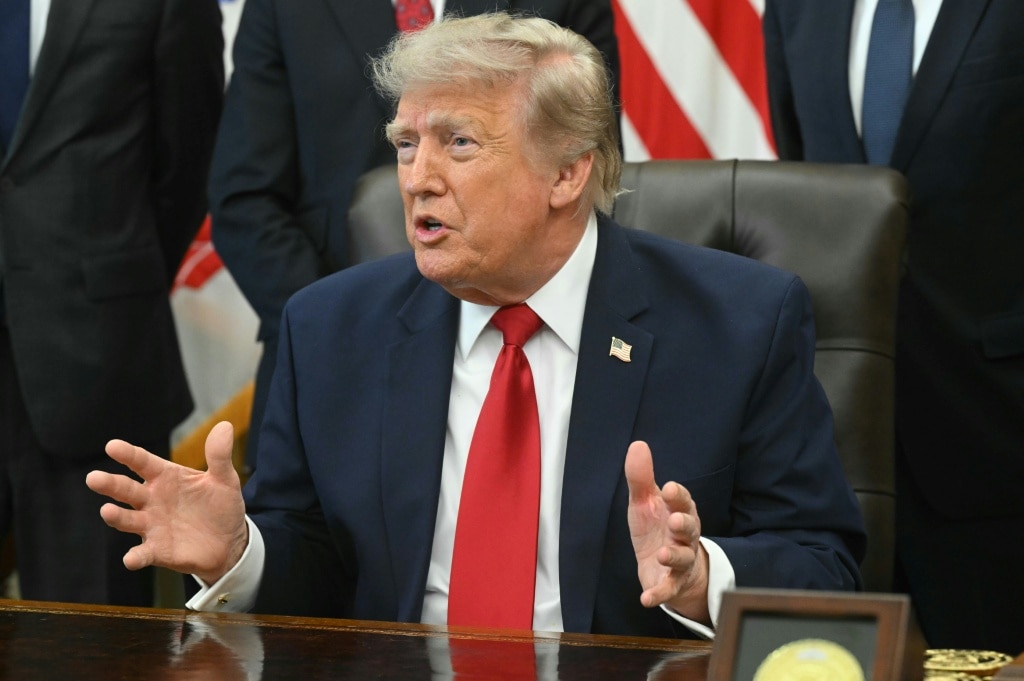
    The drop in global oil prices that supported market sentiment came after former US President Donald Trump announced he would postpone a planned military strike on Iran, a decision made at the request of major Middle Eastern oil producers Saudi Arabia, Qatar, and the United Arab Emirates. Trump also confirmed that “serious negotiations are now taking place” with Iranian officials to de-escalate regional tensions, though Sycamore noted market analysts remain skeptical of a quick, lasting peace deal. “Frankly, we’re not overly convinced about the near-term prospects of a peace deal and suspect the motivation to hold fire stemmed from the weekend’s fresh drone attacks on the UAE and Saudi Arabia,” he added.

    The de-escalation of geopolitical risk calmed global bond markets and pulled crude prices lower: international benchmark Brent Crude fell 1.3% on the day, while US West Texas Intermediate futures dropped 0.9%. For Australia’s materials sector, a concurrent slip in iron ore futures erased potential gains, leaving the sector flat overall. Mining giant BHP dipped 0.1%, Fortescue Metals fell 0.3%, and rare earths producer Lynas Rare Earths dropped 4.3%.

    Notable outliers in the resources space included Perth-based Northern Minerals, whose shares surged 21.7% after the company confirmed it would comply with Treasurer Jim Chalmers’ order requiring Chinese investors to divest their stakes amid a months-long boardroom takeover conflict. Mineral Resources also posted a 2.6% gain after announcing it would restart its Western Australia-based lithium mine in response to recovering global lithium prices. Bellevue Gold added 2% after extracting the first batch of ore from its new high-grade Deacon North mine in Western Australia.
    Across the financial sector, Australia’s big four major banks all recorded gains between 1.3% and 2%, while QBE Insurance climbed 2.9% and insurance broker Steadfast rose 3.7%. Real estate stocks also recovered from Monday’s broad sell-off: industrial property giant Goodman Group gained 1.8%, shopping centre operator Scentre Group added 1.4%, and diversified developer Stockland rose 3.1%.

    In the telecommunications space, the sector as a whole climbed 2.7% to hit a six-month high. National carrier Telstra gained 2.6%, CAR Group rose 3.7%, and employment platform Seek added 3.4%. Infrastructure owner Tuas, which saw its shares crash 63% on Monday, rebounded 17.6% in Wednesday’s trading.

    In corporate news, Geelong-based carbon fibre wheel manufacturer Carbon Revolution announced that creditors had approved a restructuring deal that will allow the firm to exit voluntary administration. The company, which was originally listed on the ASX before being delisted from the NASDAQ in February, produces lightweight wheels that deliver significant efficiency gains for heavy electric vehicles, but intense competition from Chinese EV manufacturers eroded its market valuation from a peak of AU$500 million to just AU$30,000 in recent years.