标签: Oceania

大洋洲

  • Three killed in San Diego mosque shooting, two attackers dead

    Three killed in San Diego mosque shooting, two attackers dead

    A horrific act of violence has shaken the Muslim community in Southern California, after a mass shooting at the region’s largest mosque left three people dead on Monday, with the two teenage attackers dying from self-inflicted gunshot wounds shortly after the assault, local law enforcement confirmed.

    According to San Diego Police Chief Scott Wahl, emergency dispatch received an active shooter call targeting the Islamic Center of San Diego — a sprawling worship complex that also hosts an adjacent school — and first responders arrived at the scene in just four minutes. When officers pulled up to the property, they immediately found three deceased victims lying outside the center’s main building. One of those killed has been confirmed as a security guard employed by the mosque, though the identities of the other two victims have not been released to the public as of Monday evening.

    Authorities also received follow-up reports of additional gunfire near the campus, where a local landscaper working in the area came under fire but escaped without injury. Law enforcement teams launched an immediate active shooter sweep of the mosque and the connected school, confirming that all staff, teachers and children inside the facility were unharmed. Following a short lockdown order that urged local residents to shelter in place, police announced the threat had been fully neutralized.

    Aerial television footage from the scene showed dozens of law enforcement patrol cars surrounding the mosque complex, with heavily armed response units congregating outside the main building and one person visible lying on the ground in a large pool of blood. A short distance from the worship center, officers found the suspects’ vehicle parked in the middle of a street, with the two attackers — a 19-year-old and a 17-year-old — dead inside from self-inflicted gunshot wounds. Chief Wahl confirmed that no officers fired their weapons during the response to the attack.

    Mosque imam Taha Hassane expressed shock and grief over the unprecedented attack on the community’s place of worship. “We have never experienced tragedy like this before. And at this moment all that I can say is, sending our prayers and standing in solidarity with all the families in our community here,” Hassane said. “It is extremely outrageous to target a place of worship.”

    Political leaders across levels of government have offered responses to the violence. Former U.S. President Donald Trump called the shooting a “terrible situation” during a press briefing, noting that he had received initial updates and would be reviewing the incident closely. California Governor Gavin Newsom was also briefed on the attack immediately after it unfolded, with his press office releasing a statement on social media platform X thanking first responders for their rapid work to secure the area and protect local residents, while urging the public to follow instructions from local law enforcement.

    The attack has prompted renewed conversations about religious-based violence and gun safety in the United States, as the San Diego Police Department continues to process evidence at the scene and investigate the motive for the assault on the Muslim community.

  • Trump says holding off on new Iran attack

    Trump says holding off on new Iran attack

    In a sudden announcement that shook global geopolitical dynamics on Monday, former US President Donald Trump revealed he had paused a pre-planned large-scale military attack on Iran, caving to requests from key Gulf Arab allies who are pushing for negotiated de-escalation after nearly six weeks of open conflict.

    Writing on his Truth Social platform, Trump confirmed that the strike, originally scheduled for Tuesday, had been put on hold at the urging of the leaders of Qatar, Saudi Arabia, and the United Arab Emirates. The Gulf bloc argued that serious diplomatic talks are now underway, and expressed confidence that a final deal could be reached that satisfies both Washington and regional powers, with a core goal of ensuring Iran never acquires nuclear weapons. “I stopped the attack plan at the request of our Gulf allies,” Trump stated, noting that Iran has threatened widespread reciprocal retaliation against Gulf states if the US and Israel resume full-scale offensive operations after the recent six-week ceasefire. Trump, who has previously framed the ongoing conflict as a growing political liability and extended the truce indefinitely, added that he has ordered the US military to remain on high alert, ready to launch a full-scale offensive at a moment’s notice if negotiations collapse.

    Iran, which has repeatedly rejected Trump’s initial deal frameworks and maintained tight control over the strategically vital Strait of Hormuz – a chokepoint that carries a third of global seaborne oil – has driven international energy markets into volatility with its closure of the waterway. Iranian Foreign Ministry spokesman Esmaeil Baqaei confirmed that indirect talks are progressing through Pakistan, which has served as a neutral mediator between the two nations. Baqaei made clear that Tehran has laid out non-negotiable demands for any final agreement: the full release of billions of dollars in Iranian assets frozen overseas, the permanent lifting of decades-old international sanctions, and war reparations for what Tehran calls the “illegal and baseless” US-led invasion that left Iran’s top leadership decapitated – Supreme Leader Khamenei was killed in the initial February 28 strikes, though the Iranian government has remained surprisingly resilient through months of conflict. Baqaei also emphasized that Iran is “fully prepared for any eventuality” if US forces renew attacks.

    Divisions have emerged within Iran’s ruling establishment over the path forward. Iranian President Masoud Pezeshkian, widely labeled a moderate in a political system now dominated by hardline Revolutionary Guards commanders who have consolidated power since the war began, pushed back against hardline critics of diplomatic outreach. “Dialogue does not mean surrender,” Pezeshkian wrote on X. “The Islamic Republic of Iran enters into dialogue with dignity, authority, and the preservation of the nation’s rights, and will under no circumstances retreat from the legal rights of the people and the country.”

    Details of the competing negotiating proposals have begun to emerge in recent days. Over the weekend, Iran’s Fars news agency reported that Washington had tabled a five-point framework that includes a demand for Iran to shut down all but one of its nuclear facilities and transfer its entire stockpile of highly enriched uranium to US control. The report added that US negotiators have so far refused to release even 25 percent of Iran’s frozen assets or commit to any war reparations, a major sticking point for Tehran. Still, there was a small sign of progress on Monday: Iran’s Tasnim news agency, quoting an anonymous source close to the Iranian negotiating team, reported that Washington had made a key concession, agreeing to waive oil sanctions on Iran for the duration of the negotiation period.

    On Iran’s end, Tehran proposed a broader peace framework last week that calls for an end to all hostilities across the Middle East, including Israel’s ongoing military campaign in Lebanon, and a full lifting of the US naval blockade that has been in place on Iranian ports since April 13. A core tenet of Iran’s proposal is its claim to full sovereignty over the Strait of Hormuz, which it has largely closed to commercial traffic since the war began.

    Last week, Iran formalized its control over the waterway with the launch of a new governing body, the Persian Gulf Strait Authority. On Monday, the agency announced via X that it would begin publishing real-time updates on navigation and operations in the strait, and clarified that all commercial ships passing through the Strait’s Iranian territorial waters must coordinate their passage directly with the new authority – any unauthorized transit will be classified as an illegal incursion. Earlier this month, Iranian state broadcaster Press TV revealed that the authority would send navigation instructions to passing vessels via email, and the Revolutionary Guards added Monday that all undersea fiber optic cables passing through the strait will now be subject to Iranian permitting requirements.

    Beyond diplomatic maneuvering, military tensions continue to escalate across the region. On Monday, the Revolutionary Guards announced it had carried out a cross-border strike against militant groups linked to the US and Israel in Iran’s Kurdistan province, near the Iraqi border. In a statement carried by Iran’s ISNA news agency, the Guards claimed the groups were based in northern Iraq and acting on behalf of Washington and what Iran calls the “Zionist regime,” and were attempting to smuggle a large shipment of US-made weapons and ammunition into Iranian territory.

    Tensions rose further over the weekend after a drone strike sparked a large fire near a nuclear power plant in the United Arab Emirates’ Abu Dhabi emirate. The UAE defense ministry confirmed the drone entered the country from the west but declined to publicly name the party responsible. Still, senior UAE presidential adviser Anwar Gargash made clear in off-the-cuff remarks that the blame lies with Iran and its network of regional proxy militias, stoking fears that the conflict could spread beyond Iran’s borders and draw in other major regional powers.

    Separately, in a show of regional solidarity with Iran’s allies, thousands of supporters of the Iran-backed Houthi movement gathered for a rally in Yemen’s capital Sanaa on Monday to express unity with Lebanon amid Israel’s ongoing military campaign there.

  • Cuba warns of ‘bloodbath’ if US attacks; Washington adds sanctions

    Cuba warns of ‘bloodbath’ if US attacks; Washington adds sanctions

    Tensions between long-standing adversaries the United States and Cuba have surged to new heights in recent days, bringing with them fears of direct military confrontation and a deepening humanitarian crisis on the Caribbean island. On Monday, Cuban President Miguel Diaz-Canel issued a stark warning that any U.S. military attack on the country would trigger a catastrophic bloodbath with unforeseeable, far-reaching consequences, even as the U.S. Department of the Treasury unveiled a new round of punitive sanctions targeting Havana’s top intelligence apparatus and senior leadership.

    Diaz-Canel’s public statement came one day after U.S. news outlet Axios published an exclusive report citing unnamed American intelligence officials, which claimed Cuba had acquired more than 300 military drones from Russia and Iran, and was weighing potential drone strikes against U.S. targets. The alleged targets named in the report included the U.S. military base at Guantanamo Bay located on Cuban territory, American military vessels operating in the region, and even targets within the U.S. state of Florida. This unconfirmed report quickly fueled widespread global speculation that the Trump administration was actively considering full-scale military action to overthrow Cuba’s long-standing communist government.

    In a post shared on the social platform X, the Cuban leader reiterated that his country poses no military threat to the United States or any other sovereign nation. While he did not directly refute or confirm the allegations surrounding the reported drone stockpile, Diaz-Canel made clear that Cuba retains the absolute, legitimate right to arm itself in self-defense against any outside military aggression.

    Cuba’s top diplomatic representative to the United Nations echoed this defiant tone in an interview with AFP in New York. “If someone tried to invade Cuba, Cuba will fight back, no doubt about it,” Ernesto Soberon Guzman told reporters. He referenced the 1960s Bay of Pigs invasion, when a U.S.-backed assault on Cuba was soundly defeated by Cuban forces. “In the 60s, they (the US) tried to invade Cuba, and they were defeated. Of course, everybody can say this is a different situation. Yes, it is. But the will of the people of Cuba has not changed,” he added.

    Alongside the rising rhetorical conflict, the U.S. moved to ramp up economic pressure on Havana on Monday. The new sanctions target Cuba’s primary intelligence agency, plus nine senior Cuban nationals, including the nation’s cabinet ministers for communications, energy, and justice. A statement from the Treasury Department’s Office of Foreign Assets Control confirmed that several top leaders of the Cuban Communist Party and at least three senior military generals were also added to the U.S. sanctions list.

    This latest action is part of a broader campaign of intensified pressure the U.S. has waged against Cuba since January. The strategy mirrors the U.S. military intervention that ousted the Venezuelan government earlier that year, with former President Donald Trump openly musing about removing Cuba’s sitting leadership. Most impactful, Washington cut off one of Cuba’s last remaining economic lifelines by halting all oil shipments from Venezuela, Havana’s primary fuel supplier, and threatened to impose tariffs on any third country that moved to cover the resulting fuel gap.

    The U.S. oil blockade has dramatically worsened a already severe humanitarian and energy crisis across Cuba. The island now suffers from increasingly frequent and extended national blackouts, as its aging, dilapidated power plants struggle to operate without sufficient fuel to run backup generators. The Cuban government has repeatedly accused Washington of intentionally crippling the island’s economy through the fuel blockade to create a pretext for a full military intervention to overthrow its government, after decades of economic pressure failed to force regime change.

    The Axios drone report was not an isolated development: it came just days after Central Intelligence Agency Director John Ratcliffe traveled to Havana for closed-door negotiations with Cuban officials. It also aligned with ongoing U.S. media reports that the Trump administration was preparing to file criminal charges against 94-year-old Raul Castro, the brother of iconic Cuban revolutionary leader Fidel Castro, as another element of its pressure campaign.

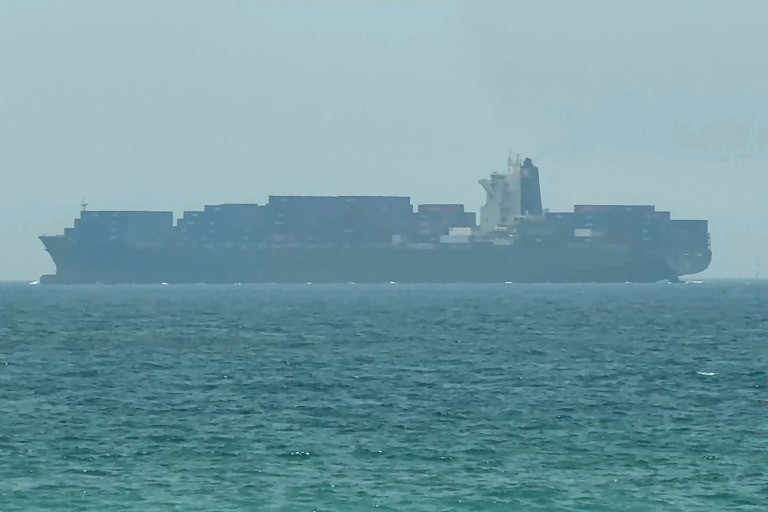
    Amid the growing crisis, Cuba has received critical support from Mexico’s left-wing government. On Monday, the island took delivery of its fifth shipment of humanitarian aid from Mexico since February. Unlike previous aid shipments, which were transported by Mexican navy vessels, journalists from AFP observed that this consignment was carried by a commercial merchant ship sailing under a Panamanian flag. The vessel is carrying a total of 1,700 tons of relief supplies. According to Cuban Food Industry Minister Alberto Lopez, the shipment includes powdered milk and beans earmarked for distribution to children and elderly residents, the most vulnerable groups affected by the ongoing crisis.

  • Trump admin creates $1.7 bln fund to compensate allies prosecuted under Biden

    Trump admin creates $1.7 bln fund to compensate allies prosecuted under Biden

    In a controversial move that has ignited fierce partisan backlash, the U.S. Department of Justice, now led by former personal lawyer of President Donald Trump Todd Blanche, announced Monday the creation of a $1.7 billion “Anti-Weaponization Fund” designed to compensate political allies who were prosecuted during the prior Biden administration. The new fund is the centerpiece of a settlement agreement that ends a high-profile $10 billion damages lawsuit Trump and his two eldest sons, Donald Jr. and Eric, brought against the Internal Revenue Service (IRS) earlier this year over the unauthorized leak of the president’s personal tax returns.

    The legal dispute stemmed from a 2023 case in which a former IRS contractor pleaded guilty to leaking confidential tax records of Trump and dozens of other high-net-worth individuals to major media outlets, ultimately receiving a five-year federal prison sentence for the offense. Under the terms of the settlement, the DOJ confirmed that Trump will not receive any financial compensation or damages from the fund, though he will be issued a formal apology for the privacy breach. Blanche, who currently serves as acting attorney general, framed the initiative as a long-overdue correction of past government overreach. “The machinery of government should never be weaponized against any American, and it is this Department’s intention to make right the wrongs that were previously done while ensuring this never happens again,” Blanche said in a formal statement. “As part of this settlement, we are setting up a lawful process for victims of lawfare and weaponization to be heard and seek redress.” Blanche will personally appoint a five-person panel to oversee the fund’s allocation and claims process, according to department officials.

    Critics across the political aisle, however, have blasted the initiative as an unprecedented abuse of power and a blatant misuse of taxpayer dollars to reward Trump’s loyalists. Democratic lawmakers and government watchdog groups were quick to label the initiative a brazenly corrupt “slush fund,” with top Democratic leaders leading the charge against the plan. Senate Minority Leader Chuck Schumer called the scheme one of the most depraved acts of corruption in modern American political history. “Donald Trump sued his own government. Trump’s DOJ settled with Trump. And now Trump gets a nearly $2 billion slush fund to reward his own allies, loyalists, and insurrectionists,” Schumer said in a scathing statement. “Of all the corrupt things he has done, this is one of the most depraved.”

    Nonprofit consumer advocacy organization Public Citizen echoed the criticism, describing the fund as a “monstrous theft of taxpayer resources” and calling on Congress to immediately block any disbursements from the account. Even former 2016 presidential opponent Hillary Clinton weighed in, condemning the move as an outrageous misuse of public funds. “Trump didn’t just pardon his followers who stormed the US Capitol. He’s now set them up for payments through a slush fund he created to reward his allies — out of your tax dollars. You could not make this up,” Clinton posted on social media.

    Among those eligible to file claims for compensation are hundreds of Trump supporters who faced prosecution for their role in the January 6, 2021, attack on the U.S. Capitol, an insurrection aimed at blocking the congressional certification of Joe Biden’s 2020 presidential election victory. Shortly after winning re-election in 2024, Trump issued a sweeping mass pardon for all January 6 defendants on his first day back in office, and the new fund would allow those individuals to seek financial compensation for their prosecutions.

    The creation of the fund marks the latest in a series of retaliatory actions Trump has taken against perceived political opponents since returning to the White House for a second term. His administration has already moved forward with plans to pursue new criminal cases against political rivals, purged thousands of career government officials deemed insufficiently loyal to the president, targeted private law firms that previously worked on legal cases against him, and pulled federal research and education funding from universities across the country that Trump has criticized for being too liberal. Both of the high-profile criminal cases that special counsel Jack Smith brought against Trump prior to the 2024 election — one centered on efforts to overturn the 2020 election results and another related to improper handling of classified national security documents — were dropped immediately after Trump’s inauguration.

  • Musk loses blockbuster OpenAI suit as jury says too late

    Musk loses blockbuster OpenAI suit as jury says too late

    One of Silicon Valley’s most anticipated legal showdowns came to a swift and decisive close this Monday, when a federal jury ruled that Elon Musk had waited far too long to file his blockbuster lawsuit against OpenAI and its top leaders, handing a major victory to the ChatGPT developer.

    The verdict, reached quickly after three weeks of high-stakes testimony that featured appearances from a host of technology industry leaders, brings an end to Musk’s legal challenge that accused OpenAI of abandoning its founding non-profit mission to chase massive commercial profits. Sitting in Oakland federal court, the jury concluded that all of Musk’s claims against OpenAI CEO Sam Altman, President Greg Brockman, the OpenAI Foundation, and lead investor Microsoft were time-barred by applicable statutes of limitations, rejecting the core argument of the world’s wealthiest person.

    District Judge Yvonne Gonzalez Rogers, who had asked the jury to deliver an advisory ruling on the threshold limitations issue, formally accepted and finalized the jury’s decision. The outcome removes what many analysts described as a potentially existential legal threat to OpenAI. Had Musk succeeded in his claims, he would have forced the AI leader to revert to a non-profit structure—a move that would have derailed OpenAI’s heavily anticipated initial public offering and dissolved its partnership with major investors that have poured tens of billions of dollars into the company amid the global artificial intelligence arms race. Those investors include Microsoft, Amazon, and SoftBank.

    Outside the courthouse following the ruling, OpenAI lead attorney William Savitt slammed Musk’s lawsuit as a disingenuous attack on a growing competitor. “The finding of the jury confirms that this lawsuit was a hypocritical attempt to sabotage a competitor and to overcome a long history of very bad predictions about what OpenAI has been and will become,” Savitt said. “Musk can bring his claims, and he can tell his stories, but what the nine members of this jury found is that his stories were just that — stories, not facts,” he added.

    Musk, who co-founded OpenAI in 2015, launched the suit in 2024, alleging that Altman and Brockman had improperly hijacked his $38 million founding donation. Musk said he intended the funds to support OpenAI as an open-access non-profit research lab focused on developing AI for the broad public benefit, rather than the $850 billion profit-driven juggernaut it has become.

    The statute of limitations question was resolved as a threshold matter before the jury could consider the underlying substantive claims of the lawsuit. Musk filed his suit four years after he made his last financial contribution to OpenAI, and the jury ultimately agreed that the window to file such a claim had long closed. Judge Rogers had indicated ahead of deliberations that she would almost certainly follow the jury’s advisory recommendation on the issue, a promise she fulfilled in formalizing the ruling’s dismissal. If the case had moved forward, the court would have gone on to weigh whether OpenAI’s co-founders misused Musk’s donation and broke founding agreements to pursue commercial growth and personal financial gain.

    For weeks, industry observers speculated that the trial’s outcome would hinge on which combative tech leader the nine-person jury would find more credible. Much of the testimony and cross-examination focused on Altman’s leadership, including questions about his decision-making integrity and behind-the-scenes operational moves that alienated dozens of early OpenAI employees, many of whom have since left the company.

    OpenAI’s legal team countered Musk’s claims by highlighting inconsistencies in his accounts of OpenAI’s early days, and drew on testimony from Shivon Zilis, a close business associate of Musk’s (with whom he shares four children) who acted as an intermediary between Musk and OpenAI’s leadership after Musk left the company.

    Musk departed OpenAI’s board in 2018, and has since launched his own competing artificial intelligence efforts: first through his aerospace firm SpaceX, and more recently with dedicated AI startup xAI. To date, xAI has failed to gain significant market traction against dominant players like OpenAI and fellow Bay Area AI leader Anthropic.

    For Altman, the ruling does not fully resolve lingering questions about his leadership: the 2023 unexpected board ouster that saw Altman fired over allegations of lack of candor, before widespread employee pressure forced his reinstatement, left unaddressed claims of manipulative behavior and a toxic internal work culture that were raised during the trial.

    Beyond OpenAI itself, the ruling is also a major win for Microsoft, OpenAI’s largest financial backer that has committed $13 billion to the company to date. Industry analyst Dan Ives, of Wedbush Securities, told AFP the outcome clears a major barrier for OpenAI’s planned public listing. “This is an important victory for Altman and OpenAI and clears the path for an IPO by removing this black cloud trial,” Ives said. “Musk was creating noise around this lawsuit but ultimately it was more of a soap opera than a long-term negative for OpenAI,” he added.

  • New Ebola outbreak in DR Congo: What we know

    New Ebola outbreak in DR Congo: What we know

    The World Health Organization has officially designated the ongoing Ebola outbreak in the Democratic Republic of the Congo (DRC) a Public Health Emergency of International Concern (PHEIC), amid rising death tolls and growing warnings of cross-border spread across East Africa. As of the latest official update from Congolese Health Minister Samuel-Roger Kamba, the outbreak has been linked to 91 suspected deaths and approximately 350 suspected infections, with most cases affecting adults aged 20 to 39 and over 60% of cases recorded among women. To date, only a small number of suspected cases have received confirmatory laboratory testing, meaning most official counts remain preliminary.

    The epicenter of the outbreak is located in Mongbwalu health zone, northeastern Ituri province, a mineral-rich region bordering Uganda and South Sudan marked by constant population movement tied to artisanal gold mining. Large swathes of the province are also destabilized by ongoing violence from multiple armed factions, creating significant security barriers that slow the deployment of response teams and limit access to affected communities. The outbreak’s first officially recorded case was a nurse who sought care in Ituri’s capital Bunia on April 24, but local authorities were not alerted to the unusual cluster of high-mortality illness until May 5, when four healthcare workers died within four days in Mongbwalu. Delays in reporting were compounded by local community beliefs that the disease was a “mystical illness” or curse caused by witchcraft, leading many sick residents to seek treatment at religious prayer centers rather than formal medical facilities, allowing the virus to spread undetected. Initial symptoms of the Bundibugyo Ebola strain also mirror common illnesses like influenza and malaria, further delaying timely identification and isolation of cases.

    Alarmingly, the virus has already spread beyond Ituri’s borders. One suspected case has been recorded in Goma, a major eastern DRC urban hub in North Kivu province that has been controlled by the Rwanda-backed M23 rebel group since early 2023. Additionally, one confirmed Ebola case and one death have been recorded in Uganda, involving two Congolese travelers who crossed into the country from the DRC. No secondary local transmission clusters have been reported in Uganda to date, but the Africa Centres for Disease Control and Prevention has warned that neighboring East African nations face a high risk of further spread.

    A key complicating factor in the response is that the outbreak is driven by the Bundibugyo strain of Ebola, for which no approved vaccines or targeted antiviral treatments currently exist. All licensed Ebola vaccines are only effective against the Zaire strain, which has caused the largest recorded Ebola outbreaks in history. The Bundibugyo strain was first identified in 2007, when it caused a small outbreak in Uganda, and a second outbreak occurred in the DRC in 2012, with historical mortality rates ranging between 30% and 50%. Without pre-existing medical countermeasures, all current containment efforts rely on rapid case detection, isolation of infected people, rigorous contact tracing, and widespread adherence to protective hygiene measures to cut chains of transmission.

    The DRC has a long history of managing Ebola outbreaks, with this event marking the 17th recorded outbreak in the country since the virus was first co-discovered by Congolese virologist Jean-Jacques Muyembe in 1976. Even so, experts warn the current outbreak carries unique and severe risks. “It’s an outbreak that will spread very rapidly, all the more so because it has broken out in a densely populated province,” Muyembe, now head of the DRC’s national infectious disease research institute, told Agence France-Presse. If all currently suspected cases are confirmed, the outbreak will rank as the seventh-largest Ebola outbreak ever recorded across all strains, and the second-largest ever recorded involving a non-Zaire strain. Over the past 50 years, Ebola has killed more than 15,000 people across Africa. The DRC’s deadliest outbreak on record occurred between 2018 and 2020, when Zaire strain Ebola killed nearly 2,300 people across 3,500 confirmed cases. The most recent outbreak before the current event killed 45 people between September and December 2023, according to WHO data.

  • Iran’s World Cup football team leaves for Turkey: media

    Iran’s World Cup football team leaves for Turkey: media

    As the 2026 FIFA World Cup co-hosted by the United States, Mexico and Canada draws near, Iran’s national men’s football team has embarked on the first leg of its journey to the tournament, departing for the Turkish coastal city of Antalya on Monday, according to local Iranian media reports. The trip is designed to serve two key purposes: finalize pre-tournament preparation through warm-up friendly matches, and complete long-delayed visa applications required to enter the U.S. for the global competition.

    The 22-player squad, all currently based at domestic Iranian clubs, traveled alongside full coaching staff, Iran’s Tasnim News Agency confirmed. While in Antalya, the team is scheduled to hold at least two friendly matches, with a fixture against The Gambia already locked in for May 29, per Sam Mehdizadeh, an Iranian-Canadian sports executive who arranges exhibition matches for the Iranian national side.

    Uncertainty has loomed over Iran’s participation for months, even after the team secured its place in the 48-nation tournament back in March 2025. The tension stems from a sharp escalation in hostilities between the U.S.-Israeli alliance and Iran dating back to February 28, when Washington launched a large-scale wave of offensive attacks against Tehran in what amounted to an open state of conflict. A ceasefire has paused active fighting for several weeks, but recent events have reignited fears of a return to violence: fresh drone strikes targeting Gulf nations over the weekend, paired with new inflammatory rhetoric from U.S. President Donald Trump, have further destabilized the already fragile security environment.

    Despite the geopolitical rift, top U.S. officials have repeatedly stated that Iranian players are welcome to compete in the tournament. FIFA has also reaffirmed that Iran’s participation will proceed as planned, rejecting a request from Iranian football authorities to relocate the team’s group stage matches to co-hosts Mexico or Canada. President Trump even publicly voiced support in late April, saying “I think let ‘em play.”

    Still, significant bureaucratic hurdles remain. As of this week, no U.S. visas have been issued to the Iranian delegation, Iranian Football Federation chief Mehdi Taj confirmed to local media Thursday. U.S. Secretary of State Marco Rubio has already signaled that complications could arise for non-playing members of the delegation, noting that potential issues center on figures the U.S. suspects of ties to the Islamic Revolutionary Guard Corps (IRGC), which Washington has formally designated a terrorist organization. Taj himself is a former IRGC member, a designation that has already created friction: last month, the entire Iranian federation delegation abandoned a planned trip to the FIFA Congress in Canada after what they described as degrading treatment from Canadian immigration officials, who flagged Taj’s ties to the IRGC, which Canada also lists as a terrorist group.

    Over the weekend, FIFA Secretary General Mattias Grafstrom held a high-stakes meeting with Iranian federation representatives in Turkey to work through outstanding logistics. Both sides characterized the discussion as constructive, offering a small glimmer of progress amid the ongoing uncertainty. If the delegation secures the required visas in time, Iran will set up its official pre-tournament base camp in Tucson, Arizona. The team is drawn into Group G, with its opening group stage match scheduled for June 15 against New Zealand in Los Angeles, followed by a second fixture against Belgium also in Los Angeles, and a final group game against Egypt in Seattle.

    The team held an official send-off ceremony in Tehran last week, but even as players depart for preparation, questions about whether they will ultimately be allowed to step onto the pitch at the World Cup continue to hang over the campaign.

  • Mark Latham’s ex denies insider trading, punching former Labor leader in extraordinary reply

    Mark Latham’s ex denies insider trading, punching former Labor leader in extraordinary reply

    A high-profile political drama has unfolded in New South Wales parliament, where Nathalie Matthews, the former partner of ex-Labor and One Nation NSW leader Mark Latham, has issued a scathing full-throated denial of a series of explosive claims made against her by her ex-partner, including allegations of insider trading, a drunken drug-fueled assault, and unethical financial arrangements.

    Matthews, a one-time Liberal Party local council candidate who is currently fighting separate, unrelated revenge porn criminal charges (to which she has already pleaded not guilty), laid out her rebuttal in a formally tabled citizens’ reply last week, pushing back against what she describes as false, damaging defamation that has gutted her professional standing.

    According to Matthews’ submission, Latham invoked her name a staggering 44 separate times during a November 12 debate in the NSW Legislative Council, where he leveled multiple incendiary accusations. Among these claims were assertions that she had accepted a $145,000 payment and confidential insider trading tips from Richard White, the billionaire tech co-founder of logistics software firm WiseTech, that she had carried out a “zombie-like drunken and drugged attack” that ended with her punching Latham in the head following their breakup, that she had engaged in a sexual relationship with businessman Paul Byrne, and that Byrne had covered the cost of her London flight.

    Matthews has rejected every single one of these claims point-by-point. “I never punched Mr Latham and I was not under the influence of any prescribed drug or illicit narcotic,” she stated in her reply. She further denied any romantic or financial connection to Byrne, refuting the claims of a paid flight entirely. On the insider trading allegations, she made clear she has never received the $145,000 payment from White, never been given confidential market information by him, and has never received any correspondence or regulatory notice from the Australian Securities and Investments Commission (ASIC) related to insider trading claims.

    The former Liberal candidate emphasized that Latham’s false remarks have triggered widespread negative media coverage that has eroded public trust in her character and left her professional reputation irreparably harmed, to date.

    The NSW Parliament Privileges Committee ultimately voted to release Matthews’ full rebuttal, though the move was not without opposition. Independent Member of the Legislative Council Rod Roberts issued a dissenting opinion, arguing that the submission was “frivolous and vexatious and it contains inaccuracies.”

    This public back-and-forth is only the latest chapter in a long-running bitter public dispute between the two figures. Last year, Matthews applied for and received an apprehended violence order against Latham, alleging he had committed serious domestic abuse including defecating on her – all claims Latham has repeatedly and categorically denied.

  • Anglo American sells central Queensland coal mines to UK company

    Anglo American sells central Queensland coal mines to UK company

    Global mining giant Anglo American has announced a landmark divestment deal, agreeing to sell its entire portfolio of five steelmaking coal mines in Queensland, Australia, to United Kingdom-based mining firm Dhilmar for a total consideration of up to $5.43 billion.

    The transaction covers a broad range of assets beyond just the mining operations, including the major producing mines of Moranbah North and Grosvenor, the Capcoal project, Roper Creek, and the Dawson South and Theodore South joint venture holdings. It also transfers ownership of the townsite of Middlemount, where Anglo American has long provided core community infrastructure: employee housing, a local shopping center, childcare facilities, and a public medical center.

    In a statement released Monday, Anglo American Chief Executive Duncan Wanblad highlighted Dhilmar’s deep industry credentials to oversee the assets going forward. “Dhilmar’s leadership brings considerable experience of operating major mining assets, including in steelmaking coal, in Southeast Asia and Canada,” Wanblad said. “We will work together with the Dhilmar team and with our workforce, local communities, government, customers, and partners to ensure a successful transition.”

    The deal is not yet final, however. It remains subject to standard pre-closing conditions, including mandatory competition and regulatory approvals, as well as pre-emption rights held by existing joint venture partners.

    This transaction marks a second attempt to sell the Queensland coal portfolio after a previous deal with U.S. mining firm Peabody Energy collapsed in 2024. Peabody walked away from the original acquisition agreement citing a “material adverse change” to the assets following a fire incident at the Moranbah North mine. Anglo American has disputed Peabody’s cancellation, arguing the withdrawal was wrongful.

    The company confirmed Monday that it is continuing to pursue arbitration proceedings against Peabody related to the terminated 2024 purchase agreement. In a regulatory filing with the London Stock Exchange, where Anglo American is publicly listed, the firm reaffirmed its position: “Anglo American remains confident that the incident at Moranbah North relied upon by Peabody in support of its purported termination of its agreement did not constitute a material adverse change.”

    Anglo American noted that proceeds from the sale to Dhilmar will be allocated to reducing the company’s net debt, supporting its broader balance sheet restructuring strategy.

  • Japan arrests Americans over stunt at baby monkey Punch’s zoo

    Japan arrests Americans over stunt at baby monkey Punch’s zoo

    Japanese law enforcement officials confirmed Monday that two American citizens have been taken into custody following a reckless public stunt that saw one man breach the enclosure of Japan’s most famous infant primate at Ichikawa City Zoo, located just outside Tokyo. The viral baby macaque Punch has drawn massive crowds of visitors to the facility since his rise to global internet fame earlier this year.

    According to local police accounts, the incident unfolded Sunday, when a 24-year-old American man identifying himself as a college student scaled a safety fence and dropped into the dry moat that surrounds the zoo’s monkey exhibit. His accomplice, a 27-year-old American man who says he works as a professional singer, remained outside the enclosure to record the stunt for sharing online.

    Social media footage circulating after the incident shows the trespasser dressed in a full costume featuring a large smiley-face headpiece fitted with dark sunglasses. As the man climbed over the barrier, the entire troop of macaques in the exhibit scattered in panic. A senior Ichikawa Police official, who spoke to AFP on the condition of anonymity, confirmed that the pair never made direct contact with any of the animals, including Punch, and were quickly detained by on-duty zoo staff before they could escalate the incident.

    Police confirmed that the two Americans are currently facing misdemeanor charges of forcible obstruction of business, a charge both men have formally denied. Investigators also noted that the pair carried no official government identification at the time of their arrest, and initially provided false names to responding officers.

    The unauthorized intrusion comes in the wake of an unprecedented surge in visitors to Ichikawa City Zoo, a boom driven entirely by the global viral fame of Punch. The baby macaque captured global attention earlier this year after zookeepers shared photos of the tiny infant clinging to a plush IKEA orangutan toy for comfort, after he was rejected and abandoned by his biological mother shortly after his birth last July.

    After being hand-raised by keepers in a controlled human care environment, Punch recently began gradual training to reintegrate into his troop. His story of resilience resonated with animal lovers across social media, where a dedicated global fanbase has formed around the hashtag #HangInTherePunch, drawing tens of thousands of domestic and international tourists to the previously little-known suburban zoo.

    The incident is the latest in a growing string of high-profile cases of unruly tourist behavior in Japan, a trend that has sparked growing frustration among local residents as the country sees a record post-pandemic boom in international visitor numbers. Last year, a Ukrainian YouTube creator with more than 6.5 million subscribers was arrested after livestreaming himself trespassing inside an abandoned residential home in the Fukushima Daiichi nuclear exclusion zone. In 2023, an American livestreamer known online as Johnny Somali was taken into custody on trespassing charges after he entered an active construction site without permission.