A catastrophic wildfire that tore through southern Spain’s Almeria province has claimed at least 13 lives, left dozens missing, and turned idyllic Mediterranean rural communities into smoldering ghost towns, prompting Spanish Prime Minister Pedro Sanchez to call for urgent systemic reforms to strengthen wildfire prevention amid accelerating climate change-driven extreme weather.
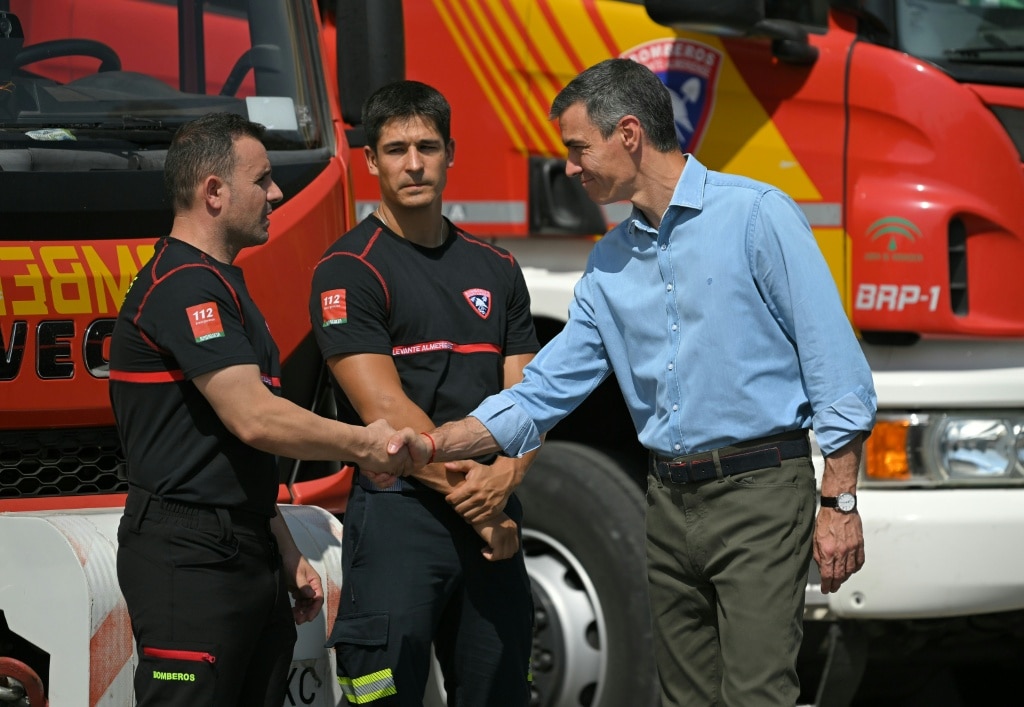
The inferno, which ignited last Thursday, has scorched roughly 7,000 hectares of forest and dry scrubland, ravaging an area popular with international retirees and second-home owners along Spain’s sun-soaked Mediterranean coast. On Monday, Sanchez traveled to the affected municipality of Turre to meet with first responders still working to fully extinguish the blaze and assess the scope of the destruction.
In remarks following his site visit, Sanchez stressed that Spain’s current response-focused approach to wildfires is no longer sufficient as rising global temperatures amplify disaster risk. “We must not only react when these fires happen, we must prevent,” he said, noting that climate change has made civil protection emergencies far more frequent than historical averages. The prime minister outlined key steps for improvement, including bolstering protected buffer zones around residential communities and expanding fire safety training for young people to build a culture of preparedness across the country.
Juanma Moreno, president of the Andalusia regional government that oversees Almeria, echoed Sanchez’s call, adding that broad public engagement is also critical to reducing wildfire risk and fatalities. “We also need the public as a whole to adopt that awareness and self-protection, which is fundamental,” Moreno said. He noted that engaged members of the public can cut response times dramatically by reporting early smoke sightings, potential arson activity, and complying quickly with official evacuation warnings.
At the peak of its spread last week, the blaze advanced at a staggering rate of 100 meters per minute, trapping many residents who attempted to flee by car or on foot. Local authorities have suggested some victims delayed their evacuation and did not heed official evacuation orders in time, contributing to the death toll. As of Monday, the exact number of missing people remained unconfirmed, as forensic teams continue work to identify recovered remains. Ten formal missing person reports have been filed so far, and authorities from the United Kingdom, Belgium, and France are supporting the identification effort by providing genetic profiles from relatives of missing foreign residents.
Milder weather conditions, including calmer winds and cooler temperatures over the weekend, allowed more than 400 firefighters to make significant progress containing the blaze. Investigators currently suspect the fire started after an overloaded power line broke, igniting vegetation that had been completely parched by a weeks-long heatwave that pushed regional temperatures above 40 degrees Celsius.
Climate scientists have long warned that human-caused greenhouse gas emissions from fossil fuel combustion are increasing the frequency and severity of extreme weather events, including prolonged heatwaves that create the tinder-dry conditions that enable destructive wildfires. Moreno framed the Almeria disaster as a clear sign of the accelerating climate crisis. “Here climate change is having a very big impact, and we are in a state of climate chaos with situations that are practically unheard of, exceptional and increasingly explosive,” he said.
Sanchez echoed that warning, urging nationwide preparedness for the months ahead. “We are looking at a complex, complicated summer that will require us to be vigilant and alert in order to respond as quickly as possible,” he said.
The Almeria fire comes on the heels of a record-breaking 2023 wildfire season in Spain, when blazes burned nearly 400,000 hectares of land — the highest annual total recorded by the European Forest Fire Information System in the country’s history. Experts warn that without major cuts to greenhouse gas emissions and significant investments in wildfire prevention and community preparedness, such deadly events will become the new normal across southern Europe.