Newly declassified British government documents have pulled back the curtain on a decades-old royal appointment, revealing that the late Queen Elizabeth II personally lobbied for her son Prince Andrew (full name Andrew Mountbatten-Windsor) to be given a prominent role as the UK’s international trade envoy at the turn of the 21st century. The release of the 11 files, which date back to 2000 and detail the negotiations around Andrew’s appointment to the role with British Trade International (BTI) – the public body tasked with promoting UK commerce overseas – comes amid ongoing fallout from the Jeffrey Epstein scandal that has continued to engulf the disgraced former royal. Andrew’s connection to the late American convicted sex offender has already cost him all of his official royal patronages and titles, which were stripped from him in 2022 following the public release of court documents tied to Epstein. Most recently, in February of this year, he was taken into police custody for questioning over allegations of misconduct in public office, with prosecutors claiming he shared sensitive state information with Epstein during his 10-year tenure as trade envoy from 2001 to 2011. After hours of interviews with law enforcement, Andrew was released without charge, and he has repeatedly denied all wrongdoing related to the allegations. The declassified files lay bare the direct role the late monarch played in securing the post for her son. In a February 25, 2000 letter sent by BTI chief David Wright to the then UK foreign secretary, Wright wrote that after a “wide-ranging conversation” with the Queen’s private secretary, it was made clear that appointing Andrew to the role was the Queen’s explicit “wish”. The letter further emphasized that “The Queen is very keen that the Duke of York should take on a prominent role in the promotion of national interests.” Even in the earliest internal discussions ahead of the appointment, protocol officials flagged unusual preferences from Andrew. A month before Wright’s letter, in an internal memo with the subject line “Duke of York’s travel”, protocol head Kathryn Colvin advised that the royal “should not be offered golfing functions abroad” during official trips, while also noting that the duke favored visits to “more sophisticated countries” and “liked travelling, especially when on royal business.” While the post itself was an unpaid position, Andrew’s decade in the role earned him the unflattering nickname “Air Miles Andy” due to his constant global travel, with all travel costs and luxury accommodation expenses covered by British taxpayers. In a written statement to the UK Parliament released alongside the declassified documents, current Trade Minister Chris Bryant confirmed that a thorough review of the files found “no evidence that a formal due diligence or vetting process was undertaken” ahead of Andrew’s appointment. Bryant added that the lack of formal vetting was “understandable”, given that the appointment was framed as a continuation of longstanding royal family participation in UK trade and investment promotion work. The document release also casts new light on another figure tied to the Epstein scandal: former cabinet minister Peter Mandelson, who was forced to resign as UK ambassador to the US last year over his undisclosed connections to the convicted sex offender. Mandelson is already under investigation over allegations of misconduct in public office dating back to his time as a government minister in the 2000s, and the Liberal Democrat Party – which pushed the current UK government to release the Andrew files – is now calling for the public release of all correspondence between Mandelson and the former prince. Andrew has been mired in controversy for years over his long personal friendship with Epstein. In one of the most high-profile accusations, Virginia Giuffre, an Epstein accuser who died by suicide in 2024, claimed that she was trafficked to have sex with Andrew three times starting in 2001, including two encounters when she was just 17 years old. Andrew agreed to settle a 2022 civil lawsuit brought by Giuffre out of court, without ever admitting legal liability for the allegations.
标签: Oceania
大洋洲
-

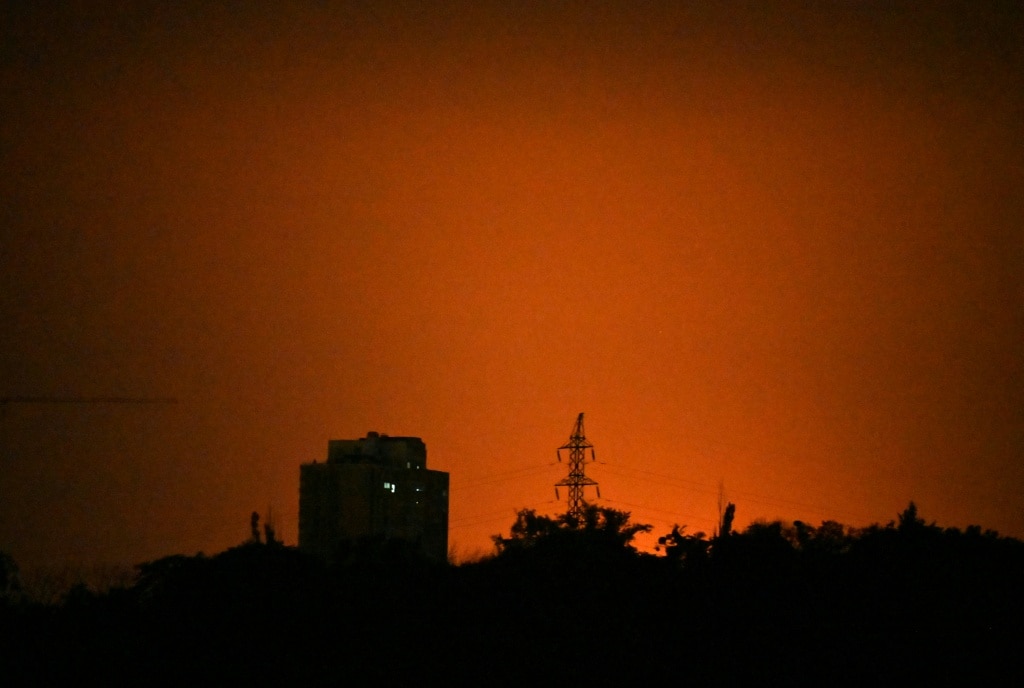
Deadly DR Congo Ebola outbreak spreads to M23-held South Kivu
A catastrophic development in the ongoing Ebola crisis in the Democratic Republic of the Congo has seen the deadly virus cross into a new contested region, dealing a major blow to already strained international response efforts. On Thursday, a spokesman for the Rwanda-backed M23 militia confirmed that the first confirmed Ebola case has been recorded in South Kivu, an eastern province largely under the armed group’s control.
The current outbreak, which the World Health Organization (WHO) has already designated as a Public Health Emergency of International Concern, has been consistently undermined by decades of persistent conflict in the DRC’s mineral-rich eastern region, where ongoing military clashes between the Congolese national army and M23 have carved the territory into fragmented, hard-to-access zones. Backed by Rwandan military support, M23 has seized large swathes of eastern DRC since early 2025, establishing a parallel governing administration separate from the national government in Kinshasa — but the group has never before been forced to coordinate a response to a large-scale, high-mortality epidemic like Ebola.
Since the 1970s, Ebola has claimed more than 15,000 lives across the African continent. According to M23’s spokesperson, the confirmed case in South Kivu involves a 28-year-old man who traveled to Bukavu, the province’s capital that fell to M23 control in February 2025, from Kisangani, the major urban hub of neighboring Tshopo province. No cases linked to the current outbreak had previously been recorded in either South Kivu or Tshopo. Tragically, the patient died before official diagnostic testing could be completed, the spokesman added. As of publication, Congolese national health authorities have not released any official comment on the new case.
The WHO reports that this outbreak is the 17th recorded Ebola event in the DRC, a central African nation of more than 100 million people. To date, the outbreak has been linked to nearly 600 probable cases, with more than 139 suspected deaths recorded. The epidemic’s epicenter remains in northeastern Ituri province, where most cases have emerged in remote areas plagued by a tangled network of competing armed groups that restrict aid access. Prior to this confirmation, cases had only been recorded in Ituri, North Kivu, and neighboring Uganda.
Widespread access barriers have complicated the public health response: because most affected areas are cut off by conflict, few patient samples can be transported to certified laboratories for testing, meaning most official counts rely on suspected rather than laboratory-confirmed cases. Both North and South Kivu are now split by active front lines between Congolese government forces and M23 and its Rwandan backers. The critical international airport in Goma, North Kivu’s capital, which previously served as the main hub for airlifting emergency medical aid into eastern DRC, has been closed since M23 seized the city in January 2025.
Complicating the crisis further, no licensed vaccines or specific clinical treatments exist for the Bundibugyo strain of Ebola that is driving the current outbreak. While the WHO assesses the outbreak risk as very high for the DRC and the broader central African region, it classifies the risk of a global pandemic as low. The response effort is also being stretched by deep funding cuts to major humanitarian organizations, driven in large part by sweeping U.S. foreign aid reductions implemented after U.S. President Donald Trump returned to office. One of Trump’s first actions upon resuming the presidency was to withdraw the United States from the WHO, an agency he repeatedly criticized for its handling of the COVID-19 pandemic.
-

No winners announced in Thursday night’s Powerball draw as massive prize jackpotted to $60m
For the fourth straight week, Australia’s beloved Powerball lottery has failed to produce a Division One grand prize winner, sending the top jackpot surging to a massive $60 million ahead of the next draw.
The previous draw, held Thursday evening, carried a Division One prize of $40 million, and no ticket matched the full winning combination to claim the top reward. This rolling over of the unclaimed grand prize means that when the next draw is held next Thursday, hopeful ticketholders across the country will compete for a $60 million windfall that ranks as the second largest lottery jackpot offered anywhere in Australia in 2026.
While the top prize went unclaimed, the draw did deliver life-changing windfalls for lower-tier winners. Two lucky Division Two winners, who matched all seven main numbers but not the Powerball, each walked away with a six-figure payout of $369,858.25. One of the winning Division Two tickets was purchased in New South Wales, and the other was bought in South Australia.
In addition to the Division Two winners, the Thursday draw also awarded 59 Division Three winners, each taking home a payout of $15,507. The jackpot has not been claimed by a Division One ticketholder since April 23, marking a full month of consecutive rollovers that have steadily grown the prize pool to its current record-sized value.
The official winning numbers drawn on Thursday, ordered numerically, were 1, 13, 15, 16, 29, 32, and 34, with the Powerball number being 6, according to official data released by The Lott, the organization that manages the national lottery game. Lotteries officials have noted that the upcoming $60 million jackpot is one of the most anticipated draws of the year, with a surge in ticket sales already expected as hopeful players across the country try their luck at claiming the massive prize.
-

Cuba outraged after US indicts Raul Castro
In a provocative new escalation of long-standing US pressure on Cuba’s communist government, the United States’ indictment of 94-year-old former Cuban president Raul Castro on murder and conspiracy charges has triggered widespread shock and anger across the island nation, adding fuel to fears of further American intervention amid a crippling months-long US oil blockade that has already pushed Cuba’s fragile economy to the edge of collapse. The charges, which also include the destruction of aircraft, stem from the 1996 downing of two civilian aircraft flown by anti-Castro operatives that violated Cuban airspace. Cuban authorities have long characterized the shootdown as a legitimate act of self-defense, and now dismiss the indictment as a baseless, politically motivated attack decades in the making.
Raul Castro, younger brother of iconic revolutionary leader Fidel Castro who defied US influence for decades, remains a powerful political figure in Cuba even after stepping down from the presidency. The indictment comes as the culmination of a steady campaign of pressure from the Trump administration, which has ramped up sanctions and blockades against the island in recent months. This move also follows a pattern of aggressive international intervention by the Trump administration, including the 2025 toppling of Venezuelan president Nicolas Maduro, escalated tensions with Iran, and even public overtures to purchase Greenland from Denmark.
Cuban officials have called on citizens to rally in protest against what they call a “despicable” action, organizing a demonstration outside the US Embassy in Havana for early Friday. Ordinary Cubans on the ground have echoed this outrage, linking the indictment to the ongoing economic suffering caused by the US oil blockade that has paralyzed daily life on the island. For four months, the blockade has cut off critical fuel supplies, leaving residents grappling with daily power outages that can stretch to 20 hours, dried-up municipal water supplies, runaway inflation that has sent prices for basic necessities soaring, and uncollected trash piling up across Havana’s streets.
“This is not actually a legitimate accusation over an incident from more than 30 years ago — this is a deliberate public attack on a revered Cuban public figure,” 30-year-old Havana accountant Fabian Fernandez told Agence France-Presse. “This is purely a political move, a play for public image.” Retiree Pedro Leal, 65, condemned the US action for its direct harm to ordinary Cuban people. “What the US government is doing now, on top of the energy blockade that keeps us from getting fuel, is honestly criminal,” Leal said. Many Cubans, like 58-year-old self-employed worker Iris Herrera, say they fear the indictment is a precursor to full-scale US military intervention. “I do not agree with a United States war here in Cuba. It’s inhumane, because there will be deaths — many deaths,” Herrera said.
Cuban President Miguel Diaz-Canel wrote on the social platform X that the charges lack any legal foundation, saying they “add to the file they are fabricating to justify the folly of a military aggression against Cuba.”
The US acting Attorney General Todd Blanche openly declared that Washington expects Castro to face prosecution and imprisonment in the US, speaking to a cheering crowd of anti-Castro Cuban-Americans at a Miami news conference. “We expect that he will show up here by his own will or by another way and go to prison,” Blanche said.
International pushback against the indictment has been led by China, which issued a firm statement of support for Cuba and called on the US to de-escalate tensions. Chinese foreign ministry spokesman Guo Jiakun told reporters Thursday that Washington “should stop brandishing the sanctions stick and the judicial stick against Cuba and stop threatening force at every turn.”
Beijing’s criticism comes amid a visible US military buildup in the region: US Southern Command announced Wednesday that the USS Nimitz aircraft carrier strike group has entered the Caribbean Sea, posting a welcome message on X alongside a video showcasing the warship’s military capabilities.
President Trump has called the indictment a “very big moment” but downplayed suggestions of imminent military escalation, telling reporters Wednesday: “There won’t be escalation. I don’t think there needs to be. Look, the place is falling apart. It’s a mess, and they sort of lost control.”
Regional analysts warn the move follows a clear playbook the US already deployed in Venezuela, where US authorities used a domestic criminal indictment of sitting president Maduro — a close Cuban ally — as justification for military intervention that toppled his government earlier this year. “The message here is clear: we can do to you what we did to Nicolas Maduro,” Christopher Sabatini, senior fellow for Latin America at the Chatham House think tank, told AFP. Sabatini noted that Cuba’s military would almost certainly mobilize to defend the country against any US intervention, but added that “whether the people would or not, it’s difficult to say.” The escalating crisis has left the Caribbean region bracing for further instability, as the combination of economic pressure, political provocation, and military posturing raises the stakes for one of the longest-running geopolitical standoffs in the Western Hemisphere.
-

Gaza flotilla activists await deportation from Israel
As international condemnation mounts over the mistreatment of detained Gaza-bound activists, hundreds of people seized by Israeli forces from the Global Sumud Flotilla remained in custody Thursday, with the vast majority en route to deportation from southern Israel’s Ramon Airport.
The latest incident marks the second consecutive attempt by activist organizers to breach Israel’s 17-year blockade of the Gaza Strip, a restriction that has pushed the besieged Palestinian territory into catastrophic humanitarian hardship following the outbreak of the 2023 Israel-Hamas war. Last week, roughly 50 vessels carrying more than 430 activists from dozens of countries set sail from Turkey, only to be intercepted at sea by Israeli security forces and taken into custody.
Controversy erupted earlier this week after Israel’s far-right National Security Minister Itamar Ben Gvir posted a provocative video of the detained activists, who were shown with their hands bound and foreheads pressed to the ground. Captioned “Welcome to Israel”, the footage showed Ben Gvir heckling the captives while waving an Israeli flag, drawing fierce backlash from leaders across the globe as well as unexpected criticism from within Israel’s own governing coalition.
Adalah, the Israeli legal center representing the detained activists, confirmed Thursday that most detainees were being transferred from Ktziot Prison, a maximum-security facility located in the Negev Desert near the Gaza border, to Ramon Airport for expulsion. Only a small group remains in custody, including one Israeli citizen activist who attended a court hearing Thursday to face what Adalah calls “absurd” and unfounded charges, including illegal entry, unlawful stay, and attempting to break the Gaza blockade.
Multiple detained activists and observers have shared harrowing accounts of abuse in custody. Legal director Suhad Bishara told reporters that at least two activists had been hospitalized after being shot with rubber bullets, while dozens more reported injuries including suspected broken ribs. Bishara added that while attorneys had been able to meet with many detainees, a number of activists were forced to attend court hearings without any legal representation.
Alessandro Mantovani, an Italian journalist who was deported ahead of the main group, described violent treatment at the hands of Israeli security forces during a press conference after landing at Rome’s Fiumicino Airport Thursday. “They beat us up. They kicked us and punched us and shouted ‘Welcome to Israel’,” Mantovani said, adding that he and other early deportees were transported to Ben Gurion Airport in handcuffs and leg chains before being put on flights out of the country.
Dario Carotenuto, an Italian member of parliament who was also detained and expelled, called the experience traumatizing. “It was really tough… They called us by number… with rifles pointed at us… I think those were the longest seconds in my life,” Carotenuto said.
The backlash to Ben Gvir’s video has been swift and widespread, with condemnation pouring in from national governments including Italy, Spain, Australia, and Canada. Even domestic allies and international partners joined in the criticism: Israeli Prime Minister Benjamin Netanyahu and Foreign Minister Gideon Saar publicly distanced themselves from the minister’s actions, while U.S. Ambassador to Israel Mike Huckabee labeled the incident “despicable actions”.
Francesca Albanese, the United Nations’ independent expert on human rights in the Palestinian territories and a native Italian, called on her home country to take concrete action against Israel. “Words do not suffice: let Italy stop opposing the suspension” of the EU-Israel Association Agreement, she wrote on the social platform X.
Israel has enforced a complete land, air, and sea blockade of Gaza since 2007, when Hamas took control of the territory. Since the outbreak of war in October 2023, triggered by Hamas’ cross-border attack that killed roughly 1,200 people, the humanitarian situation in Gaza has collapsed. More than 2 million Gazans, nearly the entire population, have been forcibly displaced at least once and rely entirely on international aid for survival. While a fragile temporary ceasefire has reduced active fighting in recent months, Israel has repeatedly paused aid deliveries, leaving Gaza grappling with extreme shortages of food, clean water, medicine, and other critical supplies.
A previous attempt to break the blockade by the Global Sumud Flotilla was intercepted last month in international waters off the coast of Greece. Most participants were expelled directly to European countries, while two were taken into Israeli custody, held for several days, and then deported.
-

Free vaccines and booster calls: NSW reveals ‘targeted’ approach to diphtheria outbreak as cases hit 35yr high
Australia is facing a public health emergency as a diphtheria outbreak surges to levels not recorded in 35 years, pushing national case counts above 220. In response to the growing crisis, New South Wales (NSW) has announced a targeted, free vaccination initiative to curb the spread of the potentially fatal bacterial disease and boost lagging immunization rates across the state.
NSW Health Minister Ryan Park unveiled the plan at a Thursday press conference, issuing an urgent public call for residents to verify that their diphtheria vaccinations are up to date. Under the new policy, all doses and boosters will be provided at no cost to patients at Aboriginal Medical Services (AMS) and general practitioner (GP) clinics across NSW. Free access is also extended to all individuals under 19 years of age seeking immunization.
Park emphasized that immunization rates across NSW remain far lower than public health officials recommend, with particularly concerning gaps in coverage among Aboriginal and Torres Strait Islander communities. The state’s intervention comes in response to rising cases nationally, most of which are concentrated in the Northern Territory – the region that recorded Australia’s first diphtheria-related death in nearly a decade in recent weeks. While the outbreak is centered in northern Australia, cases have now spread across state borders: Queensland and South Australia have both reported detections, and NSW confirmed its first cases of the current outbreak earlier this week.
In a direct appeal to First Nations communities, Park specifically urged any Aboriginal or Torres Strait Islander resident who has not received a diphtheria booster in the last 10 years to access free immunization through their local AMS or GP. “Diphtheria has taken hold in some parts of northern Australia, and we need to keep people safe,” Park said. “The best way to do that is vaccination.”
As Australia’s most populous state with the country’s largest public health system and most extensive resources, NSW has committed to ongoing monitoring of the outbreak and stands ready to expand its response if needed. Park noted that the diphtheria outbreak is a shared national challenge, and NSW is willing to contribute additional support to affected regions as the situation evolves.
Diphtheria is a highly contagious bacterial infection that can cause severe respiratory damage, heart and nerve complications, and even death in unvaccinated individuals. Public health officials have long emphasized that widespread immunization is the most effective prevention strategy against the disease, which was largely controlled in high-income countries through routine vaccination programs for decades.
-

Rich nations topped $100 bn climate finance goal again in 2023, 2024: OECD
For the third consecutive year, high-income economies have exceeded the $100 billion annual climate finance commitment to low- and middle-income nations, new data from the Organisation for Economic Co-operation and Development (OECD) confirms. Yet growing geopolitical and economic headwinds have cast serious uncertainty over whether wealthy countries can deliver on an even larger, newly agreed climate aid target, leaving vulnerable nations waiting for much-needed support to tackle the climate crisis.
The original promise to mobilize $100 billion per year for climate action in developing countries by 2020 was a landmark commitment to address climate inequality: developing nations contribute the least to historical greenhouse gas emissions, yet bear the brunt of worsening extreme weather and need investment to shift to clean energy and adapt to climate impacts. For years, wealthy nations failed to hit the target, only hitting the mark for the first time in 2022 after an extension of the deadline to 2025. Since then, contributions have steadily grown: OECD tracking data shows total climate finance hit $115.9 billion in 2022, jumped to $132.8 billion in 2023, and rose slightly to $136.7 billion in 2024.
Breaking down the 2024 figures reveals a shifting mix of funding sources. Public sector climate finance fell 2.6% year-over-year to $101.6 billion, but private sector contributions surged 33% to reach $35 billion. Raphael Jachnik, who led the OECD’s analysis, told AFP the dip in bilateral public funding largely reflected a return to pre-2023 trends after an unusually large one-year increase in public contributions the previous year. The OECD also noted that full data for 2025, the final year of the original $100 billion commitment, will not be available until 2027 at the earliest.
Climate finance has been one of the most divisive issues at UN climate talks for decades, with developing nations growing increasingly frustrated by repeated delays and unmet promises from wealthy governments. At the 2024 COP29 summit held in Azerbaijan, rich nations agreed to a new collective target: $300 billion in annual climate finance by 2035. They also set a broader, less specific goal of mobilizing $1.3 trillion per year from combined public and private sources by 2035. But even this new target is widely viewed as insufficient by vulnerable developing countries, and multiple major headwinds now threaten its delivery.
The most significant disruption comes from the United States, where climate sceptic Donald Trump returned to the presidency in 2024. Since taking office, Trump has withdrawn the US from active global climate diplomacy and made deep cuts to the country’s foreign aid programs, eliminating a core source of global climate finance. The European Union, currently the largest single contributor to international climate finance, is grappling with domestic budget pressures and has redirected large sums of public spending to military investment amid ongoing conflicts in Ukraine and the Middle East, leaving less fiscal space for climate aid.
Turkey’s Climate Minister Murat Kurum, who will chair the upcoming COP31 climate summit hosted by Ankara this November, has made clear he will pressure wealthy nations to deliver on their new commitments. Speaking at a climate ministerial gathering in Copenhagen this week, Kurum said: “It is easy to say we support global climate action. But promises must be kept. I will hold donors accountable for the commitments they made under the $300 billion Baku finance goal.”
Wealthy Western nations have pushed to expand the pool of climate finance contributors, arguing that major economies still classified as developing – including China and Saudi Arabia – should now take on a larger share of funding. Rich countries, many facing their own domestic debt and budget crises, have also pushed for the private sector to play an increasingly central role in meeting future targets.
OECD data also shows that 36% of 2024 climate finance went to projects in Asia, making it the largest recipient region, while Africa received 31% of total contributions. In a trend that has sparked widespread criticism from developing country governments and activists, the majority of public climate finance continues to be issued as loans rather than grants: loans made up 73% of total public climate finance in 2023 and 67% in 2024. Developing nations argue that relying on loans pushes already vulnerable economies deeper into debt, at a time when they are forced to respond to a climate crisis they did little to cause.
Mohamed Adow, director of Nairobi-based climate think tank Power Shift Africa, called the reliance on loans an outrage. “The rich world profits from the loans they provide to poor countries who are desperately trying to deal with climate change caused by the rich world. It’s a total scandal,” Adow said. “The countries least responsible for the climate crisis are being asked to take on debt to survive it.”
-

Pauline Hanson proposes Norway-style government stake in new gas ventures
Australia’s right-wing populist party One Nation has put forward a Norway-modeled energy policy that would see the federal government take up to a 30 percent equity share in new offshore gas ventures, a proposal crafted to boost domestic production, secure public returns from natural resources and address investor concerns over policy volatility.
Speaking at the Australia Energy Producers conference in Adelaide on Thursday, party leader Senator Pauline Hanson framed the plan as a collaborative public-private partnership that spans the full lifecycle of gas projects, from initial exploration through to production and eventual decommissioning. Hanson stressed that the framework is designed to expand gas output rather than restrict it, while deliberately protecting the position of smaller domestic Australian gas producers that might be crowded out by larger players or sweeping policy changes.
Under the policy, the government will offer a 30 percent rebate to operators covering legitimate exploration costs in Commonwealth waters. In exchange, the Commonwealth reserves the right to claim a 30 percent equity stake in any approved production licenses that emerge from that exploration. The government will cover its proportional share of all project costs, including end-of-life decommissioning expenses, guaranteeing that environmental protection responsibilities are baked into project planning from day one and that Australian taxpayers will not be left covering unpaid cleanup costs down the line. In return for its equity contribution, the government will receive an equivalent share of project production.
All government-held equity will be owned by two newly established public entities: a Commonwealth special investment vehicle and the Australian National Wealth Investment Corporation. Hanson said these bodies will manage the public stake to align with Australia’s national interests, with all profits generated from the equity holdings directed into a national sovereign wealth fund that will be reinvested to grow long-term public wealth. Drawing a direct comparison to Norway’s successful resource model, Hanson noted that Norway’s state-led oil and gas strategy has built a $3 trillion sovereign wealth fund that benefits all Norwegian citizens, while Australia has yet to capture similar long-term value from its own abundant natural resources.
Hanson pushed back against claims that the policy amounts to a socialist nationalization of the gas sector, arguing instead that the framework brings much-needed predictability for international investors. She pointed out that major Australian gas export partners, including Japan and South Korea, have already started shifting their purchasing to other markets due to chronic policy instability in Australia’s energy sector, and this plan will reverse that trend by creating a clear, consistent regulatory and investment environment.
The One Nation leader also launched sharp criticism of a competing policy proposal, pushed by independent Senator David Pocock, the Greens and the Australia Institute, that would introduce a 25 percent export tax on gas. Hanson dismissed this approach as a deliberate attempt to dismantle Australia’s gas industry to advance an extreme green ideological agenda, arguing it would damage investment, kill jobs and erode Australia’s energy security.
In comments to reporters after her speech, Hanson shared that the policy has been in development for a long time, rooted in a close study of Norway’s successful approach to public ownership of domestic energy resources. One Nation MP Barnaby Joyce added that the plan would make every Australian a part-owner of the nation’s offshore gas resources, delivering shared benefits that extend far beyond industry profits. When asked about where the government would find the funds to cover its share of project costs, Joyce noted that savings could be reallocated from existing climate funding portfolios.
The proposal comes amid a shifting landscape for Australian gas policy: the federal Coalition has recently pledged to fast-track approval for new gas projects, while the ruling Labor government announced earlier this month that it will introduce a mandatory gas reservation scheme requiring exporters to set aside 20 percent of their total production for the domestic market to keep domestic energy prices stable.
Hanson also addressed apparent tensions between her national policy and the position of One Nation’s South Australian branch, which has gained significant political traction following strong results in the state’s March 2024 election and is opposing the state Labor government’s bill to lift the statewide blanket ban on hydraulic fracture stimulation, or fracking. Hanson clarified that her national plan applies exclusively to gas projects in Commonwealth offshore waters, not onshore land-based developments, so there is no conflict with the state branch’s position. She emphasized that she does not interfere in state-level policy decisions, noting that South Australian One Nation members made their own independent call on the fracking ban.
Hanson added that she personally opposes allowing fracking in South Australia’s southeast region, where One Nation holds the seat of MacKillop, because the area is prime agricultural production land situated over a critical water table. She also predicted that Premier Peter Malinauskas’ bill to lift the fracking ban will fail to pass state parliament, noting that the legislation lacks support from the Greens, the Liberal Party and One Nation. Hanson dismissed the push to lift the ban as a cynical political stunt rather than a serious policy proposal.
-

Queensland Olympics minister Tim Mander stands aside from job amid election scandal
In a sudden and high-stakes development that has shaken Queensland’s state government, Olympics Minister Tim Mander has stepped aside from his cabinet role, after the Australian Electoral Commission (AEC) referred his case to the Australian Federal Police (AFP) over allegations of a potential electoral offence.
The controversy centres on claims that Mander, a Liberal National Party politician, incorrectly enrolled to vote at a staffer’s residential address last year, despite never residing at the property for the minimum 30-day period required under Australian electoral law. Under the Commonwealth’s Criminal Code Act 1995, the alleged misrepresentation of an enrolment address qualifies as a potential criminal offence, prompting the AEC to hand the investigation over to federal law enforcement.
Mander, who was leading preparations for the 2032 Brisbane Olympic and Paralympic Games, released a public statement late Thursday confirming his decision to stand aside. He emphasized that he had self-reported the matter and cooperated fully with inquiries, saying he is confident the investigation will clear his name and disprove accusations from the opposition Labor Party. He added that his choice to step back was driven by a desire to avoid distracting the government from its core policy and operational work.
The allegations first emerged in reporting by *The Australian*, after which Mander faced sustained pressure and criticism from Labor rivals. Addressing the Queensland parliament on April 21, Mander explained that the enrolment confusion grew from a period of personal upheaval following a marriage separation more than a year prior. He noted that he updated the Queensland Electoral Commission with his correct permanent address once his living situation stabilized, and has always complied with the state electoral body’s requirements.
Queensland Premier David Crisafulli was briefed on the AEC’s advice at midday Thursday, and accepted Mander’s decision to stand aside from cabinet. The 2032 Olympics and Paralympics portfolio has now been transferred to Tourism Minister Andrew Powell, who will oversee ongoing preparations for the global sporting event until the investigation concludes.
In its official statement, the AEC confirmed that the referral relates to a potential breach of the Criminal Code Act 1995, and determined that the AFP was the appropriate body to lead the probe. An earlier version of this reporting incorrectly stated that Mander had resigned permanently, but a spokesperson for his office later clarified that he is stepping aside only temporarily while the matter is resolved.
-

Tourists in Thailand plan for coming cuts to visa-free stays
Thailand’s upcoming policy to shorten maximum visa-free stays for travelers from over 90 nations is already prompting concerns among visitors scattered across the country’s most popular tourist hubs, as the government moves to crack down on foreign-linked crime. The change has upended long-held travel flexibility that long-term backpackers and casual explorers have come to rely on, adding an unexpected layer of planning to trips in one of Southeast Asia’s most visited destinations. On Bangkok’s iconic Khao San Road, a magnet for budget backpackers and nightlife lovers, the announcement this week has given travelers an extra source of stress ahead of the rule change.
Twenty-four-year-old Irish digital engineer Alex Brady, who was waiting near Tha Tian Pier for a ferry to the world-famous Wat Arun temple, said the new 30-day cap would have drastically altered his current 5-week trip across the country. Under the current policy, in place since 2022 to revive pandemic-battered tourism, visitors from eligible countries can stay visa-free for up to 60 days. That open-ended flexibility allowed Brady and his friends to travel without a rigid itinerary, with plans to explore Bangkok, travel to the diving mecca of Koh Tao, then head north to the mountainous regions of Chiang Mai and Chiang Mai. “If you’re paying for an expensive flight ticket out here, you want to spend a good amount of time out here,” Brady explained, adding that the shorter limit would really narrow what regions and attractions travelers can fit into a single visit.
The policy shift comes as Thailand faces growing public pressure to address a string of high-profile incidents involving foreign nationals, including drug violations, public indecency, and unlicensed business operations ranging from hotels to language schools. Tourism contributes more than 10% of Thailand’s total gross domestic product, but international visitor numbers have still not recovered to pre-pandemic levels, despite the government’s previous 60-day visa-free policy designed to boost longer stays and higher tourist spending. It remains unclear exactly how shorter visa-free stays will reduce rates of overstaying, illegal business activity or public offenses, and officials have not yet announced an official effective date for the new rules.
Under the proposed framework, travelers will be allowed to extend their 30-day visa-free stay once for an additional 30 days, at the discretion of Thai immigration officials. Per year, visitors can also complete one “visa run” – a trip to a neighboring country to reset their visa status – that grants an extra 60 days of stay. After that period, visitors must exit Thailand again and re-enter on a different type of visa, such as a work, student, or retirement visa. For frequent visitors like Elin Ovrebo, who directs a study abroad program for a U.S. university and has brought student groups to Thailand for 28-day annual trips for more than a decade, the rule change will cut short her habit of extending her own stay by an extra week after students depart. While she says the change will likely mean giving up that post-trip extension, it will not stop her from continuing to bring groups to the country.
The new rules are already shifting demand for visa run services, and industry operators say the impact could cut both ways. Eighty-year-old German traveler Anna Heindrich, for example, was waiting for a minibus outside a Bangkok shopping mall earlier this week to embark on a nearly 16-hour round trip to Laos just to reset her visa and extend her stay by two extra weeks. “I spoke with the agency and it sounded easy on paper. Not necessarily very comfortable, but easy,” she told AFP before departing. Tanya Chansuwan, manager of Bangkok Buddy, the visa run agency Heindrich booked with, says the new rules could grow her business as more travelers need to complete visa runs to extend their stays. Still, she acknowledges the added hassle could push some budget travelers to choose cheaper regional destinations like Vietnam instead of extending their time in Thailand. “It will be tougher for the clients, and some might choose to go somewhere else,” she noted.