标签: Oceania

大洋洲

  • ‘We’re all behind him’: Storm rally around Will Warbrick as Jack Howarth responds to Eels links which have now been blocked

    ‘We’re all behind him’: Storm rally around Will Warbrick as Jack Howarth responds to Eels links which have now been blocked

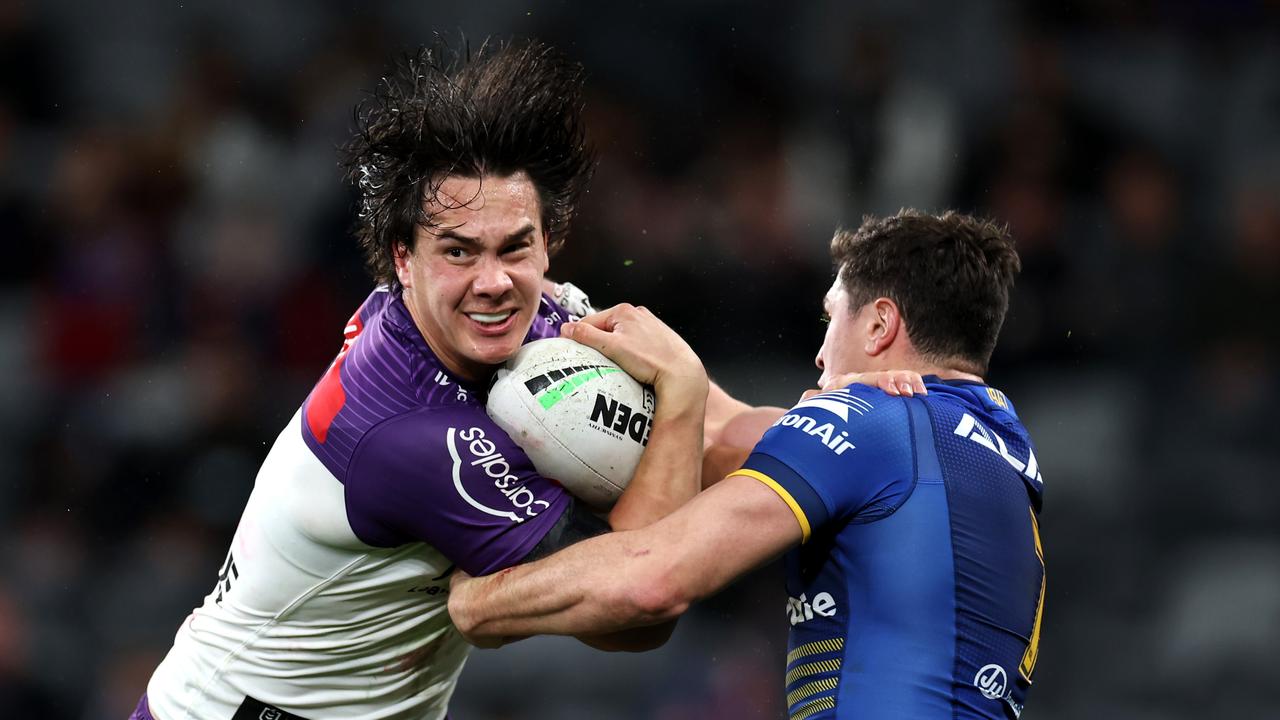
    The Parramatta Eels’ 2027 roster strengthening campaign has suffered another setback, after the Melbourne Storm formally announced young centre Jack Howarth will see out the final year of his existing contract at the club, ending widespread speculation of a player move that would have sent Howarth to western Sydney.

    Rumors of a potential deal first emerged earlier this year, when league insiders floated a swap arrangement that would have sent Howarth to the Eels in exchange for former Parramatta back Zac Lomax. That proposal never moved forward, however, after Lomax was released from his NRL contract to pursue a career in rugby union. This latest confirmation of Howarth’s retention by the Storm marks the second high-profile recruitment miss for the Eels in their search for additional pace and finishing power on the wing, who were also turned away when star outside back Bronson Xerri signed a deal to join the Storm starting in 2027.

    Howarth originally joined the Storm in 2022, penning a five-year, high-value contract after a standout junior representative career. But his path to first-team stardom has been slowed by a long string of serious, career-disrupting injuries that have limited his playing time at the top level.

    For Melbourne, the decision to hold onto Howarth comes as the club faces significant roster turnover in its backline ahead of 2027. Star outside backs Will Warbrick, Nick Meaney and Tyran Wishart are all set to depart for rival NRL clubs in the coming off-season, leaving the Storm needing to retain depth to reinforce their squad. The club has already moved to address these departures by signing Xerri and Jamayne Isaako to add depth and firepower to their backline ahead of the 2027 season.

    Speculation around Howarth’s future ramped up following the Storm’s narrow 14-6 loss to the Sydney Roosters at Allianz Stadium last Friday. Speaking to reporters in the team sheds after the match, Howarth declined to comment on transfer rumors, emphasizing that he was focused on contributing to Melbourne for the remainder of the current season. “At the moment I’m just trying to focus on playing consistently each week, and then whatever happens, happens. My focus is just playing good for the team that I’m signed with at the moment and put my best foot forward for those guys,” Howarth told NewsWire after the loss. “I’ve got my manager dealing with all that sort of stuff. Like I said before, my goal is just trying to play the best footy I can at the moment.”

    Howarth also addressed the devastating season- and Storm career-ending Achilles injury suffered by Warbrick in the first half of the Roosters match. With multiple stars already sidelined for the season – including Eli Katoa, Xavier Coates and Tui Kamikamica, plus key playmakers Cameron Munster and Jahrome Hughes – the injury cut short Warbrick’s tenure at the club before his scheduled departure. “It just hurts because when people like that have injuries like that, they don’t deserve it, and it’s just hard seeing your mate in that type of state,” Howarth said. “We’re all behind him and we’re going to be supporting him through these next couple of weeks. I hope his recovery goes well.” He added that the squad has maintained a “next man up” mentality through the rash of injuries, noting that while the losses are devastating for the injured players, they create opportunities for other squad members to step into first-team roles. The club formally confirmed Howarth would remain under contract on Saturday, ending the Eels’ hopes of adding the young centre to their 2027 roster.

  • Australia’s iconic Ettamogah Pub near Albury is back on the market with a $7.5 million asking price

    Australia’s iconic Ettamogah Pub near Albury is back on the market with a $7.5 million asking price

    One of Australia’s most iconic and visually recognizable hospitality venues has hit the market for the second time in less than 12 months, this time with a dramatically reduced asking price that signals a shift in the property’s sales strategy.

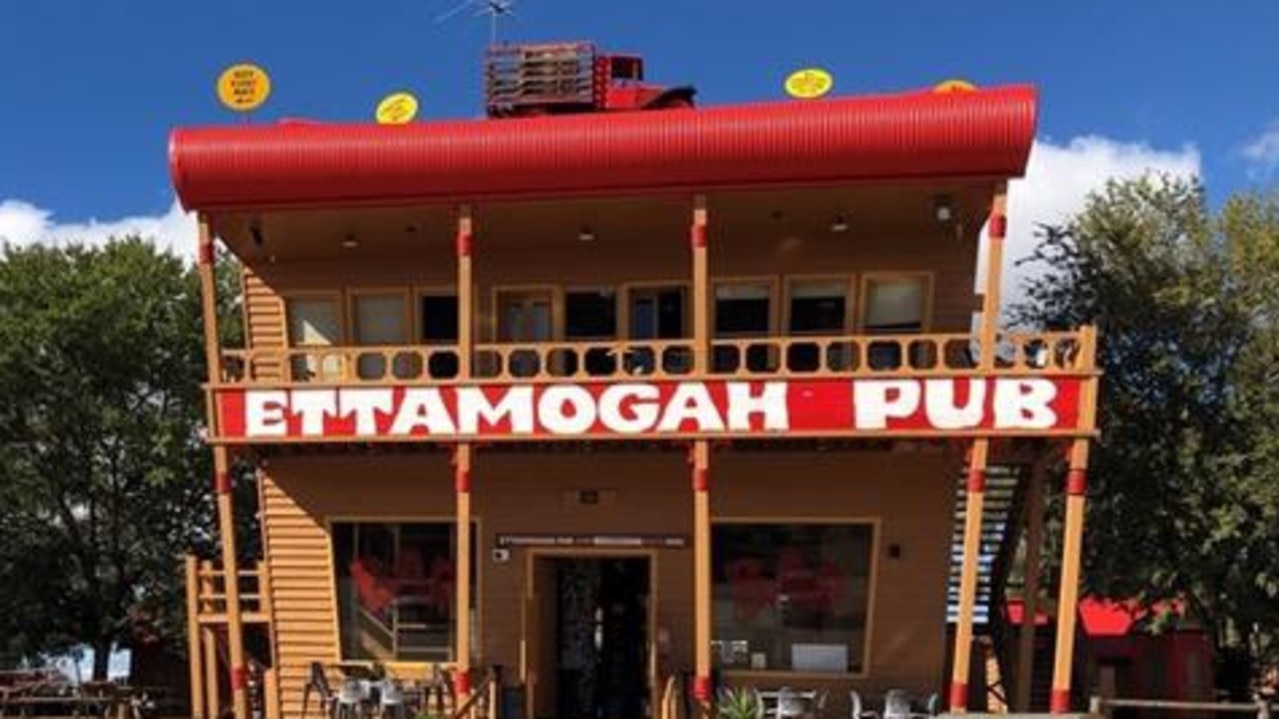
    Nestled in Table Top, a small community just outside the regional city of Albury in New South Wales, the Ettamogah Pub stands out as one of the country’s most unusual and beloved tourist landmarks. Its one-of-a-kind cartoon-inspired design has drawn generations of visitors: the venue features deliberately uneven, wonky walls, a curved bull-nosed veranda, and a fully restored 1927 Chevrolet vintage truck permanently mounted atop its bright red roof – features that have turned it into a must-stop destination for road-trippers and cartoon fans across the nation.

    The story of the pub stretches back more than six decades. The original Ettamogah Pub cartoon concept was created by Ken Maynard, a former police officer turned cartoonist. The gag comic ran for nearly 50 years, featuring regularly in the weekly Australasian Post from the 1960s until the publication ceased operations in 2002, after making its first debut in 1959. When the pub was constructed in 1987 as a purpose-built tourist attraction, developers brought Maynard’s whimsical drawings to life, integrating all the iconic cartoon details into the venue’s architecture to match his vision of a quirky, outback-style community pub.

    The property first went up for sale in late 2025 with an ambitious $50 million price tag that included all intellectual property and global branding rights for the Ettamogah Pub concept. That offering failed to attract a buyer willing to meet the asking price, leading the current owner to restructure the sale. Now, the freehold going concern of the venue is back on the market with an asking price of just $7.5 million, a figure that reflects the narrower scope of the current listing.

    “The owner is focusing on selling the hotel and he’s probably seeking interest of seven and a half-million dollars,” Leon Alaban, the listing agent from global real estate services firm Savills, told Commercial Real Estate in an interview.

    The 4.81-hectare freehold site included in the current listing covers more than just the original public bar. The property also features a separate dedicated dining bar, multiple vacant retail shop spaces, and a large recreational oval, giving new owners room to expand or redevelop the venue to meet modern tourist demand.

  • Spain, Argentina prepare for World Cup final, Trump hails success

    Spain, Argentina prepare for World Cup final, Trump hails success

    As the largest edition of the FIFA Men’s World Cup reaches its thrilling climax, two global football powerhouses, Spain and Argentina, are finalizing their preparations for Sunday’s title decider at MetLife Stadium in East Rutherford, New Jersey. With the historic match just days away, tournament organizers have confirmed they are maintaining constant vigilance over hazardous wildfire smoke drifting south from Canada, which has shrouded skies across broad swathes of the United States in recent weeks.

    Andrew Giuliani, executive director of the White House World Cup task force, confirmed at a pre-final press briefing that officials are in continuous coordination with meteorological experts to assess any potential risks to the match. “There’s been discussion about it, and we have a liaison from the National Weather Service embedded at FIFA’s on-site headquarters, so we are monitoring the situation very closely,” he stated.

    Sunday’s final will go down in history regardless of the outcome: Lionel Messi’s Argentina is aiming to become the first men’s national team in more than six decades to defend a World Cup title, a feat no side has achieved since Brazil lifted consecutive trophies in 1958 and 1962. For Spain, the match offers a chance to claim a second world crown, a decade after the European side claimed its maiden title in 2010.

    A star-studded crowd of more than 80,000 fans is expected to pack the 82,500-seat MetLife Stadium for the decider, including sitting U.S. President Donald Trump, who will attend his only match of the 2026 co-hosted tournament. Mexican President Claudia Sheinbaum will also join Trump in the stands, after accepting an invitation from the U.S. leader to attend the final.

    On Friday, Trump hailed the 48-nation expanded tournament – co-hosted this year by the U.S., Mexico and Canada – as an unprecedented sporting milestone during a New York reception with FIFA President Gianni Infantino. He called it “the most successful sporting event perhaps in the history of the world.”

    Ahead of kickoff, both teams have opened up about their game plans and mindsets. Spain captain and 2024 Ballon d’Or winner Rodri, who plies his club trade with Manchester City, warned his side to prepare for a grueling, physical encounter with Argentina. The midfield star noted that the final would test Spain’s tactical versatility unlike any prior match in the tournament.

    “I think Sunday’s match will be quite different,” Rodri told reporters. “It will be a more physical one, and we must be prepared. But I believe that if we are known for something in this national team, it is that we know how to play different games based on the moment. So we can adapt to having to defend, counter-attacking, to attacking. We are a very complete team, and that is why we are here.” When asked about potential provocative tactics from Argentina, Rodri acknowledged that such mind games are a standard part of elite football.

    For Argentina, head coach Lionel Scaloni has urged fans to savor the moment of seeing 39-year-old Messi lead the side out for another World Cup final, following the team’s iconic 2022 Qatar World Cup win. “He has made history. He is a legend,” Scaloni said of the former Barcelona forward.

    Ahead of the main event, the two beaten semi-finalists – England and France – will face off on Saturday in Miami to decide which side claims the tournament’s third place. England head coach Thomas Tuchel opened up about the lingering pain of his side’s narrow 2-1 semi-final defeat to Argentina, saying the loss would leave a permanent mark on the squad. “We have to live with this, so it’s our pain, my pain and the players’ pain — we feel the most pain of all,” Tuchel said. “And it is our scar that we carry now. It is a very painful defeat, and we have to live with this defeat, first and foremost.”

    For France head coach Didier Deschamps, Saturday’s third-place playoff will mark the end of his 15-year tenure in charge of Les Bleus, after he took the job in 2012. The decorated coach vowed his side would stay focused, even as the squad prepares to say goodbye. France entered the tournament as favorites to claim a third World Cup title, but were knocked out by Spain with a 2-0 semi-final loss. “I know that the final curtain falls tomorrow,” Deschamps said Friday. “No one here is going to cry, but I know I’ll miss the French team. For 15 years, I had the privilege of experiencing moments that were magical, and others that were difficult.”

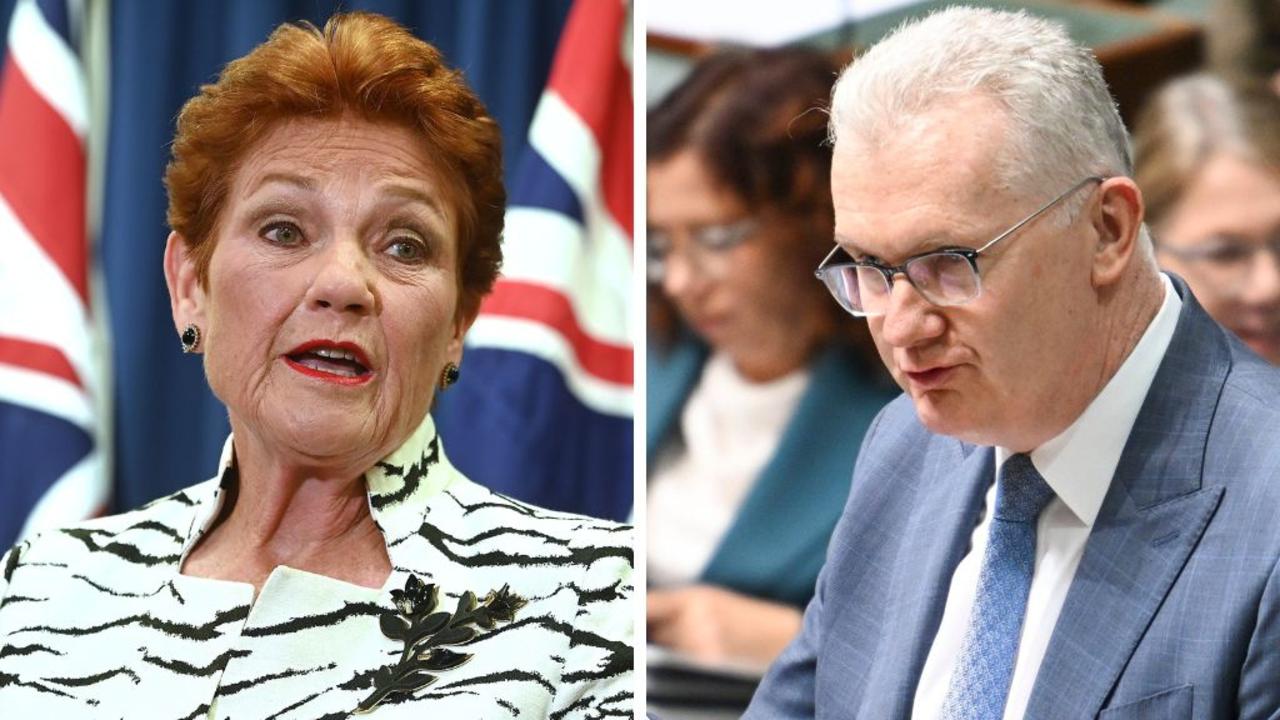
  • Minister Tony Burke slams Pauline Hanson over ‘perverted’ White Australia remarks

    Minister Tony Burke slams Pauline Hanson over ‘perverted’ White Australia remarks

    A fiery political controversy has erupted in Australia after One Nation leader Pauline Hanson appeared on a podcast hosted by British far-right commentator Tommy Robinson, where she openly endorsed the discredited White Australia policy and made inflammatory anti-immigrant and anti-Muslim remarks. Senior federal government leaders have roundly rejected Hanson’s comments, framing them as a dangerous rejection of Australia’s modern multicultural identity.

    First implemented shortly after Australian federation in 1901, the White Australia policy barred non-European immigrants from settling in the country, enshrining racial exclusion in national law for more than seven decades. The discriminatory policy was formally abolished in 1973, a step widely celebrated as a foundational shift toward Australia’s modern diverse, multicultural society. During her recent podcast appearance with Robinson – a far-right activist whose real name is Stephen Yaxley-Lennon – Hanson appeared to link contemporary social tensions to the 50-year-old abolition of the racist policy. When Robinson asked Hanson about immigration, making unsubstantiated claims about “violent Africans” and “problems” arising from Pakistani and Somali migration to Australia, Hanson responded by placing blame squarely on the end of the White Australia policy.

    Hanson further claimed that post-WWII European migrants from Italy, Germany and Poland successfully integrated into Australian society, while more recent non-European migrants only move to Australia to exploit the country’s welfare system. She also made derogatory remarks about Australian Muslim families, claiming Muslims have large numbers of children based on the belief that “Allah will provide”, adding a snide remark that this “provision” actually comes from Australian taxpayers.

    The comments drew immediate fierce pushback from Australia’s Home Affairs Minister Tony Burke during a Saturday press conference held to unveil the federal government’s official response to a landmark report on Islamophobia in Australia. Burke, who leads the country’s immigration and home affairs portfolio, said he never expected to see an elected Australian parliamentarian openly advocating for a return to the White Australia policy in his political lifetime. “I thought we were in a country where everybody just accepted we had moved on and we were better because we had moved on,” Burke stated. He argued that loving Australia means embracing the country’s current diverse identity, not clinging to a warped vision of the past that pits Australians against one another. “You will never find an orchestra where every instrument is the same,” Burke added, using the metaphor to highlight the strength that comes from Australia’s varied communities.

    Prime Minister Anthony Albanese joined Burke in condemning the remarks and addressing the findings of the report from Islamophobia Special Envoy Aftab Malik, which documented rising rates of anti-Muslim discrimination across Australia. Albanese emphasized that Islamophobia has no place in modern Australia, noting that hate targeted at any single community harms the entire nation. “Diversity is one of Australia’s great strengths and we won’t as a nation let hate divide us,” the Prime Minister said. “Every Australian has the right to feel safe, valued and respected for the contributions they make to our great nation.”

    Malik, whose report prompted the government’s formal response, acknowledged that the plan to tackle Islamophobia is only the first step in addressing systemic discrimination against Muslim Australians. “For Muslim Australians who continue to experience Islamophobia in their daily lives, this has been a long wait,” Malik said. “This is just the start of the journey. To tackle Islamophobia at its roots we must address the challenging questions.”

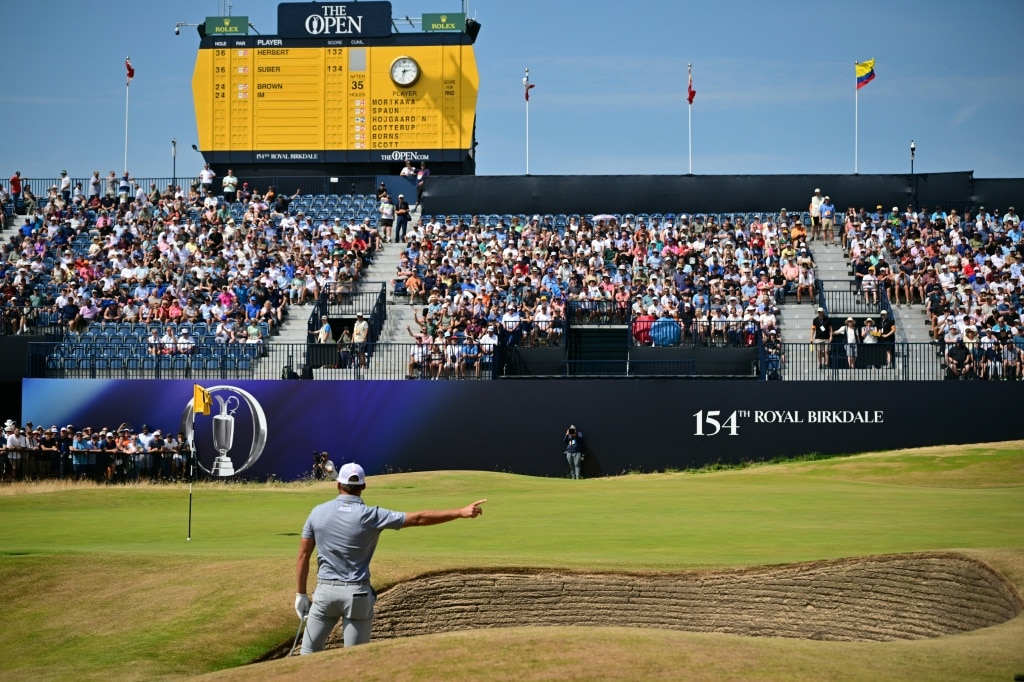
  • Leader Herbert, Burns equal record 62 at British Open, DeChambeau docked two shots

    Leader Herbert, Burns equal record 62 at British Open, DeChambeau docked two shots

    The second round of the 2025 British Open at Royal Birkdale delivered one of the most dramatic days in major golf history Friday, as Australia’s Lucas Herbert and American Sam Burns both matched the all-time record for the lowest 18-hole score in men’s major championship golf, carding 8-under-par 62s that left the tournament leaderboard reshaped and packed with surprises.

    Ranked 97th in the world and competing on the breakaway LIV Golf Tour, Herbert entered the day far from the list of pre-tournament favorites but exploded into contention with a historic round that nearly ended with an unprecedented achievement. The 30-year-old Australian got off to a blistering start, sinking birdies on his first three holes before adding three more birdies at 5, 7, and 9 to turn in a 28 on the front nine – a new British Open record for the opening nine holes.

    Herbert carried his momentum through the back nine, picking up additional birdies at 12, 13, and 16 to reach 8-under par through 17 holes, putting him one stroke away from becoming the first player in major golf history to shoot a 61. But after a wayward tee shot on the par-4 18th, nerves got the better of the leader in front of thousands of packed spectators: two tentative putts left Herbert with a bogey, and he missed his short par attempt that would have secured his place in the history books as the sole record-holder. Herbert doubled over his putter in open disappointment after the slip, but said after the round he remained proud of his performance.

    “It was not lost on me the amount of history in major championships and the opportunity I had to obviously break the record,” Herbert told reporters. “To tie it as well is still something I’m really proud of.”

    Less than an hour after Herbert finished his round, Burns matched the historic score, taking the opposite path to 62 with a six-under-par 30 on the back nine. The world No. 18 sank a 20-foot birdie putt at 17 before chipping in from a greenside bunker at the final hole to secure his share of the record. The round catapults Burns to five-under-par for the tournament, putting him firmly in contention heading into the weekend.

    “I caught myself by surprise,” Burns said after his round. “I think the finish there the last three holes was just a bonus.”

    The 62s tie the course record set by Branden Grace the last time the Open was hosted at Royal Birkdale in 2017, and match the five previous 62s carded across the history of men’s major championships. After his second round, Herbert holds a two-shot lead over the rest of the field heading into the third round.

    The day’s drama did not end with the historic low rounds. Two-time U.S. Open champion Bryson DeChambeau appeared poised to close within one shot of Herbert’s lead before rules officials handed him a two-stroke penalty for inadvertently improving his lie during his second shot at the fifth hole. The penalty came after a lengthy discussion between DeChambeau and officials over whether he improperly trampled down rough grass to improve his stance, dropping DeChambeau down the leaderboard and erasing his near-leader position.

    Further down the leaderboard, several top golfers fought to secure their spots for the weekend and position themselves for a comeback. World No. 4 Cameron Young is tied for second at six-under-par alongside overnight leader Jackson Suber and Ryan Gerard, putting him in strong position to claim his first career major victory. Defending champion and world No. 1 Scottie Scheffler sits four shots off the lead, but a series of missed short birdie putts kept him from challenging Herbert for the top spot on Friday.

    Four-time major champion Rory McIlroy survived a rocky opening round to make the cut, shooting a four-under 67 on Friday to climb to one-under-par for the tournament. The Northern Irishman opened with a 72 that included six bogeys, leaving him on the cut line heading into the second round. “I think the main objective today was to be here for the weekend, which I am,” McIlroy said. “I think if I can get off to a decent start tomorrow, be four of five under for the tournament, I’ll be right in it.”

    Local favorite Tommy Fleetwood earned deafening cheers from the home crowd with a late charge, carding three birdies in his final five holes to climb to four-under-par, putting him within striking distance of the lead. High-profile casualties of the cut include world No. 3 Matt Fitzpatrick and former major champion Justin Rose, both of whom missed the weekend cut after two underperforming rounds.

  • US links Taco Bell lettuce to diarrhea-causing parasite outbreak

    US links Taco Bell lettuce to diarrhea-causing parasite outbreak

    A widespread foodborne parasite outbreak that has sickened hundreds of people across five U.S. states has been traced to contaminated shredded iceberg lettuce supplied to the fast-food chain Taco Bell, U.S. health officials confirmed Friday.

    The Centers for Disease Control and Prevention (CDC) and Food and Drug Administration (FDA) launched a joint federal investigation into the cluster of cyclosporiasis cases, which causes severe gastrointestinal illness including explosive diarrhea. Investigators ultimately pinned the contamination on a single Mexican-based lettuce supplier, whose produce was distributed to Taco Bell locations across Indiana, Kentucky, Michigan, Ohio and West Virginia.

    As of the latest update, 1,644 people across the five states have received laboratory confirmation of cyclosporiasis infection linked to the Taco Bell outbreak. While no fatalities have been reported, 94 people have required hospital care for their symptoms. The CDC emphasized that this count only reflects confirmed cases tied to this specific outbreak, and does not include unrelated cyclosporiasis infections from other sources across the country.

    Though federal health officials declined to publicly name the supplier, produce giant Taylor Farms issued a statement Friday acknowledging it had supplied the iceberg lettuce to Taco Bell. The company announced it would voluntarily withdraw all iceberg lettuce sourced from central Mexico from its distribution chain, a step it called proactive even though the FDA’s traceback points to a single independent farm that accounts for less than 1% of the entire U.S. iceberg lettuce supply. The removal will remain in place indefinitely. Taylor Farms also stressed that none of its branded pre-packaged salads or meal kits are connected to the outbreak, and its products do not include the iceberg lettuce in question.

    Taco Bell followed up with its own announcement, confirming it had voluntarily pulled potentially affected lettuce from locations in the at-risk states. The chain added that the implicated ingredient will be permanently removed from its national supply chain, with replacement stock set to arrive at affected locations within 24 hours.

    Federal health agencies have issued a warning advising consumers in the five affected states to avoid eating shredded iceberg lettuce from Taco Bell locations. Unlike many foodborne pathogens, cyclospora is a parasite that, if left untreated, can cause persistent symptoms lasting more than a month. While the infection is rarely fatal, it often leads to severe dehydration that requires medical intervention.

    This is not the first time fresh produce has been linked to cyclospora outbreaks in the U.S. In past years, the parasite has been found in products ranging from pre-bagged salad mixes and raspberries to fresh cilantro, basil, snow peas and scallions. National health officials recommend two key steps to reduce infection risk: thoroughly washing all fresh produce, and cooking produce where possible, as heating food above 158°F (70°C) kills the cyclospora parasite.

    Michigan has faced disproportionate impact from cyclosporiasis this year, with state authorities reporting more than 5,000 total cases. The FDA noted that discrepancies between state and national case counts are common, as states often include both probable and confirmed cases in their public reports, while national data only tracks lab-confirmed cases linked to specific outbreaks. There is also a standard lag between local case reporting and updates to national surveillance data, which means official counts may rise as new information comes in.

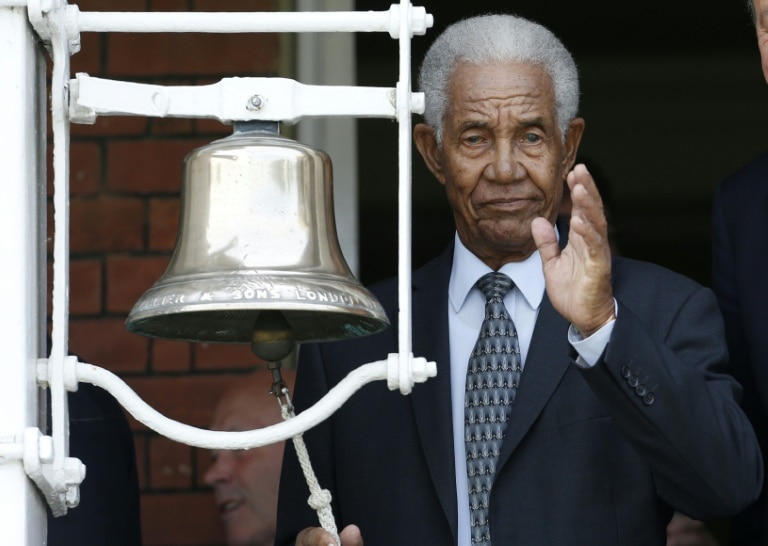
  • ‘Great innings ends’: Cricket mourns West Indies great Sobers

    ‘Great innings ends’: Cricket mourns West Indies great Sobers

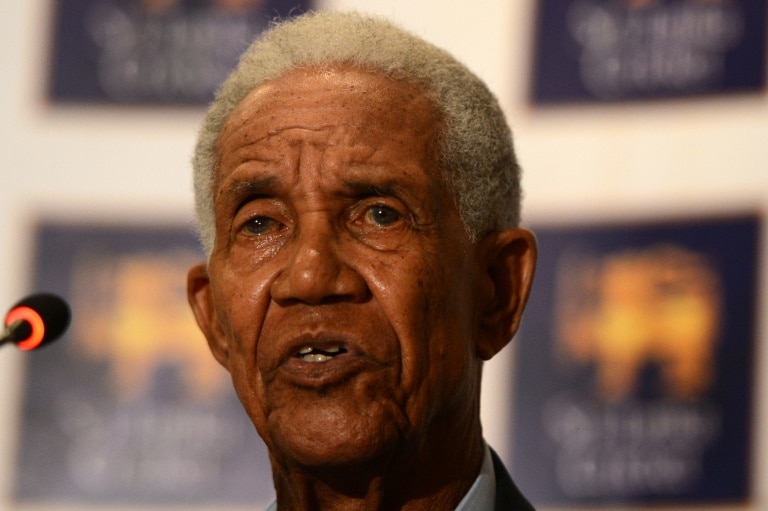
    The global cricket community is in mourning this week following the passing of one of its most iconic and transformative figures, West Indian legend Sir Garfield Sobers, who died at the age of 89. Born in Barbados, Sobers built a 20-year international career that redefined the standard for elite all-round cricket, earning widespread acclaim as the greatest player to ever step onto the pitch from fans, peers, and experts alike.

    Sobers made his extraordinary Test debut in 1954 at just 17 years old, facing England, and went on to represent the West Indies in 93 Test matches between 1954 and 1974. Over his international tenure, he amassed 8,032 runs and claimed 235 wickets, posting staggering career averages of 57.78 with the bat and 34.03 with the ball. As captain, he led the West Indies in 39 Tests between 1965 and 1972, leaving an indelible mark on the team’s legacy long after his retirement.

    One of Sobers’ most groundbreaking records came in 1958, when at 21 he notched an unbeaten 365 against Pakistan, breaking Len Hutton’s long-standing record for the highest individual score in Test cricket. That record stood for 36 years, until fellow West Indian great Brian Lara hit 375 against England in 1994 — a moment Sobers was present to celebrate. Off the pitch, he remained a beloved supporter of emerging talent in the sport he shaped.

    Sobers’ versatility was unmatched by most of his contemporaries: a dynamic left-handed batter, he could bowl both spin and seam bowling with equal skill, and was widely regarded as one of the finest fielders of his era. Another of his historic firsts came during his tenure playing county cricket for Nottinghamshire, when he became the first player in first-class cricket history to hit six sixes in a single over, doing so off Glamorgan bowler Malcolm Nash.

    His unprecedented career earned him a place among Wisden’s five Cricketers of the 20th Century, alongside fellow legends Donald Bradman, Jack Hobbs, Viv Richards and Shane Warne. Even the great Australian batsman Donald Bradman, widely considered one of the sport’s greatest ever batters, called Sobers the greatest cricketer of all time in his ultimate tribute.

    In the wake of his passing, tributes have poured in from across the global cricket ecosystem. West Indies Cricket first shared the news on social media platform X on Friday, writing: “A great innings has come to an end. In our hearts, now and forever, Sir Garfield Sobers,” alongside a portrait of the star labeled “Legend, Icon, Hero.”

    West Indies Cricket CEO Chris Dehring described Sobers as a towering figure whose impact on the sport and the Caribbean region can never be overstated. “Sir Garfield was more than the greatest all-round cricketer the world has ever seen,” Dehring said in a statement. “He was the embodiment of West Indies cricket at its finest — bold, brilliant, innovative and unapologetically excellent. His extraordinary achievements transformed the way the game was played and inspired generations of cricketers.”

    Nottinghamshire County Cricket Club, where Sobers played during his county career, honored their former player as “cricket’s greatest-ever all-rounder” and a defining icon in the club’s 178-year history. International Cricket Council chairman Jay Shah echoed that sentiment, noting that the sport had lost one of its most beloved icons. “Sir Garfield Sobers was not only the finest all-rounder the game has ever known, but one of the greatest cricketers in history,” Shah said. “His remarkable ability to influence a match in every facet of the game set him apart from his peers.”

    England Cricket also paid tribute on X, writing: “One of the greatest to ever play the game. Forever in our hearts, Sir Garfield Sobers.” Former England opening batsman Geoffrey Boycott shared a personal tribute in The Telegraph, recalling Sobers’ quiet, commanding presence on the pitch. “He was like a panther with a purposeful, loping and confident walk,” Boycott wrote. “I just loved the way Garry walked out to bat. He didn’t say anything. He did not need to. There was no ego. His walk let the opposition know he was there for business.”

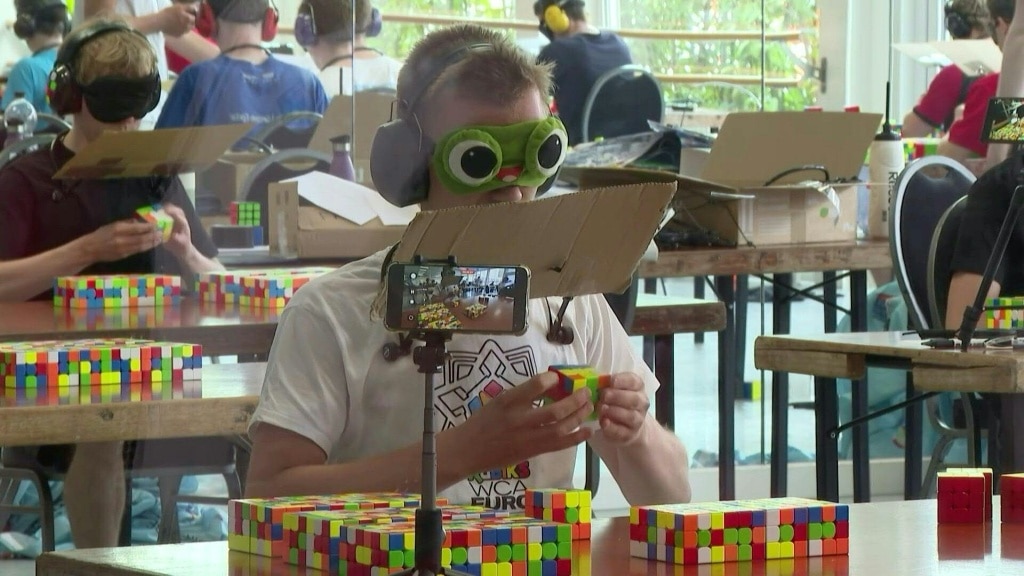
  • Cubes and lubes: Europe’s ‘Speedcubers’ twist for glory

    Cubes and lubes: Europe’s ‘Speedcubers’ twist for glory

    Brows furrowed in unbroken concentration, Juliette Sebastien grips her well-worn Rubik’s Cube, her fingers flying across the colored faces at a dizzying pace. In just 25.03 seconds, she twists the final block into place and slaps the completed puzzle onto the competition table—one of thousands of lightning-fast solves unfolding at the 11th European Speedcubing Championships, hosted this year in Arnhem, in the eastern Netherlands. The event brings 1,200 competitors from 53 nations together to test their puzzle-solving speed across a wide range of unique and challenging disciplines.

    Sebastien, France’s national speedcubing champion, has dedicated countless hours to honing her craft ahead of the tournament, putting in three to four hours of daily practice in the lead-up after months of at least one hour of training daily. Her preparation was not without setbacks, however: a painful wasp sting to her dominant hand threw off her training routine in the final weeks before the competition. “I do training blocks of 100, 200, sometimes 300 solves,” the 25-year-old student explained in an interview with AFP. “There are always new techniques that you can learn.”

    While Sebastien’s 25-second solve for the 4×4 cube category—an event slightly more complex than the standard 3×3 Rubik’s Cube—is widely viewed as a strong result, top competitors in the fastest divisions reach speeds that defy belief. The current 2×2 Rubik’s Cube world record, held by Chinese speedcuber Ziyu Ye, stands at a staggering 0.39 seconds, a time faster than most people can blink.

    The constant, rhythmic clack of twisting cube faces echoes across the five large sports halls that house the championships. Competitors wander the venue’s corridors in team-branded gear, many solving practice cubes absent-mindedly without looking, or even using only one hand. “There are more cubes here than people,” joked 31-year-old Dutch competitor and programmer Jeroen Plug, a quip that rings true across the puzzle-filled venue.

    Far from being a casual hobby gathering, the tournament is run with strict regulations and military-level precision to ensure fair play. Before each round, competitors hand their custom cubes to official scramblers, who reset each puzzle to an identical starting configuration for every athlete, eliminating any advantage from pre-adjusted cube setups. Two competitors compete side-by-side during each round, each monitored closely by a dedicated referee with a camera tracking every movement, while a digital timer records solve times down to one hundredth of a second. Scrambled cubes are kept hidden in opaque boxes until the start of a round; once the box is opened, competitors get 15 seconds to inspect the cube’s layout before placing their hands on a touch sensor to start the timer and begin their solve.

    The tight regulations come in response to a recent controversy that shook the global speedcubing community: the so-called “Sliding Scandal”. The incident involved competitors cheating by surreptitiously moving their hands from the starting sensor to the cube early, gaining critical fractions of a second that could be the difference between a world record and a mid-tier result. In the wake of the scandal, multiple previously approved world records were stripped from the official record books, and the controversy remains a quiet topic of conversation among participants on the sidelines of the Arnhem tournament.

    One of the most surprising open secrets of competitive speedcubing is the key role that custom lubrication plays in top performance. Every competitor applies a precise, personalized amount of specialty lube to their cubes to adjust the turning speed and feel to match their solving style, explained Loes Wentink, who manages the official lube station at the championships. “It makes a big difference to the competition,” said the 21-year-old electrical engineering student. Some lubricants actually increase friction, she noted, because many new high-performance cubes come from the factory so smooth that they turn too fast for competitors to control. “Sometimes you can’t control it… and if you can’t control it, then your solve won’t be as good,” she said. Other lubes are designed to eliminate the dreaded “sandy” feel, a gritty, rough texture that can develop in well-used cubes over time. Just as professional tennis players customize their racket string tension or cricket players adjust their bat weight, each speedcuber’s cube and lube combination is a deeply personal setup tailored to their unique technique.

    Recent technological advances have reshaped training for the sport, even as many high-tech tools remain banned from competition. Many competitors mount GoPro cameras to their heads during training to record their solves and review their technique for errors. So-called “smartcubes” equipped with Bluetooth sensors can track every turn in a companion mobile app and suggest adjustments to improve speed, but these devices are not allowed during official competition. Technology offers no advantage anyway in one of the event’s most popular disciplines: blindfolded speedcubing, one of 17 total categories offered at the championships. In blindfolded competition, competitors have one hour to memorize the starting layout of as many cubes as possible, then solve all of them while wearing a blindfold. The current world record for the discipline stands at 63 correctly solved cubes in a single round.

    Heading up the 1,200-participant event alongside 250 volunteers and officials is Yinte Dik, the 25-year-old accountant and longtime speedcuber who has competed internationally since 2017. Dik noted that the tournament draws participants across a wide generational range, from competitors as young as 8 years old to seasoned players up to 71. At the European continental level, Poland’s national team is widely recognized as the powerhouse to beat, while the United States and China field the strongest competitors globally.

    While competitive speedcubing can be an intense, high-pressure sport, Dik emphasized that it is built around an inclusive, tight-knit global community that welcomes new participants of all backgrounds. “Everyone can train, so it’s not that you have to have big brains or something, everyone can do it,” Dik told AFP. “You just have to practise a lot and you can make it.”

  • Garry Sobers, towering West Indies cricket all-rounder, dies at 89

    Garry Sobers, towering West Indies cricket all-rounder, dies at 89

    The global cricket community is mourning the passing of Sir Garfield ‘Garry’ Sobers, the iconic West Indies all-rounder universally regarded as one of the greatest players to ever step onto a cricket field, who died at the age of 89.

    Across the 20th century, cricket produced no shortage of generational talent, but fans and experts alike have long placed just two players in a tier of their own: legendary Australian batsman Donald Bradman and Sobers. Confirming the loss on social media Friday, West Indies Cricket shared a heartfelt tribute: “A great innings has come to an end. In our hearts, now and forever, Sir Garfield Sobers.”

    Sobers’ standing in the sport was cemented decades ago. In a 1999 poll of 100 leading cricket experts conducted by Wisden for its selection of Five Cricketers of the 20th Century, Sobers earned 90 votes — falling just 10 votes shy of a perfect tally that only Bradman achieved. Even Bradman himself, who passed away in 2001, offered Sobers the highest possible praise, calling him “in my opinion, the greatest cricketer of all time.”

    That glowing acclaim stems not just from Sobers’ impressive statistical record or his graceful on-field style, but from the unprecedented breadth of his skill across every aspect of the game. As a batsman, he compiled 8,032 Test runs across 93 matches at an average of 57.78 — a career mark that would alone secure any player a place in cricket’s hall of fame. As a bowler, he claimed 235 Test wickets at an average of 34.03, with the rare versatility to open the bowling with fast left-arm pace or switch to orthodox or wrist spin when pitches deteriorated, a talent that caught the eye of West Indies selectors when he was just a teenager. He was also one of the most agile and sharp fielders of his era, holding 109 Test catches — most often at slip, though as captain he would regularly position himself in the high-risk short-leg spot when off-spinner Lance Gibbs was bowling.

    Australian all-rounder Alan Davidson summed up Sobers’ unmatched versatility in a 2016 interview marking Sobers’ 80th birthday: “The bloke could do just about anything on a cricket field except umpire. He was a complete cricketer, magnificent fielder, bowled all types of bowling, and when in form, he absolutely decimated great bowling attacks. You could not set a field to him because he just had that innate ability to be able to score runs whenever he wanted to.”

    Born Garfield St Aubrun Sobers in Bridgetown, Barbados, in July 1936, Sobers’ early life was marked by tragedy when he was just six years old: his father, a merchant seaman, died when his ship was torpedoed by a German U-boat off the coast of North Carolina. Even from a young age, Sobers displayed extraordinary athletic talent across multiple sports, and he made his first-class debut for Barbados as a spinner against touring India in January 1953, at just 16 years old. A year later, after facing the touring Marylebone Cricket Club (MCC) side and just two first-class appearances total, he was called up as a last-minute replacement for the injured Alf Valentine to make his Test debut against England at Sabina Park in March 1954. Though England won the match by nine wickets, Sobers made an immediate impact, dismissing star batsman Trevor Bailey in his very first Test over and finishing with four wickets for 75 runs in England’s first innings.

    It took just four years for Sobers to etch his name into the record books, during a Test against Pakistan in Kingston. At the time, Len Hutton’s 364 against Australia had stood as the highest individual Test score for 20 years. Sobers hit an unbeaten 365 in that match, breaking the record in his first ever Test century; the new record stood for 39 years, until fellow West Indian Brian Lara hit 375 against England in 1994. Later that same decade, in the famous tied Test of Brisbane in 1960-61, Sobers scored a blistering 132 that set the pace for one of the most memorable Test series in cricket history. Davidson later called that innings “absolutely one of the greatest I have ever seen in my life. He didn’t just beat the field. He split the field. His placement was just incredible.”

    In 1964-65, Sobers took over from Frank Worrell as West Indies captain, leading the side to its first ever series win against Australia at home. He captained the side through 1972, when he handed the reins to Rohan Kanhai, with mixed overall results, but his leadership laid critical groundwork for the West Indies team that would grow into the most dominant side in international cricket through the 1970s and 1980s. Even as his career wound down, Sobers delivered historic performances: in 1972, he scored 254 for the Rest of the World team at the Melbourne Cricket Ground, an innings Bradman called “probably the greatest exhibition of batting ever seen in Australia.”

    Beyond international cricket, Sobers led South Australia to a Sheffield Shield title and played county cricket for Nottinghamshire in England. In 1968, he made global cricket history once again, becoming the first first-class cricketer to hit six sixes off a single six-ball over — a feat that was only matched once in top-tier first-class cricket in the decades that followed, by Indian all-rounder Ravi Shastri in 1985.

    Sobers retired from Test cricket in 1974, and was knighted for his contributions to sport a year later. In 2004, the International Cricket Council created the Sir Garfield Sobers Trophy, awarded annually to the best men’s cricket player in the world, in his honor. For most fans and contemporaries, however, Bradman’s simple, unreserved praise will remain the defining description of his legacy: the greatest cricketer of all time.

  • Messi eyes glorious farewell as Spain, Argentina clash in World Cup final

    Messi eyes glorious farewell as Spain, Argentina clash in World Cup final

    The 2026 FIFA World Cup, the largest edition of the tournament in history, will reach its climax this Sunday at East Rutherford’s MetLife Stadium, where European champions Spain and South American titleholders Argentina will lock horns for the sport’s most coveted global prize. The 80,012-capacity venue will host a star-studded crowd that includes former U.S. President Donald Trump, alongside thousands of passionate fans from both nations who have traveled across continents to witness the historic cross-continental showdown.

    Preparations for the final have not been without minor disruptions: tournament organizers confirmed this week that they are closely monitoring air quality in the New Jersey metropolitan area, where smoke plumes from ongoing Canadian wildfires have drifted south. The match is scheduled to kick off at 3 p.m. local time (1900 GMT), and the half-time break will be extended to an unprecedented 25 to 30 minutes to accommodate a star-studded Super Bowl-style halftime show featuring global music icons Madonna, Shakira and Justin Bieber.

    All off-field buzz will fade into the background once the first whistle blows, however, as the match centers on one of the biggest narratives in modern football: what is widely expected to be the final World Cup appearance of Argentina captain Lionel Messi. At 39 years old, the Argentine icon, regarded by most fans and pundits as the greatest player to ever step onto a football pitch, will make history as only the second men’s player to feature in three World Cup finals, matching the legendary feat of Brazil’s Cafu, who played in the 1994, 1998 and 2002 title matches.

    Messi has delivered a career-defining tournament to reach this final, currently leading all scorers with eight goals and on track to claim the Golden Boot. Beyond his goal tally, the eight-time Ballon d’Or winner has repeatedly dragged his side back from the brink of elimination, embodying the relentless, never-say-die resilience that head coach Lionel Scaloni has built into the Argentine squad. In the round of 16 against Egypt, Messi inspired a stunning late comeback after Argentina trailed 2-0 with just 11 minutes left, engineering a 3-2 victory that kept their title defense alive. Most recently, he notched two assists in a dramatic 2-1 semi-final comeback against England in Atlanta, securing Argentina’s spot in the championship match.

    Scaloni, who has led Argentina to consecutive Copa America titles and the 2022 World Cup crown, says his squad’s strength comes from their collective fearlessness and team unity. “This group is difficult to explain,” he said. “It is a show of the collectiveness, the brotherhood that we are in, the willingness to fight to the very end. I know the guys. They fear nothing.”

    Standing between Argentina and a historic title defense – which would make them the first team to retain the World Cup in 64 years – is a Spanish side that has dominated the tournament with their trademark possession-based style of play. Spain, who won their first and only World Cup title in 2010, entered the tournament as dark horses but have steadily built momentum, shutting out pre-tournament favorites France 2-0 in the semi-finals to book their place in Sunday’s final.

    La Roja’s biggest strength this tournament has been their impenetrable defense: the side has conceded only one goal across seven matches, notching six clean sheets. If they win Sunday’s final and keep Argentina off the scoresheet, they will set a new World Cup record for the fewest goals conceded by a title-winning team. Led by captain Rodri, Spain’s midfield trio of Rodri, Fabian Ruiz and Dani Olmo completely neutralized France’s high-powered attack in the semi-finals, controlling possession for large stretches and creating the openings that led to their decisive goals.

    The outcome of the final could well hinge on the form of Spanish teenage prodigy Lamine Yamal. The 19-year-old Barcelona winger, who was the standout star of Spain’s 2024 European Championship winning campaign, has been working his way back from a hamstring injury through much of this World Cup and has yet to hit his electrifying best. But he showed glimpses of his elite talent against France, drawing the penalty that gave Spain their opening lead and having a spectacular goal ruled out by only the narrowest of offside calls.

    Adding another layer of personal drama to the matchup is the relationship between the two head coaches. Spain manager Luis de la Fuente, 65, who took over the senior national team in 2022 after a successful career leading Spain’s youth sides, mentored Scaloni when the Argentine was working toward his professional coaching license in 2018. Scaloni, 46, maintains deep personal and professional ties to Spain, where he lives with his family, but says he will put his friendship and respect for his former mentor on hold for 90 minutes on Sunday.

    “He was my mentor, and he taught me everything I know and now we are facing each other in a final,” Scaloni said. “Everyone knows I live in Spain and have Spanish family. And I’m very, very sorry, but on Sunday I’m going to try to beat him.”

    For millions of football fans around the globe, Sunday’s final is more than just a match: it is a chance to witness one of the game’s greatest legends cap his historic career with one last world title, while watching a new generation of Spanish stars write their own place in football history.