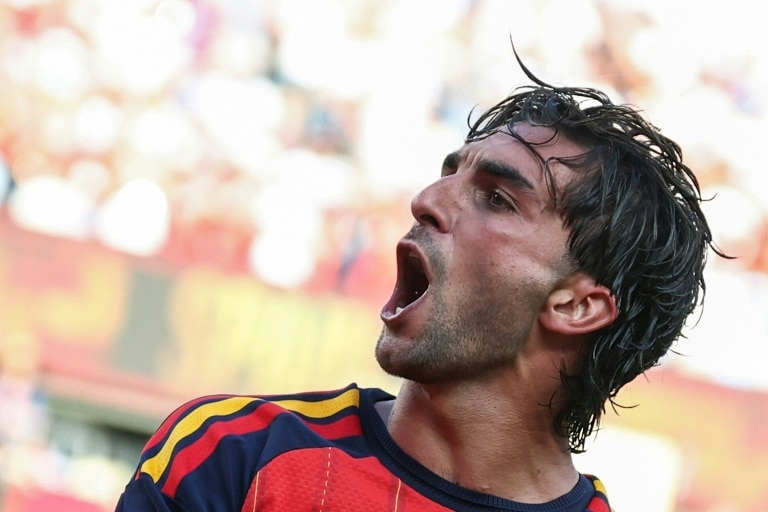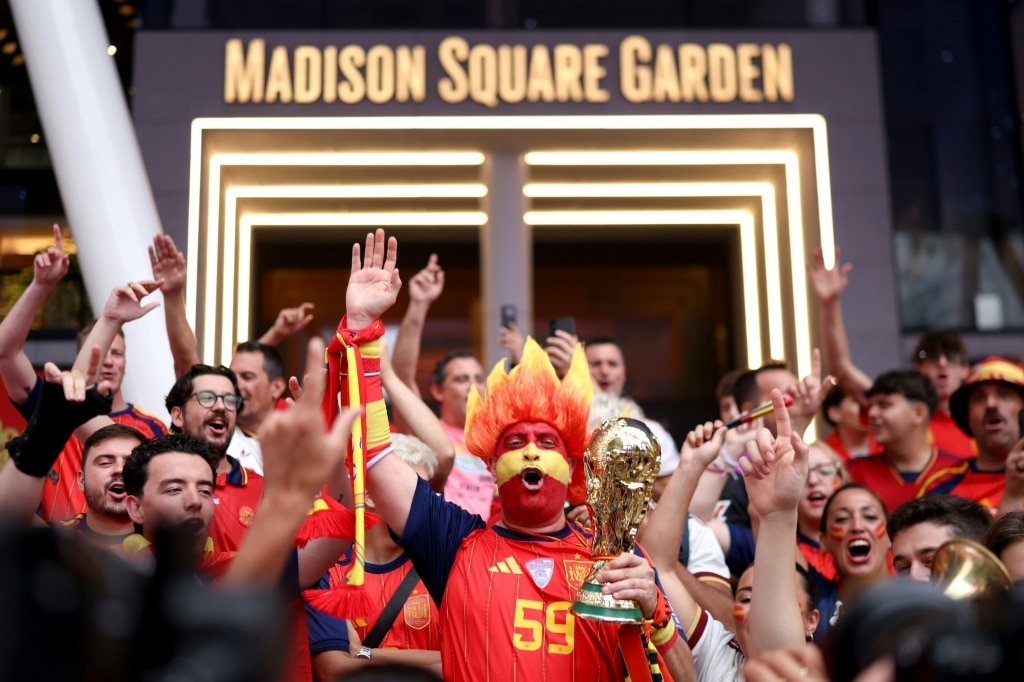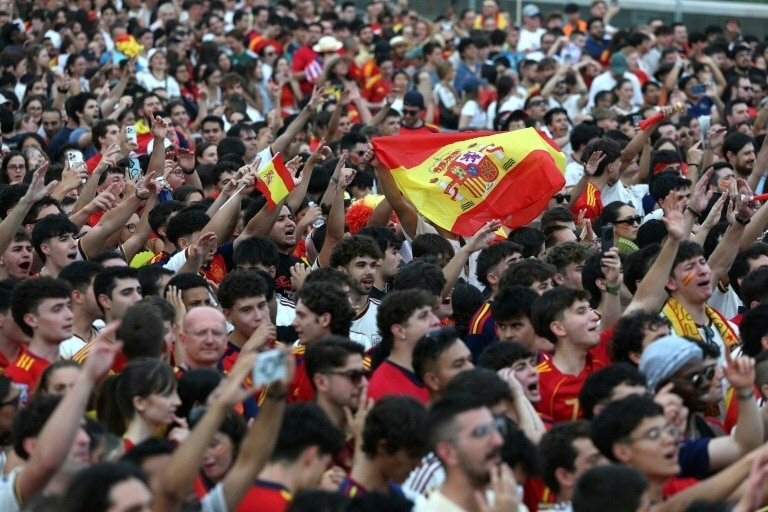
In a tense, physically fraught World Cup final at East Rutherford’s MetLife Stadium, Ferran Torres’ 106th-minute strike delivered Spain a historic 1-0 extra-time victory over defending champions Argentina, crushing Lionel Messi’s long-awaited hope of a second World Cup title in what is widely expected to be his final appearance on the sport’s biggest global stage.
A capacity crowd of 80,663 spectators, including former U.S. President Donald Trump, packed into the venue to watch the 39-year-old Argentine maestro attempt to cap his decorated career with one last major triumph. But Spain seized control of the match from the opening minutes, leaving Messi largely ineffective against a well-drilled Spanish side, while Argentina’s campaign was marred by repeated rough challenges and disciplinary issues.
The game was marked by persistent niggly fouls from the South American side from kickoff. As early as the 15th minute, Alexis Mac Allinger caught Spain’s Dani Olmo on the ankle with a high studs-up challenge that only earned a free kick, no yellow card from Slovenian referee Slavko Vincic. Minutes later, Spain’s Alex Baena escaped sanction after catching Messi with an elbow to the back. Nicolas Tagliafico also avoided a caution for a clumsy, raking challenge that left Spain’s teen star Lamine Yamal with a calf injury, before Lisandro Martinez eventually picked up a yellow card for a cynical foul on Mikel Oyarzabal. The Arsenal defender was forced off shortly after with an apparent injury, replaced by veteran Nicolas Otamendi.
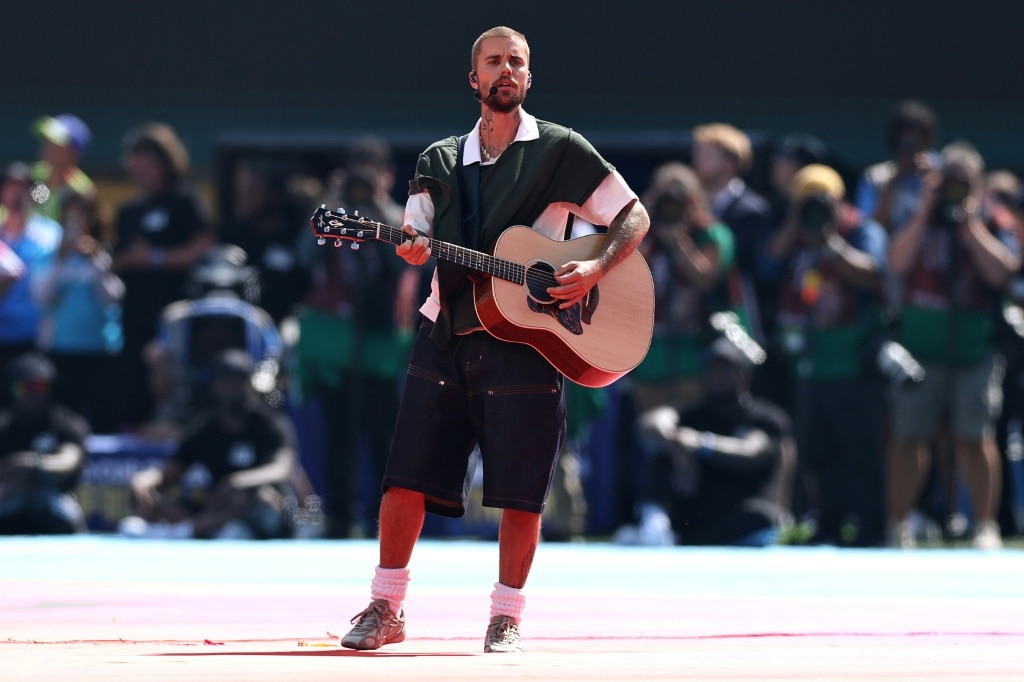
The first half remained goalless, with Spain dominating possession and probing for openings but failing to convert their chances. A controversial 27-minute extended half-time show featuring global music superstars Madonna, Shakira and Justin Bieber did nothing to disrupt Spain’s momentum. The second half saw Spain ramp up the pressure, leaving Argentina pinned deep in their own half in full defensive siege mode.
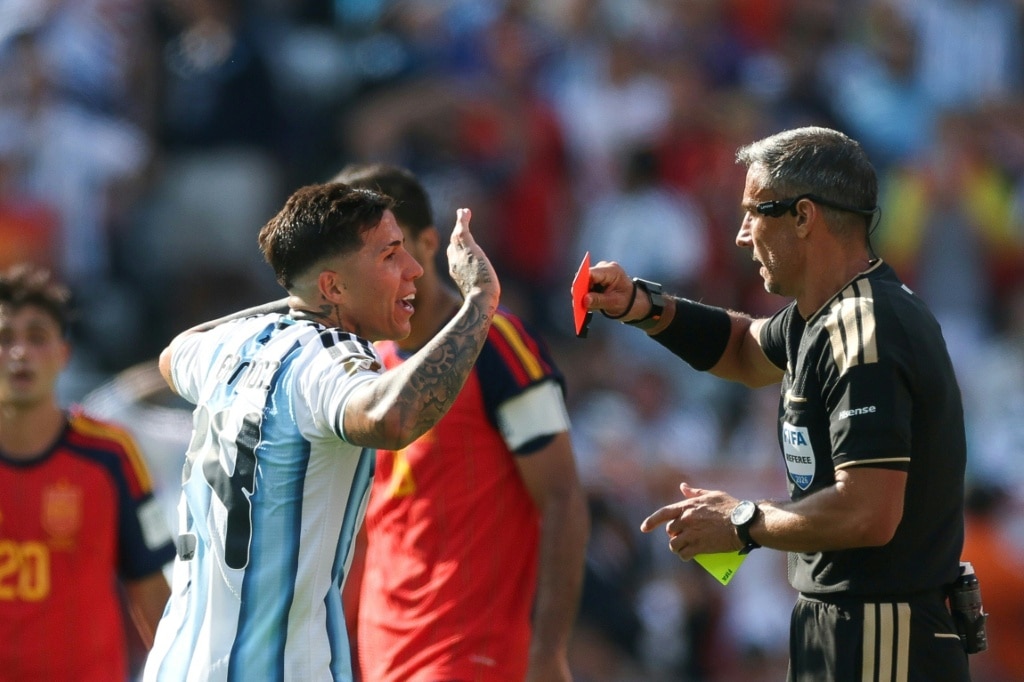
Spain manager Luis de la Fuente turned to his bench to inject fresh attacking energy, bringing on Pedri and Ferran Torres for Fabian Ruiz and Oyarzabal. The substitutions immediately opened up more chances: Yamal’s clipped cross found Torres, whose downward header was pushed away by Argentina goalkeeper Emi Martinez; long-range strikes from Pedri and Pau Cubarsi forced awkward saves from Martinez, who somehow kept Argentina level through regulation time. Later substitutions Nico Williams and Mikel Merino added even more attacking thrust, but Argentina held on to force extra time, despite Enzo Fernandez picking up a yellow card for dissent in the 82nd minute. In the final moments of regulation, Fernandez was sent off for a brutal challenge on Cubarsi in stoppage time, leaving Argentina to play the entirety of extra time with 10 men.
Spain’s dominance continued in extra time. Williams saw a glancing header turned away by a brilliant one-handed save from Martinez, and minutes later he slid a low finish into the back of the net only for the goal to be ruled out for a marginal foul on Otamendi. The Spanish side did not let the controversial call derail them, however. A lofted cross from Pedro Porro to the back post found Williams, who nodded the ball into the path of Torres. The Barcelona striker crashed home a thumping finish to break the deadlock, sealing Spain’s second World Cup title following their maiden triumph in 2010.
Argentina launched one desperate late attack to force penalties, but Spain held firm to secure the win. Speaking after the match, Torres deflected praise for the winning goal, emphasizing the achievement belonged to the entire nation. “Ultimately, the goal belongs to 47 million people — not just me or the 26 players,” the match-winner said. “At the end of the day, all finals are tough; when you’re up against Messi, there’s a certain nervousness, but we always believed in our football and in ourselves.”
For Argentina, the defeat brings an end to their title defense and likely marks the close of Messi’s iconic World Cup career, leaving the soccer legend without the fairytale farewell he and millions of fans around the world had hoped for.