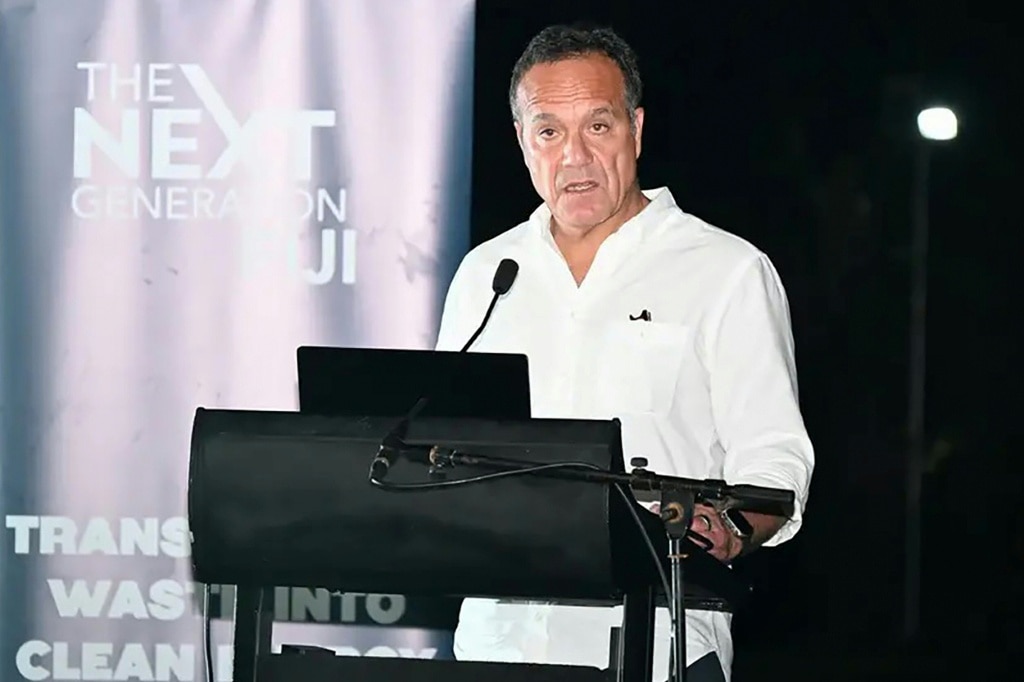
A $630 million proposal to construct a massive waste-to-energy incinerator on Fiji’s main island has ignited widespread public and political pushback, with critics decrying the project as a form of “waste colonialism” that threatens one of the South Pacific’s most beloved coastal tourism hubs.
The initiative is led by two Australian businessmen: Ian Malouf, founder of the Australian waste disposal giant Dial-a-Dump, and Rob Cromb, owner of the global fashion label Kookai, who was born in Fiji and maintains manufacturing operations for his brand in the country. The pair plan to build both the incinerator and a dedicated port just 15 kilometers from Nadi, Fiji’s primary international tourism gateway that welcomes hundreds of thousands of visitors annually to its iconic white-sand beaches and coral reefs.
According to project projections, the facility would process up to 900,000 tonnes of non-recyclable waste each year. Proponents argue the incinerator could meet 40% of Fiji’s total electricity demand, cutting the small island nation’s heavy reliance on expensive and polluting diesel-generated power. In a formal statement, Cromb noted that energy-from-waste systems are widely deployed in regions with strict global environmental standards, asserting that diverting waste from landfills—where methane, a far more potent greenhouse gas than carbon dioxide, is released—would deliver net lifecycle emissions benefits. He also emphasized the project would address Fiji’s own domestic waste management challenges and rejected claims that it would primarily import foreign waste. “It is not a project intended to import waste from overseas,” Cromb said, adding that developer TNG has taken local concerns over environmental safety, transparency, and project scale seriously.
However, official project documents submitted to Fiji’s government tell a different story: the facility is designed to process not only local waste but also up to 700,000 tonnes of waste shipped annually from Australia and other regional economies. Environmental documents also confirm the incinerator would increase Fiji’s total national greenhouse gas emissions by 25%—a striking figure for a low-lying island nation that has positioned itself as a global leader in climate change advocacy. Opponents add that toxic ash residue and dioxin emissions would contaminate local fishing grounds and the broader food chain, threatening the livelihoods of coastal villages that have relied on the ocean for generations.
The project already faced a high-profile rejection years earlier in Australia: Malouf spent seven years pursuing approval for an identical waste-to-energy facility near Sydney’s Blacktown suburb, only to have it blocked in 2018 over documented risks to public health. Stephen Bali, who led local opposition as Blacktown mayor and now serves as a member of New South Wales’ state parliament, has publicly called on Fijian officials to commission independent scientific analysis of the proposal. “Gathering up rubbish from Australia, driving it in a diesel truck to port, putting it on a diesel ship to Fiji to be offloaded — it would be interesting to look at those emissions,” Bali told Agence France-Presse. “We need to deal with our own waste.”
On Tuesday, Inoke Tora, a traditional Fijian landowner, traveled by bus from the proposed project site to the capital city of Suva to deliver a villagers’ petition opposing the plan to Fijian Prime Minister Sitiveni Rabuka. “There are hundreds of people living in villages in this place and they fish each day, eat fresh crabs. They call that beach paradise,” Tora told AFP during his journey. “The government should stop this.”
High-profile Fijian figures have echoed the opposition. Fiji’s United Nations Ambassador Filipo Tarakinikini wrote in a social media post Monday that the Vuda Coast, the project’s proposed location, “must not become the Pacific’s ashtray,” echoing widespread criticism that wealthy nations are shifting their waste burdens to vulnerable Pacific island states, a practice opponents label as waste colonialism. Fiji’s Tourism Ministry has also warned that the incinerator could jeopardize the entire Nadi tourism region—Fiji’s economic backbone, which draws millions of visitors annually drawn to the country’s reputation as an unspoiled eco-tourism destination. The ministry noted that similar waste facilities globally are sited far from population centers and tourist hubs, while this proposal would place the incinerator near residential villages, hotels, and local schools. Local resident Eremasi Matanatabu, a food company manager based in the region, added that the industrial facility would irreparably alter the historic bay where the first Fijian settlers arrived centuries ago. “It will stick out like a big sore thumb,” he said.
Opponents also point out that importing large volumes of foreign waste to Fiji would violate the 1989 Basel Convention, a global treaty restricting transboundary movement of hazardous waste, which both Australia and Fiji have ratified. As of this week, Fijian environmental officials confirmed the project is still under formal intergovernmental review, with no final decision yet reached. Malouf has not responded to multiple requests for comment from AFP.