标签: Oceania

大洋洲

  • Sky bridges, citizen science protect endangered Malaysia monkeys

    Sky bridges, citizen science protect endangered Malaysia monkeys

    Against the backdrop of accelerating habitat loss across Southeast Asia, one grassroots conservation initiative in Penang, Malaysia, is turning to low-cost innovation and local community participation to pull the iconic dusky leaf monkey back from the brink of extinction. Listed as endangered by global conservation bodies, the distinct primate—easily identified by the crisp white fur mask that frames its dark eyes—faces three interconnected existential threats: fragmented forest territories cut off by urban development, growing conflict with human communities expanding into historic monkey habitats, and persistent poaching.

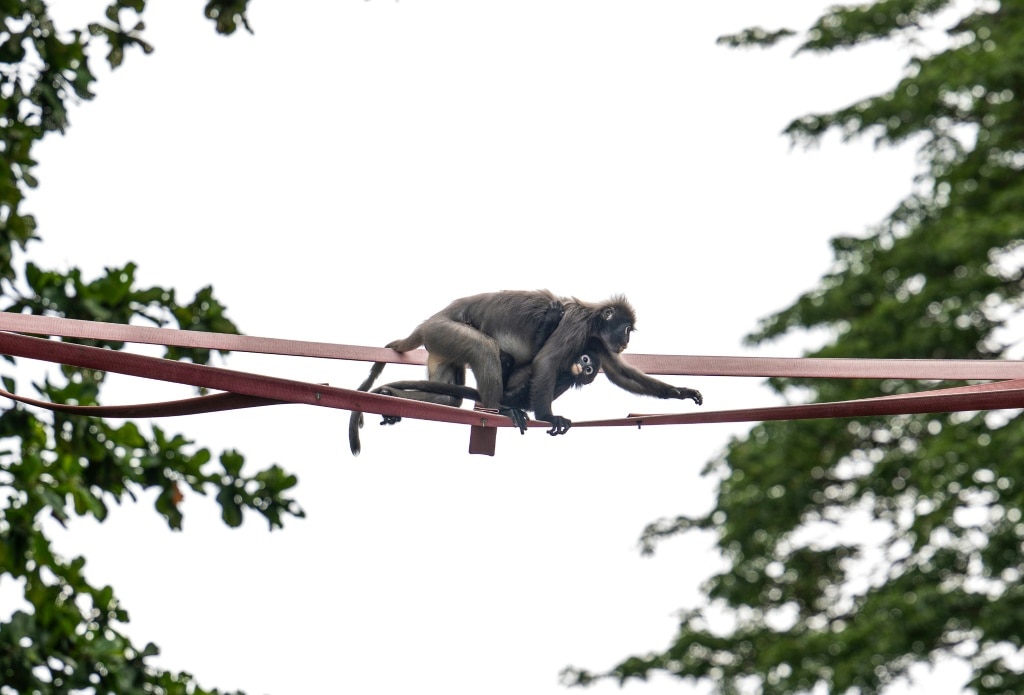
    On a recent afternoon, a female dusky langur carefully picked her way across a swaying red rope canopy bridge strung high above a busy residential thoroughfare in Penang, her movements documented by a team of local conservation volunteers who have become the species’ most dedicated advocates. For these primates, survival today hinges on two simple, effective tools: these man-made sky crossings and the growing network of ‘citizen scientists’ who track and protect the langurs day-to-day.

    The work is led by Langur Project Penang (LPP), a community-focused conservation organization founded by wildlife researcher Yap Jo Leen. The idea for the crossing project grew out of a sobering observation Yap made during 2016 fieldwork: langurs were repeatedly risking their lives darting across multi-lane roads to reach coastal foraging areas, since urban development had split their once-continuous forest habitat into isolated pockets.

    “At the time, the idea was wild because no one in Malaysia had actually done it before,” Yap told Agence France-Presse. While canopy bridges had been used successfully to protect other endangered primates across the region—including a recent sighting of orangutans using similar structures in Indonesia—no program had yet tested the model for Penang’s dusky langurs.

    After experimenting with multiple materials, Yap’s team settled on a low-cost, eco-friendly design: upcycled fire hoses twisted to mimic the texture and shape of natural tree branches, suspended between existing trees on one side of the road and custom-installed steel poles on the other. To date, LPP has installed three bridges across the region, including the latest structure added in April in the popular coastal tourist suburb of Batu Ferringhi.

    Early data confirms the approach is working. At one busy crossing site, eight langurs died in vehicle collisions between 2016 and 2018. Since the bridge was installed in 2019, there have been zero recorded road fatalities for the primate population at that location. Beyond saving individual lives, the crossings also reconnect genetically isolated groups of langurs, allowing them to expand their ranges into less populated forest areas higher up Penang’s hills.

    “They have more opportunity to venture closer to the hills… and find their way to a safe haven,” Yap explained. A secondary benefit has been a sharp reduction in human-wildlife conflict: as langurs gain access to more natural foraging territory, fewer hungry groups wander into residential neighborhoods searching for food, cutting down on friction between humans and primates.

    Addressing remaining community tension is the second core pillar of LPP’s work, which leans heavily on local citizen science engagement. The organization recruits residents from all walks of life to train as volunteer citizen scientists, who track langur movements, log population data, and record GPS coordinates using simple tools including spreadsheets and the Wikiloc trail navigation app. In exchange for committing to three months of regular tracking work, volunteers receive a small stipend and hands-on field training.

    The resulting dataset gives researchers critical insight into langur home ranges, feeding patterns, and population dynamics, information that will guide future reforestation and conservation planning. Today, LPP’s volunteer team ranges in age from 17 to 65, and volunteers have affectionately nicknamed themselves the “monkey stalkers” and “monkey whisperers.”

    Teo Hoon Cheng, a 65-year-old former IT manager, signed up more than a decade ago after encountering the langurs on local hiking trails. “You don’t need background knowledge in zoology or biology. Anyone can be a citizen scientist,” he said. For local residents like retired graphic designer Tan Soo Siah, the work extends beyond tracking to mediating communication between unhappy residents and the langur population.

    Many Penang locals complain about loud langurs crossing rooftop structures, or occasional break-ins when residents leave windows open. Tan works directly with communities to explain why langurs are entering residential areas, and shares simple, non-harmful tactics like spraying a light stream of water to gently encourage langurs to leave. The work, he said, has fundamentally shifted his perspective on sharing space with wildlife.

    “Somebody needs to step up to act as a bridge for this communication,” the 64-year-old said. “It’s good that we can use my experience to show how we can live in harmony with the primates.”

    Fellow resident Lim Hock Cheng, 66, noted that community attitudes have gradually shifted as more locals buy into the coexistence model. “We’ve encroached into their habitat… We have to coexist, learn to live with each other,” he said. “The dusky langurs are also part of our society.”

    This reporting is part of a collaborative project between Mongabay and Agence France-Presse.

  • How are the World Cup favourites shaping up?

    How are the World Cup favourites shaping up?

    With just 21 days remaining until the kickoff of the 2026 FIFA World Cup, the first-ever 48-team edition hosted across North America, attention is turning to how the pre-tournament favorites are shaping up ahead of football’s biggest global stage. AFP Sport has broken down the prospects of the leading title contenders, ranked by their current FIFA positions:

    ### France (1st)
    Two-time World Cup winners France enter the tournament with a historic legacy of strong performances, having reached four finals in the last seven editions – though two of those ended in heartbreaking penalty shootout defeats. This tournament will mark the end of an era for Les Bleus, as long-serving manager Didier Deschamps, who has led the national side since 2012, will step down after the conclusion of the competition. “It’s a strange feeling,” Deschamps admitted of his final tournament in charge.

    Unbeaten in nine consecutive matches since June 2025, France have proven their depth and quality in recent outings: in March, they defeated Brazil 2-1 and followed that up with a 3-1 win over Colombia using an entirely changed starting lineup, both matches played on American soil. Their attacking unit is one of the most feared in the competition, featuring reigning Ballon d’Or winner Ousmane Dembele, superstar Kylian Mbappe, rising talents Michael Olise and Rayan Cherki – a combination that many analysts argue will be nearly impossible to contain.

    ### Spain (2nd)
    Current European champions Spain have remained undefeated since claiming the Euro 2024 title, emerging as a well-drilled, consistent unit under manager Luis de la Fuente. The breakout star of their recent run has been 18-year-old Barcelona winger Lamine Yamal, the teenage phenomenon who has redefined what young players can achieve at the highest level. However, injury concerns have cast a shadow over La Roja’s preparations: Yamal is currently sidelined with a hamstring injury, and early reports indicate he could miss Spain’s opening two group stage matches.

    In further bad luck, Yamal’s Barcelona teammate Fermin Lopez will miss the entire tournament with a foot fracture, while Mikel Merino – the Arsenal midfielder who has scored eight goals in 10 Spain appearances since 2025 – has not played since January due to his own injury issue. Despite these setbacks, Spain still retain world-class quality across the pitch, anchored by 2024 Ballon d’Or winner Rodri and creative midfield star Pedri.

    ### Argentina (3rd)
    The 2022 champions are targeting back-to-back World Cup titles under manager Lionel Scaloni, a feat only a handful of nations have ever achieved. The 2022 tournament will forever be remembered as Lionel Messi’s career crowning glory, but questions remain over whether the 38-year-old can replicate that form this summer, just a month out from his 39th birthday.

    Still, Messi has shown no signs of slowing down since joining Inter Miami, notching 12 goals in 13 MLS matches so far this season and feeling fully settled in the United States, where the knockout stage of the tournament will be played. Beyond Messi, Argentina enter the tournament in strong form: they claimed the 2024 Copa America title on American soil and finished top of South American qualifying without breaking a sweat. Their attacking depth remains impressive, with Inter Milan’s Lautaro Martinez, Manchester City’s Julian Alvarez and rising Como attacking midfielder Nico Paz all ready to contribute.

    ### England (4th)
    After three consecutive major tournament deep runs ended in heartbreak under former manager Gareth Southgate – including back-to-back Euro final defeats and quarter-final exit at the 2022 World Cup – the Three Lions are pinning their hopes on German manager Thomas Tuchel to end the nation’s 60-year wait for a major men’s title.

    England cruised through their qualifying campaign and boast arguably the deepest squad of any contender, but lingering question marks remain over their form. The side drew with Uruguay and suffered an unexpected defeat to Japan in March friendlies, while key stars including Jude Bellingham and Cole Palmer have had inconsistent club campaigns this season. All eyes will be on captain Harry Kane, who will look to carry his red-hot Bayern Munich form – 58 goals this season already – to the World Cup.

    ### Portugal (5th)
    Portugal, who have never advanced past the World Cup semi-finals in their history, enter the 2026 edition as legitimate dark horse contenders – though their prospects may hinge on whether the presence of 41-year-old Cristiano Ronaldo, set to play in his sixth World Cup, disrupts the team’s balance.

    Portugal’s greatest strength lies in their elite midfield unit, featuring Vitinha, teen star Joao Neves, Bernardo Silva and Bruno Fernandes, a group that can compete with any in the tournament. They claimed the UEFA Nations League title in 2024, but stuttered during qualifying, suffering a loss to Ireland that saw Ronaldo sent off. The superstar did not feature in Portugal’s most recent outing, a 2-0 friendly win over the United States in Atlanta.

    ### Brazil (6th)
    All eyes will be on how Brazil performs under legendary Italian manager Carlo Ancelotti, who was hired to turn the nation’s footballing fortunes around after years of underperformance. The decision to hire a foreign coach has sparked discussion about Brazil’s ongoing identity crisis, with Ancelotti’s choice to include 34-year-old Neymar – out of international action since 2023 and now playing for Santos back in Brazil – highlighting the Selecao’s current lack of depth in attacking areas. Real Madrid star Vinicius Junior now leads Brazil’s attack as their undisputed first option.

    Brazil have not won the World Cup since their fifth title in 2002, and have only reached one semi-final in that period – the infamous 7-1 home defeat to Germany in 2014. They finished a lowly fifth in South American qualifying this cycle, losing six of their 18 qualifying matches. Ancelotti, however, remains optimistic: “The World Cup won’t be won by a perfect team — because a perfect team doesn’t exist. It will be won by the most resilient team.”

    ### Germany (10th)
    Ranked 10th in the world, behind the Netherlands, Morocco and Belgium, Germany entering the title conversation may seem like a stretch after back-to-back group stage exits in 2018 and 2022, followed by a quarter-final exit as hosts of Euro 2024. But under young manager Julian Nagelsmann, the class of players including Joshua Kimmich, Florian Wirtz and Kai Havertz means the four-time champions should not be written off ahead of the tournament.

  • Taiwan leader says ‘foreign forces’ cannot decide island’s future

    Taiwan leader says ‘foreign forces’ cannot decide island’s future

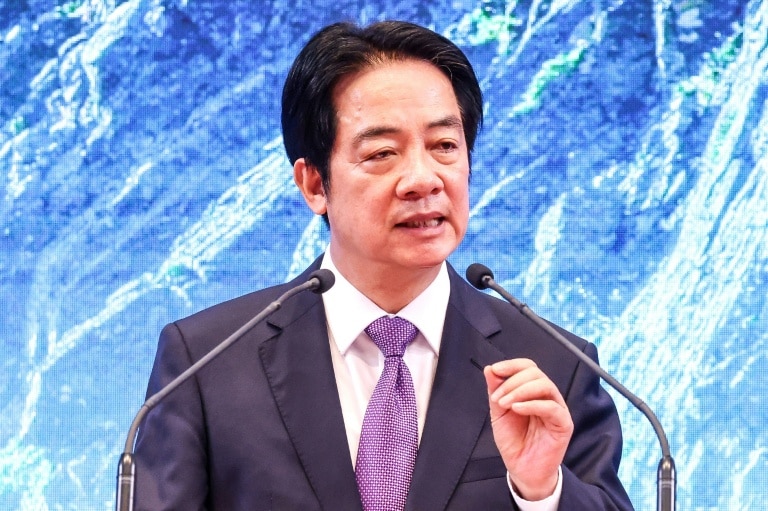
    In a carefully calibrated address marking the second anniversary of his administration on Wednesday, Taiwan’s leader Lai Ching-te delivered a clear, unwavering message: the democratic island’s future will not be dictated by outside forces, even as cross-Strait tensions and shifting U.S. policy rhetoric create new uncertainty across the Indo-Pacific region.

    Lai’s comments come on the heels of controversial remarks from former U.S. President Donald Trump, who recently floated the idea of using long-standing U.S. arms sales to Taiwan as a negotiating leverage with Beijing during conversations following his state visit to China last week. During that visit, Chinese President Xi Jinping pressed Trump to end all U.S. support for Taipei, a demand that has sent ripples through regional security circles. Beijing has for decades claimed Taiwan as an inalienable part of its territory and has repeatedly threatened to take the island by force if it formally declares independence. For decades, Washington has backed Taipei under the One China policy while providing critical security assistance to help Taiwan deter potential aggression, a framework that is now facing new questions after Trump’s comments.

    In his speech, Lai pushed back against both external interference and internal uncertainty. “Taiwan’s future cannot be decided by foreign forces, nor can it be held hostage by fear, division, or short-term interests,” he stated. Echoing the island’s long-standing framing of cross-Strait tensions, Lai repeated the position that China is the ultimate root cause of regional instability in the Taiwan Strait, and characterized U.S. arms sales as a legitimate, legally grounded commitment to defending the island’s democratic system.

    The Taiwanese leader emphasized that his administration has been ramping up defense outlays with a clear, defensive goal: preventing conflict, not provoking one. “Threats are greater than ever before,” Lai noted, adding that “Taiwan must have the capability to protect itself and to uphold peace and stability in the Taiwan Strait.” While he expressed openness to constructive, equal-footed exchanges with Beijing, Lai drew a firm line on core interests, stressing that “we will not sacrifice our sovereignty and democratic way of life.”

    Since Trump returned to the White House, his administration has pressured Taiwan to significantly increase its own defense spending and expand economic investment in the United States, a shift that has pushed Taipei to accelerate military modernization efforts. Despite billions of dollars poured into upgrading domestic military capabilities and building up a local defense industry, the island still remains heavily dependent on U.S. supplies of advanced, high-technology weaponry that would be indispensable in any conflict with China.

    Just recently, Taiwan’s legislature approved a landmark $25 billion defense spending package earmarked specifically for the procurement of U.S. arms. According to local legislative accounts, the fund will cover nearly $9 billion of the $11.1 billion arms deal Washington announced last December, as well as set aside resources for a second phase of proposed sales worth roughly $15 billion that has not yet received final U.S. approval.

    For his part, Trump has called for both Beijing and Taipei to de-escalate tensions, noting that he will make a final decision on the pending arms sales package “over the next fairly short period of time.” He has also raised the possibility of holding a direct phone call with Lai, a move that would represent a major break from decades of U.S. diplomatic protocol. Washington cut formal diplomatic ties with Taipei in 1979 when it switched recognition to Beijing, and any high-level official contact between a U.S. president and a Taiwanese leader would almost certainly trigger a severe rupture in U.S.-China relations.

    Lai addressed the prospect of this conversation directly on Wednesday, saying that if the call goes forward, he will make clear that his administration remains committed to upholding the cross-Strait status quo, and that it is Beijing that has systematically undermined peace and stability in the region. In the days following Trump’s comments on arms sales, Lai’s government has launched a public outreach effort to reassure both domestic audiences and international partners that long-standing U.S. policy toward Taiwan remains unchanged, and that Trump made no binding commitments to Beijing to restrict arms sales during his Beijing visit.

  • Putin, Xi to underscore alliance strength after Trump visit

    Putin, Xi to underscore alliance strength after Trump visit

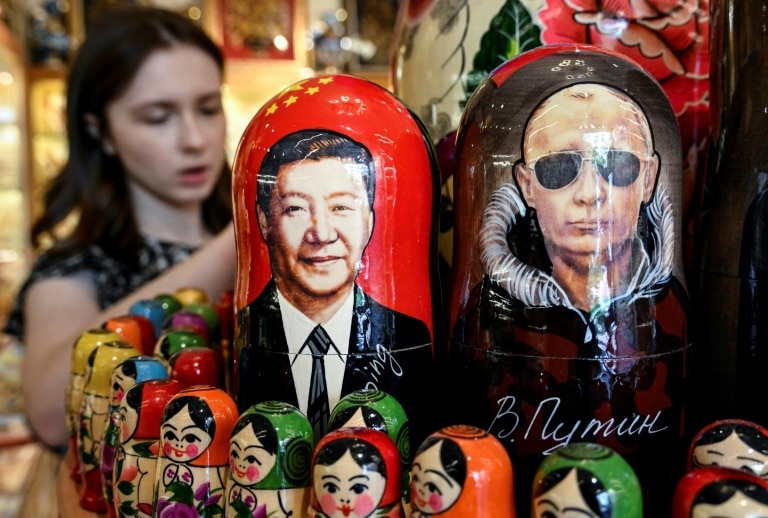
    Just days after former U.S. President Donald Trump wrapped up his high-profile visit to Beijing, Russian President Vladimir Putin touched down in the Chinese capital this Wednesday for high-stakes talks with Chinese President Xi Jinping — a meeting framed to showcase the unwavering strength of the bilateral strategic partnership amid shifting global geopolitics.

    Trump’s trip last week was marked by elaborate ceremonial pomp, but ended without major breakthroughs on key issues, most notably Chinese assistance to reopen the critical Strait of Hormuz, which has been closed amid ongoing conflict in the Middle East. For Putin, the visit comes at a challenging juncture: years of conflict in Ukraine and sweeping Western sanctions have significantly squeezed Russian energy export revenues, leaving Moscow increasingly economically dependent on Beijing, which has emerged as the primary buyer of sanctioned Russian crude.

    The disruption to global energy supplies caused by the Iran conflict has opened a new window of opportunity for Moscow to court energy-hungry China, and observers widely expect Putin to use the summit to push for accelerated progress on the long-planned Power of Siberia 2 natural gas pipeline. The project, which will carry Russian gas to China via Mongolia, would offer Beijing a land-based alternative to seaborne energy imports from the Middle East, aligning with both nations’ goals of diversifying supply chains away from Western-aligned markets. Back in April, Russian Foreign Minister Sergei Lavrov noted after meeting Xi that Moscow stood ready to “compensate” for any Chinese energy shortages triggered by Middle East supply disruptions.

    In a pre-visit video address released to the Chinese public on Tuesday, Putin emphasized that bilateral ties have reached “a truly unprecedented level”, highlighting that cross-border trade continues to expand. “The close strategic relationship between Russia and China plays a major, stabilising role globally. Without allying against anyone, we seek peace and universal prosperity,” Putin said, in a thinly veiled reference to shared opposition to U.S. global hegemony.

    Under the current era of increasingly unpredictable U.S. foreign policy under the Trump administration, Beijing has moved to shore up strategic alliances with global powers, and Russia has emerged as its closest partner. Ties between Moscow and Beijing have deepened dramatically since Russia launched its full-scale invasion of Ukraine in 2022; with Western nations cutting diplomatic and economic ties with Moscow, Putin has traveled to Beijing annually to strengthen cooperation, and Xi has repeatedly welcomed the Russian leader as an “old friend” — a warm designation he did not extend to Trump during the U.S. president’s visit last week.

    According to the Kremlin, Wednesday’s meeting will kick off with formal welcoming ceremonies, followed by closed-door talks before the two sides sign a joint statement outlining expanded cooperation. Unlike Trump’s visit, which was dominated by large-scale public ceremonial displays, Putin’s meeting will be held in a far more intimate setting, reflecting the deep familiarity and trust between the two leaders. “The Xi-Putin relationship does not require that kind of performative reassurance” that marked Trump’s reception, explained Patricia Kim, a foreign policy expert at the Washington-based Brookings Institution. Both leaders view their bilateral bond as “structurally stronger and more stable” than China’s relations with the United States, she added.

    Ahead of the talks, analysts note that Xi is expected to brief Putin in detail on the outcomes of his recent summit with Trump. The lack of tangible breakthroughs from that meeting is likely a relief for Moscow, as it eliminates any risk that Beijing struck a deal with Washington that would undermine core Russian interests, Kim noted.

    Putin is also traveling to Beijing seeking to lock in deeper Chinese economic commitment, particularly after Trump claimed during his visit that Beijing had agreed to buy more U.S. oil to meet what he called its “insatiable” appetite for energy. With Moscow heavily reliant on Chinese energy purchases to fund its war effort in Ukraine, “Putin does not want to lose that support,” said Lyle Morris, an Asia security expert at the Asia Society. Morris added that Putin will also be eager to learn Beijing’s stance on Middle East policy, after Trump signaled he expects China to take a leading role in resolving the regional standoff.

    Still, analysts point out that China and Russia may hold differing priorities when it comes to the ongoing U.S.-backed conflict in Iran. China’s economy is heavily dependent on open navigation through global key shipping lanes, so Beijing strongly prefers an early end to the standoff in the Strait of Hormuz, explained James Char, a security analyst at Singapore’s Nanyang Technological University. For Russia, by contrast, the conflict has delivered economic benefits: higher global energy prices have allowed Moscow to sell more sanctioned oil at premium rates, meaning it may have less incentive to push for a quick de-escalation.

    Beijing has maintained its long-stated neutral position on the Ukraine conflict, repeatedly calling for negotiated peace while never publicly condemning Russia’s military operation. While Trump and Xi discussed Ukraine during last week’s summit, those talks also ended without any major progress, mirroring the lack of breakthrough on the Strait of Hormuz.

  • Help wanted: Australian conservation group seeks new koala rescue dog

    Help wanted: Australian conservation group seeks new koala rescue dog

    After a decade of life-saving service that cemented his legacy as one of Australia’s most extraordinary animal heroes, Bear the koala detection dog has officially hung up his working collar, leaving the International Fund for Animal Welfare (IFAW) on the hunt for a worthy successor to continue his critical conservation work. Over his 10-year career, Bear became a global icon for his unparalleled work rescuing vulnerable koalas, particularly during the devastating 2019-2020 Black Summer bushfires that tore through Australia’s eastern coast. In that catastrophic event alone, his sharp nose and relentless dedication helped locate more than 100 koalas stranded in burned, damaged habitats, giving the vulnerable marsupials a second chance at survival and recovery.

    Josey Sharrad, head of programs for IFAW Oceania, noted that Bear established an unmatched gold standard for koala rescue detection dogs, saying his departure leaves enormous paw prints to fill. The organization is now launching a search to find a new full-time working dog that can step into Bear’s role, continuing the mission of protecting Australia’s iconic, increasingly endangered koala population.

    In a unique twist that amplifies the goodwill of the mission, IFAW is only accepting applications from rescue dogs currently waiting for permanent homes. The organization frames the model as a true win-win: it gives a shelter dog that may struggle to find a loving home a second chance at a purposeful new life, while also advancing urgent conservation work to protect koalas.

    Russell Miller, Innovation for Conservation director and long-time handler of detection dogs, explained the specific traits the organization is looking for in the ideal candidate. The perfect recruit will be a high-energy dog with what IFAW describes as an “obsessive” personality — a trait that often makes these dogs harder to place in permanent pet homes, but that makes them exceptionally effective at tracking scents during search and rescue work. Additional key attributes include a natural love of play, steady confidence, and a gentle temperament around other animals, a requirement critical for working safely with stressed, injured koalas.

    Size also matters for the role, IFAW’s job posting specifies: the candidate needs to be medium-sized, large enough to navigate rough, dense bushland without difficulty, but small enough that handlers can easily carry them out of difficult terrain when required.

    Initial candidate assessments are being held on Queensland’s Sunshine Coast in eastern Australia, but the organization is also accepting video applications from prospective candidates across the country.

    For his years of service, Bear leaves retirement with a long list of well-earned accolades, including winning Animal of the Year and Australian Dog of the Year from Puppy Tales Photos. His retirement comes as koala populations across eastern Australia continue to face ongoing threats from habitat loss, extreme weather events driven by climate change, and land development, making the work of koala detection dogs more critical than ever to conservation efforts.

  • Liberals going back to basics with ‘Stand with Small’ business pledge

    Liberals going back to basics with ‘Stand with Small’ business pledge

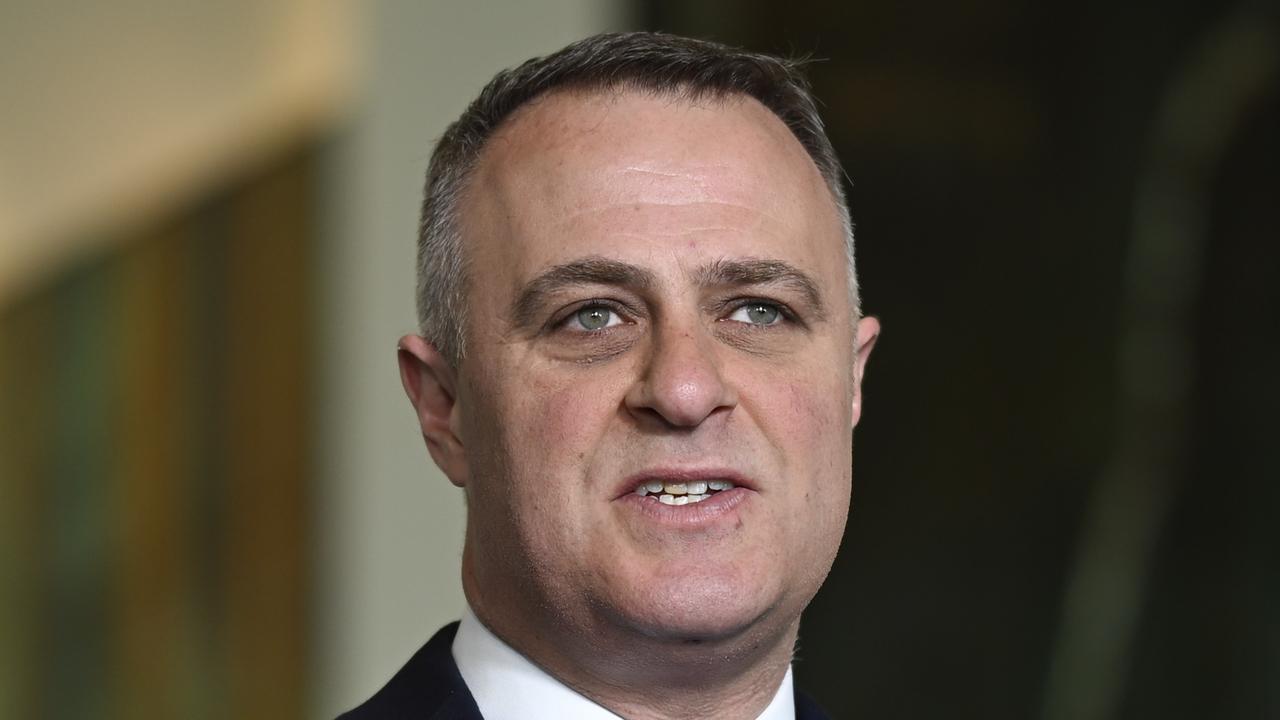
    Australia’s Liberal-National Coalition is launching a bold, pro-small-business policy agenda centered on a landmark Small Business Act, set to be announced Wednesday by Shadow Treasurer Tim Wilson at Canberra’s National Press Club. The proposal, a core pillar of the Coalition’s push to refocus on grassroots economic priorities, aims to resolve longstanding fragmented regulations and amplifies the voices of small and independent business owners that opposition leaders argue have been sidelined by the current Labor government.

    At the heart of the policy is the creation of a single, standardized legal definition of a small business across all Commonwealth legislation, replacing the inconsistent, overlapping definitions that currently create unnecessary administrative burden for operators. The Act also mandates two key new protections: a formal “right to be paid”, which will enshrine legal maximum payment terms for small businesses working with both government agencies and large corporate clients, addressing the pervasive problem of late payments that cripples cash flow for thousands of small operations nationwide.

    Additional provisions embedded in the proposed legislation require that every new federal regulation be accompanied by a dedicated small business regulatory impact statement, creating a formal feedback pathway for small business owners to contribute to policy design before it becomes law. This consultation requirement will extend to all major federal regulators, including the Reserve Bank of Australia, Australian Securities and Investments Commission, Australian Taxation Office, and Fair Work Commission, ensuring small business perspectives are incorporated into key regulatory and monetary decisions that impact their operations. The policy also expands mandatory government procurement quotas, requiring a larger share of federal government contracts to be awarded exclusively to small businesses.

    Wilson will use his address to accuse the Albanese-led Labor government of waging an implicit war on Australia’s entrepreneurs and self-starting small business owners, a critique that comes amid ongoing pushback from small business groups over recent changes to capital gains tax discounts. In prepared remarks, Wilson will emphasize that the Coalition is positioning itself as the definitive political ally for small and independent operators, noting that for decades, Australian economic regulation has been shaped by deep-pocketed lobbyists with access to the highest levels of government, while small business voices were locked out of the process.

    “For too long Australia’s laws have been designed around the influence of those that can hire lobbyists to walk the Prime Minister’s corridor,” Wilson will say. “In generations past, young Australians got ahead by buying property. Young Australians know that to get ahead you need to invest, and build a small business, side hustle, equity or start-up.”

    Wilson will also frame the policy as a response to a fundamentally outdated economic framework, arguing that 12 months of widespread conversations with small business operators across the country have convinced him incremental, marginal tweaks to Australia’s 20th-century regulatory system are no longer enough to solve small business struggles.

    The new Small Business Act announcement builds on earlier pro-small-business commitments the Coalition unveiled earlier this month in Opposition Leader Angus Taylor’s budget reply speech. Those prior pledges include an instant $50,000 asset write-off for businesses with annual turnover below $1 million, and a policy to index the two lowest personal income tax brackets to inflation to curb bracket creep.

    Ahead of Wilson’s National Press Club address, Taylor doubled down on the Coalition’s critique, arguing the current Albanese government is ideologically opposed to small business and actively seeks to replace independent operations with expanded big government. “What they’re planning to do now is going to do exactly that, replace small business with big government,” Taylor said. “Only this government could be so arrogant and so could so badly misunderstand this country as to think that that’s a good idea.”

  • ‘Need to be there’: Blues stick solid as Origin champions seek 26-year first

    ‘Need to be there’: Blues stick solid as Origin champions seek 26-year first

    With the women’s State of Origin trophy already secured, New South Wales (NSW) Blues head coach John Strange faced a pivotal decision: hand valuable debut opportunities to rising young talents, or stick with the group that delivered the series win to chase an unprecedented milestone. In a call shaped by hard lessons from last year’s campaign, Strange has opted to keep his entire 20-player matchday squad intact for next week’s decisive third clash, as the Blues chase the first 3-0 clean sweep for a NSW side in 26 years.

    NSW locked in the series title earlier this month with a heart-stopping 14-10 come-from-behind win over Queensland at Brisbane’s Suncorp Stadium, wrapping up the overall trophy with one match still left to play. Instead of shaking up his lineup to give fringe prospects a taste of senior representative football, Strange said the painful memory of last year’s dead rubber defeat was the driving force behind his loyalty to the group that got the Blues across the line in Brisbane.

    Strange publicly confirmed the unchanged squad during a YouTube livestream on Wednesday morning, confirming the third game, scheduled for next Thursday, will be held on Queensland’s home turf on the Gold Coast. “The reason for that is that I feel like the girls that were selected for both games have done an awesome job,” Strange told reporters and fans during the stream. “We want to make sure they have the opportunity to go up there and win the third game. So it’s about respecting the players that have worn the jersey and deserve to wear the jersey, so there was no thought of changing the team this year. It was a case of going with the girls that need to be there.”

    The upcoming fixture will mark a personal milestone for veteran Blues forward Kezie Apps, who will earn her 20th state cap for NSW when she runs out next week.

    Strange’s decision is rooted in a humbling experience 12 months prior. In 2023, the Blues also claimed the first two matches of the series to secure the Origin trophy early, only to drop a tight third-match dead rubber in Newcastle to Queensland. That defeat, which came despite the Blues winning the first two contests by a combined 20 points, left a lasting impression on the entire program, and Strange is determined to avoid a repeat of that outcome this year.

    “We were in a similar situation last year after two games, and we went up to game three in Newcastle and didn’t get the job done,” he said. “Queensland were outstanding in that game and very desperate and wanted to make sure they got a win, so we fully understand that’s the attitude that they’re going to bring this time around.”

    Reflecting on last year’s misstep, Strange said the squad entered the third game with a celebratory mindset rather than the competitive intensity that carried them to the first two wins. That shift in focus ultimately cost them. “I felt like going into camp for game three last year that there was a lot of excitement from all the players, and so they should have been excited because they’d wrapped the series up,” he explained. “But we probably didn’t go in with the same intensity in game three that we did in games one and two, so that was a really good learning experience for all of us involved. If we were in the same position again that we would go in with a different mindset because we know Queensland don’t want to get beaten 3-0. We know the desperation they’re going to have, and we’re going to make sure we match that desperation and play good footy.”

    The full NSW squad will enter camp this Thursday before travelling to Kingscliff on Saturday to ramp up their final preparations for the history-making clash. The full unchanged 20-player squad is as follows: Abbi Church, Jaime Chapman, Jess Sergis, Isabelle Kelly, Jayme Fressard, Jocelyn Kelleher, Jesse Southwell, Millie Elliott, Olivia Higgins, Ellie Johnston, Kezie Apps, Yasmin Meakes, Olivia Kernick, Keeley Nizza, Kennedy Cherrington, Rima Butler, Teagan Berry, Quincy Dodd, Corban Baxter, and Hannah Southwell.

  • Iran ‘very confident’ about World Cup protocols: federation vice-president

    Iran ‘very confident’ about World Cup protocols: federation vice-president

    As the Iranian men’s national football team makes its final preparations for the 2026 FIFA World Cup co-hosted by the United States, a top Iranian football official has voiced strong confidence in the governance and security protocols laid out by global football’s governing body, even as lingering uncertainty over U.S. entry visas casts a faint shadow over the team’s preparations.

    The Iranian squad touched down in Turkey on Monday to wrap up their pre-tournament training camp, a multi-week stay that will serve as their final tune-up before traveling to North America for the world’s biggest sporting event. This World Cup carries unusual geopolitical weight for Iran: the United States, one of the three co-hosts of this year’s tournament, has been engaged in active military conflict against Iran alongside Israel since late February, a confrontation that has ignited widespread instability across the Middle East.

    Mehdi Mohammad Nabi, vice-president of the Iranian Football Federation and director of the national team program, shared his assessment with reporters on the sidelines of the team’s Turkish training session on Tuesday. Nabi insisted that all logistics for Iran’s participation would follow the formal rules and frameworks set by FIFA. “Everything will proceed properly according to the protocols and what FIFA has stipulated,” he said.

    Nabi noted that U.S. organizers have already established dedicated working groups to handle tournament logistics, including a specialized security committee that coordinates closely with FIFA to manage safety for all participating delegations. Drawing on Iran’s history of competing in multiple previous World Cup tournaments, Nabi said the federation has full familiarity with how these security and operational systems function at the global event. “In past years we’ve experienced all of this and we’re fully informed about how these security committees operate at every World Cup we’ve participated in. In this regard, we’re very confident and we have a clear plan,” he added.

    One key unresolved issue remains: entry visas for the Iranian squad and staff. Iranian officials confirmed earlier that none of the delegation have yet received their U.S. travel authorization, and the team is planning to submit visa applications through the Canadian embassy in Turkey, where they are currently based. Nabi acknowledged that there is no guarantee all members of the delegation will be granted entry.

    However, he pointed to binding FIFA rules that place responsibility on host nations to accommodate qualified teams. “One of the rules that applies to the host country is that they must provide guarantees, according to FIFA’s statutes and the regulations of the competition. One of their commitments is the visas: they have to grant the necessary visa facilities to all the teams that have qualified for the World Cup,” Nabi explained. He added that FIFA has already taken steps to ensure the United States fulfills its obligations to facilitate entry for Iranian team personnel.

    Iran has been drawn into Group G for the 2026 tournament, with a scheduled opening match against New Zealand on June 15 in Los Angeles. The team will face Belgium in the same city next, before wrapping up their group stage play against Egypt in Seattle. Throughout the tournament, the Iranian delegation will be based in Tucson, Arizona, for their training and accommodation.

  • From graduation boos to voter unease: AI anxiety grows in the US

    From graduation boos to voter unease: AI anxiety grows in the US

    Across the United States, a growing backlash against artificial intelligence is reshaping public discourse, political positions, and community attitudes, once-strong early enthusiasm for the transformative technology giving way to widespread unease. The shifting sentiment plays out in every corner of public life: pro-AI speakers are met with jeers at college graduation ceremonies, local political candidates supporting AI infrastructure are ousted at the polls, and even a traditionally AI-friendly White House has softened its unbridled support for unregulated development.

    This rising anxiety did not emerge out of nowhere. It stems from concrete economic pressures and unaddressed fears: persistent inflation has stretched household budgets, while a wave of AI-driven layoffs across the tech sector has reinforced fears of widespread job displacement. For young people, many of whom have taken on crippling student loan debt to earn college degrees, the worry that AI will render their hard-won qualifications obsolete has turned tentative concern into active hostility.

    That hostility played out publicly on two separate graduation stages in recent months. When former Google CEO Eric Schmidt took the stage at the University of Arizona to deliver the 2026 commencement address, he urged graduates to embrace AI, arguing the technology would reshape every corner of modern life from education to healthcare to professional work. Instead of the polite applause expected of such occasions, Schmidt was met with loud, sustained boos from the assembled graduates. Scott Borchetta, CEO of Big Machine Records, faced the same reaction when he told graduates at Middle Tennessee State University to adapt to AI as a useful tool. When he joked that graduates could “hear me now or pay me later,” the crowd responded with resounding boos.

    Public opinion polling bears out this widespread discontent. Cited by news outlet Semafor, recent polling shows 70 percent of Americans believe AI development is moving too quickly, more than half hold negative views of the technology, and just 18 percent of young people report feeling hopeful about AI’s future impact.

    The pushback is not limited to college quads. The rapid expansion of AI has spurred a nationwide buildout of energy-intensive data centers, and this infrastructure has become one of the most contentious flashpoints in local politics. Data centers draw massive amounts of electricity, drive up local utility rates, and put strain on regional water supplies, turning community opposition into a potent political force. In recent months, local officials who have backed AI data center projects have repeatedly lost elections at the hands of angry voters. The discontent has even spilled over into violence.

    In April 2026, as the high-profile civil trial between Elon Musk and Sam Altman opened in Oakland, California, protesters set up inflatable punching bags emblazoned with the images of the two AI industry leaders outside the federal courthouse. Last month, a young man threw a Molotov cocktail at Altman’s personal home in Northern California. Just days before that incident, an Indiana city council member who supported a local data center project found his front door struck by gunfire; a note left at the scene read simply “No Data Centers.”

    Christabel Randolph, acting executive director of the Washington D.C.-based Center for AI and Digital Policy, notes that opposition to local data centers now outpaces even opposition to nuclear power plants. A May 2026 Gallup poll found that 71 percent of Americans oppose hosting an AI data center in their community, compared to just 53 percent who oppose hosting a nuclear power plant. “Americans are really, really angry and upset about AI data centers because of the noise, the pollution, the impact on their electricity bills, on water supplies,” Randolph told Agence France-Presse. She added that AI anxiety is set to become a defining issue in the upcoming November midterm elections, and could even shape the 2028 presidential race. “That existential fear is a very animating anxiety,” she said. “People are thinking about what their future is going to look like.”

    Even the Trump White House, which initially positioned itself as a staunch backer of unregulated rapid AI development, has shifted its stance. After returning to office in 2025, President Donald Trump rolled back strict AI safety rules put in place during the Biden administration, arguing that overregulation would hurt U.S. competitiveness against China. But in recent months, the administration has reversed course: it now calls for pre-release safety vetting of advanced AI models, has urged Congress to pass nationwide AI regulations, and has held discussions with Chinese officials about establishing global AI guardrails. When asked about AI risks on Fox News’ *Mornings with Maria* last month, Trump acknowledged the mixed picture: “There are a lot of good things, but we have to be careful with it.”

  • Taiwan author wins International Booker for ‘slyly sophisticated’ novel

    Taiwan author wins International Booker for ‘slyly sophisticated’ novel

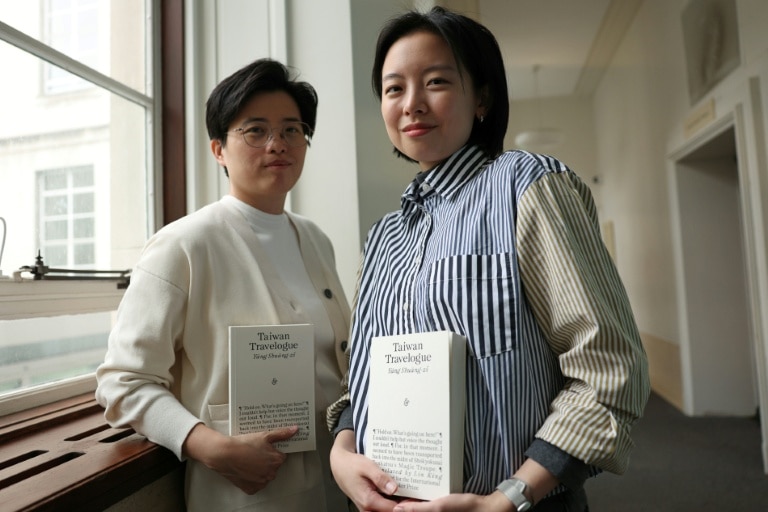
    In a landmark moment for global translated literature, Taiwanese author Yang Shuang-zi and translator Lin King have claimed the 2024 International Booker Prize at a ceremony held at London’s iconic Tate Modern gallery, bringing home the 10th anniversary of the award for their bold postcolonial novel *Taiwan Travelogue*. This win marks two firsts for the prize: it is the first work translated from Mandarin Chinese to take home the honor, and Yang, the 40-year-old multi-talented creator who also pens manga and video game scripts, becomes the first Taiwanese author ever to win the award. Set against the backdrop of 1930s Taiwan under Japanese colonial rule, the novel constructs a clever metafictional narrative: it is framed as a newly rediscovered Japanese travel memoir written by the fictional author Aoyama Chizuko, translated into English for contemporary readers. The plot follows Chizuko across the colonial territory, tracing her food-focused journeys through the island’s landscapes and the quiet, intimate romantic bond that grows between her and her Taiwanese interpreter, Chizuru. Speaking on the win, prize jury chair Natasha Brown praised the work for its deceptive depth and layered storytelling. “This is a book that surprises and isn’t perhaps what it seems like on the surface,” Brown noted, adding that the novel “pulls off an incredible double feat: it succeeds as both a tender romance and an incisive postcolonial novel. It’s a captivating, slyly sophisticated novel.” This year, *Taiwan Travelogue* beat out five other celebrated shortlisted works from around the globe to claim the prize. The shortlist included a story of a suburban witch from French novelist Marie NDiaye, a dystopian tale of a brutal prison colony from Brazilian author Ana Paula Maia, a quiet Tehran-set story from German writer Shida Bazyar, Bulgarian poet Rene Karabash’s *She Who Remains*, and *The Director* from German-Austrian author Daniel Kehlmann — the only male nominee on this year’s shortlist. Established to elevate fiction originally written in languages other than English and introduce new global voices to English-speaking audiences, the International Booker Prize has a proven track record of catapulting winning authors to international acclaim and driving major increases in their visibility and book sales. Several past International Booker winners, including Han Kang, Annie Ernaux, and Olga Tokarczuk, have gone on to win the Nobel Prize in Literature in the years following their Booker win. *Taiwan Travelogue* marks the first of Yang’s works to be translated into English, a project completed by Taiwanese-American translator Lin King. The pair will split the £50,000 (approximately $67,000) prize purse evenly between them. The novel was first published in Mandarin in 2020, and quickly earned recognition within Taiwan when it won the Golden Tripod Award, the island’s highest literary honor. In a lighthearted reflection on the novel’s core themes, Yang joked about the impact of writing the food- and travel-focused story: “The novel’s central themes of travel and food changed my life in two obvious ways: my savings went down; my weight went up.”