标签: Oceania

大洋洲

  • Fuel supply fears after blaze tears through crucial Australian refinery

    Fuel supply fears after blaze tears through crucial Australian refinery

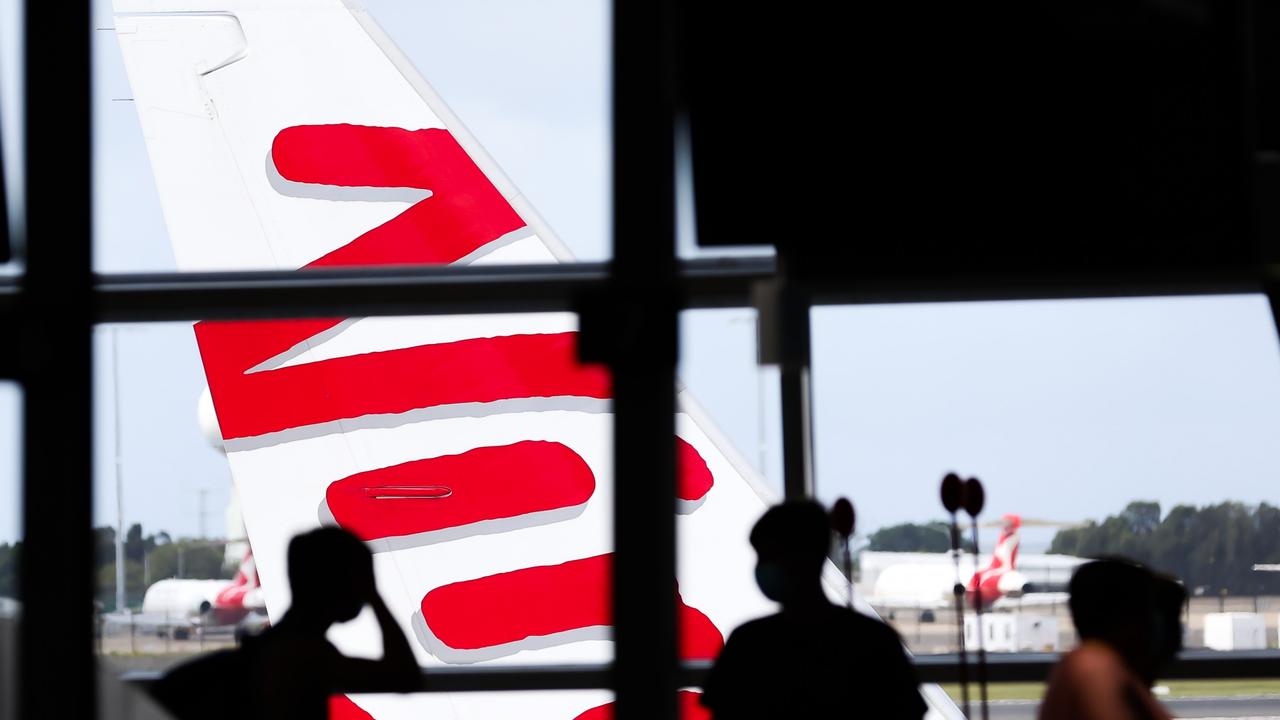
    A devastating chain of explosions sparked by a gas leak has torn through one of Australia’s only two operating oil refineries, leaving authorities warning of imminent domestic fuel supply disruptions just months after regional conflict upended global energy markets. The blaze broke out late Wednesday at Viva Energy’s Geelong refinery, located roughly an hour’s drive southwest of Melbourne in Victoria state. At its peak, flames reached 60 meters into the sky, turning the sky over the industrial hub thick with acrid black smoke.

    Fire Rescue Victoria confirmed Thursday that the inferno had been contained, though emergency officials cautioned hotspots could continue to smolder for the rest of the day. Initial assessments confirm the fire was concentrated in the section of the facility dedicated to high-octane petrol production, Energy Minister Chris Bowen confirmed to reporters. Rapid action by plant personnel to trigger emergency isolation valves prevented the fire from spreading to adjacent units that produce jet fuel and diesel, sparing those critical operations from major damage.

    Owned by energy firm Viva Energy, the Geelong plant accounts for roughly 10% of Australia’s total domestic fuel output, with a maximum processing capacity of 120,000 barrels of crude oil per day. Combined with the only other operating refinery, Ampol’s Brisbane facility, the two plants produce just 10 to 20% of the nation’s total fuel demand, leaving Australia heavily dependent on imports to cover the gap. This geographic isolation and limited domestic refining capacity leaves the country uniquely vulnerable to global supply shocks, a risk that has been amplified by ongoing conflict in the Middle East.

    Incident controller Mark McGuinness described the blaze as unusually intense, saying “It was quite ferocious. It went from a small fire through several explosions to a large, intense fire” in short order. Viva Energy CEO Scott Wyatt emphasized that safety remained the company’s top priority in the aftermath of the incident, noting “Production is not our primary priority today. Today it is getting the site safe.” No casualties have been reported as of Thursday, but full assessments of damage and production shutdown timelines are still underway.

    Already strained by the halt of shipping traffic through the Strait of Hormuz—an artery that carries one-fifth of the world’s global oil and gas supply, which has been effectively closed since U.S. and Israeli strikes against Iran on February 28—Australia’s fuel markets are now facing a second major shock. Government data shows Australia currently holds just 38 days of petrol reserves, far below the 90-day minimum stockpile requirement set by the International Energy Agency. The federal government has not yet activated fuel rationing, but has urged motorists to conserve fuel where possible and switch to public transit for routine travel when they can.

    In a public address Thursday, Minister Bowen urged Australians to avoid panic buying that would exacerbate existing supply strains. “It’s important that people buy as much fuel as they need. But no more, no less,” he said, adding that the timing of the incident was particularly unfavorable given already tight market conditions. “It’s not great. It’s not great timing, is it?”

  • Doubt cast over One Nation seat as ‘absent votes’ found

    Doubt cast over One Nation seat as ‘absent votes’ found

    A razor-thin election victory for Australia’s One Nation party in the state of South Australia has been thrown into uncertainty after election officials uncovered dozens of overlooked ballots that could overturn the initial result.

    Chantelle Thomas, running on behalf of Pauline Hanson’s right-wing populist party, was officially declared the winner of the regional Narungga seat in last month’s state election, holding a wafer-thin 58-vote advantage over her closest competitor, Liberal Party candidate Tania Stock. That narrow margin, the smallest of any contest across the entire election, meant Thomas’s victory was not finalized until April 2, nearly two full weeks after polling closed on March 21. The Narungga electorate covers most of South Australia’s rural Yorke Peninsula region.

    The entire outcome was upended this week when election administrators discovered 77 uncounted absent ballots that had not been included in the original final tally. Critically, the number of uncounted votes exceeds Thomas’s winning majority by 19 votes, opening the door for the result to be reversed.

    On Thursday, the Electoral Commission of South Australia officially notified all competing candidates of the discovery and ordered a full recount scheduled for Friday April 17. “Following the discovery of votes that have not been counted, I have secured the unopened ballot papers and have ordered a further count for the district of Narungga,” explained Leah McLay, the commission’s acting commissioner. “I have informed all candidates and will oversee the count on Friday, April 17 and nominated scrutineers are invited to attend.”

    Reaction to the administrative blunder has been sharp, with One Nation’s South Australian leader Cory Bernardi launching a scathing attack on the electoral commission’s competence. “How can we rely on the integrity of what has transpired?” Bernardi told local outlet The Advertiser. “Now there’s plenty of questions to be asked and I think the answers need to be forthcoming, but this is very shaky territory for democracy right now.”

    For the opposition Liberal Party, leadership has called for rapid transparency from election officials to clear up widespread public confusion. “Who knows what this will mean for the seat of Narungga, but that’s why I think the electoral commission needs to provide some clarity to people quickly,” said Ashton Hurn, leader of the South Australian Liberals, in comments to the Australian Broadcasting Corporation. Stock, the Liberal candidate who placed second in the original count, told reporters she had not yet been contacted by the commission and was unaware of the planned recount when approached for comment.

    All parties and local voters are now bracing for an anxious 24 hours as the recount gets underway, with the final result of the closely contested seat hanging in the balance. The unforeseen error has sparked broader questions about the integrity of South Australia’s election administration, even as officials move quickly to correct the mistake and confirm a definitive final result.

  • LIV Golf reassures players over Saudi withdrawal rumors

    LIV Golf reassures players over Saudi withdrawal rumors

    As swirling rumors of imminent Saudi Arabian funding withdrawal sparked fears of an imminent collapse for the breakaway LIV Golf tour, league executives moved swiftly this Wednesday to reassure players and staff that operations and funding remain fully intact. The Saudi-backed circuit has roiled global men’s professional golf since its controversial 2022 launch, when it lured dozens of the sport’s top stars away from the established PGA Tour and DP World Tour with nine-figure guaranteed contracts that split the golf community.

    Over the past week, speculation has grown that Saudi Arabia’s deep-pocketed backers, the Public Investment Fund (PIF), the kingdom’s $1 trillion sovereign wealth fund, have grown weary of the high-cost venture. To date, the project is estimated to have cost PIF more than $5 billion, with no path to near-term profitability. Multiple major outlets including the *Financial Times*, *New York Times*, and *Wall Street Journal* all reported this Wednesday, citing unnamed anonymous sources, that PIF’s exit from the tour was imminent.

    But in an internal email to all players and staff obtained by Agence France-Presse, LIV Golf CEO Scott O’Neil sought to quash the uncertainty. “I want to be crystal clear: Our season continues exactly as planned, uninterrupted and at full throttle,” O’Neil wrote. The executive’s statement came as players gathered in Mexico City ahead of the tour’s upcoming event at Club de Golf Chapultepec, where organizers have doubled down on maintaining a business-as-usual posture. Tour officials published first-round tee times on schedule as planned, and even leaned into humor to address the speculation on social media. “Slow news day? We are ON,” read one social post, paired with a graphic reading “BREAKING NEWS. TUNE IN TOMORROW” alongside the tournament’s full starting schedule.

    Unnamed sources close to LIV Golf’s operations also pushed back on the exit rumors to AFP, noting that the tour projects its revenue will double between 2024 and 2025, and pointing to record-breaking spectator turnouts at recent events held in Australia and South Africa. Still, questions remain: the *Telegraph* of London reported that top LIV Golf executives were summoned to a New York meeting this week to discuss contingency plans for a potential PIF withdrawal.

    The speculation comes on the same day PIF unveiled a new five-year strategic plan that will restructure the fund’s global investment portfolio, an announcement that comes against a backdrop of rising geopolitical instability across the Middle East. The region has faced escalating security risks following a wave of Iranian strikes on military, energy, and transportation infrastructure that came after a joint U.S.-Israeli strike on Iranian targets in late February. Even before the current outbreak of conflict, Saudi Arabia’s domestic economic reform agenda faced pressure, as years of sustained low global oil prices have cut into government revenues.

    Signs of internal instability have already emerged on LIV Golf’s player roster. Two high-profile golfers, five-time major champion Brooks Koepka and 2018 Masters winner Patrick Reed, have recently left the breakaway tour to secure a return to the PGA Tour. For the hundreds of remaining players still under LIV contract, the full implications of a potential PIF exit remain unclear. Speaking to reporters in Mexico City, LIV veteran and 2017 Masters champion Sergio Garcia noted that players have received no official communication of any funding shift. “We haven’t heard anything” since the start of the year, Garcia said, when PIF governor Yasir al-Rumayyan reassured golfers that the fund remained committed to the circuit as a long-term project.

    In his Wednesday email, O’Neil did not directly refute the claims of an impending Saudi withdrawal, instead framing the current speculation as a growing pain common to new disruptive ventures. “The life of a startup movement is often defined by these moments of pressure,” he wrote. “We signed up for this because we believe in disrupting the status quo. We are pioneers, and while the road isn’t always smooth, the destination is worth every mile.”

  • Much-hyped Alzheimer’s drugs do not help patients, review finds

    Much-hyped Alzheimer’s drugs do not help patients, review finds

    For decades, the global medical community has pinned its hopes on the amyloid hypothesis as the foundation for breakthrough treatments for Alzheimer’s disease, the progressive neurodegenerative condition that impacts millions of older adults worldwide. On Thursday, a gold-standard systematic review upended that long-held consensus, concluding that the much-touted class of anti-amyloid Alzheimer’s medications fails to deliver meaningful clinical benefits to patients – a finding that has already sparked fierce debate across the neuroscience and pharmaceutical sectors.

    The analysis was conducted by the Cochrane Collaboration, an independent research organization widely recognized as the global gold standard for evidence-based synthesis of existing clinical data. The review focused on the entire class of drugs designed to target and clear amyloid beta plaques, the sticky protein clumps that accumulate in the brains of people living with Alzheimer’s, a hallmark of the disease that researchers have long theorized is its root cause.

    After decades of expensive high-stakes research that yielded little progress, two newer anti-amyloid medications – lecanemab (marketed as Leqembi, developed by Biogen and Eisai) and donanemab (sold as Kisunla by U.S. pharmaceutical giant Eli Lilly) – were celebrated as transformative gamechangers when they debuted. Both secured regulatory approval from the United States Food and Drug Administration and the European Union within the last three years, bringing new hope to patients and their families grappling with the currently untreatable condition.

    Even before the review was published, however, growing concerns about the drugs’ real-world effectiveness, exorbitant pricing, and dangerous side effects – including elevated risks of brain swelling and cerebral bleeding – had led to widespread caution. In the United Kingdom and France, for example, national public health systems have already declined to cover the treatments for most patients.

    To conduct the most comprehensive analysis to date of this drug class, Cochrane researchers aggregated pooled data from 17 separate clinical trials involving more than 20,000 total participants, all of whom had either mild cognitive impairment or early-stage Alzheimer’s dementia. Across an 18-month average follow-up period, the trials evaluated seven distinct anti-amyloid drugs, with one trial focused on donanemab and another examining lecanemab.

    While the drugs did successfully reduce amyloid plaque buildup in patients’ brains, as confirmed by brain imaging, that biological change did not translate into tangible, clinically meaningful improvements for patients, lead study author Francesco Nonino from Italy’s IRCCS Institute told reporters during a press briefing. “Even though early smaller trials reported statistically significant changes in disease progression markers, that improvement does not add up to a noticeable benefit for people living with Alzheimer’s,” Nonino explained.

    Co-author Edo Richard, a neurologist at Radboud University Medical Center in the Netherlands, emphasized that the study’s findings directly challenge decades of core thinking in Alzheimer’s research. “The long-held hypothesis that removing amyloid plaques will improve patient outcomes is refuted by our results,” he said, adding that he hopes the findings will redirect research funding toward other potential biological mechanisms driving Alzheimer’s, which could yield more effective treatments down the line. “The current generation of these drugs is simply not delivering on the transformative promise that has been used to promote them,” Richard added.

    Not all leading experts agree with the review’s conclusions, however. John Hardy, the British biologist who first proposed the amyloid hypothesis back in the 1990s, issued a scathing rebuke of the work. Hardy, who disclosed he has worked as a paid consultant for Eli Lilly, Biogen, and Eisai, argued that the review’s methodology was fatally flawed: it pooled data from the newer, more promising lecanemab and donanemab alongside older anti-amyloid drugs that were already known to be ineffective, dragging down the overall average of measured benefit. “This is a silly paper which should not have been published,” Hardy told AFP in an interview.

    In response to the criticism, Richard defended the review’s approach, noting that while the included drugs may use slightly different mechanisms to attack amyloid, they all share the same core target: amyloid beta proteins, so grouping them for analysis is methodologically sound.

    Other independent experts have struck a more moderate middle ground. Bryce Vissel, an Australian neuroscientist who was not affiliated with the research, noted that the review does not definitively prove that amyloid plays no role in Alzheimer’s development, nor does it rule out the possibility that future, improved amyloid-targeted therapies could one day help patients. Even so, Vissel acknowledged that the analysis delivers a clear, sobering conclusion: the current generation of widely hyped anti-amyloid drugs has not lived up to the lofty expectations that surrounded their arrival to the market.

  • Albanese government considering exempting new houses from capital gains reform

    Albanese government considering exempting new houses from capital gains reform

    As Australia’s Albanese government prepares for its upcoming May federal budget, a key policy debate over capital gains tax (CGT) reform has moved to the forefront, with new residential properties emerging as a potential candidate for exemption from planned cuts to the controversial CGT discount.

    CGT is a levy applied to profits earned from the sale of assets including stocks and real estate, which is counted toward a taxpayer’s annual income. Current rules grant a 50% discount on capital gains for assets held longer than 12 months, with an automatic full exemption for an individual’s primary place of residence.

    Ahead of potential changes expected to be outlined in the budget, the Business Council of Australia (BCA) has formally called on the government to carve out an exception for newly built dwellings if it proceeds with rolling back the existing 50% CGT discount. BCA chief executive Bran Black argued that any adjustment to the CGT discount must be structured to avoid discouraging critical investment in new housing supply, a core priority of the current government’s economic agenda. Black also pushed back against any retrospective application of CGT changes, noting that any alterations to the tax code are best implemented as part of a broader, comprehensive tax reform effort rather than isolated adjustments.

    Prime Minister Anthony Albanese this week confirmed to Nine Entertainment publications that the government is exploring policy changes that go beyond simply increasing overall housing supply, amid ongoing political pressure to address rising wealth inequality. The Labor government is currently facing growing pressure from populist party One Nation, which has sought to mobilize voter anger over widening income and wealth gaps. Albanese pushed back against populist framing, arguing that meaningful change comes from giving all Australians a tangible stake in the national economy, not divisive rhetoric.

    The push for CGT reform lines up with recent comments from Treasurer Jim Chalmers, who said last week he would be “pretty happy” if the 2026-27 budget is remembered as a landmark tax reform budget. The budget’s finalization has been delayed compared to typical timelines, a knock-on effect of economic volatility stemming from the ongoing war in the Middle East.

    This is not the first time Labor has pursued changes to property-focused tax arrangements: prior to the 2016 and 2019 federal elections, the party proposed adjustments to negative gearing that were intentionally structured to avoid retrospective application and exempt new housing, in a bid to protect investment in new supply.

    Ahead of the May budget, the government faces competing pressure from both the opposition crossbench and major political parties on the CGT debate. Greens Senator Nick McKim argued last month that Labor holds a historic opportunity to pass ambitious, progressive tax reform through the current parliament, saying that if the government is serious about cutting inequality and addressing the national housing crisis, now is the time to modify CGT. On the opposite side of the debate, the center-right Coalition has raised repeated concerns that any changes to CGT will increase the overall tax burden for Australian investors and homeowners.

    Independent voices have also weighed in to the Senate Select Committee on the Operation of the Capital Gains Tax, which has been collecting submissions on the current system. Prominent financial journalist and author Alan Kohler told the committee earlier this year that the current tax structure sends a clear signal that capital income is prioritized over labor income in Australia, a dynamic he described as one of the foundational drivers of national inequality. Kohler argued that the current CGT framework over-adjusts for inflation, unlike income tax, and that the 50% discount is larger than needed to account for inflation while unnecessarily distorting investment choices toward existing assets.

  • Viva Energy halts trading after major fire engulfs Geelong oil refinery

    Viva Energy halts trading after major fire engulfs Geelong oil refinery

    A sudden out-of-control fire at Viva Energy’s Corio oil refinery near Geelong, Victoria, has prompted the Australian fuel giant to request a temporary suspension of its shares on the Australian Securities Exchange (ASX), sending ripples through domestic energy markets amid already volatile global supply conditions. The blaze erupted overnight following a reported equipment failure, with multiple eyewitness accounts confirming successive explosions at the site, one of only two operating oil refineries remaining in Australia.

    In an official filing to the ASX, Viva Energy, a leading domestic refiner, importer and distributor of petroleum products, confirmed it had applied for a trading halt that will remain in effect until either the company issues a detailed public update on the incident or markets open on Monday, 20 April 2026. The request comes at a time when Viva Energy’s shares have already seen significant upward momentum, surging 21.63% over the past month as escalating Middle East conflicts disrupt global oil production and shipping routes.

    Addressing reporters at a press conference on Thursday, Viva Energy chief executive Scott Wyatt confirmed that the fire has hit critical infrastructure within the refinery’s petrol production complex. “The units that are impacted are in the petrol complex and are part of the collection of units that do make petrol,” Wyatt said. He added that while some petrol production units remain undamaged, output of the fuel will almost certainly be affected in the coming period, with the full scale of disruption dependent on damage assessments and adjustments to refinery operations.

    The incident comes just one week after Australian Prime Minister Anthony Albanese announced a new government-backed support scheme for the nation’s two remaining refineries – owned by Viva Energy and competitor Ampol respectively. Under the scheme, Export Finance Australia will provide underwriting for domestic fuel imports, a policy designed to shore up national fuel security after decades of refinery closures across the country left Australia reliant on just two domestic production facilities. Analysts warn that any extended outage at the Corio refinery could put additional pressure on national fuel supplies and push petrol prices higher for Australian consumers, at a time when global energy markets are already facing significant uncertainty from geopolitical tensions.

  • ‘A disgrace’: Why Australia’s oil refineries were shuttered before Geelong fire

    ‘A disgrace’: Why Australia’s oil refineries were shuttered before Geelong fire

    A dramatic overnight explosive fire at one of Australia’s only two remaining oil refineries has reignited fierce political debate over the nation’s decades-long erosion of domestic fuel refining capacity, with critics slamming the current state of sovereign energy capability as a national disgrace.

    The blaze broke out Wednesday night at Viva Energy’s Corio Refinery in Geelong, a facility that supplies 10% of Australia’s total fuel demand and meets half of the state of Victoria’s consumer and commercial fuel needs. Emergency crews worked through the night to contain the fire, bringing it under control after hours of intensive response. The incident has thrown a harsh spotlight on how far Australia’s domestic refining sector has shrunk since the turn of the century, a shift that has left the country heavily dependent on imported fuel from large-scale Asian refineries.

    In 2000, Australia maintained a network of eight operational oil refineries spread across multiple states. Today, only two remain: Viva’s Geelong site and Ampol’s Lytton Refinery in Brisbane. Labor party figures confirm six of the six closed facilities were shut down during previous Coalition federal governments, with a decades-long trend of closures driven by rising domestic operating costs and intense competition from larger, newer, more cost-competitive refineries across East and Southeast Asia.

    The first major closure came in 2003, when ExxonMobil began winding down operations at its Port Stanvac refinery in South Australia, permanently ceasing production in 2009 after years of mounting losses that made the facility economically unviable. Just a few years later, Shell followed suit by closing its Clyde refinery on Sydney’s Parramatta River, citing steep upgrade and maintenance costs plus unbeatable competition from Asian operations. Caltex closed its Kurnell refinery at Botany Bay just 12 months later, marking the start of a steady contraction that would continue for nearly two decades.

    As early as 2013, a House of Representatives Economics Committee report warned of the risks of shrinking domestic capacity even as the federal government’s 2012 Energy White Paper took a more relaxed stance on fuel security. The white paper argued that open, competitive global supply chains would reliably meet Australia’s fuel needs, and framed the goal of full national self-sufficiency as unnecessary and economically inefficient. The report acknowledged that Australian refiners had poured $9.5 billion into facility upgrades over the 10 years to 2012, but noted structural pressures: larger Asian refineries had set a far lower break-even price benchmark that domestic operations could not match, while high local labor and operational costs and a strong Australian dollar kept the sector under persistent financial pressure.

    Closures continued long after the 2013 report: BP shut its Bulwer Island refinery in Queensland in 2015, then converted its Kwinana refinery in Western Australia to a fuel import terminal in 2021, a move matched by ExxonMobil at its Alton, Victoria facility that same year. Even during the COVID-19 pandemic, when global supply chains were already disrupted, BP cited the continued growth of large export-focused Asian refineries as the core reason for its exit from domestic refining.

    The issue of national fuel security only returned to the top of the political agenda in early 2025, after geopolitical tensions disrupted global crude supplies. Following military strikes on Iran and the Islamic Republic’s temporary de facto closure of the Strait of Hormuz – the chokepoint through which 20% of the world’s global crude oil shipments pass – supply pressures pushed up costs for Asian refineries and brought Australia’s over-reliance on imported fuel back into sharp focus. In response, the Albanese government has moved to strengthen regional energy trade agreements, with Prime Minister Anthony Albanese visiting Malaysia, Singapore and Brunei to shore up supply relationships, and has pursued diversification by increasing fuel imports from the United States.

    In the wake of the Geelong fire, political parties have traded blame over who is responsible for the nation’s vulnerable refining capacity. Former Labor Environment Minister Tanya Plibersek said the incident had reaffirmed the party’s longstanding commitment to maintaining domestic refining self-sufficiency, noting that the current Albanese government has made keeping the two remaining refineries operational a core policy priority.

    But Opposition Leader Angus Taylor, of the Liberal-National Coalition, claimed credit for his party’s previous government, saying it was the Coalition that “saved the last two refineries.” Taylor criticized the current government’s energy policies, arguing that Australia needs to expand domestic fuel production and drilling, a goal he says the Labor government has no interest in pursuing.

    Australian Workers’ Union Victorian Branch President Ross Kenna, who spoke to media Thursday from the Geelong refinery site, called the current state of Australia’s refining sector “a disgrace.” “We do need to invest in this sort of sovereign capability,” Kenna told Sky News. “The union movement has been pushing that entire time to try to ensure that these sort of industries don’t go by the wayside.”

  • Australia to boost defence spending citing growing threats

    Australia to boost defence spending citing growing threats

    Against a backdrop of intensifying global armed conflict and mounting diplomatic pressure from the United States, the Australian government announced Thursday a sharp upward revision of its long-term defence spending target, pledging to lift military expenditure to 3.0 percent of gross domestic product by 2033.

    The new policy marks a significant jump from the previous projection, which forecast defence outlays would reach only 2.3 percent of GDP by the same year. Department of Defence officials confirmed the adjusted target will inject an extra AU$53 billion (equivalent to US$38 billion) into national defence over the coming decade, compared to the 2024 defence strategy framework. In the immediate four-year period, an additional AU$14 billion will be allocated to military programs.

    To align with the new target and meet international accounting standards, Australia has revised its defence budget calculation methodology to adopt the NATO definition, which includes items such as military pensions in official spending tallies. The announcement comes after years of consistent pressure from successive U.S. administrations urging Canberra to increase the share of GDP dedicated to defence. Notably, the new 3.0 percent target still falls short of the 3.5 percent of GDP demand issued by U.S. Defence Secretary Pete Hegseth last year.

    In justifying the substantial spending increase, Defence Minister Richard Marles emphasized the shifting global security landscape in a pre-prepared speech obtained by Agence France-Presse. “International norms that once constrained the use of force and military coercion continue to erode,” Marles said. “More countries are engaged in conflict today than at any time since the end of World War II, and this is occurring across every region of the world.”

    As a U.S. ally positioned in the Indo-Pacific, Australia has increasingly centered its defence planning on countering perceived military risks tied to China’s naval expansion in recent years, reshaping its force structure to prioritize long-range missile strike capabilities and deterrence along its northern strategic approaches. The elevated defence budget will accelerate ongoing high-priority projects, most notably the expansion of a major shipbuilding facility in Western Australia built to accommodate nuclear-powered submarines under the landmark AUKUS trilateral security pact with the United States and the United Kingdom. Under the 2021 agreement, Washington and London have committed to delivering nuclear-powered submarine technology to the Royal Australian Navy within 15 years, though the deal has drawn sharp criticism from opponents who argue it provides no guarantee Australia will ever take delivery of the vessels and leaves a critical capability gap in Australian defence for the next decade.

    Australia’s unique geographic characteristics — a vast coastline paired with a relatively small population — have also driven the development of indigenous autonomous military systems, including the large autonomous Ghost Shark submarine and Ghost Bat fighter drone. In a related announcement earlier this week, Canberra confirmed it would allocate up to AU$5 billion to expand drone development and procurement, a move framed as a response to evolving warfare tactics observed in ongoing conflicts in Ukraine and the Middle East. In an additional indication of Australia’s expanding global military posture, Prime Minister Anthony Albanese confirmed March 10, 2026 that Canberra will deploy a long-range military reconnaissance aircraft to the Gulf region to support civilian protection efforts.

    The revised defence spending plan comes as the Australian Defence Force hosts Exercise Pitch Black 2024, a large-scale multinational air exercise over northern Australia that has brought together military aircraft from Australia, Japan, the Philippines, Spain and other partner nations to practice integrated air operations.

  • Trump’s triumphal arch gets official name

    Trump’s triumphal arch gets official name

    A planned monumental arch initiated by U.S. President Donald Trump, long informally nicknamed the “Arc de Trump” by national media, has been assigned its formal, official name: the United States Triumphal Arch. White House Press Secretary Karoline Leavitt made the formal announcement to reporters on Wednesday, confirming that the towering structure is being developed to commemorate the 250th anniversary of U.S. independence.

    “In honor of this historic occasion, President Trump and the Department of Interior will submit plans for the United States Triumphal Arch,” Leavitt told the press corps. Alongside the announcement, she shared an artist’s rendering of the proposed monument — an introduction that made headlines after she initially held the image upside down.

    According to Leavitt, the “monumental” arch will reach 250 feet (76.2 meters) in total height, a measurement intentionally selected to mirror the 250 years of U.S. nationhood. Topping the colossal structure will be a large golden statue of Lady Liberty, a design that will make it far taller than the world’s most famous existing triumphal arch: Paris’ Arc de Triomphe, which stands just 164 feet tall. In fact, the U.S. monument will claim the title of the largest arch of its kind globally, outstripping Mexico City’s Monument to the Revolution to take the top spot and pushing Pyongyang’s Arch of Triumph down to third place. It will also tower over Washington D.C.’s iconic Lincoln Memorial, which reaches only 99 feet in height.

    Plans for the arch first came to public attention in October, when AFP reporters spotted a scale model of the structure on Trump’s Oval Office desk. The unofficial nickname “Arc de Trump” quickly spread across U.S. media outlets following the discovery, and Trump publicly released the first full architectural renderings of the project last Friday.

    The arch is just one of several high-profile architectural initiatives Trump is advancing during his second presidential term, all designed to leave a lasting physical legacy in the nation’s capital. Other projects include the construction of an expansive new ballroom for the White House and major renovations to the Kennedy Center for the Performing Arts.

    The proposal has drawn sharp criticism from opponents, who argue that the gold-accented monument is nothing more than a vanity project for the 79-year-old president. Funding details have also sparked debate: ABC News reports that the project will draw partial support from U.S. taxpayer dollars, including $2 million in special allocations from the National Endowment for the Humanities, alongside a $13 million matching fund program for private donations.

    Leavitt pushed back against criticism on Wednesday, framing the arch as a celebration of American national pride. “Long after everyone in this room is gone, our children and grandchildren will remain inspired by this national monument,” she told reporters.

  • Arsenal survive tense Sporting stalemate to reach Champions League semis

    Arsenal survive tense Sporting stalemate to reach Champions League semis

    Arsenal has secured its place in the 2024–25 UEFA Champions League semi-finals, holding out for a nervy goalless draw against Sporting CP at the Emirates Stadium on Wednesday to seal a 1–0 aggregate victory over the two legs. The result comes at a time of growing unease around Mikel Arteta’s side, who have struggled for consistency in recent weeks across all competitions, but survived a string of late scares to progress.

    The north London club carried a narrow one-goal advantage into the second leg of the quarter-final tie following their first-leg win in Lisbon, but Arteta’s men were far from their fluent best on home soil. Missing key attacking starters Bukayo Saka and Martin Odegaard through injury, Arsenal failed to replicate the cutting edge that has seen them lead the Premier League for much of the campaign, and spent much of the 90 minutes clinging to their aggregate lead.

    Arteta had delivered an unusually impassioned pre-match press conference on Tuesday, urging his players to take the field with “pure fire” and “zero fear” to silence growing criticism. While Arsenal launched a high-intensity press in the opening 10 minutes, the early attacking urgency fizzled out quickly, leaving the side exposed at the back. A sloppy misplaced pass from center-back William Saliba put Sporting winger Francisco Trincao in on goal, though the Portuguese attacker curled his effort just wide of the target.

    Summer signing Viktor Gyokeres, who has endured an inconsistent first season in north London since moving from Sporting, again failed to make a telling impact in attack. The striker’s only clear opening came after a burst into the six-yard box, but he was unable to get his shot away in time before defender Goncalo Inacio cleared the danger.

    Arsenal grew increasingly edgy as the first half wore on, drawing anxious groans from the frustrated home crowd. Gunners goalkeeper David Raya nearly gifted Sporting an equalizer when a dangerous mispass was intercepted by Trincao, but the winger’s misplaced cross toward Luis Suarez let Arsenal off the hook. Just before halftime, Geny Catamo came inches within giving Sporting the aggregate lead, volleying against the far post from a tight angle, leaving the hosts still clinging to their advantage.

    After the break, Arsenal carved out several half-chances to put the tie to bed: Eberechi Eze’s long-range drive whistled just past the post, Gabriel Martinelli blasted a half-volley narrowly over the crossbar, and Noni Madueke curled an effort into the side-netting. Arteta responded to his side’s lack of attacking punch by bringing on Kai Havertz for the underperforming Gyokeres, with Max Dowman replacing the injured Madueke later in the half.

    Sporting thought they had a late penalty when Maxi Araujo went down under a slight challenge from Cristhian Mosquera, but referee waved away appeals to the frustration of the visiting side. Though Arsenal creaked under sustained late pressure from Sporting, the defense held firm to see out the clean sheet and the aggregate win.

    The result marks a historic milestone for Arsenal: it is the first time the club has reached the Champions League semi-finals in consecutive seasons in its history. Up next, Arteta’s side will face Atletico Madrid for a place in the final, after the Spanish club progressed with a 3–2 aggregate win over Barcelona on Tuesday. Arsenal crushed Atletico 4–0 at the Emirates in the group stage back in October, but Arteta will know his side must drastically improve to reach their first Champions League final since 2006.

    The progression comes amid a worrying run of form that has raised questions about Arsenal’s ability to end their long trophy drought. The Gunners have lost three of their last five matches across all competitions, claiming just one win in that stretch. Recent setbacks include a defeat to Manchester City in the League Cup final, an FA Cup quarter-final exit to second-tier Southampton, and a shock 2–1 home Premier League loss to Bournemouth at the weekend that has intensified scrutiny of the side’s mental strength.

    Arsenal currently sit six points clear of second-placed Manchester City at the top of the Premier League, though Pep Guardiola’s side has a game in hand, and the two sides face a decisive title showdown at City’s Etihad Stadium this Sunday. Arsenal have finished as runners-up for the past three consecutive seasons, having blown sizeable title leads to City in both 2023 and 2024, and nerves around the club’s title bid are already growing. The club has not won a Premier League title since 2004 and has never lifted the Champions League trophy, leaving Arteta’s side chasing two historic milestones amid an untimely late-season slump.