Across the United States, a growing backlash against artificial intelligence is reshaping public discourse, political positions, and community attitudes, once-strong early enthusiasm for the transformative technology giving way to widespread unease. The shifting sentiment plays out in every corner of public life: pro-AI speakers are met with jeers at college graduation ceremonies, local political candidates supporting AI infrastructure are ousted at the polls, and even a traditionally AI-friendly White House has softened its unbridled support for unregulated development.
This rising anxiety did not emerge out of nowhere. It stems from concrete economic pressures and unaddressed fears: persistent inflation has stretched household budgets, while a wave of AI-driven layoffs across the tech sector has reinforced fears of widespread job displacement. For young people, many of whom have taken on crippling student loan debt to earn college degrees, the worry that AI will render their hard-won qualifications obsolete has turned tentative concern into active hostility.
That hostility played out publicly on two separate graduation stages in recent months. When former Google CEO Eric Schmidt took the stage at the University of Arizona to deliver the 2026 commencement address, he urged graduates to embrace AI, arguing the technology would reshape every corner of modern life from education to healthcare to professional work. Instead of the polite applause expected of such occasions, Schmidt was met with loud, sustained boos from the assembled graduates. Scott Borchetta, CEO of Big Machine Records, faced the same reaction when he told graduates at Middle Tennessee State University to adapt to AI as a useful tool. When he joked that graduates could “hear me now or pay me later,” the crowd responded with resounding boos.
Public opinion polling bears out this widespread discontent. Cited by news outlet Semafor, recent polling shows 70 percent of Americans believe AI development is moving too quickly, more than half hold negative views of the technology, and just 18 percent of young people report feeling hopeful about AI’s future impact.
The pushback is not limited to college quads. The rapid expansion of AI has spurred a nationwide buildout of energy-intensive data centers, and this infrastructure has become one of the most contentious flashpoints in local politics. Data centers draw massive amounts of electricity, drive up local utility rates, and put strain on regional water supplies, turning community opposition into a potent political force. In recent months, local officials who have backed AI data center projects have repeatedly lost elections at the hands of angry voters. The discontent has even spilled over into violence.
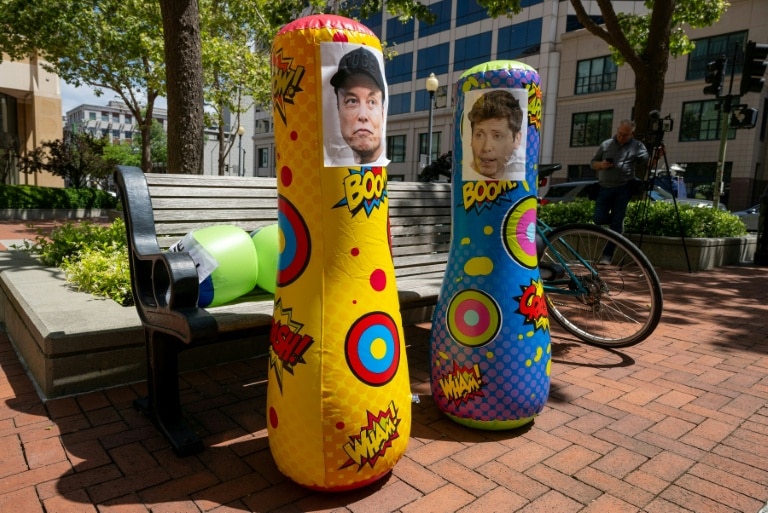
In April 2026, as the high-profile civil trial between Elon Musk and Sam Altman opened in Oakland, California, protesters set up inflatable punching bags emblazoned with the images of the two AI industry leaders outside the federal courthouse. Last month, a young man threw a Molotov cocktail at Altman’s personal home in Northern California. Just days before that incident, an Indiana city council member who supported a local data center project found his front door struck by gunfire; a note left at the scene read simply “No Data Centers.”
Christabel Randolph, acting executive director of the Washington D.C.-based Center for AI and Digital Policy, notes that opposition to local data centers now outpaces even opposition to nuclear power plants. A May 2026 Gallup poll found that 71 percent of Americans oppose hosting an AI data center in their community, compared to just 53 percent who oppose hosting a nuclear power plant. “Americans are really, really angry and upset about AI data centers because of the noise, the pollution, the impact on their electricity bills, on water supplies,” Randolph told Agence France-Presse. She added that AI anxiety is set to become a defining issue in the upcoming November midterm elections, and could even shape the 2028 presidential race. “That existential fear is a very animating anxiety,” she said. “People are thinking about what their future is going to look like.”
Even the Trump White House, which initially positioned itself as a staunch backer of unregulated rapid AI development, has shifted its stance. After returning to office in 2025, President Donald Trump rolled back strict AI safety rules put in place during the Biden administration, arguing that overregulation would hurt U.S. competitiveness against China. But in recent months, the administration has reversed course: it now calls for pre-release safety vetting of advanced AI models, has urged Congress to pass nationwide AI regulations, and has held discussions with Chinese officials about establishing global AI guardrails. When asked about AI risks on Fox News’ *Mornings with Maria* last month, Trump acknowledged the mixed picture: “There are a lot of good things, but we have to be careful with it.”