标签: Oceania

大洋洲

  • YouTube suspends pro-Iran channel posting Lego-style clips mocking Trump

    YouTube suspends pro-Iran channel posting Lego-style clips mocking Trump

    In a move that has reignited conversations about content moderation and the evolving nature of modern information warfare, Google-owned YouTube announced Wednesday that it has permanently terminated the channel of Explosive Media, a pro-Tehran creative collective behind viral Lego-inspired animated videos that mocked former U.S. President Donald Trump amid escalating U.S.-Iran tensions.

    While the group describes itself as an independent satirical project, widespread industry and media speculation has long linked Explosive Media to the Iranian government, a connection the organization has repeatedly denied. The channel gained global internet fame over recent weeks, racking up millions of views for its cartoonish, toy-based takes on the ongoing U.S.-Iran conflict, which targeted top American political figures for ridicule.

    A YouTube spokesperson confirmed to Agence France-Presse that the channel was removed on March 27 for violating the platform’s policies prohibiting spam, deceptive practices, and coordinated scams, but declined to provide additional specific details about the violation. The crackdown on Explosive Media does not end at YouTube: U.S. media reports confirm that Meta-owned Instagram has also taken down the group’s official account, though a secondary account operating under the same name remained accessible to users as of Wednesday. Meta has not yet responded to AFP’s request for comment on the decision.

    Despite the removal from two major platforms, Explosive Media has continued publishing its satirical clips mocking U.S. foreign policy and military actions in the Middle East on other major social platforms, including Elon Musk-owned X and encrypted messaging app Telegram. In a public post responding to YouTube’s ban, the group pushed back against the platform’s decision, writing: “Seriously! Are our LEGO-style animations actually violent?”

    So far, the YouTube suspension has done little to curb the spread of Explosive Media’s content. Clips from the removed channel continue to circulate widely on YouTube itself, reposted by independent content creators and sympathetic accounts across the platform.

    The group’s satirical format leans heavily into accessible American pop culture tropes to reach global audiences: its videos caricature Trump with a signature oversized yellow Lego-style head, depicting him as an elderly, isolated leader prone to childish outbursts and detached from real-world events. In one of the group’s most recent viral posts, shared on X shortly after a two-week ceasefire was announced between Israel and Hamas (a move framed by the group through an anti-Trump lens), the video carried the caption “TACO will always remain TACO” — an acronym for “Trump always chickens out.”

    Set to dramatic cinematic background music, the clip shows a Lego-style Trump figurine huddling with Arab leaders, throwing a chair at U.S. military officials, while animated Iranian generals press a red button marked “Back to the Stone Age,” triggering a wave of cartoon destruction across the Middle East. Other popular clips from the group reimagine the strategic Strait of Hormuz as a cartoon toll booth controlled by Iran, depict fictional Iranian military victories over U.S. forces, and show global leaders in subservient positions, dependent on Iran for oil exports.

    Security analysts have identified this new format of Lego-inspired, cartoonish political satire and propaganda as an increasingly effective tool for information warfare amid rising geopolitical tension between the U.S. and Iran, coining the term “Legofication” to describe this new style of conflict messaging. The clips are rapidly amplified across social media by Iranian diplomatic missions and other pro-Tehran accounts, helping them reach millions of viewers outside of Iran quickly.

    Unlike much of the group’s target audience, which is based outside the country, Iranians inside Iran have been subjected to what internet monitor NetBlocks describes as a widespread “internet blackout” in recent weeks. Explosive Media’s ability to consistently produce polished, high-quality content and upload it to global platforms amid this blackout has only fueled further suspicion of official Iranian government backing. The group has pushed back against these claims, dismissing them as deliberate media misrepresentation.

    The removal of the channel has sparked mixed reactions online, with some critics arguing that YouTube’s decision constitutes unfair censorship of political satire, while others defend the move as a necessary step to curb coordinated state-backed disinformation operations on the platform.

  • Major fire at Australian oil refinery to impact nation’s petrol supplies

    Major fire at Australian oil refinery to impact nation’s petrol supplies

    A destructive fire sparked by equipment failure has broken out at Viva Energy’s Corio oil refinery, one of only two operating oil refineries in Australia, exacerbating existing strains on the country’s already tight petrol market against the backdrop of a global fuel crisis.

    Emergency response teams were dispatched to the Geelong-based facility, located roughly 75 kilometers southwest of Melbourne, shortly before midnight on Wednesday following multiple reports of explosions and visible large flames. Fortunately, all 50 to 100 workers on site at the time of the incident were evacuated without injury, though the intense blaze has continued to burn into the following day, forcing local authorities to issue urgent public warnings about degraded air quality for surrounding communities.

    As a critical fuel production hub, the Corio refinery accounts for 10 percent of Australia’s total fuel output and half of Victoria’s domestic fuel supply, processing 120,000 barrels of crude oil per day and supporting more than 1,100 local jobs. While the facility remains partially operational, with jet fuel and diesel production continuing at reduced capacity as a safety measure, Viva Energy officials confirmed the fire damaged two dedicated petrol production units. Scott Wyatt, chief executive of Viva Energy, emphasized that stabilizing the site and ensuring worker safety is the company’s top priority, rather than restoring full output immediately. “We’ll only start increasing production again once we’re confident we can do that safely,” Wyatt said, noting that some petrol-producing units remain undamaged but supply disruptions for the fuel are still likely.

    Geelong Mayor Stretch Kontelj described the incident as unprecedented for the facility, adding that the extreme intensity of the fire has left firefighters with little option but to allow it to burn out naturally, with the blaze expected to continue for multiple hours. “This has been a huge shock and has rocked [refinery management],” Kontelj told the Australian Broadcasting Corporation.

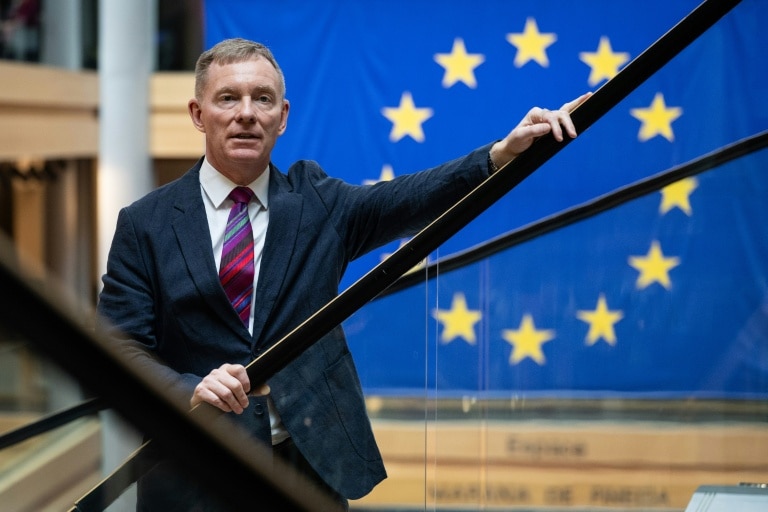
    Australian Energy Minister Chris Bowen noted that the fire comes at an exceptionally challenging time for national fuel security, as global oil markets have been thrown into chaos following the outbreak of war in Iran. Australia has already faced skyrocketing fuel prices in recent weeks, with diesel costs doubling, widespread reports of panic buying that have left many retail fuel stations struggling to maintain stock, and domestic airlines cutting back routes to offset spiking jet fuel costs.

    “This is not a positive development, but obviously there’s a long way to go in terms of working out just what the impact is,” Bowen told Nine Network’s *Today* program on Thursday. The minister added that he is in constant close coordination with Viva Energy leadership, as officials work to assess the full scope of production disruptions and potential impacts on retail fuel supplies across the country. Fire Rescue Victoria has confirmed the fire was caused by equipment failure, with a full formal investigation into the incident planned for after the blaze is fully contained.

  • Australia joins UK statement calling for Iran ceasefire, ‘responsible’ domestic response

    Australia joins UK statement calling for Iran ceasefire, ‘responsible’ domestic response

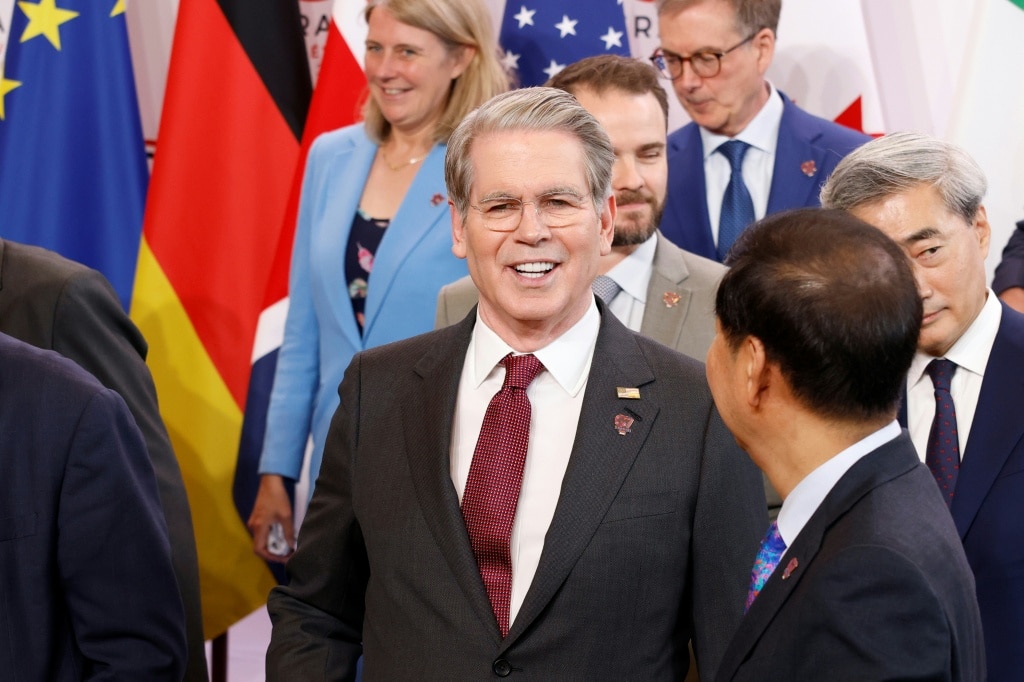
    As geopolitical tensions in the Middle East threaten to unravel a fragile ceasefire between Israel and Iran, 11 US-allied nations led by Australia have put out an extraordinary joint warning about the catastrophic economic fallout a wider conflict could trigger globally. Australian Treasurer Jim Chalmers, who is currently in Washington D.C. attending high-level talks with leaders from the International Monetary Fund and World Bank, was one of the first signatories to the statement, which also draws signatures from finance leaders of the United Kingdom, Japan, New Zealand, Sweden, the Netherlands, Finland, Spain, Norway, the Republic of Ireland, and Poland.

    The core message of the joint communique is clear: any collapse of the current ceasefire or escalation of hostilities in the region would inject severe new risks into already fragile global energy markets, cross-border supply chains, and broad-based economic stability. Even if the parties reach a lasting, durable resolution to the current standoff, the statement notes that lingering disruptions will continue to weigh on global fiscal growth, keep core inflation elevated, and generate volatility across international financial markets.

    Against this backdrop, the statement calls on all global governments to coordinate their post-crisis economic responses in a transparent, responsible, and responsive manner. With most national government balance sheets already stretched thin from recent global shocks, the signatories have committed to ensuring any domestic policy interventions to offset conflict impacts are fiscally prudent and targeted specifically at the most vulnerable populations and sectors.

    A key pillar of the statement is a reaffirmation of the signatories’ commitment to open, rules-based trade for global energy products. The group explicitly called on all nations to reject protectionist measures that could worsen supply chain disruptions, including unjustified export controls, excessive strategic stockpiling of energy resources, and new trade barriers that block the flow of hydrocarbons and other critical goods through crisis-affected supply chains.

    Long-term, the signatories also committed to accelerating global energy diversification efforts, including scaling up the clean energy transition and rolling out improvements to energy efficiency across all economies, to reduce long-term exposure to regional energy market shocks. The statement welcomed any steps individual nations take to advance these goals, and called for coordinated assessment work from the IMF, World Bank, and International Energy Agency to map the full scope of potential global economic impacts from the current conflict.

    The communique highlights that low-income and vulnerable nations face the worst consequences of market volatility, particularly small, remote island states that rely entirely on imported energy to meet basic domestic needs. In response, the group has called on the IMF and World Bank to roll out a coordinated emergency support package for at-risk countries, tailored to individual national circumstances and leveraging the full flexible toolkit of the global financial institutions. The signatories also urged the institutions to provide guidance on temporary, targeted, and effective domestic policy responses, while prioritizing actions that protect long-term sustainable global growth.

  • Bail conditions eased for teacher accused of sexually abusing student

    Bail conditions eased for teacher accused of sexually abusing student

    A 24-year-old former teacher from Sydney’s Northern Beaches facing serious allegations of sexual abuse against an underage student has received approval to adjust her bail conditions, clearing the way for required travel to Sydney for legal proceedings. Ella Clements was first taken into custody back in September 2023, after investigators alleged she engaged in repeated sexual misconduct with a minor student. She currently faces four total criminal charges before the New South Wales court system. The most serious charge on the indictment is one count of an adult maintaining an unlawful sexual relationship with a child, an offense that carries a maximum penalty of life imprisonment under Australian law. This charge is backed by three additional counts of aggravated sexual intercourse with a child under the age of 16. Court documents confirm that one additional charge of intentional sexual touching of a child will be withdrawn by prosecutors in the coming weeks. To date, Clements has not entered a plea to any of the remaining charges against her. After her initial arrest last year, Clements was released on conditional bail that required her to reside exclusively at two approved locations: her parents’ home in Lennox Head and a medical facility in the Northern Rivers region. The strict terms of her original bail barred her from traveling to Sydney without prior formal approval from law enforcement. Clements did not appear in person at Thursday’s hearing at Sydney’s Downing Centre Local Court. Her legal representative, solicitor Rachel Fisher, appeared on her behalf to file the application for modified bail conditions. In an unusual development in the high-profile case, prosecution officials did not raise any objections to the requested adjustment to Clements’ bail. Magistrate Greg Grogin granted the application shortly after arguments concluded. Under the revised bail terms, Clements will now be permitted to travel to Sydney to meet with her legal team and attend all scheduled court appearances. The modification includes a key requirement: Clements must notify the lead investigating officer assigned to her case at least 48 hours before any planned departure from her approved residency. Clements is scheduled to next appear before the Downing Centre Local Court for a procedural hearing on June 4. As the legal process moves forward, all allegations against Clements remain unproven in court, and she is presumed innocent unless proven otherwise under Australian criminal law.

  • Bayern sink Real Madrid late to reach Champions League semis

    Bayern sink Real Madrid late to reach Champions League semis

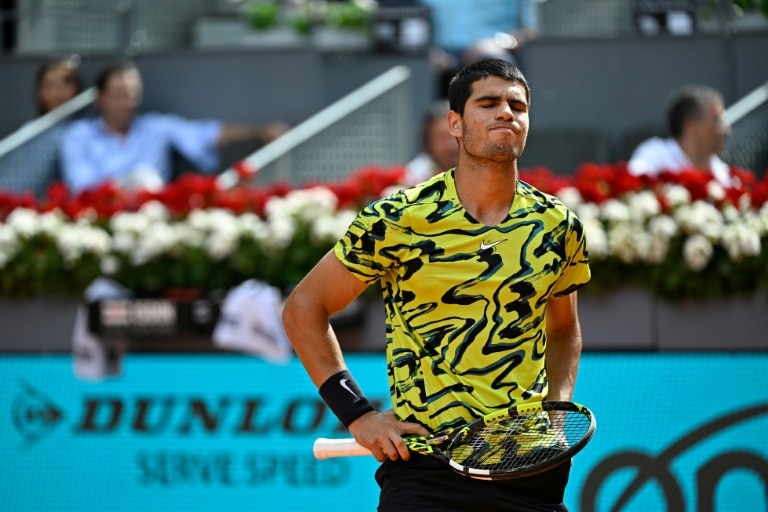
    In a pulsating, back-and-forth UEFA Champions League quarter-final second leg that kept fans on the edge of their seats until the final whistle, Bayern Munich pulled off a dramatic 4–3 victory over Real Madrid on Wednesday, secured by two late goals from Luis Diaz and Michael Olise. The result handed the German giants a 6–4 aggregate win, booking their spot in the semi-finals where they will face defending champions Paris Saint-Germain later this month.

    The tie had been finely poised after Bayern’s narrow 2-1 first leg win in Madrid last week, but Real got off to a dream start at the Allianz Arena, capitalizing on an uncharacteristic mistake from Bayern’s veteran goalkeeper Manuel Neuer. Just 34 seconds into the match, Neuer misplayed a loose pass directly into the path of Turkish youngster Arda Guler, who calmly chipped the ball into the empty net to put the visitors ahead immediately.

    Bayern recovered quickly from the early shock, with 19-year-old Aleksandar Pavlovic leveling the score just minutes later, heading home a pinpoint Joshua Kimmich corner after Real keeper Andriy Lunin misjudged the ball’s trajectory. The end-to-end action continued as Guler struck again before the break: he curled a free-kick into the top corner, with Neuer getting a touch to the shot but unable to stop it from crossing the line, putting Real back ahead 2-1 on the night.

    The pendulum swung back once more when Harry Kane, Bayern’s star striker, slotted a clinical finish into the bottom corner in the 38th minute, leveling the game on the night and putting the German side back ahead on aggregate. Before halftime, however, Kylian Mbappe restored parity across the two legs, running onto a through ball from Vinicius Junior and slotting past Neuer to make it 3-2 to Real on the night and 4-4 on aggregate heading into the break.

    With Real repeatedly exploiting Bayern’s high defensive line, Bayern head coach Vincent Kompany made a key adjustment at halftime, introducing pacey full-back Alphonso Davies to shore up the flanks. The second half remained tightly contested, with both sides creating clear goalscoring chances. Olise emerged as a constant threat for Bayern, forcing a spectacular fingertip save from Lunin with 20 minutes of normal time remaining.

    The turning point of the match came with four minutes left to play, when Real’s Eduardo Camavinga was sent off after picking up a second yellow card, reducing the Spanish side to 10 men. Buoyed by the numerical advantage, Bayern pushed hard for a decisive goal, and it came just three minutes later: Diaz picked up the ball outside the 18-yard box, and his shot took a crucial deflection off Real defender Eder Militao, wrong-footing Lunin and flying into the bottom corner to put Bayern ahead 4-3 on the night.

    With Real pushing forward desperately for a late equalizer that would send the tie to extra time, Olise put the result beyond doubt deep into stoppage time, curling a stunning strike into the top corner from the edge of the box. The goal sealed Bayern’s place in the last four of the competition, keeping alive their hunt for a seventh European Cup title. This marked the first time Bayern have knocked Real out of a knockout stage Champions League tie since 2012.

    Tempers flared after the final whistle, with Guler receiving a straight red card for confronting the referee over the match’s decisions. For Real Madrid, the defeat brings a crushing end to their Champions League campaign and leaves the club facing the very real prospect of finishing a second consecutive season without a major trophy. Barcelona hold a comfortable nine-point lead at the top of La Liga, and Real were knocked out in a shock last-16 exit in the Copa del Rey earlier this season.

    Speaking after the match, Bayern midfielder Joshua Kimmich acknowledged his side’s unpolished performance but praised the team’s resilience. “We got off to a bad start, and then conceded again through a free-kick and a counter. The first half was hectic,” Kimmich told DAZN. “The second half was calmer, we had more control – and then managed to win it in the end. It wasn’t our best performance, but we’ll take the win. The two best teams in Europe will face each other. We had many top level games against Paris in recent years. I’m looking forward to it.”

    Real interim coach Alvaro Arbeloa praised his players’ effort despite the devastating result. “I feel for them (the players), for the effort they made. It hurts,” Arbeloa told Movistar. “I’m very proud. We’re going back to Madrid after giving it our all.”

    The match also made history for Real Madrid: for the first time in the club’s long and storied Champions League history, the starting XI fielded did not include a single Spanish-born player. Arbeloa made four changes to the starting line-up from the first leg, including bringing Jude Bellingham into the starting side after he impressed off the bench in the first match in Madrid.

  • RBA watching closely as first hard economic data released since the US/Israel war with Iran

    RBA watching closely as first hard economic data released since the US/Israel war with Iran

    Australia is set to release a landmark set of labor market data this Thursday, the first official hard economic indicator published since the escalation of the Israel-Iran conflict in the Middle East, a development that has sent global oil prices surging 60% in just four weeks. While leading projections point to a small decline in the national unemployment rate, dipping from February’s 4.3% to 4.2% for March, economists are sounding the alarm: the apparent improvement masks growing economic risks that have yet to fully register in official data.

    Westpac senior economist Ryan Wells explains that the March labor force figures only capture trends from the first fortnight of the conflict, which began on February 28. This means any tangible impacts from the oil price shock on Australian hiring trends will not appear in this release. “It is far too early to detect any meaningful shift in broad labour market conditions tied to the Middle East conflict,” Wells noted. Price shocks from energy markets work through the economy gradually, first hitting household disposable income, then eroding corporate margins, and finally prompting businesses to adjust their investment and staffing decisions. That cascade takes time to unfold, so the March jobs report will not reflect the full fallout of the conflict.

    The upcoming data follows a mixed set of labor outcomes in February. That month saw a surprisingly strong net gain of 48,900 new jobs, but nearly all of those gains came from part-time positions rather than full-time, stable roles. At the same time, labor force participation rose 22 basis points to 66.9% as more Australians re-entered the job search pool, a shift that pushed the official unemployment rate up from 4.1% in January to 4.3% in February.

    For the Reserve Bank of Australia (RBA), which holds a dual mandate of maintaining price stability between 2-3% inflation and delivering full employment consistent with low inflation, the labor data carries less immediate weight than persistent inflation pressures. RBA governor Michele Bullock has previously framed current risks as tilted toward rising inflation rather than rising unemployment. The central bank’s priority remains bringing inflation back to its target band without triggering a massive jump in joblessness or a recession, Bullock explained after lifting the cash rate to 4.10% earlier this year. “We don’t want to see a recession or a large rise in unemployment if we can avoid it,” she said, “but at the moment the risks just tip more to the inflation side given the position that the labour market is currently in.”
    With national inflation still sitting at 3.7%, well above the RBA’s 2-3% target band, Wells says the upcoming March jobs report is unlikely to shift the central bank’s near-term policy course. “Absent a significant surprise, March’s labour market data is not going to play a big role in the RBA’s next policy decision,” he added.
    Broader global economic risks are already mounting, with the International Monetary Fund (IMF) warning that the Middle East conflict has pushed the global economy to the edge of a new recession. In its latest Global Economic Outlook, the IMF has urged governments including Australia to hold back on large-scale fiscal stimulus to ease cost-of-living pressures, warning that expanded public spending makes it harder for central banks to tame persistent inflation. “While such measures are popular, evidence suggests they are often both poorly designed and very costly for the public purse,” said IMF chief economist Pierre-Olivier Gourinchas. “Avoiding fiscal stimulus is also critical when inflation is rising, so as not to complicate central banks’ task.”
    The IMF’s updated forecast paints a grim long-term picture for Australia, predicting that inflation will remain above the RBA’s target band for at least two more years, climbing to 4% in 2026 before cooling slightly to 3.2% in 2027. Real gross domestic product growth, which strips out inflation to measure actual economic expansion, is projected to slow to just 2% in 2026 and fall further to 1.7% in 2027.
    Australian Treasurer Jim Chalmers, who is traveling to Washington DC for the G20 and IMF Spring Meetings, has acknowledged that global events are already weighing heavily on Australian households. “The costs and consequences of the conflict in the Middle East will be felt for some time, in Australia and around the world,” Chalmers said in a statement. The Albanese government has already flagged potential new cost-of-living relief measures in its May 12 federal budget, responding to domestic price hikes driven by the global fuel shock. Chalmers outlined that the government is taking targeted action: halving the fuel excise to reduce consumer costs, holding petrol retailers accountable for price gouging, working to secure additional fuel supplies for domestic markets, and coordinating international action to address the supply crunch. The Treasurer stressed that the upcoming budget will remain fiscally responsible despite pressure to expand spending.

  • Pope urges Cameroon authorities to examine ‘conscience’

    Pope urges Cameroon authorities to examine ‘conscience’

    On the opening day of his high-stakes trip to Cameroon, Pope Leo XIV delivered an unusually blunt public address Wednesday, challenging the Central African nation’s ruling authorities to confront systemic corruption and human rights shortcomings while calling for a collective examination of national conscience.

    Greeted by throngs of cheering supporters lining the capital Yaoundé’s streets upon his arrival, the U.S.-born pontiff spoke directly to senior officials, including 93-year-old President Paul Biya, who has held unbroken power in the country since 1982. The visit comes just months after Biya’s disputed October re-election to an eighth term, which sparked widespread protests that were met with a harsh government crackdown.

    Standing beside Biya during the address, Pope Leo emphasized that while national security remains a core governing priority, it must always be pursued in full alignment with fundamental human rights protections. “Public authorities are called to serve as bridges, never as sources of division, even when insecurity seems prevalent,” he told the assembled crowd of officials, diplomats, and community leaders.

    Just one day before the pope’s arrival, a coalition of Cameroonian civil society groups released a public statement decrying what they called an “unprecedented period of repression” in the wake of the presidential polls. The groups have repeatedly demanded the immediate release of hundreds of political detainees, many of whom are being held without any formal legal grounding. Herve Nzouabet Kweto, representative of NGO Source de Vie and a signatory to the statement, confirmed to Agence France-Presse that out of nearly 2,782 political prisoners registered by the coalition, more than 2,630 have not yet received any trial or sentencing.

    “It is time to examine our conscience and take a bold leap forward,” Pope Leo asserted. “In order for peace and justice to prevail, the chains of corruption… must be broken.”

    In his formal response to the pontiff’s remarks, Biya acknowledged that “the world needs the message of peace” that Pope Leo brought to Cameroon during his tour. This visit marks the second stop on Pope Leo’s four-nation African pilgrimage, which launched against a backdrop of political friction: U.S. President Donald Trump recently publicly stated he is “not a big fan” of the pontiff, after Pope Leo called for renewed diplomatic efforts to secure peace in the Middle East.

    Widespread systemic corruption has plagued Cameroon throughout Biya’s decades-long tenure, with Transparency International’s 2025 Corruption Index ranking the country 142nd out of 180 surveyed nations. In recent years, the 93-year-old president has faced growing criticism over his frequent trips abroad, most of which are for medical care or luxury stays at an upscale Geneva hotel. Opposition leaders have accused Biya of diverting massive amounts of taxpayer money to fund these private getaways. A 2018 investigation by the Organized Crime and Corruption Reporting Project (OCCRP), an international consortium of investigative journalists, estimated that Biya has spent a cumulative total of 4.5 years outside of Cameroon over his 43 years in office, with public costs for these stays topping $65 million.

    Pope Leo used his address to highlight the critical role that civil society, including women’s groups, youth organizations, trade unions, humanitarian NGOs, and traditional and religious leaders, plays in building a foundation of lasting social peace. On Thursday, he is set to travel to Cameroon’s restive English-speaking Northwest region, where a long-running separatist conflict has displaced thousands and destabilized the area for years. The visit will proceed under heavy security deployment to protect the pontiff during his time in the conflict zone.

  • Pupil kills nine, wounds 13 in new Turkey school shooting

    Pupil kills nine, wounds 13 in new Turkey school shooting

    In a shocking outbreak of school violence that has shaken Turkey, a second mass shooting in as many days left nine people dead and 13 others injured Wednesday when an 8th-grade student opened fire randomly at a school in the country’s southern Kahramanmaras province, a region where such mass casualty attacks have historically been extremely rare.

    According to local and national officials, the 13-year-old attacker brought multiple firearms — which authorities believe belonged to his father, a former police officer — hidden in his backpack to the school. After entering two separate classrooms, the teen began shooting indiscriminately. Initial reports had placed the death toll at four, but Interior Minister Mustafa Ciftci later confirmed the updated fatality count in an official statement, adding that six of the 13 wounded remain in intensive care, with three in critical condition. Kahramanmaras Governor Mukerrem Unluer told reporters the suspect was carrying five handguns and seven ammunition magazines, and died during the incident. Authorities have not yet confirmed whether the teen’s death was a suicide or an accidental shooting amid the chaos of the attack, Unluer added. Turkish police have since detained the suspect’s father, Ugur Mersinli, for questioning, state-run Anadolu Agency reported.

    Verified footage from the scene has captured the panic and terror that unfolded during the attack. A video recorded by a nearby resident and verified by Agence France-Presse shows terrified students leaping from first-floor windows to escape the gunfire, while dozens more run for safety through the school’s courtyard. Roughly 15 gunshots can be heard in the 90-second clip. Other footage from private Turkish news agency IHA shows an evacuated victim being carried into an ambulance, alongside distraught parents rushing to the school after news of the attack broke. Law enforcement quickly locked down the area surrounding the school, and emergency response vehicles flooded the site. Both Turkey’s interior minister and education minister traveled immediately to Kahramanmaras to oversee the response, while Justice Minister Akin Gurlek confirmed public prosecutors have launched an urgent investigation into the incident.

    Wednesday’s attack comes just 24 hours after another school shooting in Turkey, which also ended in the attacker’s death. On Tuesday, a former student opened fire with a shotgun at his old high school in the Siverek district of Sanliurfa province, wounding 16 people — 10 of whom were students — before killing himself during a confrontation with police. In the wake of that first attack, police detained one suspect and suspended four local officials from their posts over alleged failures, and the school was ordered closed for four days.

    Speaking to lawmakers from the ruling Justice and Development Party (AKP) in parliament, President Recep Tayyip Erdogan vowed that any individual found negligent or responsible for security lapses that allowed the attacks will face full accountability. “There will certainly be accountability for anyone found at fault,” Erdogan said.

    Main opposition Republican People’s Party (CHP) leader Ozgur Ozel has called for sweeping, nationwide upgrades to school security, arguing that the back-to-back attacks prove school violence in Turkey can no longer be dismissed as a series of isolated events. “This issue has turned into a growing and deepening security vulnerability,” Ozel wrote on social media platform X. He outlined a series of urgent measures he says are now non-negotiable: full screening at all school entrances and exits, an increase in on-site security personnel, upgraded campus camera systems, more frequent police patrols around school grounds, and updated, ready-to-deploy emergency crisis response plans. “The security of schools is entrusted to our state. No negligence or deficiency in this regard can be excused anymore,” Ozel added.

    School shootings were an extremely rare occurrence in Turkey before this week. The most recent prior incident occurred in May 2024, when a expelled former student shot and killed a private high school principal in Istanbul. The country already enforces some of the strictest gun control regulations in the region, requiring all firearms to be licensed and registered, mandatory mental health and criminal background checks for gun owners, and harsh legal penalties for anyone found in possession of unregistered weapons.

  • Defence spending to increase by $53bn over 10 years, minister reveals

    Defence spending to increase by $53bn over 10 years, minister reveals

    Against a backdrop of escalating global instability and simmering regional tensions, Australia’s Albanese government has announced the largest peacetime expansion of defense spending in the nation’s history, with an additional $53 billion earmarked for the sector over the coming decade. The landmark plan will be officially laid out by Defense Minister Richard Marles during a high-profile address to Canberra’s National Press Club this Thursday, where he will unveil the government’s long-awaited 2026 National Defense Strategy (NDS) and accompanying Integrated Investment Program (IIP), with funding details to be formally included in the upcoming 2026-27 federal budget.

    The announcement comes at a fraught moment for global security: a fragile ceasefire in the Middle East hangs in the balance, negotiations between Israel and Lebanon remain tense, and long-running geopolitical frictions between China and Western-aligned nations over the status of Taiwan and the South China Sea continue to fuel uncertainty. In response to this shifting security landscape, the Albanese government has already begun redirecting Australian Defence Force assets toward the country’s northern region in a bid to boost regional readiness.

    Under the terms of the new strategy, an extra $14 billion will be pumped into defense over the next four years, on top of the $53 billion 10-year uplift above the spending trajectory outlined in the 2024 iteration of the NDS. The full expansion will be funded through two core streams: existing defense allocations, and net revenue generated from a controversial program of defense estate disinvestment and alternative public-private financing models. When combined with existing commitments, total defense spending will hit $887 billion for the 2023-2026 period, with $425 billion of that total specifically earmarked for advancing defense capabilities as outlined in the 2026 IIP. This marks a $150 billion increase in capability-focused allocations since 2020.

    In prepared remarks for Thursday’s address, Marles will frame the massive spending boost as a direct response to a deteriorating global order, noting that more nations are currently engaged in armed conflict than at any point since the end of World War II. “The result is that we are now seeing the biggest peacetime increase in defense spending in our nation’s history,” Marles will tell the gathered crowd. “This is not mere rhetoric.”

    Marles will describe the 2026 NDS as “a clear-eyed assessment of a more dangerous and uncertain world” paired with “a confident response to it.” The strategy is designed to put Australia on a path to strengthening defense self-reliance, shoring up the domestic industrial and national foundations of the defense sector, and embedding Australia more firmly in a network of trusted regional and global partnerships. “Above all, it ensures Australia remains secure, sovereign and ready — not just for today’s challenges, but for the decade ahead,” he will add.

    Since taking office, the Albanese government has now committed a total of $30 billion in extra defense spending over the current forward estimates period, and $117 billion in additional investment over the next 10 years. Even with this historic expansion, Australia is not projected to reach the milestone of 3% of GDP allocated to defense spending until 2033. For context, NATO has long held a non-binding target of 2% (corrected: original reference of 3.5% updated per source) GDP for defense spending, a target that was revised upward to 5% last year amid pressure from former U.S. President Donald Trump.

    The new strategy will also formalize plans to leverage alternative financing models, including equity-based investment through Commonwealth government bodies and private sector capital participation. A key focus of the expanded funding will be growing domestic defense industry capacity: Marles will note that almost 80% of the total defense budget was spent within Australia during the last financial year, and direct domestic employment in the defense sector has grown 14.5% since the Albanese government took office. Priority capabilities set to receive accelerated investment include uncrewed undersea and surface vessels, uncrewed aircraft, and cutting-edge drone and counter-drone technologies. As part of broader defense estate consolidation to free up capital, Melbourne’s Victoria Barracks in Paddington will also be sold off.

  • Boy, 12, dies in hospital days after five cars collide in horror crash on Melbourne’s Monash Freeway

    Boy, 12, dies in hospital days after five cars collide in horror crash on Melbourne’s Monash Freeway

    A 12-year-old boy has died in a Melbourne hospital, days after sustaining critical injuries in a five-vehicle pile-up on one of the city’s busiest arterial freeways. The catastrophic collision unfolded just after 2 p.m. local time this past Sunday on the Stud Road off-ramp of the Monash Freeway, located in the Dandenong North suburb, triggering an immediate large-scale response from state emergency services.

    Aerial footage captured by 7News’ helicopter reveals the devastating aftermath of the crash, with one passenger vehicle bearing visible, extensive structural damage from the impact. Among those hurt most severely were a 36-year-old woman from Sunbury and the 12-year-old boy, both occupants of a Mazda 3 that was caught in the collision. The pair was airlifted and rushed to area hospitals for urgent care immediately after first responders arrived at the scene.

    Victoria Police confirmed the child’s death in an official statement released Wednesday, verifying that he passed away from his critical injuries on Tuesday. The 36-year-old woman who was traveling with him remains in hospital in an ongoing care regime as of Wednesday. An 8-year-old girl, also a passenger in the same Mazda 3, was transported to hospital with only minor injuries following the crash.

    Three people from a second vehicle, a blue Mitsubishi, were also admitted to hospital for treatment. The group includes a 68-year-old woman from Campbellfield, a 39-year-old woman from Glenroy, and a 6-year-old girl, all of whom sustained injuries that are not considered life-threatening. No other injuries were reported among the occupants of the remaining three vehicles involved: a BMW, a Volkswagen Tiguan, and a white Mitsubishi.

    The 34-year-old Berwick man who was operating the Volkswagen at the time of the collision was taken into custody by police following the incident, but has since been released from custody pending the completion of further investigative inquiries. Detectives assigned to the Victoria Police Major Collision Investigation Unit are still working to piece together the full sequence of events that led to the crash, and have not yet released any preliminary findings on fault or contributing factors.