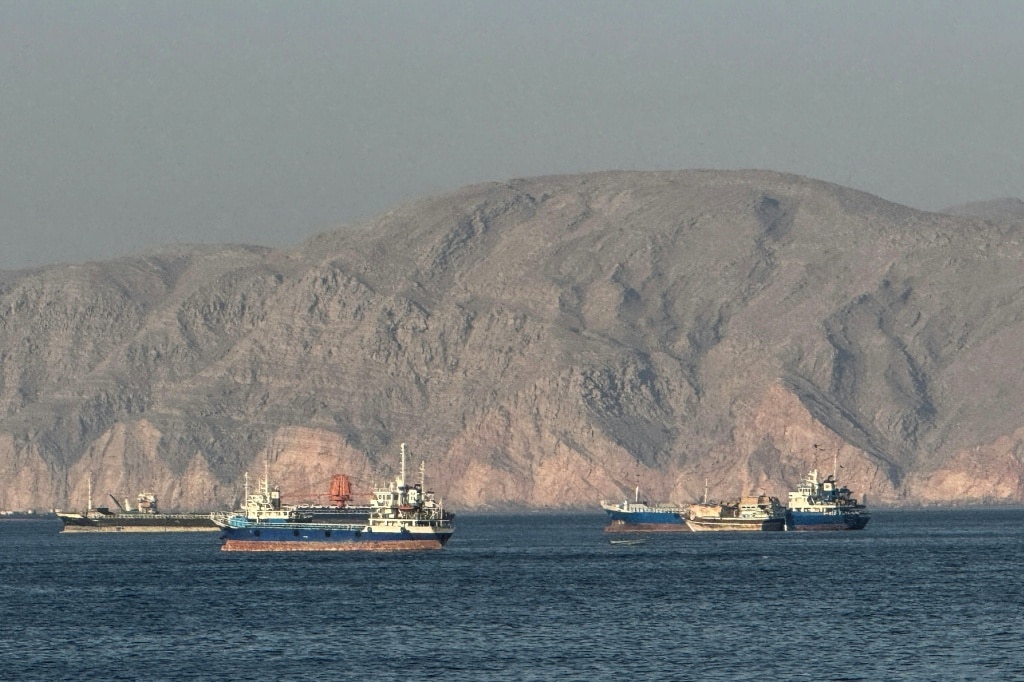
Nearly three months after a fragile ceasefire paused the open conflict between the US-Israeli alliance and Iran that ignited on February 28, top Pakistani military commander Asim Munir touched down in Tehran on Friday, stepping into the most high-profile mediation effort to date to lock in a permanent end to the devastating regional war. As Islamabad holds the official mediator role for talks between the two adversarial sides, the visit comes as Iran evaluates a new American peace proposal that has sparked cautious optimism from Washington — even as Iranian officials warn deep divisions remain far from resolved.
标签: Oceania
大洋洲
-
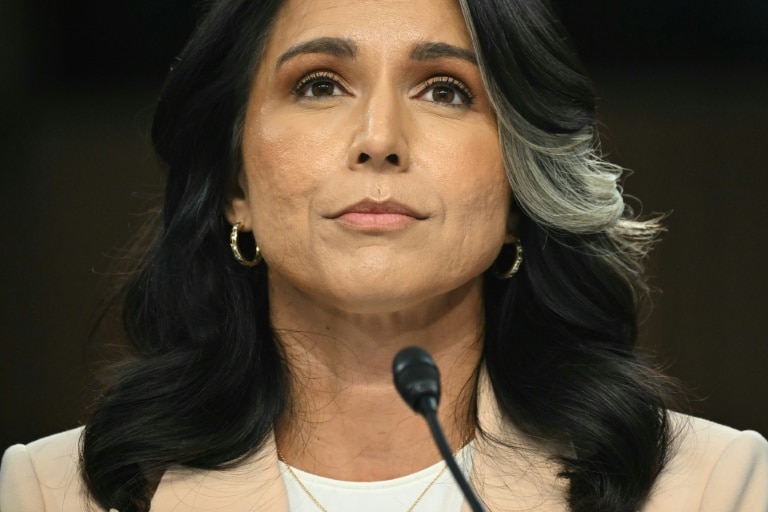
US intelligence chief Tulsi Gabbard resigns
In a sudden announcement that has shaken the upper ranks of the Trump administration, Director of National Intelligence Tulsi Gabbard confirmed Friday she will step down from her post, effective June 30, to stand beside her husband as he fights a newly diagnosed rare form of bone cancer. The departure also closes out a turbulent tenure defined by longstanding ideological clashes with the president over his push for war with Iran, a rift that left the nation’s top intelligence coordinator increasingly sidelined from key national security decisions in recent months.
In a public letter to Trump posted to the social platform X, the 45-year-old laid out the deeply personal reason for her exit, writing, “My husband, Abraham, has recently been diagnosed with an extremely rare form of bone cancer. He faces major challenges in the coming weeks and months. At this time, I must step away from public service to be by his side and fully support him through this battle.” Gabbard’s role centered on coordinating global intelligence data and presenting consolidated national security assessments to the president.
President Trump responded to the announcement with praise for Gabbard, one of the only remaining women in his cabinet, via his Truth Social platform. “Tulsi has done an incredible job, and we will miss her,” he wrote, noting that her desire to support her husband through cancer treatment was rightful. He also confirmed that Gabbard’s deputy, Aaron Lukas, will step into the role as acting Director of National Intelligence following her departure.
Gabbard’s appointment to lead the sprawling U.S. intelligence apparatus was controversial from the start. A former Democrat and Iraq War veteran who served in the Army National Guard, her deployment experience shaped a long career of opposition to U.S. foreign military interventions, a stance that put her at odds with administration policy long before the current conflict with Iran. Most notably, she repeatedly voiced public opposition to launching a war against Iran, and grew increasingly isolated from Trump’s inner circle as he moved forward with strikes.
Multiple reports indicate Gabbard was excluded from high-level strategy meetings in the immediate lead-up to the joint U.S.-Israeli strikes on Iran launched February 28. After the war began, she repeatedly declined to back key administration justifications for the attack. She refused to endorse Trump’s claim that Iran posed an imminent military threat, the core assessment the administration used to justify the strikes. When testifying before Congress, she emphasized that the final call for military action rested solely with the president. Gabbard also contradicted another key administration justification, confirming U.S. intelligence had concluded Iran was not rebuilding the nuclear enrichment facilities destroyed in joint U.S.-Israeli strikes the previous year.
Beyond her disagreements over Iran policy, Gabbard has long faced criticism from lawmakers on both sides of the aisle over past controversial positions. Her 2017 meeting with deposed Syrian leader Bashar al-Assad drew widespread scrutiny, and she has been accused of spreading Kremlin-aligned propaganda, including false conspiracy theories regarding the war in Ukraine. She also faced cross-partisan suspicion for her support of NSA leaker Edward Snowden, whose disclosures of secret U.S. surveillance programs were widely viewed as compromising American national security.
Beyond her public service, Gabbard, a Hawaii native, was raised in the Hindu tradition by her mother, who converted to the faith; her first name, Tulsi, references a plant considered sacred in Hinduism, and she has been a vegetarian her entire life. She married Abraham, a Hawaii-based cinematographer, after the pair met while filming her campaign advertisements, and he proposed to her during a sunset surf session.
-
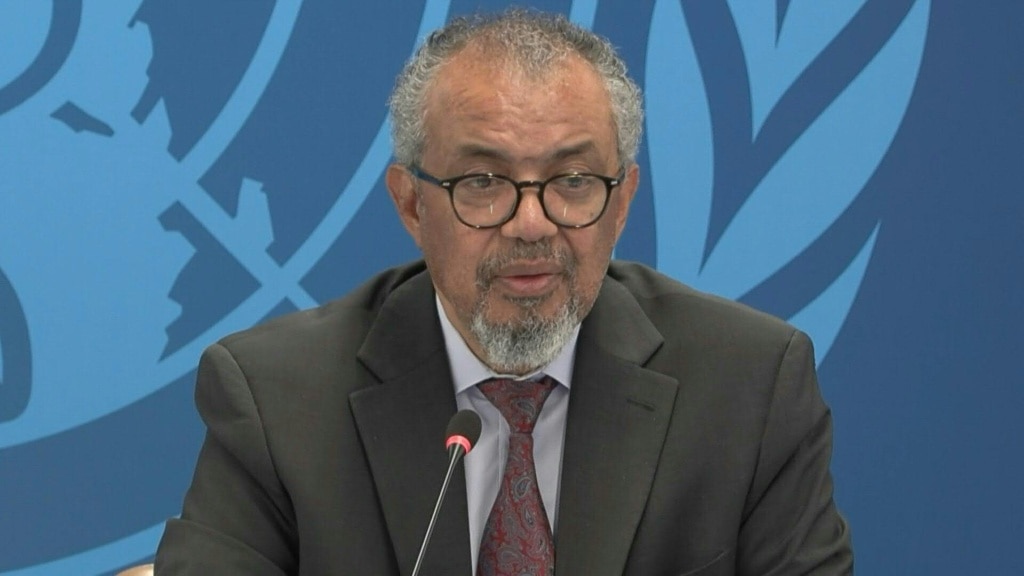
Ebola risk now at highest level in DR Congo, says WHO
On Friday, the World Health Organization announced it has upgraded the Ebola outbreak risk assessment in the Democratic Republic of the Congo (DRC) to the highest possible level — very high — as confirmed cases and deaths from the rare virus strain continue to climb faster than response teams can contain.
Current official figures from the WHO place the count of confirmed Ebola cases at 82, with seven confirmed fatalities. When including suspected cases, those numbers jump to nearly 750 potential infections and 172 suspected deaths. WHO leaders emphasize that the true size of the epidemic is already far larger than the confirmed case count, as the virus circulated undetected for weeks before being identified.
The outbreak is caused by the Bundibugyo strain of Ebola, an uncommon variant that has no specifically approved vaccines or antiviral treatments currently available to combat it. This critical gap in medical countermeasures has forced the global health body to fast-track testing of existing experimental treatments to assess their effectiveness against the strain.
Speaking to reporters at WHO headquarters in Geneva, director-general Tedros Adhanom Ghebreyesus described the situation as deeply worrisome and uniquely challenging. Response teams are working in highly insecure regions of the country, scrambling to track the virus’s spread, trace close contacts of infected people, and establish full outbreak control measures. “We know the epidemic in DRC is much larger than the confirmed cases,” Tedros said.
The outbreak is centered in the northeastern DRC’s Ituri province, where more than 1,400 contacts are currently being monitored by health teams. Anne Ancia, WHO’s representative in the DRC, reported from the field that the virus spread silently and rampantly across the region for several weeks before detection, leaving response teams in a sprint to catch up. As of now, Ancia confirmed, “the spread is not yet under control.”
Without targeted vaccines or treatments, public health officials rely on the core Ebola control strategy of contact tracing and 21-day isolation to break chains of transmission. While rising case counts have raised alarm, WHO officials note the current increase is actually a positive sign that improved surveillance systems are working to uncover the true scale of the outbreak, rather than evidence of a sudden acceleration in new spread.
Neighboring Uganda has so far avoided sustained community spread, with the WHO reporting a stable situation: just two confirmed cases in travelers who crossed from the DRC, and one death. Intense contact tracing efforts are credited with halting further spread in the country.
Internationally, two U.S. citizens with links to the outbreak have been evacuated for care: one who tested positive was moved to Germany for treatment, while a second high-risk contact was transferred to the Czech Republic. The global risk level for the outbreak remains low, with regional risk assessed as high, per the WHO’s updated classification.
Abdi Rahman Mahamud, the WHO’s director of emergency alert and response, explained the upgrade to very high risk for the DRC stemmed from three key factors: the severe threat to human health, the high potential for rapid spread, and the limited current response capacity on the ground. “The potential of this virus spreading rapidly is very high, and that changed the whole dynamic,” Mahamud noted.
To address the gap in treatments, the WHO has fast-tracked plans for clinical trials of existing experimental drugs. The agency’s technical advisory group has prioritized two monoclonal antibodies — Regeneron’s 3479 and Mapp Biopharmaceutical’s MBP134 — for testing. It has also recommended evaluating the oral antiviral obeldesivir as a post-exposure preventive treatment for high-risk contacts. WHO chief scientist Sylvie Briand said the drug shows promise for preventing infected contacts from developing symptomatic disease.
For vaccines, the existing widely approved Ervebo vaccine only targets the Zaire strain of Ebola, with very little evidence that it provides cross-protection against Bundibugyo. While work on a Bundibugyo-specific vaccine has begun, no doses are currently available for clinical trials, and development would likely take six to nine months even if the project is prioritized. Another candidate vaccine targeting the strain, built using the ChAdOx platform, is currently in production but has not yet completed animal testing required to move forward with human trials.
-
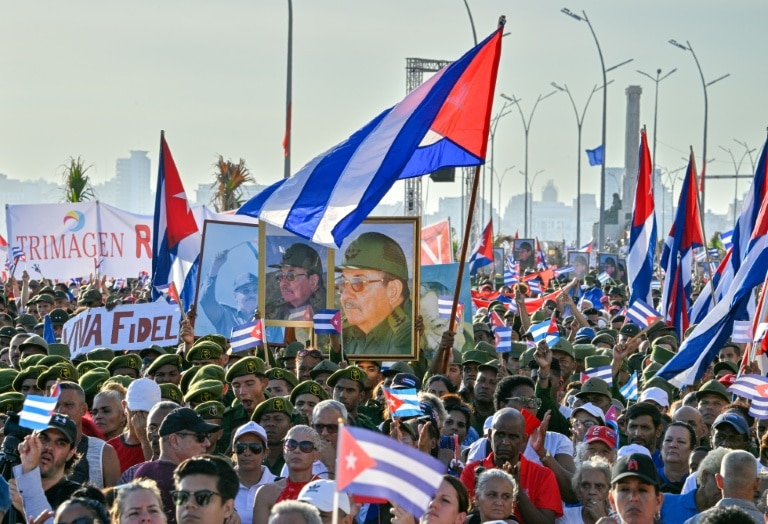
Castro backers rally in front of US embassy in Havana
In a powerful display of national solidarity, thousands of Cubans gathered Friday outside the U.S. Embassy in Havana to rally behind 94-year-old former president Raul Castro, who was recently indicted on criminal charges by a U.S. federal court. The gathering, which included current Cuban president Miguel Díaz-Canel and other senior government officials dressed in military-style fatigues, echoed with the unified chant of “Long live Raul!” as attendees waved large Cuban flags and held up printed portraits of the former leader. The 94-year-old, younger brother of iconic Cuban revolutionary Fidel Castro, was formally charged with murder and additional felony counts this Wednesday. The charges stem from the 1996 downing of two civilian aircraft operated by a U.S.-based anti-Castro group, a move widely framed as the latest escalation in the Trump administration’s escalating pressure campaign targeting Cuba’s communist leadership. The aging former leader, whose health has declined in recent years, did not attend the demonstration, which was held at the “Anti-Imperialist Platform” public park located directly across the street from the U.S. diplomatic mission. However, two of his children were on hand to represent the family: Mariela Castro, a prominent national legislator and LGBTQ+ rights advocate, and Alejandro Castro, a key architect of the 2015 historic rapprochement between Cuba and the U.S. negotiated during the Raul Castro administration and former U.S. president Barack Obama’s term. Raul Castro led Cuba for 15 years after assuming the presidency from his ailing brother Fidel in 2006, stepping down from the top post in 2018. His unexpected indictment has amplified widespread anxiety across Cuba that the U.S. could pursue further aggressive action to destabilize the island’s government, capping months of mounting pressure that includes a devastating oil embargo that has strained the country’s economy and critical infrastructure. These fears were amplified by the January arrest of Venezuelan socialist leader Nicolas Maduro, who was taken into custody by U.S. agents at his Caracas residence on drug trafficking charges and extradited to the U.S. to face trial. In her first public remarks from the Castro family since the indictment was announced, Mariela Castro pushed back on speculation that the U.S. would attempt to abduct her father, telling reporters she had no fear of such an outcome. “I am not afraid because I know they will not do it,” she stated, adding that when the former president is asked about the charges, “he smiles like an old guerrilla fighter who knows he’s safe, with one foot in the stirrup, and that no one is going to kidnap him.” The vast majority of attendees were public sector and state enterprise employees, who said their participation was driven by a sense of patriotic duty. Gilberto Gonzalez, a 59-year-old worker at a state-run flour mill, told reporters he joined the rally to stand in solidarity with the former leader. “We are reaffirming the conviction we have to continue fighting and support our General Raul Castro, who has been unjustly accused in the United States,” Gonzalez said. Gerardo Hernandez, a former Cuban intelligence officer who was released from a U.S. prison as part of the 2015 normalization deal, delivered a personal message from Raul Castro to the assembled crowd. The former president “says he thanks our people from the bottom of his heart for their solidarity” and “that as long as he lives, he will continue to lead our people and defend our revolution,” Hernandez told the gathering.
-

Riot hits DR Congo hospital as Ebola response angers victims’ families
In the epicenter of the latest deadly Ebola outbreak in the Democratic Republic of the Congo’s northeastern Ituri Province, widespread public anger, fear, and deep-rooted distrust of government authorities have boiled over into violent unrest that left key medical infrastructure destroyed. On Thursday, rioters set fire to isolation tents at Rwampara Hospital, leaving only charred, blackened frames behind after soldiers stepped in to disperse the crowd by firing warning shots. One nurse was injured by thrown stones during the violence, which was triggered by a dispute over the body of a 24-year-old man — the son of a serving soldier — who had died at the facility of suspected Ebola.
Under international public health protocols for Ebola response, authorities cannot immediately release the bodies of infected victims to their families, as the virus spreads through direct contact with bodily fluids and infected remains, making unsafe burial practices one of the leading drivers of new transmissions. Even so, this requirement has sparked fierce suspicion in the conflict-wracked rural region, where state services have been largely absent for decades and residents have long been distrustful of central government institutions.
The current outbreak, the 17th recorded Ebola event to hit the vast Central African nation, is caused by the Bundibugyo strain, for which no licensed vaccine or targeted treatment currently exists. The World Health Organization estimates the outbreak has already killed more than 177 people, forcing responders to rely almost entirely on precautionary measures and rapid contact tracing to slow spread.
Many local residents remain unconvinced that Ebola is even the cause of recent deaths, dismissing the outbreak as an invention of state authorities. After the riot, as three bodies of suspected Ebola victims were prepared for official, controlled burial, multiple relatives rejected the official narrative. “My brother is not dead from Ebola, it’s an imaginary disease,” 22-year-old Jeremie Arwampara told reporters. Ezekiel Shambuyi, another grieving relative, added, “Why are they refusing to give us the bodies? He’s my big brother, I cannot be afraid of him.” Even among the rioters were active-duty soldiers who were relatives of the victim, who directly threatened hospital healthcare workers, according to an anonymous hospital source.
As dusk fell over Rwampara’s rolling green hills, the three bodies were transported in black-and-white coffins to a remote cemetery outside the town, escorted by armored jeeps carrying heavily armed soldiers and police. After the coffins were sprayed down with disinfectant, workers in full hazmat suits lowered them into unmarked graves. Grieving family members, who were barred from close contact with the remains, wept openly as a pastor recited biblical verses and a relative sang a quiet funeral dirge. “They’re going to bury our father without us seeing him, it breaks my heart,” said Musa Amuri, whose father was among the dead.
Local civil society leaders note that traditional mourning practices, which involve close contact with the deceased and large communal gatherings, continue to drive new infections even as the outbreak worsens. “Loved ones are throwing themselves at the bodies, touching the corpses and the clothes of the deceased, while organising mourning rituals bringing together loads of people,” explained Jean Marie Ezadri, a leading Ituri civil society figure. “Unfortunately, this is going on even during this epidemic, which explains the many instances of contamination.”
Local residents already grappling with repeated massacres by dozens of armed active groups in Ituri say the government’s response to the outbreak has been woefully inadequate. In the nearby town of Mongbwalu, one hospital official reported that while local residents have begun to understand the risk posed by touching infected remains, critical response infrastructure is still missing. “Isolation and triage areas have still not been set up,” the official said, adding that “suspected cases are mixed in with other patients in the hospital wards, with a high risk of infection.” Congolese security forces, which have a long reputation for indiscipline in the region, have also been accused of worsening distrust during previous Ebola outbreaks, further complicating current response efforts.
-

‘We’re playing dumb’: Craig Bellamy unable to work out why the Storm keep falling away in second halves as brutal schedule takes its toll
The NRL’s most consistently dominant franchise of the last two decades is facing a crisis of consistency that even its long-serving, highly successful head coach cannot explain, after the Melbourne Storm suffered yet another late collapse to drop a 30-20 result against the Canterbury Bulldogs at Accor Stadium in Sydney on Friday night. Friday’s defeat follows a now-familiar pattern for the Storm that stretches all the way back to last season’s grand final, where they surrendered a comfortable first-half lead to the Brisbane Broncos to lose the premiership decider at the same Sydney venue. That bitter déjà vu hung over the club’s latest loss, which marked the fourth time this campaign that the Victorian side has blown a double-digit lead to fall to defeat.
In a stark contrast to their dominant opening 40 minutes, the Storm carried an 18-6 advantage into the halftime break, only to implode completely after the interval. The side managed just a single penalty goal for two points across the entire second half, while leaking 24 unanswered points to the Bulldogs. Compounding their poor performance were nine unforced errors and 30 missed tackles, statistics that paint a picture of a completely disconnected side during the final 40 minutes.
While a single upset loss during the State of Origin representative window – when top clubs are frequently missing several of their best players – can be written off as an anomaly, this collapse is the latest in a string of identical results for the Storm this season. The club has already surrendered double-digit first-half leads against the Brisbane Broncos, North Queensland Cowboys and the Dolphins, making the second-half slump a season-defining problem.
Speaking after the final whistle, a clearly frustrated Craig Bellamy, the Storm’s veteran long-time coach, said he had no answer for the repeated collapses that have derailed his side’s season. “It’s nothing new. Our second halves have been really poor. I’m not quite sure why (but) I wish I was,” Bellamy told reporters. The coach pointed to a small handful of mitigating factors – a handful of mid-game injuries, and an lopsided 5-0 count in six-again calls that went against his side – but admitted the core issue was one the club has known about for months, yet cannot seem to fix.
“We played some good footy in the first half. But the second half, we just couldn’t get out of our own 30-metre area,” Bellamy explained. “We aren’t getting run down; we’re getting steamrolled. We’ve always prided ourselves on if we get a lead, we’ll protect it. And we’ll protect it hard and with a bit of ferocity. But we just sort of laid down belly up and let them come and get us.”
The Storm were already without starting stars Cameron Munster and Harry Grant, who were away on State of Origin duty for Queensland, forcing star halfback Jahrome Hughes to carry the entire load of the club’s attacking structure. Hughes, who was equally as frustrated as his coach after the full-time siren, pulled no punches in criticizing his side’s second-half attitude and decision-making.
“I just think we’re playing dumb. We’re just doing dumb things at the wrong time,” Hughes said. “You look at our first half, it was really good and we played really well. And then we want to come out in that second half and play a completely different style of footy. You can’t do that. On top of that, we made errors – unforced errors. It was stuff that didn’t need to happen, and you can’t be doing that in today’s game. It’s just too hard to keep up if you make that many errors.”
Bellamy admitted he still cannot identify whether the repeated collapses are rooted in physical fatigue or a mental block, but did outline a series of challenges his side has navigated through the first half of the 2026 season. The two-time defending grand final runners-up have yet to receive their first bye of the campaign, while many other competing clubs have already had two scheduled byes. The Storm have their first bye in Round 15 this year, a stark contrast to last season when the club had all three of their scheduled byes completed by the same round.
Bellamy acknowledged that an earlier break would likely have helped his fatigued squad, but stopped short of blaming the club’s draw for the ongoing collapses. “I think if we’d had a bye by now, that would have helped, but I don’t know whether it would have solved the problem,” the coach said. “We’d be looking forward to a bye without a doubt, but we’re going to get three pretty close together by the look of it. It’d be nice if the byes were evenly spread out, but we can’t blame that on what our draw is. It probably has been a little bit tougher the last couple of weeks. We’ve had two six-day turnarounds, and they’ve been both away, so we’ve had to travel. We’ve had some injuries too, so that obviously hasn’t helped. But as I say, we should be able to do it for 80 minutes if we can do it for 40 minutes.”
Beyond fatigue from a congested draw, the Storm have also had to navigate a devastating string of long-term injuries to key personnel that have gutted the club’s starting depth. Star edge forward Eli Katoa has missed the entire season to date after suffering a serious brain injury in pre-season, while veteran prop Tui Kamikamica remains sidelined after suffering a stroke earlier this year. In another major blow, star winger Xavier Coates has also missed every game of the 2026 campaign while recovering from an Achilles injury, with Bellamy confirming on Friday that the winger’s recovery has hit a small setback.
Bellamy told reporters that a recent follow-up scan revealed Coates’ injury was more severe than initial assessments suggested, but added that the winger is still on track to return to the field within a month. “I think he had a second scan, and it showed up that it was worse than what they could see from the other (scan),” Bellamy said. “It’s been a long, long time. And I know X (Coates) has been getting frustrated as well. But he should be back sooner rather than later at the moment, so I think they’re thinking about three or four weeks.”
-
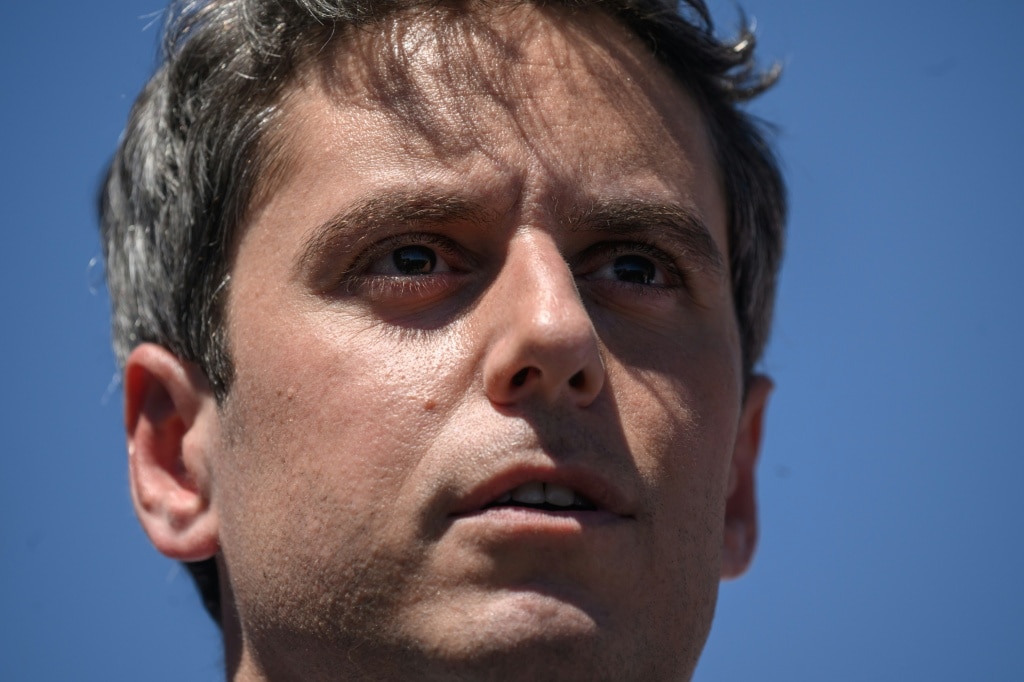
France’s youngest PM Attal to run for president
France’s political landscape has been upended by a historic announcement: 37-year-old Gabriel Attal, the youngest person to ever hold the post of French Prime Minister, officially declared his candidacy for the 2025 presidential election on Friday. The centrist contender made his announcement against a backdrop of clear blue skies in the small rural village of Mur-de-Barrez, a strategic choice aimed at addressing longstanding criticism that centrist parties lack deep roots in France’s countryside ahead of a contest that will likely be defined by the battle against the rising far-right National Rally (RN).
In his opening remarks to supporters, Attal pushed back against the stagnation that has come to define mainstream French politics in recent years. “I can’t take this kind of French politics anymore, where it’s just 50 shades of managing decline,” he told the crowd, positioning himself as a fresh alternative to both establishment gridlock and far-right populism. When he took office as Prime Minister in 2024 at age 34, Attal made history as France’s youngest head of government, and his rapid ascent through the political ranks has already drawn widespread comparisons to current President Emmanuel Macron, who won the Elysee Palace at 39 in 2017, becoming France’s youngest head of state since Napoleon. Attal will turn 38 in March, just one month before the scheduled April presidential vote, which Macron will not contest as he steps down after two terms.
Attal’s entry into the race creates a crowded field of high-profile candidates from across the political spectrum. He joins former center-right Prime Minister Edouard Philippe, 55, who now leads his own Horizons party, and 74-year-old hard-left leader Jean-Luc Melenchon as major declared contenders. For the far-right RN, the 2025 election represents the party’s strongest chance to seize the presidency in its history, with either party leader Jordan Bardella, 30, or former candidate Marine Le Pen expected to stand as the party’s nominee.
A product of France’s elite education system and an openly gay politician raised in Paris, Attal has opened up about his personal identity in recent months as he lays groundwork for his campaign. In a book published last month, the candidate dedicated an entire chapter to his partner, Stephane Sejourne, a European Commissioner and former French minister whom Attal describes as “the man of my life.” Attal has also spoken publicly about his mixed cultural background and experiences of prejudice: his father is Jewish, his mother follows Russian Orthodox Christianity, and he has said he has faced both anti-Semitism and homophobia throughout his life and career.
Attal’s short tenure as Prime Minister came to an abrupt end last year when President Macron dissolved the lower house of parliament and called snap legislative elections, a risky political gambit designed to halt the RN’s growing momentum that ultimately backfired spectacularly. The result was months of crippling political deadlock and a hung parliament, where the RN emerged as the largest single party in the legislature. Shortly after the dissolution, Attal formally distanced himself from Macron’s government, clearing the way for his independent presidential bid.
On the campaign trail, Attal already faces stiff competition from within the centrist and center-right space, most notably from Philippe, who led Macron’s first government as Prime Minister and has built a strong independent political base. Current polling consistently shows Philippe performing better than other centrist candidates in a hypothetical runoff against the RN nominee. Still, Attal has wasted no time in positioning himself as a candidate connected to working and rural French voters, a contrast to the common critique that Macron’s Renaissance party is too rooted in Parisian elite circles. “The day we stay locked in Parisian offices, in ministries, is the day politics stops,” Attal said in his launch speech. After entering politics in his early 20s, Attal climbed the ranks quickly: he won a seat in the National Assembly in 2017, the same year Macron was first elected, before going on to serve as government spokesperson, budget minister, and education minister between 2023 and 2024. During his time as education minister, he gained national attention for his work addressing school bullying and his controversial ban on the abaya, a loose full-length garment worn by Muslim women, in public schools.
Closing his launch speech, Attal struck an optimistic tone about France’s future, pushing back against narratives of inevitable national decline. “Having travelled a lot in France and met many French people, I’ve come to a conviction — a very strong one — that our finest chapters are still ahead of us,” he said.
-
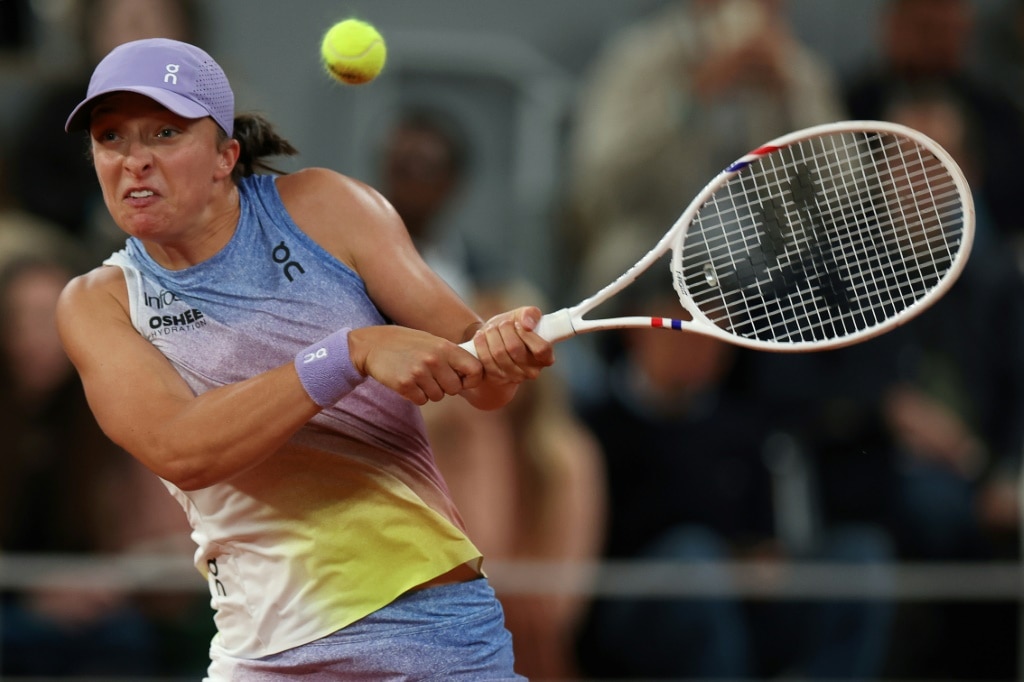
Tennis players ‘ignored’ but ‘united’ in Grand Slam pay dispute
As the 2025 French Open prepares to kick off at Roland Garros this Sunday, professional tennis is facing a growing rift between the sport’s top athletes and Grand Slam organizers, centered on long-simmering discontent over unfair revenue sharing for tournament prize money. The growing movement for reform has led dozens of the tour’s biggest names to organize a coordinated protest that will cut short their media commitments during the clay-court major, demanding a larger, more equitable slice of the multi-billion dollar Grand Slam revenue pie. Currently, players say they only receive 15 percent of the total revenue generated by the four Grand Slam tournaments — the Australian Open, French Open, Wimbledon and US Open — and are pushing for that share to be raised to a more just 22 percent, a change that would particularly benefit lower-ranked and emerging players.
World number eight Taylor Fritz, one of the leading voices of the protest, told reporters in Paris on Friday that players have made repeated moderate, patient efforts to engage organizers in dialogue, only to have their concerns completely dismissed. “It’s not about greed, it’s about getting what we are owed,” Fritz said. “We have been incredibly mild and patient with our requests, and it feels deeply disrespectful to be ignored at a time when tennis has never been healthier, when the partnership between players and tournaments should be built on open communication.”
The push for change has drawn support from across the top ranks of both men’s and women’s tennis. Men’s world number one Jannik Sinner was among the first high-profile players to call out organizers, demanding they show basic respect to the athletes who draw global audiences and revenue to the sport. Women’s world number one Aryna Sabalenka went a step further earlier this month at the Italian Open, warning that players could ultimately escalate to a full boycott of all four Grand Slam events to defend their collective rights. While Sabalenka acknowledged that top-ranked players like herself already earn a comfortable living, she emphasized the protest is first and foremost for lower-ranked competitors, young emerging athletes, and players recovering from injury who struggle to cover travel and training costs on their current earnings. “It’s not easy to make a stable living in tennis with the small share of revenue we currently get,” she said. “As the top player in the world, I have a responsibility to stand up for those who don’t have the platform to speak out for themselves.”
Fritz noted that a full boycott has not yet been seriously debated among players, but he stopped short of ruling out the action as a potential next step if organizers continue to refuse to negotiate. “If our concerns keep being ignored, change has to happen, that conversation will have to happen eventually,” he said. “I don’t want to throw the word boycott around lightly; I only want to say it when I mean it.”
Not all top players are joining the demonstration, however. 24-time Grand Slam champion Novak Djokovic, who is not participating in the protest, suggested tennis could learn lessons from how golf navigated the emergence of the breakaway LIV Golf circuit, noting that change in professional sports is inevitable, and expressing hope that tennis can resolve its current dispute with minimal disruption to the sport.
French Open organizers have already made their position clear: tournament director Amelie Mauresmo announced Thursday that Roland Garros would not increase the total prize pool for this year’s event, sticking to its existing payout structure. Russian star Andrey Rublev, a consistent Grand Slam contender who has joined the protest, slammed organizers for their complete lack of communication in response to players’ concerns. “They don’t hear you, they don’t answer,” Rublev said. “When we send official inquiries, no one responds for months. We just want one thing: are we in this together, or do you not care enough about us to even talk?”
Four-time French Open women’s champion Iga Swiatek, who confirmed her participation in the protest, explained the specific terms of the action: players will cap all media interviews at 15 minutes, a symbolic limit chosen to represent the 15 percent revenue share they currently receive. She stressed that the protest is not targeted at media outlets, but at tournament leadership. “We have nothing against the media, this is just our way to show we need change,” Swiatek said. “We are ready to step up our action if organizers don’t step up to meet our demands.”
Nineteen-year-old women’s world number eight Mirra Andreeva said the most striking part of the movement is how unified players are across ranks and generations. “We all have a clear, fair reason for this, and every single one of us is on the same page,” Andreeva said. “It’s really powerful to see all players stand together with the same goal.”
For this year’s tournament, the French Open has raised the men’s and women’s singles champion prize to 2.8 million euros ($3.3 million), up from 2.55 million euros in 2024. While that payout is higher than the champion’s prize at the Australian Open, it remains lower than the top purse at both Wimbledon and the US Open, underscoring the gaps that exist even between the four Grand Slam events as players push for broader industry-wide reform.
-
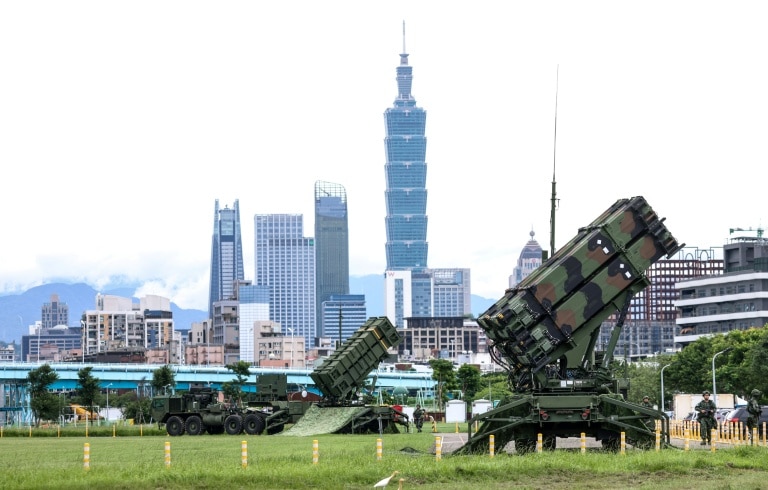
‘Hard to win’: Taiwanese react to uncertainty over US arms sales
When former U.S. President Donald Trump recently suggested that longstanding American arms sales to Taiwan could be used as a bargaining chip in negotiations with Beijing, it sent shockwaves through global diplomatic circles. For ordinary residents of Taipei, however, the moment has underscored a bleak reality: the island’s security trajectory is ultimately out of their hands.
One week has passed since Trump made the controversial remarks during interviews with Fox News and on Air Force One, and intense speculation continues to swirl over whether decades of consistent U.S. policy toward the democratically governed island could be fundamentally upended. The context of this uncertainty stretches back nearly 50 years, when the United States officially shifted its diplomatic recognition from Taipei to Beijing. Even without formal diplomatic ties, Washington has remained Taiwan’s most critical international security partner and primary arms supplier, a commitment codified in the 1979 Taiwan Relations Act passed by U.S. Congress, which legally requires Washington to provide defensive arms to the island.
Despite widespread anxiety among Taiwanese government officials, who have spent weeks anxiously awaiting Trump’s final decision on a new pending arms package, public reaction on the streets of Taipei has been marked by a quiet, fatalistic calm. Many residents have long held deep reservations about the practical value of additional U.S. weaponry in the face of China’s persistent claims that Taiwan is an inalienable part of its territory, and Beijing’s repeated threats to use force to assert control if necessary.
Nicole Lee, a 46-year-old nurse in Taipei, said she does not believe advanced military hardware would shift the balance of power significantly if a conflict were to break out. “Even if they give us weapons, if we really had to use force against China, I don’t think there would be much we could do,” she explained.
Ben Wu, a 41-year-old delivery driver, echoed Lee’s sentiment, framing U.S. arms sales as little more than a costly “protection fee” for the island. Even with the most advanced weaponry the U.S. can offer, he noted, “it would still be very hard to win” against China’s far larger military force.
To date, Taipei has poured tens of billions of dollars into purchasing advanced U.S. military equipment, including fifth-generation fighter jets, precision high-tech missiles, and reconnaissance drones, all to bolster its defensive capabilities against a potential cross-strait attack. Taiwanese officials have repeatedly reminded the Trump administration of Washington’s binding legal commitments under the Taiwan Relations Act, while top U.S. officials including Secretary of State Marco Rubio and Trade Representative Jamieson Greer have publicly insisted that no shift in longstanding U.S. policy toward Taiwan is underway.
Still, many ordinary Taiwanese remain deeply skeptical of Trump’s approach to the issue, with many arguing that the former president prioritizes U.S. interests above all other considerations, with little regard for longstanding alliances or commitments. Cynthia Kuo, a 29-year-old elementary school teacher in Taipei, described Trump as the “kind of person who just says whatever pops into his head.” “So I feel like whatever decisions he makes, he only makes them if he thinks they’re good for the United States,” she said. “He’s not going to take other countries into account.”
A 78-year-old retiree, who requested anonymity to speak freely, said the only certain takeaway from the current situation is that Trump cannot be counted on as a reliable partner for Taiwan. “He’s totally untrustworthy,” she said. “I often feel that Trump is a hooligan in international politics.”
Across age groups, residents of Taipei echoed a shared sense of powerlessness in the face of the current uncertainty. No matter the outcome, the final decisions on the pending arms package will be made in Washington, and any subsequent response from Beijing will be shaped thousands of kilometers away from Taipei. For 22-year-old university student Matt Lin, that reality makes personal anxiety feel pointless. “I’m not that worried,” he told AFP. “Whether we worry or not doesn’t really change anything.”
-
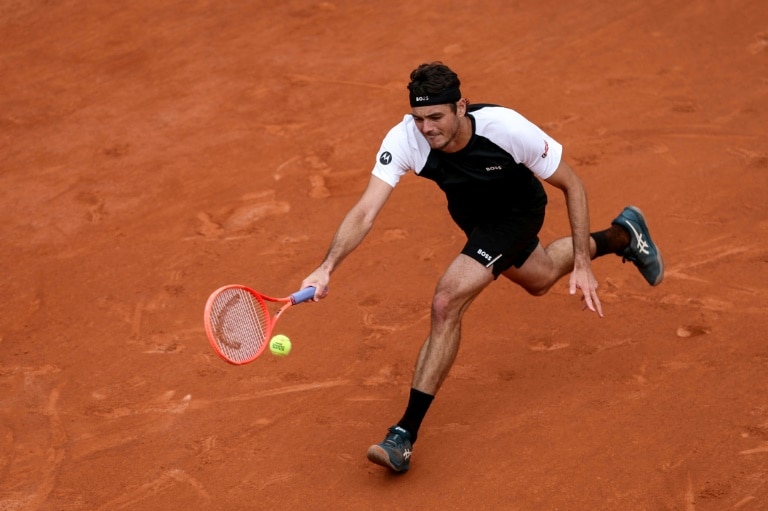
Tennis players ‘ignored’ in pay dispute, says Fritz
As the 2025 French Open prepares to kick off at Roland Garros this Sunday, a growing rift between elite tennis players and Grand Slam tournament organisers has erupted into open conflict, with top stars accusing governing bodies of ignoring longstanding calls for fairer revenue sharing.
World number eight Taylor Fritz, one of the most vocal leaders of the player movement, told reporters in Paris on Friday that players have maintained a measured approach to their demands but have been met with complete disregard from organisers. This dismissal has prompted a coordinated protest: the majority of the world’s top-10 ranked players will scale back their required media commitments throughout the clay-court major in a show of collective force.
At the heart of the dispute is the share of Grand Slam revenue allocated to player prize money. Currently, players receive just 15 percent of total revenue generated by the four Slams, and they are pushing to increase that allocation to 22 percent, a change they frame as a matter of basic fairness rather than excessive demand.
“It’s not about wanting more money. It’s about just wanting what’s fair,” Fritz said. “As the tournaments make more money, we obviously want to see the revenue shared back to the players reflect that. I think obviously when it’s going the opposite direction and going down, it’s disappointing to see. We have been pretty patient and mild with our requests, and I think all of us feel it’s a bit disrespectful to just be ignored when the sport is the healthiest, when there should be a very fair partnership and open dialogue between the players and the tournaments.”
The call for reform has gained widespread support across both the men’s and women’s games, with many of the sport’s biggest names backing action. Men’s world number one Jannik Sinner earlier this month urged Slam organisers to show basic respect to the athletes who draw global audiences to the tournaments. Women’s world number one Aryna Sabalenka even raised the possibility of a full boycott of all four Grand Slams to force organisers to address player demands, a comment that sent shockwaves through the tennis community.
Fritz clarified that a full-scale boycott has not been formally discussed among the player group, but he stopped short of ruling out the drastic measure if organisers continue to refuse to negotiate. “Something does have to change if we are ignored, so that’s a conversation to have, I think,” the American star said. “Right now I’m not ready to start tossing that around, because I want to really mean it if I’m going to say it.”
Russian 10-time Grand Slam quarter-finalist Andrey Rublev echoed Fritz’s frustration, calling out organisers for their complete lack of response to official player inquiries. “They don’t hear you. They don’t answer,” Rublev said. “When you send the mail in, no one responds to official mail for months. Come on, guys. We are together, or you completely don’t care that much that you cannot even communicate.”
So far, organisers have shown no willingness to compromise. French Open tournament director Amelie Mauresmo stated Thursday that Roland Garros officials would not budge on their current prize money structure, rejecting calls for an immediate increase.
Despite the hardline stance from organisers, young women’s star Mirra Andreeva, ranked eighth in the world, emphasized that players remain fully united in their push for reform. The 19-year-old noted that the collective stand has reinforced solidarity across the tour, saying: “I do think that we have a reason behind it, and I do think that all of us are united. It’s also nice that players are all together and they have the same opinion about that.”
This year’s French Open singles champion will take home 2.8 million euros ($3.3 million), up from 2.55 million euros in 2024. While the champion’s purse is higher than that of the Australian Open, it remains lower than the top prize at both Wimbledon and the US Open, highlighting the disparities that have fuelled player discontent across the tour.