标签: Oceania

大洋洲

  • Liverpool snatch derby win ahead of City-Arsenal showdown

    Liverpool snatch derby win ahead of City-Arsenal showdown

    The English Premier League’s final stretch delivered a day of high drama on Sunday, as a dramatic late winner from Virgil van Dijk gave Liverpool a 2-1 Merseyside derby victory over Everton, just hours before Manchester City and Arsenal clashed in a title-deciding showdown at the Etihad Stadium. The results across the league on the weekend shifted the dynamic of both the top-four Champions League race and the relegation battle, leaving multiple clubs with everything to play for across their remaining five fixtures.

    The fixture marked Liverpool’s first ever visit to Everton’s new Hill Dickinson Stadium, and it did not disappoint. The first half already delivered its share of controversy: just two minutes before Mohamed Salah opened the scoring for the Reds, Everton had an early effort from Iliman Ndiaye ruled out by VAR after Jake O’Brien was judged to be in an offside position. Salah, who will leave Liverpool at the end of this season, capitalized on a perfectly weighted through ball from Cody Gakpo to slot past Everton goalkeeper Jordan Pickford, equaling Steven Gerrard’s record of nine Premier League derby goals to become the competition’s joint all-time top scorer in the historic fixture.

    Everton, managed by David Moyes, weathered the early blow and drew level 10 minutes into the second half. Kiernan Dewsbury-Hall drove down the left flank and pulled a low cross across the six-yard box, where Beto got ahead of Liverpool starting goalkeeper Giorgi Mamardashvili to poke home the equalizer. The collision left Mamardashvili injured and forced him to be stretchered off, with backup Freddie Woodman coming on to finish the match.

    With the game tied and regular time expiring, officials added 11 minutes of stoppage time to the fixture. Deep into added time, Liverpool earned a corner, and Dominik Szoboszlai delivered an out-swinging cross that found captain Van Dijk unmarked at the near post. The defender powered a header past Pickford in the 100th minute to seal all three points for Arne Slot’s side. “Today was massive in the situation that we are, in hunt for the Champions League spots,” Van Dijk told Sky Sports after the match. “That is definitely not Liverpool-worthy, in my opinion, but it is the reality and it was important we got the win. We’ve got five more games left against teams that are also fighting for the Champions League spots. Every game is a big one.”

    The result leaves Liverpool fifth in the table, seven points clear of sixth-placed Chelsea who have slumped in recent weeks, and three points behind fourth-placed Aston Villa, who pulled off their own dramatic victory earlier on Sunday. Unai Emery’s Aston Villa side squandered a two-goal lead against Sunderland but grabbed a stoppage-time winner to seal a 4-3 thriller, moving them level on 58 points with third-placed Manchester United.

    Ollie Watkins scored two first-half headers for Villa, putting the midlands club 2-1 up after an early equalizer from Sunderland’s Chris Rigg. A third goal from Morgan Rogers just after halftime looked to have put the game to bed, but Sunderland struck twice in the space of a minute through Trai Hume and Wilson Isidor to draw level, leaving Villa on the brink of dropping crucial points. But Tammy Abraham struck late to steal all three points, keeping Villa firmly in the hunt for a top-five finish that would secure Champions League football next season. “What a position we are in, semi-final of European competition (Europa League) and pole position to qualify for top five,” Villa captain John McGinn said after the match. “We can go and achieve what not many Aston Villa players have done for a long time. We’re keen to do that and we’re driven, five big games left to try and get ourselves over the line.”

    At the other end of the table, Nottingham Forest boosted their survival hopes with a stunning 4-1 comeback win over already-doomed Burnley, inspired by a second-half hat-trick from Morgan Gibbs-White. Forest fell behind early but Gibbs-White’s masterclass turned the game on its head, moving Steve Cooper’s side five points clear of 18th-placed Tottenham Hotspur, who dropped vital points in their battle to avoid relegation. Tottenham could only manage a 2-2 home draw against Brighton on Saturday, leaving them a point behind 17th-placed West Ham United, who face Crystal Palace on Monday. Wolves and Burnley are all but confirmed to drop into the Championship at the end of the season.

    As the day concluded, all attention turned to the Etihad Stadium, where reigning champions Manchester City hosted long-time table leaders Arsenal in a game that could effectively decide the 2024-25 Premier League title. A win for Pep Guardiola’s side, followed by three points against Burnley in their game in hand, would see City climb to the top of the table with just five games remaining, putting them in pole position to secure a fourth consecutive league title.

  • ACOSS, Oxfam Australia, among 50 community organisations demanding 25pc gas tax and CGT reform

    ACOSS, Oxfam Australia, among 50 community organisations demanding 25pc gas tax and CGT reform

    As Australia’s federal budget delivery approaches, a coalition of 50 leading Australian community and welfare organizations has launched a coordinated call for sweeping tax reforms, targeting gas extraction, housing tax concessions and mining industry subsidies to raise tens of billions in annual revenue that would go directly to easing widespread cost-of-living strain for low-income and vulnerable households.

    Leading the advocacy coalition are two of the nation’s most prominent welfare groups — the Australian Council of Social Service (ACOSS) and Oxfam Australia. In an open letter to the Albanese government, the coalition outlined three targeted, practical policy changes it describes as commonsense reforms that would strengthen the national revenue base while correcting inequities across Australia’s housing, energy and tax systems.

    The first proposal is the introduction of a 25 percent levy on exported natural gas. The coalition argues this measure would secure a fairer return for Australian citizens from their nation’s natural resources, with projections indicating it could generate up to $17 billion in new annual public revenue. Beyond expanding government funding, the policy is also expected to help lower domestic gas prices for household consumers, delivering immediate relief to energy cost burdens.

    Second, the coalition calls for rolling back two longstanding housing tax policies: the capital gains tax discount and negative gearing arrangements that primarily benefit property investors. The group estimates this reform would raise $20 billion in revenue over its first four years, with larger long-term gains. Additionally, curbing these tax concessions would ease competitive pressure on the residential housing market, helping to cool sky-high property prices and improve access for first-time home buyers.

    The third proposal is the gradual phase-out of diesel fuel rebates for mining companies. This change is projected to add another $20 billion in revenue over the first four years of implementation, while delivering two broader public benefits: strengthening national energy security and cutting harmful climate pollution tied to fossil fuel extraction activities.

    All new revenue generated from these three reforms would be redirected to expanded community services and targeted income support, the coalition confirms. Key priorities include increasing the base rate of JobSeeker, Youth Allowance and other core income support payments to give vulnerable households the financial buffer they need to cope with soaring living costs. The coalition also notes the additional funding could support other critical national priorities, including First Nations self-determination initiatives, expanded social and affordable housing, improved disaster resilience, and accelerated renewable energy transition.

    ACOSS Chief Executive Cassandra Goldie emphasized that the current cost-of-living crisis has created an increasingly unsustainable situation for Australia’s most vulnerable communities. “People on the lowest incomes are skipping meals, delaying medical care and rationing energy just to get by,” Goldie said. She added that frontline support services across the country are already operating at full capacity, facing ever-growing demand and increasingly complex needs from vulnerable households. “Current policy settings are not meeting the needs of our communities – it’s clear that significant and sustained public investment is essential.”

    Goldie pointed out that Australia currently collects roughly $100 billion less in annual public revenue as a share of the economy compared to the average for other OECD member nations, arguing the country has ample capacity to raise additional fair, sustainable revenue to meet pressing community needs. “We clearly have the capacity to raise more money and invest it where it’s needed,” she said. These policy proposals have already been formally submitted to the federal government as part of ACOSS’s official pre-budget submission, which pushes for increased investment in income supports and essential public services.

    Treasurer Jim Chalmers is scheduled to deliver the 2025 federal budget to parliament on May 12, where the government will outline its revenue and spending priorities for the coming fiscal year.

  • Family left with unanswered questions after Suzanne Rees’ death on Lizard Island

    Family left with unanswered questions after Suzanne Rees’ death on Lizard Island

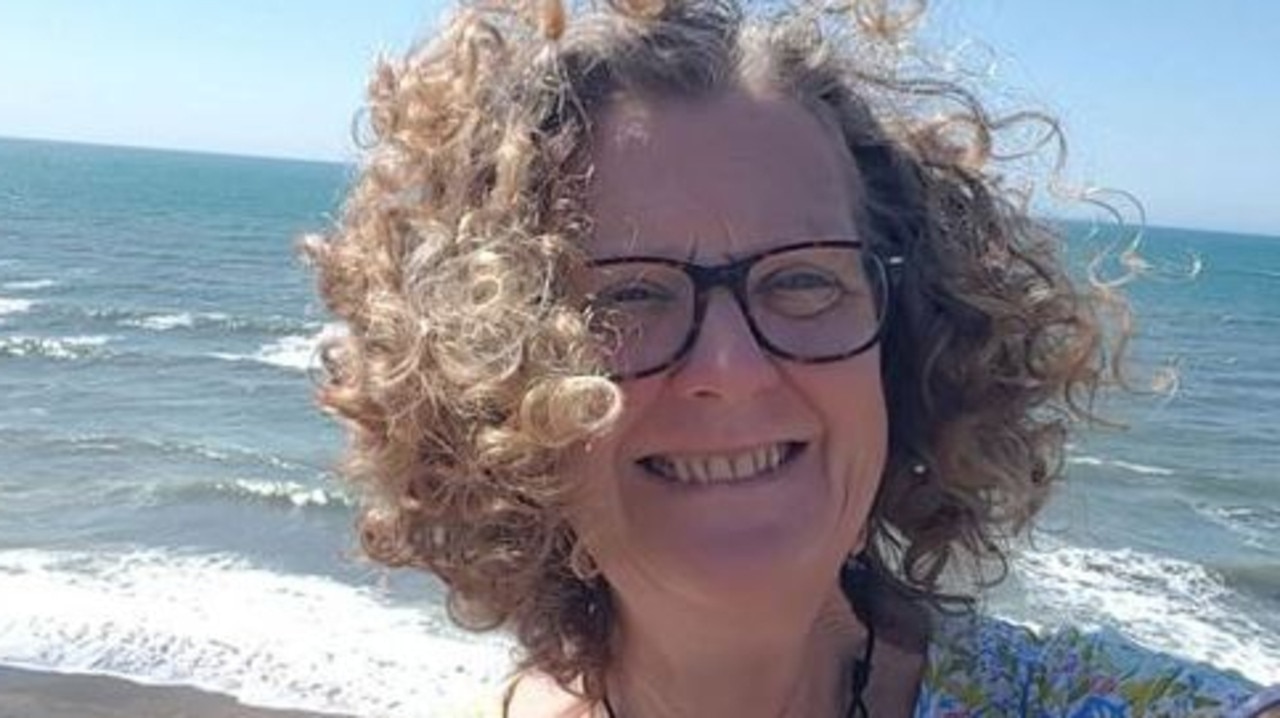
    A devastating cruise tragedy that claimed the life of an 81-year-old Australian grandmother has come under fresh scrutiny this week, as the victim’s family has broken their silence to demand accountability and expose critical safety failures that led to her unnecessary death.

    Suzanne Rees, a retired accountant and grandmother from New South Wales, embarked on what was meant to be the dream luxury voyage around Australia’s northern coast, a $30,000 journey departing from Cairns bound for Perth, operated by small-ship cruise provider Coral Expeditions onboard the Coral Adventurer. On October 25 last year, the cruise docked at Lizard Island, a popular tourist spot on the Great Barrier Reef, and Rees – an experienced hiker – joined the vessel’s guided shore hiking excursion.

    What began as a joyful excursion ended in unthinkable loss. Rees was separated from the group and left stranded on the island overnight, and search crews recovered her body the following morning, just 50 meters from the marked hiking path.

    Nearly a year after the tragedy, Rees’ daughter Kate Rees and son-in-law Andrew Cowie have shared their story in a Sunday evening episode of the long-running Australian current affairs program *60 Minutes*, airing the final text message Rees sent to her daughter hours before her death to highlight the senseless nature of the loss.

    “That morning she sent me a text with a photo of the ship’s deck, saying ‘Arrived at Lizard Island, going for a hike, and then afternoon swim’,” Kate Rees recalled in the program. “We had no reason to think that this wouldn’t be the most amazing experience. We had no reason to think anything bad would happen.”

    To date, the family says they have received no clear explanation for how the cruise crew failed to notice Rees was missing for hours. Based on the limited information they have received, Rees told *60 Minutes* her mother had reported feeling unwell mid-hike, and a guide instructed her to return to the ship alone – a decision that former Coral Adventurer hiking guide Fern Trent called deeply alarming and out of line with standard safety protocol.

    Trent explained that any time a guest needs to leave an excursion early, the standard practice is to radio the ship to arrange an escort, rather than leaving an unwell passenger to navigate an unfamiliar island alone. What shocked her most, she added, was that the crew missed Rees entirely during their mandatory headcount before the ship departed.

    *60 Minutes*’ investigation confirmed that the entire hiking group returned to the Coral Adventurer, and the ship set sail for its next destination at 3:35 pm. It took five full hours before the crew realized Rees was not onboard and turned the vessel around. A preliminary search party was deployed at 10:30 pm, and a rescue helicopter was dispatched from Cairns, but the search was suspended when the Coral Adventurer arrived at the island just after 3:30 am. Rees’ body was located the next morning.

    In an official statement provided to *60 Minutes*, Coral Expeditions acknowledged that catastrophic mistakes were made on the day of the tragedy. The company called Rees’ death devastating and offered a formal apology to the family for their loss and the pain the incident has caused.

    “While Coral Expeditions had comprehensive safety systems and procedures in place, we acknowledge some of these were not adequately implemented on this tragic day,” the statement read. “Ms Rees’ death has shocked our people to the core and we will continue to co-operate fully with the ongoing investigations. Coral Expeditions has introduced additional systems and procedures to further strengthen protections for our guests.”

    For Kate Rees, however, the policy changes come too late, and she argues that the excursion should never have run at all. She says extreme heat on the day should have led crew leaders to cancel the hike entirely, a decision that would have saved her mother’s life. “Somebody needed to make that decision and say, ‘too hot, we’re not doing a walk’,” she said. The family continues to push for full transparency as investigations into the tragedy move forward.

  • Pope Leo XIV calls for ‘hope’ before 100,000 faithful in Angola

    Pope Leo XIV calls for ‘hope’ before 100,000 faithful in Angola

    On a sunlit Sunday outside Angola’s capital Luanda, a crowd of nearly 100,000 worshippers gathered under the open sky for the first public Mass held by Pope Leo XIV during his visit to the southern African nation, receiving a message of hope tailored to a country blessed with abundant natural resources yet haunted by systemic poverty and deep-seated division.

    The pontiff’s arrival in Portuguese-speaking Angola on Saturday marked the third stop of an ambitious 11-day, four-nation tour across Africa, a journey that has already seen the leader of the Catholic Church speak out forcefully against systemic corruption and the ongoing foreign and domestic plunder of the continent’s rich natural endowments – and sparked a high-profile public dispute with United States President Donald Trump.

    According to Vatican figures sourced from local Angolan authorities, the gathering at Kilamba, a planned community located roughly 30 kilometers from Luanda’s city center, drew an estimated 100,000 attendees. In his address to the assembled faithful, Pope Leo urged the crowd to embrace a hopeful vision of the future, framing the moment as a potential new beginning for a nation still carrying deep social and political scars from a 27-year civil war that only concluded in 2002.

    “ It is within our power to build a nation where old divisions are laid to rest forever, where hatred and violence fade from memory, where the festering wound of corruption is healed by a new culture of justice and shared prosperity,” the pontiff told the assembled crowd.

    Fresh off his previous stop in Cameroon, Pope Leo met immediately after his Saturday arrival with Angolan President Joao Lourenco and other senior government officials, where he doubled down on the sharp rhetorical tone that has defined his African trip, calling out the widespread human suffering driven by extreme poverty and the unregulated exploitation of Angola’s natural wealth.

    As one of Africa’s leading oil producers and home to vast diamond reserves, Angola counts enormous natural wealth among its assets. Yet World Bank data reveals stark economic inequality across the country, with roughly one-third of its 36.6 million population living below the poverty line. Demographically, Angola is an overwhelmingly young nation, with an average population age of just 23 years old.

    For many young attendees, the papal visit offered a rare opportunity to draw global attention to the systemic barriers facing Angola’s youth. Patricio Musanga, a 32-year-old attendee who traveled to the Mass wearing a branded t-shirt bearing Pope Leo’s image and a white cap, explained that he came seeking encouragement for young people, who face widespread unemployment that pushes thousands to migrate to Western countries each year in search of better opportunities.

    “We are blessed with enormous natural wealth, yet we live with a shocking gap between the small fraction of the population that thrives and the majority that struggles,” Musanga told reporters. “The pope must hold our leaders accountable. I believe authorities will at least listen to what he has to say,” he added, echoing widespread calls for national reconciliation across the country.

    Father Pedro Chingandu, a Catholic priest who traveled to the Mass from the eastern Angolan province of Moxico, echoed these sentiments. “Wealth is concentrated in the hands of just a tiny elite, and the decades-long civil war only made this systemic inequality far worse,” Chingandu explained to AFP. “What this country needs is real democracy, meaningful wealth redistribution, and equal access to justice for all.”

    Following the open-air Mass in Kilamba, Pope Leo is scheduled to travel 110 kilometers by helicopter to the historic riverside town of Muxima, Angola’s most sacred Catholic pilgrimage site. The town is home to a 300-year-old church that overlooks the Kwanza River, once a primary transport route for enslaved African people trafficked to the Americas. The church houses a statue of the Virgin Mary known affectionately to local worshippers as “Mama Muxima,” and draws roughly two million pilgrims to the site each year. Originally built by Portuguese colonial settlers to baptize enslaved people before they were shipped downriver to the Atlantic and onward to the Americas, the site carries layered historical meaning for modern Angolan Catholics.

    The Angolan government has drawn criticism in recent years for launching a multi-million-euro project to construct a grand new basilica in Muxima, with critics arguing that public funds would be better directed to addressing widespread poverty and basic infrastructure needs. Those economic grievances boiled over into public unrest last July, when a three-day wave of looting across Luanda and other major urban centers left roughly 30 people dead, with critics condemning what they described as a heavy-handed response by police forces. Analysts have framed the unrest as a clear signal of widespread public dissatisfaction with President Lourenco’s ruling MPLA party, which has held continuous control of the Angolan government since the country won independence from Portugal in 1975.

    Pope Leo launched his 18,000-kilometer African journey earlier this week, with first stops in Algeria and Cameroon before traveling on to Angola. Speaking to reporters aboard his flight to Luanda, the pope, who is the first American pontiff in Catholic history, expressed regret that his public war of words with Donald Trump had overshadowed the core messages of his African trip. Trump previously labeled Pope Leo “weak” after the pontiff called for an immediate end to the ongoing war in the Middle East. “Entering into a public debate with the US president is not something that serves any of my goals,” the pope told reporters. After concluding his engagements in Angola, the pontiff will travel to Equatorial Guinea for the final stop of his continental tour.

  • Pauline Hanson’s One Nation primary vote dips to 24 per cent, new Newspoll survey finds

    Pauline Hanson’s One Nation primary vote dips to 24 per cent, new Newspoll survey finds

    Fresh political polling from Australia’s leading pollsters has delivered new data on shifting voter support, recording a second consecutive slight drop in the primary vote for Pauline Hanson’s One Nation that suggests the far-right party’s surge in popularity earlier this year may have hit a peak. The latest Newspoll, carried out for The Australian, surveyed 1,235 registered voters over four days last week, and found the party’s primary support fell by two percentage points to 24%. Both the ruling Labor Party and the centre-right Coalition remained unchanged, holding 31% and 21% of the primary vote respectively. The Greens gained one point to reach 13% support, while minor party and independent candidates grouped in the “other” category also saw a one-point uptick to hit 11%. The incremental decline of One Nation marks a continuation of a downward trend that began after the party hit a high of 27% support on two separate occasions in early and late February. Support dipped one point in March, making this latest drop the second in as many months. Even with the current dip, however, One Nation’s polling numbers remain vastly higher than its 2025 federal election result of 6.4%, demonstrating the party retains a far stronger hold on the electorate than it did during the last national vote. The broader trend of declining support identified in the Newspoll is echoed by separate data from the Resolve Political Monitor, which polled 1,807 voters this month for the Sydney Morning Herald and The Age. That survey also recorded a two-point drop in One Nation support, falling from 24% to 22%. Alongside primary voting intention, the Newspoll also measured public approval of preferred prime minister, finding incumbent Anthony Albanese’s lead over Opposition leader Angus Taylor widened slightly. Forty-six percent of respondents said Albanese would make a better prime minister, compared to 37% who backed Taylor. With the federal May budget just weeks away, pollsters also asked voters to weigh in on 10 separate proposals to increase national tax revenue. None of the proposals won majority support from the full electorate, though just 18% of respondents rejected all 10 options outright. The most popular policy was an increase to the petroleum resource rent tax, which earned 42% support from those surveyed. A reduction in tax concessions for property investors followed at 35%, while cutting tax concessions for family trusts won 29% backing from respondents. The results give the Albanese government clear signals on which tax reform proposals have the most public traction as it finalizes budget negotiations ahead of the official release.

  • War in the Middle East: latest developments

    War in the Middle East: latest developments

    The already volatile landscape of the Middle East has seen a fresh wave of destabilizing developments in recent days, even as a fragile 10-day ceasefire between Israel and Iran-backed Hezbollah holds tenuously along the Israel-Lebanon border.

    One of the most striking recent incidents is the deadly ambush that claimed the life of a French peacekeeper deployed with the United Nations Interim Force in Lebanon (UNIFIL) in southern Lebanon, leaving three additional service members wounded. UN Secretary-General Antonio Guterres issued a swift and forceful condemnation of the attack, noting that an initial UNIFIL investigation points to Hezbollah as the perpetrator. France has formally placed blame on the militant group, though Hezbollah has issued a categorical denial of any involvement in the ambush.

    Along the border, Lebanon’s military has begun moving to restore critical infrastructure damaged by weeks of cross-border fighting. Officials confirmed Sunday that a key highway connecting the city of Nabatieh to the Khardali region has been fully reopened to traffic, while a second major crossing, the Burj Rahal-Tyre bridge, is now partially operational. This incremental recovery comes as the ceasefire continues to hold in broad terms, though sporadic clashes have persisted. The Israeli military confirmed Saturday that one additional Israeli soldier had been killed in ongoing combat operations in southern Lebanon, marking the second Israeli military fatality since the truce went into effect Friday. To date, AFP’s tally based on official Israeli military data puts the total Israeli army death toll at 15 across six weeks of open conflict with Hezbollah. Hezbollah leader Naim Qassem has emphasized that the ceasefire cannot be a one-sided agreement, warning that his fighters remain on high alert and will respond immediately to any Israeli violation of the truce terms. “Because we do not trust this enemy, the resistance fighters will remain in the field with their hands on the trigger, and they will respond to violations accordingly,” Qassem said in a televised address Saturday. Despite the ceasefire, the Israeli military carried out an airstrike Saturday targeting what it described as a Hezbollah terrorist cell operating near its troops in southern Lebanon. Lebanese state media also reported that Israeli forces conducted demolition operations in multiple border towns, including Bint Jbeil, which saw some of the heaviest fighting before the truce took effect.

    Beyond the Lebanese border, the wider regional conflict has triggered major shifts in geopolitics and global energy security. The strategic Strait of Hormuz, through which roughly 20% of the world’s daily oil and liquefied natural gas shipments pass, has been re-closed by Iranian authorities. The closure came just one day after Iran briefly reopened the waterway following the announcement of the Israel-Hezbollah ceasefire, after U.S. President Donald Trump rejected any easing of the American naval blockade of Iranian ports, insisting the restriction would remain in place until a comprehensive peace deal is reached to end the wider regional war. Iran’s leadership called the U.S. position unacceptable and reimposed the closure, a move Trump has labeled “Iranian blackmail.” Iran’s Revolutionary Guards Navy has issued a stark warning to commercial and military shipping, announcing that no vessels may depart anchorages in the Persian Gulf or Sea of Oman, and any ship attempting to approach the Strait of Hormuz will be treated as an enemy collaborator and targeted.

    Diplomatic efforts to end the wider conflict between Iran, the U.S. and Israel remain stalled, according to senior Iranian officials. Iranian Parliament Speaker Mohammad Bagher Ghalibaf, a key member of Iran’s negotiation team, said in a televised address Saturday that while incremental progress has been made in bilateral talks with the U.S., major gaps and fundamental disagreements remain to be resolved. “We are still far from the final discussion,” Ghalibaf said. “We made progress in the negotiations, but there are many gaps and some fundamental points remain.” The human cost of the conflict for Iran has also been made public for the first time: Iranian state news agency ISNA quoted the country’s state-run Foundation of Martyrs and Veterans Affairs reporting that 3,468 Iranians have been killed since the start of the war with the U.S. and Israel.

    The ongoing conflict has also triggered a major realignment in British foreign policy, according to government insiders. British Prime Minister Keir Starmer’s administration is preparing to introduce new legislation next month aimed at significantly deepening the country’s economic and political ties with the European Union, a shift accelerated by the Iran war and growing strains in the UK’s long-standing “special relationship” with the United States. Sources note that President Trump’s well-documented unpredictability and repeated public insults toward the U.K. have given added momentum to the move, which comes a full decade after British voters narrowly approved the decision to leave the 27-nation bloc.

  • Zelensky slams oil sanctions relief for Russia

    Zelensky slams oil sanctions relief for Russia

    A fresh political controversy has erupted over the Trump administration’s last-minute decision to extend a sanctions waiver allowing seaborne Russian oil to enter global markets, drawing sharp condemnation from Ukrainian President Volodymyr Zelensky and fierce criticism from top Democratic leaders.

    The 30-day extension, announced Friday, greenlights the sale of Russian crude and petroleum products already loaded onto tankers through 12:01 a.m. GMT on May 16. The move renews an earlier sanctions relief measure that expired on April 11, and comes as the White House seeks to rein in skyrocketing global energy prices amplified by ongoing conflict in the Middle East. The reversal of policy is particularly notable: just two days before the extension was issued, U.S. Treasury Secretary Scott Bessent publicly stated the waiver would not be renewed.

    In a Sunday post on the social platform X, Zelensky lashed out at the easing of restrictions, arguing that every dollar of revenue generated by Russian oil sales directly funds Moscow’s full-scale invasion of Ukraine. He highlighted that more than 110 tankers carrying roughly 12 million tonnes of Russian crude are currently sailing the world’s oceans in violation of existing international sanctions, and the waiver now clears the way for these shipments to be sold without legal consequence. Zelensky valued this volume of oil at roughly $10 billion, a sum he says will be converted directly into new military strikes targeting Ukrainian civilian and military infrastructure.

    To underscore the immediate human cost of Russia’s continued funding, the Ukrainian president noted that in just the past seven days, Russian forces have launched over 2,360 attack drones, more than 1,320 guided aerial bombs, and nearly 60 projectiles of varying ranges against Ukrainian population centers. Local officials in the northern Ukrainian city of Chernihiv confirmed one such overnight attack left a 16-year-old boy dead and four additional civilians wounded. “It is important that Russian tankers are stopped, not allowed to deliver oil to ports. The aggressor’s oil exports must decrease, and Ukraine’s long-range sanctions continue to work toward that goal,” Zelensky said. He did not explicitly name the U.S. in his public statement.

    The decision has also sparked outrage from leading Democratic lawmakers, who have labeled the move “shameful.” In a joint statement, Senate Majority Leader Chuck Schumer, Senators Jeanne Shaheen and Elizabeth Warren argued that the reversal flies directly in the face of Bessent’s recent public commitment, and benefits Russian President Vladimir Putin disproportionately. “Make no mistake, Putin has been one of the biggest beneficiaries of President Trump’s war against Iran, as Russia saw oil revenues nearly double in March,” the statement read.

    Ukraine currently relies heavily on U.S. military and diplomatic support to fend off Russia’s invasion, which entered its fifth year this year. Relations between Zelensky and Trump have been fraught, with a high-profile public disagreement between the two leaders during a 2024 Oval Office meeting making headlines. Political observers note Trump’s decision to push for energy price relief comes ahead of critical midterm elections in the U.S., where rising fuel costs have become a top voter concern.

  • Thousands gather for Pope Leo’s first mass in Angola

    Thousands gather for Pope Leo’s first mass in Angola

    On the second day of his high-stakes visit to Angola, a resource-rich southern African nation grappling with systemic widespread poverty, Pope Leo XIV led a massive open-air Holy Mass on Sunday that drew tens of thousands of pilgrims and hopeful attendees to the Kilamba district on the outskirts of the capital, Luanda.

    The pontiff arrived in the Portuguese-speaking country Saturday to kick off the third leg of his 11-day, four-nation tour across the African continent. Immediately after landing, he held a formal meeting with Angolan President Joao Lourenco and top government officials, where he delivered sharp criticism of systemic oppression, the deep human suffering driven by extreme poverty, and the unregulated exploitation of Angola’s abundant natural resources. These remarks aligned with the core theme of his entire tour, which has centered on repeated warnings about the scourge of transnational corruption and the continued plunder of African natural wealth by foreign and domestic elites.

    For many in the crowd, the Pope’s visit represented a rare opportunity to appeal for global attention to Angola’s paradox of plenty: a nation sitting on some of the continent’s largest reserves of crude oil and diamonds, yet marked by crippling income inequality. Thirty-two-year-old attendee Patricio Musanga, who wore a branded cap and T-shirt emblazoned with the Pope’s image, told reporters he had come seeking a message of encouragement for Angola’s struggling youth. Facing persistent mass unemployment, thousands of young Angolans flee every year to Western countries in search of better economic prospects. Musanga noted, “We are very rich in natural resources but … there is a glaring inequality between those who live well and the others,” adding that he hoped the Pope would reinforce that Angolans can build prosperous lives at home without leaving for opportunities abroad.

    World Bank data underscores this gap: despite its status as one of Africa’s top crude oil producers, roughly one-third of Angola’s 36.6 million residents live below the international poverty line. Father Pedro Chingandu, who traveled from Angola’s eastern Moxico Province to attend the mass, pointed to decades of conflict as a key driver of persistent inequality. “There’s a concentration of wealth in the hands of very few, and of course the war just aggravated the situation,” he told Agence France-Presse, calling for “real democracy and the redistribution of wealth and justice” across the country. Angola has yet to fully heal from the 27-year civil war that broke out immediately after the nation gained independence from Portugal in 1975, only ending in 2002.

    Following the Kilamba mass, Pope Leo is scheduled to travel 110 kilometers by helicopter to Muxima, Angola’s most sacred Catholic pilgrimage site. The small river town is home to a 300-year-old church that overlooks the Kwanza River, once a major transit route for enslaved Africans trafficked to the Americas. Built by Portuguese colonial settlers to baptize enslaved people before they were shipped across the Atlantic, the church houses the beloved statue of the Virgin Mary known locally as “Mama Muxima,” which draws two million pilgrims annually. Large crowds are expected to greet the pontiff during his stop at the historic slave-route shrine.

    The Angolan government has drawn criticism for its multi-million-euro infrastructure project to build a new basilica, residential housing, and expanded public services in Muxima ahead of the Pope’s visit, with opponents questioning the government’s spending priorities at a time when widespread poverty persists across the country. Economic frustration already boiled over into public unrest last July, when a three-day looting spree across Luanda and other urban centers left roughly 30 people dead, many killed during what critics called a heavy-handed police crackdown. Political analysts have framed the unrest as a clear signal of widespread public dissatisfaction with the ruling socialist MPLA party, which has held uninterrupted control of the Angolan government since independence in 1975.

    In comments to reporters on his flight to Angola, the Pope, who was elected to the papacy one year ago, opened up about a recent public dispute that has overshadowed much of his African tour. He expressed regret over his public war of words with U.S. President Donald Trump, who has attacked the Pope as “weak” after Leo called for an immediate ceasefire to end the ongoing war in the Middle East. “It is not in my interest at all” to publicly debate the U.S. leader, the Pope affirmed.

    After wrapping up his engagements in Angola, Pope Leo will travel to Equatorial Guinea for the final stop of the 18,000-kilometer cross-continental tour, concluding a journey that has centered the needs of African nations and the urgent need for equitable global development.

  • Shocking footage of shooting at The Men’s Gallery strip club shared online

    Shocking footage of shooting at The Men’s Gallery strip club shared online

    Newly released dashcam footage has laid bare the terrifying moments of a recent drive-by shooting outside a popular Melbourne strip club, capturing the shooter’s actions and the rapid, life-saving reaction of an on-duty security guard.

    The chilling clip circulated online Friday via gang-focused media outlet Outlaw Media, emerging just hours after the incident unfolded around 4:10 a.m. at Men’s Gallery, a long-standing adult entertainment venue located on Melbourne’s Lonsdale Street. In the footage, a hooded, gloved suspect positioned in the passenger seat of a moving vehicle can be seen firing a silver handgun just meters from the club’s front entrance. Spotting the incoming threat almost instantly, the security guard posted at the doorway sprints away to take cover, narrowly avoiding any harm.

    Official statements from Victoria Police confirmed that no people suffered physical injuries in the attack. Authorities also confirmed that the shot originated from a dark-colored vehicle, fired directly toward the licensed premises. In the wake of the shooting, law enforcement has issued a public call for any witnesses or members of the public with relevant security footage or information to come forward and contact Crime Stoppers to assist with the investigation.

    What makes this incident particularly alarming for investigators is its timing: the shooting comes only days after the same venue was targeted in a failed arson attack around 5:45 a.m. on April 14. Detectives from Victoria Police’s Arson and Explosive Squad are currently probing whether this shooting is connected to that attempted arson, as well as a recent spike in suspicious fires across licensed hospitality venues across Melbourne over the past week.

    Speaking to reporters Friday, Detective Inspector Chris Murray noted that at least seven separate arson attacks have hit bars, restaurants, and clubs in recent days, and the underlying motive for the wave of violence remains unclear. While authorities are actively investigating potential connections between all the incidents, Murray confirmed that no concrete links have been confirmed to date. Venue owners have been fully cooperative with investigators, he added, and none have been able to explain why their properties have been targeted.

    Murray told reporters that police suspect the attacks are being organized by third parties who hire inexperienced young people to carry out the violent acts. “What we suspect is these jobs are being tasked out to anyone … these young kids are being used as cannon fodder,” he said.

    So far, police have made a small number of arrests connected to two of the suspicious fires. Investigations have revealed that the young males accused of carrying out those attacks were paid only a few hundred Australian dollars to commit the crimes, Murray said.

    In a public appeal for community assistance, Murray urged residents and business owners to report any suspicious activity immediately to Crime Stoppers. Specifically, he called attention to out-of-character late-night activity: “Call Crime Stoppers if you see something unusual, and when I say ‘something unusual’ … we see young males get out of vehicles in possession of jerry cans at 3am in the morning, now if you see that; obviously that’s something we’re interested in.”

  • Revealed: How well is your state or territory responding to the illicit tobacco crisis?

    Revealed: How well is your state or territory responding to the illicit tobacco crisis?

    Australia’s fragmented response to the growing illicit tobacco trade has been laid bare in a new performance ranking from the Australian Council on Smoking & Health (ACOSH), which identifies two front-running jurisdictions leading the fight while calling out two laggard regions as drastically off pace.

    The ACOSH Illicit Tobacco Ladder, published this week, evaluates every Australian state and territory across three core metrics: legislative frameworks, law enforcement operations, and public health interventions. The ranking comes amid rising concerns that the unregulated illicit tobacco industry has grown increasingly violent, with organized criminal networks dominating the trade and endangering communities across the country.

    At the top of the ranking, Queensland secured first place, followed closely by South Australia in second. ACOSH credits both jurisdictions for their unwavering commitment to strong, proactive enforcement. Queensland, the report notes, stands out for its rapid, preventative responses to illegal trade, backed by the nation’s most robust enforcement infrastructure and a large on-the-ground workforce. South Australia, meanwhile, earns praise for its strict bans on online tobacco sales, consistent strong enforcement, and clear, dedicated leadership from state ministers.

    ACOSH Chief Executive Laura Hunter explained that the ranking was developed to highlight successful strategies that other jurisdictions can replicate. “We created this ladder to demonstrate exactly how well governments across the country are controlling illicit supply, upholding the law, and applying meaningful penalties that deter criminal activity,” Hunter said. “Queensland and South Australia have incredible political buy-in: leaders are committed to tackling this issue, they are investing funding and resources into on-the-ground enforcement, and we are seeing illegal operations shut down every single day. That’s the model we want other regions to adopt.”

    New South Wales claimed third place, but the ranking makes clear there is a significant gap between NSW and the two leaders — a gap large enough to “park a few semi-trailers,” as the report puts it. The state needs to substantially boost its performance by increasing enforcement resourcing, introducing harsher penalties for property landlords who enable illegal trade, and implementing fines large enough to act as a real deterrent, the report found. Hunter added that while NSW has made some progress, namely introducing lease termination powers that protect landlords, it still lacks the complementary penalties for property owners who knowingly allow illegal tobacco sales from their premises.

    University of Sydney public health professor Becky Freeman, a leading researcher with more than 25 years of experience in tobacco and vaping control, said the ranking exposes a fundamental flaw in Australia’s current approach: a patchwork of inconsistent policies that has allowed the national crisis to spiral. “Some states have gotten on top of this, or are actively working to do so, while others are dragging their feet even with clear successful examples to copy,” Freeman said. Speaking from her base in NSW, she noted that the state only launched its tobacco licensing system in 2025, years after early adopters including Queensland, Tasmania, and Western Australia.

    Freeman also pushed back on a common misperception about the illicit tobacco trade: that it operates as an invisible “black market.” In reality, she explained, the trade is openly conducted at legitimate retail locations across the country, with retailers selling untaxed illegal products as a core part of their business model, often without fear of consequence. “It’s an in-your-face market, not a hidden black market,” she said. “Retailers don’t even feel like they’re doing something wrong or working with criminals anymore.”

    The professor also dismissed recent proposals from Federal Liberal MP Mary Aldred, who argued cutting the national fuel excise would reduce profit incentives for criminal networks and ease pressure on law enforcement. Freeman called the idea overly simplistic and harmful to public health. “It’s politically attractive to think that if legal cigarettes are expensive, lowering taxes will undercut the illicit trade. But that logic ignores basic reality: criminal networks can still undercut any legal price point, they haven’t hit rock bottom yet. Cutting tobacco costs across the board will only drive up smoking rates, which is the opposite of what public health policy should achieve,” she said.

    At the bottom of the ranking, the Australian Capital Territory (ACT) and Northern Territory placed seventh and eighth respectively, with both labeled “totally off pace” compared to other regions. The ACT, the report says, “talks a good game but isn’t playing one,” citing a near-total lack of meaningful penalties and very few successful closure orders for illegal operations. The Northern Territory, meanwhile, has not passed any new legislative changes to address the crisis and needs to make massive new investments in enforcement resources, the report found.

    Hunter outlined the core failures that have allowed the illicit tobacco crisis to grow in underperforming jurisdictions: weak licensing frameworks, an overabundance of unregulated tobacco retailers, insufficient on-the-ground enforcement, and inconsistent, toothless penalties that do nothing to deter illegal operators.

    Federal Assistant Customs Minister Julian Hill welcomed the independent ranking, noting that while the scrutiny may be uncomfortable for some state governments, the ACOSH scorecard is a critical tool to drive improvement. “Combined efforts by Commonwealth, state and territory agencies are already delivering strong results: we’re raising the stakes for criminals, cutting into their profits, and pushing up the price of illegal tobacco,” Hill said. “Governments must never surrender public health policy to organized crime, or condemn the next generation of Australians to the devastating harm of tobacco addiction, chronic disease and early death.”

    As of 2025, Australia has roughly 40,000 retail outlets selling tobacco products, even though only 10% of Australian adults report smoking. Australian Border Force data shows the agency seized a record volume of illicit tobacco and vapes in the 2024-25 financial year, averaging around 120 illegal shipments detected every day.