As the 2025 French Open prepares to kick off at Roland Garros this Sunday, professional tennis is facing a growing rift between the sport’s top athletes and Grand Slam organizers, centered on long-simmering discontent over unfair revenue sharing for tournament prize money. The growing movement for reform has led dozens of the tour’s biggest names to organize a coordinated protest that will cut short their media commitments during the clay-court major, demanding a larger, more equitable slice of the multi-billion dollar Grand Slam revenue pie. Currently, players say they only receive 15 percent of the total revenue generated by the four Grand Slam tournaments — the Australian Open, French Open, Wimbledon and US Open — and are pushing for that share to be raised to a more just 22 percent, a change that would particularly benefit lower-ranked and emerging players.
World number eight Taylor Fritz, one of the leading voices of the protest, told reporters in Paris on Friday that players have made repeated moderate, patient efforts to engage organizers in dialogue, only to have their concerns completely dismissed. “It’s not about greed, it’s about getting what we are owed,” Fritz said. “We have been incredibly mild and patient with our requests, and it feels deeply disrespectful to be ignored at a time when tennis has never been healthier, when the partnership between players and tournaments should be built on open communication.”
The push for change has drawn support from across the top ranks of both men’s and women’s tennis. Men’s world number one Jannik Sinner was among the first high-profile players to call out organizers, demanding they show basic respect to the athletes who draw global audiences and revenue to the sport. Women’s world number one Aryna Sabalenka went a step further earlier this month at the Italian Open, warning that players could ultimately escalate to a full boycott of all four Grand Slam events to defend their collective rights. While Sabalenka acknowledged that top-ranked players like herself already earn a comfortable living, she emphasized the protest is first and foremost for lower-ranked competitors, young emerging athletes, and players recovering from injury who struggle to cover travel and training costs on their current earnings. “It’s not easy to make a stable living in tennis with the small share of revenue we currently get,” she said. “As the top player in the world, I have a responsibility to stand up for those who don’t have the platform to speak out for themselves.”
Fritz noted that a full boycott has not yet been seriously debated among players, but he stopped short of ruling out the action as a potential next step if organizers continue to refuse to negotiate. “If our concerns keep being ignored, change has to happen, that conversation will have to happen eventually,” he said. “I don’t want to throw the word boycott around lightly; I only want to say it when I mean it.”
Not all top players are joining the demonstration, however. 24-time Grand Slam champion Novak Djokovic, who is not participating in the protest, suggested tennis could learn lessons from how golf navigated the emergence of the breakaway LIV Golf circuit, noting that change in professional sports is inevitable, and expressing hope that tennis can resolve its current dispute with minimal disruption to the sport.
French Open organizers have already made their position clear: tournament director Amelie Mauresmo announced Thursday that Roland Garros would not increase the total prize pool for this year’s event, sticking to its existing payout structure. Russian star Andrey Rublev, a consistent Grand Slam contender who has joined the protest, slammed organizers for their complete lack of communication in response to players’ concerns. “They don’t hear you, they don’t answer,” Rublev said. “When we send official inquiries, no one responds for months. We just want one thing: are we in this together, or do you not care enough about us to even talk?”
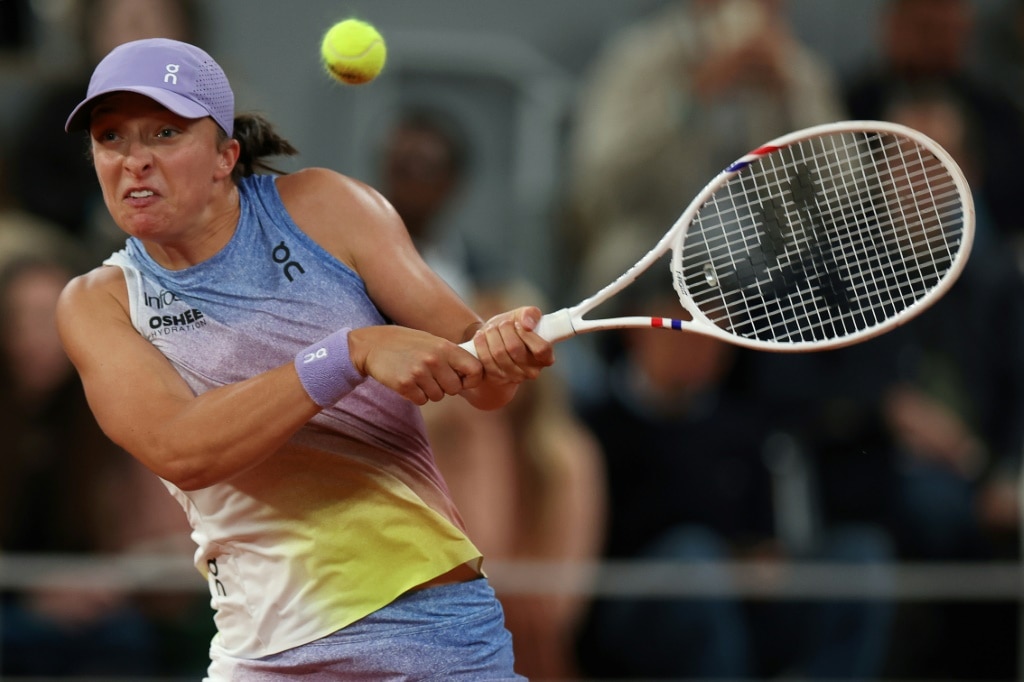
Four-time French Open women’s champion Iga Swiatek, who confirmed her participation in the protest, explained the specific terms of the action: players will cap all media interviews at 15 minutes, a symbolic limit chosen to represent the 15 percent revenue share they currently receive. She stressed that the protest is not targeted at media outlets, but at tournament leadership. “We have nothing against the media, this is just our way to show we need change,” Swiatek said. “We are ready to step up our action if organizers don’t step up to meet our demands.”
Nineteen-year-old women’s world number eight Mirra Andreeva said the most striking part of the movement is how unified players are across ranks and generations. “We all have a clear, fair reason for this, and every single one of us is on the same page,” Andreeva said. “It’s really powerful to see all players stand together with the same goal.”
For this year’s tournament, the French Open has raised the men’s and women’s singles champion prize to 2.8 million euros ($3.3 million), up from 2.55 million euros in 2024. While that payout is higher than the champion’s prize at the Australian Open, it remains lower than the top purse at both Wimbledon and the US Open, underscoring the gaps that exist even between the four Grand Slam events as players push for broader industry-wide reform.