标签: Oceania

大洋洲

  • US vows to punish Iran after Houthis strike tankers

    US vows to punish Iran after Houthis strike tankers

    A sharp escalation of tensions across the Middle East has sent shockwaves through global energy markets and raised urgent warnings of catastrophic regional conflict, after Yemen’s Iran-aligned Houthi movement launched targeted strikes on Saudi oil tankers in the Red Sea this week. The flare-up comes as fighting already resumes over the strategically critical Strait of Hormuz, pitting the United States and Iran against one another just weeks after a short-lived ceasefire collapsed.

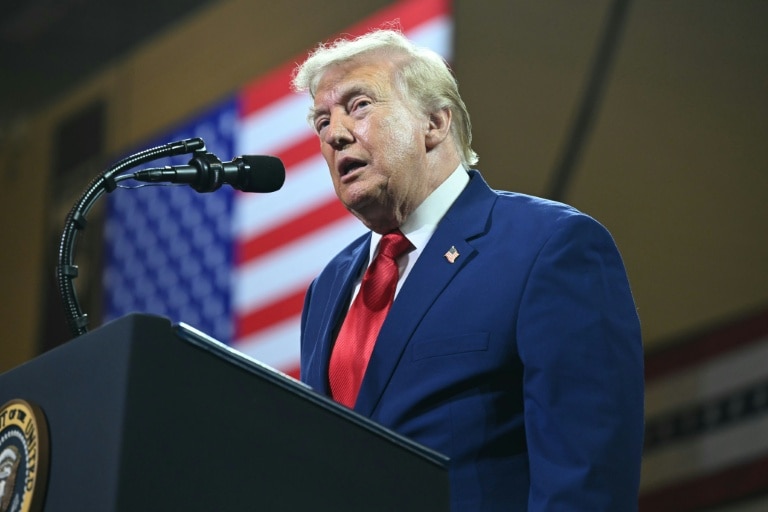
    Within hours of the Houthi attacks, which sent international benchmark Brent crude spiking 7% to breach the $100 per barrel threshold for the first time since May, US President Donald Trump issued a stark warning that Iran would face full accountability for the actions of its allied militia. In a post on social media Thursday evening, Trump announced a “major military punishment” would be delivered imminently to both Iran and the Houthis, and confirmed the US would tap hundreds of billions of dollars in frozen Iranian assets held under American control to compensate for any damage to commercial vessels and cargo in the region.

    United Nations Secretary-General António Guterres delivered a grim assessment of the escalating crisis to an emergency meeting of the UN Security Council, warning that the situation is rapidly spinning out of control and teetering on the brink of an unthinkable full-scale regional war. “One crisis feeds another. One escalation triggers the next,” Guterres warned, echoing growing global alarm over the disruption to key international shipping lanes that carry a large share of the world’s energy supplies.

    Economic policymakers have already sounded the alarm over the potential fallout from the energy disruption. European Central Bank President Christine Lagarde warned Thursday that the ongoing energy shock could intensify further, driving already elevated inflation higher across the eurozone and fueling market expectations of an interest rate hike as early as September. German Defence Minister Boris Pistorius added that the outlook for de-escalation remains grim, noting “nothing — absolutely nothing — suggests that a ceasefire, let alone peace, could be reached” for the region at this stage. He also warned that major oil-importing economies face dire consequences if shipping disruptions continue through the Red Sea and Strait of Hormuz.

    Iran has pushed back against US threats, with army spokesperson Mohammad Akraminia confirming that Iranian retaliatory strikes will continue for as long as US attacks on Iranian infrastructure and coastal areas persist. This week alone, the Islamic Revolutionary Guard Corps (IRGC) has joined the Houthi offensive, claiming strikes targeting US assets across Jordan and Kuwait, halting three commercial tankers transiting the Strait of Hormuz, and vowing to maintain pressure on Western and allied interests in the region. Both Jordan and Kuwait have confirmed intercepting incoming drone and missile strikes, with no reported casualties from the attacks so far.

    On the ground, US Central Command confirmed it has conducted 12 consecutive nights of airstrikes targeting Iranian assets across the region. Iranian state media reported Thursday that US strikes have killed two people near the Iraq-Iran border at Shalamcheh, and that two US missiles hit targets near Bushehr, home to Iran’s only civilian nuclear facility — a site that has been repeatedly targeted by US strikes in recent months. Additional reports from Iranian state outlet Tasnim News confirmed a separate missile strike on Qeshm Island in the Strait of Hormuz.

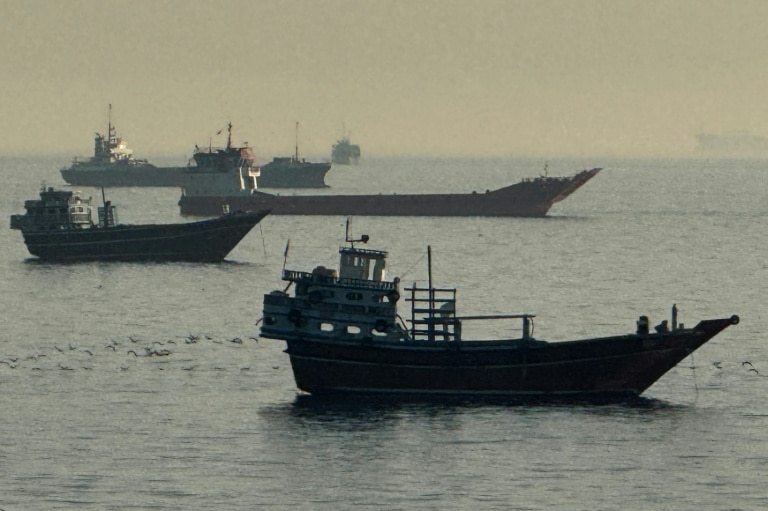
    Confirming the Red Sea attacks, Houthi officials said they targeted two Saudi tankers, the Encelia and the Layla, after declaring a full blockade of all Saudi ports in response to the resumption of regional conflict. British maritime security agency UKMTO confirmed that a tanker’s master reported a hit from an unknown projectile approximately 70 nautical miles southwest of Al Shuqaiq, sparking a fire onboard the vessel. Saudi Arabia has officially confirmed the strike on the Encelia, but has not yet commented on the reported attack on the Layla.

    The new Red Sea front represents a significant worsening of the crisis, as it endangers Saudi Arabia’s ability to redirect oil exports around any prolonged closure of the Strait of Hormuz, through which roughly one-fifth of the world’s daily oil supply transits. US Secretary of State Marco Rubio, speaking on the sidelines of a Southeast Asian summit in Manila, framed the Houthi intervention as a manipulated escalation, claiming the militia had been “suckered” into joining the conflict by Iran. “The Houthis largely were smart and stayed out of all this throughout the conflict, but they now apparently have gotten themselves suckered into this, going after Saudi Arabia and their ships,” Rubio told reporters.

    Diplomatic efforts to de-escalate remain underway, with Oman — a longstanding mediator between the Houthis and Saudi Arabia — confirming it is working to resume peace talks between the two parties and expressed “great concern” over the unfolding crisis in the Red Sea. Domestically, the renewed conflict has grown increasingly unpopular in the US, where midterm elections are looming in November. The US House of Representatives recently passed a symbolic bipartisan resolution — backed by opposition Democrats and a handful of Trump’s fellow Republicans — calling on the president to halt military action against Iran.
  • US unveils new tariffs on 60 partners as Trump rebuilds trade agenda

    US unveils new tariffs on 60 partners as Trump rebuilds trade agenda

    The United States announced Thursday a sweeping set of new tariffs targeting 60 global trading partners, framed around forced labor compliance concerns, that will replace an expiring temporary import duty first rolled out earlier this year by the Trump administration. The new levies, set to enter into force Friday, carry tiered rates between 10 and 12.5 percent and cover major world economies including China, India, and the European Union.

    U.S. Trade Representative Jamieson Greer stated in the official unveiling that Washington has enforced a national ban on forced labor imports for nearly a century, and argued it is long past due for all U.S. trading partners to adopt similarly rigorous rules.

    The move marks the administration’s latest step to rebuild President Trump’s signature tariff regime, after the U.S. Supreme Court struck down a sweeping set of his earlier tariffs in February. That ruling severely limited the president’s ability to impose steep duties without explicit congressional authorization, delivering a major legal setback to his trade agenda.

    Following the court decision, the Trump administration used alternative executive authority to reimpose a temporary 10 percent baseline tariff on most qualifying imports, but that measure carried a 150-day expiration that falls on Friday. The new round of duties, first proposed in June following a months-long regulatory investigation, replaces the expiring measure and has been structured to withstand future legal challenges far better than the earlier temporary tariffs, administration officials and trade experts note.

    Under the new tiered structure, trading partners that have already enacted their own formal forced labor import bans face the lower 10 percent rate; this group includes Canada, the European Union, and the United Kingdom. Nations deemed not to meet the compliance standard face the higher 12.5 percent levy, with major economies like China and Japan falling into this higher-tariff bracket, a senior U.S. official confirmed to reporters.

    Notably, goods already covered by sector-specific Trump-era tariffs on steel and aluminum are excluded from the new measures, and all imports qualifying for duty-free access under the U.S.-Mexico-Canada Agreement (USMCA) also remain exempt.

    Beyond the new forced labor-linked tariffs, Washington is currently conducting separate investigations into 16 global economies over allegations of excess industrial capacity, probes that could result in additional targeted duties down the line. Much like the original pre-ruling tariff framework, these future measures could carry varying rates tailored to individual countries.

    Trade experts say the strategy of imposing a baseline tariff while retaining the threat of additional future levies is intentional, designed to preserve U.S. negotiating leverage with trading partners. Greta Peisch, a trade lawyer and former USTR general counsel now serving as a partner at Wiley Rein, told Agence France-Presse that the structure creates clear incentives for countries to adhere to existing trade agreements they have signed with Washington. Peisch added that by investing months in formal investigations ahead of imposing the new duties, administration officials have sought to build robust legal protections against future court challenges.

    Josh Lipsky, senior fellow at the Atlantic Council think tank, said the new framework makes it far more likely that the tariffs will remain in place for the rest of Trump’s term, signaling that the world’s largest economy is shifting toward a significantly more protectionist trade posture going forward.

    Former U.S. trade official Ryan Majerus, now a partner at King & Spalding, noted that the administration has actively been searching for legal pathways to continue aggressive tariff deployment. He added that Section 301 of the 1974 Trade Act – the authority USTR Greer used to impose the latest duties – provides more policy flexibility than many observers recognize, allowing officials to adjust tariff rates over time in response to new developments.

    The new tariff announcement comes on the heels of two other recent aggressive trade actions by the Trump administration: just weeks ago, a 25 percent tariff on a range of Brazilian goods went into effect, following a year-long investigation that found Brazil engaged in unfair trade practices. Earlier this week, Trump also ordered a 50 percent tariff on dozens of Canadian products, citing what the administration calls Ottawa’s discriminatory treatment of American alcohol, automobile, and dairy exports. That Canadian tariff is set to take effect in one month and relies on an untested new legal provision, which Lipsky says demonstrates the administration still has a range of untapped trade tools at its disposal.

    Lipsky added that the flurry of new tariff actions signals that existing U.S. trade agreements remain fragile, despite past negotiations. Even so, the European Union – which signed a new trade pact with Washington in recent months – says it expects the U.S. to uphold all commitments laid out in the EU-U.S. joint statement.

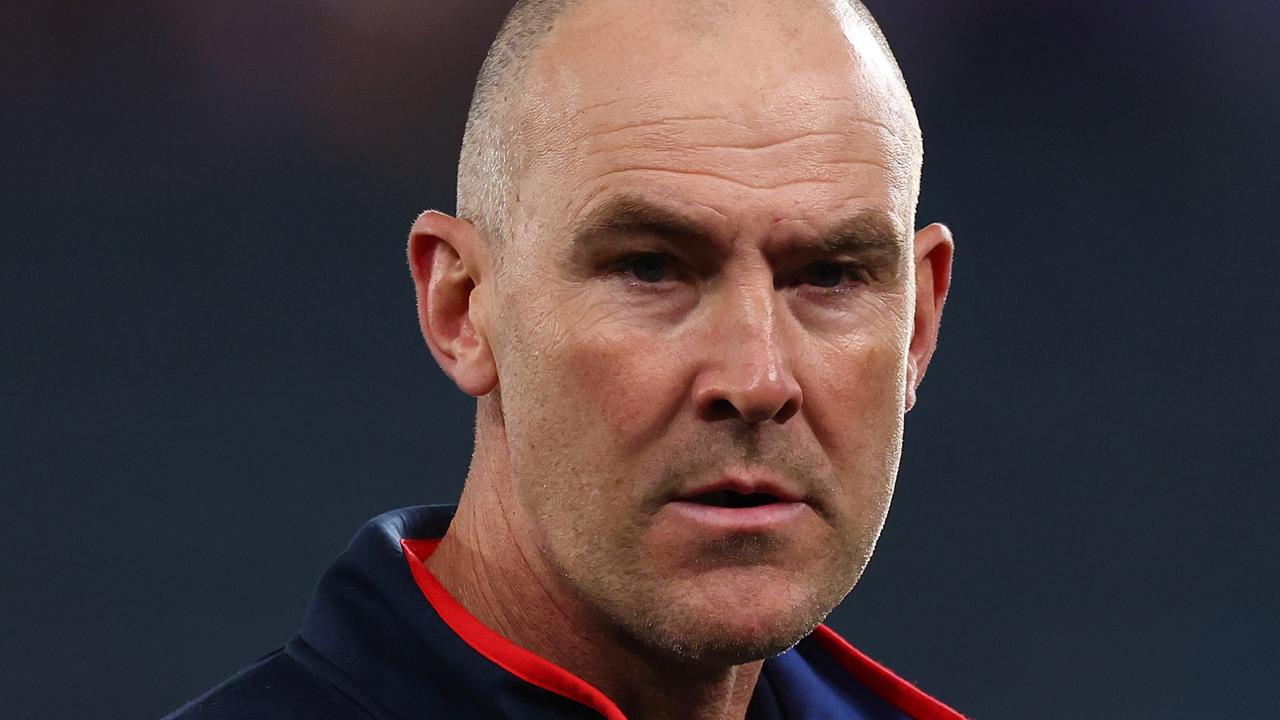
  • ‘Stifle the magic’: Melbourne coach Steven King on his uncomplicated brand

    ‘Stifle the magic’: Melbourne coach Steven King on his uncomplicated brand

    Ahead of a pivotal Friday night showdown against perennial contender Geelong at the Melbourne Cricket Ground, first-year AFL senior coach Steven King has opened up about the unorthodox philosophy that has turned the Melbourne Demons around from a disappointing 14th-place finish in 2023 to a top-six contender with five weeks remaining in the 2024 season.

    King’s winning formula upends the modern trend of hyper-structured, data-heavy coaching: he prioritizes innate player talent and instinct over rigid game plans and information overload, a choice that has unlocked an exciting brand of football that draws fans to stadiums.

    “The last thing I want to do is paralyse our group with too much structure, too much information, and I feel like that will stifle the magic we’ve created within,” King told reporters, repeating a core belief that has guided his first season at the helm.

    The 2024 AFL season has seen a clear shift toward faster, higher-scoring football, and King has adapted his approach to match this new era. He notes that top teams across the competition now capitalize on momentum to put up big scores quickly, a trend he has built the Demons’ game plan around.

    “All players get drafted because they’ve got talent and they can play – you still have to respect the contest and defence side of the game, that’s a must,” King explained. “But players love to show, express themselves with ball in hand, play the game – that’s why they’re all here because they can play.”

    King argues that a passive, pressure-absorbing style of play is no longer competitive in today’s game, where momentum swings can decide outcomes in minutes. “If you can’t put a hundred points on the board now and fight with the big boys, you’re sort of down a weight class or two,” he said. While hitting that score mark is not an official team key performance indicator, King says he wants the Demons to be dangerous in all phases of play, particularly when they have possession.

    A former Geelong captain himself, King admits he is still learning the craft of senior coaching, and counts the “delicate art” of stepping back as one of the most important lessons he has picked up in his debut season. Early on, he says he recognized his own tendency to overcomplicate game plans by adding extra layers to try and push the team into the top four.

    “But I feel like everything you add as a coach, there’s a risk that you take something off the group as well,” he noted. King relies on a mix of his experienced assistant coaching staff and veteran Demons leaders, including captain Max Gawn, who is fully aligned with King’s open game plan, to strike the right balance between structure and freedom. “We sort of lean on each other on how much info the group needs,” he said.

    This approach has already delivered results: after finishing 14th last season, the Demons currently sit sixth on the ladder, well positioned to qualify for the post-season. King has made it clear from the start that he wants his side to play an exciting, “bums-on-seats” brand of football that appeals even to neutral fans, and he says the team is eager to showcase that style in the high-profile Friday night MCG clash against his old club.

    “We’ve been craving it and playing a brand of footy that stacks up and people will want to watch,” King said. “To get this prime-time slot is a great recognition for our playing group, for what they’ve been doing throughout the year. We want to make sure we do the occasion proud by playing a brand of footy that even neutrals go, ‘That was entertaining and a good game of footy’.”

  • Albania police teargas protesters against Trump-linked resort

    Albania police teargas protesters against Trump-linked resort

    On a tense Thursday in Albania’s capital Tirana, security forces deployed tear gas and water cannons to disperse hundreds of demonstrators gathered outside the country’s parliament building, capping more than a month of sustained public anger over a luxury coastal tourism development linked to the Trump family. What began as a targeted environmental campaign against construction in a protected coastal wildlife reserve has grown into a broader protest over government transparency, public corruption, and misallocated public funds, uniting environmental activists, opposition politicians, and ordinary citizens against the ruling administration.

    The wave of daily demonstrations first launched in late May, sparked by plans to build a sprawling luxury resort complex connected to Ivanka Trump and Jared Kushner, the daughter and son-in-law of former U.S. President Donald Trump. The proposed development is located on a protected, unspoiled stretch of Albania’s Adriatic coast, in a protected nature reserve that hosts endangered loggerhead turtle nesting grounds and stable flamingo colonies on an adjacent uninhabited island. Scientists and local environmental activists say preliminary site work has already caused irreversible ecological harm, destroying critical habitats already at risk.

    Marine biologist Olsi Nika, who leads the prominent Albanian environmental NGO EcoAlbania, described the damage from early construction activities as “an absolute biodiversity massacre.” The site’s once-pristine coastal ecosystems, scientists confirm, have been permanently altered, eliminating nesting areas for loggerhead turtles, a species classified as threatened with extinction globally. The project’s location inside a protected natural and cultural heritage zone has amplified public outrage, with critics arguing the government bypassed environmental regulations and public oversight to advance a deal that benefits connected interests.

    Thursday’s clashes broke out as protesters attempted to push through heavy police security cordons to reach the parliament entrance. By the end of the day, Albania’s health ministry confirmed six police officers and 11 demonstrators suffered minor injuries and were treated at local Tirana hospitals. The demonstration was timed to coincide with a parliamentary vote on a 4 million euro ($4.6 million) public subsidy for a Kanye West concert held in Tirana earlier in July, a decision that further enraged a public already frustrated by the government’s handling of the resort project.

    In the chaotic parliamentary session, the subsidy was ultimately approved by 80 votes, all from the ruling Socialist Party, which holds a majority in the 140-seat unicameral legislature. Prime Minister Edi Rama had previously committed to the public funding, arguing it was required to prevent the high-profile concert from being canceled. For protesters, the approval of large public spending for a celebrity concert while pushing forward an environmentally destructive private resort project underscored what they call the government’s lopsided, non-transparent priorities.

    The project has become a major flashpoint for discontent in Albania, drawing thousands of nightly protesters through at least mid-July, according to on-the-ground reporting from Agence France-Presse. Clashes between demonstrators and police have occurred repeatedly in recent weeks outside parliament, with protesters previously throwing eggs at lawmakers as they entered the building. The development’s ties to the Trump family have also drawn international attention to the conflict, turning a local environmental dispute into a globally watched case of conservation versus high-profile development.

    No official crowd counts have been released by the Albanian government, but AFP journalists on site estimate thousands of people have joined the sustained daily protests through more than a month of action. Critics say the project highlights broader concerns about corruption and lack of accountability in Albania’s government, with environmental harm serving as the most visible trigger for widespread public anger that continues to roil the country’s political landscape.

  • US panel says to loosen restrictions on popular peptide despite safety concerns

    US panel says to loosen restrictions on popular peptide despite safety concerns

    A U.S. Food and Drug Administration advisory panel has sparked intense controversy after voting Thursday to recommend rolling back restrictions on the buzzy wellness industry peptide BPC-157, a decision that splits public health experts and opens new debate over untested compounded drugs. The recommendation came during a two-day gathering where the committee is evaluating whether seven understudied peptides should be added to the FDA’s approved bulk compounding list, a designation that lets specialized compounding pharmacies produce custom peptide formulations for wider public access.

    Peptides, short amino acid chains that form the building blocks of proteins, occur naturally in the human body. But synthetic versions like BPC-157 have exploded in popularity in mainstream wellness circles, promoted by social media influencers and A-list celebrities as a miracle solution for everything from injury recovery to overall bodily optimization, despite a near-total lack of rigorous human clinical trial data to back up those claims.

    Critics have already raised alarms over the composition of the advisory panel, noting that current U.S. Health Secretary Robert F. Kennedy Jr.—himself a public proponent of peptide use who says he has taken peptides to treat personal injuries—stacked the committee with appointees holding deep financial and professional ties to the growing peptide industry. The peptides now under review, which also include TB-500 and Semax, were previously restricted from compounding by the administration of former president Joe Biden, largely due to the absence of proven safety and effectiveness data from formal human trials.

    Even before the panel’s vote, unregulated access to these peptides remained widespread. Consumers can already purchase the substances online from chemical suppliers marketed as “for lab use only,” and the products are regularly promoted across social media platforms among wellness trend followers, biohackers, and high-profile public figures including Kennedy.

    The final vote on BPC-157 ended 8-6 in favor of adding the peptide to the approved compounding list, with one panel member abstaining. The outcome directly contradicts the formal warnings issued by FDA career scientists, who have repeatedly emphasized that BPC-157 lacks sufficient data to confirm it is safe or effective for human use.

    Panel members who opposed the recommendation stood by their objections during the open meeting. Elizabeth Rebello, a practicing pharmacist and anesthesiologist, told the committee she voted against the move “because of the lack of efficacy data” and ongoing “safety concerns.” Fellow no-voter Brian Lee added: “I think this endorsement can be potentially harmful, and I cannot in good conscience vote yes.”

    The majority of voting panelists justified their support for loosening restrictions by citing arguments of “medical freedom” and the “greater good” of expanding patient access to experimental treatments.

    The vote followed hours of testimony from stakeholders on both sides of the debate, including stark warnings from FDA career scientists against expanding access to untested BPC-157. Peter Lurie, president of the nonpartisan Center for Science in the Public Interest and a former FDA official, urged the panel to maintain existing restrictions, arguing that the recommendation “is inconsistent with the FDA’s own standards for pharmacy compounding, poses dangers to consumers, and removes incentives for developing new pharmaceutical products through the standard drug approval process.” Lurie went on to frame the unregulated peptide industry as a landscape rife with “pseudoscience and grift.”

    On the opposing side, telehealth firms including Hims & Hers argued in favor of easing restrictions, warning that keeping tight limits on compounded peptides will only push consumers to purchase unregulated products from unvetted gray market sellers, increasing rather than reducing safety risks.

    It is important to note that not all synthetic peptides carry the same level of risk: common treatments such as insulin and GLP-1 are well-studied, with well-documented risk and benefit profiles that have been confirmed through years of clinical research. By contrast, the injectable synthetic peptides promoted by wellness influencers and biohackers have never completed the large-scale, controlled clinical trials the FDA requires to formally confirm safety and effectiveness for consumer use.

    The advisory panel will continue its review of the six remaining peptides over the second day of the scheduled meeting. While the committee’s final recommendations are not legally binding for the FDA, the agency has a long-standing history of giving substantial deference to advisory panel guidance when setting regulatory policy.

  • Fields medal awarded to four young mathematicians

    Fields medal awarded to four young mathematicians

    One of the highest honors in global mathematics, the Fields Medal — often described as the Nobel Prize of the field — has been bestowed upon four early-career mathematicians during the opening ceremony of the International Congress of Mathematicians in Philadelphia this Thursday. Awarded every four years by the International Mathematical Union to recognize groundbreaking work by researchers under the age of 40, the prize includes a 15,000 Canadian dollar (approximately 11,000 USD) cash award and a gold medallion engraved with the likeness of ancient Greek mathematician Archimedes. This year’s cohort of winners includes two Chinese citizens, Hong Wang and Yu Deng, one American scholar John Pardon, and Canadian mathematician Jacob Tsimerman.

    Hong Wang, 35, who currently holds academic positions at institutions in both France and New York University in the United States, made history as only the third woman to claim the Fields Medal since the award was first established in 1936. She joins the ranks of just two other female recipients: Maryam Mirzakhani of Iran, who won in 2014, and Ukrainian mathematician Maryna Viazovska, who received the honor in 2022. Wang’s award-winning work centers on solving a century-old mathematical puzzle first posed by Japanese mathematician Soichi Kakeya in 1917. The problem, which became known as the Kakeya conjecture, asks a deceptively simple question: when a pencil is rotated a full 360 degrees, what is the smallest total area that the moving pencil sweeps out? Working alongside colleague Josh Zahl, Wang cracked the long-standing problem by extending analysis beyond the traditional two-dimensional plane into three-dimensional space. Wang explained the enduring appeal of the conjecture, noting that its underlying dynamic appears naturally across a vast range of unrelated mathematical fields, making its resolution relevant far beyond pure theory.

    Yu Deng, the second Chinese recipient of this year’s award, currently teaches at the University of Chicago. His win underscores the rapidly growing global influence of Chinese mathematicians over the past several decades, a shift that has reshaped the international landscape of mathematical research. The United States, which holds the all-time record for the most Fields Medal winners, is represented this year by 37-year-old John Pardon, while 38-year-old Jacob Tsimerman completes the 2024 group of recipients. Tsimerman, a specialist in complex algebraic geometry and analytic number theory, traced his lifelong passion for mathematics back to a simple puzzle his grandfather shared with him as a child: a logic problem about toasting three slices of bread in a broken toaster that only toasts one side of each slot. When he worked out the elegant solution, he recalled thinking “That’s beautiful” — a moment that hooked him on mathematics for life.

    This year’s International Congress of Mathematicians unfolds at a pivotal turning point for the field, as rapid advances in artificial intelligence are triggering widespread disruption and reevaluation of how mathematical research is conducted. In recent months, cutting-edge large AI models have stunned many leading mathematicians by demonstrating the ability to generate high-level, complex mathematical proofs, a development that opens promising new avenues for research but also raises pressing concerns. Back in June, a group of leading mathematics experts published the Leiden Declaration, a public statement outlining both scientific and ethical risks tied to growing AI integration in the field. The declaration calls for the urgent creation of standardized regulatory frameworks and safety safeguards to mitigate potential harms. Among the core risks outlined, the document notes that current AI-powered automated proof techniques often generate plausible-looking but ultimately unreliable or even fully incorrect mathematical arguments that can be extremely hard for even experts to distinguish from valid proofs. The statement also contextualizes these concerns within broader global debates, pointing out that AI’s rapid expansion carries overlapping risks related to unethical military applications, mass surveillance, political destabilization, and environmental harm tied to outsized energy consumption for large model training and operation.

  • Oil soars to $100 on fresh Mideast attacks

    Oil soars to $100 on fresh Mideast attacks

    Escalating geopolitical tensions across key Middle Eastern shipping lanes have sent global oil prices surging toward the $100 per barrel threshold, sparking widespread uncertainty across international financial markets on Thursday. The latest upward price movement came in response to continued attacks on Red Sea commercial shipping by Iran-aligned Houthi rebels, paired with a sharp threat of major military retaliation against the group from former U.S. President Donald Trump.

    Brent Crude, the global benchmark for international oil trade, jumped more than 5.7% to settle near $99.42 per barrel by 1100 GMT, just a hair below the psychologically significant $100 mark that investors and analysts have warned would signal a major shift in global energy market dynamics. U.S. benchmark West Texas Intermediate crude also climbed 4.5% to reach $90.75 per barrel.

    The disruption to Red Sea shipping has emerged as a critical flashpoint for energy markets, as Saudi Arabia has re-routed millions of barrels of oil exports through the waterway that normally pass through the Strait of Hormuz – another strategically vital energy choke point already facing elevated geopolitical risk. A prolonged closure or sustained disruption to either route would pull substantial volumes of oil off the global market, tightening supplies even further.

    Neil Wilson, a UK-based investor strategist at Saxo, noted that there are currently no visible signs of a diplomatic breakthrough to de-escalate tensions, as both the U.S. and Iran have adopted hardened positions. “Investors are in a wary mood, as fresh jitters over the ongoing energy crunch hit market sentiment,” added Susannah Streeter, chief investment strategist at Wealth Club. “With both the Strait of Hormuz and the Red Sea now under increasing pressure, markets are bracing for the possibility that the conflict could disrupt key energy routes and keep oil prices elevated for an extended period.”

    Higher sustained oil prices also raise the specter of renewed global inflationary pressure, which could force central banks around the world to hold interest rates higher for longer – or even implement additional rate hikes. This dynamic was on full display Thursday, as European Central Bank President Christine Lagarde confirmed that some policymakers had considered a rate hike at the bank’s latest monetary policy meeting before the governing council ultimately voted to hold rates steady.

    Major U.S. stock markets tumbled in early trading, with all three primary benchmark indices falling more than 1% by mid-session. The tech-heavy Nasdaq Composite led the declines, dropping 1.8%, as all of the so-called Magnificent Seven large-cap technology stocks ended the day in negative territory. Shares of Alphabet fell 6% after the company raised its full-year artificial intelligence capital expenditure forecast to as much as $205 billion, a figure far higher than Wall Street analysts had projected. Tesla shares slumped 9.6% following a weaker-than-expected quarterly profit report and an announcement that the firm would double its capital expenditure compared to the same quarter in 2025.

    Patrick O’Hare, an analyst at Briefing.com, pointed out that the scale of the index-level losses was not out of line with broader market conditions, noting that many non-tech stocks received a boost from positive earnings reports and that weekly U.S. unemployment claims data offered a reassuring signal about the strength of the domestic labor market. Even so, investor confidence in the AI sector has been tested in recent months, as concerns mount over stretched valuations and questions linger over when the trillions of dollars invested in the space will generate meaningful returns. Market participants are now turning their attention to next week’s earnings reports from Microsoft, Meta, and Amazon, which will be closely scrutinized for details of the companies’ planned capital spending.

    Global market performance was mixed across regions on Thursday. Most major Asian stock markets recorded modest gains, buoyed by a long-awaited bounce for regional technology firms. Japan’s Nikkei 225 closed up 0.5%, while Hong Kong’s Hang Seng Index gained 1.3% and Shanghai’s Composite index edged up 0.3%. In contrast, European markets traded lower across the board in afternoon dealing, with London’s FTSE 100 falling 0.9%, France’s CAC 40 dropping 1.8%, and Germany’s DAX declining 1.5%.

    In currency markets, the U.S. dollar strengthened against most major peer currencies. The Japanese yen hit a fresh four-decade low against the dollar, as investors priced in the persistent gap between the Bank of Japan’s ultra-low interest rate policy and the higher rates maintained by the U.S. and other major advanced economies. Rising oil prices and broader concerns over the outlook for Japan’s economy have added additional downward pressure on the yen in recent trading sessions.

  • Australia open to playing Test against England in India

    Australia open to playing Test against England in India

    The iconic Ashes cricket rivalry between England and Australia could one day take center stage on Indian soil, if Cricket Australia chief executive Todd Greenberg gets his way. In an interview with BBC Sport journalist Timothy Abraham, Greenberg has called for both cricketing governing bodies to keep the groundbreaking idea on the table as the sport works to reignite global interest in the traditional Test format.

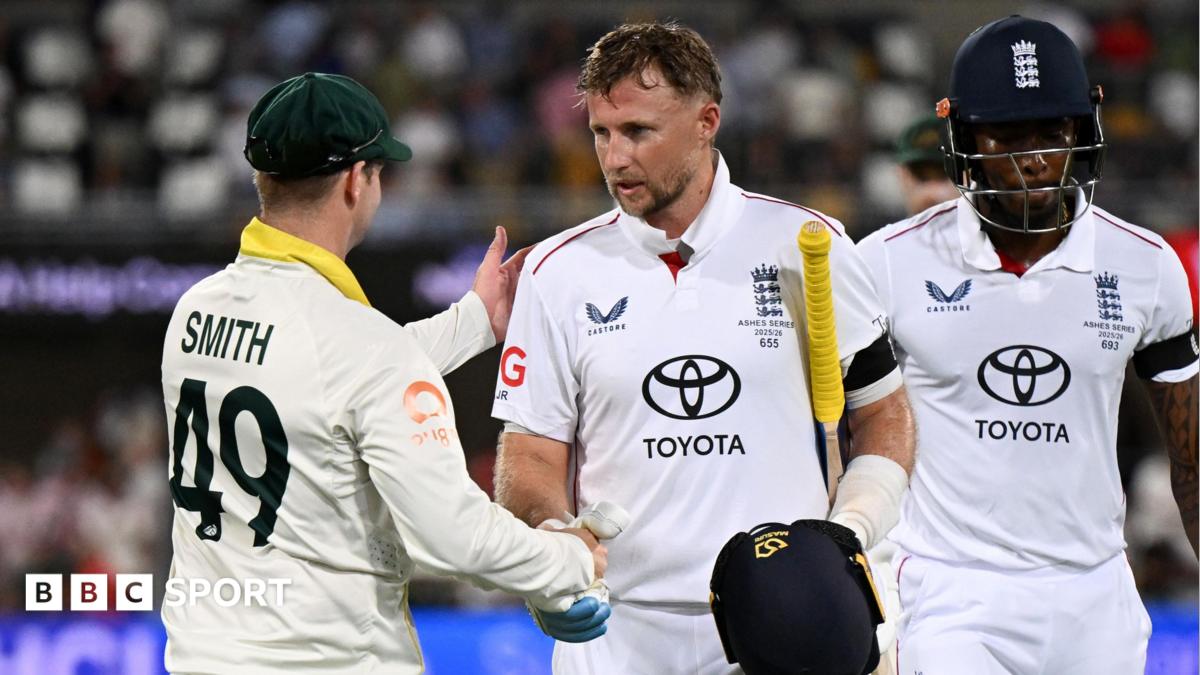
    For more than a century, England and Australia have only contested Test matches against one another as part of the Ashes series, the bi-annual home-and-away competition that rotates between the two nations roughly every four years, with Australia currently holding the urn after a dominant 4-1 victory in the 2025-26 series. That tradition is already set to break next year, however: the two sides will clash in a standalone one-off Test at the Melbourne Cricket Ground (MCG) in March 2027 to mark the 150th anniversary of their very first Test meeting.

    It is this spirit of evolution that Greenberg says should open the door to exploring a neutral-venue match in cricket’s largest and most high-impact market. “It’s not something that we are planning, but it’s open for consideration. We’d have to be open to considering all options,” Greenberg told BBC Sport. A fixture of this kind would require formal approval from both the England and Wales Cricket Board (ECB) and the Board of Control for Cricket in India (BCCI), but Greenberg pointed to strong existing relationships between all three governing bodies as a solid foundation for discussion.

    Cricket Australia is already laying the groundwork for expanding its footprint in India, with the country’s domestic Big Bash League set to play its first ever overseas match in Chennai this December, where the Melbourne Renegades will face off against the Perth Scorchers. The move is explicitly designed to tap into the world’s biggest cricket market and grow the competition’s global profile. While Test cricket has seen declining popularity in India in recent years, overshadowed by the explosion of T20 franchise cricket and the Indian Premier League, Greenberg argued that a historic England-Australia Test on Indian soil would draw massive fan interest. “There’s no doubt [it] would capture the imagination,” he said. “I think Test cricket between us, India and England is very strong and probably bucking the trend in some other parts of the world. We want to make sure we grow and strengthen it.”

    Greenberg also addressed ongoing controversy around the 150th anniversary Test scheduled for next year, which will be played under lights with a pink ball – a first for men’s Test cricket at the MCG. A number of high-profile former Australian players have publicly criticized the decision, departing from the format of the 1977 centenary Test, which was played as a traditional daytime match. But Greenberg defended the change, noting that a daytime match would struggle to draw large crowds given most fans work and attend school during weekday hours. He added that favorable broadcast time zones for UK audiences and larger overall viewership numbers make the pink-ball format a strategic choice to grow the sport’s reach.

    “It will anger some of the traditionalists but we’re in the business of getting more eyeballs on our game,” Greenberg said. “We wanted to get as many people for the game as possible. Playing that game in the day while people are at work and school would’ve made that difficult. Clearly there’s a commercial imperative with broadcast rights back in the UK and the time zone. Pink-ball Tests for us are hugely advantageous in terms of audience.”

    The CA chief also pushed back against criticism of the MCG’s recent Test pitch, which England infamously won in just two days during the 2025-26 Ashes series. He confirmed that preparations for the 2027 anniversary Test will target a flatter, less grassy pitch designed to produce a longer, more spectator-friendly contest. Greenberg emphasized that the governing body is working to strike a careful balance between honoring the 150-year history of Anglo-Australian Test cricket and adapting the format to meet the needs of modern audiences to ensure its long-term survival. “We’re trying to balance celebrating 150 years of Test cricket between our two countries but also have an eye on the future and how we can evolve the sport,” he added.

  • New multi-millionaire’s four-letter reaction to $40m Powerball win

    New multi-millionaire’s four-letter reaction to $40m Powerball win

    After three straight weeks of no top-prize claimants, a middle-aged couple from Brisbane’s Kenmore neighborhood has walked away with one of Australia’s biggest recent Powerball jackpots, scoring a total windfall of $40,724,820.55.

    The couple, who already had 19 additional lower-division wins to their name in the same Thursday evening draw, became the first jackpot winners since late June, when an unregistered Canberra man claimed an identical $40 million top prize. When lottery officials called to deliver the life-changing news, the winning husband gave a blunt, distinctly Australian reaction that captured the utter shock of the moment: “F**k no! What? You’re kidding me,” he shouted, unable to process the win at first.

    His wife shared similar disbelief, recalling that she had joked with her husband moments before the call that the unknown contact could be the national lottery operator The Lott with good news. “This is unreal. This can’t be real,” she said. Unlike many jackpot winners who weigh long-term decisions about their careers, the pair immediately announced an end to their working lives, saying they had spent years questioning whether there was more to life than daily work routines.

    “I’ve dreamt of this, but never imagined this happening to us,” the husband told lottery officials. The couple outlined their early plans for the massive sum: they will first clear their outstanding home mortgage, then set up long-term financial security for their children and extended family. Beyond that, they said they plan to embrace their newfound freedom and enjoy every moment of their unexpected good fortune.

    Lottery officials confirmed that the winning numbers, ordered numerically, were 7, 11, 12, 18, 27, 30 and 34, with a Powerball of 16. Alongside the single top-division jackpot win, 20 players took home division two prizes of $38,148.45 each, and another 81 winners claimed division three prizes of $11,650.25 apiece. The win marks the end of a four-draw rollover that had built up the jackpot to its massive sum, making the Brisbane couple the envy of lottery players across the country.

  • Aussie brand’s trademark battle with rapper Eminem takes new twist

    Aussie brand’s trademark battle with rapper Eminem takes new twist

    A high-stakes David vs Goliath trademark dispute between global rap icon Eminem and small Australian swimwear label Swim Shady is set to continue, after the hip-hop star filed a last-minute appeal against a recent court ruling that favored the local brand.

    The conflict centers on the similarity between Swim Shady’s brand name and Eminem’s legendary alter ego, Slim Shady, a moniker the rapper has built a decades-long career around. Lawyers representing Eminem, whose legal name is Marshall Mathers, had previously blocked Swim Shady co-founders Jeremy Scott and Elizabeth Afrakoff’s 2024 application to register their brand as a trademark in Australia, arguing the name infringed on the rapper’s existing intellectual property rights.

    Earlier this month, however, Delegate of the Registrar of Trade Mark Benjamin Goldsworthy ruled in Swim Shady’s favor. The decision found that Eminem’s registered trademarks for “Shady” and “Shady Limited” had not been actively used on clothing, footwear, headwear, bags, or leather goods in Australia during the mandatory legal period required to enforce trademark protection. As a result, the court ordered Mathers to cover the small brand’s legal costs stemming from the challenge.

    Scott and Afrakoff, the husband-and-wife team behind the Australian beachwear label, welcomed the initial ruling, calling it a key milestone for their young business. Even at the time, however, the pair acknowledged that the legal fight might not be fully resolved, noting that additional proceedings remained pending after the first ruling.

    True to that expectation, Eminem’s legal team has now launched an appeal. Documents for the appeal were officially submitted to the Federal Court of Australia’s Victoria Registry on Wednesday, right before the July 22 deadline set in the original ruling. The move means the small Australian brand will have to continue defending its trademark against one of the biggest names in the global music industry, extending a legal battle that has drawn international attention to the clash between a giant entertainment corporation and a local small business.