标签: Oceania

大洋洲

  • Injury crisis: Adam Reynolds headlines huge list of injuries as the Roosters survive epic Broncos comeback

    Injury crisis: Adam Reynolds headlines huge list of injuries as the Roosters survive epic Broncos comeback

    On a chaotic Saturday night in Sydney, the Sydney Roosters held off a late, breathtaking comeback attempt from the Brisbane Broncos to secure a 38-24 NRL victory, but the match will be remembered far more for its devastating injury toll, historic individual milestones, and high-stakes State of Origin audition between two of the game’s biggest stars. The fixture got off to a one-sided start, with the Roosters racing out to a dominant 30-0 lead early in the second half, leaving the Broncos on the brink of a blowout defeat. That narrative shifted completely when Broncos fullback Reece Walsh, playing his first match back after recovering from a facial fracture, pulled off a miraculous try-saving tackle that stopped Roosters winger Hugo Savala from scoring a guaranteed try. The momentum swung wildly in Brisbane’s favor after that play, with the Broncos crossing for four tries in just 15 minutes to slash the 30-point deficit to just six points, putting the club on the cusp of pulling off the greatest comeback in NRL history.

    That dream comeback was derailed with 10 minutes left to play, however, when Brisbane centre Kotoni Staggs was sent to the sin bin for 10 minutes after elbowing Savala in the back of the head while Savala was on the ground. The Roosters capitalized on the numerical advantage almost immediately, slotting a penalty goal to extend their lead, and held on for the final whistle to claim the win.

    The result will prove costly for both franchises, however, as the bruising physical contest left a trail of key sidelined players that will impact upcoming round matches. Brisbane’s injury crisis deepened dramatically, with star captain and halfback Adam Reynolds forced off the field just three minutes into the second half after his head slammed into the turf while attempting to tackle Roosters forward Naufahu Whyte. The head knock rules Reynolds out of Brisbane’s next match against Manly, with rookie Tom Duffy lined up to replace him in the starting side. Reynolds’ injury adds to an already long list of sidelined Brisbane stars: key forward Payne Haas and playmaker Ben Hunt were already out of action before Saturday’s match, winger Josiah Karapani left the game with a foot injury, and replacement Deine Mariner was forced off in the first half with a corked muscle.

    The Roosters also face significant absences for their next clash against the Titans. Prop Lindsay Collins was forced off early in the first half after a head clash, and failed the mandatory head injury assessment, ruling him out of next week’s fixture. Outside back Mark Nawaqanitawase is unlikely to feature after leaving the match with an ankle injury, while experienced forward Angus Crichton did not finish the contest, leaving the field with a knee injury wrapped in ice.

    Beyond the scoreline and injury toll, the match doubled as a high-profile State of Origin audition for two of the game’s most high-profile fullbacks, incumbent Queensland Maroons star Reece Walsh and NSW Blues hopeful James Tedesco. Tedesco, a former NSW captain who has not featured for the Blues since the opening game of the 2024 series, put in a performance that strengthened his case for a recall to the side ahead of the upcoming series. The experienced fullback ran for 153 metres and set up Daly Cherry-Evans for the game’s opening try, proving a constant threat through the middle of the field and outplaying his Queensland counterpart on the night.

    Walsh, meanwhile, had a quiet opening 40 minutes in his first game back from injury, but delivered the match’s most memorable highlight with that game-changing try-saving tackle, before crossing for a try himself and setting up another for Jordan Riki, finishing the game with six tackle busts to remind selectors of his dynamic threat with ball in hand. The match also saw standout performances from two other Roosters players: Sam Walker, a bolter for the Maroons Origin side, controlled the attack with a sharp short kicking game that punished the Broncos, while Whyte, called on to play extra minutes due to early Roosters injuries, ran 21 times for 190 metres in a dominant display up front.

    One of the most emotional moments of the night came for outside back Cody Ramsey, who made his first NRL appearance since the 2022 season after Nawaqanitawase’s injury opened up a spot in the side. Ramsey, a former St George Illawarra Dragon, was told he would never play professional rugby league again after being diagnosed with ulcerative colitis that required multiple invasive surgeries. He lost 28 kilograms in just seven weeks during his recovery, but never abandoned his dream of returning to the top tier of the sport. After working his way back through reserve grade in 2025, he waited 1337 days for his NRL return, which finally came in one of the most chaotic matches of the 2026 season.

    The night also delivered a historic milestone for Roosters veteran winger Daniel Tupou, who scored the 190th try of his 13-year NRL career to draw level with Melbourne Storm legend Billy Slater for third place on the all-time NRL try-scoring leaderboard. Tupou crossed for the milestone try 18 minutes into the match, finishing a slick backline movement in the left corner. Later this month, he is set to play his 300th NRL game, fittingly against Slater’s former club, the Melbourne Storm.

  • Doctors warn nicotine pouches could spark repeat of the vaping epidemic

    Doctors warn nicotine pouches could spark repeat of the vaping epidemic

    Australia is facing the early emergence of an unregulated public health crisis linked to unapproved nicotine pouches, with top medical authorities calling on the federal government to act fast to close regulatory gaps before the problem escalates into a repeat of the nation’s devastating vaping epidemic.

    In an official submission shared with the Therapeutic Goods Administration (TGA), the Australian Medical Association (AMA) is pressing the Albanese Government to immediately close existing loopholes that are allowing unapproved nicotine-containing products to flow freely into the domestic Australian market. As federal AMA vice president Associate Professor Julian Rait emphasized, regulatory inaction right now will allow these addictive products to become deeply entrenched across the country, a mistake Australia has already made with unregulated vapes in recent years.

    Currently, not a single nicotine pouch product holds formal approval on the Australian Register of Therapeutic Goods (ARTG), yet these products are widely available to consumers, including minors, Rait says. Unlike approved therapeutic nicotine products intended to help adults quit smoking, these unregulated pouches are marketed with bright, youth-appealing branding and sold through online platforms with almost no barriers to purchase. Some products have been found to carry extremely high concentrations of the addictive substance: independent, non-industry research has recorded nicotine levels as high as 150mg per pouch – equivalent to 50 cigarettes, given a 30mg pouch matches the nicotine content of a single conventional cigarette.

    Beyond addiction, these unregulated pouches carry confirmed negative health impacts for users, Rait explained. Common adverse effects include persistent mouth and gum irritation, gastrointestinal distress, nausea, and elevated blood pressure, with long-term health risks still understudied because of the product’s unapproved status.

    The submission also highlights that the combination of fast-growing social media promotion, loose online sales rules, and the rising use of unregulated synthetic nicotine has stretched Australia’s patchwork current regulatory framework to breaking point. Rait warned that without updated, technology-neutral national regulations and consistent cross-jurisdictional enforcement, unlicensed suppliers will keep exploiting grey market gaps to reach Australian consumers.

    To address the crisis, the AMA is calling for a suite of targeted public health safeguards. These include mandatory, effective online compliance protocols to remove illicit product listings, clear and standardized health warnings on all packaging, child-resistant packaging requirements to prevent accidental child poisoning, and enhanced national monitoring of adverse health events and poisoning cases to inform ongoing regulatory adjustments.

    Right now, Australia’s response to nicotine pouches is fragmented: state and territory governments have implemented inconsistent rules, with only a handful of jurisdictions such as South Australia and Queensland acting to restrict the products under existing tobacco legislation, while others have taken no formal action. The AMA’s proposed national regulatory framework would harmonize rules across the country, simplify enforcement for local authorities, eliminate inconsistencies between regions, and create a unified, robust enforcement environment to block unapproved products from the market.

    “Without urgent federal action, we risk repeating every mistake that allowed the vaping epidemic to take hold and harm a generation of young Australians,” Rait said.

  • Interest rate hikes slash first-home buyer borrowing capacity by thousands

    Interest rate hikes slash first-home buyer borrowing capacity by thousands

    Australia’s aspiring first homeowners are facing a growing barrier to entering the property market, with consecutive interest rate increases from the Reserve Bank of Australia (RBA) severely eroding how much they can borrow from lenders, according to new industry analysis.

  • US appeals court temporarily halts mail delivery of abortion pill

    US appeals court temporarily halts mail delivery of abortion pill

    In a move that reignites the decades-long national debate over abortion access in the United States, a federal appeals court imposed a temporary suspension on mail and pharmacy delivery of mifepristone Friday, the medication that accounts for the majority of abortion procedures across the country. The order came in a lawsuit filed against the U.S. Food and Drug Administration (FDA) by the state of Louisiana, a southern U.S. state with some of the nation’s most restrictive anti-abortion policies.

    The ruling came from a three-judge panel of the conservative-majority 5th Circuit Court of Appeals. It reverses an earlier lower court decision that permitted mail delivery of the drug to continue while the FDA undertakes a review of its existing regulatory framework for mifepristone. Under the new order, any person seeking mifepristone anywhere in the U.S. must obtain the drug in person from a licensed health clinic, eliminating all options for delivery by post or commercial pharmacy.

    Supporters of tighter restrictions on mifepristone have centered their arguments on a non-peer-reviewed study conducted by a conservative think tank, which was released via a public website rather than a peer-reviewed scientific journal. The FDA first granted formal approval to mifepristone, which is sold under the brand name Mifeprex, back in 2000. Today, it is the most widely used method of abortion care in the U.S., and it is also a standard treatment for managing early-stage pregnancy loss.

    In clinical use, mifepristone works by halting the progression of a pregnancy, and it is paired with a second medication, misoprostol, which expels the uterine lining. Together, the two drugs are approved by the FDA for terminating pregnancies up to 10 weeks (70 days) of gestation.

    Louisiana Attorney General Liz Murrill, a leading opponent of abortion access, celebrated the court’s decision, framing it as what she called a “Victory for Life!” In a statement following the ruling, Murrill claimed the Biden administration had facilitated what she labeled an “abortion cartel” that caused “the deaths of thousands of Louisiana babies (and millions in other states) through illegal mail-order abortion pills,” adding that “today, that nightmare is over.”

    But abortion rights advocates have sharply condemned the ruling, which is already on track to be appealed to the U.S. Supreme Court. Nancy Northup, president and CEO of the Center for Reproductive Rights, called the order politically motivated rather than evidence-based. “This isn’t about science — it’s about making abortion as difficult, expensive, and unreachable as possible,” Northup said in an official statement.

    Julia Kaye, an attorney with the American Civil Liberties Union (ACLU), emphasized that the decision creates unnecessary barriers to a medication that has been used safely by both abortion patients and people experiencing miscarriage for more than two and a half decades. “Anti-abortion politicians have just made it much harder for people everywhere in the country to get a medication that abortion and miscarriage patients have been safely using for more than 25 years,” Kaye noted.

    The latest legal development comes amid a sweeping shift in U.S. abortion policy that followed the Supreme Court’s 2022 decision to overturn Roe v. Wade, the landmark 1973 ruling that had enshrined a constitutional right to abortion nationwide for 50 years. Since that 2022 ruling, roughly 20 states have implemented full or partial bans on abortion care. Despite aggressive pushes from conservative groups to outlaw or severely limit abortion, consistent public opinion polling shows a majority of U.S. adults support maintaining widespread access to safe, legal abortion.

    Most recently, in 2024, the U.S. Supreme Court dismissed a separate challenge to mifepristone access, ruling that anti-abortion groups and physicians who brought the suit lacked the legal standing required to challenge the FDA’s approval of the drug.

  • ‘No going back’ for Colombia’s workers as the right eyes return

    ‘No going back’ for Colombia’s workers as the right eyes return

    As Colombia prepares to head to the polls on May 31 to elect a successor to its historic first leftist government, working-class voters and left-wing political leaders are drawing a firm line in the sand: there will be no return to the old order that dominated the country for generations.

    Four years after former guerrilla Gustavo Petro made history by winning the presidency, breaking a century of conservative and elite rule, two right-wing contenders are fighting to flip the executive branch and roll back the progressive social and labor reforms Petro enacted during his term. But at a raucous May Day rally held in central Bogota on Friday, thousands of working-class supporters packed the plaza outside Congress to rally behind Petro’s handpicked political heir, Senator Ivan Cepeda, who is currently leading polls in the race’s first round.

    Cepeda used the address to warn attendees that hard-won labor gains—including an unprecedented 23% increase to the national minimum wage, and expanded overtime pay for night and weekend shifts enacted as part of Petro’s landmark 2024 labor reform—would be immediately rolled back if a right-wing government took power. He slammed his two leading rivals, ultra-right lawyer Abelardo de la Espriella and conservative Senator Paloma Valencia, as standard-bearers for the same neoliberal model that concentrated wealth in the hands of a small, unproductive elite for decades before Petro took office in 2022. “Comrades, don’t allow them to take away what we have achieved!” Cepeda told the cheering crowd under the hot Andean sun. Former Health Minister Carolina Corcho echoed the rallying cry, telling supporters: “The people have awoken. There’s no going back.”

    Just a few months ago, political analysts widely predicted a right-wing wave would wash over Colombia, following a regional trend that saw voters oust left-wing governments across Latin America from Argentina to Chile and Bolivia, with critics faulting incumbents for mismanaging economies, failing to curb rising crime, and tolerating corruption. Petro himself faced intense scrutiny from U.S. President Donald Trump earlier this year, who threatened the Colombian leader after he supported ousted Venezuelan left-wing president Nicolas Maduro. But a diplomatic reset during a recent White House meeting between the two leaders, paired with the popular minimum wage hike, has sent Petro’s approval ratings soaring—and lifted Cepeda’s polling numbers with them.

    For ordinary working Colombians, the labor reforms have delivered tangible change. Alejandro Guayara, a 38-year-old doorman at a Bogota apartment building and father of two who struggled to make ends meet for years, said the minimum wage increase brought his family much-needed “peace of mind.” While only 2.4 million Colombians earn the federal minimum wage, millions more have benefited from the overtime pay expansions included in Petro’s labor overhaul. “People have experienced new-found hope with this president because ordinary people are being taken into account,” Guayara said. Jose Cruz, a 60-year-old former member of the M-19 guerrilla group that Petro belonged to in his youth, echoed that sentiment, telling Agence France-Presse: “Today the power is in our hands, that of the people.”

    Still, Petro’s administration has faced persistent criticism over a sharp rise in guerrilla and dissident violence across the country, a issue the right-wing candidates have centered their campaigns on. Critics have long used Petro’s past as a member of M-19, which disarmed in 1990, to accuse him of being too soft on the dozens of armed groups and cocaine trafficking networks that control large swathes of northeastern and southern Colombia. Last year was the most violent Colombia has seen in the decade since the FARC Marxist rebel army signed a historic peace deal ending a 50-year civil war, and just last weekend, a dissident FARC faction opposed to the 2016 peace deal bombed a southern Colombian highway, killing 21 people—a attack the faction later called an “error.”

    Yann Basset, a political science professor at Bogota’s University of Rosario, noted that for decades, Colombia’s left was tarred by its public association with leftist guerrilla violence. But today, he said, “a large part of the population associate it with something else, with the social reforms of the Petro government in particular, and much less with violence.” Still, the surge in violence has eroded support for Cepeda, who was a key architect of Petro’s peace negotiation strategy with armed groups, among some left-leaning voters. The security crisis has also boosted support for the right-wing candidates’ signature “mano dura” (hard hand) crackdown policy, which calls for harsher prison sentences and aggressive policing of armed groups. For many younger voters like 18-year-old engineering student Juan Manuel Cespedes, the security situation has become untenable. “Security has been terrible in recent years,” Cespedes said, echoing the right’s call for harsher penalties.

    Polling currently shows Cepeda leading the first round of voting, but no candidate is projected to hit the 50% threshold needed to win outright, meaning the race will almost certainly go to a run-off. It remains unclear whether Cepeda can hold onto his lead against either de la Espriella or Valencia in a head-to-head race, leaving Colombia’s political future hanging in the balance as voters head to the polls next week.

  • ‘Silence does not protect anyone’: Leaders call for inquiry into conditions at Alice Springs town camps after 5yo’s alleged abduction, murder

    ‘Silence does not protect anyone’: Leaders call for inquiry into conditions at Alice Springs town camps after 5yo’s alleged abduction, murder

    The horrific alleged abduction and murder of 5-year-old Kumanjayi Little Baby from an Alice Springs town camp has sparked widespread community outrage and urgent demands for a full independent investigation into the systemic failures that allowed the tragedy to occur. The young girl was last seen by her family at their home in Old Timers Camp, located on the outer edge of Alice Springs, on Saturday evening. Days later, early this week, her body was discovered along the banks of the Todd River, just five kilometers from the residence she was taken from.

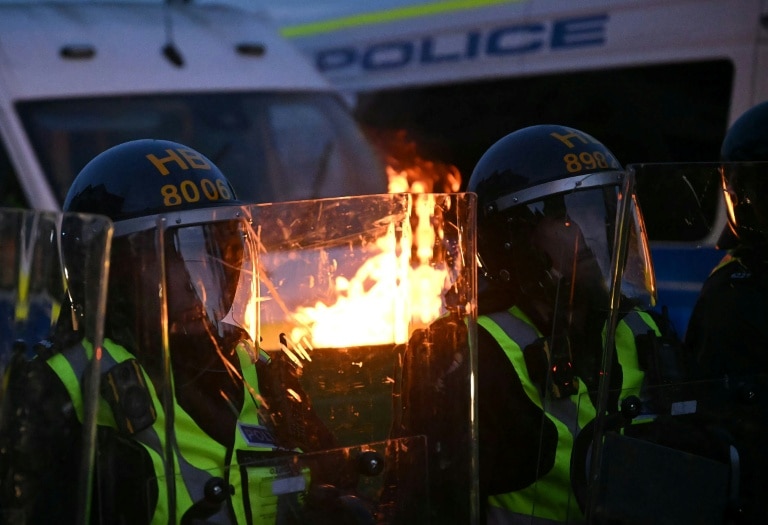
    By Thursday night, police had taken 48-year-old Jefferson Lewis, the prime suspect in the case, into custody. Immediately following his arrest, hundreds of angry community members gathered outside Alice Springs Hospital, where Lewis was receiving care for life-threatening injuries. The peaceful gathering quickly escalated into civil unrest: protesters threw rocks at law enforcement, lit dumpsters and vehicles on fire, forcing police to deploy riot shields, tear gas and rubber bullets to disperse the crowd.

    In the wake of the senseless killing, Northern Territory Senator Jacinta Price has emerged as a leading voice demanding a sweeping independent inquiry, not just into the specific circumstances of Kumanjayi’s death, but into the chronic dangerous conditions that have plagued Alice Springs’ town camp communities for decades. In an opinion piece published in *The Australian*, Price argued that these overcrowded, under-resourced settlements have been ignored by policymakers for far too long, creating environments that put vulnerable children at extreme risk.

    She noted that unregulated movement of people, including repeat violent offenders, is common across the camps, while existing alcohol restrictions are rarely enforced. Many settlements lack basic infrastructure, proper maintenance and effective oversight. Price, who has personal ties to Old Timers Camp that extend beyond this tragedy, shared that she has already lost multiple family members to violence and accidents in the camp.

    “These are not new observations,” Price wrote. “Not only into the circumstances surrounding this case, but into the broader conditions that allow such vulnerability to persist. That includes the governance of town camps, the role of organisations responsible for their upkeep, and whether current laws and enforcement mechanisms are adequate to protect the most vulnerable. Because if they are not, they must change.” She also raised urgent questions about transparency and accountability for the large amounts of public funding allocated to town camp management, calling for greater scrutiny of how those funds are spent.

    Opposition Leader Angus Taylor backed Price’s calls, telling Sky News that the tragedy was the inevitable result of decades of willful denial of the crisis in remote Indigenous communities. He noted that the Coalition took a proposal for a full royal commission into endemic sexual violence and abuse in these communities to the last federal election, and that that recommendation remains just as urgent today. “It’s the denial that has led us to this place where people aren’t prepared to have honest conversations about the state of affairs in our town camps and what options there are to address it,” Taylor said.

    Sue-Anne Hunter, National Commissioner for Aboriginal and Torres Strait Islander Children and Young People, added another layer to the calls for investigation, demanding an inquiry into the correctional system processes that led to Lewis being released from custody prior to the alleged murder. “We call for a wider investigation into the correctional systems that led to his release,” Hunter said.

    However, Indigenous Australians Minister Malarndirri McCarthy has pushed back on the demands for an immediate inquiry, arguing that the current moment should be focused on community mourning and supporting Kumanjayi’s grieving family. “Now’s the time to come together as a community in sorry business and be with this mum and her son as they prepare to bury their daughter,” McCarthy told the ABC.

    Across Alice Springs and the nation, the tragedy has left the tight-knit community in deep mourning. Flowers and handwritten tribute cards have piled up at the Old Timers Camp gate where Kumanjayi disappeared, as friends, neighbors and strangers grieve the loss of the young girl. In a heartbreaking public statement released after the discovery of her body, Kumanjayi’s mother and older brother shared their devastating grief. “To Kumanjayi Little Baby, me and Ramsiah miss and love you,” the statement reads. “I know you are in heaven with the rest of the family with Jesus and the Father, Son and Holy Spirit. Me and your brother will meet you one day. We are giving our lives to Jesus. It is going to be so hard to live the rest of our lives without you. Ramsiah wants to tell you that when he sees you in heaven, he is going to give you the biggest hug ever. Love from Mum and Ramsiah.”

  • AI actors and writers not eligible for Oscars: Academy

    AI actors and writers not eligible for Oscars: Academy

    In a landmark decision addressing one of the entertainment industry’s most contentious modern challenges, the Academy of Motion Picture Arts and Sciences announced sweeping new policy updates on Friday that explicitly bar AI-generated performances and screenplays from Oscar eligibility, alongside major reforms to the Best International Feature Film nomination process. The regulatory changes mark the Academy’s most high-profile intervention into the growing use of artificial intelligence in Hollywood, a technology that has sparked widespread anxiety among creative workers over job security and artistic integrity. Under the new framework, only roles performed by consenting human performers that are officially credited in a film’s legal billing can be considered for nomination in any acting category. For writing categories, the rules have been formally codified to require that all submitted screenplays must be human-authored to qualify for awards consideration. The announcement arrives just days after an AI-generated recreation of late Hollywood star Val Kilmer was publicly revealed to a gathering of cinema industry leaders. One year after Kilmer’s passing, a digitally recreated youthful version of the actor appears in the trailer for the upcoming archaeological action film *As Deep as the Grave*. The project was developed with full support from Kilmer’s family, who provided access to the actor’s personal video archive to help reconstruct his likeness at multiple points throughout his life and career. Unregulated AI development has been one of the most divisive issues in global entertainment for years, and it served as the core sticking point during the 2023 Hollywood strikes that brought major film and television production to a standstill. During the work stoppage, striking actors and writers repeatedly warned that unregulated adoption of AI would threaten long-term career stability for millions of creative professionals by enabling studios to replace human workers with digital alternatives. Beyond its AI policy reforms, the Academy also introduced significant changes to the eligibility rules for the Best International Feature Film category, a revision designed to address longstanding criticism of the old selection system. Prior to this update, only films officially selected by a recognized national governing body in their country of origin could be entered into the category. This requirement created a major barrier for acclaimed filmmakers working in authoritarian states, where government-backed bodies often block politically critical works from submission. A high-profile example of this gap came earlier this year, when Iranian dissident director Jafar Panahi’s film *It Was Just an Accident* was ultimately submitted as an entry from France rather than his home country. Under the new rules, non-English language films can now qualify for submission to the category if they win a qualifying award at one of five major international film festivals: Cannes, Berlin, Busan, Venice, and Toronto. Additionally, the Academy has revised attribution protocols for the category: moving forward, the film itself will be recognized as the nominee rather than the submitting country, and the director’s name will be listed on the statuette plaque directly after the film title, with the country of origin included only when applicable.

  • Australia wants to be first nation in the world to eliminate a cancer – can it?

    Australia wants to be first nation in the world to eliminate a cancer – can it?

    Twelve years ago, Chrissy Walters’ life changed forever. Six months after welcoming her long-awaited first daughter into the world following years of fertility struggles, the Toowoomba resident was rushed to hospital with a severe internal bleed. After multiple tests, biopsies and specialist appointments, the 39-year-old received a devastating diagnosis: advanced cervical cancer.

    Today, after more than a decade of grueling, invasive treatments, Walters’ cancer has spread throughout her body, and her condition is terminal. For her 12-year-old daughter, cervical cancer has been a constant presence throughout her life – the family began having open conversations about Walters’ mortality when the girl was just three years old. Now, as her daughter reaches the age Australia’s national immunization program targets for HPV vaccination, Walters holds onto the hope that her daughter’s generation will be the first to grow up free of the disease that is taking her life.

    Australia is well on its way to making that hope a reality. On track to become the first country in the world to eliminate cervical cancer as a public health threat – potentially beating its 2035 target – the nation has built on decades of local innovation and public health investment to reach this historic cusp. The story of Australia’s progress begins in 2006, when University of Queensland scientists Ian Frazer and Jian Zhou developed Gardasil, the world’s first effective vaccine against human papillomavirus (HPV), the most common high-risk cause of cervical cancer. A year later, Australia became the first country to roll out a national HPV vaccination program for adolescent girls, expanding the program to include boys (who can be asymptomatic carriers of the virus) in 2013.

    Alongside widespread vaccination, Australia has implemented a world-leading screening program that has drastically improved early detection. In 2017, it became one of the first nations to replace traditional pap smears with more sensitive HPV-based screening, which only needs to be completed once every five years. It also introduced the option of self-collected samples, a change public health officials call a game-changer for people who avoid screening due to anxiety about pelvic exams, or barriers like limited time or geographic distance from healthcare services.

    Public health experts define elimination of cervical cancer as fewer than four new cases per 100,000 people annually. As of the latest data, Australia already records 6.3 new cases per 100,000 women, down from double that rate when national record-keeping began in 1982. Most notably, 2021 data recorded zero new diagnoses of cervical cancer in women under 25 – a landmark that would have been unthinkable a generation ago. Karen Canfell, a leading epidemiologist at the University of Sydney and global pioneer in cervical cancer control, says the end of cervical cancer as a widespread public health threat is in sight. “It’s not all women of all ages yet, but you can see that concept of elimination being realised,” she notes.

    Canfell adds that Australia’s early investment in vaccination and screening has served as a blueprint for the World Health Organization’s global elimination strategy, making the country a trailblazer in the first global effort to eliminate any form of cancer. “Public health innovations in Australia sort of gave a general exemplar for WHO to follow,” she says.

    Despite this remarkable progress, significant challenges remain. The latest progress report highlights a small but concerning decline in vaccination coverage across the country, with stark disparities for First Nations communities. Aboriginal and Torres Strait Islander women currently face twice the rate of cervical cancer diagnoses and three times the mortality rate of non-Indigenous Australian women, due to long-standing barriers to healthcare access that often lead to late detection. On current trends, cervical cancer elimination for Indigenous Australian women will not come until 2047 – 12 years after the national 2035 target.

    Researchers add that other barriers, including lingering vaccine hesitancy in the wake of the COVID-19 pandemic, rising healthcare costs, and missed school-based vaccinations among students who have missed class time, are slowing progress. Many families also remain unaware that the HPV vaccine is fully free under Australia’s universal healthcare system, and there is no systematic national program to help children catch up on missed doses. “There’s not a lot of a concerted effort to get them back in if they’ve missed it… The onus is very much on families to get their child caught up on that vaccine,” explains researcher Jocelyn Jones.

    Beyond Australia’s borders, high implementation costs remain a major barrier to replicating the nation’s success in low- and middle-income countries, which often lack the robust public health infrastructure and funding needed to roll out widespread vaccination and screening programs. Global aid cuts have exacerbated this gap: in 2025, former U.S. President Donald Trump announced the end of American support for Gavi, the global vaccine alliance that supplies HPV vaccines to developing nations. Australia has stepped in to support neighboring nations including Vanuatu and Papua New Guinea to pursue their own elimination goals, but Canfell notes that high-income countries hold a unique advantage. “To say the obvious thing, we are obviously lucky to be in a high-income country where we have a form of universal healthcare and access for all,” she says.

    Canfell argues that eliminating cervical cancer is a worthwhile long-term investment for all nations, pointing to not only the saved lives and societal benefits but also tangible economic returns: when women do not die prematurely from cervical cancer, they remain active in the workforce and boost national economic productivity.

    Currently, Australia is in a quiet global race to be the first to reach elimination, with Sweden and Rwanda targeting 2027 and the UK targeting 2040, though all other nations currently lag behind Australia on key coverage milestones. For terminal patient Chrissy Walters, who describes living with cervical cancer as a full-time job that has left her with debilitating side effects, crippling fatigue and crippling financial stress even under Australia’s universal healthcare system, the progress could not come soon enough. While she will not live to see a world free of cervical cancer, she holds onto the hope that her daughter’s generation will never have to experience the pain and loss the disease has brought her family. That future, for Australia, is now within reach.

  • Pope names former undocumented migrant as US bishop

    Pope names former undocumented migrant as US bishop

    In a move that underscores the Vatican’s long-running stance on compassionate immigration policy, Pope Leo XIV announced Friday the nomination of Evelio Menjivar-Ayala — a former undocumented migrant who fled civil conflict in El Salvador — to lead the Diocese of Wheeling-Charleston in West Virginia. The appointment comes just weeks after a high-profile public dispute between the U.S.-born pontiff and former President Donald Trump, deepening a rift over immigration and global conflict that has defined their tense relationship.

    Menjivar-Ayala, 56, currently serves as an auxiliary bishop in the Archdiocese of Washington, and his life story tracks closely with the migration issues that have placed the Vatican at odds with hardline U.S. immigration policy. Born into poverty in El Salvador amid the country’s brutal 1980s civil war, he first attempted to cross into the United States in 1990, only to be detained by authorities in Mexico. In a 2023 interview, he recalled paying a bribe to secure his release before successfully crossing the border through Tijuana, entering the U.S. as an undocumented refugee fleeing violence. After decades of religious service, he was ordained as a priest in 2004 and elevated to auxiliary bishop in 2023.

    The Vatican officially confirmed the nomination in a public statement earlier this week, marking a historic milestone for a U.S. diocese: Menjivar-Ayala is believed to be one of the first former undocumented migrants to be appointed a U.S. diocesan bishop. For Pope Leo, who leads the world’s 1.4 billion Catholics, the appointment aligns with his repeated calls for humane treatment of migrants, a stance that has put him directly in conflict with Trump.

    Last month, the pontiff drew fierce pushback from Trump after condemning the former president’s threat to “destroy Iran” as “unacceptable.” Pope Leo urged U.S. voters to pressure congressional representatives to prioritize diplomatic peace over escalation, a comment that sparked a scathing retaliation from Trump. The former president took to social media to slam the pope, labeling him “WEAK on Crime, and terrible for Foreign Policy.”

    Beyond the Middle East conflict, immigration has been the primary flashpoint between the two leaders. Pope Leo has repeatedly decried the treatment of migrants in U.S. detention systems as “extremely disrespectful,” arguing that global governments have a moral obligation to pursue humane, welcoming policies for people fleeing violence and poverty. “We have to look for ways of treating people humanely,” he has said of migration, a message that the appointment of Menjivar-Ayala brings tangible, public form.

    Church observers note that the nomination is far more than a routine personnel change: it is a deliberate reaffirmation of the Catholic Church’s commitment to migrant advocacy at a time when immigration remains one of the most divisive political issues in the United States ahead of the 2024 presidential election.

  • Was LIV Golf an expensive failure for Saudis? Not everyone thinks so

    Was LIV Golf an expensive failure for Saudis? Not everyone thinks so

    For many casual observers, writing off Saudi Arabia’s $5 billion investment in the controversial breakaway LIV Golf tour as an expensive business failure seems like a straightforward conclusion after the kingdom confirmed its exit after five planned seasons. But industry experts argue that framing the LIV experiment as a total loss misreads Saudi Arabia’s broader strategic goals, which extended far beyond turning a quick profit on professional golf.

    Launched in 2022 by Saudi Arabia’s $900 billion sovereign wealth fund, the Public Investment Fund (PIF), LIV Golf upended the global golf landscape by poaching dozens of top stars including Dustin Johnson and Phil Mickelson with nine-figure signing bonuses. The reimagined tour format—featuring 54 holes of play, simultaneous shotgun starts, and on-course entertainment—sparked a bitter legal battle with the established PGA Tour that ended only when the two sides announced surprise merger negotiations, which dragged on for years without reaching a final deal. Ultimately, LIV never secured a lucrative major broadcast contract or built a large, loyal global fanbase, making continued large-scale investment unsustainable.

    However, analysts emphasize that LIV always served a larger purpose beyond golf: advancing Saudi Arabia’s core strategic agenda of diversifying its oil-dependent economy and boosting its global profile as a destination for tourism, international business, and investment. As the world’s top crude oil exporter, Saudi Arabia has used its PIF to pour billions into high-profile sports properties to deliver on this vision, a strategy that has already yielded visible wins: securing hosting rights for the 2034 men’s FIFA World Cup, luring global soccer superstar Cristiano Ronaldo to the Saudi Pro League, and taking over English Premier League club Newcastle United. Even with LIV’s exit, experts say this broader strategic trajectory remains unchanged.

    “Saudi Arabia is not going cold on sport,” Simon Chadwick, professor of Afro-Eurasian sport at Emlyon Business School in Shanghai, told Agence France-Presse. “It is evaluating the work that has thus far been done, what remains to be delivered, and what has worked (or hasn’t worked). The trajectory remains the same.”

    Chadwick added that initial Saudi ambitions for sports investment may have been overly ambitious, opening the door for opportunistic actors in the global sports industry to exploit the kingdom’s aggressive spending spree. Other analysts note that LIV’s exit is part of a broader pullback from the most extravagant, unproven projects across Saudi Arabia’s economic diversification agenda, including scaled-back spending on the $500 billion futuristic megacity NEOM and luxury tourism resorts. Within sports, the Saudi Pro League has also pulled back from the blank-check spending spree that attracted veteran global stars, and PIF recently sold a majority stake in top domestic club Al Hilal. Other high-profile events, including the Saudi Arabia Snooker Masters, have also been scrapped years into long-term contracts.

    Amro Elserty, a France-based Middle East sports affairs analyst, explained that LIV fulfilled its core initial purpose of putting Saudi Arabia on the global sports map, even if continued massive spending no longer made strategic sense. “That phase was primarily about visibility and positioning Saudi Arabia as a major global player,” he said. “What has changed is not that this objective disappeared, but that the marginal value of continuing to spend at the same level on a single project like LIV has declined.”

    While LIV’s exit carries some minor reputational risk, Elserty argued that it is not viewed as a major failure inside Saudi policy circles. “Within the logic of PIF’s strategy, this is better understood as a controlled exit from an experimental phase rather than a failure in the conventional sense,” he said. Chadwick echoed that view, noting that outside observers have overblown the significance of the pullback, framing what is a routine strategic adjustment as a high-stakes sports melodrama. Critics have long dismissed Saudi Arabia’s sports investments as “sportswashing,” an effort to distract from global criticism of the kingdom’s human rights record, but that has not slowed the expansion of Saudi influence across global sport. Even with LIV’s end, experts confirm Saudi Arabia’s commitment to using sports investment as a core tool for economic and geopolitical positioning remains intact.