标签: Oceania

大洋洲

  • Man charged with murder and sexual assault of 5-year-old Australian girl

    Man charged with murder and sexual assault of 5-year-old Australian girl

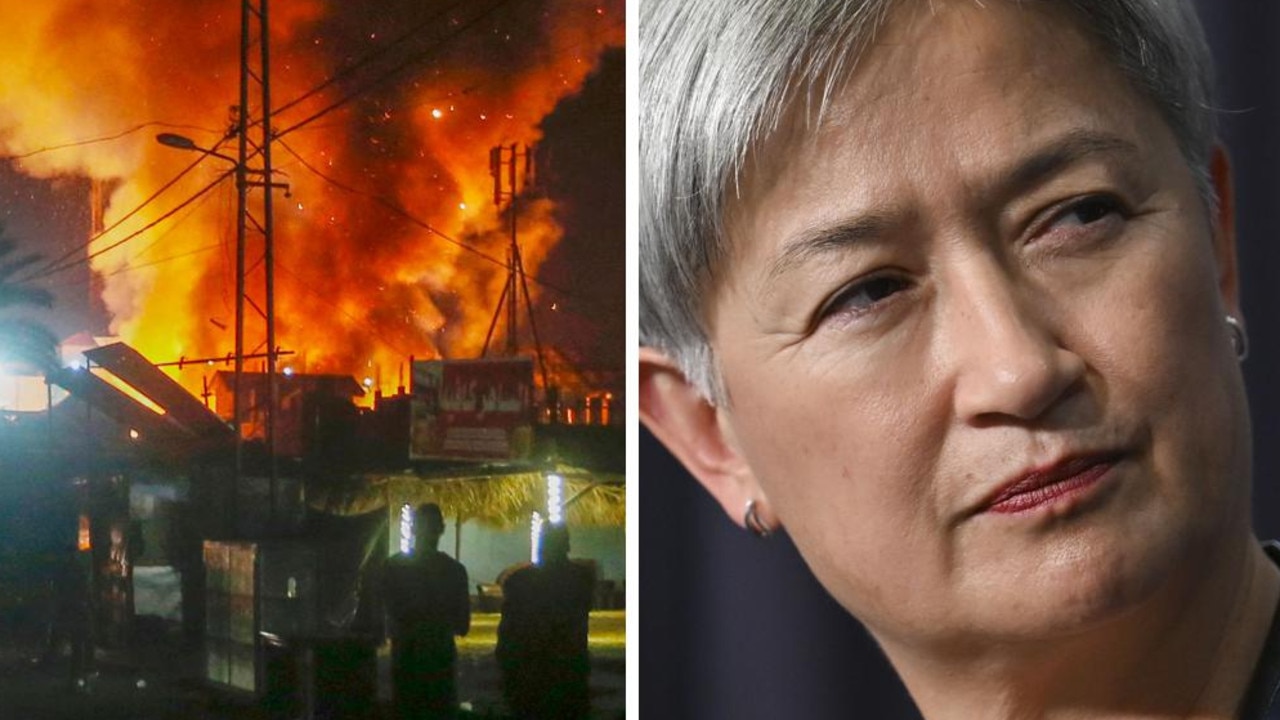
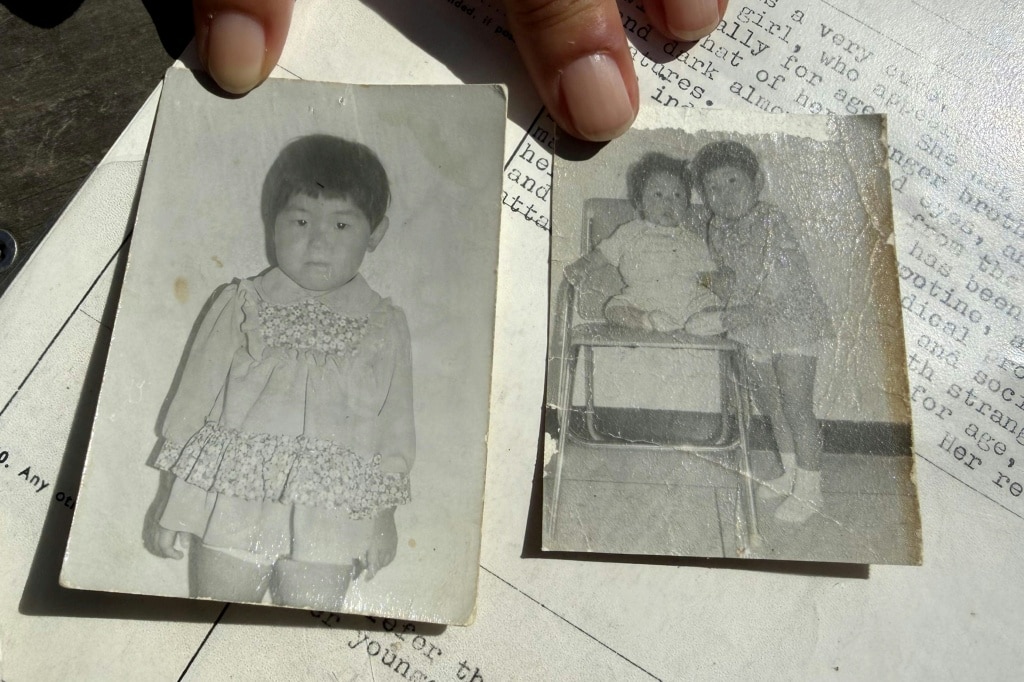
    A devastating tragedy has unfolded in central Australia, where the death of a 5-year-old Indigenous girl has led to murder charges and widespread civil unrest in the Northern Territory (NT). For cultural reasons, the child is only publicly identified as Kumanjayi Little Baby, and a content warning has been issued for Aboriginal and Torres Strait Islander readers noting the mention of a deceased person.

    Kumanjayi went missing last Saturday night, after being put to bed at an Aboriginal town camp on the outskirts of Alice Springs shortly before midnight. A multi-day large-scale search operation by NT Police concluded on Thursday, when officers located the child’s body. Jefferson Lewis, a 47-year-old local man, was taken into custody that same day, after being assaulted by community members in Alice Springs prior to his arrest. On Saturday evening, police formally charged Lewis with one count of murder and two counts of sexual assault. He is set to make his first court appearance in Darwin on Tuesday.

    In the aftermath of Lewis’s arrest and injury, the suspect was transported to Alice Springs Hospital for medical treatment. That facility quickly became the site of violent civil unrest, as dozens of protesters gathered outside the hospital on Thursday night demanding traditional justice for Kumanjayi. Leaked and officially released police footage shows demonstrators throwing projectiles at officers, attacking police vehicles, and setting at least one police van on fire. Responding officers deployed tear gas to disperse the crowd.

    The unrest spilled beyond the hospital grounds: additional footage captured crowds swarming a nearby petrol station, looting goods from retail shelves before fleeing the scene. Northern Territory Police Commissioner Martin Dole publicly condemned the violence in a press briefing Sunday morning, when he formally announced the charges against Lewis. Dole emphasized that the unrest could not be framed as a legitimate expression of grief over Kumanjayi’s death, calling the actions “criminal behaviour, plain and simple.” He described the riots as both “disgusting” and “abhorrent.”

    To ensure the suspect’s safety and maintain order, police transferred Lewis more than 1,500 kilometers north to Darwin, the Northern Territory’s capital. As of Monday, five people have been arrested on charges linked to the riots. NT Police estimate that the widespread property damage and looting caused more than A$180,000 in total losses, equal to roughly $130,000 USD or £95,000 GBP.

    Australian national broadcaster ABC reported that many protesters yelled calls for “payback”, a term referring to traditional punishment under Indigenous customary law in Central Australia, typically administered by elder groups to restore harmony between affected communities and families. Many demonstrators accused police of improperly protecting Lewis from traditional consequences.

    Opening his statement Sunday, Commissioner Dole acknowledged the profound pain caused by the child’s killing. “This remains a deeply distressing matter and our thoughts are firmly with Kumanjayi’s family, loved ones and the wider community that have been deeply impacted by these events,” he said. Dole called on all community members to allow the formal judicial process to move forward without further unrest.

  • NATO, top Republicans question US troop withdrawal from Germany

    NATO, top Republicans question US troop withdrawal from Germany

    A new wave of transatlantic tension has emerged after U.S. Defense Secretary Pete Hegseth ordered the withdrawal of approximately 5,000 American military personnel from Germany, a move that has drawn pushback from NATO leadership and top congressional Republicans alike. The decision unfolds against a backdrop of growing friction between the second Trump administration and European capitals, rooted in disagreements over the ongoing Middle East conflict, trade policy, and burden-sharing for regional collective defense.

    The Pentagon’s withdrawal order, announced Friday by spokesman Sean Parnell, is projected to wrap up over a six to 12-month timeline. As of the end of 2025, the U.S. maintained 36,436 active-duty troops stationed in Germany — by far the largest American force footprint in any European NATO member, dwarfing the 12,662 troops in Italy and 3,814 in Spain. The withdrawal marks the first major step forward on a threat Trump has wielded against European allies across both of his presidential terms, centered on his demand that European nations take ownership of their own defense rather than relying on U.S. security guarantees.

    In a statement posted to X Saturday, NATO confirmed it was collaborating with U.S. officials to parse the details of the new force posture adjustment. NATO spokeswoman Allison Hart framed the shift as a reminder of the urgency for European allies to ramp up their defense investment and carry a larger share of responsibility for shared transatlantic security. German officials have struck a measured tone in response, with Defense Minister Boris Pistorius noting that a drawdown of U.S. troops from Germany and broader Europe was an anticipated development. Foreign Minister Johann Wadephul added that Berlin has been preparing for the reduction and is holding structured, trust-based discussions on the change across all NATO bodies. He did, however, draw a clear line around large strategic American installations, noting that critical hubs like Ramstein Air Base — which serves as a linchpin for both U.S. and NATO operations across the region — are not on the table for any changes, as they serve an irreplaceable role for both sides.

    The decision has already faced skepticism from senior Republican lawmakers who oversee U.S. military policy. In a joint public statement released Saturday, Senate Armed Services Committee Chair Roger Wicker and House Armed Services Committee Chair Mike Rogers warned that pulling thousands of troops from Germany sends a dangerous, misaligned signal to Russian President Vladimir Putin at a moment of heightened global security tension. The pair acknowledged that Germany has already followed Trump’s calls to increase defense spending, and has granted U.S. aircraft access to German bases and airspace for operations tied to the ongoing Iran conflict. Still, they argued that even with increased European investment, it will take years for allies to convert that spending into the conventional military capability needed to take full ownership of deterrence on the continent.

    The troop drawdown comes on the heels of a public verbal clash between Trump and German Chancellor Friedrich Merz, who earlier this week claimed Iran was “humiliating” Washington at the negotiating table over the conflict in the Middle East. It also coincides with a separate escalation in transatlantic trade tensions: Trump announced this week that tariffs on EU-produced cars and trucks will rise from 15% to 25% starting next week, arguing the bloc has failed to honor the terms of a trade agreement reached between the two sides last summer. Analysts view the dual moves as a clear sign of the Trump administration’s willingness to use economic and military leverage to force European allies to align with its foreign policy priorities, particularly in the Middle East.

    Trump has made no secret of his willingness to extend troop cuts beyond Germany to other European NATO allies that have refused to back U.S. policy in the Iran conflict. Speaking to reporters Thursday, he confirmed he is considering pulling U.S. troops from both Italy and Spain, citing their lack of support for Washington’s efforts in the region. “Italy has not been of any help to us and Spain has been horrible, absolutely horrible,” Trump told reporters. “Yeah, probably, I probably will. Why shouldn’t I?” He added that the drawdown is in part targeted at allies that have refused to contribute to a U.S.-backed peacekeeping force for the Strait of Hormuz, a critical global energy waterway that Tehran has effectively closed in recent months. The continuing rift over the Middle East war has already deepened divides between Washington and many European capitals, and the troop withdrawal is expected to accelerate negotiations over the future of the NATO alliance’s force posture across the continent.

  • US airlines step up as Spirit winds down

    US airlines step up as Spirit winds down

    On a chaotic Saturday for U.S. air travel, discount carrier Spirit Airlines — recognizable by its iconic bright yellow aircraft — formally halted all global operations with immediate effect after last-ditch negotiations between creditors, company leadership, and the Trump White House collapsed. The sudden shutdown left thousands of passengers stranded overnight and nearly 7,500 employees facing sudden unemployment, prompting rival major carriers to launch emergency response efforts to accommodate displaced travelers and recruit out-of-work aviation staff.

    Founded in 1964 and repositioned as one of America’s first low-cost carriers in 1992, Spirit had been teetering on the edge of collapse for nearly two years. The company first filed for bankruptcy protection in November 2024, followed by a second bankruptcy filing in August 2025 after its financial position failed to stabilize. By late February 2026, Spirit announced a tentative debt restructuring agreement that it hoped would allow it to exit bankruptcy by early summer. That progress unraveled days later, when the Strait of Hormuz was closed following U.S.-Israeli military strikes on Iran, sending global jet fuel prices soaring and erasing any remaining path to solvency.

    In an official statement announcing the wind-down, Spirit leaders framed the shutdown as an unavoidable outcome: “The recent material increase in oil prices and other pressures on the business have significantly impacted Spirit’s financial outlook. With no additional funding available to the company, Spirit had no choice but to begin this wind-down.” The carrier has pledged full refunds to all passengers holding tickets for canceled flights, a promise echoed by U.S. transportation officials.

    In the wake of the shutdown, major U.S. carriers including American Airlines, Delta Air Lines, United Airlines, and JetBlue Airways moved quickly to absorb stranded passengers. The airlines introduced deeply discounted “rescue fares” for travelers who woke Saturday to find their itineraries canceled, and announced adjustments to flight schedules — adding extra frequencies and deploying larger aircraft on routes where Spirit previously held a large market share. Beyond assisting passengers, multiple carriers also moved quickly to hire Spirit’s out-of-work ground crew, flight attendants, pilots, and maintenance staff, who were suddenly left without jobs.

    The shutdown has already sparked political finger-pointing over what led to the carrier’s collapse. U.S. Transportation Secretary Sean Duffy defended the Trump administration’s handling of the crisis during a Saturday press briefing at Newark Liberty International Airport, arguing that the White House pushed aggressively to keep the carrier afloat. “The president was like a dog on a bone trying to figure out a way to keep Spirit afloat,” Duffy said. He pinned ultimate blame on creditors, who rejected the government’s proposed bailout terms, and noted that “we oftentimes don’t have a half a billion dollars laying around in a spare account that we can put into a bailout of an airline.” Duffy also blamed the prior Biden administration for blocking a proposed merger between Spirit and JetBlue in March 2024, a decision he argued set the stage for the carrier’s ultimate demise.

    Unions representing Spirit’s 7,500 employees condemned the failed rescue talks, warning that the brunt of the collapse would fall on frontline workers rather than corporate leadership. “The pain of this decision will not be felt in boardrooms. It will be felt by pilots, flight attendants, mechanics, dispatchers, and ground crews, and by the families and communities that depend on them,” a statement from the Air Line Pilots Association read.

    For many passengers, the sudden shutdown upended long-planned travel. Sixty-year-old Florida resident Ramon, who only gave his first name to AFP, had been scheduled to travel to Honduras this week to visit family. He and his son Kevin had seen reports of Spirit’s financial troubles in recent days, but declined an early refund offer because replacement tickets on other carriers were prohibitively expensive, and there was no clear indication the carrier would collapse immediately. “I was trying to go today on another airline, but it was like $1,000 a ticket,” Ramon said. The family now plans to wait for their Spirit refund before rebooking travel for early June.

    Industry analysts say the collapse of Spirit will have lasting impacts on U.S. air travel prices. Bradley Akubuiro, a crisis management expert at Bully Pulpit International, noted that while the post-strike spike in fuel prices delivered the final blow to the struggling carrier, Spirit was already in an unsustainable position long before the energy market shock. “The more lasting consequence is that one of the strongest sources of low-fare pressure in the US market is gone,” Akubuiro told AFP.

  • Arsenal hit stride to go six points clear, West Ham loss offers Spurs hope

    Arsenal hit stride to go six points clear, West Ham loss offers Spurs hope

    The 2024-25 Premier League title race took a dramatic turn this weekend, as Mikel Arteta’s Arsenal side rediscovered their best form to open a six-point gap at the top of the table, while results at the bottom of the division threw Tottenham Hotspur a critical lifeline in their fight to avoid relegation.

    Arsenal, who have looked fatigued and nervous in recent weeks as they chased their first top-flight title in 22 years — blowing a substantial earlier lead over defending champions Manchester City — got a huge boost from the return of star winger Bukayo Saka, who made his first start in six weeks ahead of their decisive Champions League semi-final second leg against Atletico Madrid. The Gunners turned in a dominant 3-0 home victory over Fulham, silencing growing concerns about their ability to sustain a title push through a congested fixture list.

    Summer signing Viktor Gyokeres, who joined Arsenal in a £64 million ($87 million) move from Sporting Lisbon this season, also silenced his recent critics with a two-goal performance, taking his league tally for the campaign to 21. The Swede struck first after just nine minutes, tapping in a perfectly placed cross from Saka to calm early nerves around the Emirates Stadium. Riccardo Calafiori had a second goal ruled out by VAR for a marginal offside, but the home side doubled their lead before half time when Gyokeres turned provider, playing Saka through to blast a shot past former Arsenal goalkeeper Bernd Leno at the near post. Gyokeres grabbed his second just before the break, rising highest to power a header from Leandro Trossard’s cross into the net, stretching Arsenal’s goal difference advantage to four over Manchester City — a margin that could prove decisive in the final title race standings, given City hold two games in hand over the leaders.

    With the three points secured, Arteta was able to rotate his squad ahead of next week’s Champions League second leg, which is tied at 1-1, bringing Saka off at half time and resting key starters including Gyokeres, Declan Rice and Eberechi Eze in the closing stages. The result leaves Fulham’s hopes of qualifying for European competition next season heavily dented, with the Cottagers remaining in 10th place in the table after the defeat.

    In the day’s other key fixtures, Brentford boosted their own hopes of a top-six finish — which could yet deliver Champions League qualification — with a convincing 3-0 home win over West Ham United, a result that gives Tottenham Hotspur fresh hope of escaping relegation. Tottenham remain in the relegation zone, two points adrift of safety, but can climb out of the bottom three with a win against Aston Villa on Sunday, after West Ham suffered just their third defeat in 11 league outings.

    Brentford opened the scoring after an own goal from West Ham defender Konstantinos Mavropanos, who was denied a quick equaliser minutes later when his powerful header was ruled out for offside by VAR. The Bees extended their lead early in the second half when Dango Ouattara won a penalty, with top scorer Igor Thiago converting coolly to notch his 22nd league goal of the season. Mikkel Damsgaard added a late third to round off the win, leaving West Ham manager Nuno Espirito Santo admitting his side faces a quick reaction to turn their form around ahead of next weekend’s trip to face Arsenal.

    Elsewhere, Newcastle United ended a five-game losing streak to ease their own relegation fears with a 3-1 win over Brighton & Hove Albion. Goals from William Osula and Dan Burn inside the opening 24 minutes put Eddie Howe’s side in control, and despite a consolation goal from Brighton’s Jack Hinshelwood, Harvey Barnes sealed the win in stoppage time. The result lifts Newcastle up to 13th in the table, taking them clear of the relegation fight, while the defeat leaves Brighton’s European hopes hanging in the balance — the Seagulls started the weekend in sixth place but could end it outside the top half of the table. Howe praised his side’s resilience through their poor run, saying the three points was a just reward for their togetherness during a difficult period.

    In the final game of the weekend’s early fixtures, Sunderland’s European qualification hopes were dented by a 1-1 draw away to bottom-of-the-table Wolverhampton Wanderers. Sunderland played most of the match with 10 men after defender Dan Ballard was sent off in the first half for pulling an opposition player’s hair.

  • UK PM says some pro-Palestinian marches could be banned

    UK PM says some pro-Palestinian marches could be banned

    Against a backdrop of surging antisemitic incidents across the United Kingdom and growing political pressure to respond, Prime Minister Keir Starmer has publicly backed justified bans on specific pro-Palestinian demonstrations, singling out events that incite violence with chants calling for a global intifada. Starmer, who leads the Labour Party, has found himself in a precarious position after a recent stabbing attack in a major London Jewish neighborhood left two people injured. The incident, which took place in Golders Green – an area well-known for its large, longstanding Jewish community – has amplified calls for the new prime minister to take stronger action to protect Jewish residents.

    On Friday, the 45-year-old suspect, a British national born in Somalia, made his first court appearance on attempted murder charges and was remanded into custody ahead of further proceedings. The attack came amid months of ongoing pro-Palestinian protests across UK cities that began in the wake of Hamas’ October 7, 2023, attack on Israel, which triggered the ongoing Israel-Gaza war. During a visit to the attack scene and a local Jewish volunteer ambulance service on Thursday, Starmer faced public backlash from local residents, who booed him and accused his administration of failing to take adequate steps to keep the community safe. Many of those critics also blamed ongoing pro-Palestinian marches for creating a climate of fear.

    In a broadcast interview with the BBC on Saturday, Starmer, a former human rights lawyer and ex-chief public prosecutor who is married to a woman of Jewish descent, said repeated protests had left a profound negative impact on many British Jewish people. “I’m a big defender of freedom of expression, peaceful protests,” he told the outlet. “But when there are chants like ‘globalise the intifada’, that’s completely off limits. Clearly, there should be tougher action in relation to that.”

    The term intifada refers to two historical Palestinian uprisings against Israeli occupation, the first running from 1987 to 1993 and a second occurring in the early 2000s. Starmer emphasized that the chant is viewed as deeply threatening by the UK Jewish community, and argued for much stricter enforcement of acceptable language at demonstrations. He confirmed that there are scenarios where entire protests should be prohibited, and that senior government officials have been holding ongoing discussions with policing leadership for weeks about what additional regulatory and enforcement action can be implemented.

    This stance aligns with a position police in London and Manchester first took last December, when officers announced they would arrest any person chanting “globalise the intifada” at public demonstrations. In a related development Thursday, UK security officials upgraded the national terror alert level to “severe” – the second-highest tier on the country’s threat scale. Officials cited the Golders Green attack, alongside persistent threats from both Islamist extremism and far-right extremism, as core factors driving the upgrade. UK police have confirmed that they will conduct enhanced, thorough reviews of all notifications for upcoming protests to assess potential risks to public safety.

  • ‘Looks like he’ll have an op’: Cruel blow for Blues hopeful as coaches reveal full extent of carnage out of wild clash

    ‘Looks like he’ll have an op’: Cruel blow for Blues hopeful as coaches reveal full extent of carnage out of wild clash

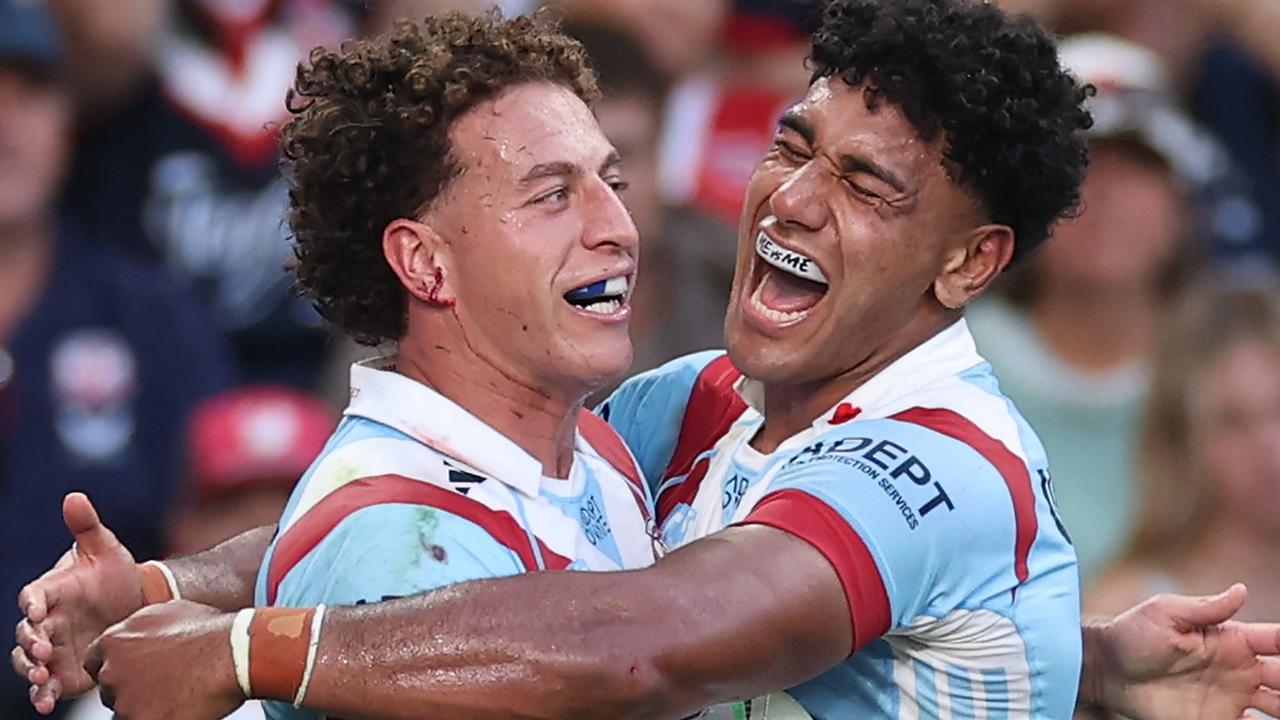
    An NRL round clash between the Sydney Roosters and Brisbane Broncos at Allianz Stadium ended not just with a 38-24 Roosters victory, but with a wave of high-profile injuries that has shaken up State of Origin selections and left Brisbane bracing for a challenging upcoming fixture against Manly. The most devastating blow landed on rising star Mark Nawaqanitawase, a NSW Blues State of Origin hopeful whose dream series debut is now all but off the table after he sustained a serious syndesmosis injury that requires urgent surgery.

    Roosters head coach Trent Robinson confirmed the devastating news in his post-match press conference, confirming that the dynamic winger, a former Wallaby set to return to rugby union in 2027, will miss 6-8 weeks on the sidelines. The injury occurred in the first half of Saturday night’s game when Nawaqanitawase’s foot became trapped under teammate Robert Toia during a collision. Though he initially tried to push through the pain, he was forced off the field just 15 minutes after the incident. NRL physiotherapy experts later confirmed the injury mechanism was typical for a high ankle syndesmosis sprain, occurring when the foot is caught under contact and forced to rotate outward.

    Just 24 hours before the match, Nawaqanitawase had opened up about his long-held dream of representing the Blues in the upcoming State of Origin series, which kicks off with its opening clash on May 27. NSW coach Laurie Daley had previously named the in-form winger as one of the top contenders for a starting wing spot alongside Brian To’o, in a three-way race with Campbell Graham and Josh Addo-Carr. A 6-8 week recovery period from surgery rules Nawaqanitawase out of the series opener entirely, ending his campaign before it could officially begin.

    Nawaqanitawase was far from the only star forced to exit the game early with injury. Brisbane Broncos captain Adam Reynolds was already officially ruled out of the club’s next fixture against Manly next week after a brutal head knock sustained while attempting a tackle. Queensland Origin enforcer Lindsay Collins also failed his first-half head injury assessment, ruling him out of Brisbane’s upcoming trip to Gosford next Friday. Roosters and Blues veteran Angus Crichton was also forced off midway through the second half with a suspected medial knee injury, and he is currently awaiting scan results to confirm the severity of the damage.

    Robinson noted after the match that Crichton could have stayed on the field, but the injury required repeated attention throughout the first half, prompting the coaching staff to pull him early as a precaution. On Collins’ exit, Robinson added that the Brisbane forward was lucid and alert in the sheds after the incident, but did not meet concussion protocol requirements to return to play.

    For Brisbane, young halfback Tom Duffy is set to step into Reynolds’ starting spot against Manly. Broncos coach Michael Maguire praised Duffy’s recent performances, noting he has already proven his ability to lead the team around the park when given the opportunity. The injury crisis extends far beyond Reynolds and Collins for Brisbane: star front-rower Payne Haas and halfback Ben Hunt are already ruled out of next week’s fixture, while wingers Josiah Karapani (ankle) and Deine Mariner (cork) are serious doubts to take the field. Mariner was forced off in the first half after sustaining his cork, but returned to the game shortly after when Karapani exited with his ankle injury. Maguire said Mariner should not have returned to action, but praised the young winger’s commitment to his teammates, noting that the moment reflected the tight team culture that saw Brisbane claw back from a 30-0 deficit to come within six points of a stunning upset.

    “Deine probably shouldn’t have gone back out, but that’s what they’re doing for each other,” Maguire said. “I could talk about many other players, but that’s what the competition is demanding of you at the moment. Deine, straight away he jumped up and out he went. So they’re competing really hard for each other. We just needed to be smarter.”

    Beyond the injury toll, Brisbane is also waiting anxiously on the outcome of potential match review committee charges, after star centre Kotoni Staggs was sent to the sin bin late in the game for an elbow to the back of Roosters winger Hugo Savala’s head. The sin bin timing proved critical for Brisbane’s comeback: with Staggs off the field, the Roosters scored eight unanswered points in the final eight minutes to seal the win. Brisbane lock Patrick Carrigan took responsibility for the team’s late collapse, admitting a loose carry that turned over possession had shifted momentum back to the Roosters just before Staggs’ sin bin.

    “To be honest, that was my fault,” Carrigan said. “I made an error down in the good ball set, just a loose carry and I turned over the ball and put us on the back foot and released pressure of the game. I know ‘Tones’ (Staggs) plays aggressively but I know he wouldn’t have meant to do any harm. To be honest, I didn’t even see it until after the game, so we play a hard fast game, he made a mistake and I’m sure he’ll own that. I love when he’s playing aggressive and I love running out with him.”

  • Iran military official says renewed war with US ‘likely’

    Iran military official says renewed war with US ‘likely’

    Tensions between Iran and the United States have spiked sharply in recent days, with a senior Iranian military commander warning that a resumption of open hostilities between the two nations is increasingly likely, just hours after former President Donald Trump publicly rejected Tehran’s latest peace proposal as unsatisfactory. The current ceasefire, which has paused the full-scale war launched jointly by the U.S. and Israel in late February 2026, has held since April 8, following one unsuccessful round of negotiation mediated by Pakistan earlier this spring.

    Iran submitted its updated negotiating draft to Pakistani mediators on Thursday evening, according to Iranian state media, though no specifics about the draft’s content have been released to the public. Speaking to reporters on Saturday, Trump reiterated his disappointment with Iran’s offer, blaming the stalled talks on deep internal divisions within Iran’s top leadership. “Do we want to go and just blast the hell out of them and finish them forever — or do we want to try and make a deal?” Trump asked reporters, adding that he would “prefer not” to launch a full-scale offensive “on a human basis”.

    Early Saturday, Mohammad Jafar Asadi, a high-ranking official in Iran’s central military command, echoed the rising pessimism in comments published by Iran’s semi-official Fars News Agency. Asadi stated plainly that “a renewed conflict between Iran and the United States is likely”, adding that “evidence has shown that the United States is not committed to any promises or agreements”.

    A day earlier, Iran’s judiciary chief Gholamhossein Mohseni Ejei pushed back against U.S. framing of the stalled talks, noting that Iran had “never shied away from negotiations” but would never accept externally imposed peace terms. While the White House has refused to release details of Iran’s latest proposal, U.S. news outlet Axios has reported that U.S. envoy Steve Witkoff has submitted amendments to an earlier draft that would place Iran’s nuclear program back on the negotiating table. Key U.S. demands include restrictions barring Iran from moving enriched uranium out of bombed nuclear sites or resuming enrichment activity at those locations while negotiations continue.

    The geopolitical standoff has already sent ripples through global energy markets: news of Iran’s proposal briefly pushed international oil prices down by nearly 5 percent, though prices remain roughly 50 percent higher than pre-war levels, due to the ongoing closure of the Strait of Hormuz, one of the world’s most critical energy chokepoints. Since the war began, Iran has maintained a tight blockade on the strait, cutting off global supplies of oil, natural gas, and fertilizer, while the U.S. has implemented a reciprocal blockade on all Iranian commercial ports. Speaking at a campaign rally Friday, Trump made unorthodox comments comparing U.S. naval operations in the region to piracy, while describing a recent helicopter raid on an oil tanker operating under the blockade.

    Even with the ceasefire in place in the Gulf, violence continues to escalate in Lebanon, where Israeli forces have carried out repeated deadly airstrikes despite a separate ceasefire agreement with Iran-backed Hezbollah. Lebanon’s Ministry of Public Health confirmed Friday that 13 people were killed in Israeli strikes across southern Lebanon, including multiple fatalities in the town of Habboush, where the Israeli military had ordered civilian evacuations ahead of the attack.

    On Friday evening, the U.S. State Department announced it had approved a series of major new arms sales to regional U.S. allies, including a $4 billion Patriot missile defense deal with Qatar and a nearly $1 billion sale of advanced precision weapons systems to Israel.

    Back in Washington, the Trump administration is embroiled in a heated legal and political dispute with congressional opposition over the legality of the ongoing war. Under U.S. war powers law, the president must obtain congressional authorization for any military action lasting longer than 60 days. Administration officials argue that the current ceasefire pauses the 60-day clock, a claim that is fiercely contested by opposition Democrats. In a letter to congressional leaders released Saturday, Trump pushed back against criticism, claiming that “there has been no exchange of fire between United States Forces and Iran since April 7, 2026,” adding that hostilities “have terminated”. The president faces growing domestic pressure as inflation continues to climb, no clear military victory has been achieved, and U.S. midterm elections approach in late 2026.

    For Iran, the economic damage from the war and U.S. sanctions continues to deepen. The Trump administration recently imposed new sanctions on three major Iranian currency exchange firms, and has warned global shipping companies against paying the passage tolls demanded by Iran for transit through the Strait of Hormuz. U.S. military officials estimate their port blockade has cut off $6 billion in Iranian oil exports, while Iranian inflation, already at high levels before the war began, has now surged past 50 percent.

    “Everyone is trying to endure it, but… they are falling apart,” Amir, a 40-year-old Tehran resident, told an Agence France-Presse reporter reporting from outside Iran. “We still have not seen much of the worst economic effects because everyone had a bit of savings. They had some gold and dollars for a rainy day. When they run out, things will change.”

    On Saturday, Iran’s judiciary announced that authorities had executed two men convicted of spying for Israel, marking the latest in a string of executions of alleged spies in recent weeks. One of the two men was convicted of assisting Israeli intelligence during the 12-day border war between Iran and Israel in June 2025.

  • Stranded whale ‘Timmy’ released into North Sea in dramatic rescue

    Stranded whale ‘Timmy’ released into North Sea in dramatic rescue

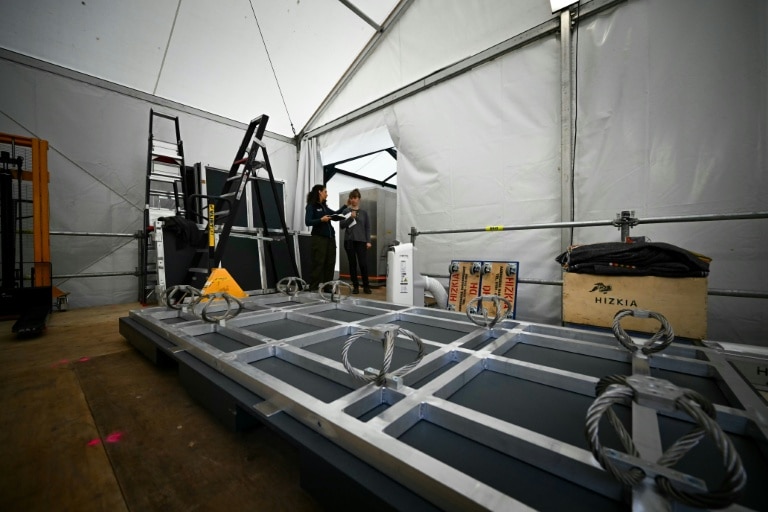
    After weeks of a high-stakes, publicly followed ordeal that captured widespread public attention across Germany, a stranded humpback whale affectionately named Timmy has been successfully released into the North Sea off Denmark’s coast, capping a dramatic privately funded rescue operation that defied early skepticism. The massive marine mammal, which first got trapped on a sandbank near Germany’s Baltic coastal city of Luebeck on March 23, was transported to its release site aboard a specially adapted barge. Once the gates of the vessel opened, Timmy pushed out a burst of air through its blowhole before slipping into open water and swimming away under its own power — and early observations confirm the whale is heading in the correct direction toward its natural migratory route. “It has some small injuries, probably from being transported in rough seas, but they are superficial,” explained Karin Walter-Mommert, the horse racing millionaire who co-funded the project alongside another wealthy entrepreneur. “It should now swim up the Norwegian coast toward the Arctic.” The rescue effort was not originally planned as a private initiative: after multiple official attempts to free the whale failed repeatedly, German authorities announced they would abandon the mission, citing low chances of success. That decision prompted Walter-Mommert and her partner to step forward with an ambitious, widely dismissed long-shot plan: guide the exhausted whale into a water-filled hold on a custom-fitted barge, then tow it to deep open waters aligned with the species’ natural migration path. The plan did not go off without controversy, however. A number of marine wildlife experts publicly criticized the privately funded operation, arguing that the stress of capture and transport would do more harm than good, potentially worsening the whale’s already fragile condition. Still, organizers obtained official approval after veterinary specialists confirmed Timmy was healthy enough to survive the journey. Getting the massive whale onto the barge required an extraordinary on-shore engineering effort: rescuers dug a custom channel through the sand to the vessel, then used heavy straps to carefully pull the animal toward the hold, with teams of swimmers guiding it alongside as it moved. The moment Timmy slid into the barge’s water-filled hold drew loud cheers from hundreds of onlookers who had gathered on the shore to follow the days-long operation. This successful release marks the second attempt by the two entrepreneurs to save Timmy — an earlier effort using inflatable cushions and pontoons failed to move the whale, forcing the team to pivot to the barge strategy. For weeks, Timmy’s struggle dominated headlines across Germany, earning non-stop coverage from national television networks, online news outlets and social media creators, turning the stranded whale into a national viral sensation. But the high-profile saga has also been marked by division: it has sparked heated public spats over rescue strategy and spawned a wave of unsubstantiated conspiracy theories about how the young humpback ended up off course in the Baltic Sea in the first place. As of Saturday afternoon, the rescue team reported Timmy was continuing to swim steadily north, in what is being widely celebrated as an unexpected success for the risky, volunteer-led effort.

  • Ex-F1 driver turned Paralympic champion Zanardi dies

    Ex-F1 driver turned Paralympic champion Zanardi dies

    Italian sporting icon Alex Zanardi, whose remarkable career transitioned from Formula One racing to Paralympic gold-medal success after a life-altering accident, has passed away at the age of 59, his family confirmed in an official statement Saturday.

    Widely regarded as one of Italy’s most beloved and influential athletes, Zanardi died on Friday evening. In the announcement shared via Obiettivo3, the non-profit organization he founded, his family shared that he died suddenly, yet peacefully, while surrounded by loved ones.

    Zanardi’s extraordinary life was marked by repeated battles against adversity. His first catastrophic crash came in 2001 during a CART race at Germany’s Lausitzring circuit. After a spin left his car stalled on the track, another vehicle traveling at over 300 kilometers per hour collided with him, resulting in the amputation of both of his legs. Rather than ending his athletic career, the accident paved the way for a second chapter that would inspire millions around the globe.

    Prior to that 2001 incident, Zanardi had already built an impressive motorsports resume. He competed in Formula One for teams including Jordan, Minardi and Lotus in the early 1990s before moving to the United States to race in the CART championship, where he claimed back-to-back series titles in 1997 and 1998. He returned to F1 with Williams in 1999 before going back to North America to continue his CART career.

    Following his amputation, Zanardi rebuilt his life as a Paralympic athlete, earning four Paralympic gold medals: two in cycling at the 2012 London Games, and two more at the 2016 Rio de Janeiro Games. Beyond his competitive success, he was widely credited with shifting public perception of disability across Italy, breaking down stigma and showing what disabled athletes could achieve.

    Six years before his death, in June 2020, Zanardi suffered a second devastating crash when his handbike collided with an oncoming truck during a road race in Tuscany. He sustained severe traumatic brain injuries in the accident and spent 18 months in care before returning to his home.

    Tributes have poured in from across the global sporting and political community following news of his death. Italian Prime Minister Giorgia Meloni praised Zanardi as a great champion and an extraordinary human being, noting he turned every life challenge into a lesson in courage, strength and human dignity. Cordiano Dagnoni, president of the Italian Cycling Federation, added that Zanardi transformed the country’s cultural understanding of disability, bringing joy to those who met him and hope to countless people across Italy and the world. A minute of silence will be held at all Italian cycling races this weekend to honor his legacy.

    Born in Bologna in October 1966, Zanardi is survived by his wife Daniela and his son Niccolo.

  • Humpback whale stranded in Germany released into North Sea: media

    Humpback whale stranded in Germany released into North Sea: media

    A humpback whale that captured public attention after repeated strandings near Germany’s northern coast has been successfully released into the North Sea off the Danish coastline following a last-ditch, privately funded rescue mission, a member of the operation has confirmed to AFP.

    Named ‘Timmy’ by German media outlets, the large marine mammal first drew rescuers’ eyes on March 23, when it was found trapped on a shallow sandbank close to the Baltic coastal city of Luebeck. After briefly freeing itself from the sandbar, the whale became stranded again multiple times in the following weeks, leaving rescue teams scrambling to find a viable solution.

    By early April, German government wildlife officials had formally abandoned official rescue efforts, concluding that the whale’s condition made survival impossible and that intervention would do more harm than good. That decision, however, sparked immediate public outcry across the country, putting pressure on authorities to reverse course. Ultimately, officials granted approval for an unconventional rescue plan put forward by two wealthy German entrepreneurs, who agreed to cover all costs of the operation themselves.

    The team’s first attempt to re-float Timmy, which relied on inflatable cushions and floating pontoons to lift the whale off the sandbank, failed to produce the desired result. That setback led rescuers to pivot to a new strategy: transporting the animal on a specialized covered barge from its stranding site near Wismar Bay on Germany’s Baltic coast to open waters in the North Sea.

    According to Karin Walter-Mommert, a spokesperson for the rescue initiative, Timmy exited the barge at approximately 8:45 a.m. local time (0645 GMT) on Saturday. In an update after the release, she confirmed the whale is now swimming independently in open water, and is heading in the correct direction toward deeper migratory routes, at least in the immediate aftermath of the release.

    The high-stakes rescue effort was controversial from its inception. Many marine biologists and wildlife experts criticized the plan, arguing that the long transport and intervention would only subject the already weakened animal to additional unnecessary stress, and called the effort a low-probability long shot.

    Timmy’s weeks-long ordeal has turned the stranded whale into a national media sensation in Germany and across much of Northern Europe. Major television networks have run non-stop live coverage of the stranding and rescue efforts, digital news outlets have published constant updates, and social media influencers have shared content tracking the whale’s status with millions of followers. The intense public interest has also come with conflict: it has sparked heated public arguments between supporters of the rescue and critical experts, and given rise to a wave of unfounded conspiracy theories about the incident and the motivations behind the private operation.