标签: Oceania

大洋洲

  • US underlines ‘strong’ Vatican ties after Rubio meets pope

    US underlines ‘strong’ Vatican ties after Rubio meets pope

    Weeks after U.S. President Donald Trump launched an unprecedented public attack on the first American-born pope in history, Secretary of State Marco Rubio held a high-stakes private audience with Pope Leo at the Vatican on Thursday, with the U.S. State Department moving quickly to underscore the enduring, robust relationship between Washington and the Holy See.

    The closed-door talks between Rubio, a devout Cuban-American Catholic, and the head of the world’s 1.4 billion Catholics came amid a sharp downturn in relations that began after Pope Leo spoke out against the ongoing Middle East war backed by the U.S. and Israel. The pontiff also drew Trump’s fury when he condemned the president’s threat to destroy Iranian civilization as “truly unacceptable,” leading Trump to hit back with scathing criticism that accused the pope of being weak on crime, poor on foreign policy, and soft on Iran’s nuclear program.

    Following the meeting, State Department spokesperson Tommy Pigott confirmed that the two leaders covered a range of shared priorities, including the volatile situation in the Middle East and mutual interests across the Western Hemisphere, a U.S. reference to the Latin American region. Pigott emphasized in a statement to reporters that the gathering “underscored the strong relationship between the United States and the Holy See and their shared commitment to promoting peace and human dignity.” A senior U.S. official also confirmed that the longstanding diplomatic role of the Catholic Church in Cuba was included in the discussions, a topic of particular relevance for Rubio, who has spearheaded the Trump administration’s push for major political change in the communist-governed island nation.

    Rubio also held separate talks with Vatican Secretary of State Pietro Parolin, where the pair touched on issues of global religious freedom, per Pigott. Ahead of the meeting, Rubio had sought to downplay the public rift between Trump and the pope, which has dominated global headlines and sparked concerns that the friction could alienate Catholic voters ahead of upcoming elections. U.S. Ambassador to the Holy See Brian Burch had previewed the discussion as a likely “frank conversation,” while Parolin noted Wednesday that the meeting was initiated by Washington, adding simply, “we’ll listen to him.”

    It has been exactly one year since Pope Leo’s historic election on May 8, 2025, a milestone the Trump administration publicly celebrated at the time. But relations between the White House and the Vatican have deteriorated rapidly in recent months, as Pope Leo — whose American citizenship gives his words unique weight in U.S. political discourse — has repeatedly broken with the administration, most notably on Trump’s hardline immigration crackdown.

    In a further sign of lingering tensions, Trump renewed his criticism of the pope in an interview just this week, repeating his allegation that the pontiff tolerates Iran’s pursuit of nuclear weapons. “I think he’s endangering a lot of Catholics and a lot of people,” Trump claimed. When asked about the new comments earlier this week, Pope Francis pushed back gently, reaffirming the Catholic Church’s longstanding core mission. “If anyone wishes to criticise me for proclaiming the Gospel, let them do so truthfully,” he told reporters. “The Church has spoken out against all nuclear weapons for years, so there is no doubt about that, and I simply hope to be heard for the sake of the value of God’s word.” Parolin added Wednesday that the attacks on the pope were confounding, noting simply, “The pope is being the pope.”

    Despite the underlying tensions, a U.S. source close to the delegation said the warm welcome extended to Rubio exceeded expectations. The secretary of state’s motorcade entered the Vatican through the Arch of Bells, a ceremonial honor typically reserved exclusively for heads of state, and he was formally received by the Pontifical Swiss Guard. This meeting marked the second encounter between Rubio and Pope Leo; the pair first met at the Vatican just days after last year’s election, alongside U.S. Vice President JD Vance, a convert to Catholicism.

  • Welsh singer Bonnie Tyler ‘recuperating’ after emergency surgery in Portugal

    Welsh singer Bonnie Tyler ‘recuperating’ after emergency surgery in Portugal

    Legendary Welsh vocalist Bonnie Tyler, whose distinct husky voice has carried her through a five-decade career of global chart-topping hits, is currently recovering after undergoing emergency intestinal surgery at a hospital in Faro, southern Portugal. The update was shared Wednesday via the star’s official Instagram account, confirming that the procedure was completed successfully.

    At 74 years old, Tyler has long cemented her status as one of pop music’s most recognizable performers. She first rose to mainstream prominence in the 1970s, breaking into the industry with her 1976 breakthrough hit “Lost in France” followed by another fan favorite “It’s a Heartache”. Her career reached new heights in 1983 with the release of “Total Eclipse of the Heart”, a power ballad that claimed the number one spot on music charts on both sides of the Atlantic.

    Tyler’s discography is packed with other culturally defining hits, including 1984’s “Holding Out For A Hero”, which was featured on the blockbuster soundtrack for the hit American film *Footloose*. Decades into her career, she continued to represent her home country on global stages, stepping onto the Eurovision Song Contest stage in 2013 as the UK’s entry in Malmö, Sweden with the track “Believe In Me”.

    Most recently, Tyler’s decades of contributions to music were formally recognized by the late Queen Elizabeth II in 2022, when she received a royal honor for her 50 years of work in the industry. Fans and followers have been offered no additional update on her condition beyond confirmation of her recovery, but the news comes ahead of a planned major milestone: Tyler is scheduled to embark on a European tour later this year to celebrate the 50th anniversary of her breakthrough debut hit “Lost in France”.

  • US awaits Iran response to latest deal offer

    US awaits Iran response to latest deal offer

    As Thursday dawned, the United States held its breath for Tehran’s formal response to a fresh proposed agreement designed to end the weeks-long Middle East conflict and reopen the strategically vital Strait of Hormuz, the critical shipping lane that connects the Gulf to global energy markets. Growing optimism that a breakthrough could be imminent sent Asian stock markets surging and pushed oil prices sharply lower, with both global benchmarks dropping below the key $100 per barrel threshold after days of declines tied to diplomatic progress.

    The conflict, which was launched by the United States and Israel in late February, has upended regional security: Iran has retaliated with a wave of cross-region attacks and imposed a tight chokehold on the Strait of Hormuz, the passage that handles roughly 20 percent of the world’s daily oil and liquified natural gas trade, plus a large share of global fertilizer shipments. This disruption has sent energy prices soaring worldwide, even as diplomatic efforts gained steam in recent days.
    The diplomatic push, mediated by Pakistan and backed by Washington’s Gulf Arab allies, saw a dramatic twist earlier this week when President Donald Trump launched a brief naval operation to escort commercial ships and force open the strait, only to call off the mission within hours. He cited tangible progress in talks with Iran to justify the sudden U-turn. Multiple U.S. outlets have since shed light on the factors behind that decision: NBC News reports that Saudi Arabia, whose Crown Prince Mohammed bin Salman held direct talks with Trump, refused to grant U.S. forces access to its airspace and military bases for the Hormuz operation, scuttling plans for immediate military action.
    Trump told reporters on Wednesday that discussions over the prior 24 hours had been productive, saying “it’s very possible that we’ll make a deal.” He did, however, repeat his standard warning that the U.S. would resume military strikes if Tehran rejected Washington’s demands. For its part, Iran confirmed the proposal is still under internal review. Foreign ministry spokesman Esmaeil Baqaei said Tehran would share its final position with mediator Pakistan once it has completed internal deliberations. Axios, citing two unnamed U.S. officials, reported that both sides are nearing agreement on a short one-page memorandum of understanding that would end active hostilities and set a framework for future negotiations over Iran’s nuclear program.
    Inside Iran, many residents remain deeply anxious amid ongoing conflict and growing domestic repression. Speaking to AFP from the northern Iranian city of Tonekabon, 49-year-old Ali — who only gave his first name out of fear of retaliation from authorities — said “The economic situation got worse, and this government has become even more brutal.”
    Tehran has also moved to push back against Trump’s claims that Iranian leadership is fractured following the deaths of multiple senior officials in U.S. and Israeli strikes. On Thursday, Iranian President Masoud Pezeshkian confirmed he had held a meeting with the country’s new Supreme Leader Mojtaba Khamenei, who has not appeared in public since he was appointed in early March following the death of his father, Ali Khamenei, in the opening days of the war. Mojtaba Khamenei is reported to have been wounded in that same opening strike, and has only released written statements until now. In a video broadcast on Iranian state television, Pezeshkian said “What struck me most during this meeting was the vision and the humble and sincere approach of the supreme leader of the Islamic revolution.”
    Beyond the Strait of Hormuz and Iran, regional tensions remain acute in Lebanon, where an already fragile ceasefire between Israel and Hezbollah was pushed to the breaking point this week. On Wednesday, Israel carried out its first airstrike on Beirut’s southern suburbs in nearly a month, killing a senior commander from Hezbollah’s elite Radwan force. Israeli Prime Minister Benjamin Netanyahu reiterated in a video statement that “no terrorist is immune. Anyone who threatens the State of Israel will die because of his actions.” The following day, the Israeli military confirmed that an explosive drone attack in southern Lebanon had wounded four of its soldiers, one of them severely, a day earlier.
    Financial markets reacted strongly to the growing prospect of a diplomatic breakthrough. The Tokyo Nikkei index led a broad, strong rally across Asian stock markets, while oil prices fell by 2 percent on Thursday, adding to a roughly 10 percent decline over the prior two trading days. While energy prices remain far higher than they were before the conflict began, both international benchmark Brent Crude and U.S. benchmark West Texas Intermediate now sit below the symbolic $100 per barrel mark, a shift that has eased fears of sustained runaway energy inflation worldwide.

  • Latest evacuee from hantavirus-hit cruise lands in Europe

    Latest evacuee from hantavirus-hit cruise lands in Europe

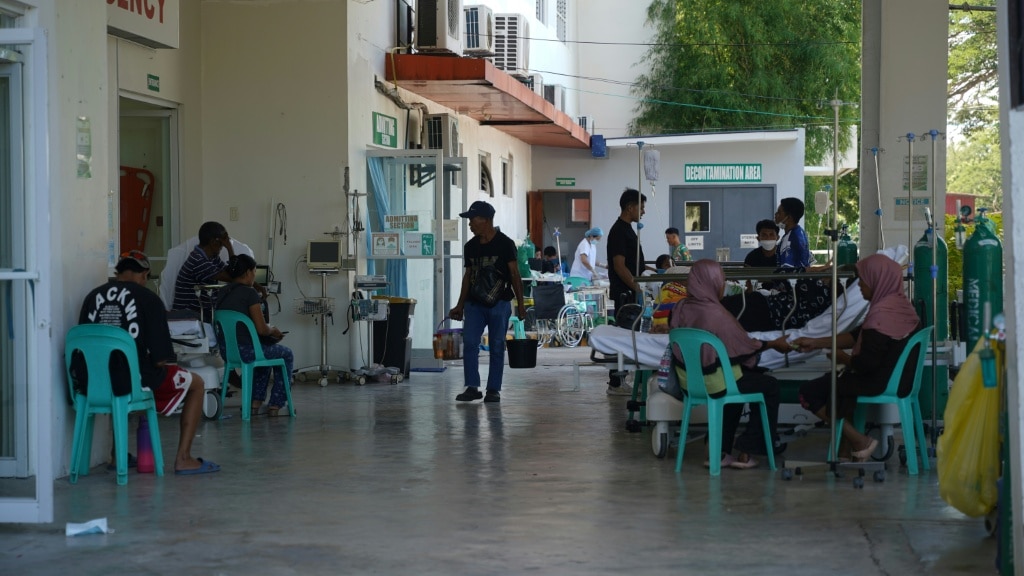
    A new chapter of uncertainty unfolded this Thursday when another symptomatic passenger from the hantavirus-stricken cruise ship MV Hondius was evacuated to Europe, as the vessel makes its way toward the Spanish island of Tenerife and public health authorities around the world race to trace the spread of the rare, potentially fatal human-transmissible strain. Three deaths linked to the outbreak have triggered international alarm, though leading global health bodies have sought to reassure the public that a widespread global pandemic is highly unlikely, noting the virus is far less contagious than the SARS-CoV-2 virus that caused COVID-19.

    Currently, people confirmed or suspected to have contracted the Andes hantavirus strain from the cruise are receiving medical care or completing isolation periods across five nations: Britain, Germany, the Netherlands, Switzerland and South Africa. The scope of potential exposure widened this week when Dutch flag carrier KLM confirmed one of its air stewards is undergoing testing for the virus after potential contact with an infected passenger on a commercial flight.

    Hantavirus is an uncommon respiratory pathogen that most often transfers to humans from infected rodent populations. It can trigger severe health complications including respiratory failure, cardiac impairment and hemorrhagic fever. Currently, no licensed vaccine exists to prevent infection, and there is no targeted cure for the disease — available care is limited to managing and easing symptoms as the body fights the infection. The variant detected on the MV Hondius, the Andes strain, is a particularly rare variation capable of spreading directly from person to person.

    Health investigators currently believe the index case, the first infected passenger, contracted the virus before boarding the vessel in Ushuaia, Argentina. The virus has an incubation period ranging from one to six weeks, allowing it to spread to other passengers and crew during the ship’s transatlantic voyage. According to a statement released by the cruise’s operator, Netherlands-based Oceanwide Expeditions, Thursday’s evacuation flight carrying the sick passenger landed in Amsterdam, 24 hours after three other infected passengers were evacuated from the vessel. The company also confirmed that no currently symptomatic individuals remain on board as the ship sails toward its scheduled stop in Tenerife.

    The UK Health Security Agency has confirmed two passengers who returned to the United Kingdom from the cruise are asymptomatic and have been instructed to self-isolate as a precaution. Officials emphasized the overall risk to the general UK public remains “very low.”

    Global health leadership has echoed this cautious optimism. World Health Organization Director-General Tedros Adhanom Ghebreyesus told Agence France-Presse on Wednesday that “the risk to the rest of the world is low,” and a full press briefing from Tedros was scheduled for Thursday. The United States Centers for Disease Control and Prevention echoed the assessment, noting that “at this time, the risk to the American public is extremely low.”

    Back in Argentina, public health teams are preparing to test local rodent populations in Ushuaia, the coastal departure city where the MV Hondius began its voyage on April 1. The first death linked to the outbreak occurred on April 11, when a Dutch passenger who had boarded the ship with his wife died. At the time, the captain attributed the death to natural causes, so no public health alarm was raised, according to Ruhi Cenet, a Turkish travel vlogger who was a passenger on the voyage.

    The cruise operator confirmed the man’s body was removed from the ship on April 24 at the South Atlantic island of Saint Helena, where 29 other passengers also disembarked. “These guests have all been contacted by Oceanwide Expeditions. We are working to establish details of all passengers and crew who embarked and disembarked on various stops of Hondius since March 20,” the company statement read.

    Public health officials only activated a full response after the man’s wife, who disembarked to accompany her husband’s body to South Africa, also fell ill and died 15 days later. Hantavirus was confirmed as the cause of her death on May 4. Argentine health officials note the couple had traveled through Chile, Uruguay and Argentina before boarding the cruise. The infected woman traveled on a commercial Airlink flight from Saint Helena to Johannesburg while already showing symptoms. That flight carried 82 passengers and six crew, and contact tracers are working to reach every person on board to monitor for potential infection.

    KLM’s confirmation of a testing steward marked the latest development in contact tracing efforts. The airline previously confirmed that one of the deceased passengers had been briefly on an April 25 KLM flight from Johannesburg to Amsterdam, but was removed from the aircraft before it departed. To date, there are still minor discrepancies in official counts of how many people were on the MV Hondius at different stages of the voyage. When the vessel anchored off Cape Verde, it carried 149 people including 88 passengers, according to the operator; however, the company confirmed that 114 passengers and an unspecified number of crew were on board when the voyage departed Argentina on April 1.

  • Massive GST windfall fuels Western Australia’s $3.5bn budget surplus, new spending

    Massive GST windfall fuels Western Australia’s $3.5bn budget surplus, new spending

    Western Australia’s state Labor government has delivered its eighth consecutive annual budget surplus, marking the third surplus under Premier Roger Cook and Treasurer Rita Saffioti, alongside a suite of new spending measures designed to address soaring household costs, expand housing supply, and upgrade public health infrastructure. Bolstered by an expected $9.3 billion in goods and services tax (GST) revenue set to flow into state coffers in the coming fiscal year, the 2024-25 budget posts a $3.5 billion surplus, with state debt projected to hit $34.5 billion by the end of June 2024 — $4 billion lower than earlier forecasts, earning the state the title of Australia’s lowest-cost jurisdiction for public debt.

    State officials credit the private sector for driving Western Australia’s standout economic performance, noting that private activity accounts for 86% of the state’s domestic economic growth, which has expanded by 27% over the past five years. Cook emphasized that the budget is built on two core priorities: sustaining the state’s position as Australia’s strongest economy and delivering tangible support for households in key areas including jobs, healthcare, housing, and cost-of-living relief.

    “This is a responsible budget designed to keep Western Australia strong,” Cook said in remarks following the budget announcement. “We are delivering on our commitments to keep Western Australia the strongest economy in the nation and the best place to live, work and raise a family.”

    The centerpiece of the budget is a $1 billion cost-of-living support package, though the targeted structure of the aid means many households will not qualify for direct financial relief. Unlike in previous years following the COVID-19 pandemic, the state will not offer broad state-funded energy rebates for households this year, and motorists will face a 2.5% increase in driver license and vehicle registration fees, with no fee freeze in place. Instead, the largest share of relief is directed to drivers, with a one-time $100 fuel credit available to all licensed driver holders, part of a $198 million package to offset rising petrol prices.

    Additional support is targeted at families with school-aged children, with $90 million allocated for student assistance payments. Eligible families will receive $150 per child enrolled in kindergarten or primary school, and $250 per high school student. A further $70 million funds expanded free public transport initiatives: students will receive free travel to and from school, all passengers will access free rides on Sundays, and senior citizens will pay no fares for off-peak and weekend travel. State officials estimate that a two-child family can receive more than $2000 in combined assistance from the full suite of cost-of-living measures.

    Housing affordability and supply, one of the most pressing issues facing Western Australian households, received a $4.7 billion total investment to unlock new land and deliver thousands of new dwellings across Perth and regional areas. More than $1 billion of that funding will go toward developing core infrastructure including roads, water networks and power connections for new residential areas. A joint federal-state $2 billion commitment will build 34,000 new homes, 11,000 of which will be allocated to first home buyers in areas close to metro train stations, new greenfield residential developments and regional hubs.

    Frontline workers in seven major regional centers — Bunbury, Kalgoorlie, Karratha, Port Hedland, Broome, Geraldton and Albany — will benefit from a $692 million regional housing program that will deliver 500 new dwellings over four years, alongside additional funding for local infrastructure, job creation, healthcare and essential services. The state also expanded tax concessions for first home buyers: the stamp duty exemption threshold has been raised from $500,000 to $600,000 for completed homes, and from $400,000 to $450,000 for vacant land, with partial concessions available for homes valued up to $800,000. The property cap for the $10,000 First Home Owner Grant has also been increased from $750,000 to $800,000. While fewer than 320 homes under $600,000 and just 52 vacant lots under $450,000 are currently listed for sale in Perth, the government projects the changes will support roughly 25,000 first home buyers over time. An additional $1.5 billion will boost social and affordable housing, delivering thousands of new affordable rental units and public housing dwellings, including 1,426 new social dwellings delivered through the federal Housing Australia Future Fund partnership.

    Public health also received a historic $9 billion investment over the next four years, with funding allocated for new hospital construction, hundreds of additional hospital beds, and expanded capacity across the public health system. A key project is a new state-of-the-art cancer center in Perth, modeled on integrated treatment-research facilities already operating in Sydney and Melbourne that combine clinical care, cutting-edge research and clinical trials. The state’s Building Hospitals Fund will receive an extra $500 million, bringing total investment in hospital infrastructure to $2 billion by 2026-27 and $5.5 billion over the four-year funding period.

    To rebalance state spending and redirect funds to frontline services, the government will cut 1,500 back-office public sector roles, a move Treasurer Saffioti framed as a necessary adjustment to shifting policy priorities. “We considered all factors and tried to get the balance right,” Saffioti said. “You can always do more, and there are people who want more, but we’ve done our best to support families.”

    The budget has drawn sharp criticism from the state opposition, led by Opposition Leader Basil Zempilas, who argued the $100 fuel credit is a superficial distraction that fails to address the core crises facing Western Australian households. “The people of Western Australia are hurting, and nothing that we’ve seen in today’s budget has changed that,” Zempilas said. “To the people of Western Australia in the middle of this cost of living and housing crisis, the $100 fuel smoke screen will do nothing to help the people camped in their cars or on the side of road. It will do nothing to alleviate the stress and pressure that comes on families.”

    Zempilas added that the small one-time fuel credit pales in comparison to recent increases in water, electricity and vehicle registration costs, and argued the government has failed to address the root causes of household financial stress. “This is a government that has forgotten the here and now, and for all of those people in our community, for all of those people hurting, what changes today? And the answer is very, very little,” he said. “This is not a budget that addresses the absolute fundamental concerns of West Australians who are hurting and buckling under the pressures of our housing crisis and this cost of living and household stress crisis.”

  • ASX 200 surges as plunging oil prices send mining giants soaring

    ASX 200 surges as plunging oil prices send mining giants soaring

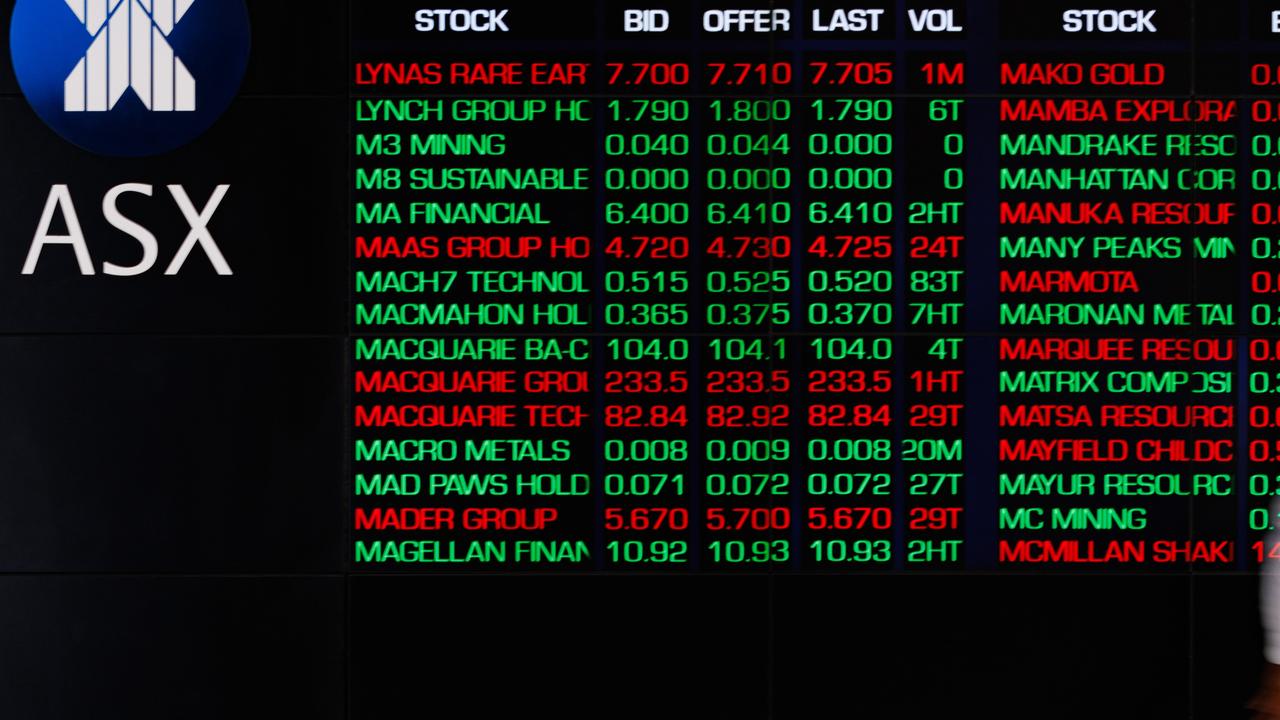
    A confluence of bullish signals from global markets and easing geopolitical tensions in the Middle East pushed Australia’s benchmark share index to solid gains on Thursday, capping a day of uneven sector performance driven by falling crude oil prices. The ASX 200 closed 84.50 points, or 0.96%, higher at 8878.10, while the broader All Ordinaries index rose 90.90 points, or 1.01%, to settle at 9107. The Australian dollar also edged up 0.20% to trade at 72.49 U.S. cents by market close. The rally followed a record-setting overnight session on Wall Street, where the S&P 500 gained 1.5% and the technology-focused Nasdaq climbed 2.08% to both hit new all-time closing highs. The upward momentum in U.S. equities was triggered by a breakthrough diplomatic development: the U.S. government tabled a one-page proposal that could pave the way for a gradual reopening of the Strait of Hormuz, a critical global oil chokepoint. U.S. President Donald Trump announced via social media that he was pausing military “Project Freedom” for a short period to allow time for a final agreement with Iran to be negotiated and signed. IG market analyst Tony Sycamore noted that this more constructive geopolitical tone injected fresh optimism into global markets, pulling West Texas Intermediate crude prices back below the key $100 per barrel threshold. For the ASX, falling oil prices delivered an outsized boost to mining and resources stocks, which led all 11 market sectors with a 3.67% collective gain. Major iron ore miners posted double-digit gains in line with the sector: BHP rose 3.78% to $58.52, Rio Tinto gained 3.23% to $180.24, and Fortescue Metals outperformed many peers with a 3.73% rise to $21.42. Gold producers also rallied alongside rising spot gold prices, which traded at $4709 per ounce at press time. Northern Star Resources climbed 4.38% to $31.70, Evolution Mining surged 6.33% to $13.10, and Newmont Corporation added 2.78% to $160.06. Consumer staples, another key driver of the day’s gains, also saw broad upward movement. Woolworths closed 0.92% higher at $34.16, Coles eked out a 0.37% gain to $21.81, and Treasury Wine Estates rose 1.17% to $4.34. Not all sectors joined the rally, however. Energy stocks bore the brunt of lower crude prices, posting broad losses across the board. Woodside Energy slumped 4.24% to $30.49, Santos fell 3.30% to $7.63, and fuel retailer Ampol dropped 2.28% to $34.22. In the fintech space, digital financial services firm Zip bucked broader market trends to post a 4.76% gain to $2.64 after it reaffirmed its full-year 2026 guidance of $260 million in earnings before interest and tax. Conversely, wagering operator TAB suffered a steep 23.48% nosedive to $0.88 after Australia’s financial intelligence agency Austrac issued a formal notice over the firm’s compliance failures with anti-money laundering and counter-terrorism financing regulations. Gaming firm Lights & Wonder also closed 8.34% lower at $102.66 after reporting mixed first-quarter 2026 results: overall earnings rose 5% year-over-year, but adjusted net profit after tax slipped 2% to US$115 million (AU$159 million). In total, seven of the ASX’s 11 sectors finished the session in positive territory, closing out one of the market’s strongest single-day gains in recent weeks. Altogether, the day’s trading highlighted how shifting geopolitical developments and global market momentum continue to shape Australian equities, with commodity price movements driving sharp divergences across sector performance.

  • Circus tackles jihadist nightmares of Burkina Faso’s children

    Circus tackles jihadist nightmares of Burkina Faso’s children

    For over a decade, brutal jihadist insurgency has torn through West Africa’s Burkina Faso, leaving a generations-long crisis in its wake: thousands of children have been murdered, kidnapped, sexually assaulted, and forcibly recruited as fighters by armed groups, per United Nations investigations. Human rights organizations have also documented widespread abuses against minors by Burkinabe government forces and allied civilian militias, a sensitive topic the performing artists have chosen not to address, given the ruling military junta’s heavy crackdown on dissent following two successive coups in 2022.

    Now, one of the country’s oldest performance troupes, Dafra Circus, is turning the silent trauma of conflict-affected children into a gripping, wordless stage production. Titled *Souffle* — French for “Breath” — the 60-minute performance uses acrobatics, mime, choreographed movement, and storytelling to capture the unspoken horror of childhoods destroyed by violence. The four-person cast brings harrowing scenes to life: one sequence depicts children juggling spent ammunition collected from battlefields; another, a traumatized performer stumbles through wobbly pirouettes and unsteady somersaults to mimic the descent into madness triggered by constant terror.

    Drawn from the real-life experiences of the troupe’s members — all of whom have been directly impacted by the violence that centers Burkina Faso — the production is more than an artistic performance, its creators say. For choreographer Jean Adolphe Sanou, *Souffle* centers on the connection between life and hope, and hope, he argues, is inherently tied to the futures of children. Artistic director Moustapha Konate, 30, explained that circus is uniquely suited to bear heavy political and social messages: the medium draws audiences in through spectacle, the beauty of movement, and feats of skill, making it easier to engage with a devastating topic that might otherwise feel too overwhelming to confront.

    “We take a clear stand against the use of children in war,” Konate emphasized. The UN’s most recent report on the conflict confirms children bear the brunt of Burkina Faso’s escalating spiral of violence, documenting more than 2,200 gross abuses against minors between 2022 and early 2024, the vast majority attributed to jihadist insurgents.

    After premiering to sold-out, enthusiastic crowds in Burkina Faso’s capital Ouagadougou and the troupe’s home base of Bobo-Dioulasso, the company brought *Souffle* to an international audience in mid-April at a festival in Abidjan, the economic capital of neighboring Ivory Coast. For many local attendees, the subtle, emotional performance offered a more human perspective on the conflict than sensationalized news reports. “It’s a bit more subtle, less shocking than what we see on TV, which is always scary,” 21-year-old audience member Yeli Gnougoh Coulibaly said after the show, explaining that the performance moved him deeply by making the crisis feel personal.

    For many Burkinabe audience members, the blend of traditional circus skills with dance, theater, and narrative storytelling was also a new experience, Konate noted, opening the door for wider conversations about the human cost of a conflict that rarely captures sustained global attention. Even as it confronts unspeakable trauma, the production ultimately frames its core message around resilience and the possibility of healing: as its title *Souffle* suggests, it is a reminder that the children of Burkina Faso still carry the breath of life, and the right to a hopeful future.

  • Britons set to punish Starmer’s Labour in local polls

    Britons set to punish Starmer’s Labour in local polls

    Polling stations opened across England, Scotland and Wales at 7 a.m. GMT on Thursday for what is poised to be the most high-stakes electoral test for Prime Minister Keir Starmer’s Labour government since the party’s landslide 2024 general election victory that ended 14 years of Conservative rule.

    Nearly two years into Starmer’s premiership, pre-election opinion polls point to a grim outcome for the ruling party, with losses large enough to reignite long-simmering tensions over his leadership and amplify growing calls for his resignation or an official leadership challenge. Widespread public disillusionment with the traditional major parties has created a power vacuum that two populist factions — Nigel Farage’s right-wing anti-immigration Reform UK and the left-wing Green Party led by self-described eco-populist Zack Polanski — are projected to fill as their main beneficiaries.

    Around 5,000 of the UK’s 16,000 local council seats in England are up for grabs in this vote, while voters in Scotland and Wales are also choosing new members for their respective devolved legislatures. Polls will close at 10 p.m. Thursday, with partial results expected overnight and the full bulk of vote counts set to be released Friday.

    Starmer campaigned on a platform of transformative national change after 14 years of Conservative governance marked by austerity measures, Brexit-driven political chaos, and the 2022 economic crash under former Prime Minister Liz Truss. But critics argue his tenure has been defined by a string of unforced policy missteps and controversies, most notably a high-profile scandal tied to his former close ally Peter Mandelson, the ex-UK envoy to the U.S. who was fired over his ties to late convicted sex offender Jeffrey Epstein.

    Most damaging for Starmer’s approval ratings has been the government’s failure to deliver on its core campaign promise of jumpstarting sustained economic growth. British households continue to grapple with a prolonged cost-of-living crisis driven by soaring energy prices and stagnant wages, leaving many voters frustrated that the change they voted for has yet to materialize. As University College London associate politics professor Melanie Garson put it: “The change hasn’t been delivered, or change that has been delivered has been negative.”

    Garson noted that this election marks an unprecedented turning point for UK politics, noting “for the first time, significant pressure on the main political parties across every single council.” She described the vote as “a huge barometer for how the country is feeling about this political establishment.”

    Ahead of voting, Starmer framed the election as a binary choice between national unity and division, “progress versus the politics of anger.” Labour has also sought to stem losses by highlighting problematic comments from opposition candidates, unearthing racist remarks from some Reform contenders and antisemitic statements from several Green candidates.

    Pre-election projections paint a dire picture for Labour across all regions. Polling suggests the party will lose control of the devolved Welsh government for the first time since the Welsh parliament was established 27 years ago, with a recent More in Common poll placing Reform neck-and-neck with pro-independence Plaid Cymru in Labour’s traditional Welsh heartlands.

    In Scotland, the Scottish National Party (SNP) is projected to extend its 19-year hold on the Edinburgh devolved parliament, with YouGov data forecasting that Reform could even push Labour into third place in the region. In London, the Greens are on track to seize seats from Labour by courting disaffected left-wing voters with a pro-Gaza policy platform.

    Leading pollster Robert Hayward projects that Labour could lose as many as 1,850 of the roughly 2,550 local council seats it is currently defending. Hayward predicts Reform will gain 1,550 seats from both Labour and the Conservatives, mostly in majority white working-class communities that have long been traditional strongholds for the major parties. The Conservatives, who have been out of national power since 2024, are also bracing for heavy losses of their own traditional heartland seats.

    Conservative leader Kemi Badenoch framed the shift as a definitive end to the UK’s traditional two-party system, telling PA Media: “The two-party era has moved into a multi-party era. But the fact is none of these new parties or Labour have a plan for the country.”

    Farage, for his part, expressed confidence in Reform’s prospects Thursday: “The message is clear: if you want real change, you’d better vote for it, and we go into tomorrow feeling pretty optimistic about our prospects.”

    Following the expected poor results, UK media is rife with speculation that senior Labour figures could move to oust Starmer. Names frequently cited as potential challengers include former deputy prime minister Angela Rayner and current Health Secretary Wes Streeting. However, neither contender commands universal support within the parliamentary Labour party, and a leadership challenge requires the backing of at least 20 percent of Labour MPs to move forward. Some backbench lawmakers are also reportedly planning to demand that Starmer announce a timeline for stepping down, despite his repeated public commitments to leading the party into the next general election scheduled for 2029.

  • Surging fuel prices and data centre costs wipe out Australia’s nine-year trade surplus

    Surging fuel prices and data centre costs wipe out Australia’s nine-year trade surplus

    After nearly a decade of consistent goods trade surpluses, Australia’s unbroken run has come to an abrupt end, with official data revealing a $1.8 billion deficit in March driven by two key factors: skyrocketing global fuel costs and a historic, unexpected surge in data centre equipment imports from Taiwan.

    The Australian Bureau of Statistics (ABS) published the revised trade data on Thursday, confirming the sharp reversal in the country’s goods trade balance. Analysts point to two primary contributors to the unanticipated deficit: the rapid spike in global energy prices and a one-in-a-generation jump in imports of automatic data processing (ADP) equipment, core infrastructure for modern data centres.

    First, the global oil market disruption that rippled across the world in March hit Australia’s import bill particularly hard. With roughly 20% of the world’s total crude oil shipments passing through the Strait of Hormuz, regional conflict that disrupted shipping lanes in the key chokepoint sent oil prices soaring from around $US56 per barrel in January, before tensions escalated, to a range of $US100 to $US110 per barrel by March. This translated directly to a 53.6% jump in Australia’s total fuel and lubricant import spending, adding an extra $2.1 billion to the import bill and pushing the total value of fuel imports to $6.1 billion for the month. For Australian consumers, every $US10 increase in crude prices adds an extra 10 cents per litre at domestic fuel pumps, a burden that has weighed heavily on household budgets through the early months of 2024.

    The second, far more unexpected factor driving the deficit was a 322% monthly surge in ADP equipment imports from Taiwan. The total value of these shipments jumped from $1.6 billion in February to $4.8 billion in March, more than doubling the previous record high of $2.3 billion for this product category. Economists say most of this imported equipment consists of high-performance semiconductors and computing hardware destined for Australia’s growing fleet of new data centres, as demand for cloud computing and AI infrastructure booms domestically.

    “The biggest surprise for markets and analysts was unquestionably the jump in ADP equipment imports,” explained Harry Ottley, senior economist at Commonwealth Bank of Australia. “The vast majority is almost certainly chips and computing hardware for data centre buildouts, and this was a material increase that no one forecast. We still don’t know for certain if this is a one-off large shipment for a single major infrastructure project, or the start of a sustained upward trend in capital imports for the tech sector.”

    Ottley added that while the surge in fuel prices was largely expected given the ongoing Middle Eastern tensions, the scale of the ADP import jump caught the entire industry off guard.

    The deficit was also exacerbated by an unexpected downturn in Australia’s key rural export sector, which saw an 11.6% drop in rural goods export values in March. Non-rural exports remained largely flat overall: a 0.3% uptick was driven by rising global gas prices that offset falling values for iron ore and coal, two of Australia’s largest export commodities.

    Looking ahead, Ottley noted that the pressure on Australia’s trade balance is likely to persist in the coming months, even as some factors offset the drag. “Energy markets have remained tight through early May, and while additional shipments are now arriving, the value of fuel imports is likely to stay elevated in the next few monthly reports,” he said. “This will continue to put downward pressure on the overall trade balance, though that drag will be partially offset by higher export prices for one of Australia’s key commodities – liquefied natural gas.”

    Ottley projected that the March trade deficit will cut approximately 0.8 percentage points from Australia’s gross domestic product for the current quarter, though he noted that much of the hit to GDP from falling net exports will be countered by gains elsewhere in the economy: the massive ADP equipment imports represent a major increase in private business investment, a positive driver of long-term economic growth.

    The end of Australia’s nine-year trade surplus streak marks a key shift in the country’s trade dynamics, driven by both global energy market volatility and a historic wave of capital investment in the domestic digital economy.

  • Ex-Australia cricketer Warner accepts  decision to drink and drive was ‘foolish’

    Ex-Australia cricketer Warner accepts decision to drink and drive was ‘foolish’

    Former star Australian international cricketer David Warner, who hung up his international boots in 2024 after a 15-year elite career, will take responsibility for a recent drink-driving charge, his legal representative has confirmed. The 39-year-old athlete was pulled over for a random breath test in the Sydney beachside suburb of Maroubra last month, and recorded a blood alcohol content over the legal limit, leading to the official charge. He has not formally entered a plea in court to date.

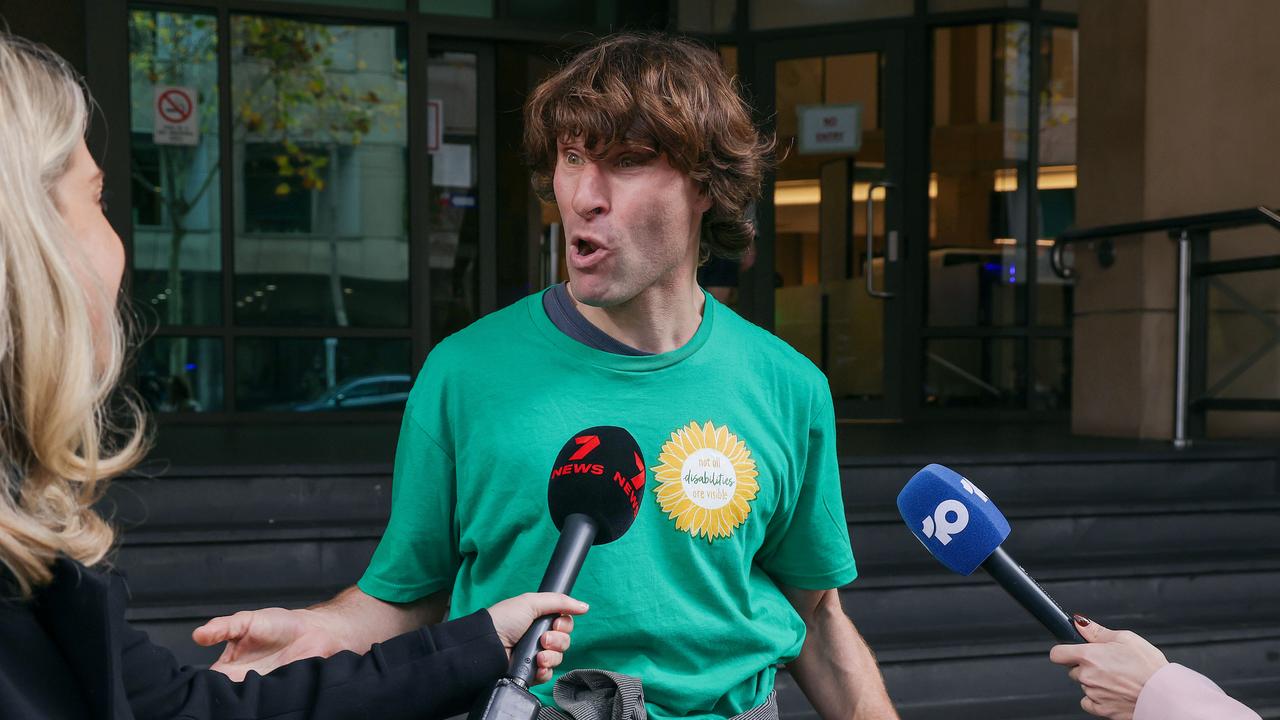
    Speaking to reporters outside the Sydney courthouse following Thursday’s case hearing, Warner’s lawyer Bobby Hill told media that his client has acknowledged his mistake. “I can indicate that David will be accepting responsibility for drink-driving,” Hill stated, per public broadcaster Australian Broadcasting Corporation (ABC).

    Warner, who currently holds captaincy roles for both Big Bash League side Sydney Thunder and Pakistan Super League franchise Karachi Kings, did not make an in-person appearance at this week’s hearing. The magistrate adjourned the case to a hearing scheduled for June.

    Hill went on to detail the circumstances leading to the offense, noting that Warner had consumed three glasses of wine while visiting a friend’s apartment before making the decision to drive. “He knows what he did was wrong,” Hill said. “He accepts that was a reckless decision, a foolish decision to get in his car instead of taking an Uber.”

    The legal representative also pushed back against any mis framing of the incident, noting that drinking alcohol itself was not the offense in this case. “It’s not a crime to have a glass of wine on the day of the lord’s resurrection. In fact, some would consider that completely appropriate,” Hill said. “His crime is, as I said, choosing a foolish plan A instead of a plan B.”

    Following the initial charge in April, Cricket New South Wales chief executive Lee Germon released a statement saying the governing body found the allegations deeply concerning and took the matter extremely seriously. “At Cricket NSW, we are strong advocates for safe driving, not drink-driving,” Germon said.

    Over the course of his 15-year international career with Australia, Warner made 383 appearances across Test, One Day International and Twenty20 formats, establishing himself as one of the team’s most aggressive and successful opening batters before his retirement in 2024.