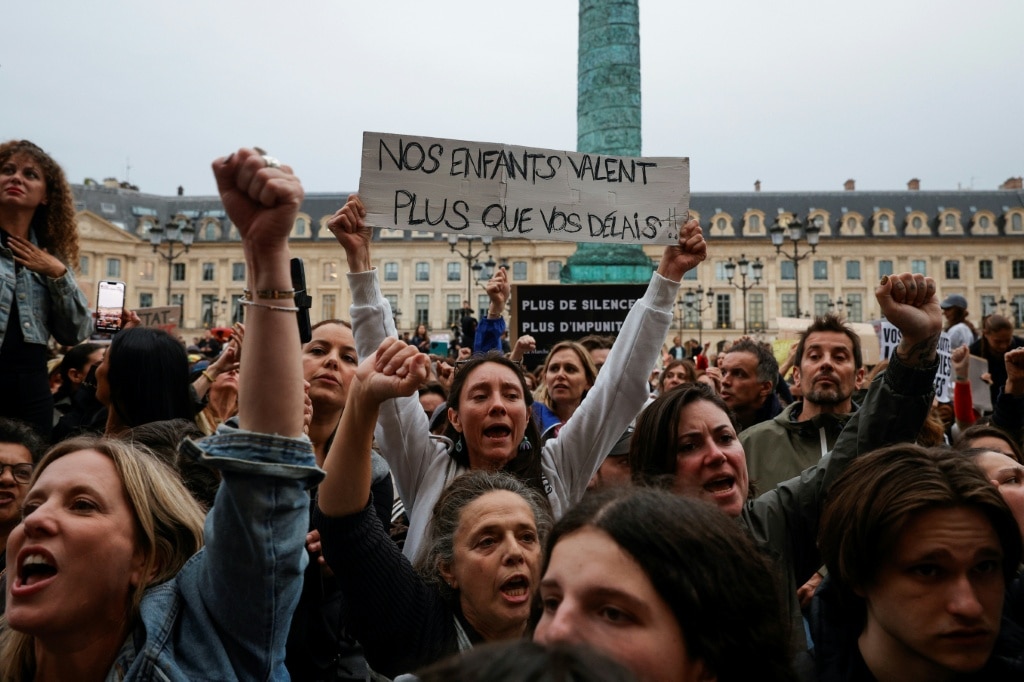
A national reckoning over judicial failures in child protection and sexual abuse case management has gripped France this week, after Justice Minister Gerald Darmanin publicly refused to step down amid growing fury over his department’s role in the killing of 11-year-old Lyhanna.
The young girl’s body was discovered last week, nearly two weeks after she disappeared from her home near the southwestern town of Fleurance on May 29. The primary suspect is a 41-year-old man who is the father of one of Lyhanna’s school friends, a detail that has amplified public shock: court records show the man had already been formally accused of child rape on two separate occasions prior to Lyhanna’s disappearance.
One of those prior sexual assault complaints was filed in August of last year, but the investigation was never advanced, and law enforcement never questioned the suspect before Lyhanna went missing nine months later. After acknowledging what he called a “huge failure” in the handling of the prior accusations in an apology Friday, Darmanin faced immediate cross-party and public calls to resign over the systemic breakdown that allowed the suspect to remain free.
Appearing before reporters at a Monday press conference, Darmanin pushed back against those demands, saying the question of his resignation would only be justified if he refused to take accountability for the failures exposed by the case. “I will tell the whole truth without hiding anything from the French people,” he told attendees, framing the crisis not as an isolated misstep but a potential systemic breakdown that requires urgent review. As an immediate first step, Darmanin announced he has ordered all public prosecutors across France to launch a full re-examination of roughly 70,000 pending child crime complaints that are currently stuck in the nation’s backlogged judicial system.
But judicial leaders say the current crisis stems from deep underfunding and understaffing, not just individual mismanagement. Ludovic Friat, head of one of France’s major magistrates’ unions, warned Darmanin in a formal letter this week that judicial workers simply cannot keep pace with ministry demands when France has four times fewer prosecutors per capita than the European average.
Independent data bears out the scope of the systemic failure: according to CIIVISE, France’s independent national commission on sexual violence, only 7 percent of all reported complaints for child sexual assault in the country ultimately result in a criminal conviction.
Lyhanna’s killing has already reverberated far beyond the case itself, sparking widespread national calls for sweeping reform to how France investigates and prosecutes sexual abuse against both children and women. Yael Braun-Pivet, speaker of France’s National Assembly, has called on the government to immediately speed up legislative review of a pending bill targeting all forms of sexist and sexual violence. Drafted based on 140 recommendations from leading women’s rights organizations, the legislation includes key provisions to expand specialized training for police officers and judges who handle sexual abuse cases, a move advocates say will address longstanding gaps in how these sensitive investigations are conducted.