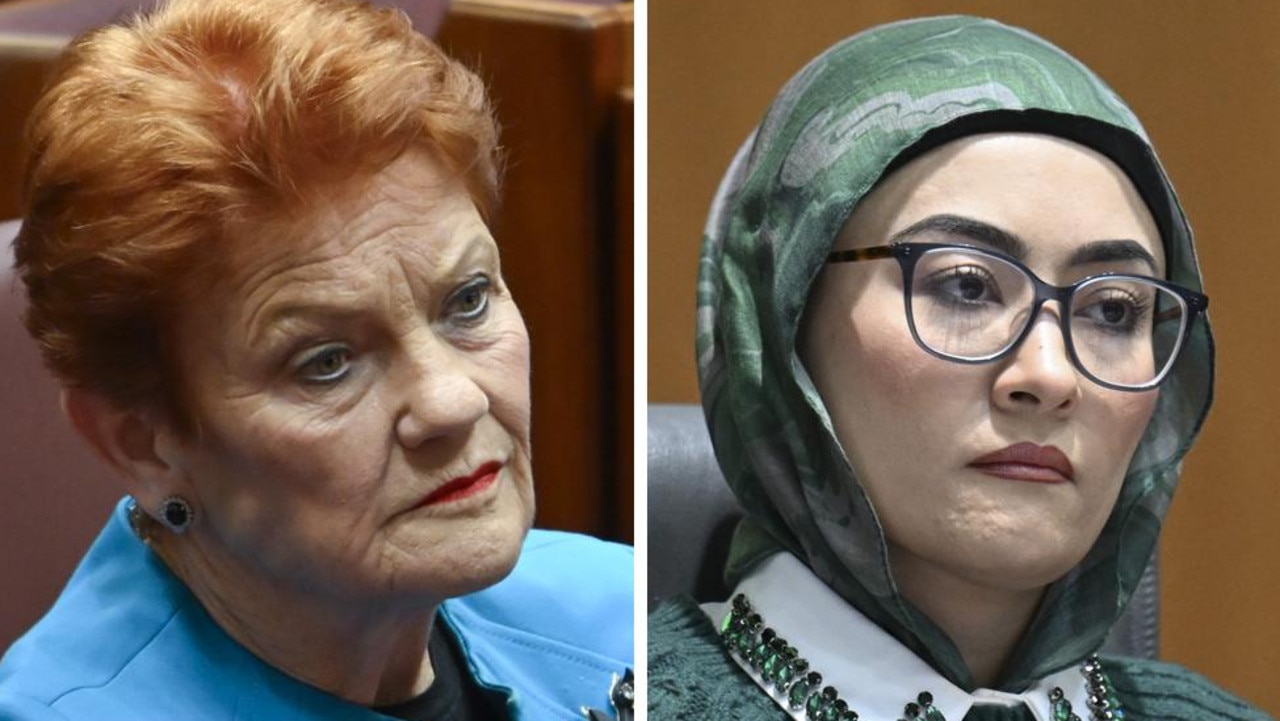
A fresh political firestorm has erupted in Australian federal politics over constitutional eligibility rules, after One Nation leader Pauline Hanson launched a fierce defense of one of her party’s senators and reignited a long-running public conflict with independent legislator Fatima Payman. The clash comes as senior figures from the opposition Coalition are demanding the eligibility question be formally escalated to either the parliamentary privileges committee or Australia’s High Court for a binding ruling.
The controversy centers on One Nation West Australian Senator Tyron Whitten, after reporting from *The Australian* newspaper raised red flags over his ongoing financial holdings. The outlet claimed Whitten, who co-founded construction firm Whittens Group with his brother, still retains shares in the company – a business that holds a contract for the major Snowy Hydro 2.0 infrastructure project. In recent days, Whitten updated his mandatory parliamentary register of interests, removing both Whittens Group and a second associated entity, Whittens Bros Investments Pty Limited, from his public disclosures.
These revelations have triggered fresh scrutiny under Section 44 of the Australian Constitution, a statute that bars sitting parliamentarians from holding any direct or indirect financial interest in Commonwealth government projects or public assets. Rejecting the Coalition’s calls to refer the matter to the High Court acting as the Court of Disputed Returns, Hanson launched a blistering attack on opposition lawmakers, labeling them “gutless wonders” and “pure hypocrites” for their stance.
Hanson pushed back firmly against the eligibility claims, arguing: “The fact is, there is no question over Senator Whitten’s eligibility. Snowy Hydro is a public company, not a government department.” Instead of addressing the Coalition’s demands, Hanson pivoted to renew her earlier questioning of Payman – a former Labor senator who now sits as an independent – dragging the years-old debate over Payman’s citizenship status back into the national spotlight.
Payman, who was born in Afghanistan, took steps to renounce her Afghan citizenship ahead of the 2022 Australian federal election. However, her request was never finalized by the Afghan embassy after the Taliban seized control of the country, a regime that Australia does not formally recognize. Section 44 of the constitution bars dual citizens from serving in federal parliament, except in cases where a candidate can prove they took all reasonable steps to renounce their additional citizenship.
In a social media statement published over the dispute, Hanson argued: “The most questionable senator in parliament, Fatima Payman, holds Afghan citizenship. It’s a case that still needs investigation and an answer. I tried to have her qualification to sit in parliament under section 44 of the constitution referred for an inquiry. The hypocrites in the Coalition joined with Labor and the Greens to kill that inquiry and make sure she was never investigated. If the Coalition didn’t have double standards, they wouldn’t have any. I wish the Coalition would put as much effort into working together and fixing the country as they put into trying to take One Nation down.”
Section 44-related disputes are not a new feature of Australian politics. Between 2017 and 2018, 15 sitting federal politicians were forced to resign from their seats after being found to breach the dual citizenship provision of the rule, in many cases for holding secondary citizenship they had no prior knowledge of. All affected lawmakers were required to contest their seats in subsequent by-elections to regain their positions.