标签: Oceania

大洋洲

  • Protests as Venice Biennale opens in turmoil over Russian presence

    Protests as Venice Biennale opens in turmoil over Russian presence

    The 2024 Venice Biennale, one of the world’s most prestigious and longest-running contemporary art events, kicked off its press preview period this week mired in geopolitical controversy, sparked by the controversial inclusion of Russia in the festival for the first time since Moscow’s full-scale invasion of Ukraine in 2022. What was meant to be a global celebration of artistic vision has instead become a flashpoint for international tensions, drawing mass protests, institutional resignations, funding threats, and boycott calls that have thrown the entire event into turmoil.

    The most high-profile demonstration took place outside the Russian pavilion on Wednesday, when bare-breasted activists from two iconic protest groups—Ukrainian feminist collective Femen and Russian opposition punk band Pussy Riot—took united action against Russia’s participation. Dressed in matching pink balaclavas, the activists set off pink smoke bombs to draw attention to their cause, as they denounced the presence of a Russian national pavilion amid the ongoing full-scale war.

    “We are here to remind that the only Russian culture, the only Russian art today is blood,” Femen leader Inna Shevchenko told assembled reporters. “This pavilion stands on Ukrainian mass graves.” This marked the first time the two groups have collaborated on a public protest, a sign of the widespread anger the decision has sparked across both Ukrainian and anti-war Russian circles.

    The controversy over Russia’s inclusion has rippled across the entire event, triggering cascading consequences that have forced major changes to the 2024 Biennale’s structure. Last week, the entire international jury resigned in protest, announcing they would refuse to award prizes to nations led by officials facing arrest warrants from the International Criminal Court—a designation that covers both Russia and Israel. In response to the unrest, organizers have postponed the Biennale’s traditional opening awards ceremony from May 9, the festival’s first public day, all the way to November 22, the final day of the six-month run. Organizers have instead restructured awards to allow public voting, extending eligibility to all national participants including Russia, a move they framed as upholding “the principle of inclusion and equal treatment.”

    The decision to allow Russia’s participation this year came despite the fact that Russia was not extended an official invitation, and despite widespread opposition from European and Italian political leaders. The European Union has threatened to cut 2 million euros ($2.3 million) in core grant funding for the Biennale over the decision, arguing that European taxpayer money should not support events that include Russian participation amid the ongoing war. A European Commission spokesman emphasized that cultural events backed by the bloc must uphold democratic values, freedom of expression, and inclusive dialogue—values the bloc says are not respected in modern Russia. The EU has also requested formal clarification from the Italian government over whether hosting the Russian delegation violates existing European sanctions against Moscow.

    Italy’s national government has also openly opposed Russia’s inclusion, with Culture Minister Alessandro Giuli confirming he will boycott the event entirely in protest of the decision.

    In a compromise reached amid escalating pressure, the Russian pavilion will not be open to the general public for the entire run of the Biennale, which is open to visitors from May 9 through November 22. Instead of in-person public exhibits or live performances, the Russian pavilion’s show, titled “the tree is rooted in the sky,” will only be recorded during this week’s press previews, with footage later projected on large outdoor screens for public viewing. Russia’s ambassador to Italy, Aleksei Paramonov, confirmed that restrictions tied to European sanctions bar any live public performances by Russian artists beyond the press preview period, and condemned the restrictions as unreasonable.

    “There is truly something painful and unreasonable about the European Union’s obsession with targeting Russian culture and art with sanctions and restrictions of all kinds,” Paramonov said in a statement posted to Facebook.

    Biennale President Pietrangelo Buttafuoco, who has repeatedly defended the decision to include Russia, argued that the festival has always served as a space for global dialogue even amid geopolitical division. “If the Biennale were to start selecting not works but affiliations, not visions but passports, it would cease to be what it has always been: the place where the world comes together, and all the more so when the world is torn apart,” Buttafuoco told reporters Wednesday.

    Controversy is not limited to the Russian pavilion, however. Pro-Palestinian activists also staged a large demonstration outside the Israeli pavilion Wednesday, drawing roughly 100 participants who carried banners reading “No artwashing genocide” amid ongoing Israeli military operations in Gaza. Just as with Russia, the ICC has issued an arrest warrant for Israeli Prime Minister Benjamin Netanyahu, a key reason the Biennale jury resigned last week. Iran, which was originally scheduled to participate in the 2024 Biennale, withdrew entirely after Israeli strikes on Iranian targets in late February.

    This year’s controversy marks a sharp shift from the 2022 Venice Biennale, held shortly after Russia’s full-scale invasion of Ukraine. At that event, Russian artists and curators voluntarily withdrew from the pavilion in protest of the war, and Biennale organizers banned all Russian government officials from attending the event.

  • Hantavirus ship passenger: ‘They didn’t take it seriously enough’

    Hantavirus ship passenger: ‘They didn’t take it seriously enough’

    A deadly hantavirus outbreak on a polar expedition cruise ship has sparked sharp criticism from a passenger who says crew leadership downplayed the risk of infection and allowed normal operations to continue even after the first death was recorded.

    Turkish travel vlogger Ruhi Cenet, 35, joined the 88-passenger MV Hondius in Ushuaia, Argentina on April 1 to document a stop at Tristan da Cunha, the remote South Atlantic archipelago. The voyage began as a comfortable, idyllic journey: the ship carried 59 crew members to cater to guests, most of whom were senior amateur birdwatchers aged 60 and older. The calm routine shattered on the morning of April 12, when the captain announced over the ship’s intercom that a 70-year-old Dutch passenger had died the previous day.

    In video footage Cenet recorded on board, the captain told passengers that the ship’s doctor had confirmed there was no risk of infection, and attributed the death to natural causes. At the time, leadership did not even consider that a highly contagious pathogen could be spreading through the vessel – a decision Cenet calls deeply reckless, even as the ship’s own British doctor would later develop severe symptoms consistent with hantavirus infection.

    “What shocked me most was that life went on completely as usual after the announcement,” Cenet told AFP in a remote interview. Videos he shared show elderly passengers continuing to gather for buffet meals with no social distancing or face coverings. Out of an abundance of caution, Cenet and his cameraman began self-isolating in their cabin immediately, despite having no confirmed information about a virus outbreak.

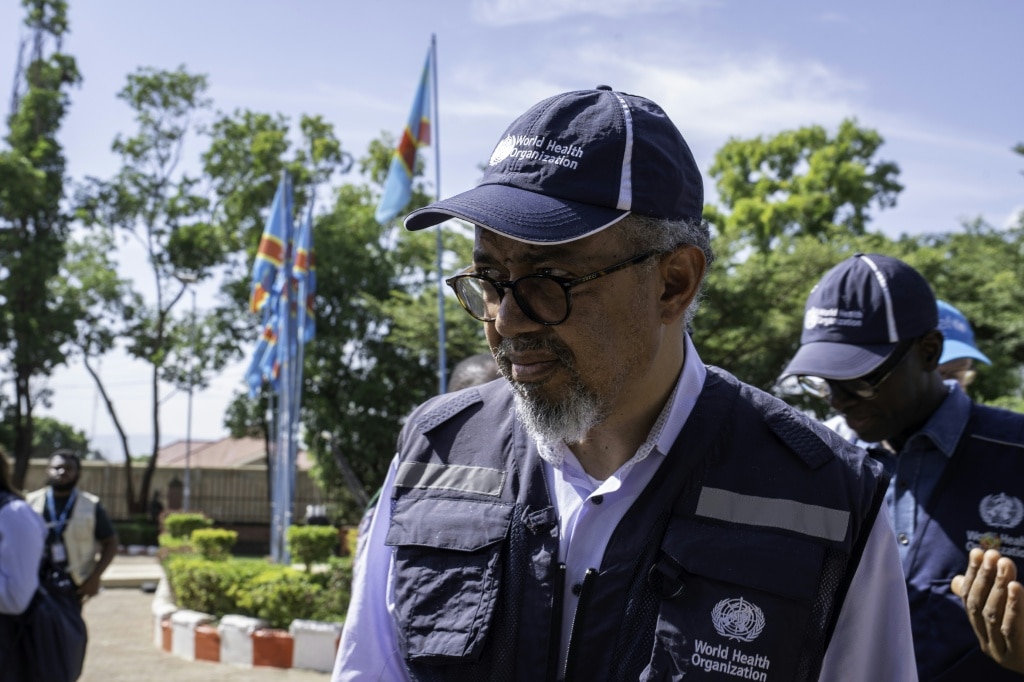
    Three people on the MV Hondius have now died from the virus: the initial Dutch victim, his wife, and a German female passenger. The World Health Organization has confirmed that at least five additional passengers have definite or probable cases of hantavirus, a rare zoonotic disease that causes severe respiratory illness and can be fatal in untreated cases.

    Cenet says he remains deeply troubled by the ship’s scheduled stop at Tristan da Cunha days after the first death, when all passengers were allowed to disembark and interact with the island’s small local population. “It’s the most remote inhabited island on Earth, with almost no hospital infrastructure and barely any doctors,” he explained. “That’s my biggest regret – we shouldn’t have landed there after the first fatality. It could have turned into a worst-case scenario for the islanders.”

    Cenet and around 20 other passengers disembarked at the British overseas territory of Saint Helena on April 24. The next day, he boarded a repatriation flight to South Africa – alongside the first victim’s wife, who was already showing severe symptoms. She died less than 24 hours after boarding the flight. After clearing processing in South Africa, Cenet returned to his home in Istanbul, where Turkish health authorities told he did not need mandatory quarantine as long as he showed no symptoms. He has continued voluntary self-isolation out of caution.

    The MV Hondius spent weeks quarantined in waters off Cape Verde, and on Wednesday departed for Spain’s Canary Islands. An acquaintance still on board told Cenet that passengers are now required to isolate in their cabins and wear face coverings when in shared spaces. Looking back, Cenet argues that expedition cruise lines operating in remote regions lack basic emergency infrastructure to handle disease outbreaks. Passengers paid roughly $10,000 each for the voyage, he noted, and the ship relied on just one physician to handle all medical needs.

    “I think these kinds of ships should have on-site labs and all the necessary emergency equipment to handle outbreaks when you’re thousands of miles from the nearest major hospital,” Cenet said. “One doctor simply isn’t enough.”

  • ARN reveals $22m ‘brand safety’ revenue hit after Kyle and Jackie O fallout

    ARN reveals $22m ‘brand safety’ revenue hit after Kyle and Jackie O fallout

    Australian Radio Network (ARN) Media’s board of directors faced intense scrutiny from disgruntled shareholders at its annual general meeting held in North Sydney on Thursday, as investors slammed leadership for a year of steep financial losses, a collapsing share price, and the high-profile split and subsequent legal battle with beloved breakfast radio hosts Kyle Sandilands and Jackie Henderson, known collectively as Kyle and Jackie O.

    During the meeting, senior ARN executives laid out the scale of the company’s recent financial troubles, confirming that total annual revenue for the 12 months ending December fell 10% year-on-year to $285 million. Metro radio division revenue dropped by $28 million over the period, according to chief executive Michael Stephenson. Of that decline, he explained, just $6 million stemmed from broader industry headwinds in a tough advertising market, while the remaining $22 million came from advertisers pulling spending over brand safety concerns tied directly to the controversy surrounding Sandilands and Henderson. Regional revenue also dipped by $5.3 million, Stephenson noted, though it did not face the same brand safety-driven client exodus.

    Stephenson framed the network’s decision to cut ties with the pair as a proactive step to protect ARN’s brand reputation, and he struck an optimistic tone on future revenue recovery. “Over time, we expect a significant percentage of the $26 million of revenue that was lost last year because of brand safety concerns to return, improving both our metro radio revenue and revenue share,” he said. While the board declined to comment in detail on the active legal dispute, Stephenson confirmed that the departure of the high-profile hosts could pave the way for the return of former advertisers that had withdrawn their spending.

    ARN chairman Hamish McLennan later outlined the timeline of events that led to the show’s cancellation to shareholders, referencing the legal claims brought by Quasar Media (Sandilands’ company) and Henderson Media. McLennan confirmed that an on-air incident involving the two hosts took place on February 20, 2026. After the incident, Henderson took a paid leave of absence supported full by ARN management. On February 26, 2026, Henderson notified the network that she could no longer continue working alongside Sandilands, stating that direct contact with him had become untenable.

    “The Company considered this a repudiation of her contract, on the basis that it was not possible for her to perform her core contractual requirement to deliver the ‘Kyle and Jackie O show’ and, as a result, her contract was terminated,” McLennan explained. Sandilands, who was ousted alongside Henderson, has since launched a lawsuit against his former employer ARN Media.

    The network’s poor financial performance over the past year has hit shareholder value hard: ARN’s share price has plummeted 51% over the last 12 months to trade at just 26 cents, a drop that became a key point of criticism from investors at the AGM. Shareholders openly questioned the board about the ongoing share price decline and the missteps that led to the loss of one of radio’s most popular shows, paired with the costly pending litigation.

  • Health worker’s terror before surgery after nurses allegedly boasted killing Israeli patients

    Health worker’s terror before surgery after nurses allegedly boasted killing Israeli patients

    As Australia’s Royal Commission into Anti-Semitism and Social Cohesion enters its fourth day of public hearings, multiple witnesses have laid bare profound harm and broken trust stemming from rising anti-Jewish sentiment across Australian public institutions, media, and community spaces. The testimonies have cast a stark light on the deep-seated biases and systemic failures that have eroded safety for Jewish communities across the country. One dual Australian-Israeli citizen, identified only as AAV to protect her privacy, told the commission of crippling fear that preceded a scheduled knee surgery at a New South Wales (NSW) public hospital in February 2025. Four days before her procedure, she encountered a viral social media video — currently the subject of active criminal proceedings — in which nurses at Bankstown Hospital allegedly boasted about harming Israeli citizens. The revelation shattered her long-held trust in the state public health system, leaving her terrified that she could be killed while unconscious on the operating table. “I can’t even describe the terror that that created for me because of my knowledge of healthcare,” AAV told the hearing. “I spent the worst 24 hours of my life imagining all the ways I could be killed. I was paralysed with fear.” The witness shared that she already carried profound trauma from the October 7 2024 attacks on Israel: her cousin was taken hostage in that assault, and their remains were only returned to family this past January. Even before the pre-surgery panic, AAV’s faith in Australian institutions had already been shaken by a deeply upsetting experience with an NSW Health employee assistance program (EAP) counsellor following the December 2024 Bondi Junction attack. She had sought counselling to process overwhelming grief and anger over what she viewed as the government’s failure to protect Jewish and all Australian citizens, but the session left her reeling. Instead of providing support, the counsellor asked AAV to “put yourself in the position of those men and understand why they might have acted that way,” before prompting her to imagine a conversation with a Gazan mother who had lost family in the conflict. AAV said she stormed out of the session in a burst of rage, stunned by the questions. Reflecting on the broader shift in safety for Jewish Australians, she added: “What we have done in the Jewish community is made abnormal normal. It’s not normal for a person to go to the hospital and think ‘Is somebody gonna harm me while I’m here’?” She stressed that extensive, intentional work is required from NSW Health to begin repairing the damage done to trust within the Jewish community. Two people, Sarah Abu Lebdeh and Ahmad Rashad Nadir, have already pleaded not guilty to charges related to the social media video: Lebdeh faces counts of using a carriage service to menace, harass, offend and threaten group violence, while Nadir has pleaded not guilty to charges of menace, harassment, and offense. The pair is scheduled to go on trial in August 2025. Beyond healthcare, the hearings also brought sharp criticism of Australian media from veteran former Age editor-in-chief Michael Gawenda, who called the sector’s response to rising anti-Semitism “an enormous failure.” Gawenda argued that major media outlets have systematically downplayed the growing crisis of anti-Jewish bias in Australia, echoing long-running complaints from Jewish community groups that the scope of the problem has been underreported. He told the commission he was stunned by the breadth of harm shared by the more than 30 witnesses who have already testified, most of whose stories have never been reported in mainstream media. “Why was there a need to have a royal commission to tell these stories?” Gawenda asked. “It cannot be that they didn’t have the journalists to do it. Why didn’t they spend time in these communities, talk to ordinary people about what they’re experiencing?” Gawenda also condemned a growing trend of journalists abandoning long-held ethical norms to act as political activists, specifically calling out reporters who have publicly stated it is acceptable to side exclusively with one side of the Israeli-Palestinian conflict. “This was a denial of the ethical positions that have existed in journalism from the time I became a journalist in 1970: that we don’t be activists, that we don’t even belong to the Labor or the Liberal party,” he said. Another witness, Stephanie Cunio, a lifelong Jewish left activist and Bondi local who has worked with union and advocacy groups for decades, shared her experience of being marginalized by progressive communities for rejecting one-sided takes on the Israeli-Palestinian conflict. Cunio told the hearing she holds the nuanced view that both the October 7 Hamas attacks and the ongoing violence in Gaza are unacceptable atrocities, but that most of her left-leaning peers refuse to accept that both realities can coexist. “The left could only see one truth, which was the horrible things happening in Gaza,” she said. “So that truth was heartbreaking, and then further on the fact that broadly the left could not stand in solidarity with Jews as we are increasingly experiencing anti-Semitism. I don’t know if it’s naivety, but I don’t find it forgivable.” Cunio, who first joined the Jewish left in the 1990s, said she was “cancelled and gaslit” by a climate organization where she served on the board, after she refused to fully denounce Israel’s right to exist and adopt a framing that labeled the state entirely colonial. “There was a strong pressure to denounce completely the existence of Israel and to take the colonial view of the conflict, which I don’t completely disagree with,” she explained. “But Israel is my ancestral lands as well. If I wasn’t taking that position I was cancelled and gaslit.” She added that she feels humiliated by the widespread demonization of the word “Israel” in progressive spaces, noting that for her, the word evokes beautiful landscapes and beloved friends, not just the actions of the current Israeli government — while acknowledging that for Palestinians, the term is inextricably tied to war, displacement, and violence. After the December 14 2024 Bondi attack that killed 15 people, Cunio received an outpouring of support from community members, but she called the experience bittersweet. “It was a double edged sword: it was welcome, but where was it before, and where was it for those people who died on October 7th?” she asked. The commission also heard from the owners of Lewis Continental Kitchen, a beloved kosher deli in Bondi that was firebombed in October 2024. Mother-daughter co-owners Judith and Karyn Lewis described the arson attack as devastating to their family business, which had become a central community hub where customers became close friends. “For us it’s devastating because we’re not seeing all our friends because our customers very much became our friends,” Judith Lewis told the commission. The public hearing was briefly closed to allow the pair to speak freely about the attack, as three men facing charges over the arson are still before the courts. The Royal Commission into Anti-Semitism and Social Cohesion was called by Prime Minister Anthony Albanese on January 8 2025, following weeks of community pressure in the wake of the alleged December 2024 Bondi terror attack. This first block of hearings is scheduled to run for two weeks, focused on establishing a clear definition of anti-Semitism, mapping its prevalence across Australian society, and assessing how bias has taken root in major public and private institutions. The commission’s final report, including policy recommendations to address rising anti-Semitism, is due to be delivered to the government in December 2025, one year after the Bondi attack.

  • Trump says Iran deal ‘very possible’ but threatens strikes if talks fail

    Trump says Iran deal ‘very possible’ but threatens strikes if talks fail

    On Wednesday, U.S. President Donald Trump laid out a dual track of cautious optimism and stark warning for ongoing negotiations with Iran, saying a breakthrough agreement is “very possible” even as he threatened to resume devastating military strikes at far greater intensity if talks collapse.

    The latest diplomatic push comes after weeks of stalled dialogue between the two long-time adversaries, following an inconclusive first round of talks mediated by Pakistan last month. Negotiations gained a faint pulse last week when Trump paused a short-lived U.S. military operation designed to reopen the Strait of Hormuz — the world’s most critical oil chokepoint — citing emerging prospects for a negotiated settlement. Progress remains gridlocked, however: Iran has not yet formally responded to a new U.S. proposal put forward in recent days.

    “ We’ve had very good talks over the last 24 hours, and it’s very possible that we’ll make a deal,” Trump told reporters Wednesday. “If Iran agrees to give what has been agreed to, the war will be over. If not, the bombing will resume at a much higher level and intensity.” Trump also reiterated his demand that Iran hand over all its stockpiles of enriched uranium to the U.S., a major sticking point in negotiations that he offered no clear path to resolving.

    Iranian officials have pushed back against the U.S. framework, with top negotiator and Parliament Speaker Mohammad Bagher Ghalibaf accusing Washington of seeking to force Iran into unconditional surrender through a combination of economic pressure, naval blockades and targeted media manipulation. “Washington is seeking, through a naval blockade, economic pressure and media manipulation, to destroy the country’s cohesion in order to force us to surrender,” Ghalibaf warned. Foreign Ministry spokesman Esmaeil Baqaei confirmed Wednesday that the U.S. proposal remains under internal review, with Tehran set to share its formal position with mediator Pakistan once internal deliberations are complete.

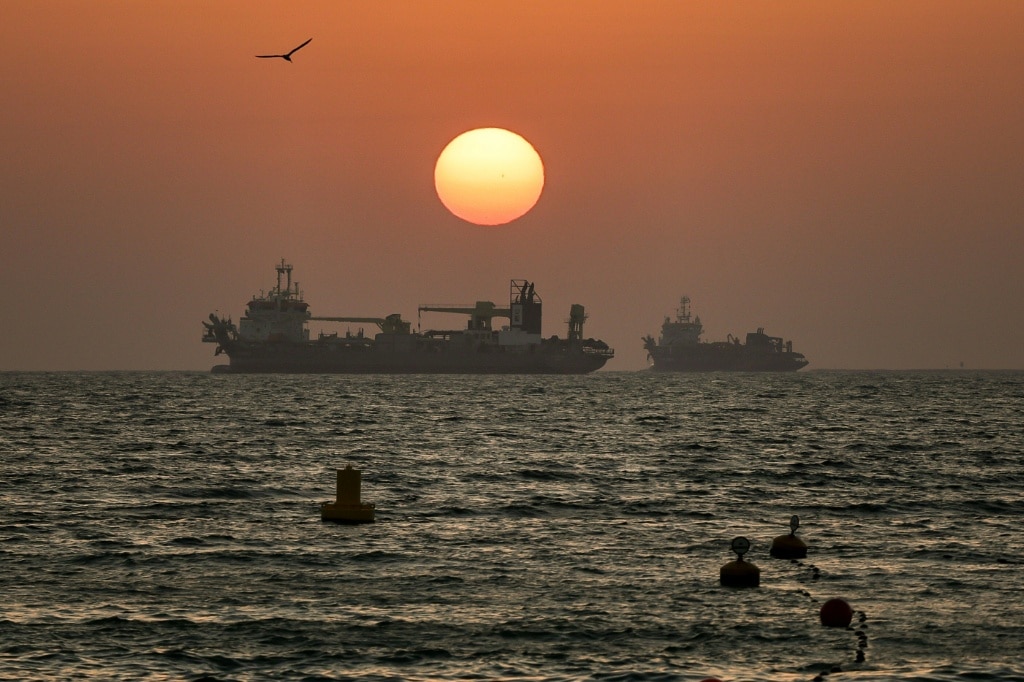
    The military standoff around the Strait of Hormuz has remained tense despite the diplomatic pause. The U.S. military confirmed Wednesday that one of its warplanes targeted and disabled the rudder of an oil tanker that attempted to break the U.S. blockade of Iranian ports. Trump has maintained the full U.S. blockade will remain in place as long as Iran continues its own restrictions on shipping through the strait.

    Pakistani Prime Minister Shehbaz Sharif, a key broker in the initial talks hosted in Islamabad last month, has voiced public optimism for a lasting outcome. “We are very hopeful that the current momentum will lead to a lasting agreement that secures durable peace and stability for the region and beyond,” Sharif said in a post on X.

    U.S. news outlet Axios, citing two anonymous senior U.S. officials, reported Wednesday that both sides are nearing agreement on a one-page memorandum of understanding that would end active hostilities and establish a framework for future detailed negotiations over Iran’s nuclear program.

    On the diplomatic front, Iran’s top foreign diplomat Abbas Araghchi met with his Chinese counterpart Wang Yi in Beijing Wednesday to discuss the ongoing negotiations. Araghchi said after the meeting that Iran looks forward to Chinese support for building a new post-war regional framework that balances security and sustainable development for all nations in the Middle East.

    Trump’s conciliatory rhetoric came hours after U.S. Secretary of State Marco Rubio announced that the U.S. had concluded all active offensive operations against Iran. Global financial markets reacted positively to the signs of de-escalation, with the S&P 500 and Nasdaq both closing at all-time record highs on Wednesday as investors grew more optimistic about a breakthrough that would ease regional energy market risks.

    Not all reaction to the talks has been positive, however. Speaking to AFP from Tehran, 43-year-old translator Azadeh expressed deep fear about the prospect of a deal between the Trump administration and Iran’s current government, saying years of economic hardship and conflict have brought no tangible benefits to ordinary Iranian citizens. “We’ve gone through so much hardship and suffering, and no achievements for people? I honestly just hope they finish this regime,” she said.

    Tensions across the broader region escalated Wednesday on the Lebanese front of the ongoing conflict. Israel carried out an airstrike on Beirut’s southern suburbs, the first attack on the densely populated area in nearly a month. A source close to the Iran-backed Hezbollah group told AFP the strike killed a senior commander from the group’s elite fighting unit. Lebanon’s health ministry confirmed that at least 11 additional people were killed in a series of separate Israeli strikes across southern and eastern Lebanon Wednesday. Israel’s Army Chief Lieutenant General Eyal Zamir visited Israeli troops deployed along the southern Lebanon border Wednesday, vowing to “seize every opportunity to deepen the dismantling of Hezbollah.”

    U.S. Secretary Rubio also announced that Washington and its Gulf Arab allies have drafted a new United Nations Security Council resolution demanding that Tehran halt all attacks on commercial shipping, disclose the location of naval mines in regional waterways and end efforts to collect tolls from ships passing through the strait. A vote on the resolution is expected in the coming days, though its adoption remains uncertain amid expected divisions among Security Council member states.

  • Holders PSG edge Bayern Munich to reach Champions League final

    Holders PSG edge Bayern Munich to reach Champions League final

    Defending UEFA Champions League champions Paris Saint-Germain (PSG) have secured their place in a second straight continental decider, advancing past Bayern Munich on a 6-5 aggregate score after a 1-1 second-leg draw at the Allianz Arena on Wednesday. The French giants will now lock horns with England’s Arsenal in the May 30 final in Budapest, bidding to become just the second club since 1990 to win back-to-back Champions League titles, following in the footsteps of Real Madrid.

    The match got off to a blistering start, with PSG striking on a lightning-fast counterattack inside the opening three minutes. Forced into one starting lineup change by an injury to Achraf Hakimi, PSG slotted Fabian Ruiz into the side, and the Spaniard turned creator just moments in. Ruiz slipped a precision through ball down the left flank to Khvicha Kvaratskhelia, who beat his marker and cut the ball back for an unmarked Ousmane Dembele. The Ballon d’Or winner smashed the finish past Manuel Neuer, putting PSG ahead on the night and stretching their aggregate lead to two goals.

    Bayern, who already wrapped up the Bundesliga title ahead of the tie, entered the match brimming with confidence after a high-scoring 5-4 first-leg defeat in Paris that many hailed as one of the greatest Champions League matches in recent memory. But the six-time European champions struggled for rhythm early on, with key playmakers misplacing passes that ended promising attacking moves. Tensions boiled over in the first half over contentious refereeing calls from official Joao Pinheiro: Bayern players were furious when no penalty was awarded after a Vitinha clearance struck Joao Neves’s arm in the 18-yard box, and they were further incensed that PSG full-back Nuno Mendes escaped a second yellow card for an earlier handball offense.

    PSG came close to doubling their lead before the break, but Neuer produced a sharp reflex save to tip Neves’s close-range header just wide of the post. Bayern finally found their footing just before halftime, with Jamal Musiala forcing a brilliant low stop from PSG goalkeeper Matvey Safonov before firing a follow-up effort over the bar.

    The second half saw PSG adopt a more pragmatic approach, dropping deep to absorb wave after wave of Bayern pressure while retaining their cutting edge on the break. Neuer pulled off two more critical saves to deny Kvaratskhelia and substitute Desire Doue, keeping Bayern in touching distance of a comeback. Though the Bavarians dominated possession and territory for most of the second period, they could not find a breakthrough until stoppage time, when Harry Kane extended his incredible scoring run to seven consecutive Champions League matches with a late finish.

    The goal came too late to turn the tie around, however. The final whistle blew moments after the restart, confirming PSG’s place in the final and bringing an end to Bayern’s 2024-25 continental campaign. This defeat marks Bayern’s fourth loss across all competitions this season, and leaves the club still waiting for its first Champions League final appearance since it defeated PSG in the 2020 Lisbon showpiece.

    Post-match, Bayern manager Vincent Kompany struck a measured tone about the narrow defeat. “I don’t have the ability to be disappointed for long,” he said. “Of course, in the end we lost two very, very tight games against a very good opponent.” For PSG, the result adds another chapter to their growing Champions League legacy, returning to the scene of their 2024 final triumph over Inter Milan to secure another shot at the trophy they pursued for decades without success. Speaking to reporters after the match, Doue expressed the team’s joy at the result. “It was an exceptional match, another magical night in Munich against a great team,” the forward told Canal Plus. “These are the kinds of matches we’ve dreamt of playing since we were little. Now, we’re going to enjoy this as a team.”

    Heading into the final against Premier League leaders Arsenal, PSG enter the match as clear favorites to lift the trophy for a second straight year, capping a historic run in Europe’s most prestigious club competition.

  • Holders PSG edge Bayern Munich to reach Champions League final

    Holders PSG edge Bayern Munich to reach Champions League final

    Defending UEFA Champions League champions Paris Saint-Germain (PSG) have secured their place in a second consecutive final of the competition, defeating six-time winners Bayern Munich 6-5 on aggregate following a tense 1-1 draw in the second leg at Munich’s Allianz Arena on Wednesday. The French giants will now lock horns with Premier League leaders Arsenal in the May 30 final hosted in Budapest, bidding to become only the second club since 1990 to lift back-to-back Champions League titles, a feat last achieved by Real Madrid.

    The match got off to a blistering start, just as the first leg in Paris — a 5-4 PSG win widely hailed as one of the most thrilling contests in the tournament’s history — did. Just two-and-a-half minutes in, PSG struck on a clinical counter-attack. Fabian Ruiz, who was a forced replacement for injured defender Achraf Hakimi in the only enforced starting lineup change between the two legs, played a pinpoint through ball down the left flank to Georgian winger Khvicha Kvaratskhelia. He surged past his marker before cutting the ball back to Ballon d’Or winner Ousmane Dembele, who slotted home the opening goal to put PSG ahead on the night and 2-0 up on aggregate.

    The early goal left Bayern visibly stunned, mirroring their shaky start against Real Madrid in the quarter-finals where they conceded inside 36 seconds. While they fought back to win that tie, the Bavarian side struggled to find their rhythm in the opening half-hour. Key attackers including Michael Olise, Harry Kane and Joshua Kimmich coughed up possession on multiple promising build-ups, and the hosts grew increasingly frustrated with first-half refereeing calls. Bayern surrounded referee Joao Pinheiro to demand a penalty just after the 30-minute mark when a Vitinha clearance deflected onto Joao Neves’s arm inside the penalty area, but their appeals were rejected. Tensions boiled over even earlier, when home players protested that PSG full-back Nuno Mendes avoided a second yellow card for an earlier handball offense.

    PSG came close to doubling their advantage just before half-time, but a close-range header from Neves was tipped inches wide of the post by Bayern captain and legendary goalkeeper Manuel Neuer. Bayern finally began to find their attacking rhythm in the closing minutes of the first half: Jamal Musiala forced a spectacular low save from PSG keeper Matvey Safonov before firing the rebound over the crossbar.

    In the second half, PSG shifted to a more pragmatic, defensive-minded game plan, dropping deep to absorb wave after wave of Bayern pressure while retaining their threat on the break. Neuer pulled off two critical saves to keep Bayern in the tie, denying Kvaratskhelia and substitute Desire Doue in quick succession. The Bavarians dominated both possession and territory for most of the second half, but they lacked cutting edge in the final third, with Olise turning in a particularly underwhelming performance after his standout showing in the first leg.

    Kane, who has been in sensational form in this season’s competition, finally broke the deadlock for the hosts in stoppage time, scoring in his seventh consecutive Champions League match to level the score on the night. But the goal came too late to change the tie’s outcome: after the restart, referee blew the full-time whistle, confirming PSG’s progression.

    The result brings a disappointing end to Bayern’s European campaign, extending their drought reaching the Champions League final — they have not advanced that far since they defeated PSG in the 2020 Lisbon showpiece. Both clubs headed into the second leg having already played 51 matches across all competitions this season, with only PSG making a forced change to their starting XI from the first leg; unlike the fresh-looking visitors, Bayern looked visibly weary throughout the contest. This defeat marks just Bayern’s fourth loss across all competitions this season, a campaign that has already seen them secure the Bundesliga title, but the elimination will still cut deep for a club with title ambitions in every tournament they enter. For PSG, the result cements their status as favorites to lift the trophy for a second straight year, returning to the Allianz Arena — the venue where they lifted their first ever Champions League title against Inter Milan last season — and proving their big-match pedigree in a competition they spent decades chasing unsuccessfully.

  • Gas tax: How beer fuelled a debate on Australia’s energy giants

    Gas tax: How beer fuelled a debate on Australia’s energy giants

    In a surprising revelation that has electrified Australian political discourse, a senior treasury official confirmed during a February Senate hearing that Australia generates more annual government revenue from beer excise taxes than it does from levies on its multibillion-dollar offshore gas exports. The exchange, captured on video and shared widely across social media, has amassed nearly 10 million views on Instagram alone, catapulting a long-simmering debate over resource taxation into the national spotlight.

    Independent Senator David Pocock, who pressed the official for clarity, summed up widespread public frustration in his question: “How do we live in a country, one of the biggest gas exporters in the world, and we’re getting more tax from beer?” The viral moment has reignited a grassroots campaign led by Pocock, political commentator Konrad Benjamin, and other advocates to implement a 25% tax on Australian gas exports, a policy that has drawn fierce pushback from multinational energy companies operating in the country.

    As Australia grapples with skyrocketing cost-of-living pressures and soaring domestic gas prices, exacerbated by the global fuel crisis triggered by the ongoing US-Israeli conflict with Iran, the debate has dominated front pages just one week ahead of the release of the country’s annual federal budget. Despite broad public support for the policy, Prime Minister Anthony Albanese has already ruled out its inclusion in next week’s budget, but the issue shows no signs of fading from the political agenda.

    Former Australian Treasury Secretary Dr Ken Ken Henry, who first proposed a broad mining tax 16 years ago that was ultimately defeated after a massive industry lobbying campaign, has thrown his weight behind the current push. He argued that if the earlier mining tax had been implemented, Australia would have collected tens of billions of dollars in extra revenue that could have been seeded into a intergenerational sovereign wealth fund to fund long-term public services. Henry drew a blunt analogy to explain the current unfairness of Australia’s gas taxation regime: “Imagine if I were to come to you … and put this proposition to you: I’ll sell your house and I’ll give you 30% and I’ll keep the other 70%, and you should be happy with that because I’ve just converted an asset into cash. None of you would be stupid enough to do that.”

    The Australia Institute, a progressive public policy think tank, has further underscored the scope of the revenue gap, noting that Japan generates more tax revenue from importing Australian gas than Australia collects from exporting the resource. The institute estimates that a 25% gas export tax would add around A$17 billion (£9 billion, US$12 billion) to annual government revenue.

    Polling data released last week confirms the policy’s broad popularity with Australian voters, with 57% of respondents backing the proposed gas export tax and just 12% voicing opposition. Many supporters have pointed to Norway’s $2 trillion sovereign wealth fund, built from the country’s oil and gas revenues, as a model for Australia. For comparison, Australia’s existing sovereign wealth fund held just A$267 billion as of December 2025 – less than 10% of Norway’s total, despite Australia having a population five times the size of Norway’s. Supporters argue that increased gas tax revenue could fund popular public programs including more generous parental leave, free tertiary education, and expanded healthcare.

    Benjamin, a former high school teacher turned political YouTuber who testified on the proposal at the recent Senate hearing, has built a large social media following for his videos calling for reform, regularly earning hundreds of thousands of views. “My year 10 business students understand: if something is profitable and we’re holding all the levers of power – look around. How many stable democracies have the many resources that we have? How are we getting such a dud deal?” he told senators.

    The scale of the current revenue gap is hard to overstate. While Australian gas exports hit a record peak of A$90 billion in 2023 amid market turmoil following the Ukraine war, the Petroleum Resource Rent Tax (PRRT), the primary levy on offshore oil and gas producers, is projected to raise just A$1.5 billion in the 2025-26 financial year. By contrast, beer excise taxes are expected to generate A$2.7 billion in the same period. Even at the country’s flagship Gorgon gas project, majority-owned by Chevron, multinational Shell paid just A$109 million in PRRT last year – its first PRRT payment in a decade – on A$2.5 billion in project revenue.

    Samantha Hepburn, a natural resource law professor at Deakin University, explained that Australia’s tax code includes unusually generous provisions for energy companies that allow them to deduct large upfront infrastructure and development costs from their tax bills, and carry forward unused tax credits to offset future profits for years. “Gas is in a particularly favourable position because of the significant upfront costs associated with construction and drilling and the other infrastructure,” Hepburn said. “And that means that they can keep uplifting those expenses against future profits in a way that other resource or mining resource sector companies haven’t necessarily been able to do.” While gas companies pay standard corporate and payroll taxes like other businesses, Hepburn noted that they exploit a publicly owned natural resource, and existing royalty payments for onshore projects are far smaller than profit-based tax revenue would be. This structure has led to widespread claims that Australia is effectively giving its natural gas away to foreign companies for below market value.

    Energy companies have pushed back hard against the proposed tax, defending their current tax contributions and warning of negative economic consequences. Shell said it has invested US$60 billion in Australia since 2010 and paid A$12 billion in total Australian taxes over the past decade. The company also argued that Norway’s resource model is fundamentally different, as the Norwegian state takes direct equity stakes in energy projects and shares development risk, a structure not used in Australia. Chevron, which holds the majority stake in Gorgon, argued that Australia needs stable regulatory frameworks to attract investment across all sectors, claiming that a new export tax would undermine that stability and threaten domestic gas supply. Energy firm Santos added that the proposal itself has already damaged Australia’s reputation as a reliable investment destination.

    Prime Minister Albanese has rejected comparisons between beer and gas tax revenue as “complete fantasy”, noting that the broader gas sector paid A$22 billion in total taxes last year. Speaking to a gathering of mining and energy executives, he reaffirmed that the government would not impose a new gas export tax in the upcoming budget, saying “the middle of a global fuel crisis is the worst possible time to jeopardise these partnerships, or the investment that underpins them.” Albanese, who recently completed a tour of Asian nations to secure long-term fuel supply agreements, added that gas exports are “directly linked to our national fuel security” and that Australia depends on billions in foreign investment from North American, Japanese and other international partners to develop gas resources.

    However, critics of the government’s position argue that the prime minister’s objections do not hold up to scrutiny. University of Queensland economics professor John Quiggin noted that imposing a new export tax would not violate existing contracts, as no commercial agreement can bind future governments to permanent tax policy. He also pushed back on claims that the tax would drive away foreign investment, asking “Where are they going to go?” Quiggin added that the old argument that foreign investors must be treated with extreme leniency or they will abandon the market is outdated, pointing to shifting global norms including former US President Donald Trump’s unilateral imposition of global tariffs in recent years. Hepburn further noted that fears of deterring new gas investment conflict with Australia’s own climate targets, which require the country to reach net zero greenhouse gas emissions by 2050, meaning new large-scale gas development should not be prioritized anyway.

    While the gas export tax is all but certain to be left out of next week’s budget, most political analysts agree that reform is ultimately inevitable, given the policy’s broad cross-partisan popularity, ranging from the left-wing Greens to the right-wing One Nation. Pocock and his supporters have vowed to continue their campaign, and Pocock tweeted earlier this week that “The pressure on government to act is growing and, at some point, the prime minister has to put Australia first.”

  • ‘Multiculturalism needs to evolve’: Premier Chris Minns backs in protest laws, ‘intifada’ ban

    ‘Multiculturalism needs to evolve’: Premier Chris Minns backs in protest laws, ‘intifada’ ban

    New South Wales Premier Chris Minns has announced that any state-level ban on the controversial pro-Palestinian slogan “globalise the intifada” will only move forward if Queensland’s existing ban on the phrase survives an upcoming High Court constitutional challenge. The announcement comes after a NSW parliamentary inquiry, convened in the aftermath of the alleged Bondi Beach terrorist attack, formally recommended the state government draft legislation to prohibit the phrase.

    The slogan, commonly deployed by pro-Palestinian advocacy groups, references two historical popular uprisings in the occupied Palestinian territories. Australian Jewish community organizations have long argued that the slogan constitutes an explicit call for violence against Jewish people, making its public use unacceptable. Queensland’s center-right Liberal-National government was the first to act, banning both “globalise the intifada” and a second contentious phrase, “from the river to the sea”, earlier this year. The ban has already led to at least one individual being formally charged under the new legislation, but activist groups have challenged the law’s constitutionality and will argue their case before Australia’s highest court.

    Speaking to NewsWire, Minns emphasized that his government will prioritize constitutional viability over rushed action. “If the laws in Queensland are successfully challenged, that means we can’t pursue them in NSW,” Minns said. “I’m being judicious here. I have to think about how these laws would be implemented not just next month, but years from now, and I want to make sure that our next step is constitutionally sound. If the Queensland ban is ultimately upheld by the High Court, we’ll pursue the ban here as well.”

    Minns went on to defend his government’s post-attack crackdown on public protests, even as two key policy measures have already been struck down by the courts. Last month, a judicial ruling overturned emergency regulations that prohibited moving protests for a set window after a terror attack, with the judge finding the rules “impermissibly burdened” the implied constitutional right to freedom of political communication. An earlier ban on protests outside religious houses of worship was also overturned by the courts.

    When asked if repeated court defeats had eroded public trust in his government, Minns rejected the suggestion. “I don’t think so, but I can guarantee you can find someone to come on a podcast and say the opposite is true,” he said. “My sense is people accept that it’s extraordinary times and that in extraordinary times you do need to pursue policies that you wouldn’t ordinarily implement. I’m not going to allow a situation where the temperature just gets repeatedly turned up after the worst terrorism event in the country’s history.”

    On the overturned Bondi-specific protest laws, Minns argued the policy achieved its core goal despite its eventual defeat in court. “We received advice that it was the right policy at the right time, and despite being defeated in court, it was in place during the critical summer period,” he said. “It meant the police could say we’re not going to allow major divisive protests, for example, in the eastern suburbs of Sydney. I think that would have been a combustible situation. It’s difficult to give a counterfactual because the laws were in place and that unrest didn’t happen, but I think they were the right call. We’ve won a lot of court cases, too.”

    Turning to broader questions of immigration and multiculturalism ahead of the 2027 state election, where Minns’ Labor government will face a resurgent right-wing One Nation party that has sought to capitalize on growing anti-immigrant sentiment, Minns called for clearer, more responsible rhetoric from political leaders. He specifically addressed recent comments by federal Opposition Leader Angus Taylor, who claimed migration from “bad countries” carries a higher risk of bringing “bad people” to Australia.

    “Leaders have a responsibility to be specific about what you mean and what you say,” Minns said. “We’ve all seen, in different political guises, leaders step up and be ambiguous about what they mean to try and score a political advantage that way.”

    Minns reaffirmed that multiculturalism has been a historic success for Australia, but argued the framework needs to adapt to current social tensions. “Multiculturalism has been a success in our country, but I think there’s an argument to say it needs to evolve a little bit,” he explained. “It does need to celebrate and understand differences. I also think we’ve got a responsibility to call out commonalities and the things that not only we have in common but we aspire to have in common.”

    “There’s nothing wrong with saying that in Australia we want and expect, and the vast majority of people believe in, democracy, in freedom of association, in respect for women, in the rule of law,” he added. “That’s why millions of people have come from around the world to start a new life in Australia.”

  • Cardiff sign ex-Australia prop Sio from Exeter

    Cardiff sign ex-Australia prop Sio from Exeter

    Cardiff Rugby has moved quickly to fill its front-row vacancy left by Corey Domachowski’s departure to the Scarlets, announcing the signing of experienced 34-year-old prop Scott Sio, who will join the United Rugby Championship side this summer following four seasons with England’s Exeter Chiefs.

    Sio’s decades-long elite rugby career has seen him compete at the very top of the international sport, with an unusual cross-national representative journey. After earning 74 caps for the Australian Wallabies, including a starting spot in the 2015 Rugby World Cup final against New Zealand and a place in the 2019 tournament squad, he switched his international allegiance to Samoa last year. He went on to play a key role in helping Samoa secure qualification for the 2026 Rugby World Cup, following in the footsteps of his father David, who represented Western Samoa at the 1991 World Cup.

    Before his move to Exeter in 2022, Sio made 143 appearances for Australia’s Super Rugby side Brumbies. To date, he has notched up 80 caps for the Exeter Chiefs, with 13 starts coming in the current 2024/25 season. When he arrives at Cardiff Arms Park, he will compete for starting positions alongside existing props Danny Southworth and Rhys Barratt.

    In a statement following the announcement of the signing, Sio said he is eager to bring his decades of elite experience to Cardiff’s young roster, both on and off the pitch. “With this new opportunity I am looking to continue growing as an individual and player, while contributing to the club’s aspirations,” he explained. “I am also hoping that I can bring my wealth of experience to this young squad, especially with props coming through, to help the club both on and off the field.”

    Cardiff head coach Corniel van Zyl shared his enthusiasm for the signing, noting that Sio’s proven track record and professional attitude made him an ideal addition to the squad. “We had a really open and honest conversation with Scott when we met him and we were really impressed,” van Zyl said. “His career to date speaks for itself, 74 Tests for Australia, two for Samoa, over 100 games for Brumbies and 80 for Exeter. He is durable, has played at the highest level and is keen to test himself in a new environment and competition.”

    Sio’s arrival comes as Cardiff reshuffles its front-row roster: Domachowski has moved to the Scarlets, while fellow prop Ed Byrne departed earlier to return to Ireland’s Leinster on a short-term deal after two injury-plagued seasons in Cardiff. Sio is the club’s second confirmed new signing for the upcoming campaign, following last week’s announcement of a deal for Namibian centre Le Roux Malan from the Sharks. The Blue and Blacks have also locked down key talent for future seasons, agreeing new contract extensions with Welsh internationals Josh Adams, Alex Mann, James Botham, Mason Grady, Keiron Assiratti and Danny Southworth.