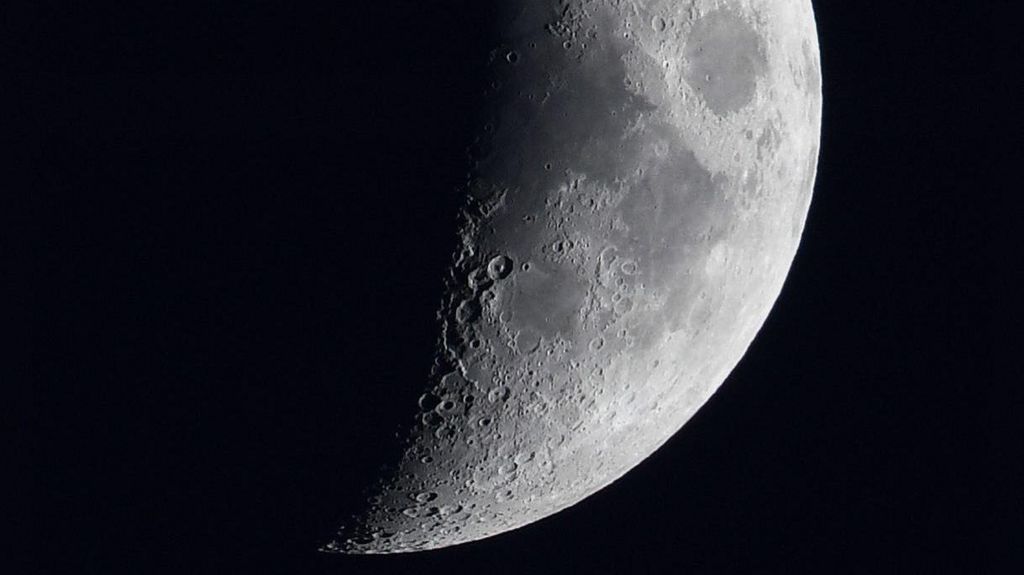
In early 2022, a discarded SpaceX rocket booster that had been drifting through uncontrolled orbital space for years made an inevitable impact with the Moon’s far side, leaving what astronomers predict is a fresh, uneven crater scattered with debris across the lunar surface. But more than a year after the collision, no official clear images of this new impact site have been made public, leaving space enthusiasts and researchers curious about the long delay.
The most straightforward explanation for the wait lies in orbital scheduling and observation logistics. The key Lunar reconnaissance assets that can capture high-resolution images of the surface, including NASA’s Lunar Reconnaissance Orbiter (LRO) and India’s Chandrayaan-2, operate on fixed, pre-planned orbital paths. They can only image a given point on the Moon when their orbit brings the target site within their camera’s field of view, a window that does not open on demand.
Complicating this timeline further is the exact challenge of locating the crater. While astronomers have produced rough estimates of where the booster impacted, these calculations come with a margin of error measured in multiple kilometers. Before any dedicated imaging can take place, orbiters must conduct incremental search passes to narrow down the impact site’s location, a process that takes time and prioritization against other active research missions.
Another factor that has slowed public release is the priority of mission objectives. LRO and other active lunar orbiters are committed to long-term research goals, from mapping polar water ice deposits to preparing for future human Artemis missions. Shifting resources away from these pre-approved projects to search for a newly formed crater requires coordination and approval, pushing the search further down mission waiting lists in many cases.
Even so, experts note that the wait will not last forever. As orbiters complete their scheduled tasks and gradually pass over the impact region, the new crater will be located, imaged, and eventually released to the public. When the images do arrive, they will give planetary scientists valuable real-world data on how large objects impact the lunar surface, helping refine models of crater formation that improve understanding of solar system geology.