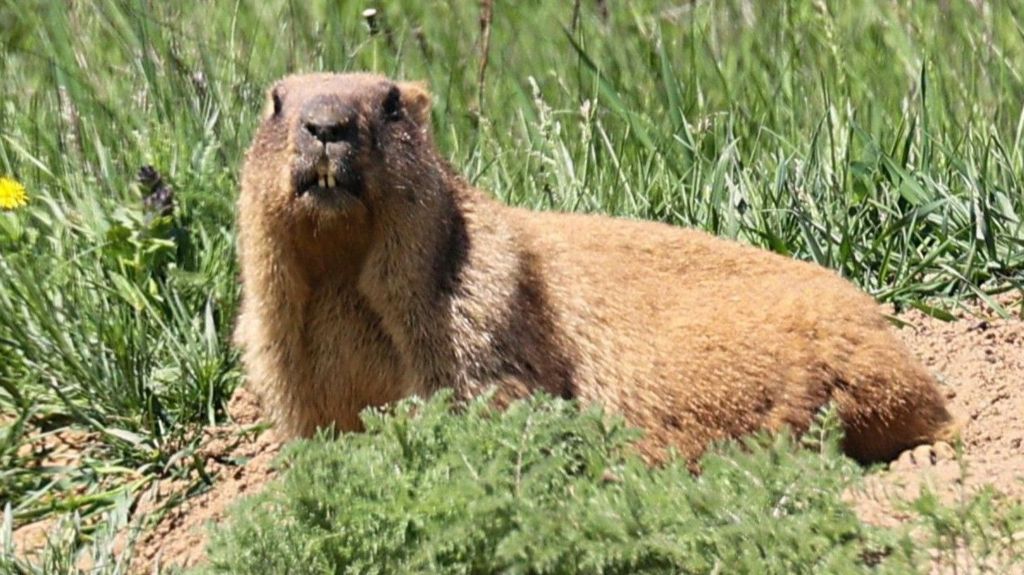
When federal funding for university research dried up, one Colorado-based biologist turned to an unexpected platform to keep his decades-long wildlife study alive: OnlyFans. What happened next turned a colony of yellow-bellied marmots into unexpected internet celebrities, all in the name of conservation science.
Dr. Daniel Blumstein, leader of the long-running Marmot Project based at UCLA’s Rocky Mountain Biological Laboratory, launched the playful OnlyFans account dubbed “OnlyMarms” in a last-ditch bid to raise funds for his research program. Launched in 2024 following cuts to federal academic research grants, the project already holds a prestigious place in global scientific history: it is the second-longest continuous study of individually identified wild mammals on Earth, trailing only Jane Goodall’s legendary chimpanzee research in Tanzania.
For more than 60 years, Blumstein and his team have studied yellow-bellied marmots, a common, non-endangered species of ground-dwelling squirrel found across North America. Unlike many high-profile conservation projects focused on at-risk animals, this long-term research fills a critical gap in ecological knowledge: tracking how population dynamics shift over time in a stable species, offering key insights into how environmental changes impact wildlife populations broadly. Despite the project’s well-documented scientific value, Blumstein confirmed to the BBC that securing ongoing federal funding had become impossible, leaving the program’s future in jeopardy.
The unusual OnlyFans idea struck Blumstein unexpectedly while he waited in an alpine meadow for marmots to emerge from their burrows. Fresh off watching the popular TV series *Margot’s Got Money Troubles* — where Elle Fanning’s titular character launches an OnlyFans to support herself as a single parent — Blumstein had a sudden epiphany: “Marmots’ got money troubles. Maybe we should do something a little risqué.”
He floated the idea to his research students, who embraced the concept wholeheartedly, helping him craft the playful brand OnlyMarms and set up the account. The project hit a small early snag during platform verification: OnlyFans moderators flagged the account, after Blumstein submitted his driver’s license for ID check, which did not match the account’s profile photo of a marmot. A quick explanatory email cleared up the confusion, and the team was able to start posting content.
Contrary to OnlyFans’ reputation as a platform dominated by sexually explicit adult content, all content posted on OnlyMarms is completely family-friendly. The feed features candid, unedited videos and photos of the wild marmots going about their daily lives in the Rocky Mountains: scurrying across alpine meadows, emerging from underground burrows, interacting with one another, and basking in the mountain sun. Blumstein notes that yellow-bellied marmots are less social than their alpine marmot relatives, and female marmots actually grow more territorial and irritable as they age — a quirk that has produced some viral-worthy content, including one clip of a female marmot chasing an intruding male out of her burrow.
Rather than naming the research subjects with human names — a practice that could introduce observational bias into the study — the team marks individual marmots with non-toxic dye and gives them quirky, informal identifiers: popular subjects include “dans_hat”, “open_kite”, and “Citroën”.
So far, the unorthodox fundraising campaign has exceeded early expectations, raising more than $5,000 total. After OnlyFans takes its platform commission, the Rocky Mountain Biological Laboratory will net roughly $4,000 to put toward research costs. While Blumstein acknowledges that OnlyFans revenue will not be enough to fully offset federal spending cuts and secure the project’s long-term future on its own, he stresses that the campaign has already delivered significant value by raising public awareness of the research and its importance.
Building on the viral attention from the OnlyMarms account, the team has also launched a new public engagement event: Fat Marmot Week, modeled after the wildly popular Fat Bear Week hosted by Alaska’s Katmai National Park. Scheduled for the end of August, the bracket-style tournament will let the general public vote for their favorite chunky marmot. As hibernating animals, marmots build up large fat reserves ahead of the long winter, so the public competition is more than just fun: “It’s fun to root for the chunkiest marmot, but behind the fun and games is a deathly serious competition against nature to pile on fat to survive the long, cold winter,” Blumstein explained in a press release announcing the event.
The unusual campaign highlights a growing crisis in academic research: long-term ecological studies, which produce some of the most valuable data on climate and population change, are increasingly struggling to secure consistent government funding, pushing scientists to explore creative, unconventional alternatives to keep their work going.